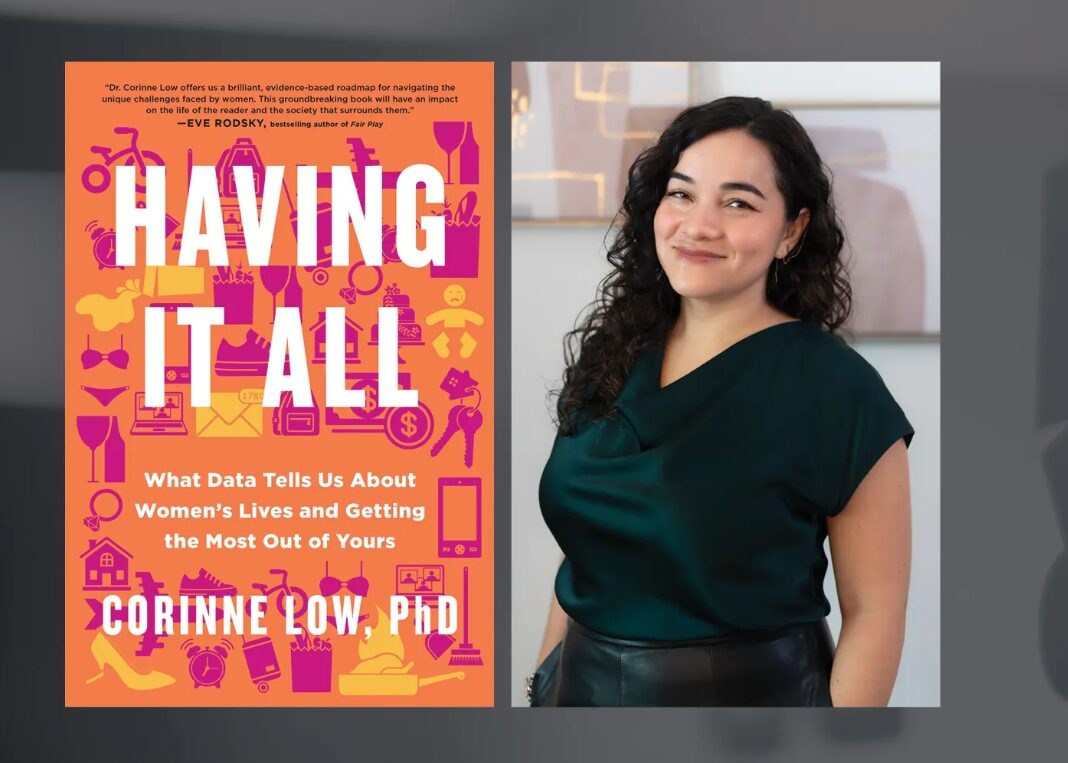
Author: Lechin Lu

  • Corinne Low on ‘What Data Tells Us About Women’s Lives’

    Corinne Low on ‘What Data Tells Us About Women’s Lives’

    [fusion_builder_container type=”flex” hundred_percent=”no” equal_height_columns=”no” hide_on_mobile=”small-visibility,medium-visibility,large-visibility” background_position=”center center” background_repeat=”no-repeat” fade=”no” background_parallax=”none” parallax_speed=”0.3″ video_aspect_ratio=”16:9″ video_loop=”yes” video_mute=”yes” border_style=”solid”][fusion_builder_row][fusion_builder_column type=”1_1″ layout=”1_1″ background_position=”left top” border_style=”solid” border_position=”all” spacing=”yes” background_repeat=”no-repeat” margin_top=”0px” margin_bottom=”0px” animation_speed=”0.3″ animation_direction=”left” hide_on_mobile=”small-visibility,medium-visibility,large-visibility” center_content=”no” last=”true” hover_type=”none” min_height=”” link=”” background_blend_mode=”overlay” first=”true”][fusion_text]

    IN-PERSON AND VIRTUAL EVENT

    Date: December 2, 2025 at 5:30 PM – 6:30 PM EDT

    In-person location: Desautels Hall, Rotman School of Management, 105 St George Street, Toronto

    Co-presented by: Rotman Events

    Agenda:

    5:30 pm – Author discussion
    6:30 pm – Book signing, meet-and-greet and light refreshments

    Book Synopsis:

    You’re not imagining it: Women aren’t getting a good deal at home or at work. We have the evidence to prove it. This book gives you the power to change it.

    For women in America today, the promise of “having it all” is an ever-elusive carrot. Faced with unsustainable demands in every sphere, we are certainly doing it all—but at a steep cost. Research shows that biologically, culturally, and economically, we are on uneven playing ground, and one that drains us of our happiness. But that same data can empower us to make choices that will reclaim our time, our energy―and even our joy.

    In Having It All, Wharton professor and economist Dr. Corinne Low unpacks the hidden factors that influence women’s decision-making, and how the unintended consequences of these choices alter the course of our lives. From when and whether to get married and (or) have children to what type of career to pursue, whether to obtain an advanced degree to where to live—Dr. Low explores questions such as:

    • What if there is no optimal time to “have a family” but rather a slew of different considerations at different life stages?
    • What if we approached decisions around marriage and partnership as rigorously as we would an employment opportunity?
    • What if we valued our time in dollars and cents, and structured our lives around choices that give us the greatest return on our investments?

    Speaker

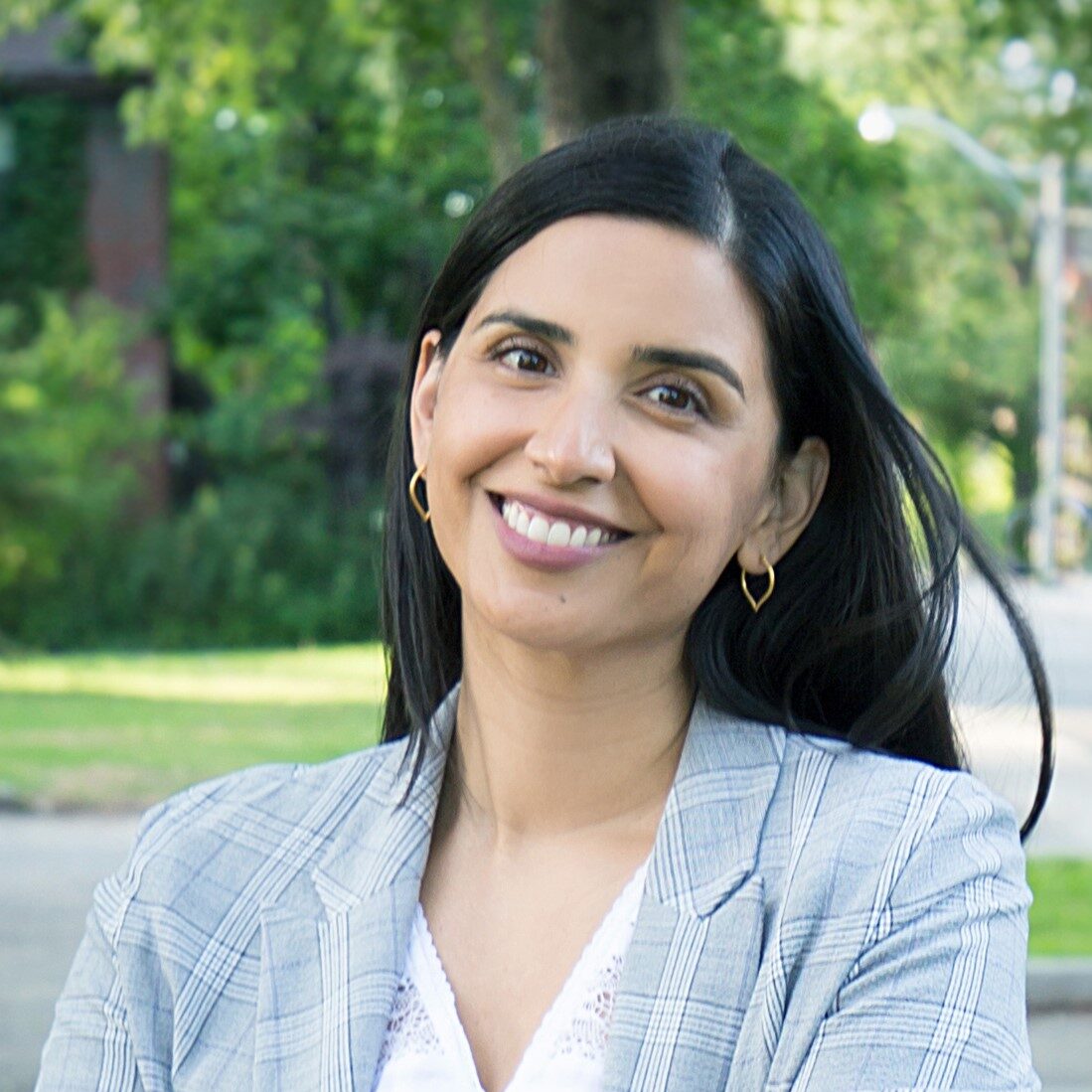
    Corinne Low

    Associate Professor of Business Economics and Public Policy, Wharton School, University of Pennsylvania

    Corinne Low is an Associate Professor of Business Economics and Public Policy at the Wharton School of the University of Pennsylvania. Her research focuses on the economics of gender and discrimination and has been published in top journals such as the American Economic Review, Quarterly Journal of Economics, and Journal of Political Economy. She was named one of Poets and Quants 40 MBA Professors under 40 in 2024. Her first book, Having It All, was published in September by Flatiron.

    Corinne and her work have also been featured by major popular media outlets, including Forbes, Vanity Fair, The LA Times, and NPR. Corinne is the co-creator of the Incentivized Resume Rating method for measuring hiring discrimination, and regularly speaks to and works with firms looking to improve their hiring and retention practices. She has spoken to and advised firms like Google, IFM Investors, Uber, Activision Blizzard, and Amazon Web Services, in addition to teaching in Wharton’s Executive Education programs. She has given talks to top academic institutions like Harvard University, Stanford University, and Oxford, as well as to organizations like the New York Federal Reserve, Brookings, and the US Department of Labor. She received her Ph.D. in Economics from Columbia University, her B.S. in Economics and Public Policy from Duke University, and formerly worked for McKinsey and Company. Outside of work, she is the co-founder and volunteer executive director for Open Hearts Initiative, a New York City based non-profit that aims to combat the homelessness crisis through pro-housing neighborhood organizing.

    Moderator

    Sonia Kang

    Professor, Organizational Behaviour and Human Resource Management, Department of Management, University of Toronto- Mississauga,

    Director, Insitute for Gender and the Economy (GATE),

    Canada Research Chair in Identity, Diversity, and Inclusion

    Sonia Kang is a Professor of Organizational Behaviour and Human Resource Management in the Department of Management at the University of Toronto Mississauga and director of the Insitute for Gender and the Economy (GATE). She holds a cross-appointment to the Organizational Behaviour and Human Resource Management area at Rotman. Her research explores the challenges and opportunities of diversity, including strategies for mitigating the far-reaching effects of stigma and harnessing the power of diversity for society and organizations alike. Sonia’s research has been published in journals including the Journal of Personality and Social Psychology, Psychological Science, Administrative Science Quarterly, and the Journal of Experimental Social Psychology, and has been featured in media outlets such as The Globe and Mail and The Atlantic.

    For more information on event logistics and registration, visit the Rotman Events website.

    [/fusion_text][/fusion_builder_column][/fusion_builder_row][/fusion_builder_container]

  • David Robertson on Walking With Indigenous Peoples on the Path to Healing

    David Robertson on Walking With Indigenous Peoples on the Path to Healing

    [fusion_builder_container type=”flex” hundred_percent=”no” equal_height_columns=”no” hide_on_mobile=”small-visibility,medium-visibility,large-visibility” background_position=”center center” background_repeat=”no-repeat” fade=”no” background_parallax=”none” parallax_speed=”0.3″ video_aspect_ratio=”16:9″ video_loop=”yes” video_mute=”yes” border_style=”solid”][fusion_builder_row][fusion_builder_column type=”1_1″ layout=”1_1″ background_position=”left top” border_style=”solid” border_position=”all” spacing=”yes” background_repeat=”no-repeat” margin_top=”0px” margin_bottom=”0px” animation_speed=”0.3″ animation_direction=”left” hide_on_mobile=”small-visibility,medium-visibility,large-visibility” center_content=”no” last=”true” hover_type=”none” min_height=”” link=”” background_blend_mode=”overlay” first=”true”][fusion_text]

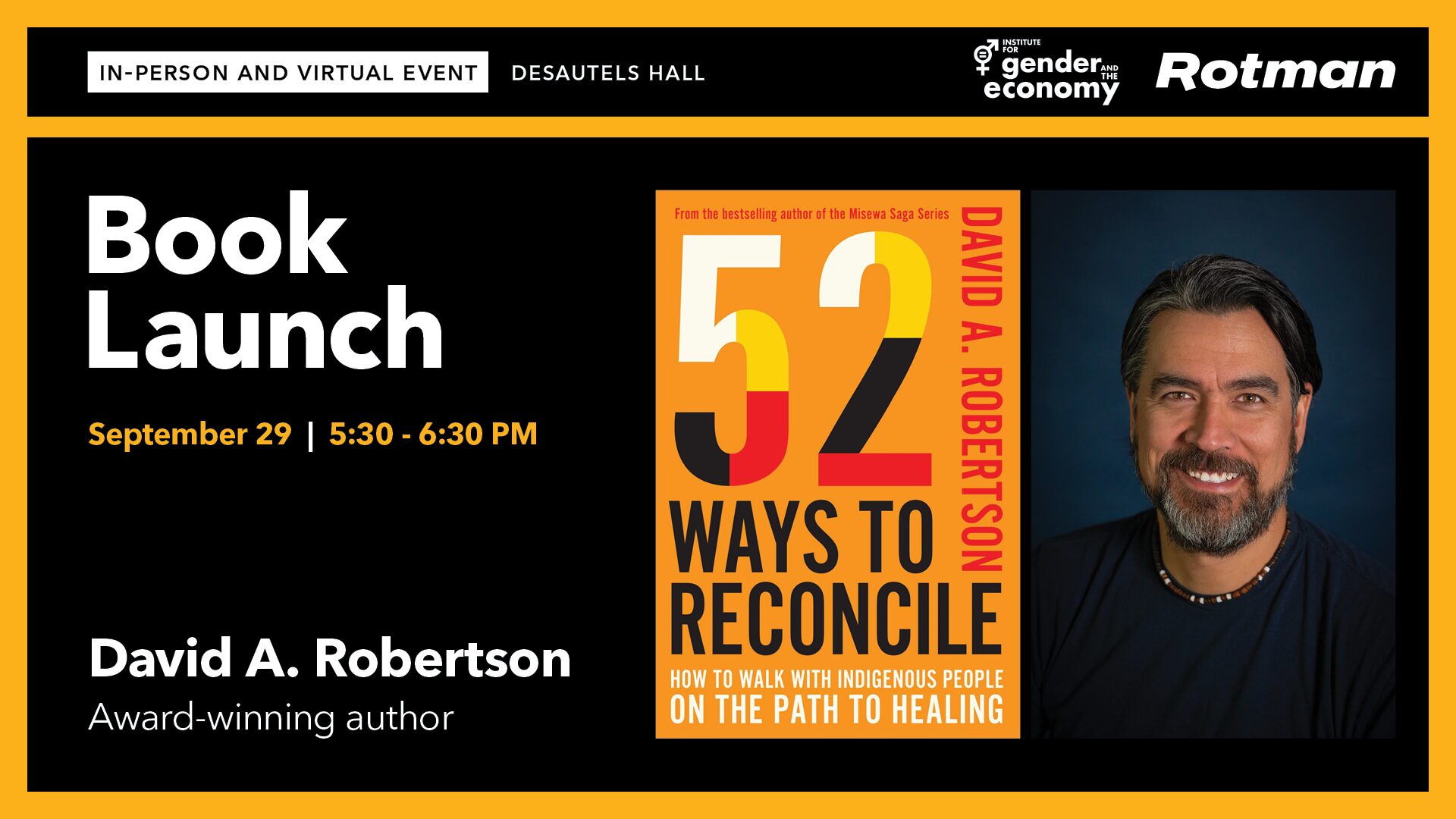
    IN-PERSON AND VIRTUAL EVENT

    Date: September 29, 2025 at 5:30 PM – 6:30 PM EDT

    In-person location: Desautels Hall, Rotman School of Management, 105 St George Street, Toronto

    Co-presented by: Rotman Events

    Agenda:

    5:30 pm – Author presentation + interview with moderated Q&A
    6:30 pm – Light refreshments + book signing

    Book Synopsis:

    From bestselling author of the Misewa Saga series David A. Robertson, this is the essential guide for all Canadians to understand how small and attainable acts towards reconciliation can make an enormous difference in our collective efforts to build a reconciled country.

    52 Ways to Reconcile is an accessible, friendly guide for non-Indigenous people eager to learn, or Indigenous people eager to do more in our collective effort towards reconciliation, as people, and as a country. As much as non-Indigenous people want to walk the path of reconciliation, they often aren’t quite sure what to do, and they’re afraid of making mistakes. This book is the answer and the long overdue guide.The idea of this book is simple: 52 small acts of reconciliation to consider, one per week, for an entire year. They’re all doable, and they’re all meaningful.

    All 52 steps take readers in the right direction, towards a healthier relationship between Indigenous and non-Indigenous people and a time when we are past trauma. By following these steps, we can live in stronger and healthier communities equally, and respectfully, together.

    Speaker

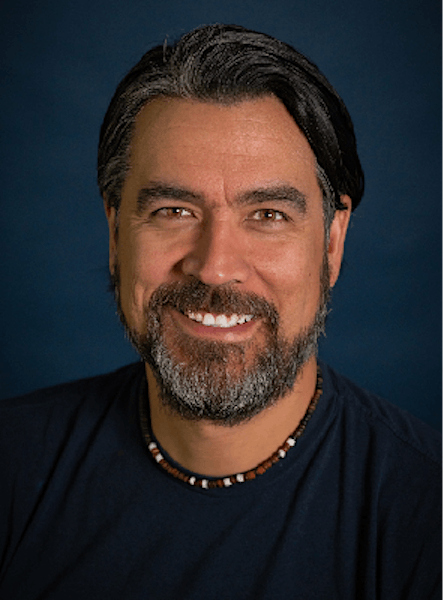
    David A. Robertson is the author of numerous books for young readers including Governor General’s Literary Award winners On the Trapline and When We Were Alone. The Barren Grounds, Book 1 of The Misewa Saga series, was a Kirkus, NPR, and Quill & Quire best middle-grade book of 2020, as well as a USBBY and Texas Lone Star selection. Winner of the Writers’ Union of Canada’s Freedom to Read Award, as well as the 2021 Globe and Mail Children’s Storyteller of the Year recipient, Dave is a member of Norway House Cree Nation and currently lives in Winnipeg, Canada. For more information, visit his website: www.darobertson.ca and follow him on X: @DaveAlexRoberts.

    Moderator

    Jordyn Hrenyk is a Michif researcher from Métis Nation Saskatchewan, Local #7. She is a Provost’s Postdoctoral Research Fellow at the Rotman School of Management. Jordyn’s research is focused on Indigenous entrepreneurship and values-aligned business. She often examines the theoretical and empirical intersections between Indigenous art, spirituality, and entrepreneurship. Jordyn is a passionate advocate for Indigenous business students and she also conducts research focused on Indigenizing and decolonizing the business school.

    For more information on event logistics and registration, visit the Rotman Events website.

    [/fusion_text][/fusion_builder_column][/fusion_builder_row][/fusion_builder_container]

  • Global Shocks, Local Consequences: Building Inclusive Economies in a Volatile World

    Global Shocks, Local Consequences: Building Inclusive Economies in a Volatile World


    Event Information

    Date: June 18, 12:00  – 1:00 PM EDT

    Format: Online

    REGISTER NOW

    Event Summary 

    2025 is testing the limits of our systems and strategies. Economic uncertainty, political shifts, and global disruption are challenging old assumptions and forcing a hard reset on how we think about growth.  

    It’s a critical time to reimagine what’s possible. The strategies we build today must be bold, forward-looking, and inclusive. 

    Join us in a panel discussion that looks beyond the headlines to ask: What should economic development look like now? How can we prioritize reconciliation, resilience, and shared prosperity in our response so that no one is left behind? 

    Speaker:

    Marwa Abdou 

    Marwa is the Senior Research Director at the Canadian Chamber of Commerce. Prior to her role at the Chamber, Marwa served as the Advisor to the Minister of International Cooperation of Egypt for Private Sector Engagement where she managed a portfolio of projects totaling USD 3.2 Billion. She also worked directly with and within some of the world’s most renowned multilateral organizations, private sector organizations, and country governments including the World Bank Group, Commonwealth Secretariat, APEC, OECD, Ernst and Young, Nathan Associates and the Asian Development Bank. In addition to leading dozens of capacity and technical assistance projects, consulting on regulatory, legal and policy reforms with these institutions, she has also co-authored a number of publications and working papers.

    Eliza Casinather, Founder and CEO, Casi Consulting 

    Eliza is an internationally recognized and award-winning leader known for her experience in strategic consulting, digital innovation, and human capital management across the financial services and technology sectors. Her career has spanned major organizations such as the Toronto Stock Exchange and CIBC, where she has consistently driven business growth through inclusive talent strategies and innovative client experiences. A passionate advocate for diversity, inclusion and equity, Eliza serves on the Board of Directors for CARE Canada and advises the Canadian Paralympic Games Committee as well as Women in Aerospace Canada. Her commitment to inclusion extends globally, empowering young women in Sub-Saharan Africa and supporting minority entrepreneurs in Australia.

    Rob Gillezeau 
    Rob is an Assistant Professor of Economic Analysis and Policy at the Rotman School of Management at the University of Toronto and an affiliated scholar at the Stone Center on Socio-economic Inequality. His research is primarily focused on economies of Indigenous peoples and state discrimination.  Prior to his academic appointment, Rob served as the Chief Economist in the Office of the Leader of the Official Opposition from 2011 until 2015 in Ottawa, Ontario and as the chief of staff to the Minister of Finance and Deputy Premier of British Columbia in Victoria, British Columbia from 2017 to 2019.

    Debbie Owusu-Akyeeah 

    Debbie is the Co-Director of Policy and Advocacy at Action Canada for Sexual Health and Rights. Before joining Action Canada, she was the Executive Director of the Canadian Centre for Gender & Sexual Diversity (CCGSD) and has been instrumental in advancing the rights of 2SLGBTQIA+ youth and communities. Debbie is an accomplished community educator, feminist activist, and social justice advocate driven by the mission of creating a more inclusive, equitable, and safe world. She has spoken at Parliamentary and Senate standing committees, appeared in numerous media outlets, and held several advocacy and policy-oriented positions in government and non-profit organizations, including Oxfam Canada and Global Affairs Canada.

    Naoufel Testaouni, Co-founder & CEO, QueerTech

    Naoufel is the co-founder and CEO of QueerTech. QueerTech is on a mission to queer the Canadian tech ecosystem. Operating since 2016, QueerTech is a national non-profit organization dedicated to promoting workforce and economic development across Canada by fostering entrepreneurship and providing opportunities for the 2SLGBTQ+ community to access employment, professional development and meaningful connections in the technology industry. The organization is also a national leader in workplace inclusion advocacy and progressive 2SLGBTQ+ equity, diversity and inclusion policy facilitation.

  • 10th Annual Research Roundtable | May 2025

    10th Annual Research Roundtable | May 2025


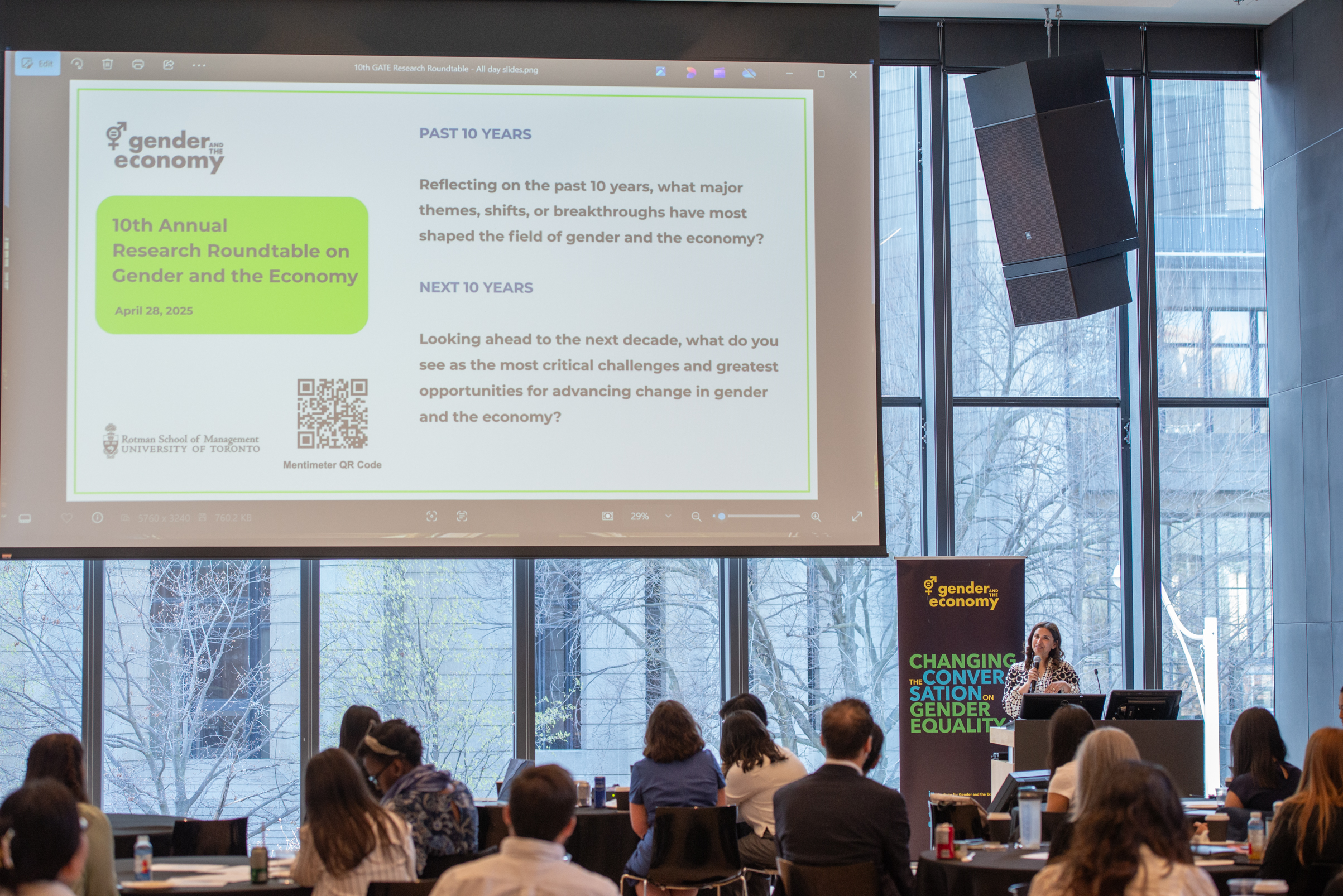
    GATE’s 10th annual research roundtable brought together a multidisciplinary group of emerging and established from across the University of Toronto—each funded through GATE research grants. Attendees shared bold new research, received valuable feedback, and built meaningful connections.

    So, what did we learn?

    We summarized the 10 research snapshots from our funded research on gender and the economy:

    The Effects of an Additional Year without Childcare (Carmen Quezada, Economic Analysis and Policy):

    Using a longitudinal dataset from Chile , this study shows how delaying school entry by one year can boost academic outcomes for children—but at a cost to mothers. Mothers face reduced workforce participation and income, take on the bulk of added childcare responsibilities, and sometimes take on more flexible, but precarious, informal work.

    • Takeaway: Even well-intended policies can deepen gender inequities without systemic childcare support.

    Socio-Economic Pathways of Japanese Women and Non-Binary Migrants in Canada (Izumi Sakamoto, Social Work):

    Study participants revealed key push and pull factors for migration to Canada, with gender-based discrimination and rigid norms pushing women to leave Japan, and better career opportunities, educational access, and LGBTQ+ inclusion pulling them to Canada. Although many migrants found more freedom and institutional support in Canada, they also faced racism, disillusionment, and underemployment.

    • Takeaway: Migration experiences are shaped by the intersections of gender, race, imperial legacies, and false promises of inclusion.

     Institutional Drift, Property Rights, and Economic Development (Rob Gillezeau, Economic Analysis and Policy):

    How have historical treaties shaped economic outcomes for Indigenous nations in Canada? Communities that signed treaties earn $7,000 less on average than those that did not, largely due to lower employment income. This  suggests that privatizing reserve land may worsen inequality, whereas landback initiatives and stronger treaty enforcement could help close the gap.

    • Takeaway: Historical institutions continue to shape economic inequities—and policy choices today can deepen or disrupt that legacy.

    Racial Dynamics and Citations in Economics (Marlene Koffi, Economics):

    This study examines racial disparities in the diffusion of ideas, focusing on how race shapes citation patterns. The findings reveal a consistent citation penalty for non-white authors: papers by non-white economists are cited about 5% less on average, with the gap widening to nearly 10% in top journals.

    • Takeaway: Race continues to shape the flow of ideas in economics, with implications for equity, innovation, and knowledge production.

     Circle Teachings as Methodological Guides (Jordyn Hrenyk, GATE Postdoctoral Fellow)

    Drawing from their own experiences as Indigenous scholars working with non-Indigenous collaborators, , the researchers introduce the Sharing Circle as a methodological guide for how to work together.  Circle protocols include: opening the circle in a good way, inviting everyone to participate when and how they want, using a talking stick to create a predictable communication rhythm, and closing the circle only when the Circle Keeper feels the work is done.  Together, these practices support reflexive theorizing and story work.

    • Takeaway: Sharing Circles offer a non-hierarchical and relational approach to research grounded in Indigenous ways of knowing.

    Non-Black Consumer Perceptions of Black Atypicality for  Cosmetic Products (Tosen Nwadei, OBHRM)

    This study examines whether the race of a model who appears on an advertisement for a cosmetic product affects consumers’ assumptions about the product’s intended users. Model race significantly influenced perceptions—but only for more racialized product categories (e.g., shampoo). The results suggest that the perceived racialization of a product significantly shapes whether it is perceived to be “for everyone”.

    • Takeaway: Efforts to increase representation in advertising may be perceived as atypical or exclusionary when consumers racialize the product itself.

    How “Genius” Framing in Creative Job Ads can Decrease the Gender Diversity of Applicant Pools (Grusha Agarwal, OBHRM)  

    This multi-method study examines how language in job ads influences applicant interest and perceptions. While “genius” framing is common in job ads for creative jobs, “explorer” language attracts more applicants—especially those high in openness—and appeals equally to men and women. It also reduces perceptions of masculine workplace culture and signals a more inclusive environment.

    • Takeaway: Job ad language affects both who applies and how inclusive an organization is perceived to be.

    People (Mistakenly) Highlight Disadvantages over Advantages in DEI Communication (Minwen Yang, Marketing)

    This research explores how individuals present themselves in high-stakes contexts like job applications. Across five studies, people were more likely to emphasize disadvantages than advantages in their DEI statements.

    • Takeaway: Applicants often misjudge what DEI messaging is most effective—highlighting advantage may yield better outcomes than emphasizing disadvantage.

    The Impact of Sexual Misconduct on Scientific Production and Gender Diversity (Manuela Collis, Strategy)

    This study explores the broader organizational consequences of sexual misconduct within university departments, focusing on three key outcomes: scientific productivity, collaboration patterns, and gender diversity. Preliminary findings and theorizing suggest that incidents of sexual misconduct reduce women’s sense of belonging and contribute to declines in their scholarly output.

    • Takeaway: Sexual misconduct may have ripple effects that extend beyond individual cases, undermining departmental culture, productivity, and equity in academia.

    Gender, Feedback, and Persistence Following Rejection (Laura Doering, Strategy)

    This study examines how gender and feedback interact to shape persistence following grant rejection—a key concern in addressing gender disparities in academia.  The findings show that after narrowly missing a funding threshold (“near misses”), men and women are equally likely to reapply. However, when the rejection is more severe (“wide misses”), women are significantly less likely to reapply compared to their male counterparts.

    • Takeaway: Gender gaps in persistence may stem not only from rejection itself, but also from the nature and severity of feedback received.

    Download our infographic for 10 TAKEAWAYS from GATE’s 10th Annual Research Roundtable -PDF -12May2025

    [fusion_imageframe image_id=”13934|fusion-1200″ aspect_ratio=”” custom_aspect_ratio=”100″ aspect_ratio_position=”” skip_lazy_load=”” lightbox=”no” gallery_id=”” lightbox_image=”” lightbox_image_id=”” alt=”” link=”https://www.gendereconomy.org/wp-content/uploads/2025/05/10-TAKEAWAYS-from-GATEs-10th-Annual-Research-Roundtable-PNG-12May2025.png” linktarget=”_self” hide_on_mobile=”small-visibility,medium-visibility,large-visibility” sticky_display=”normal,sticky” class=”” id=”” max_width=”” sticky_max_width=”” align_medium=”none” align_small=”none” align=”none” mask=”” custom_mask=”” mask_size=”” mask_custom_size=”” mask_position=”” mask_custom_position=”” mask_repeat=”” style_type=”” blur=”” stylecolor=”” hue=”” saturation=”” lightness=”” alpha=”” hover_type=”none” magnify_full_img=”” magnify_duration=”120″ scroll_height=”100″ scroll_speed=”1″ margin_top_medium=”” margin_right_medium=”” margin_bottom_medium=”” margin_left_medium=”” margin_top_small=”” margin_right_small=”” margin_bottom_small=”” margin_left_small=”” margin_top=”” margin_right=”” margin_bottom=”” margin_left=”” bordersize=”” bordercolor=”” borderradius=”” z_index=”” caption_style=”off” caption_align_medium=”none” caption_align_small=”none” caption_align=”none” caption_title=”” caption_text=”” caption_title_tag=”2″ fusion_font_family_caption_title_font=”” fusion_font_variant_caption_title_font=”” caption_title_size=”” caption_title_line_height=”” caption_title_letter_spacing=”” caption_title_transform=”” caption_title_color=”” caption_background_color=”” fusion_font_family_caption_text_font=”” fusion_font_variant_caption_text_font=”” caption_text_size=”” caption_text_line_height=”” caption_text_letter_spacing=”” caption_text_transform=”” caption_text_color=”” caption_border_color=”” caption_overlay_color=”” caption_margin_top=”” caption_margin_right=”” caption_margin_bottom=”” caption_margin_left=”” animation_type=”” animation_direction=”left” animation_color=”” animation_speed=”0.3″ animation_delay=”0″ animation_offset=”” filter_hue=”0″ filter_saturation=”100″ filter_brightness=”100″ filter_contrast=”100″ filter_invert=”0″ filter_sepia=”0″ filter_opacity=”100″ filter_blur=”0″ filter_hue_hover=”0″ filter_saturation_hover=”100″ filter_brightness_hover=”100″ filter_contrast_hover=”100″ filter_invert_hover=”0″ filter_sepia_hover=”0″ filter_opacity_hover=”100″ filter_blur_hover=”0″]https://www.gendereconomy.org/wp-content/uploads/2025/05/10-TAKEAWAYS-from-GATEs-10th-Annual-Research-Roundtable-PNG-12May2025-1200×1200.png[/fusion_imageframe]

    [fusion_imageframe image_id=”13942|fusion-800″ aspect_ratio=”” custom_aspect_ratio=”100″ aspect_ratio_position=”” skip_lazy_load=”” lightbox=”no” gallery_id=”” lightbox_image=”” lightbox_image_id=”” alt=”” link=”” linktarget=”_self” hide_on_mobile=”small-visibility,medium-visibility,large-visibility” sticky_display=”normal,sticky” class=”” id=”” max_width=”” sticky_max_width=”” align_medium=”none” align_small=”none” align=”none” mask=”” custom_mask=”” mask_size=”” mask_custom_size=”” mask_position=”” mask_custom_position=”” mask_repeat=”” style_type=”” blur=”” stylecolor=”” hue=”” saturation=”” lightness=”” alpha=”” hover_type=”none” magnify_full_img=”” magnify_duration=”120″ scroll_height=”100″ scroll_speed=”1″ margin_top_medium=”” margin_right_medium=”” margin_bottom_medium=”” margin_left_medium=”” margin_top_small=”” margin_right_small=”” margin_bottom_small=”” margin_left_small=”” margin_top=”” margin_right=”” margin_bottom=”” margin_left=”” bordersize=”” bordercolor=”” borderradius=”” z_index=”” caption_style=”off” caption_align_medium=”none” caption_align_small=”none” caption_align=”none” caption_title=”” caption_text=”” caption_title_tag=”2″ fusion_font_family_caption_title_font=”” fusion_font_variant_caption_title_font=”” caption_title_size=”” caption_title_line_height=”” caption_title_letter_spacing=”” caption_title_transform=”” caption_title_color=”” caption_background_color=”” fusion_font_family_caption_text_font=”” fusion_font_variant_caption_text_font=”” caption_text_size=”” caption_text_line_height=”” caption_text_letter_spacing=”” caption_text_transform=”” caption_text_color=”” caption_border_color=”” caption_overlay_color=”” caption_margin_top=”” caption_margin_right=”” caption_margin_bottom=”” caption_margin_left=”” animation_type=”” animation_direction=”left” animation_color=”” animation_speed=”0.3″ animation_delay=”0″ animation_offset=”” filter_hue=”0″ filter_saturation=”100″ filter_brightness=”100″ filter_contrast=”100″ filter_invert=”0″ filter_sepia=”0″ filter_opacity=”100″ filter_blur=”0″ filter_hue_hover=”0″ filter_saturation_hover=”100″ filter_brightness_hover=”100″ filter_contrast_hover=”100″ filter_invert_hover=”0″ filter_sepia_hover=”0″ filter_opacity_hover=”100″ filter_blur_hover=”0″]https://www.gendereconomy.org/wp-content/uploads/2025/05/SQ7_3651-800×532.jpg[/fusion_imageframe]

    [fusion_gallery order_by=”desc” limit=”” pagination_type=”” load_more_btn_text=”” layout=”” picture_size=”” aspect_ratio=”” custom_aspect_ratio=”100″ aspect_ratio_position=”” gallery_masonry_grid_ratio=”” gallery_masonry_width_double=”” lightbox=”yes” lightbox_content=”” lightbox_id=”” margin_top=”” margin_right=”” margin_bottom=”” margin_left=”” hide_on_mobile=”small-visibility,medium-visibility,large-visibility” class=”” id=”” columns_medium=”0″ columns_small=”0″ columns=”3″ column_spacing=”” hover_type=”” bordersize=”” bordercolor=”” hue=”” saturation=”” lightness=”” alpha=”” border_radius=”” load_more_btn_span=”no” button_alignment=”center” load_more_btn_hover_color=”” load_more_btn_color=”” load_more_btn_hover_bg_color=”” load_more_btn_bg_color=”” caption_style=”off” caption_title_tag=”2″ fusion_font_family_caption_title_font=”” fusion_font_variant_caption_title_font=”” caption_title_size=”” caption_title_line_height=”” caption_title_letter_spacing=”” caption_title_transform=”” caption_title_color=”” caption_background_color=”” fusion_font_family_caption_text_font=”” fusion_font_variant_caption_text_font=”” caption_text_size=”” caption_text_line_height=”” caption_text_letter_spacing=”” caption_text_transform=”” caption_text_color=”” caption_border_color=”” caption_overlay_color=”” caption_align_medium=”none” caption_align_small=”none” caption_align=”none” caption_margin_top=”” caption_margin_right=”” caption_margin_bottom=”” caption_margin_left=”” parent_dynamic_content=””][fusion_gallery_image image=”https://www.gendereconomy.org/wp-content/uploads/2025/05/SQ5_6841-1.jpg” image_id=”13952″ aspect_ratio_position=”” masonry_image_position=”” image_title=”” image_caption=”” link=”” linktarget=”_self” /][fusion_gallery_image image=”https://www.gendereconomy.org/wp-content/uploads/2025/05/SQ5_6793.jpg” image_id=”13939″ aspect_ratio_position=”” masonry_image_position=”” image_title=”” image_caption=”” link=”” linktarget=”_self” /][fusion_gallery_image image=”https://www.gendereconomy.org/wp-content/uploads/2025/05/SQ5_6730.jpg” image_id=”13937″ aspect_ratio_position=”” masonry_image_position=”” image_title=”” image_caption=”” link=”” linktarget=”_self” /][fusion_gallery_image image=”https://www.gendereconomy.org/wp-content/uploads/2025/05/SQ7_3701.jpg” image_id=”13943″ aspect_ratio_position=”” masonry_image_position=”” image_title=”” image_caption=”” link=”” linktarget=”_self” /][fusion_gallery_image image=”https://www.gendereconomy.org/wp-content/uploads/2025/05/IMG_8880-scaled.jpg” image_id=”13950″ aspect_ratio_position=”” masonry_image_position=”” image_title=”” image_caption=”” link=”” linktarget=”_self” /][fusion_gallery_image image=”https://www.gendereconomy.org/wp-content/uploads/2025/05/IMG_8900-scaled.jpg” image_id=”13947″ aspect_ratio_position=”” masonry_image_position=”” image_title=”” image_caption=”” link=”” linktarget=”_self” /][fusion_gallery_image image=”https://www.gendereconomy.org/wp-content/uploads/2025/05/IMG_8887-scaled.jpg” image_id=”13949″ aspect_ratio_position=”” masonry_image_position=”” image_title=”” image_caption=”” link=”” linktarget=”_self” /][fusion_gallery_image image=”https://www.gendereconomy.org/wp-content/uploads/2025/05/IMG_8941-scaled.jpg” image_id=”13948″ aspect_ratio_position=”” masonry_image_position=”” image_title=”” image_caption=”” link=”” linktarget=”_self” /][fusion_gallery_image image=”https://www.gendereconomy.org/wp-content/uploads/2025/05/IMG_8969-scaled.jpg” image_id=”13945″ aspect_ratio_position=”” masonry_image_position=”” image_title=”” image_caption=”” link=”” linktarget=”_self” /][fusion_gallery_image image=”https://www.gendereconomy.org/wp-content/uploads/2025/05/IMG_8898-scaled.jpg” image_id=”13946″ aspect_ratio_position=”” masonry_image_position=”” image_title=”” image_caption=”” link=”” linktarget=”_self” /][fusion_gallery_image image=”https://www.gendereconomy.org/wp-content/uploads/2025/05/IMG_8957-scaled.jpg” image_id=”13944″ aspect_ratio_position=”” masonry_image_position=”” image_title=”” image_caption=”” link=”” linktarget=”_self” /][/fusion_gallery]

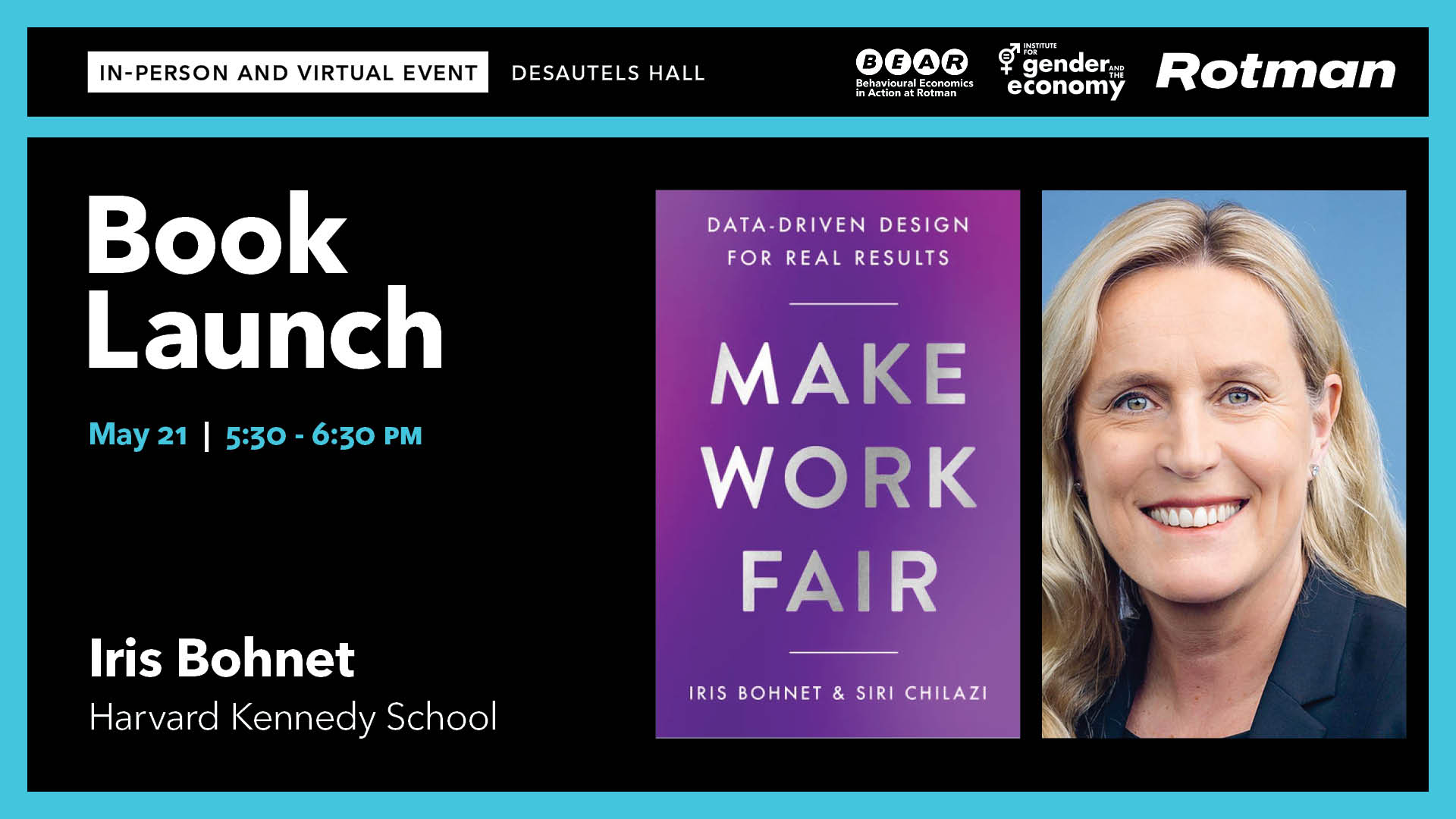
  • Iris Bohnet on ‘Make Work Fair: Data-Driven Design for Real Results’

    Iris Bohnet on ‘Make Work Fair: Data-Driven Design for Real Results’


    Event Information

    Date: May 21 2025, 5:30 PM – 6:30 PM EDT

    Format: Hybrid

    In-person location: Desautels Hall, Rotman School of Management, 105 St. George, Toronto

    REGISTRATION LINK

    Synopsis:

    To make organizations more fair, many well-meaning individuals and companies invest their time and resources in diversity, equity, and inclusion (DEI) initiatives. But because inequity is built into the structures, processes, and environments of our workplaces, adding these programs has been ineffective and often becomes a burden passed off to the individuals they are meant to help.

    In Make Work Fair, behavioral scientist and author of What Works Iris Bohnet and gender expert Siri Chilazi offer data-backed, actionable solutions that build fairness into the very fabric of the workplace. Their methods—tested at many organizations, and grounded in data proven to work in the real world—help us make fairer, and simply better, decisions. Using their three-part framework, employees at all levels can embed fairness into their everyday practices.

    Speaker:

    Iris Bohnet, Albert Pratt Professor of Business and Government: Co-director, Women and Public Policy Program, Harvard Kennedy School

    Rhia Catapano, Assistant Professor, Marketing, Rotman School of Management

    About our Speaker:

    Iris Bohnet is the Albert Pratt Professor of Business and Government and the co-director of the Women and Public Policy Program at Harvard Kennedy School. She is a behavioral economist, combining insights from economics and psychology to improve decision-making in organizations and society, often with a gender or cross-cultural perspective. Her most recent research examines behavioral design to embed equity at work. She is the author of the award-winning book What Works: Gender Equality by Design and co-author of the new book Make Work Fair.Bohnet advises governments and companies around the world, including serving as Special Advisor on the Gender Equality Acceleration Plan to the UN Secretary-General/Deputy Secretary-General and as a member of the Gender Equality Advisory Council of the G7. She was named one of the Most Influential Academics in Government and one of the most Influential People in Gender Policy by apolitical. Professor Bohnet served as academic dean of Harvard Kennedy School for six years and as the faculty chair of the executive program “Global Leadership and Public Policy for the 21st Century” for the World Economic Forum’s Young Global Leaders for more than ten years. She presently serves as the faculty director of the social sciences at Harvard Radcliffe Institute and on a number of boards and advisory boards.

    Rhia Catapano is an Assistant Professor of Marketing at Rotman at the University of Toronto. Her research explores how consumer psychology can be leveraged to benefit society. In one stream, she examines how people can be shifted away from entrenched views, and factors that affect receptiveness to the opposition. In another research stream, she explores the role of meaning in consumer satisfaction and decision-making. Her research has been published in leading journals including Journal of Personality and Social Psychology, Psychological Science, and Journal of Consumer Psychology.

    Event Logistics:

    Rotman Events is committed to accessibility for all people. If you have any access needs or if there are any ways we can support your full participation in this session, please email Rotman Events at events@rotman.utoronto.ca no later than 2 weeks in advance of the event and we will be glad to work with you to make the appropriate arrangements.

    Cancellation & Refund Policy

    • Refunds will only be issued for cancellations received in writing NO LATER than 24 hours prior to the event. Please email events@rotman.utoronto.ca for processing.

    For more details about event logistics, please visit Rotman Events website.