2025 is testing the limits of our systems and strategies. Economic uncertainty, political shifts, and global disruption are challenging old assumptions and forcing a hard reset on how we think about growth.
It’s a critical time to reimagine what’s possible. The strategies we build today must be bold, forward-looking, and inclusive.
Join us in a panel discussion that looks beyond the headlines to ask: What should economic development look like now?How can we prioritize reconciliation, resilience, and shared prosperity in our response so that no one is left behind?
Speaker:
Marwa Abdou
Marwa is the Senior Research Director at the Canadian Chamber of Commerce. Prior to her role at the Chamber, Marwa served as the Advisor to the Minister of International Cooperation of Egypt for Private Sector Engagement where she managed a portfolio of projects totaling USD 3.2 Billion. She also worked directly with and within some of the world’s most renowned multilateral organizations, private sector organizations, and country governments including the World Bank Group, Commonwealth Secretariat, APEC, OECD, Ernst and Young, Nathan Associates and the Asian Development Bank. In addition to leading dozens of capacity and technical assistance projects, consulting on regulatory, legal and policy reforms with these institutions, she has also co-authored a number of publications and working papers.
Eliza Casinather, Founder and CEO, Casi Consulting
Eliza is an internationally recognized and award-winning leader known for her experience in strategic consulting, digital innovation, and human capital management across the financial services and technology sectors. Her career has spanned major organizations such as the Toronto Stock Exchange and CIBC, where she has consistently driven business growth through inclusive talent strategies and innovative client experiences. A passionate advocate for diversity, inclusion and equity, Eliza serves on the Board of Directors for CARE Canada and advises the Canadian Paralympic Games Committee as well as Women in Aerospace Canada. Her commitment to inclusion extends globally, empowering young women in Sub-Saharan Africa and supporting minority entrepreneurs in Australia.
Rob Gillezeau
Rob is an Assistant Professor of Economic Analysis and Policy at the Rotman School of Management at the University of Toronto and an affiliated scholar at the Stone Center on Socio-economic Inequality. His research is primarily focused on economies of Indigenous peoples and state discrimination. Prior to his academic appointment, Rob served as the Chief Economist in the Office of the Leader of the Official Opposition from 2011 until 2015 in Ottawa, Ontario and as the chief of staff to the Minister of Finance and Deputy Premier of British Columbia in Victoria, British Columbia from 2017 to 2019.
Debbie Owusu-Akyeeah
Debbie is the Co-Director of Policy and Advocacy at Action Canada for Sexual Health and Rights. Before joining Action Canada, she was the Executive Director of the Canadian Centre for Gender & Sexual Diversity (CCGSD) and has been instrumental in advancing the rights of 2SLGBTQIA+ youth and communities. Debbie is an accomplished community educator, feminist activist, and social justice advocate driven by the mission of creating a more inclusive, equitable, and safe world. She has spoken at Parliamentary and Senate standing committees, appeared in numerous media outlets, and held several advocacy and policy-oriented positions in government and non-profit organizations, including Oxfam Canada and Global Affairs Canada.
Naoufel Testaouni, Co-founder & CEO, QueerTech
Naoufel is the co-founder and CEO of QueerTech. QueerTech is on a mission to queer the Canadian tech ecosystem. Operating since 2016, QueerTech is a national non-profit organization dedicated to promoting workforce and economic development across Canada by fostering entrepreneurship and providing opportunities for the 2SLGBTQ+ community to access employment, professional development and meaningful connections in the technology industry. The organization is also a national leader in workplace inclusion advocacy and progressive 2SLGBTQ+ equity, diversity and inclusion policy facilitation.
GATE Director Sarah Kaplan hosted a discussion with Dr. Shalene Wuttunee Jobin, Associate Professor in the Faculty of Native Studies, Director of the Indigenous Governance program, and a Canada Research Chair in Indigenous Governance at the University of Alberta. She is the author of Upholding Indigenous Economic Relationships: Nehiyawak Narratives (UBC Press, 2023). Together they had a thought-provoking conversation about the way Indigenous peoples move with and between economic structures imposed by the settler state with a particular focus on prairie Indigenous life and philosophy.
Shalene bases her work in the knowledge systems of the nehiyawak ᓀᐦᐃᔭᐊᐧᐠ (Cree people) – whose distinctive principles and practices shape their economic behaviour. She emphasized that economic exploitation was the initial and most enduring relationship between early settlers and Indigenous peoples: capitalism and colonialism are intimately intertwined. In her book, she writes, “Those Indigenous practices that fall principally outside capitalism, such as ceremonial practices deemed to fit only within the spiritual realm, are seen as noneconomic. But governance and economic relationships are embedded in ceremonies of renewal. Settler colonialism makes silos of these different practices; by removing the blinders to recognize Cree economic relationships in everyday actions and in sublime practices, we witness acts of resurgence as strong antidotes to colonial dissonance.”
She also highlighted that Indigenous economic relationships are constitutive: connections to the land, water, and other human and nonhuman beings form who we are as individuals and as peoples.
“There’s this link between the exploitation of mother earth [..] and the impacts of missing and murdered Indigenous women, girls and Two Spirit peoples. Especially in places where I live, where resource extraction is so prevalent, it creates these imbalances of relationships. It also creates structures where exploitation happens. Often times Indigenous women are negatively impacted with places where there are man camps and different things where resource extraction happens.”
– Shalene Wuttunee Jobin
Drawing upon Cree narratives and contemporary nehiyawak examples, Shalene provided valuable tools and advice for organizing to engage in community and economic development, planning, and governance.
Watch Shalene Jobin discuss the impact of resource extraction on Indigenous communities.
[fusion_builder_container hundred_percent=”no” equal_height_columns=”no” menu_anchor=”” hide_on_mobile=”small-visibility,medium-visibility,large-visibility” class=”” id=”” background_color=”” background_image=”” background_position=”center center” background_repeat=”no-repeat” fade=”no” background_parallax=”none” parallax_speed=”0.3″ video_mp4=”” video_webm=”” video_ogv=”” video_url=”” video_aspect_ratio=”16:9″ video_loop=”yes” video_mute=”yes” overlay_color=”” video_preview_image=”” border_color=”” border_style=”solid” padding_top=”” padding_bottom=”” padding_left=”” padding_right=”” type=”legacy”][fusion_builder_row][fusion_builder_column type=”1_1″ layout=”1_1″ background_position=”left top” background_color=”” border_color=”” border_style=”solid” border_position=”all” spacing=”yes” background_image=”” background_repeat=”no-repeat” padding_top=”” padding_right=”” padding_bottom=”” padding_left=”” margin_top=”0px” margin_bottom=”0px” class=”” id=”” animation_type=”” animation_speed=”0.3″ animation_direction=”left” hide_on_mobile=”small-visibility,medium-visibility,large-visibility” center_content=”no” last=”true” min_height=”” hover_type=”none” link=”” first=”true” border_sizes_top=”” border_sizes_bottom=”” border_sizes_left=”” border_sizes_right=””][fusion_text columns=”” column_min_width=”” column_spacing=”” rule_style=”” rule_size=”” rule_color=”” hue=”” saturation=”” lightness=”” alpha=”” content_alignment_medium=”” content_alignment_small=”” content_alignment=”” hide_on_mobile=”small-visibility,medium-visibility,large-visibility” sticky_display=”normal,sticky” class=”” id=”” margin_top=”” margin_right=”” margin_bottom=”” margin_left=”” fusion_font_family_text_font=”” fusion_font_variant_text_font=”” font_size=”” line_height=”” letter_spacing=”” text_transform=”” text_color=”” animation_type=”” animation_direction=”left” animation_color=”” animation_speed=”0.3″ animation_delay=”0″ animation_offset=”” logics=””]Today’s ways of working are not working―even for professionals in “good” jobs. Responding to global competition and pressure from financial markets, companies are asking employees to do more with less and new technologies are normalizing a 24/7 work day.
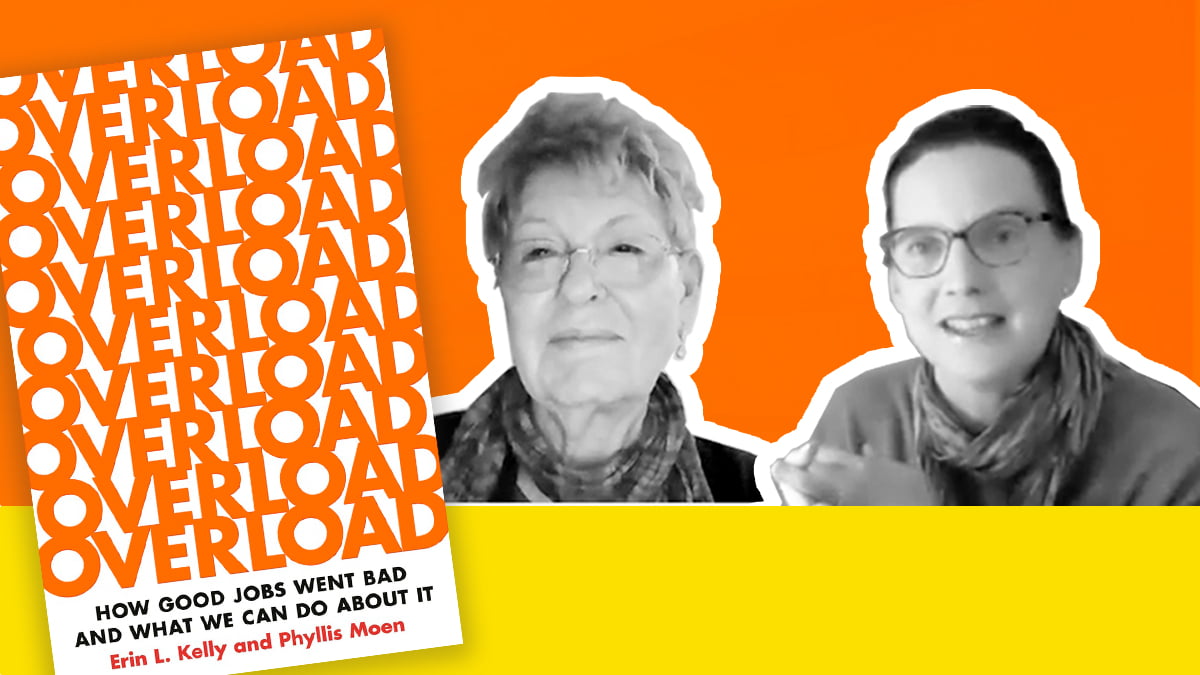
In Overload, Erin Kelly and Phyllis Moen document how the intensification of work creates chronic stress and leads to burnout. “Flexible” work policies and corporate lip service about “work-life balance” don’t come close to fixing the problem. But this unhealthy and unsustainable situation can be changed.
Kelly and Moen joined Sarah Kaplan to discuss their new book, Overload: How Good Jobs Went Bad and What We Can Do About It, based on five years of research, which involved surveying over a thousand employees and managers at a Fortune 500 firm. This experiment helped design and implement a “work redesign treatment”, allowing the company to adopt creative and practical approaches that gave workers more control over how and where they worked and encouraged managers to evaluate performance in new ways. Kelly went on to explain the success of their findings. “The employees in the treatment group reported less psychological distress and burnout. The company benefited because those employees were more satisfied with their jobs and fewer were planning to quit. We found a 40% smaller exit rate in the treatment group compared to the controlled group. Work-life-conflict also improved for moms and dads.”
Why are we experiencing an increased level of stress and burnout at work?
Employees are being asked to tackle too much at work and feel rushed and overwhelmed. In an effort to trim labour costs, organizations are cutting staff, shifting work offshore and automating processes. This results in less workers collaborating on projects and the workers who remain having to do more with less. Additionally, technology offers opportunities for managers, clients and peers to reach employees at any hour of the day or night, creating a workday that has no end.
Why is framing burnout around work-life-balance problematic?
Conversations about work-life-balance implicitly put the onus on the individual to figure out how to have their personal needs met. However, the issue is an organizational one, according to Kelly and Moen. Work-family-conflict is not the root issue, it is the intensification of work. Organizations need to revisit outdated conversations around flexibility, especially when considering “accommodations” to working mothers and parents.
How can we avoid overload?
New work strategies can decrease burnout, increase worker satisfaction, and help you keep your best people. Kelly and Moen offered insight towards actions that organizations can take to reduce workplace related stress and burnout:
Manage the work, not the worker. Turn the focus to the results, not when, where and how it is done. By offering more control to employees to dictate their working conditions, managers can benefit as well, since they don’t have to micromanage and can focus on completing their own work.
Get rid of low value work, such as meetings with no agendas, the report that are done which no one reads, etc. This will help free up time to make people more efficient.
Honour, respect and take account of workers’ private lives. This has been enhanced by COVID-19. We now have a glimpse of people’s home life through our video interactions and encounter children, spouses and dependants . We can no longer deny that workers need time to support these home environments.
Have honest conversations about capacity and create a team culture where this is the norm.
Watch Kelly and Moen discuss why elevated stress is becoming a trend in the workplace and what we can do about it.
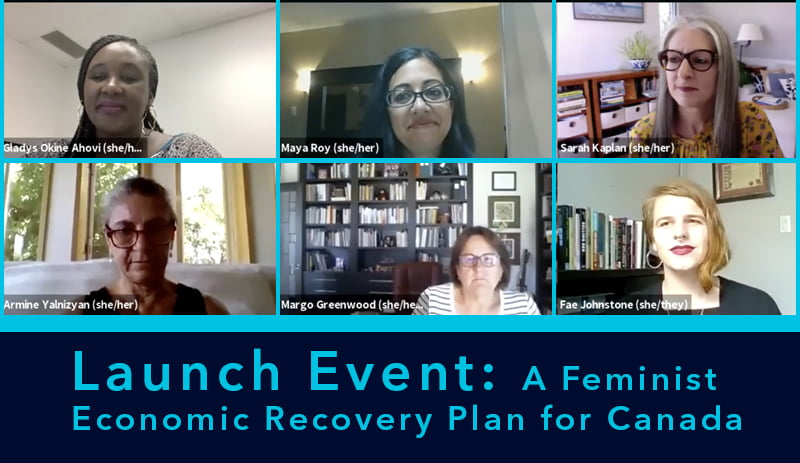
The underlying principle of the report is that we won’t get recovery unless we focus on equity. In our launch event for the plan, Sarah Kaplan (she/her), Distinguished Professor and Director, Institute for Gender and the Economy at the University of Toronto Rotman School of Management, introduced the 8 pillars for recovery outlined in the report, which include supporting the care economy, investing in social infrastructure and supporting women-owned businesses.
Maya Roy, CEO of YWCA Canada, moderated the event featuring a lineup of experts. Roy asked panelists, Margo Greenwood, Academic Leader, National Collaborating Centre for Aboriginal Health and Adjunct Professor, University of Northern British Columbia, Fae Johnstone; Principal Consultant at Wisdom2Action; Gladys Okine Ahovi, Executive Lead, Canadian Council for Youth Prosperity; and Armine Yalnizyan, Economist and Atkinson Fellow on the Future of Workers, what policy interventions should be prioritized in the COVID response in order to build back better.
Panelists emphasized creating policies that acknowledge and respond to systemic discrimination, uplift marginalized groups and address deeply rooted inequalities that existed in our country prior to COVID-19. They spoke passionately about the need for more inclusive growth and how this can only be done through a collective approach.
IN THE FOLLOWING VIDEO, PANELISTS DISCUSS THE FRAMEWORKS REQUIRED TO MOVE FORWARD:
In Canada, the COVID-19 pandemic has had significant impacts on women, Two-Spirit and gender diverse people, particularly those who are low-income, people with disabilities, are members of the LGBTQ+ communities, belong to Indigenous, Black, or racialized communities or are newcomers, refugees, immigrants and migrants. More than half of COVID-19 cases and deaths in Canada have been experienced by women, yet at the same time women have faced disproportionate job loss, an increase in domestic violence due to lockdowns, and an intensification in unpaid work.
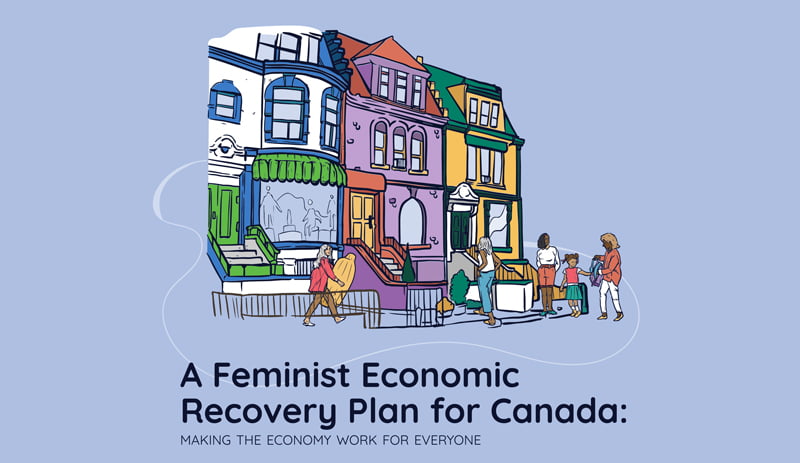
YWCA Canada and The Institute for Gender and the Economy at the University of Toronto’s Rotman School of Management have partnered to create a Feminist Economic Recovery Plan for Canada, which proposes a new path forward for Canada’s economy – one that focuses on changing the structures and barriers that have made some groups more vulnerable to the pandemic and its fallout than others. The report highlights 8 pillars for recovery with a focus on supporting the care economy, investing in social infrastructure and supporting women-owned businesses.
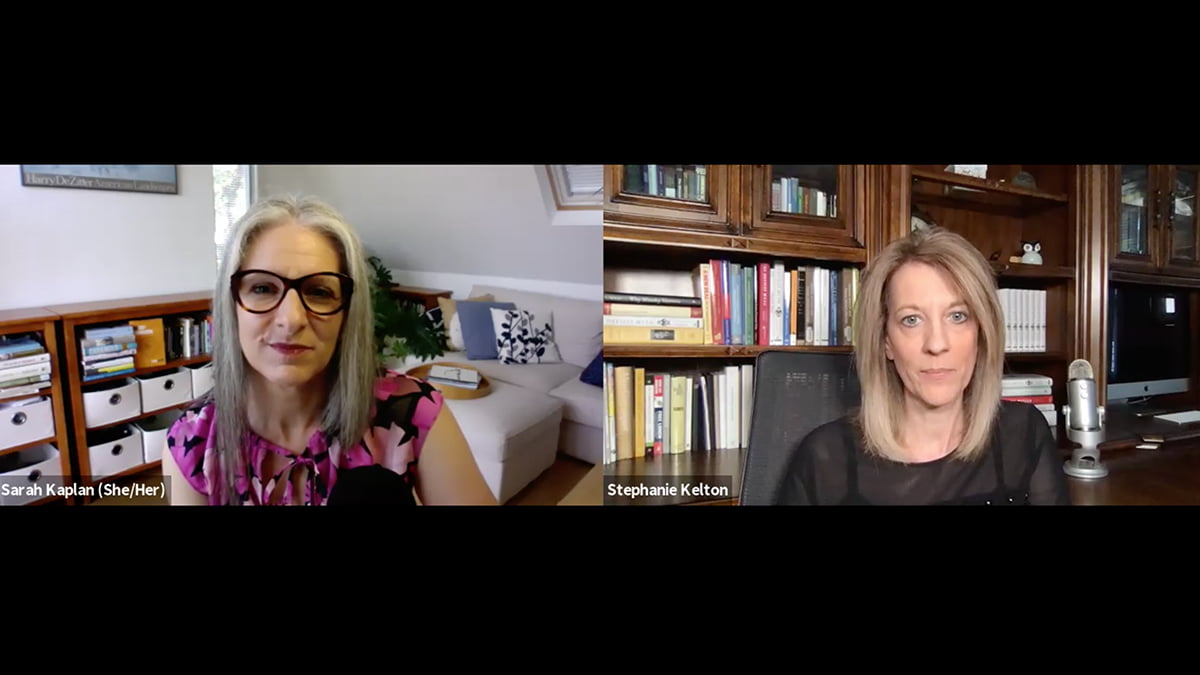
[fusion_builder_container hundred_percent=”no” equal_height_columns=”no” menu_anchor=”” hide_on_mobile=”small-visibility,medium-visibility,large-visibility” class=”” id=”” background_color=”” background_image=”” background_position=”center center” background_repeat=”no-repeat” fade=”no” background_parallax=”none” parallax_speed=”0.3″ video_mp4=”” video_webm=”” video_ogv=”” video_url=”” video_aspect_ratio=”16:9″ video_loop=”yes” video_mute=”yes” overlay_color=”” video_preview_image=”” border_color=”” border_style=”solid” padding_top=”” padding_bottom=”” padding_left=”” padding_right=”” type=”legacy”][fusion_builder_row][fusion_builder_column type=”1_1″ layout=”1_1″ background_position=”left top” background_color=”” border_color=”” border_style=”solid” border_position=”all” spacing=”yes” background_image=”” background_repeat=”no-repeat” padding_top=”” padding_right=”” padding_bottom=”” padding_left=”” margin_top=”0px” margin_bottom=”0px” class=”” id=”” animation_type=”” animation_speed=”0.3″ animation_direction=”left” hide_on_mobile=”small-visibility,medium-visibility,large-visibility” center_content=”no” last=”true” min_height=”” hover_type=”none” link=”” first=”true” border_sizes_top=”” border_sizes_bottom=”” border_sizes_left=”” border_sizes_right=””][fusion_text columns=”” column_min_width=”” column_spacing=”” rule_style=”” rule_size=”” rule_color=”” hue=”” saturation=”” lightness=”” alpha=”” content_alignment_medium=”” content_alignment_small=”” content_alignment=”” hide_on_mobile=”small-visibility,medium-visibility,large-visibility” sticky_display=”normal,sticky” class=”” id=”” margin_top=”” margin_right=”” margin_bottom=”” margin_left=”” fusion_font_family_text_font=”” fusion_font_variant_text_font=”” font_size=”” line_height=”” letter_spacing=”” text_transform=”” text_color=”” animation_type=”” animation_direction=”left” animation_color=”” animation_speed=”0.3″ animation_delay=”0″ animation_offset=”” logics=””]Stephanie Kelton, Professor of Economics and Public Policy at the State University of New York at Stony Brook and Bloomberg Contributing Columnist, argues that we have been thinking about government spending in the wrong ways, on both sides of the political aisle. Everything that both liberal/progressives and conservatives believe about deficits and the role of money and government spending in the economy is wrong, especially the fear that deficits will endanger long-term prosperity. Kelton joined Sarah Kaplan on a GATE hosted livestream event to discuss which deficits actually matter.
In Kelton’s book, “The Deficit Myth: Modern Monetary Theory and the Birth of the People’s Economy,” she asks what is the best way to balance the risk of inflation against the benefits of a society that is more broadly prosperous, safer, cleaner, and secure? According to Kelton, deficits can help us fight a myriad of problems from inequality, climate change and other things, but this can’t be done until we properly grasp what a deficit actually is.
We can’t use deficits to solve problems if we continue to think of deficits as the problem.
WHAT IS THE MAIN MYTH YOU ARE REFUTING?
A common misconception, according to Kelton, is that the federal government should run like a household, managing the budget like you would at home. Kelton argues that not only is the government not like a household, but when it tries to handle its finances as such, it can be quite destructive. In Canada, because the Federal government is the sole issuer of the currency, it can never run out of cash or be forced into bankruptcy. The limit is how many dollars the Canadian or US economy can safely handle before inflation becomes a problem.
IT IS INCREASINGLY RECOGNIZED THAT RECOVERY FROM THE COVID PANDEMIC IS GOING TO REQUIRE GREATER INVESTMENT IN CHILDCARE. THE ECONOMIC DOWNTURN COUPLED WITH CHILDREN BEING OUT OF SCHOOL IS SIPHONING WOMEN OUT OF THE WORKPLACE. THE CANADIAN GOVERNMENT HAS MADE SUBSTANTIAL INVESTMENTS BUT THEY ARE NOT NEARLY SIGNIFICANT ENOUGH TO PROVIDE ALL OF THE CHILDCARE REQUIRED. HOW IS THE DEFICIT MYTH BEING USED IN THESE KINDS OF CASES?
Governments may hide behind the deficit myth because it is politically useful. That is, this myth gives them political cover not to spend money on particular priorities, and these are often social priorities such as expansions of childcare support. Deficits represent a matter of priorities in society.
The punishment for overspending is inflation and that is the relevant limit.
WATCH STEPHANIE KELTON DISCUSS WHAT THE DEFICIT ACTUALLY IS:
[fusion_builder_container hundred_percent=”no” equal_height_columns=”no” menu_anchor=”” hide_on_mobile=”small-visibility,medium-visibility,large-visibility” class=”” id=”” background_color=”” background_image=”” background_position=”center center” background_repeat=”no-repeat” fade=”no” background_parallax=”none” parallax_speed=”0.3″ video_mp4=”” video_webm=”” video_ogv=”” video_url=”” video_aspect_ratio=”16:9″ video_loop=”yes” video_mute=”yes” overlay_color=”” video_preview_image=”” border_color=”” border_style=”solid” padding_top=”” padding_bottom=”” padding_left=”” padding_right=”” type=”legacy”][fusion_builder_row][fusion_builder_column type=”1_1″ layout=”1_1″ background_position=”left top” background_color=”” border_color=”” border_style=”solid” border_position=”all” spacing=”yes” background_image=”” background_repeat=”no-repeat” padding_top=”” padding_right=”” padding_bottom=”” padding_left=”” margin_top=”0px” margin_bottom=”0px” class=”” id=”” animation_type=”” animation_speed=”0.3″ animation_direction=”left” hide_on_mobile=”small-visibility,medium-visibility,large-visibility” center_content=”no” last=”true” min_height=”” hover_type=”none” link=”” first=”true” border_sizes_top=”” border_sizes_bottom=”” border_sizes_left=”” border_sizes_right=””][fusion_text columns=”” column_min_width=”” column_spacing=”” rule_style=”” rule_size=”” rule_color=”” hue=”” saturation=”” lightness=”” alpha=”” content_alignment_medium=”” content_alignment_small=”” content_alignment=”” hide_on_mobile=”small-visibility,medium-visibility,large-visibility” sticky_display=”normal,sticky” class=”” id=”” margin_top=”” margin_right=”” margin_bottom=”” margin_left=”” fusion_font_family_text_font=”” fusion_font_variant_text_font=”” font_size=”” line_height=”” letter_spacing=”” text_transform=”” text_color=”” animation_type=”” animation_direction=”left” animation_color=”” animation_speed=”0.3″ animation_delay=”0″ animation_offset=”” logics=””]Professors Sarah Kaplan and Soo Min Toh joined Rotman’s Interim Dean Kenneth Corts to discuss why organizations need to rethink work, strategy and governance after COVID-19. The pandemic has highlighted inequalities in the current workforce and according to Sarah Kaplan, right now, we have the opportunity to build back better.
We have to pay attention to these inequalities that have always been there, but for many people in positions of leadership or privilege we haven’t always seen them or paid attention to them or invested in them.
Kaplan drew from her recent piece for Fast Company, to highlight the required elements to building back better, including re-evaluating minimum wage and shifting the conversation of what it means to be an essential worker.
While recovery will require an innovative approach, Toh states that now is the time to double down on equity and inclusion.
It’s a good time to think about how we manage, strategize and do business. It’s time to take stock of what has gone well and the opportunities that were not there before.
WATCH SARAH AND SOO MIN DISCUSS WHAT WE NEED TO DO MOVING FORWARD:
Although women in Canada are participating in the labour market more than ever before, studies have found that they are less likely to save and invest than men are. This gap contributes to financial disadvantage across the course of women’s lives. For example, one study from 2017 discovered that 24% of Canadian women do not invest their money at all, compared to 15% of men.
The difference between men’s and women’s savings and investment is especially impactful for women’s retirement: women in Canada live about four years longer than men on average, and may face financial insecurity in old age. The gender investing gap can also affect women’s abilities to grow their assets, save for significant purchases, and amass wealth. The investing gap has different causes: it can be linked to gender roles and norms that financially advantage men, as well as the pervasive gender wage gap. Short-term actions, like changing designs of financial products and services to be more inclusive, may have a positive effect, but need to be implemented in combination with policy and other structural changes that mitigate women’s economic marginalization.
CARMINA RAVANERA OF THE INSTITUTE FOR GENDER AND THE ECONOMY AT THE ROTMAN SCHOOL OF MANAGEMENT, UNIVERSITY OF TORONTO, UNDER THE SUPERVISION OF PROFESSOR SARAH KAPLAN.