Tag: Immigration

  • The unequal burden of care: How does parental leave affect immigrant care workers in Canada?

    The unequal burden of care: How does parental leave affect immigrant care workers in Canada?

    [fusion_builder_container hundred_percent=”no” equal_height_columns=”no” hide_on_mobile=”small-visibility,medium-visibility,large-visibility” background_position=”center center” background_repeat=”no-repeat” fade=”no” background_parallax=”none” enable_mobile=”no” parallax_speed=”0.3″ video_aspect_ratio=”16:9″ video_loop=”yes” video_mute=”yes” border_style=”solid” margin_top=”20″ type=”legacy”][fusion_builder_row][fusion_builder_column type=”3_4″ layout=”3_4″ center_content=”no” hover_type=”none” hide_on_mobile=”small-visibility,medium-visibility,large-visibility” background_position=”left top” background_repeat=”no-repeat” border_style=”solid” border_position=”all” animation_direction=”left” animation_speed=”0.3″ last=”false” first=”true” border_sizes_top=”0″ border_sizes_bottom=”0″ border_sizes_left=”0″ border_sizes_right=”0″ background_blend_mode=”overlay” min_height=”” link=””][fusion_text hide_on_mobile=”small-visibility,medium-visibility,large-visibility” sticky_display=”normal,sticky” text_transform=”none” animation_direction=”left” animation_speed=”0.3″ animation_delay=”0″]

    Research has documented the consequences that mothers might face in the labour market, including career interruptions, barriers to advancement, and a “motherhood penalty” in terms of wages. Mothers and families might wish to hire support in their households to help with care responsibilities, and Canada has consistently relied in immigrant labour to assist with care shortages. But what happens to immigrant caregivers when they are faced with their own care needs?

    Naomi Lightman, associate professor at Toronto Metropolitan University, studied how immigrants care workers fare when having a child interrupts their careers. She found that on average, immigrant women’s income is lower when they encounter a birth-related interruption, as compared to their men counterparts who see an increase in income.

    The author used Statistics Canada’s Longitudinal Immigration Database (IMDB) and the General Social Survey (GSS) to find out who is likely to experience a career interruption and how employment income changes before and after this interruption, with specific attention on the effects of gender and immigration pathways. The author looked at individuals who accessed employment insurance (EI) in a given year and had a child younger than one year, and  primarily examined immigrant care workers who entered through Canada’s Live-in Caregiver Program/Caregiver Program (LCP/CP).

    Lightman found that not only did a higher proportion of immigrant women experience birth-related career interruption each year than immigrant men, but also that immigrant women experienced lengthier career interruptions than men. This career interruption affected immigrant women’s incomes negatively the year after having a child: they experienced on average lower income than before, while immigrant men’s average income actually increased. This points to a gendered divide when it comes to the effect of birth-related career interruptions on incomes and careers. The lengthier birth-related career interruption for women aligns with existing findings that point to a lack of childcare support or deskilling that occurs from the career interruption as contributing to difficulties in re-entering the labour market.

    “This career interruption affected immigrant women’s incomes negatively the year after having a child: they experienced on average lower income than before, while immigrant men’s average income actually increased”

    There are also differences based on different immigration categories. The author compared the LCP/CP–a temporary worker program—with immigrants who entered through economic class and family class immigration pathways, ­forms of permanent immigrant categories in Canada. The analyses suggest that immigrant care workers (through the LCP/CP) are more likely to have a birth-related career interruption as compared to those who entered through economic or family class. However, regardless of immigration categories, immigrant women are still more likely to have a lower income after a career interruption compared to immigrant men. The findings suggest that different immigration classes might be tied to access to income after a birth-related career interruption, based on the types of jobs that immigrant women who enter through LCP/CP tend to take part in (i.e., low-wage jobs in care).

    Lightman notes that this project stems from her own curiosity and experiences of taking parental leave: “I was having to think about taking parental leave and I started to wonder about how immigrant caregivers were handling and experiencing the effects of taking leave and balancing their work and family obligations.”

    This research has implications for policies on the labour market integration of immigrants, which currently create a barrier to upward mobility and higher wages. This barrier is especially relevant for the LCP/CP program, which has targeted a highly feminized workforce that has traditionally been characterized by low-income and citizenship precarity, such as the condition for workers to fulfill live-in requirements before they can apply for permanent residency status.

    “…the LCP/CP program…has targeted a highly feminized workforce that has traditionally been characterized by low-income and citizenship precarity”

    Lightman stresses the importance of changing policy to support highly skilled and qualified immigrants who are often not able to practice in their field due to lack of credential recognition. One of the biggest barriers to labour market integration for new immigrants is that their credentials from their home countries are not recognized in Canada. This has resulted in skill-job mismatch and underemployment for immigrants. In addition, more financial and governmental support for unpaid caregiving is needed to better support new parents. It is important to have proactive policies to ensure that those who take care of others in Canada can also take care of themselves and their families.

    ______
    Research brief prepared by:

    Laura Lam

    [/fusion_text][fusion_separator style_type=”none” hide_on_mobile=”small-visibility,medium-visibility,large-visibility” top_margin=”20″ bottom_margin=”20″ alignment=”center” /][fusion_button link=”https://www.gendereconomy.org/research-briefs/” target=”_blank” hide_on_mobile=”small-visibility,medium-visibility,large-visibility” color=”custom” button_gradient_top_color=”#62bd19″ button_gradient_bottom_color=”#62bd19″ button_gradient_top_color_hover=”#00c2e2″ button_gradient_bottom_color_hover=”#00c2e2″ stretch=”yes” icon_position=”left” icon_divider=”no” animation_direction=”left” animation_speed=”0.3″]See more research briefs[/fusion_button][fusion_separator style_type=”none” hide_on_mobile=”small-visibility,medium-visibility,large-visibility” top_margin=”20″ bottom_margin=”20″ alignment=”center” /][fusion_recent_posts layout=”default” hover_type=”none” columns=”3″ number_posts=”3″ offset=”0″ pull_by=”category” cat_slug=”research-briefs” thumbnail=”yes” title=”yes” meta=”no” meta_author=”no” meta_categories=”no” meta_date=”yes” meta_comments=”yes” meta_tags=”no” excerpt=”no” excerpt_length=”35″ strip_html=”yes” scrolling=”no” hide_on_mobile=”small-visibility,medium-visibility,large-visibility” animation_direction=”left” animation_speed=”0.3″ /][/fusion_builder_column][fusion_builder_column type=”1_4″ layout=”1_4″ center_content=”no” hover_type=”none” hide_on_mobile=”small-visibility,medium-visibility,large-visibility” background_position=”left top” background_repeat=”no-repeat” border_style=”solid” border_position=”all” animation_direction=”left” animation_speed=”0.3″ last=”true” first=”false” border_sizes_top=”0″ border_sizes_bottom=”0″ border_sizes_left=”0″ border_sizes_right=”0″ background_blend_mode=”overlay” min_height=”” link=””][fusion_title title_type=”text” rotation_effect=”bounceIn” display_time=”1200″ highlight_effect=”circle” loop_animation=”off” highlight_width=”9″ highlight_top_margin=”0″ title_link=”off” link_target=”_self” hide_on_mobile=”small-visibility,medium-visibility,large-visibility” sticky_display=”normal,sticky” class=”briefsummary” content_align=”left” size=”3″ text_shadow=”no” text_shadow_blur=”0″ text_stroke=”no” text_stroke_size=”1″ text_overflow=”none” gradient_font=”no” gradient_start_position=”0″ gradient_end_position=”100″ gradient_type=”linear” radial_direction=”center center” linear_angle=”180″ style_type=”none” animation_direction=”left” animation_speed=”0.3″ animation_delay=”0″]

    Title

    The High Costs of Caring: Measuring the Prevalence and Consequences of Birth-Related Career Interruptions for Immigrant Care Workers in Canada

    Author

    Naomi Lightman

    Source

    Canadian Public Policy

    Published

    2024

    Link

    https://www.utpjournals.press/doi/full/10.3138/cpp.2023-005

    Research brief prepared by

    Laura Lam

    [/fusion_title][fusion_widget_area name=”avada-custom-sidebar-researchbriefsidebar” hide_on_mobile=”small-visibility,medium-visibility,large-visibility” /][/fusion_builder_column][/fusion_builder_row][/fusion_builder_container]

  • A Feminist Economic Recovery Plan for Canada

    A Feminist Economic Recovery Plan for Canada

    [fusion_builder_container admin_label=”” hundred_percent=”no” equal_height_columns=”no” menu_anchor=”” hide_on_mobile=”small-visibility,medium-visibility,large-visibility” class=”” id=”” background_color=”” background_image=”” background_position=”center center” background_repeat=”no-repeat” fade=”no” background_parallax=”none” enable_mobile=”no” parallax_speed=”0.3″ video_mp4=”” video_webm=”” video_ogv=”” video_url=”” video_aspect_ratio=”16:9″ video_loop=”yes” video_mute=”yes” video_preview_image=”” border_color=”” border_style=”solid” margin_top=”20″ margin_bottom=”” padding_top=”” padding_right=”” padding_bottom=”” padding_left=”” type=”legacy”][fusion_builder_row][fusion_builder_column type=”3_4″ layout=”3_4″ spacing=”” center_content=”no” hover_type=”none” link=”” min_height=”” hide_on_mobile=”small-visibility,medium-visibility,large-visibility” class=”” id=”” background_color=”” background_image=”” background_position=”left top” background_repeat=”no-repeat” border_color=”” border_style=”solid” border_position=”all” padding_top=”” padding_right=”” padding_bottom=”” padding_left=”” margin_top=”” margin_bottom=”” animation_type=”” animation_direction=”left” animation_speed=”0.3″ animation_offset=”” last=”false” first=”true” border_sizes_top=”0″ border_sizes_bottom=”0″ border_sizes_left=”0″ border_sizes_right=”0″ spacing_right=””][fusion_text columns=”” column_min_width=”” column_spacing=”” rule_style=”” rule_size=”” rule_color=”” hue=”” saturation=”” lightness=”” alpha=”” content_alignment_medium=”” content_alignment_small=”” content_alignment=”” hide_on_mobile=”small-visibility,medium-visibility,large-visibility” sticky_display=”normal,sticky” class=”” id=”” margin_top=”” margin_right=”” margin_bottom=”” margin_left=”” fusion_font_family_text_font=”” fusion_font_variant_text_font=”” font_size=”” line_height=”” letter_spacing=”” text_transform=”” text_color=”” animation_type=”” animation_direction=”left” animation_speed=”0.3″ animation_offset=””]
    In Canada, the COVID-19 pandemic has had significant impacts on women, Two-Spirit and gender diverse people, particularly those who are low-income, people with disabilities, are members of the LGBTQ+ communities, belong to Indigenous, Black, or racialized communities or are newcomers, refugees, immigrants and migrants. More than half of COVID-19 cases and deaths in Canada have been experienced by women, yet at the same time women have faced disproportionate job loss, an increase in domestic violence due to lockdowns, and an intensification in unpaid work.

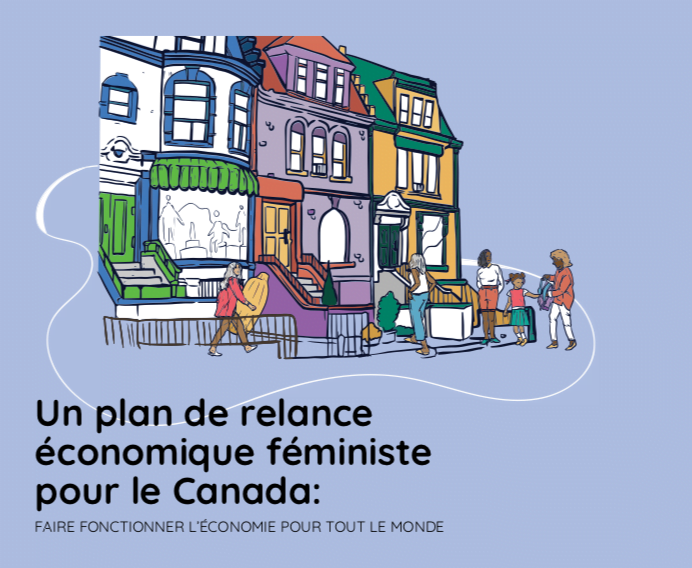
    YWCA Canada and The Institute for Gender and the Economy at the University of Toronto’s Rotman School of Management have partnered to create a Feminist Economic Recovery Plan for Canada, which proposes a new path forward for Canada’s economy – one that focuses on changing the structures and barriers that have made some groups more vulnerable to the pandemic and its fallout than others. The report highlights 8 pillars for recovery with a focus on supporting the care economy, investing in social infrastructure and supporting women-owned businesses.

    DOWNLOAD THIS REPORT IN ENGLISH/ EN FRANÇAIS


    __________________________

    Report written by:

    Carmina Ravanera and Anjum Sultana

    Strategic Leads:

    Sarah Kaplan and Maya Roy

    [/fusion_text][fusion_separator style_type=”none” hide_on_mobile=”small-visibility,medium-visibility,large-visibility” class=”” id=”” sep_color=”” top_margin=”20″ bottom_margin=”20″ border_size=”” icon=”” icon_circle=”” icon_circle_color=”” width=”” alignment=”center” /][fusion_button link=”https://www.gendereconomy.org/category/policy-briefs/” text_transform=”” title=”” target=”_blank” link_attributes=”” alignment=”” modal=”” hide_on_mobile=”small-visibility,medium-visibility,large-visibility” class=”” id=”” color=”custom” button_gradient_top_color=”#62bd19″ button_gradient_bottom_color=”#62bd19″ button_gradient_top_color_hover=”#00c2e2″ button_gradient_bottom_color_hover=”#00c2e2″ accent_color=”” accent_hover_color=”” type=”” bevel_color=”” size=”” stretch=”yes” icon=”” icon_position=”left” icon_divider=”no” animation_type=”” animation_direction=”left” animation_speed=”0.3″ animation_offset=””]See more policy briefs[/fusion_button][fusion_separator style_type=”none” hide_on_mobile=”small-visibility,medium-visibility,large-visibility” class=”” id=”” sep_color=”” top_margin=”20″ bottom_margin=”20″ border_size=”” icon=”” icon_circle=”” icon_circle_color=”” width=”” alignment=”center” /][fusion_recent_posts layout=”default” picture_size=”fixed” hover_type=”none” columns=”3″ number_posts=”3″ offset=”0″ pull_by=”category” cat_slug=”policy-briefs” exclude_cats=”” tag_slug=”” exclude_tags=”” thumbnail=”yes” title=”yes” meta=”no” meta_author=”no” meta_categories=”no” meta_date=”yes” meta_comments=”yes” meta_tags=”no” content_alignment=”” excerpt=”no” excerpt_length=”35″ strip_html=”yes” scrolling=”no” hide_on_mobile=”small-visibility,medium-visibility,large-visibility” class=”” id=”” animation_type=”” animation_direction=”left” animation_speed=”0.3″ animation_offset=”” /][/fusion_builder_column][fusion_builder_column type=”1_4″ layout=”1_4″ spacing=”” center_content=”no” hover_type=”none” link=”” min_height=”” hide_on_mobile=”small-visibility,medium-visibility,large-visibility” class=”” id=”” background_color=”” background_image=”” background_position=”left top” background_repeat=”no-repeat” border_color=”” border_style=”solid” border_position=”all” padding_top=”” padding_right=”” padding_bottom=”” padding_left=”” margin_top=”” margin_bottom=”” animation_type=”” animation_direction=”left” animation_speed=”0.3″ animation_offset=”” last=”true” first=”false” border_sizes_top=”0″ border_sizes_bottom=”0″ border_sizes_left=”0″ border_sizes_right=”0″][fusion_title title_type=”text” rotation_effect=”bounceIn” display_time=”1200″ highlight_effect=”circle” loop_animation=”off” highlight_width=”9″ highlight_top_margin=”0″ before_text=”” rotation_text=”” highlight_text=”” after_text=”” hide_on_mobile=”small-visibility,medium-visibility,large-visibility” sticky_display=”normal,sticky” class=”briefsummary” id=”” content_align_medium=”” content_align_small=”” content_align=”left” size=”3″ font_size=”” animated_font_size=”” fusion_font_family_title_font=”” fusion_font_variant_title_font=”” line_height=”” letter_spacing=”” text_shadow=”no” text_shadow_vertical=”” text_shadow_horizontal=”” text_shadow_blur=”0″ text_shadow_color=”” margin_top_medium=”” margin_bottom_medium=”” margin_top_small=”” margin_bottom_small=”” margin_top=”” margin_bottom=”” margin_top_mobile=”” margin_bottom_mobile=”” text_color=”” animated_text_color=”” highlight_color=”” style_type=”none” sep_color=”” animation_type=”” animation_direction=”left” animation_speed=”0.3″ animation_offset=””]

    Authors
    Report written by:

    Carmina Ravanera and Anjum Sultana

    Strategic Leads:

    Sarah Kaplan and Maya Roy

    Published

    July 2020

    [/fusion_title][fusion_widget_area name=”avada-custom-sidebar-researchbriefsidebar” title_size=”” title_color=”” background_color=”” padding_top=”” padding_right=”” padding_bottom=”” padding_left=”” hide_on_mobile=”small-visibility,medium-visibility,large-visibility” class=”” id=”” /][/fusion_builder_column][/fusion_builder_row][/fusion_builder_container]
  • Primer on the gendered impacts of COVID-19

    Primer on the gendered impacts of COVID-19

    [fusion_builder_container admin_label=”” hundred_percent=”no” equal_height_columns=”no” menu_anchor=”” hide_on_mobile=”small-visibility,medium-visibility,large-visibility” class=”” id=”” background_color=”” background_image=”” background_position=”center center” background_repeat=”no-repeat” fade=”no” background_parallax=”none” enable_mobile=”no” parallax_speed=”0.3″ video_mp4=”” video_webm=”” video_ogv=”” video_url=”” video_aspect_ratio=”16:9″ video_loop=”yes” video_mute=”yes” video_preview_image=”” border_color=”” border_style=”solid” margin_top=”20″ margin_bottom=”” padding_top=”” padding_right=”” padding_bottom=”” padding_left=”” type=”legacy”][fusion_builder_row][fusion_builder_column type=”3_4″ layout=”3_4″ spacing=”” center_content=”no” hover_type=”none” link=”” min_height=”” hide_on_mobile=”small-visibility,medium-visibility,large-visibility” class=”” id=”” background_color=”” background_image=”” background_position=”left top” background_repeat=”no-repeat” border_color=”” border_style=”solid” border_position=”all” padding_top=”” padding_right=”” padding_bottom=”” padding_left=”” margin_top=”” margin_bottom=”” animation_type=”” animation_direction=”left” animation_speed=”0.3″ animation_offset=”” last=”false” first=”true” border_sizes_top=”0″ border_sizes_bottom=”0″ border_sizes_left=”0″ border_sizes_right=”0″ spacing_right=””][fusion_text columns=”” column_min_width=”” column_spacing=”” rule_style=”” rule_size=”” rule_color=”” hue=”” saturation=”” lightness=”” alpha=”” content_alignment_medium=”” content_alignment_small=”” content_alignment=”” hide_on_mobile=”small-visibility,medium-visibility,large-visibility” sticky_display=”normal,sticky” class=”” id=”” margin_top=”” margin_right=”” margin_bottom=”” margin_left=”” fusion_font_family_text_font=”” fusion_font_variant_text_font=”” font_size=”” line_height=”” letter_spacing=”” text_transform=”” text_color=”” animation_type=”” animation_direction=”left” animation_color=”” animation_speed=”0.3″ animation_delay=”0″ animation_offset=”” logics=””]

    Introduction

    The COVID-19 pandemic has had gendered effects. Women, especially those who are racialized, Indigenous, low-income, migrants and immigrants, and / or have disabilities, have been particularly susceptible to contracting the disease, as well as to experiencing heightened economic instability, job loss, and curtailed access to services and resources. Trans and gender diverse peoples also face increased risks due to widespread discrimination and stigma. On the other hand, some data suggest that men, particularly racialized men, have been more likely to face serious illness and death from COVID-19.

    This primer provides a summary of how gender and its intersections impact the ways the COVID-19 crisis is experienced, including key resources for further reading, and the implications for policy and action during and after the pandemic. It has been updated in July 2021 to add more resources and information to the original April 2020 version.

    1.    Women are more likely than men to be frontline workers.

    Women are more likely than men to be healthcare workers, on the frontline of the pandemic. According to the World Health Organization, across 104 countries, women comprise 70% of health and social care sector workers.[1] In Canada, they are even more represented, at 81% of health care and social assistance workers.[2] This has made women more vulnerable to COVID-19, and as of spring 2021 they made up 51% of COVID-19 cases in Canada. One study in the summer of 2020 found that of all women who tested positive for COVID-19 in Ontario, 36 per cent were employed as healthcare workers, and of those, 45 per cent were immigrants and refugees.[3] However, because there is an underrepresentation of women in leadership, especially racialized and immigrant women, their voices are not often heard in decision- and policymaking.[4]

    2.    Women, particularly racialized women, are more likely to do high-contact, unprotected, and economically insecure work.

    Women and particularly racialized and immigrant women are also concentrated in jobs in services, retail, care, and hospitality sectors. These jobs involve high contact with people, often do not offer paid sick leave, and tend to pay relatively low wages.[5] This has translated to increased risk of contracting COVID-19 for these workers and their families.

    Such jobs are also likely to provide precarious and part-time or temporary work, increasing workers’ susceptibility to layoffs and economic insecurity.[6] This latter point means women have been more severely affected by the economic recession caused by COVID-19. Data from Statistics Canada show that women made up 70% of employment losses for Canadians aged 25-64 in March of 2020.[7] Subsequent waves of COVID-19 causing further lockdowns resulted in more lost hours and temporary layoffs for core-aged women than for men, and higher unemployment for young women compared to young men.[8]

    Resources (for 1 and 2)

    Research and policy

    Media

    3.    Women’s domestic and caregiving burdens have increased.

    The pandemic has brought to the fore the importance of public investment in childcare. As countries went into lockdown, women’s domestic work and caregiving burdens increased heavily. When schools and daycares closed and social distancing measures were put into place, caregiving was moved back into the home, and grandparents or other relatives could not assist with care. Sick and / or self-isolating people also needed caregiving. Due to gender norms and roles, women have been doing the majority of this unpaid labour. While both women’s and men’s time spent on domestic work increased during the pandemic, women’s tended to increase more than men.[9] Further, for single mothers, balancing caregiving and paid work is a norm, but during the pandemic this work has been an even heavier load.

    As a result, more women than men have left or reduced paid work due to caregiving responsibilities. In the summer of 2020, women’s participation in the Canadian labour force fell to 1980s levels. Between February and October of 2020, 20,600 Canadian women left the labour force while nearly 68,000 men joined.[10] In November 2020, over half of mothers with children under eighteen were working less than half their usual hours, compared to only 41% of fathers.[11] Such caregiving burdens have also resulted in increased reports of mental health issues for parents and particularly for mothers.[12]

    Research on gendered effects of the pandemic across multiple countries suggest that having the ability to telecommute reduces these gender differences in employment. However, even for parents who have been telecommuting while taking care of children, mothers still face higher productivity declines than fathers.[13]

    Studies show that investing in the care economy (i.e., through publicly funded, affordable and accessible childcare) will boost women’s participation in the labour force as well as ensure that workers in the care sector have good jobs that are paid fairly, resulting in higher quality care services for all.[14]

    Resources

    Research and policy

    Media

    4.    Gender, race and other social identities shape the risk of serious illness or death from COVID-19.

    Some evidence suggests that men have experienced more serious illness from COVID-19 than women. As of June 2021, for every ten women who died of COVID-19 around the world, thirteen men died.[15]

    Intersectional analysis is important here. Racialized people are less likely to be able to access healthcare and have access to paid sick leave. They are more likely to work in essential jobs and to be in poorer health due to poverty and inadequate access to healthy foods. Research has found that race plays a significant role in mortality, with one study from the United States showing that Black men have the highest mortality rates from COVID-19. However, Black women showed higher mortality rates than white men and women.[16]

    To better understand risks and impacts, it is vital that COVID-19 data disaggregated by sex and gender, as well as other variables such as race, ethnicity, and socioeconomic status, are made available.[17]

    Resources

    Research and policy

    Media

    5.    Vulnerability to domestic abuse and gender-based violence increases.

    Isolation and social distancing pose increased dangers to victims of abusive relationships. During a lockdown, victims face more barriers to leaving abusers or to reaching out for help to friends and family. There has also been limited access to domestic violence services such as shelters due to social distancing measures. During the spring of 2020 in China, data indicate that the number of reported domestic violence cases tripled.[18] In Canada at the beginning of the pandemic, the federal government noted that there was a 20-30% increase in domestic violence reports in some regions. It has since announced extra funding for supports and services for gender-based violence, as well as a commitment to a National Action Plan on Gender-Based Violence.[19]

    Resources

    Research and policy

    Media

    6.    Access to sexual and reproductive healthcare is curtailed.

    During a pandemic, barriers to sexual and reproductive healthcare arise globally. Research has suggested that access to contraception and menstrual products has been curtailed due to supply chain interruptions. There has also been a shortage of services providing sexual and reproductive health care, as resources have been taken away from these programs. Further, people have lacked information about what sexual and reproductive health services are available during quarantine periods.[20] [21] A recent survey of sexual and reproductive health workers in 29 countries found that 86% reported the pandemic decreased access to contraceptive services and 62% reported decreased access to surgical abortion. These results came about due to a lack of political will, the effects of lockdowns, and suspension of sexual education.[22]

    Resources

    Research and policy

    Media

    7.    Indigenous, racialized, low-income, LGBTQ+ and other marginalized groups are more affected.

    It is crucial to emphasize that Indigenous, racialized, low-income, LGBTQ+, immigrant, and other marginalized groups have been more affected by the pandemic, as they were already more likely to be in economically insecure and high-risk health circumstances.

    The resources linked below point to some different aspects of heightened risk:

    • Indigenous and racialized communities as well as immigrants and migrants have been more susceptible to the pandemic’s impacts due to overcrowded housing, unsafe water, and poor access to healthcare and safe employment.
    • The pandemic has resulted in palpable racism, hate, and xenophobia against Asian populations.
    • Low-income groups are less likely to be able to work from home or have access to paid sick leave, resulting in higher rates of COVID-19.
    • Trans and gender-diverse people continue to face high levels of discrimination and stigma, including in healthcare and in bathrooms (where handwashing is done).
    • LGBTQ+ people are more likely to face employment instability or insecurity than the general population. LGBTQ+ elders are also more likely to be isolated or living alone.
    • Persons with disabilities and chronic health conditions have faced high rates of social isolation and financial uncertainty during the pandemic, leading to increased stress, anxiety, and despair.

    Resources

    Research and policy

    Media

    Policy considerations

    Considering the above perspectives, the following actions are recommended for policymaking and decision-making during and after the COVID-19 pandemic. Pandemic recovery must use a feminist lens and focus on equity for all groups who have been disproportionately affected. A summary of the Feminist Economic Recovery Plan for Canada developed by GATE in partnership with YWCA Canada can be found below and the full version is available here.

    1. Ensure marginalized groups have a voice in decision-making around pandemic response. Pay specific attention to the needs and perspectives of women, girls, gender-diverse people, Indigenous, low-income, racialized, LGBTQ+, and other high-risk groups.
    2. Conduct a gender analysis on all pandemic policy responses, both economic- and health-related. Analysis should be intersectional and consider race, socio-economic status, sexual identity, Indigeneity, and other social demographics. Gender analysis should be considered essential.
    3. Establish a universal or targeted basic income to ensure that a livable income is not tied to access to work and that unpaid labour is valued.
    4. Prioritize ensuring that everyone has paid sick leave, high quality health care, and affordable childcare. Lack of paid sick leave and access to care puts an entire population at risk during pandemics.
    5. Fund and provide extra support for essential reproductive and sexual health services, especially for vulnerable populations. This includes access to maternal and child services, abortion, and women’s hygiene products.
    6. Fund and provide extra support for shelters and assistance for domestic violence victims and ensure that assistance services are available digitally.
    7. Promote and campaign for equal domestic work sharing among genders to concretize the importance of reducing these burdens for women.
    8. Ensure that data collection and analysis on the impacts of the pandemic is disaggregated by gender, sex, race, Indigeneity, disability status, and other social demographics.

    Further reading

    The following links provide more helpful resources on gender and COVID-19.

    Téléchargez le pdf en français ici.
    ________________________

    Policy brief prepared by:

    CARMINA RAVANERA OF THE INSTITUTE FOR GENDER AND THE ECONOMY AT THE ROTMAN SCHOOL OF MANAGEMENT, UNIVERSITY OF TORONTO, UNDER THE SUPERVISION OF PROFESSOR SARAH KAPLAN.

    References

    [1] Boniol, M., et al. (2019). Gender equity in the health workforce: Analysis of 104 countries. World Health Organization. Retrieved on March 25, 2020 from https://apps.who.int/iris/bitstream/handle/10665/311314/WHO-HIS-HWF-Gender-WP1-2019.1-eng.pdf?sequence=1&isAllowed=y

    [2] Statistics Canada (2019). Employment by class of worker, annual (x 1,000). Retrieved on March 25, 2020 from https://www150.statcan.gc.ca/t1/tbl1/en/tv.action?pid=1410002701&pickMembers%5B0%5D=1.1&pickMembers%5B1%5D=3.15&pickMembers%5B2%5D=4.3

    [3] Guttmann A. et al. (2020). COVID-19 in Immigrants, Refugees and Other Newcomers in Ontario: Characteristics of Those Tested and Those Confirmed Positive, as of June 13, 2020. Retrieved on May 20, 2021 from https://www.ices.on.ca/Publications/Atlases-and-Reports/2020/COVID-19-in-Immigrants-Refugees-and-Other-Newcomers-in-Ontario

    [4] Wenham, C., Smith, J., and Morgan, R. (March 6, 2020). COVID-19: the gendered impacts of the outbreak. The Lancet 395(10227).

    [5] Scott, K. (March 20, 2020). COVID-19 crisis response must address gender faultlines. Canadian Centre for Policy Alternatives. Retrieved on March 25, 2020 from http://behindthenumbers.ca/2020/03/20/covid-19-crisis-response-must-address-gender-faultlines/

    [6] Moyer, M (2017). Women and Paid Work. Statistics Canada. Retrieved on March 26, 2020 from https://www150.statcan.gc.ca/n1/pub/89-503-x/2015001/article/14694-eng.htm

    [7] Statistics Canada (2020). Labour Force Survey, March 2020. Retrieved on May 19, 2021 from https://www150.statcan.gc.ca/n1/daily-quotidien/200409/dq200409a-eng.htm

    [8] Statistics Canada (2021). Labour Force Survey, April 2021. Retrieved on May 19, 2021 from https://www150.statcan.gc.ca/n1/daily-quotidien/210507/dq210507a-eng.htm

    [9] Kabeer, N., Razavi, S., van der Meuelen Rodgers, Y. (2021). Feminist Economic Perspectives on the COVID-19 Pandemic. Feminist Economics 27(1-2), 1-29.

    [10] Desjardins, D. and Freestone, C. (2020). Canadian Women Continue to Exist the Labour Force. RBC Economics. Retrieved on May 19, 2021 from https://thoughtleadership.rbc.com/canadian-women-continue-to-exit-the-labour-force/

    [11] Statistics Canada (2020). Labour Force Survey, November 2020. Retrieved on May 19, 2021 from https://www150.statcan.gc.ca/n1/daily-quotidien/201204/dq201204a-eng.htm

    [12] Oxfam (2020). 71 per cent of Canadian women feeling more anxious, depressed, isolated, overworked or ill because of increased unpaid care work caused by COVID-19: Oxfam survey. Retrieved from https://www.oxfam.ca/news/71-per-cent-of-canadian-women-feeling-more-anxious-depressed-isolated-overworked-or-ill-because-of-increased-unpaid-care-work-caused-by-covid-19-oxfam-survey/

    [13] Alon, T. et al. (2021). From Mancession to Shecession: Women’s Employment in Regular and Pandemic Recessions. NBER Working Paper. Retrieved on June 28, 2021 from https://www.nber.org/system/files/working_papers/w28632/w28632.pdf

    [14] de Henau, J. and Himmelweit, J. (2021). A Care-Led Recovery From Covid-19: Investing in High-Quality Care to Stimulate And Rebalance The Economy. Feminist Economics 27(1-2).

    [15] The Sex, Gender and COVID-19 Project (2021). Retrieved on July 5, 2021 from https://globalhealth5050.org/the-sex-gender-and-covid-19-project/the-data-tracker/

    [16] Rushovich, T. et al. (2021). Sex Disparities in COVID-19 Mortality Vary Across US Racial Groups. Journal of General Internal Medicine.

    [17] Allotey, P., Reidpath, D.D. and Schwalbe, N. (2020). Are men really that much more likely to die from coronavirus? We need better data to be certain. The Conversation. Retrieved on May 19, 2021 from https://theconversation.com/are-men-really-that-much-more-likely-to-die-from-coronavirus-we-need-better-data-to-be-certain-141564

    [18] Allen-Ebrahimian, B. (March 7, 2020). China’s domestic violence epidemic. Retrieved on March 26, 2020 from https://www.axios.com/china-domestic-violence-coronavirus-quarantine-7b00c3ba-35bc-4d16-afdd-b76ecfb28882.html

    [19] Patel, R. (April 27, 2020). Minister says COVID-19 is empowering domestic violence abusers as rates rise in parts of Canada. Retrieved on June 2, 2021 from https://www.cbc.ca/news/politics/domestic-violence-rates-rising-due-to-covid19-1.5545851

    [20] Hussein, J. (2020). COVID-19: What implications for sexual and reproductive health and rights globally? Sexual and Reproductive Health Matters.

    [21] Marie Stopes International (2020). Resilience, Adaptation and Action : MSI’s Response to COVID-19. Retrieved on May 20, 2021 from https://www.msichoices.org/media/3849/resilience-adaptation-and-action.pdf

    [22] Endler, M. et al. (2020). How the coronavirus disease 2019 pandemic is impacting sexual and reproductive health and rights and response: Results from a global survey of providers, researchers, and policy makers. Acta Obstetricia et Gynecologica Scandinavica 100 (4), 571-578.

    [/fusion_text][fusion_separator style_type=”none” hide_on_mobile=”small-visibility,medium-visibility,large-visibility” class=”” id=”” sep_color=”” top_margin=”20″ bottom_margin=”20″ border_size=”” icon=”” icon_circle=”” icon_circle_color=”” width=”” alignment=”center” /][fusion_button link=”https://www.gendereconomy.org/category/policy-briefs/” text_transform=”” title=”” target=”_blank” link_attributes=”” alignment=”” modal=”” hide_on_mobile=”small-visibility,medium-visibility,large-visibility” class=”” id=”” color=”custom” button_gradient_top_color=”#62bd19″ button_gradient_bottom_color=”#62bd19″ button_gradient_top_color_hover=”#00c2e2″ button_gradient_bottom_color_hover=”#00c2e2″ accent_color=”” accent_hover_color=”” type=”” bevel_color=”” size=”” stretch=”yes” icon=”” icon_position=”left” icon_divider=”no” animation_type=”” animation_direction=”left” animation_speed=”0.3″ animation_offset=””]See more policy briefs[/fusion_button][fusion_separator style_type=”none” hide_on_mobile=”small-visibility,medium-visibility,large-visibility” class=”” id=”” sep_color=”” top_margin=”20″ bottom_margin=”20″ border_size=”” icon=”” icon_circle=”” icon_circle_color=”” width=”” alignment=”center” /][fusion_recent_posts layout=”default” picture_size=”fixed” hover_type=”none” columns=”3″ number_posts=”3″ offset=”0″ pull_by=”category” cat_slug=”policy-briefs” exclude_cats=”” tag_slug=”” exclude_tags=”” thumbnail=”yes” title=”yes” meta=”no” meta_author=”no” meta_categories=”no” meta_date=”yes” meta_comments=”yes” meta_tags=”no” content_alignment=”” excerpt=”no” excerpt_length=”35″ strip_html=”yes” scrolling=”no” hide_on_mobile=”small-visibility,medium-visibility,large-visibility” class=”” id=”” animation_type=”” animation_direction=”left” animation_speed=”0.3″ animation_offset=”” /][/fusion_builder_column][fusion_builder_column type=”1_4″ layout=”1_4″ spacing=”” center_content=”no” hover_type=”none” link=”” min_height=”” hide_on_mobile=”small-visibility,medium-visibility,large-visibility” class=”” id=”” background_color=”” background_image=”” background_position=”left top” background_repeat=”no-repeat” border_color=”” border_style=”solid” border_position=”all” padding_top=”” padding_right=”” padding_bottom=”” padding_left=”” margin_top=”” margin_bottom=”” animation_type=”” animation_direction=”left” animation_speed=”0.3″ animation_offset=”” last=”true” first=”false” border_sizes_top=”0″ border_sizes_bottom=”0″ border_sizes_left=”0″ border_sizes_right=”0″][fusion_title title_type=”text” rotation_effect=”bounceIn” display_time=”1200″ highlight_effect=”circle” loop_animation=”off” highlight_width=”9″ highlight_top_margin=”0″ before_text=”” rotation_text=”” highlight_text=”” after_text=”” title_link=”off” link_url=”” link_target=”_self” hide_on_mobile=”small-visibility,medium-visibility,large-visibility” sticky_display=”normal,sticky” class=”briefsummary” id=”” content_align_medium=”” content_align_small=”” content_align=”left” size=”3″ font_size=”” animated_font_size=”” fusion_font_family_title_font=”” fusion_font_variant_title_font=”” line_height=”” letter_spacing=”” text_shadow=”no” text_shadow_vertical=”” text_shadow_horizontal=”” text_shadow_blur=”0″ text_shadow_color=”” margin_top_medium=”” margin_right_medium=”” margin_bottom_medium=”” margin_left_medium=”” margin_top_small=”” margin_right_small=”” margin_bottom_small=”” margin_left_small=”” margin_top=”” margin_right=”” margin_bottom=”” margin_left=”” margin_top_mobile=”” margin_bottom_mobile=”” text_color=”” animated_text_color=”” highlight_color=”” style_type=”none” sep_color=”” link_color=”” link_hover_color=”” animation_type=”” animation_direction=”left” animation_speed=”0.3″ animation_offset=””]

    Authors

    Carmina Ravanera

    Published

    July 2021 (updated from April 2020)

    [/fusion_title][fusion_widget_area name=”avada-custom-sidebar-researchbriefsidebar” title_size=”” title_color=”” background_color=”” padding_top=”” padding_right=”” padding_bottom=”” padding_left=”” hide_on_mobile=”small-visibility,medium-visibility,large-visibility” class=”” id=”” /][/fusion_builder_column][/fusion_builder_row][/fusion_builder_container]
  • Shattering the second glass ceiling: Financing women’s entrepreneurial ventures

    Shattering the second glass ceiling: Financing women’s entrepreneurial ventures

    [fusion_builder_container admin_label=”” hundred_percent=”no” equal_height_columns=”no” menu_anchor=”” hide_on_mobile=”small-visibility,medium-visibility,large-visibility” class=”” id=”” background_color=”” background_image=”” background_position=”center center” background_repeat=”no-repeat” fade=”no” background_parallax=”none” enable_mobile=”no” parallax_speed=”0.3″ video_mp4=”” video_webm=”” video_ogv=”” video_url=”” video_aspect_ratio=”16:9″ video_loop=”yes” video_mute=”yes” video_preview_image=”” border_color=”” border_style=”solid” margin_top=”20″ margin_bottom=”” padding_top=”” padding_right=”” padding_bottom=”” padding_left=”” type=”legacy”][fusion_builder_row][fusion_builder_column type=”3_4″ layout=”3_4″ spacing=”” center_content=”no” hover_type=”none” link=”” min_height=”” hide_on_mobile=”small-visibility,medium-visibility,large-visibility” class=”” id=”” background_color=”” background_image=”” background_position=”left top” background_repeat=”no-repeat” border_color=”” border_style=”solid” border_position=”all” padding_top=”” padding_right=”” padding_bottom=”” padding_left=”” margin_top=”” margin_bottom=”” animation_type=”” animation_direction=”left” animation_speed=”0.3″ animation_offset=”” last=”false” border_sizes_top=”0″ border_sizes_bottom=”0″ border_sizes_left=”0″ border_sizes_right=”0″ first=”true” spacing_right=””][fusion_text columns=”” column_min_width=”” column_spacing=”” rule_style=”default” rule_size=”” rule_color=”” content_alignment_medium=”” content_alignment_small=”” content_alignment=”” hide_on_mobile=”small-visibility,medium-visibility,large-visibility” sticky_display=”normal,sticky” class=”” id=”” font_size=”” fusion_font_family_text_font=”” fusion_font_variant_text_font=”” line_height=”” letter_spacing=”” text_color=”” animation_type=”” animation_direction=”left” animation_speed=”0.3″ animation_offset=””]

    Download this research brief (in English/en Français).

    Shattering the Second Glass Ceiling cover             

    Overview

    Securing funding is one of the first obstacles every entrepreneur must overcome. But, for women entrepreneurs, accessing financial capital is even more challenging than it is for men. For example, in 2018 nearly 98% of all venture capital funding in the United States went to start-ups owned and operated by men.[1] That means only 2.2% went to women entrepreneurs. Scholars have described this phenomenon as the “second glass ceiling.”[2] This research brief provides an overview of existing academic literature about the barriers to funding and financing for women entrepreneurs, identifying current gaps in research, providing recommendations for future work, and practical implications for researchers, funders and entrepreneurs.

    Today, only 16% of businesses in Canada are owned or led by women.[3] Why does this matter? Not only do women entrepreneurs represent an important source of economic growth and provide valuable and diverse perspectives, committing to supporting women’s entrepreneurship is one step toward a more just and equitable world.

    What does it mean to be an entrepreneur?

    Historically, an entrepreneur was defined as someone who managed theatrical productions, borrowing from the French entrepreneur: “one who undertakes or manages.”[4] In the 15th century, the word began to be used by English speakers to describe business managers in general. During industrialization, entrepreneurship became inextricably linked to capitalism, machines, and men. This association continues resulting in the conflation of entrepreneurship with innovation and masculinity, particularly in the technology sector.

    One of the challenges in understanding what the research says about women entrepreneurs is that the definition of entrepreneur used today is often very narrow. For example, self-employed women may not be considered entrepreneurs. As a result, this research overview focuses primarily on studies about founders (that is, women who start companies), but also includes work about women who lead small and medium-sized enterprises (SMEs).

    Research about women and entrepreneurship is relatively young.

    Although scholars have studied entrepreneurship since the 1930s, the first research article about women and entrepreneurship was not published until the mid-1970s.[5] The literature reviewed below comes from a variety of peer-reviewed academic sources. We’ve sought to include seminal studies as well as contradictory findings and more recent research. When discussing emerging trends (e.g., “sidepreneurship”), we also cite relevant popular sources (e.g., Fortune, Forbes). It’s important to note, however, that this is a nascent area of study, deserving more time and attention from researchers in diverse disciplines.[6] Finally, it’s also telling that many of the top tier journals in fields like finance, management, and organizational studies have published relatively few studies about women entrepreneurs and funding.[7] Note that there is even more limited research on the experiences of transgender and gender non-conforming entrepreneurs and so we can only offer some suggestions for future research in this domain.[8]

    What existing research tells us about women entrepreneurs and funding

    Research says women entrepreneurs are less likely to seek certain kinds of funding, but a closer look proves it’s more complicated than “women don’t ask.”

    Research suggests women are less likely to seek funding provided by formal, external sources (e.g., angel investors, venture capitalists, public lenders).[9],[10] For example, a 2008 study found that significantly fewer women-led firms—less than 9%—were likely to seek angel investment (meaning, investment from a high-net worth individual who uses their own capital).[11]

    Why do women seemingly exclude themselves from certain kinds of funding? A growing body of work suggests that, while self-efficacy, imperfect information, and internalized sexism—sometimes contributing to what researchers call the “discouraged borrower” phenomenon[12],[13] —may play a role, so too does the presence (or absence) of start-up helpers (i.e., supporters who are not financially involved)[14] and women’s perceptions of how effective asking for funding may (or may not) be.[15]

    When it comes to venture capital (meaning, private equity provided by a group of investors), women may not seek venture capital (VC) financial support because, historically, they’ve been less likely to receive it and because VCs, in general, exhibit little gender diversity.[16] In other words, women may not seek funding from formal, external sources for a variety of reasons, many of which overlap and are reinforced by their own experiences and the experiences of other women.

    This brings us to the supply vs. demand debate in the literature.[17] While some researchers argue women don’t seek funding (there’s no supply of women entrepreneurs), others argue investors are unwilling to invest in women entrepreneurs (there is no demand to invest in women’s entrepreneurship). This debate speaks to a dynamic sociological and economic phenomenon that is often difficult to tease apart, but recent research suggests that both factors are at play.[18] However, what we do know from the research is that, historically, the deck has been stacked against women seeking funding, particularly when it comes to biases held by gatekeepers.

    Investors evidence biases against women entrepreneurs.

    Investors evidence biases that impact their decisions to fund (or not fund) women. For example, a series of studies have found that investors are less likely to invest in women-led start-ups even when factors like start-up quality, sector focus, and risk were similar.[19],[20],[21] Furthermore, some research suggests investors ask different things of women entrepreneurs than of their male counterparts. According to one study, investors involved in TechCrunch Disrupt New York City from 2010 to 2016 consistently asked men how they would succeed and women how they would avoid failure.[22] And it isn’t only that investors ask men and women different kinds of questions during pitches; they also use different kinds of language to describe men and women entrepreneurs. For example, Malmstrom and colleagues (2017) recorded the conversations governmental VCs in Sweden had about both men and women entrepreneurs and found that, overwhelmingly, VCs described women in a way that undermined their credibility, knowledge, trustworthiness, and experience.[23]

    It appears that these effects may differ by sector. Evidence from France shows that women entrepreneurs are less likely to use external equity in male-dominated sectors but more likely to use external equity in female-dominated sectors.[24] Unfortunately, most sectors are male-dominated, which leaves women with access to financing in a much smaller part of the economy. Because the bar is higher for women in male-dominated sectors, this same study showed that—conditional on receiving funding—women-led businesses outperform their male counterparts in these male-dominated sectors.

    Bank lenders also evidence biases against women-led businesses.

    Investors aren’t the only stakeholders who enact biases against women entrepreneurs. Studies find loan officers also evidence gender biases that negatively impact women seeking start-up capital. However, this bias plays out in ways that are more complicated than the gender of the individual bank lender. That is, researchers have found that both men and women loan officers perceive women entrepreneurs as more risk-averse and less autonomous than men.[25] Furthermore, the processes by which loan officers make decisions—including the protocols and practices they use—can reinforce gender norms and stereotypes, further excluding women.[26],[27]

    Women entrepreneurs are more likely to rely on informal networks for funding.

    Given the findings noted above, it’s perhaps unsurprising women entrepreneurs often seek financial support from informal networks.[28] Overall, women are more likely to rely on credit cards, personal savings, and/or “love” money (meaning, capital provided by family and friends) than men.[29] Other research suggests that women—particularly those in traditionally male-dominated sectors such as technology— may benefit more from crowdfunding (e.g., through Kickstarter) than men do because of activist women investors on those platforms.[30],[31]

    Race and class inequalities shape women entrepreneur’s experiences.

    In the past several years, businesses founded, owned, and operated by women of color, newcomer and immigrant women, and women with low socioeconomic status (SES) have grown significantly. However, too often research about women entrepreneurs presents a homogenized view of “female entrepreneurs” as though every woman’s experience is the same. We know this isn’t true.[32] Intersectionality—the interconnected nature of social categorizations such as race, class, and gender and how they create overlapping and interdependent systems of discrimination—means that race and class inequalities radically shape women entrepreneurs’ experiences of seeking and securing funding. For example, a study of women entrepreneurs in the Southern United States found that Black women starting their own businesses are more likely than their white counterparts to depend on a “multiplicity of resources,” combining public and private sources of capital and drawing on family members to provide free labor.[33] Similarly, a study of women entrepreneurs in Sweden found immigrant women were more likely to rely on loans from family members than their native-born counterparts.[34]

    To date, research about ethnic entrepreneurship and intersectionality has been undertaken largely by scholars outside of disciplines traditionally associated with business (e.g., anthropology, sociology).

    Women entrepreneurs in developing countries have different experiences.

    Recent research about how context impacts entrepreneurship has resulted in a wave of emerging work about women entrepreneurs in developing countries where they have even less access to capital.[35] Microfinancing (meaning, small collateral-free loans generally provided to unemployed or low SES individuals) has been championed as a way to help women establish their own businesses thereby facilitating their empowerment and subsequently reducing poverty. In some cases, microfinancing women entrepreneurs seems to have proven successful.[36],[37] In others, microfinancing has failed largely due to unacknowledged cultural realities. For example, a study of microfinance in Ethiopia revealed that, due to gender dynamics in families (e.g., decision making, the division of household labor), women who receive microloans often don’t have access to the funds and become even more overworked.[38]

    Funding is only one of the challenges women face in the entrepreneurship ecosystem.

    Women continue to be at a disadvantage in the larger entrepreneurship ecosystem.[39] Funding and financing, though significant, is only one of the challenges women face. Women entrepreneurs also face a lack of role models, gendered cultural expectations regarding what it means to be an entrepreneur and work-life balance, and, at times, blatant sexism and harassment.[40],[41] Women of color, newcomer and immigrant women, and women with low SES face additional hurdles including, but not limited to, racism, classism, language barriers, and the long-term effects of discrimination. Many of these challenges compound women’s access to financial capital as they start and as they grow their businesses.[42]

    What we still don’t know about women entrepreneurs and funding

    As noted above, research about women and entrepreneurship is relatively new, and much of it has leveraged what’s called a deficit model—asking why women entrepreneurs can’t be more like men.[43] But these limitations provide ample opportunities for future work. As Leitch and colleagues write in their introduction to a 2018 recent special issue of Venture Capital devoted to research about women entrepreneurs, despite a decade of research, “we do not seem to have progressed far […] in either theoretical development or in understanding the challenges which women continue to face in accessing entrepreneurial finance.”[44] For example, how does the underrepresentation of women in the financial sector impact women entrepreneurs’ access to funding? What alternatives to microfinance exist for women starting businesses in non-Western settings? How do national and international financial crises impact women entrepreneurs? How are women financing the increasing “sidepreneurship” endeavors they’re pursuing?[45] What kinds of structural interventions best address the persistent gender gap in entrepreneurial funding? And, perhaps most provocative, if women entrepreneurs have the same access to financial capital as their male peers, what will happen?

    Addressing barriers to funding and financing for women entrepreneurs

    Given the challenges of funding and financing for women entrepreneurs, what’s the best way to overcome the unique hurdles women face? Although many of the challenges women entrepreneurs face are the by-products of institutionalized sexism—a problem that is nearly impossible to solve due to its social complexities and interdependencies—research suggests the following practices are reasonable first steps:

    • Ask women entrepreneurs what they need most. As noted above, there is still much we don’t know about women entrepreneurs in general and about women entrepreneurs and funding more specifically. The bulk of research in the past few decades has focused primarily on traditional models of entrepreneurship, reifying dichotomies and, at times, reinforcing stereotypes. To move forward, we need to ask women entrepreneurs what they need most and understand how they define what it means to be an entrepreneur.
    • Challenge stereotypes. Entrepreneurship is often equated with heterosexual masculinity, and this conflation can perpetuate insidious stereotypes.[46] Instead of positioning women as in a deficit relative to men, we can imagine women’s entrepreneurship on its own terms, offering alternative models for business creation and economic growth.[47] One way we can challenge these stereotypes is to build awareness of women entrepreneurs’ successes and promote them as role models. Here, representation matters. For example, we can consider illustrating content about entrepreneurship with images of women or conducting case studies about women-owned firms—not as an exception but as a rule.
    • Pay attention to context. Because the research shows that access to finance will differ based on the type of finance, the sector, and the country context, research and practical recommendations will need to take into account these differing circumstances.
    • Create networks. Decades of research find that entrepreneurs of all genders benefit from strong networks.[48] By creating networks for women, non-binary, and transgender entrepreneurs, we can support people who may not identify with the ways in which entrepreneurship has been historically and conventionally construed. These networks, however, should be gender inclusive and supported by allies as women-only networks have proven to be problematic given women already have limited access to financial capital.[49]
    • Redefine innovation. Current definitions of “innovation” are narrow, favoring technological advancements and, subsequently, prioritizing the technology sector where women are already underrepresented. As a result, investors often overlook the kinds of radical innovations women entrepreneurs introduce in the marketplace, including in the services and retail sectors.[50]
    • Support inclusive policies and practices. Women and other historically marginalized entrepreneurs benefit from policies and practices that recognize and seek to redress institutionalized bias and discrimination in material and instrumental ways. Initiatives like the Government of Canada’s first ever Women Entrepreneurship Strategy—which has funded more than 50 projects—can effect substantial change by supporting women entrepreneurs with immediate access to capital, expertise, and networks.

    __________________________

    Research overview prepared by:

    Dr. Amanda Menking, under the supervision of Professor Sarah Kaplan, Director, Institute for Gender and the Economy at the University of Toronto’s Rotman School of Management.

    The preparation of this research overview was supported by the Government of Canada’s Women Entrepreneurship Knowledge Hub (WEKH).

    Cite as:

    Menking, Amanda (2020), “Shattering the second glass ceiling: Financing women’s entrepreneurial ventures,” Institute for Gender and the Economy, https://www.gendereconomy.org/shattering-the-second-glass-ceiling/.

    References

    [1] Hinchliffe, E. (2019, January 28). Funding for female founders stalled at 2.2% of VC dollars in 2018. Fortune. Retrieved https://fortune.com/2019/01/28/funding-female-founders-2018/

    [2] Bosse, D.A., & Taylor, P.L. (2012). The second glass ceiling impedes women entrepreneurs. The Journal of Applied Management and Entrepreneurship, 17(1), 52-68.

    [3] Women Entrepreneurship Strategy. (n.d.). Government of Canada. Retrieved from https://www.ic.gc.ca/eic/site/107.nsf/eng/home

    [4] Entrepreneur. (n.d.). Online etymology dictionary. Retrieved from https://www.etymonline.com/word/entrepreneur#etymonline_v_8748

    [5] Jennings, J. E., & Brush, C. G. (2013). Research on women entrepreneurs: Challenges to (and from) the broader entrepreneurship literature? The Academy of Management Annals, 7(1), 663-715.

    [6] Ahl, H. (2006). Why research on women entrepreneurs needs new directions. Entrepreneurship Theory and Practice, 30(5), 595-621.

    [7] Drawing on subject terms and author keywords from seminal studies and meta-reviews (e.g., Jennings & Brush, 2013), we used Business Search Premier to search top tier journals (e.g., Academy of Management Journal, Administrative Science Quarterly, Strategic Management Journal, Organization Science, Journal of Finance, Journal of Financial Economics, Journal of Management) without date delimiters using the following key phrases and variations thereof: women, female, gender, female entrepreneurs, female entrepreneurship, women entrepreneurs, women entrepreneurship, gender + entrepreneurs, gender + entrepreneurship, gender gap + funding, women entrepreneurs + capital, women entrepreneurs + funding, women entrepreneurs + financing, women-owned business enterprises, and businesswomen. In total, across these publications and search terms, we found only 10 articles relevant to the topic of women entrepreneurs and funding.

    [8] We located one study based on evidence from Viet Nam (Pauline Oosterhoff & Tu-Anh Hoang (2018) Transgender employment and entrepreneurialism in Vietnam, Gender & Development, 26:1, 33-51) and a few conference papers such as Ruebottom, Trish & Madeline Toubiana (2017), Biographical Opportunities: How Entrepreneurship Creates Pride in Alterity in Stigmatized Fields, Academy of Management Proceedings, https://doi.org/10.5465/AMBPP.2017.12168abstract.

    [9] Coleman, S. (2000). Access to capital and terms of credit: A comparison of men-and women-owned small businesses. Journal of Small Business Management, 38(3), 37.

    [10] Coleman, S., & Robb, A. (2012). Capital structure theory and new technology firms: Is there a match? Management Research Review, 35(2), 106-120.

    [11] Becker-Blease, J.R., & Sohl, J. (2008). Confidence and angel investors: Does gender matter? Frontiers of Entrepreneurship Research.

    [12] Kon, Y., & Storey, D.J. (2003). A theory of discouraged borrowers. Small Business Economics 21(1), 37-49.

    [13] Mijid, N. (2014). Why are female small business owners in the United States less likely to apply for bank loans than their male counterparts? Journal of Small Business & Entrepreneurship, 27(2), 229-249.

    [14] Kwapisz, A., & Hechavarría, D.M. (2018). Women don’t ask: An investigation of start-up financing and gender. Venture Capital, 20(2), 159-190.

    [15] Naegels, V., Mori, N., & D’Espallier, B. (2018). An institutional view on access to finance by Tanzanian women-owned enterprises. Venture Capital, 20(2), 191-210.

    [16] Brush, C., Greene, P., Balachandra, L., & Davis, A. (2018). The gender gap in venture capital-progress, problems, and perspectives. Venture Capital, 20(2), 115-136.

    [17] Fernandez-Mateo, Isabel & Sarah Kaplan (2018), Gender and Organization Science, Organization Science, 29(6): 1229–1236.

    [18] Guzman J, Kacperczyk A (Olenka) (2019) Gender gap in entrepreneurship. Research Policy 48(7):1666–1680.

    [19] Ewens, M., & Townsend, R. R. (2019). Are early stage investors biased against women? Journal of Financial Economics.

    [20] Brooks AW, Huang L, Kearney SW, Murray FE (2014) Investors prefer entrepreneurial ventures pitched by attractive men. PNAS 111(12):4427–4431.

    [21] Bigelow, L., Lundmark, L., McLean Parks, J., & Wuebker, R. (2014). Skirting the Issues: Experimental Evidence of Gender Bias in IPO Prospectus Evaluations. Journal of Management, 40(6), 1732–1759.

    [22] Kanze, D., Huang, L., Conley, M. A., & Higgins, E. T. (2018). We ask men to win and women not to lose: Closing the gender gap in startup funding. Academy of Management Journal, 61(2), 586-614.

    [23] Malmström, M., Johansson, J., & Wincent, J. (2017). Gender stereotypes and venture support decisions: How governmental venture capitalists socially construct entrepreneurs’ potential. Entrepreneurship Theory and Practice, 41(5), 833-860.

    [24] Hebert, Camille, The Minority Effect: Gender Stereotypes and Entrepreneur Financing (December 1, 2019). Available at SSRN: https://ssrn.com/abstract=3318245 or http://dx.doi.org/10.2139/ssrn.3318245

    [25] Buttner, E. H., & Rosen, B. (1988). Bank loan officers’ perceptions of the characteristics of men, women, and successful entrepreneurs. Journal of Business Venturing, 3(3), 249-258.

    [26] Carter, S., Shaw, E., Lam, W., & Wilson, F. (2007). Gender, entrepreneurship, and bank lending: The criteria and processes used by bank loan officers in assessing applications. Entrepreneurship Theory and Practice, 31(3), 427-444.

    [27] Eddleston, K. A., Ladge, J. J., Mitteness, C., & Balachandra, L. (2016). Do you see what I see? Signaling effects of gender and firm characteristics on financing entrepreneurial ventures. Entrepreneurship Theory and Practice, 40(3), 489-514.

    [28] Nancy Carter, Candida Brush, Patricia Greene, Elizabeth Gatewood & Myra Hart (2003) Women entrepreneurs who break through to equity financing: The influence of human, social and financial capital, Venture Capital, 5:1, 1-28

    [29] Manolova, T. S., Manev, I. M., Carter, N. M., & Gyoshev, B. S. (2006). Breaking the family and friends’ circle: Predictors of external financing usage among men and women entrepreneurs in a transitional economy. Venture Capital, 8(02), 109-132.

    [30] Marom, D., Robb, A., & Sade, O. (2016). Gender dynamics in crowdfunding (Kickstarter): Evidence on entrepreneurs, investors, deals and taste-based discrimination. Investors, Deals and Taste-Based Discrimination.

    [31] Greenberg, J., & Mollick, E. (2017). Activist choice homophily and the crowdfunding of female founders. Administrative Science Quarterly, 62(2), 341-374.

    [32] Neumeyer, X., Santos, S. C., Caetano, A., & Kalbfleisch, P. (2019). Entrepreneurship ecosystems and women entrepreneurs: A social capital and network approach. Small Business Economics, 53(2), 475-489.

    [33] Inman, K. (2000). Women’s Resources in Business Start‐Up. A Study of Black and White Women Entrepreneurs. Garland Publishing.

    [34] Abbasian, S., & Yazdanfar, D. (2013). Exploring the financing gap between native born women-and immigrant women-owned firms at the start-up stage: Empirical evidence from Swedish data. International Journal of Gender and Entrepreneurship, 5(2), 157-173.

    [35] Poggesi, S., Mari, M., & De Vita, L. (2016). What’s new in female entrepreneurship research? Answers from the literature. International Entrepreneurship and Management Journal, 12(3), 735-764.

    [36] Estapé-Dubreuil, G., & Torreguitart-Mirada, C. (2010). Microfinance and gender considerations in developed countries: The case of Catalonia. Management Research Review, 33(12), 1140-1157.

    [37] Hussain, J., Mahmood, S., & Scott, J. (2019). Gender, Microcredit and Poverty Alleviation in a Developing Country: The Case of Women Entrepreneurs in Pakistan. Journal of International Development, 31(3), 247-270.

    [38] Geleta, E. B. (2016). Microfinance and women’s empowerment: an ethnographic inquiry. Development in Practice, 26(1), 91-101.

    [39] Aidis, R., & Weeks, J. (2016). Mapping the gendered ecosystem: The evolution of measurement tools for comparative high-impact female entrepreneur development. International Journal of Gender and Entrepreneurship, 8(4), 330-352.

    [40] Thébaud, S. (2015). Business as Plan B. Administrative Science Quarterly60(4), 671–711.

    [41] Jones, K., & Clifton, J. (2018). Rendering sexism invisible in workplace narratives. A narrative analysis of female entrepreneurs’ stories of not being talked to by men. Gender, Work & Organization25(5), 557–574.

    [42] Yang, T., & del Carmen Triana, M. (2019). Set up to fail: Explaining when women-led businesses are more likely to fail. Journal of Management, 45(3), 926-954.

    [43] Marlow, S., & Swail, J. (2014). Gender, risk and finance: Why can’t a woman be more like a man? Entrepreneurship & Regional Development, 26(1-2), 80-96.

    [44] Leitch, C., Welter, F., & Henry, C. (2018). Women entrepreneurs’ financing revisited: Taking stock and looking forward: New perspectives on women entrepreneurs and finance. Venture Capital, 20(2), 103-114.

    [45] Hannon, K. (2019, October 24). Sidepreneurship: The booming trend for women. Forbes. Retrieved from https://www.forbes.com/sites/nextavenue/2019/10/24/sidepreneurship-the-booming-trend-for-women/#597e5a943fc1

    [46] Bruni, A., Gherardi, S., & Poggio, B. (2004). Doing gender, doing entrepreneurship: An ethnographic account of intertwined practices. Gender, Work & Organization, 11(4), 406-429.

    [47] Ahl, H., & Marlow, S. (2012). Exploring the dynamics of gender, feminism and entrepreneurship: advancing debate to escape a dead end? Organization, 19(5), 543–562.

    [48] Malecki, E. J. (2019). Entrepreneurs, Networks, and Economic Development Revisited, Reflections and Extensions on Key Papers of the First Twenty-Five Years of Advances. Emerald Publishing Limited. Publisher Emerald Publishing Limited Copyright, 117-126.

    [49] McAdam, M., Harrison, R. T., & Leitch, C. M. (2019). Stories from the field: Women’s networking as gender capital in entrepreneurial ecosystems. Small Business Economics, 53(2), 459-474.

    [50] Beckton, C., McDonald. J., & Marquis-Bissonnette. (2018). Everywhere, every day innovating: Women entrepreneurs and innovation. Report. Retrieved from https://carleton.ca/creww/?p=1393

    [/fusion_text][fusion_separator style_type=”none” hide_on_mobile=”small-visibility,medium-visibility,large-visibility” class=”” id=”” sep_color=”” top_margin=”20″ bottom_margin=”20″ border_size=”” icon=”” icon_circle=”” icon_circle_color=”” width=”” alignment=”center” /][fusion_button link=”https://www.gendereconomy.org/research-briefs/” text_transform=”” title=”” target=”_blank” link_attributes=”” alignment=”” modal=”” hide_on_mobile=”small-visibility,medium-visibility,large-visibility” class=”” id=”” color=”custom” button_gradient_top_color=”#62bd19″ button_gradient_bottom_color=”#62bd19″ button_gradient_top_color_hover=”#00c2e2″ button_gradient_bottom_color_hover=”#00c2e2″ accent_color=”” accent_hover_color=”” type=”” bevel_color=”” size=”” stretch=”yes” icon=”” icon_position=”left” icon_divider=”no” animation_type=”” animation_direction=”left” animation_speed=”0.3″ animation_offset=””]See more research briefs[/fusion_button][fusion_separator style_type=”none” hide_on_mobile=”small-visibility,medium-visibility,large-visibility” class=”” id=”” sep_color=”” top_margin=”20″ bottom_margin=”20″ border_size=”” icon=”” icon_circle=”” icon_circle_color=”” width=”” alignment=”center” /][fusion_recent_posts layout=”default” hover_type=”none” columns=”3″ number_posts=”3″ offset=”0″ pull_by=”category” cat_slug=”research-briefs” exclude_cats=”” tag_slug=”” exclude_tags=”” thumbnail=”yes” title=”yes” meta=”no” meta_author=”no” meta_categories=”no” meta_date=”yes” meta_comments=”yes” meta_tags=”no” content_alignment=”” excerpt=”no” excerpt_length=”35″ strip_html=”yes” scrolling=”no” hide_on_mobile=”small-visibility,medium-visibility,large-visibility” class=”” id=”” animation_type=”” animation_direction=”left” animation_speed=”0.3″ animation_offset=”” /][/fusion_builder_column][fusion_builder_column type=”1_4″ layout=”1_4″ spacing=”” center_content=”no” hover_type=”none” link=”” min_height=”” hide_on_mobile=”small-visibility,medium-visibility,large-visibility” class=”” id=”” background_color=”” background_image=”” background_position=”left top” background_repeat=”no-repeat” border_color=”” border_style=”solid” border_position=”all” padding_top=”” padding_right=”” padding_bottom=”” padding_left=”” margin_top=”” margin_bottom=”” animation_type=”” animation_direction=”left” animation_speed=”0.3″ animation_offset=”” last=”true” border_sizes_top=”0″ border_sizes_bottom=”0″ border_sizes_left=”0″ border_sizes_right=”0″ first=”false”][fusion_title title_type=”text” rotation_effect=”bounceIn” display_time=”1200″ highlight_effect=”circle” loop_animation=”off” highlight_width=”9″ highlight_top_margin=”0″ before_text=”” rotation_text=”” highlight_text=”” after_text=”” hide_on_mobile=”small-visibility,medium-visibility,large-visibility” sticky_display=”normal,sticky” class=”briefsummary” id=”” content_align_medium=”” content_align_small=”” content_align=”left” size=”3″ font_size=”” animated_font_size=”” fusion_font_family_title_font=”” fusion_font_variant_title_font=”” line_height=”” letter_spacing=”” text_shadow=”no” text_shadow_vertical=”” text_shadow_horizontal=”” text_shadow_blur=”0″ text_shadow_color=”” margin_top_medium=”” margin_bottom_medium=”” margin_top_small=”” margin_bottom_small=”” margin_top=”” margin_bottom=”” margin_top_mobile=”” margin_bottom_mobile=”” text_color=”” animated_text_color=”” highlight_color=”” style_type=”none” sep_color=”” animation_type=”” animation_direction=”left” animation_speed=”0.3″ animation_offset=””]

    Research summary prepared by

    Amanda Menking

    Published

    November, 2020

    [/fusion_title][fusion_widget_area name=”avada-custom-sidebar-researchbriefsidebar” title_size=”” title_color=”” background_color=”” padding_top=”” padding_right=”” padding_bottom=”” padding_left=”” hide_on_mobile=”small-visibility,medium-visibility,large-visibility” class=”” id=”” /][/fusion_builder_column][/fusion_builder_row][/fusion_builder_container]
  • Industry Partner Workshop | March 2019

    Industry Partner Workshop | March 2019

    [fusion_builder_container hundred_percent=”no” equal_height_columns=”no” menu_anchor=”” hide_on_mobile=”small-visibility,medium-visibility,large-visibility” class=”” id=”” background_color=”” background_image=”” background_position=”center center” background_repeat=”no-repeat” fade=”no” background_parallax=”none” parallax_speed=”0.3″ video_mp4=”” video_webm=”” video_ogv=”” video_url=”” video_aspect_ratio=”16:9″ video_loop=”yes” video_mute=”yes” overlay_color=”” video_preview_image=”” border_color=”” border_style=”solid” padding_top=”” padding_bottom=”” padding_left=”” padding_right=”” type=”legacy”][fusion_builder_row][fusion_builder_column type=”1_1″ layout=”1_1″ background_position=”left top” background_color=”” border_color=”” border_style=”solid” border_position=”all” spacing=”yes” background_image=”” background_repeat=”no-repeat” padding_top=”” padding_right=”” padding_bottom=”” padding_left=”” margin_top=”0px” margin_bottom=”0px” class=”” id=”” animation_type=”” animation_speed=”0.3″ animation_direction=”left” hide_on_mobile=”small-visibility,medium-visibility,large-visibility” center_content=”no” last=”true” min_height=”” hover_type=”none” link=”” border_sizes_top=”” border_sizes_bottom=”” border_sizes_left=”” border_sizes_right=”” first=”true”][fusion_text columns=”” column_min_width=”” column_spacing=”” rule_style=”default” rule_size=”” rule_color=”” hide_on_mobile=”small-visibility,medium-visibility,large-visibility” class=”” id=””]

    Let’s change the conversation…

    A distinctive part of an industry partnership with GATE is to engage with university researchers on the cutting-edge topics of the day. In our third Industry Partner Workshop, we welcomed GATE-funded researchers to share their latest insights on the following topics:

    • Financial decision-making and the “gender investment gap”
    • Immigrant women in STEM
    • Gender bias in evaluations
    • Retirement contributions
    • Covering in job applications
    • Reporting sexual harassment

    Our researchers guided participants through a series of talks on these issues and presented their latest findings.

    Download key insights from the workshop, and a resource list, here.

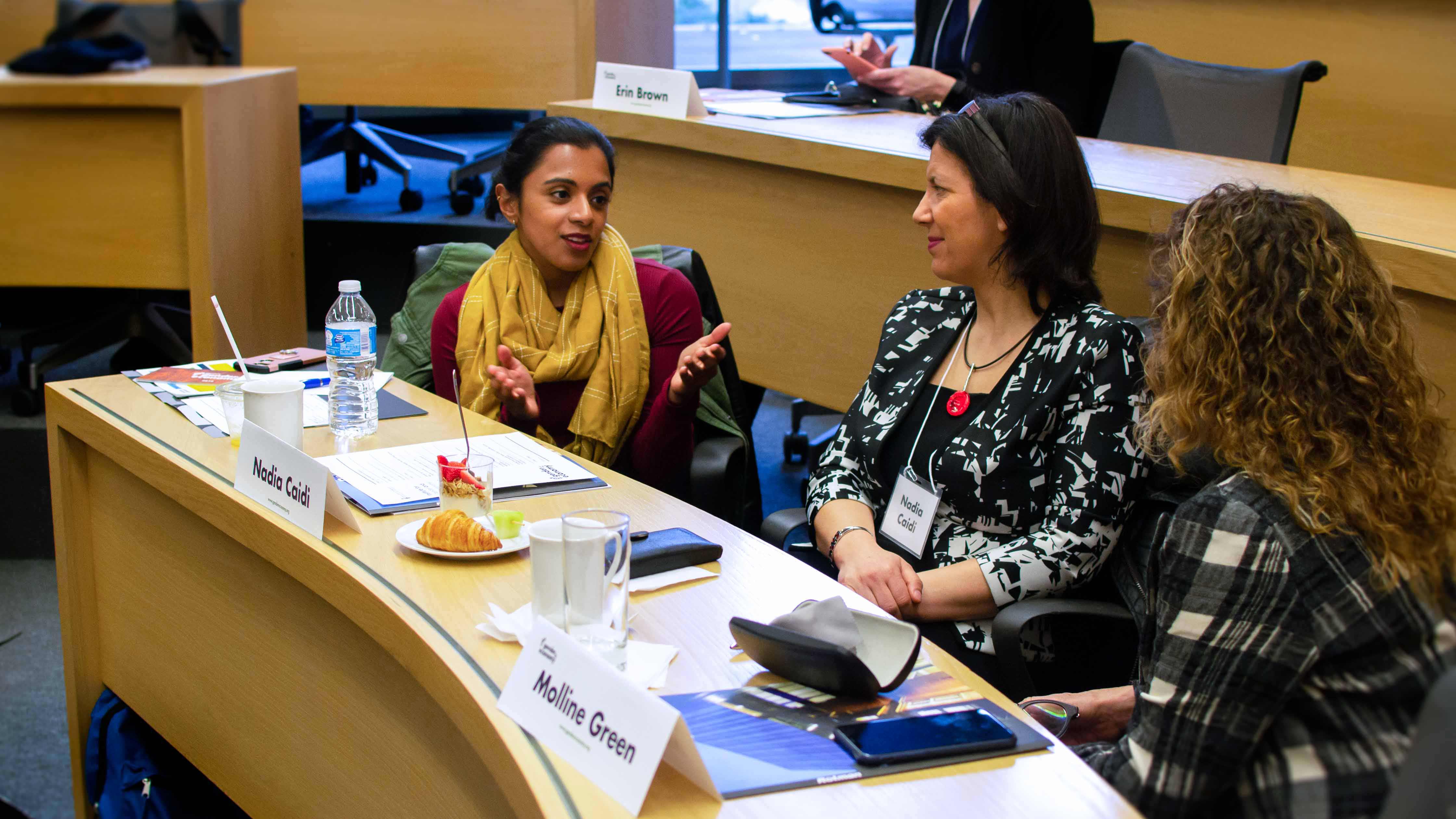
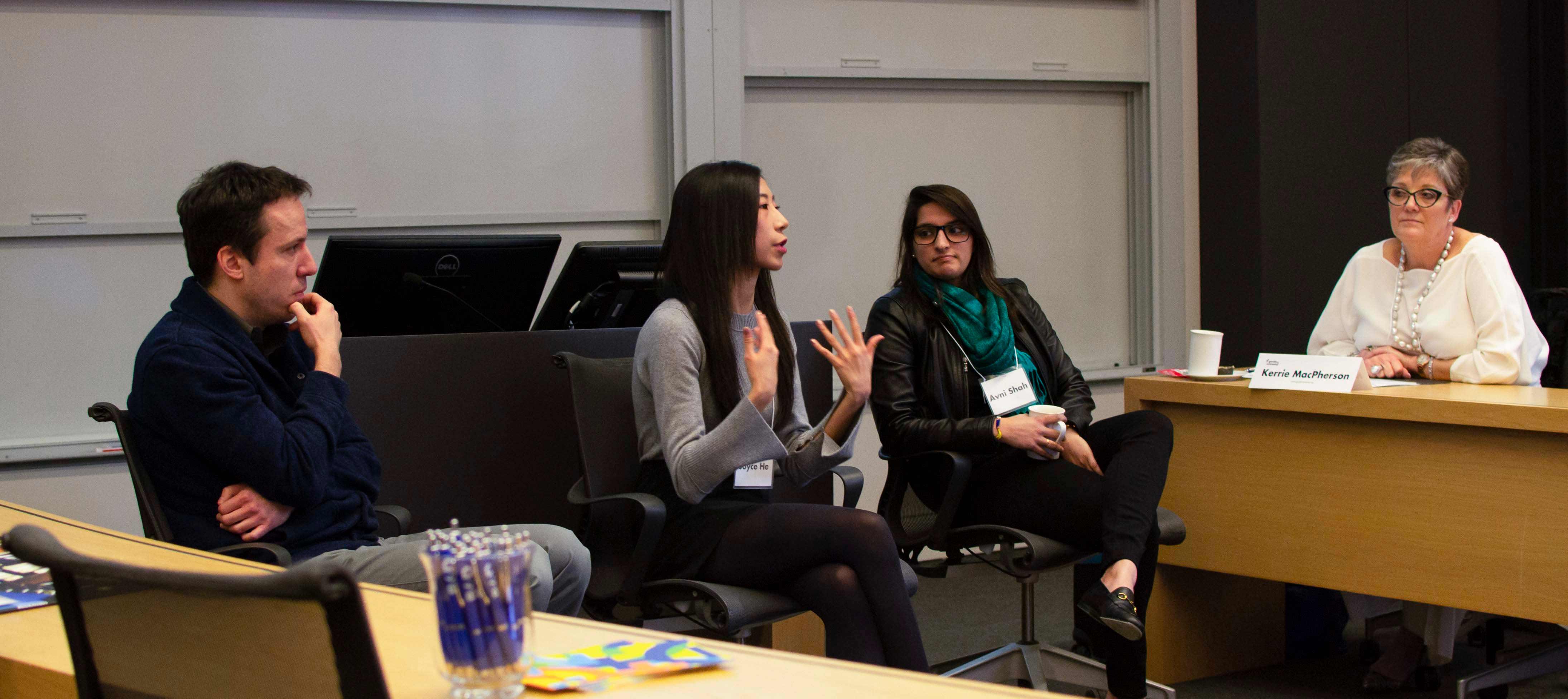
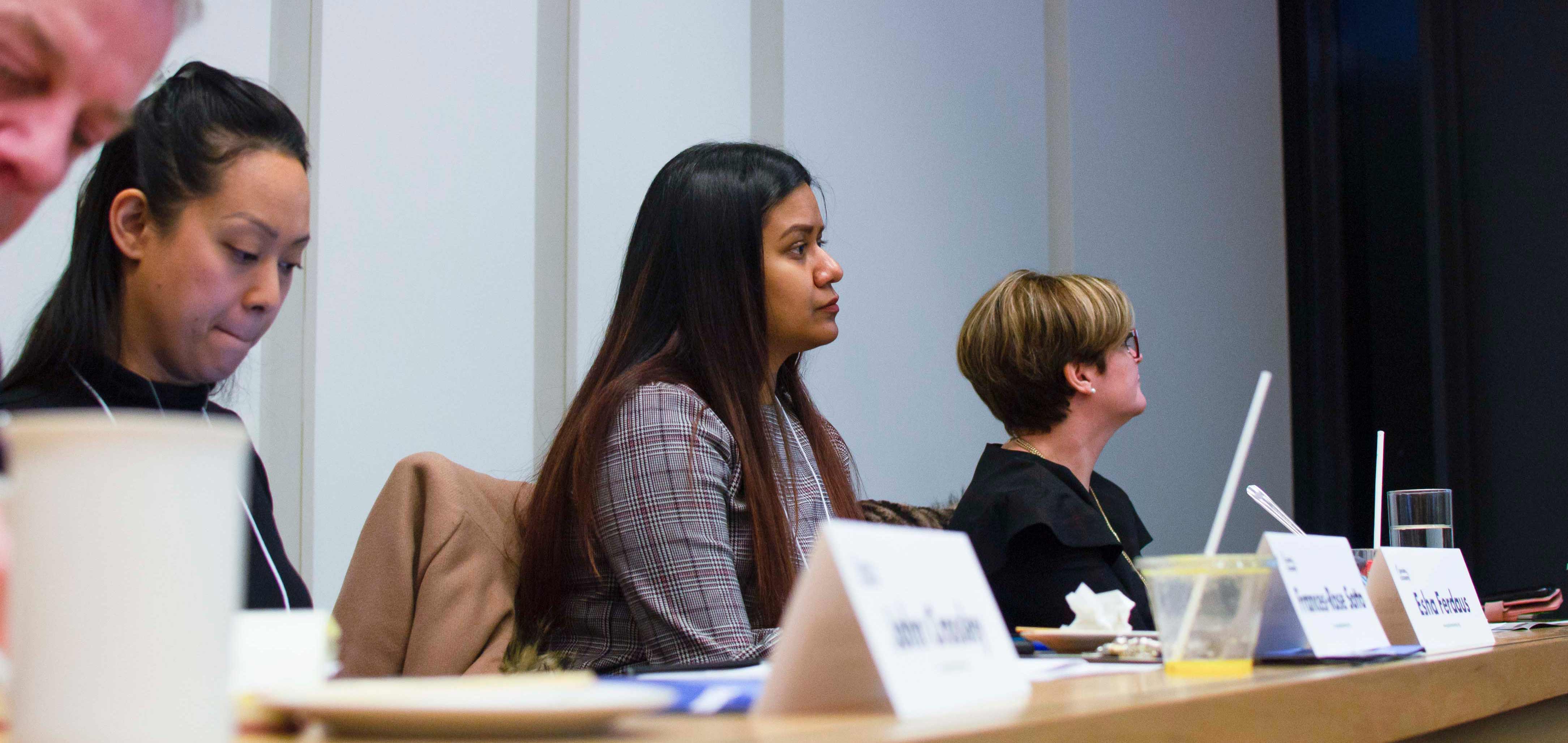
    Participants listen at the Industry Partner Meeting

    Are you interested in supporting our research as an Industry Partner? Find out more here.

    [/fusion_text][fusion_separator style_type=”none” hide_on_mobile=”small-visibility,medium-visibility,large-visibility” class=”” id=”” sep_color=”” top_margin=”25″ bottom_margin=”25″ border_size=”” icon=”” icon_circle=”” icon_circle_color=”” width=”” alignment=”center” /][fusion_button link=”https://www.gendereconomy.org/past-events/” text_transform=”” title=”” target=”_blank” link_attributes=”” alignment=”” modal=”” hide_on_mobile=”small-visibility,medium-visibility,large-visibility” class=”” id=”” color=”custom” button_gradient_top_color=”#62bd19″ button_gradient_bottom_color=”#62bd19″ button_gradient_top_color_hover=”#00c2e2″ button_gradient_bottom_color_hover=”#00c2e2″ accent_color=”” accent_hover_color=”” type=”” bevel_color=”” size=”” stretch=”yes” icon=”” icon_position=”left” icon_divider=”no” animation_type=”” animation_direction=”left” animation_speed=”0.3″ animation_offset=””]See more past events[/fusion_button][fusion_separator style_type=”none” hide_on_mobile=”small-visibility,medium-visibility,large-visibility” class=”” id=”” sep_color=”” top_margin=”20″ bottom_margin=”20″ border_size=”” icon=”” icon_circle=”” icon_circle_color=”” width=”” alignment=”center” /][fusion_title margin_top=”” margin_bottom=”” hide_on_mobile=”medium-visibility,large-visibility” class=”” id=”” size=”5″ content_align=”center” style_type=”default” sep_color=””]

    Or register below for these upcoming events

    [/fusion_title][fusion_recent_posts layout=”default” hover_type=”none” columns=”3″ number_posts=”3″ offset=”0″ pull_by=”category” cat_slug=”events” exclude_cats=”past” tag_slug=”” exclude_tags=”” thumbnail=”yes” title=”yes” meta=”no” meta_author=”no” meta_categories=”no” meta_date=”yes” meta_comments=”yes” meta_tags=”no” content_alignment=”” excerpt=”no” excerpt_length=”35″ strip_html=”yes” scrolling=”no” hide_on_mobile=”medium-visibility,large-visibility” class=”” id=”” animation_type=”” animation_direction=”left” animation_speed=”0.3″ animation_offset=”” /][/fusion_builder_column][/fusion_builder_row][/fusion_builder_container]