
Author: Salwa Iqbal

  • Erasing Barriers: Making the Future of Work Accessible

    Erasing Barriers: Making the Future of Work Accessible

    [fusion_builder_container hundred_percent=”no” equal_height_columns=”no” hide_on_mobile=”small-visibility,medium-visibility,large-visibility” background_position=”center center” background_repeat=”no-repeat” fade=”no” background_parallax=”none” parallax_speed=”0.3″ video_aspect_ratio=”16:9″ video_loop=”yes” video_mute=”yes” border_style=”solid” type=”legacy”][fusion_builder_row][fusion_builder_column type=”1_1″ layout=”1_1″ background_position=”left top” border_style=”solid” border_position=”all” spacing=”yes” background_repeat=”no-repeat” margin_top=”0px” margin_bottom=”0px” animation_speed=”0.3″ animation_direction=”left” hide_on_mobile=”small-visibility,medium-visibility,large-visibility” center_content=”no” last=”true” hover_type=”none” first=”true” min_height=”” link=”” background_blend_mode=”overlay”][fusion_text columns=”” column_min_width=”” column_spacing=”” rule_style=”” rule_size=”” rule_color=”” hue=”” saturation=”” lightness=”” alpha=”” content_alignment_medium=”” content_alignment_small=”” content_alignment=”” hide_on_mobile=”small-visibility,medium-visibility,large-visibility” sticky_display=”normal,sticky” class=”” id=”” margin_top=”” margin_right=”” margin_bottom=”” margin_left=”” fusion_font_family_text_font=”” fusion_font_variant_text_font=”” font_size=”” line_height=”” letter_spacing=”” text_transform=”none” text_color=”” animation_type=”” animation_direction=”left” animation_speed=”0.3″ animation_offset=””]

    Topic: Erasing Barriers: Making the Future of Work Accessible

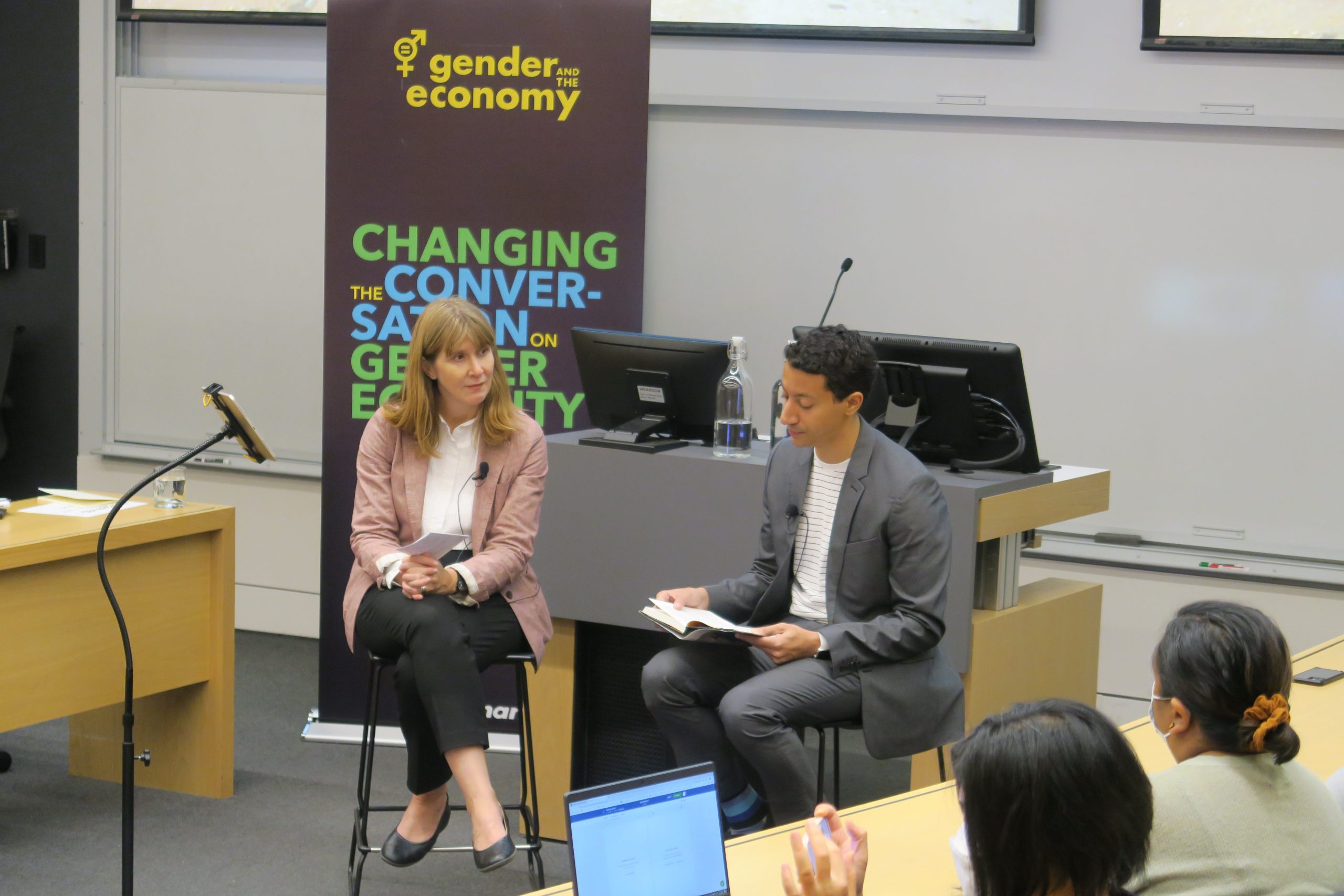
    GATE co-hosted a panel discussion with Access to Success, a non-profit organization aiming to support the development of future leaders with disabilities and accessibility tech. We heard from four experts and champions for accessible workplaces—Liza Arnason, Founder and Chair of the Board of Directors, ASE Community Foundation for Black Canadians with Disabilities; Simone Lima, former GATE MBA Fellow and Senior Product Manager, Proposify; Tim Rose, Senior Consultant, Accessibility, Client Experience team, CIBC; and Gaurav Upadhya, Global Chief Actuary and Chief Risk Officer at Foresters Financial—and moderator Darrell Bowden, Director of Equity, Diversity and Inclusion at the Rotman School.  

    Nearly one-quarter of Canadians live with some form of disability, it’s essential for employers to ensure policies and environments welcome people with disabilities to attract and retain diverse talent. The panel shared their thoughts on the future of work and provided examples of how businesses can take the lessons learnt from the pandemic era about flexible working arrangements to make workplaces more inclusive for people with disabilities and everyone else.   

    Here are their recommendations for employers:  

    • When making policies and processes for people with disabilities, ensure they are “at the table” participating in that decision-making.  
    • Create tools and processes that will facilitate people with disabilities to disclose without stigma.  
    • Ask employees with disabilities what they need to be successful—don’t assume what they need.  
    • Perceive disability as a strength rather than a weakness: disability gives people a valuable lens on the world.  
    • Pay attention to intersectionality and how factors such as race and gender can amplify barriers faced by people with disabilities.  
    • Educate leaders and managers on ableism and how to stop it.   

    “Let’s turn the corporate ladder into a corporate ramp.” – Tim Rose

    Watch highlights from the discussion in which panelists explored the importance of representation in leadership positions and their advice on how to build the talent pipeline.  

    [/fusion_text][fusion_separator style_type=”none” hide_on_mobile=”small-visibility,medium-visibility,large-visibility” top_margin=”20″ bottom_margin=”20″ alignment=”center” /][fusion_button link=”https://www.gendereconomy.org/events/” target=”_blank” hide_on_mobile=”small-visibility,medium-visibility,large-visibility” color=”custom” button_gradient_top_color=”#62bd19″ button_gradient_bottom_color=”#62bd19″ button_gradient_top_color_hover=”#00c2e2″ button_gradient_bottom_color_hover=”#00c2e2″ stretch=”yes” icon_position=”left” icon_divider=”no” animation_direction=”left” animation_speed=”0.3″]See more events[/fusion_button][/fusion_builder_column][/fusion_builder_row][/fusion_builder_container]
  • 25 Million Sparks: The Untold Story of Refugee Entrepreneurs

    25 Million Sparks: The Untold Story of Refugee Entrepreneurs

    [fusion_builder_container hundred_percent=”no” equal_height_columns=”no” hide_on_mobile=”small-visibility,medium-visibility,large-visibility” background_position=”center center” background_repeat=”no-repeat” fade=”no” background_parallax=”none” parallax_speed=”0.3″ video_aspect_ratio=”16:9″ video_loop=”yes” video_mute=”yes” border_style=”solid” type=”legacy”][fusion_builder_row][fusion_builder_column type=”1_1″ layout=”1_1″ background_position=”left top” border_style=”solid” border_position=”all” spacing=”yes” background_repeat=”no-repeat” margin_top=”0px” margin_bottom=”0px” animation_speed=”0.3″ animation_direction=”left” hide_on_mobile=”small-visibility,medium-visibility,large-visibility” center_content=”no” last=”true” hover_type=”none” first=”true” min_height=”” link=”” background_blend_mode=”overlay”][fusion_text columns=”” column_min_width=”” column_spacing=”” rule_style=”” rule_size=”” rule_color=”” hue=”” saturation=”” lightness=”” alpha=”” content_alignment_medium=”” content_alignment_small=”” content_alignment=”” hide_on_mobile=”small-visibility,medium-visibility,large-visibility” sticky_display=”normal,sticky” class=”” id=”” margin_top=”” margin_right=”” margin_bottom=”” margin_left=”” fusion_font_family_text_font=”” fusion_font_variant_text_font=”” font_size=”” line_height=”” letter_spacing=”” text_transform=”none” text_color=”” animation_type=”” animation_direction=”left” animation_speed=”0.3″ animation_offset=””]

    Topic: 25 Million Sparks: The Untold Story of Refugee Entrepreneurs (Cambridge University Press, May 26, 2022)

    In collaboration with Journalists for Human Rights (JHR), GATE co-hosted a thought-provoking conversation on refugee entrepreneurship with the author of 25 Million Sparks: The Untold Story of Refugee Entrepreneurs, Andrew Leon Hanna, an award-winning Egyptian American lawyer and entrepreneur, and Rachel Pulfer, Executive Director of Journalists for Human Rights.

    25 Million Sparks explores the phenomenon of refugee entrepreneurship in refugee camps and cities across the globe. What emerges is a tale of power, determination, and dignity – of igniting the brightest sparks of joy, even in places where the rest of the world sees only the darkness.

    The conversation focused on refugee entrepreneurs’ strengths and resilience that enables them to do a lot more with a lot less. Compared to other entrepreneurs, refugees can face much higher obstacles when starting businesses such as poor access to capital, lack of networks, and language barriers, in addition to traumas they have experienced in life. Despite these challenges, Andrew showed that refugee entrepreneurs have a strong commitment to success. Refugees also have a cross cultural advantage that gives them unique insights: because of their lived experiences, they have a better understanding of different cultures, products and markets that traditional entrepreneurs may not.  Andrew also observed that refugees are often very desirous of creating a community and have a high level of empathy for their customers, which is helpful for business.

    “Immigrants and refugees are portrayed as either victims or villains […]  I know that’s not the reality, So how do we tell a story  that paints the beauty, power, dignity and innovation of refugees, and tells a story that’s accurate, not what’s all over the news.” – Andrew Leon Hanna

    Watch Andrew Leon Hanna discuss the strengths of refugee entrepreneurs

    [/fusion_text][fusion_separator style_type=”none” hide_on_mobile=”small-visibility,medium-visibility,large-visibility” top_margin=”20″ bottom_margin=”20″ alignment=”center” /][fusion_button link=”https://www.gendereconomy.org/events/” target=”_blank” hide_on_mobile=”small-visibility,medium-visibility,large-visibility” color=”custom” button_gradient_top_color=”#62bd19″ button_gradient_bottom_color=”#62bd19″ button_gradient_top_color_hover=”#00c2e2″ button_gradient_bottom_color_hover=”#00c2e2″ stretch=”yes” icon_position=”left” icon_divider=”no” animation_direction=”left” animation_speed=”0.3″]See more events[/fusion_button][/fusion_builder_column][/fusion_builder_row][/fusion_builder_container]
  • Creating Value in the Care Economy

    Creating Value in the Care Economy

    [fusion_builder_container type=”flex” hundred_percent=”no” equal_height_columns=”no” menu_anchor=”” hide_on_mobile=”small-visibility,medium-visibility,large-visibility” class=”” id=”” background_color=”” background_image=”” background_position=”center center” background_repeat=”no-repeat” fade=”no” background_parallax=”none” parallax_speed=”0.3″ video_mp4=”” video_webm=”” video_ogv=”” video_url=”” video_aspect_ratio=”16:9″ video_loop=”yes” video_mute=”yes” overlay_color=”” video_preview_image=”” border_color=”” border_style=”solid” padding_top=”” padding_bottom=”” padding_left=”” padding_right=””][fusion_builder_row][fusion_builder_column type=”1_1″ layout=”1_1″ background_position=”left top” background_color=”” border_color=”” border_style=”solid” border_position=”all” spacing=”yes” background_image=”” background_repeat=”no-repeat” padding_top=”” padding_right=”” padding_bottom=”” padding_left=”” margin_top=”0px” margin_bottom=”0px” class=”” id=”” animation_type=”” animation_speed=”0.3″ animation_direction=”left” hide_on_mobile=”small-visibility,medium-visibility,large-visibility” center_content=”no” last=”true” min_height=”” hover_type=”none” link=”” border_sizes_top=”” border_sizes_bottom=”” border_sizes_left=”” border_sizes_right=”” first=”true”][fusion_text columns=”” column_min_width=”” column_spacing=”” rule_style=”” rule_size=”” rule_color=”” hue=”” saturation=”” lightness=”” alpha=”” content_alignment_medium=”” content_alignment_small=”” content_alignment=”” hide_on_mobile=”small-visibility,medium-visibility,large-visibility” sticky_display=”normal,sticky” class=”” id=”” margin_top=”” margin_right=”” margin_bottom=”” margin_left=”” fusion_font_family_text_font=”” fusion_font_variant_text_font=”” font_size=”” line_height=”” letter_spacing=”” text_transform=”none” text_color=”” animation_type=”” animation_direction=”left” animation_speed=”0.3″ animation_offset=””]

    Creating Value in the Care Economy

    Authors: Laura Lam, Carmina Ravanera and Sarah Kaplan

    The Care Economy — the economic sectors that involve paid and unpaid care, including childcare, elder care and long-term care — is one of the fastest expanding economic sectors globally. A 2015 study of 45 countries by the International Labour Organization (ILO) found that there were 206 million people in care jobs such as early childhood education and long-term care, and they estimated that this figure would rise to 248 million by 2030.

    The COVID-19 pandemic has brought an increased focus on how the lack of support for care sectors and the increasing trend of financializing access to care have placed equality and health on

    fragile grounds. In Canada, COVID has highlighted the poor conditions in long-term care homes and the dearth of affordable and high-quality early childhood education options — in part due to for-profit organizational models that have turned caring into a business that only some can afford.

    The pandemic has forced many to think about a new ‘ethics of care,’ where we see ourselves not as a collection of autonomous individuals but as many interconnected and interdependent relationships and communities. As society emerges into a recovery economy, questions about the future of care emerge: What organizational and policy changes are needed to ensure that care work and caregiving is more equitable and sustainable? What do we know and what still remains to be discovered through future research?

    Read the full article here.

    [/fusion_text][/fusion_builder_column][/fusion_builder_row][/fusion_builder_container]

  • Podcast: Positively Exhausted – Stories of Toxic Positivity in the Workplace

    Podcast: Positively Exhausted – Stories of Toxic Positivity in the Workplace

    GATE MBA Fellow Simone Lima investigates “toxic positivity”—the idea that the best way to cope with a challenging situation is to put a positive spin on it—is a coping strategy often promoted in companies. Using interviews and rich storytelling from her own experiences, Simone Lima explores the effects of toxic positivity on employees, especially women, and on company culture.

    Listen now on Spotify  Apple Podcasts  Google Podcasts

    You can support our work by rating and subscribing to this podcast! Help us get the word out.

    Episode 1—What even is toxic positivity?

    Download show notes

    Episode 2—Toxic Positivity from the lens of employees


    Download show notes

    Episode 3—Toxic Positivity from the lens of companies


    Download show notes

    BE SURE TO FOLLOW US ON TWITTERLINKEDIN, AND YOUTUBE FOR MORE KEY INSIGHTS AND RESOURCES.
  • Why gender and its intersections matter

    To understand how gender and its intersections shape policy and organizations’ outcomes and impacts, you first need to have a solid understanding of key concepts and terminology. In the following videos, you will learn what gender means, understand the difference between gender and sex, and become familiar with terms such as gender identity, transgender, and cisgender. We will also discuss the concept of “intersectionality” and why it is important.

    Defining gender:

    Beyond the gender binary:

    Impact of intersectionality:


  • Career

    Job posting – Part time Assistant Professor for Gender Analytics

    The Rotman School of Management at the University of Toronto invites applications for a two-year part- time (75%) non-tenure stream position, with a possibility of renewal, in the Strategic Management area to support the work of the Institute for Gender and the Economy (GATE). The appointment will be at the rank of Assistant Professor, and will commence October 1, 2022, or shortly thereafter (with an end date of August 30, 2024).

    We seek experienced candidates who already hold a PhD degree in strategic management with a focus on gender-based analysis and have a demonstrated record of excellence in research and teaching in these fields. The successful applicant will possess a strong demonstrated ability to integrate theory and practice through effective communication and presentation skills, and to stimulate and challenge the intellectual capacity of students. Experience in teaching in business school courses at the undergraduate, graduate or executive education levels is required.

    We seek candidates whose research and teaching interests complement and enhance our existing strengths in gender-based analysis and strategic management. The successful candidate is expected to pursue independent, innovative research at the highest international level, and to establish an outstanding and competitive research program leading to publications in internationally recognized top- ranked academic journals, in the fields of gender-based analysis in strategic management/organizational theory. We seek individuals who have been published in, or have works in progress meeting the standards of Management Science, Academy of Management Journal, Organization Science, Strategic Management Journal, and journals of similar caliber and international standing.

    Candidates must provide evidence of research excellence as demonstrated by a record of high-impact contributions and publications in top-ranked and field-relevant journals, or forthcoming publications and other work in progress meeting high international standards. Other evidence of research excellence will include a strong research statement, presentations at significant conferences, awards and accolades, as well as strong endorsements from referees of high standing.

    We seek candidates with research interest in gender-based analysis, diversity and inclusion, and strategic HR. The candidate will be responsible for developing and teaching undergraduate, graduate and executive courses on gender-based analysis based on the GATE Gender Analytics framework.

    The successful candidate will also have a record of excellence in teaching at either the undergraduate or graduate level in the field of strategic management. Evidence of excellence in teaching will be provided through teaching accomplishments, the teaching dossier, a teaching statement, sample course syllabi, and the teaching evaluations submitted as part of the application, as well as strong letters of reference.

    Select applicants will be invited to present their research to the Rotman School faculty and students as part of the interview process.

    Salary will be competitive and commensurate with qualifications and experience.

    About the Organization

    U of T is Canada’s largest university and has been ranked first in Canada and in the top 30 world-wide by most of the major international ranking scores. The Rotman School operates several programs including an undergraduate commerce program, a full-time, part-time and executive MBA programs, a Masters in Management Analytics program, and a Ph.D. program. Rotman is situated in the heart of Toronto, Canada’s corporate and financial center, and the world’s most diverse city. Rotman’s core values reflect this diversity and, as such, we have a preference for candidates with demonstrated experience and interest in promoting a diverse and inclusive research and teaching environment. For more information about the Rotman School and its core values, please visit: www.rotman.utoronto.ca/Connect/AboutRotman/OurValues 

    Submission guidelines

    All qualified candidates are invited to apply by submitting the following documents by email at gender.economy@rotman.utoronto.ca; a cover letter; a current curriculum vitae; a research statement outlining current and future research interests; up to three representative publications, and a teaching dossier to include a teaching statement, sample course syllabi, and teaching evaluations.

    Applicants must arrange to have three letters of reference sent directly by the referee to the hiring unit via email at gender.economy@rotman.utoronto.ca by the closing date (on letterhead, dated, and signed).

    If you have any questions about this position, please contact Professor Sarah Kaplan at gender.economy@rotman.utoronto.ca.

    All application materials, including reference letters, must be received by September 22, 2022. All qualified candidates are encouraged to apply; however, Canadians and permanent residents will be given priority.

    Diversity Statement

    The University of Toronto is strongly committed to diversity within its community and especially welcomes applications from racialized persons / persons of colour, women, Indigenous / Aboriginal People of North America, persons with disabilities, LGBTQ2S+ persons, and others who may contribute to the further diversification of ideas.

    Accessibility Statement

    The University strives to be an equitable and inclusive community, and proactively seeks to increase diversity among its community members. Our values regarding equity and diversity are linked with our unwavering commitment to excellence in the pursuit of our academic mission.

    The University is committed to the principles of the Accessibility for Ontarians with Disabilities Act (AODA). As such, we strive to make our recruitment, assessment and selection processes as accessible as possible and provide accommodations as required for applicants with disabilities.

    If you require any accommodations at any point during the application and hiring process, please contact gender.economy@rotman.utoronto.ca .

    For a PDF of this page please click here.