Category: Case Studies

  • Mirza: Inclusive Innovation in Childcare

    Mirza: Inclusive Innovation in Childcare


     Introduction

    Affordable and accessible childcare is one of the most important barriers to achieving gender equality. Many people are forced to stay home, work reduced hours, or take on jobs with lower pay in order to accommodate childcare needs in a system that does not provide good options.

    Enter Mirza to help contribute to a solution. Named after Maryam Mirzakhani, the first woman to win the Fields Medal in mathematics, Mirza is a fintech company that has developed a Software-as-a-Service (SaaS) platform to help employers and workers navigate government and state-level childcare support programs in the United States. Mirza was founded by Mel Faxon and Siran Cao, who observed how their family and friends experienced systemic childcare shortages and the motherhood penalty. With the goal of making access to childcare benefits simple and easy, Mirza offers a platform that connects private sector players with funds from the public sector. Integrated with employers’ HR systems, the platform allows employees to discover, in just a few clicks, which subsidies and supports they are eligible for.

    To maximize impact, Mirza focuses on employers with a high proportion of frontline workers at the lower end of the income distribution, such as call centers. By working closely with hourly and low-wage workers, Mirza has developed a deep understanding of their needs—not just resource constraints but also literacy barriers—and has customized solutions to address them. Mirza plans to leverage the lessons learned from improving accessibility in government-funded childcare to expand into other care economies, such as elder care and school lunch programs. This case shares the story of how Mirza was founded, the challenges they faced, the pivots they made to find the right business model, and some of their early successes.

    TO VIEW AND DOWNLOAD THE FULL CASE STUDY, FOLLOW THESE INSTRUCTIONS.

    This case was written by Hyeun Lee and Sarah Kaplan. We are grateful for the participation of Mel Faxon and Siran Cao.

  • Gender Lens Investing: The 2X Global Approach to Systemic Change

    Gender Lens Investing: The 2X Global Approach to Systemic Change


     Introduction

     2X Global (the Platform) is a global membership network for investors, capital providers, and intermediaries working in public and private markets, across both developed and emerging economies, to mobilize capital for gender finance. Its goal is to create an inclusive and equitable financial system that values all people and the planet, an outcome that Alyanna Carrion, program manager with 2X Global, calls a “win-win” for both women and capital providers. 2X Global aims to achieve these goals by emphasizing accountability through measurable outcomes and providing guidance on effective practices, ultimately helping investors navigate power dynamics and achieve tangible social impact returns through their financial decisions. 

    TO VIEW AND DOWNLOAD THE FULL CASE STUDY, FOLLOW THESE INSTRUCTIONS.

     This case was written by Tanmay Padhye. The author prepared this case under the supervision of Professors Sonia Kang and Hyeun Lee. 

    The development of this case study was supported by the Latner GATE MBA Internships program. 


  • Navigating the Complexities of Homelessness: Fred Victor’s Multifaceted Approach to Sustainable Solutions in Toronto

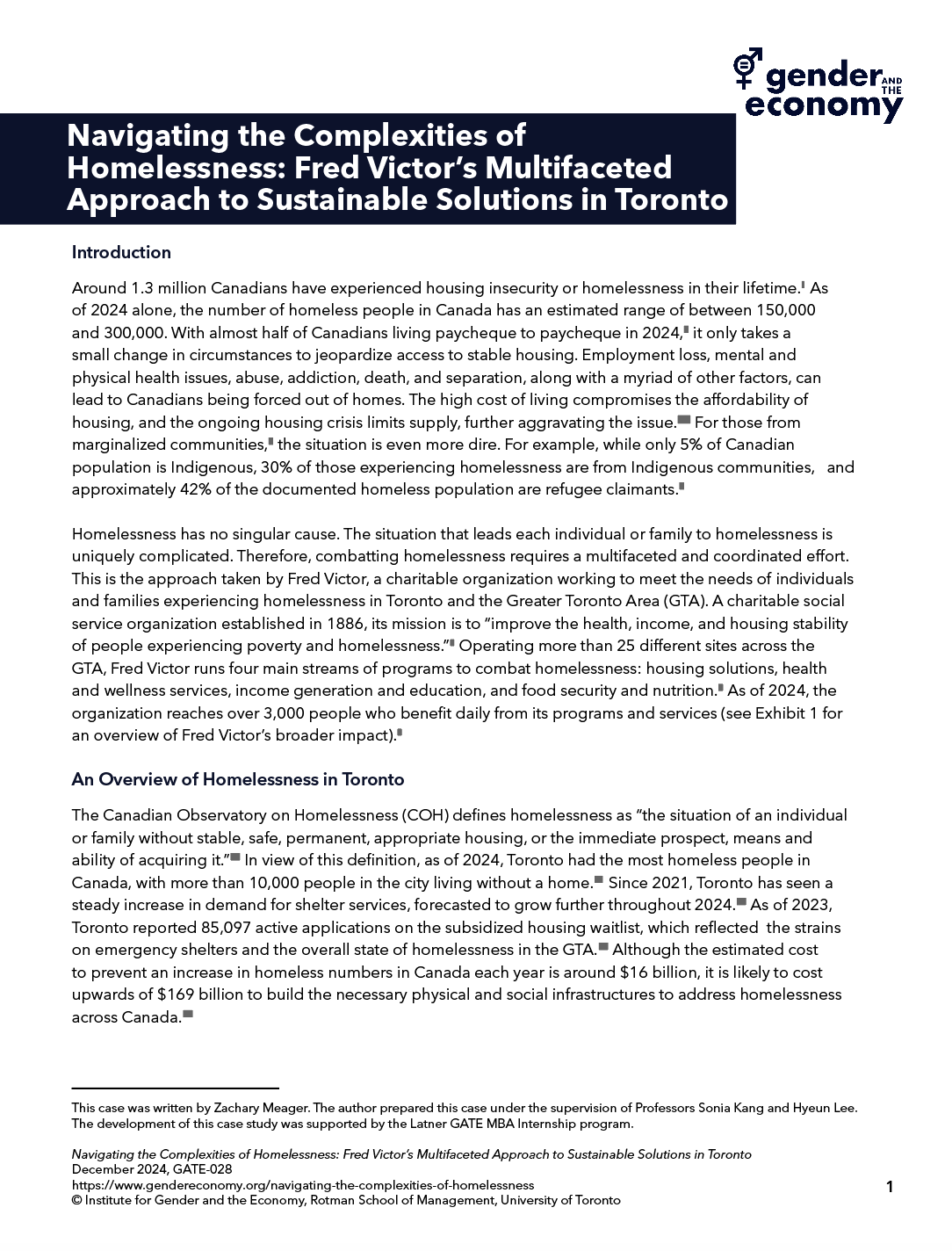
    Navigating the Complexities of Homelessness: Fred Victor’s Multifaceted Approach to Sustainable Solutions in Toronto


     Introduction

     Around 1.3 million Canadians have experienced housing insecurity or homelessness in their lifetime. As of 2024 alone, the number of homeless people in Canada has an estimated range of between 150,000 and 300,000. With almost half of Canadians living paycheque to paycheque in 2024, it only takes a small change in circumstances to jeopardize access to stable housing. Employment loss, mental and physical health issues, abuse, addiction, death, and separation, along with a myriad of other factors, can lead to Canadians being forced out of homes. The high cost of living compromises the affordability of housing, and the ongoing housing crisis limits supply, further aggravating the issue. For those from marginalized communities, the situation is even more dire. For example, while only 5% of Canadian population is Indigenous, 30% of those experiencing homelessness are from Indigenous communities, and approximately 42% of the documented homeless population are refugee claimants.

    Homelessness has no singular cause. The situation that leads each individual or family to homelessness is uniquely complicated. Therefore, combatting homelessness requires a multifaceted and coordinated effort. This is the approach taken by Fred Victor, a charitable organization working to meet the needs of individuals and families experiencing homelessness in Toronto and the Greater Toronto Area (GTA). A charitable social service organization established in 1886, its mission is to “improve the health, income, and housing stability of people experiencing poverty and homelessness.” Operating more than 25 different sites across the GTA, Fred Victor runs four main streams of programs to combat homelessness: housing solutions, health and wellness services, income generation and education, and food security and nutrition. As of 2024, the organization reaches over 3,000 people who benefit daily from its programs and services (see Exhibit 1 for an overview of Fred Victor’s broader impact).

    TO VIEW AND DOWNLOAD THE FULL CASE STUDY, FOLLOW THESE INSTRUCTIONS.

     This case was written by Zachary Meager. The author prepared this case under the supervision of Professors Sonia Kang and Hyeun Lee. 

    The development of this case study was supported by the Latner GATE MBA Internships program. 


  • YWCA Metro Vancouver: Creating Affordable Homes for Single Women and Their Children

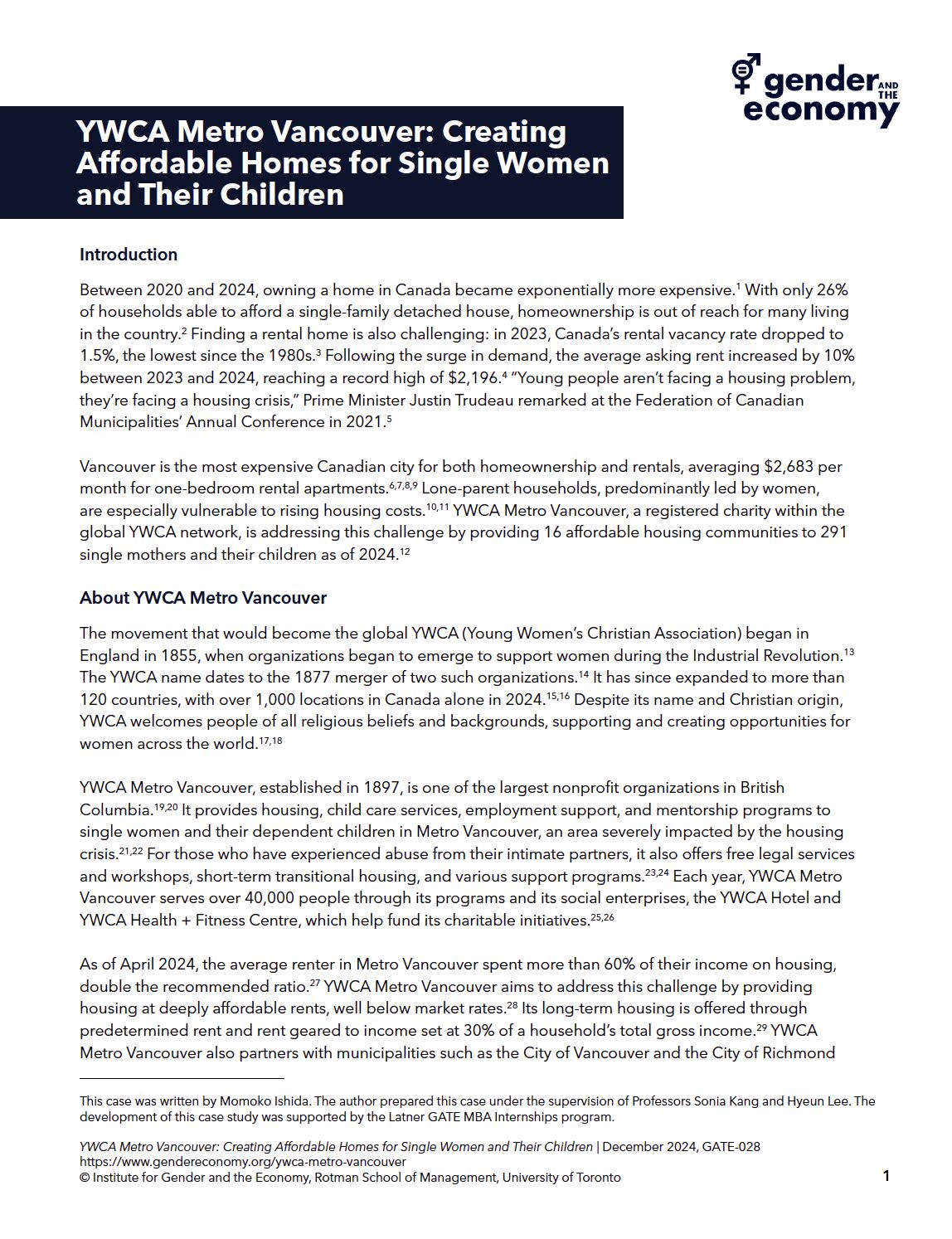
    YWCA Metro Vancouver: Creating Affordable Homes for Single Women and Their Children


     Introduction

     Between 2020 and 2024, owning a home in Canada became exponentially more expensive. With only 26% of households able to afford a single-family detached house, homeownership is out of reach for many living in the country. Finding a rental home is also challenging: in 2023, Canada’s rental vacancy rate dropped to 1.5%, the lowest since the 1980s. Following the surge in demand, the average asking rent increased by 10% between 2023 and 2024, reaching a record high of $2,196. “Young people aren’t facing a housing problem, they’re facing a housing crisis,” Prime Minister Justin Trudeau remarked at the Federation of Canadian Municipalities’ Annual Conference in 2021.

    Vancouver is the most expensive Canadian city for both homeownership and rentals, averaging $2,683 per month for one-bedroom rental apartments. Lone-parent households, predominantly led by women, are especially vulnerable to rising housing costs. YWCA Metro Vancouver, a registered charity within the global YWCA network, is addressing this challenge by providing 16 affordable housing communities to 291 single mothers and their children as of 2024.

    TO VIEW AND DOWNLOAD THE FULL CASE STUDY, FOLLOW THESE INSTRUCTIONS.

     This case was written by Momoko Ishida. The author prepared this case under the supervision of Professors Sonia Kang and Hyeun Lee. 

    The development of this case study was supported by the Latner GATE MBA Internships program. 


  • Removing Accessibility Barriers for Inclusive Living: The Daniels Corporation’s Accessible Designs Strategy

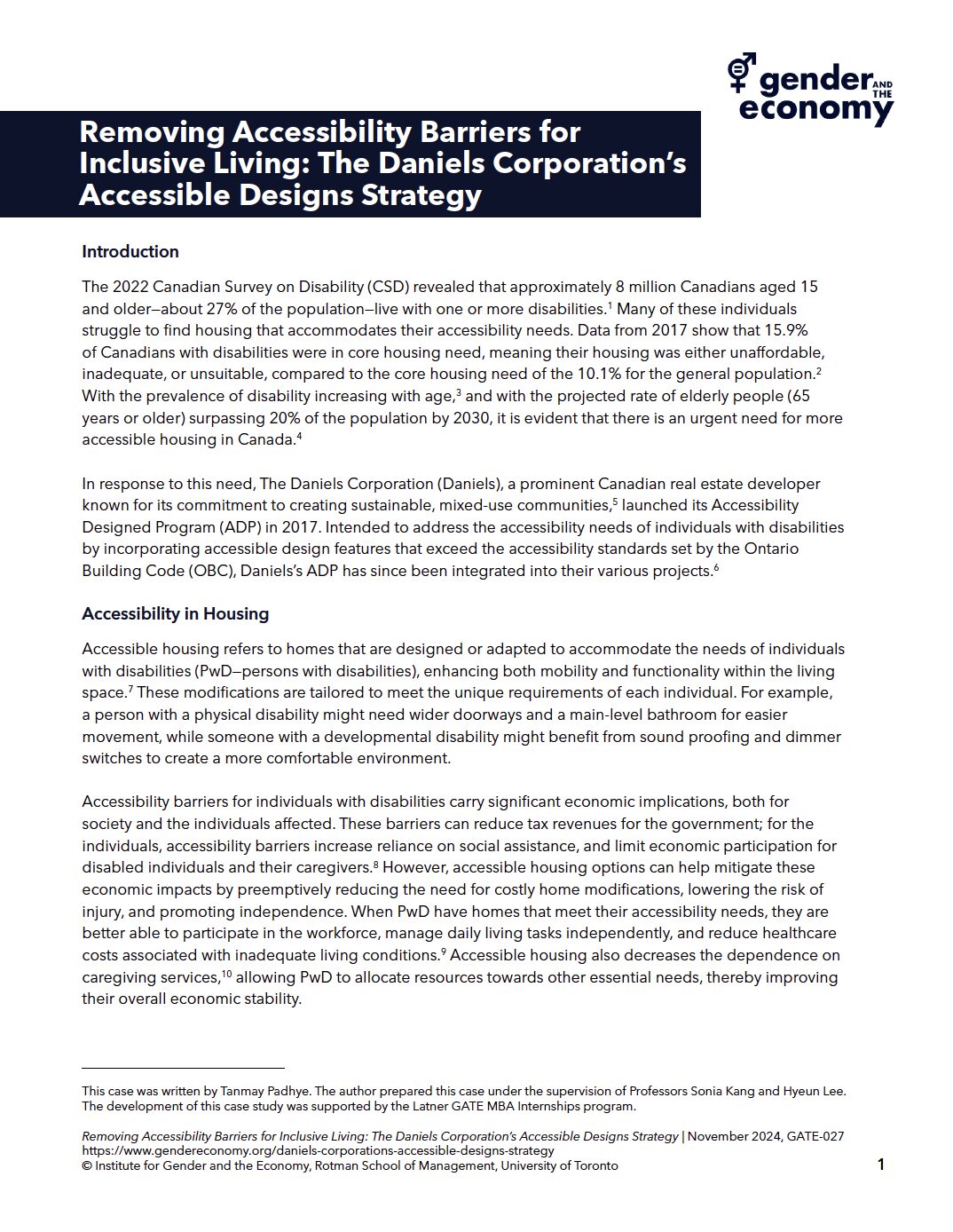
    Removing Accessibility Barriers for Inclusive Living: The Daniels Corporation’s Accessible Designs Strategy


     Introduction

    The 2022 Canadian Survey on Disability (CSD) revealed that approximately 8 million Canadians aged 15 and older—about 27% of the population—live with one or more disabilities. Many of these individuals struggle to find housing that accommodates their accessibility needs. Data from 2017 show that 15.9% of Canadians with disabilities were in core housing need, meaning their housing was either unaffordable, inadequate, or unsuitable, compared to the core housing need of the 10.1% for the general population. With the prevalence of disability increasing with age, and with the projected rate of elderly people (65 years or older) surpassing 20% of the population by 2030, it is evident that there is an urgent need for more accessible housing in Canada.

    In response to this need, The Daniels Corporation (Daniels), a prominent Canadian real estate developer known for its commitment to creating sustainable, mixed-use communities, launched its Accessibility Designed Program (ADP) in 2017. Intended to address the accessibility needs of individuals with disabilities by incorporating accessible design features that exceed the accessibility standards set by the Ontario Building Code (OBC), Daniels’s ADP has since been integrated into their various projects.

    TO VIEW AND DOWNLOAD THE FULL CASE STUDY, FOLLOW THESE INSTRUCTIONS.

     This case was written by Tanmay Padhye. The author prepared this case under the supervision of Professors Sonia Kang and Hyeun Lee.

    The development of this case study was supported by the Latner GATE MBA Internships program. 


  • Mila’s AI4Humanity and Biasly: Best  Practices to Develop Socially Responsible AI

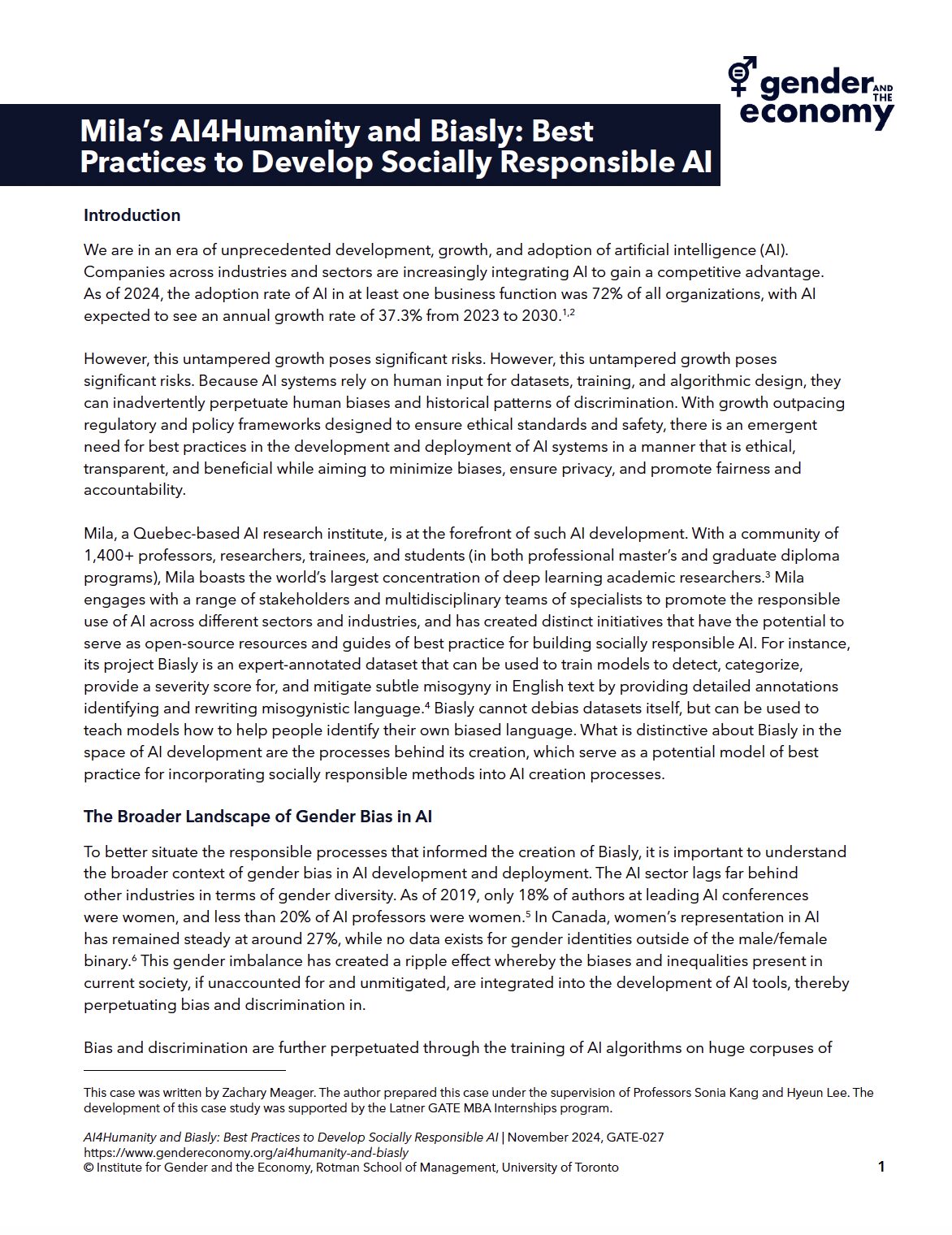
    Mila’s AI4Humanity and Biasly: Best Practices to Develop Socially Responsible AI


    Introduction

    We are in an era of unprecedented development, growth, and adoption of artificial intelligence (AI). Companies across industries and sectors are increasingly integrating AI to gain a competitive advantage. As of 2024, the adoption rate of AI in at least one business function was 72% of all organizations, with AI expected to see an annual growth rate of 37.3% from 2023 to 2030. 

    However, this untampered growth poses significant risks. However, this untampered growth poses significant risks. Because AI systems rely on human input for datasets, training, and algorithmic design, they can inadvertently perpetuate human biases and historical patterns of discrimination. With growth outpacing regulatory and policy frameworks designed to ensure ethical standards and safety, there is an emergent need for best practices in the development and deployment of AI systems in a manner that is ethical, transparent, and beneficial while aiming to minimize biases, ensure privacy, and promote fairness and accountability.

    Mila, a Quebec-based AI research institute, is at the forefront of such AI development. With a community of 1,400+ professors, researchers, trainees, and students (in both professional master’s and graduate diploma programs), Mila boasts the world’s largest concentration of deep learning academic researchers. Mila engages with a range of stakeholders and multidisciplinary teams of specialists to promote the responsible use of AI across different sectors and industries, and has created distinct initiatives that have the potential to serve as open-source resources and guides of best practice for building socially responsible AI. For instance, its project Biasly is an expert-annotated dataset that can be used to train models to detect, categorize, provide a severity score for, and mitigate subtle misogyny in English text by providing detailed annotations identifying and rewriting misogynistic language. Biasly cannot debias datasets itself, but can be used to teach models how to help people identify their own biased language. What is distinctive about Biasly in the space of AI development are the processes behind its creation, which serve as a potential model of best practice for incorporating socially responsible methods into AI creation processes.

    TO VIEW AND DOWNLOAD THE FULL CASE STUDY, FOLLOW THESE INSTRUCTIONS.

     This case was written by Zachary Meager. The author prepared this case under the supervision of Professors Sonia Kang and Hyeun Lee.

    The development of this case study was supported by the Latner GATE MBA Internships program. 


  • Freshco: Redefining the Blue-Collar Sector

    Freshco: Redefining the Blue-Collar Sector


    Introduction

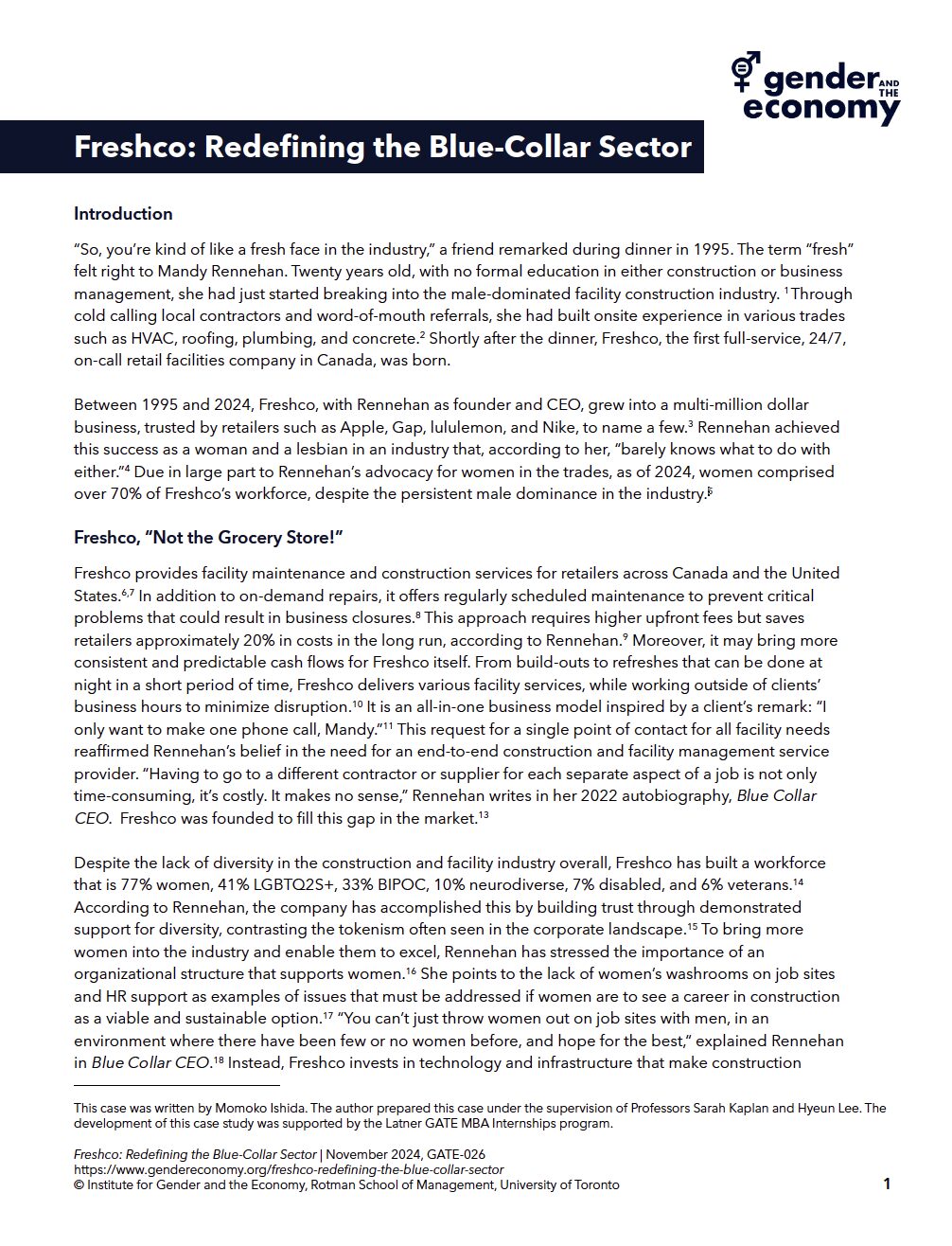
     “So, you’re kind of like a fresh face in the industry,” a friend remarked during dinner in 1995. The term “fresh” felt right to Mandy Rennehan. Twenty years old, with no formal education in either construction or business management, she had just started breaking into the male-dominated facility construction industry. Through cold calling local contractors and word-of-mouth referrals, she had built onsite experience in various trades such as HVAC, roofing, plumbing, and concrete. Shortly after the dinner, Freshco, the first full-service, 24/7, on-call retail facilities company in Canada, was born.

    Between 1995 and 2024, Freshco, with Rennehan as founder and CEO, grew into a multi-million dollar business, trusted by retailers such as Apple, Gap, lululemon, and Nike, to name a few. Rennehan achieved this success as a woman and a lesbian in an industry that, according to her, “barely knows what to do with either.” Due in large part to Rennehan’s advocacy for women in the trades, as of 2024, women comprised over 70% of Freshco’s workforce, despite the persistent male dominance in the industry.

    TO VIEW AND DOWNLOAD THE FULL CASE STUDY, FOLLOW THESE INSTRUCTIONS.

     This case was written by Momoko Ishida. The author prepared this case under the supervision of Professors Sarah Kaplan and Hyeun Lee.

    The development of this case study was supported by the Latner GATE MBA Internships program. 


  • Adasina: Reimagining Finance for Social Justice

    Adasina: Reimagining Finance for Social Justice


    Introduction

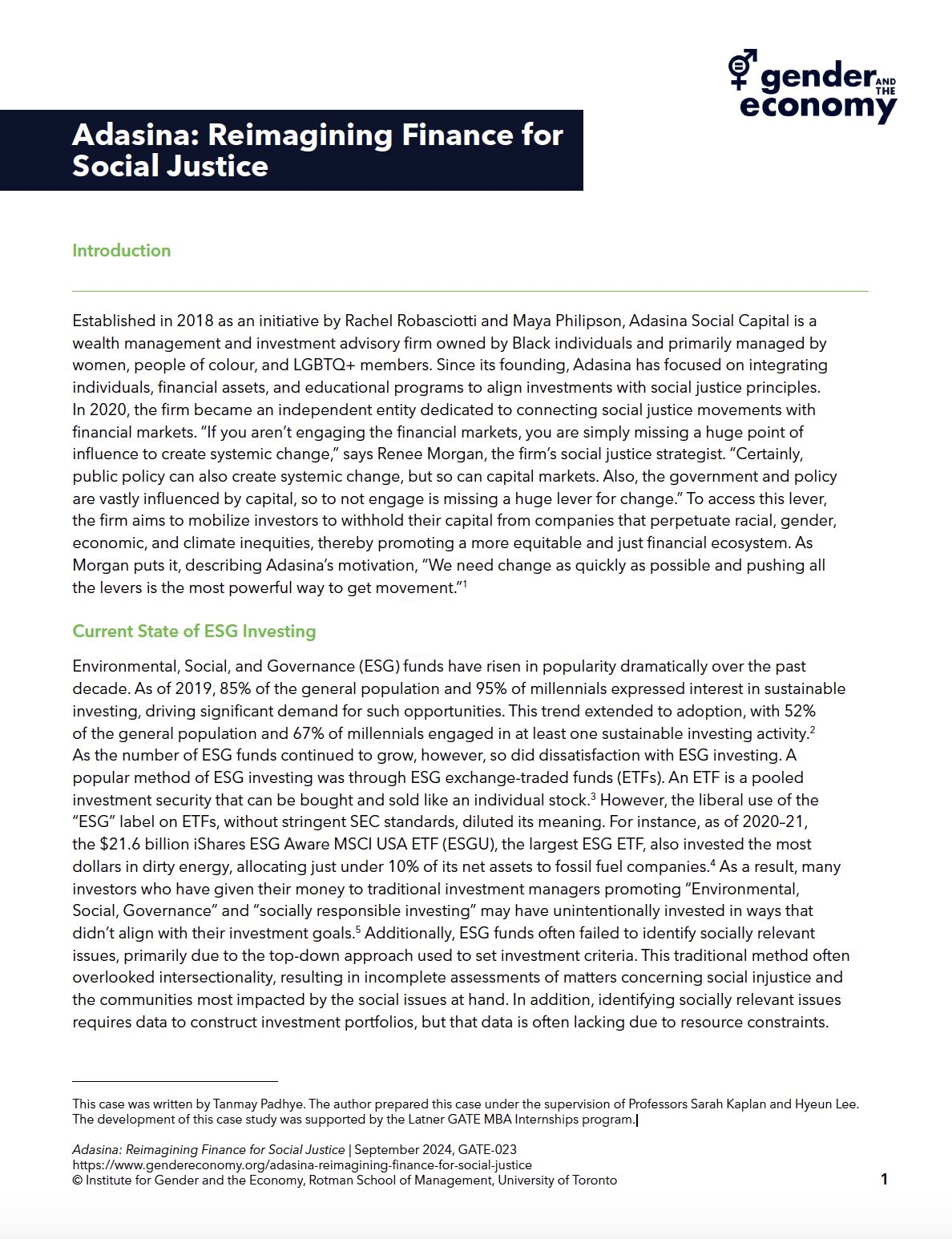
    Established in 2018 as an initiative by Rachel Robasciotti and Maya Philipson, Adasina Social Capital is a wealth management and investment advisory firm owned by Black individuals and primarily managed by women, people of colour, and LGBTQ+ members. Since its founding, Adasina has focused on integrating individuals, financial assets, and educational programs to align investments with social justice principles. In 2020, the firm became an independent entity dedicated to connecting social justice movements with financial markets. “If you aren’t engaging the financial markets, you are simply missing a huge point of influence to create systemic change,” says Renee Morgan, the firm’s social justice strategist. “Certainly, public policy can also create systemic change, but so can capital markets. Also, the government and policy are vastly influenced by capital, so to not engage is missing a huge lever for change.” To access this lever, the firm aims to mobilize investors to withhold their capital from companies that perpetuate racial, gender, economic, and climate inequities, thereby promoting a more equitable and just financial ecosystem. As Morgan puts it, describing Adasina’s motivation, “We need change as quickly as possible and pushing all the levers is the most powerful way to get movement.”

    TO VIEW AND DOWNLOAD THE FULL CASE STUDY, FOLLOW THESE INSTRUCTIONS.

     This case was written by Tanmay Padhye. The author prepared this case under the supervision of Professors Sarah Kaplan and Hyeun Lee. 

    The development of this case study was supported by the Latner GATE MBA Internships program. 


  • Toyota x UBC: Closing the Safety Gap for Pregnant Women in Automotive Design

    Toyota x UBC: Closing the Safety Gap for Pregnant Women in Automotive Design


    Introduction

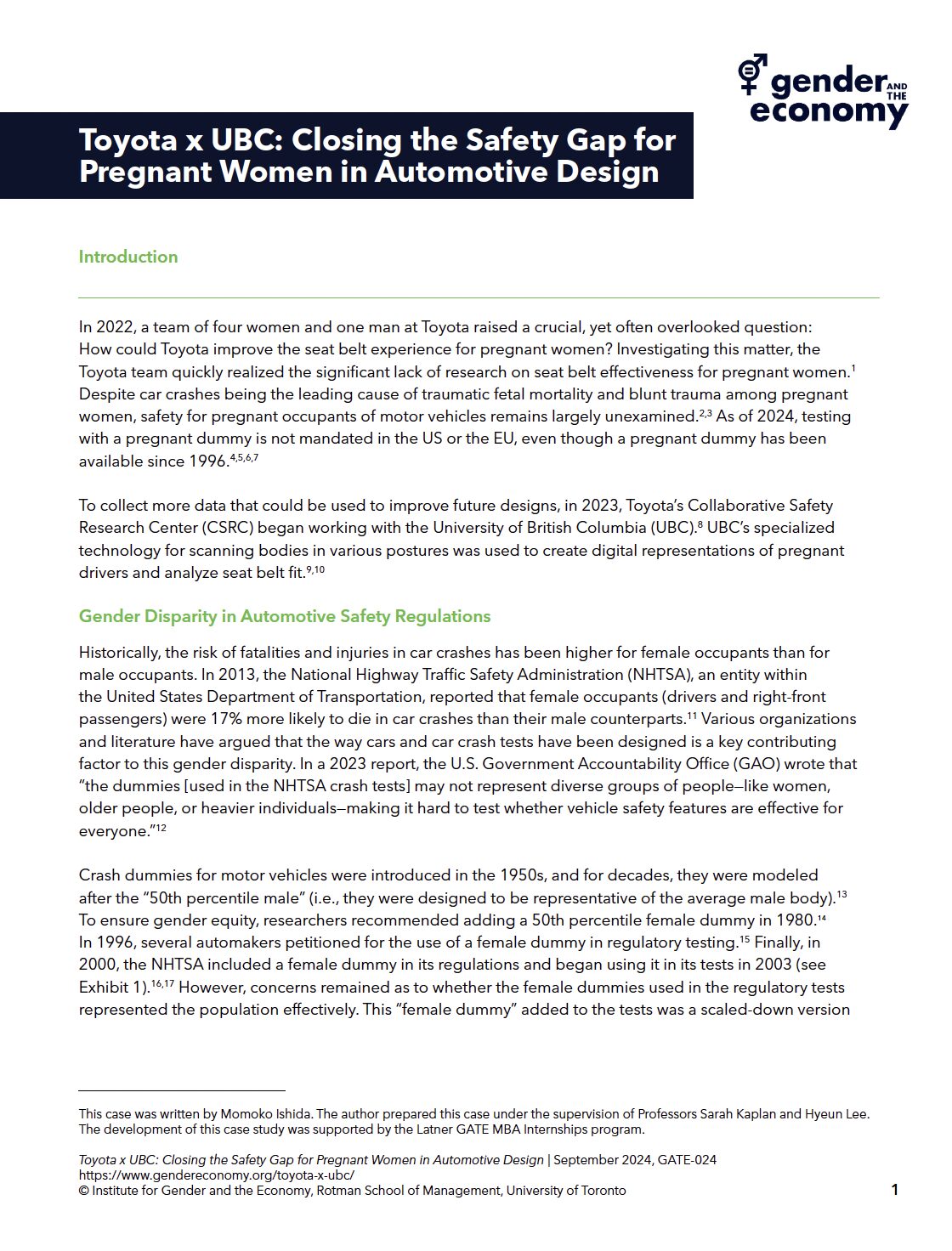
    In 2022, a team of four women and one man at Toyota raised a crucial, yet often overlooked question: How could Toyota improve the seat belt experience for pregnant women? Investigating this matter, the Toyota team quickly realized the significant lack of research on seat belt effectiveness for pregnant women. Despite car crashes being the leading cause of traumatic fetal mortality and blunt trauma among pregnant women, safety for pregnant occupants of motor vehicles remains largely unexamined. As of 2024, testing with a pregnant dummy is not mandated in the US or the EU, even though a pregnant dummy has been available since 1996.

    To collect more data that could be used to improve future designs, in 2023, Toyota’s Collaborative Safety Research Center (CSRC) began working with the University of British Columbia (UBC). UBC’s specialized technology for scanning bodies in various postures was used to create digital representations of pregnant drivers and analyze seat belt fit.

    TO VIEW AND DOWNLOAD THE FULL CASE STUDY, FOLLOW THESE INSTRUCTIONS.

     This case was written by Momoko Ishida. The author prepared this case under the supervision of Professors Sarah Kaplan and Hyeun Lee.

    The development of this case study was supported by the Latner GATE MBA Internships program. 

  • Coralus: A Collective Economy for Perpetual Investment in Women and Non-binary Ventures

    Coralus: A Collective Economy for Perpetual Investment in Women and Non-binary Ventures


    Introduction 

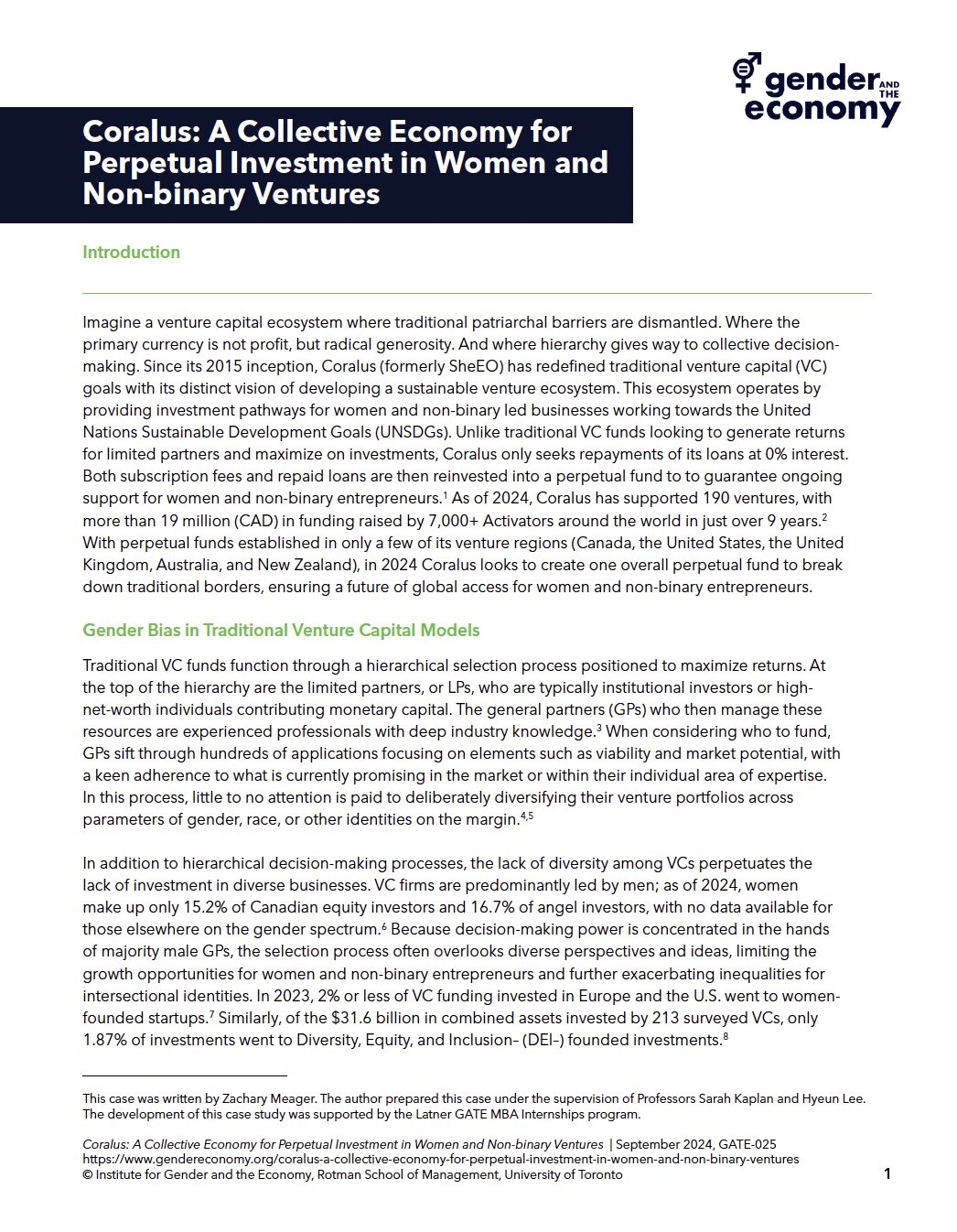
    Imagine a venture capital ecosystem where traditional patriarchal barriers are dismantled. Where the primary currency is not profit, but radical generosity. And where hierarchy gives way to collective decision-making. Since its 2015 inception, Coralus (formerly SheEO) has redefined traditional venture capital (VC) goals with its distinct vision of developing a sustainable venture ecosystem. This ecosystem operates by providing investment pathways for women and non-binary led businesses working towards the United Nations Sustainable Development Goals (UNSDGs). Unlike traditional VC funds looking to generate returns for limited partners and maximize on investments, Coralus only seeks repayments of its loans at 0% interest. Both subscription fees and repaid loans are then reinvested into a perpetual fund to to guarantee ongoing support for women and non-binary entrepreneurs.1 As of 2024, Coralus has supported 190 ventures, with more than 19 million (CAD) in funding raised by 7,000+ Activators around the world in just over 9 years.2 With perpetual funds established in only a few of its venture regions (Canada, the United States, the United Kingdom, Australia, and New Zealand), in 2024 Coralus looks to create one overall perpetual fund to break down traditional borders, ensuring a future of global access for women and non-binary entrepreneurs.

    TO VIEW AND DOWNLOAD THE FULL CASE STUDY, FOLLOW THESE INSTRUCTIONS.

     This case was written by Zachary Meager. The author prepared this case under the supervision of Professors Sarah Kaplan and Hyeun Lee. 

    The development of this case study was supported by the Latner GATE MBA Internships program.