Tag: Care economy

  • Make remote work a plus instead of a penalty for gender equality

    Make remote work a plus instead of a penalty for gender equality

    [fusion_builder_container type=”flex” hundred_percent=”no” equal_height_columns=”no” menu_anchor=”” hide_on_mobile=”small-visibility,medium-visibility,large-visibility” class=”” id=”” background_color=”” background_image=”” background_position=”center center” background_repeat=”no-repeat” fade=”no” background_parallax=”none” parallax_speed=”0.3″ video_mp4=”” video_webm=”” video_ogv=”” video_url=”” video_aspect_ratio=”16:9″ video_loop=”yes” video_mute=”yes” overlay_color=”” video_preview_image=”” border_color=”” border_style=”solid” padding_top=”” padding_bottom=”” padding_left=”” padding_right=””][fusion_builder_row][fusion_builder_column type=”1_1″ layout=”1_1″ background_position=”left top” background_color=”” border_color=”” border_style=”solid” border_position=”all” spacing=”yes” background_image=”” background_repeat=”no-repeat” padding_top=”” padding_right=”” padding_bottom=”” padding_left=”” margin_top=”0px” margin_bottom=”0px” class=”” id=”” animation_type=”” animation_speed=”0.3″ animation_direction=”left” hide_on_mobile=”small-visibility,medium-visibility,large-visibility” center_content=”no” last=”true” min_height=”” hover_type=”none” link=”” border_sizes_top=”” border_sizes_bottom=”” border_sizes_left=”” border_sizes_right=”” first=”true”][fusion_text columns=”” column_min_width=”” column_spacing=”” rule_style=”” rule_size=”” rule_color=”” hue=”” saturation=”” lightness=”” alpha=”” content_alignment_medium=”” content_alignment_small=”” content_alignment=”” hide_on_mobile=”small-visibility,medium-visibility,large-visibility” sticky_display=”normal,sticky” class=”” id=”” margin_top=”” margin_right=”” margin_bottom=”” margin_left=”” fusion_font_family_text_font=”” fusion_font_variant_text_font=”” font_size=”” line_height=”” letter_spacing=”” text_transform=”none” text_color=”” animation_type=”” animation_direction=”left” animation_speed=”0.3″ animation_offset=””]

    Make remote work a plus instead of a penalty for gender equality

    Authors: Kim de Laat, Carmina Ravanera and Sarah Kaplan

    The arrival of the federal affordable child-care plan has meant a rise in women’s employment in Canada – a success we should celebrate. But, the way we work has changed over the past few years, mainly as a result of the COVID-19 pandemic. Many people now work in remote and hybrid arrangements, and research has found that women who use these arrangements are often penalized in their careers.

    As more women join the workforce, policies facilitating paid and unpaid work must ensure they are not just able to work, but also to thrive. These changes must be embedded in a constellation of employer and government policy interventions.

    Despite early signs of progress, universal access to quality child care is not yet a reality – a chief reason being that child-care workers are woefully underpaid and undervalued, leading inadequate numbers of people to be attracted to the career. Without enough workers to provide child care for those who need it, women, who are expected to provide the majority of caregiving at home, may be prevented from pursuing full-time employment or accessing the kinds of positions that are professionally and financially rewarding.

    Read the full article here

    [/fusion_text][/fusion_builder_column][/fusion_builder_row][/fusion_builder_container]
  • Care Work in the Recovery Economy: Towards a Caring Economy

    Care Work in the Recovery Economy: Towards a Caring Economy

    [fusion_builder_container admin_label=”” hundred_percent=”no” equal_height_columns=”no” menu_anchor=”” hide_on_mobile=”small-visibility,medium-visibility,large-visibility” class=”” id=”” background_color=”” background_image=”” background_position=”center center” background_repeat=”no-repeat” fade=”no” background_parallax=”none” enable_mobile=”no” parallax_speed=”0.3″ video_mp4=”” video_webm=”” video_ogv=”” video_url=”” video_aspect_ratio=”16:9″ video_loop=”yes” video_mute=”yes” video_preview_image=”” border_color=”” border_style=”solid” margin_top=”20″ margin_bottom=”” padding_top=”” padding_right=”” padding_bottom=”” padding_left=”” type=”legacy”][fusion_builder_row][fusion_builder_column type=”3_4″ layout=”3_4″ spacing=”” center_content=”no” hover_type=”none” link=”” min_height=”” hide_on_mobile=”small-visibility,medium-visibility,large-visibility” class=”” id=”” background_color=”” background_image=”” background_position=”left top” background_repeat=”no-repeat” border_color=”” border_style=”solid” border_position=”all” padding_top=”” padding_right=”” padding_bottom=”” padding_left=”” margin_top=”” margin_bottom=”” animation_type=”” animation_direction=”left” animation_speed=”0.3″ animation_offset=”” last=”false” border_sizes_top=”0″ border_sizes_bottom=”0″ border_sizes_left=”0″ border_sizes_right=”0″ first=”true” spacing_right=””][fusion_text columns=”” column_min_width=”” column_spacing=”” rule_style=”” rule_size=”” rule_color=”” hue=”” saturation=”” lightness=”” alpha=”” content_alignment_medium=”” content_alignment_small=”” content_alignment=”” hide_on_mobile=”small-visibility,medium-visibility,large-visibility” sticky_display=”normal,sticky” class=”” id=”” margin_top=”” margin_right=”” margin_bottom=”” margin_left=”” fusion_font_family_text_font=”” fusion_font_variant_text_font=”” font_size=”” line_height=”” letter_spacing=”” text_transform=”” text_color=”” animation_type=”” animation_direction=”left” animation_speed=”0.3″ animation_offset=””]

    DOWNLOAD THIS RESEARCH OVERVIEW IN ENGLISH/ EN FRANÇAIS

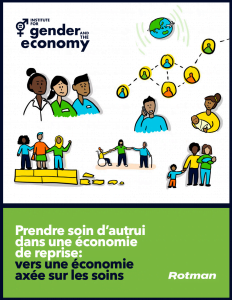
    English cover of report- Care Work in the Recovery Economy        French cover of report- Care Work in the Recovery Economy

    OVERVIEW:

    The care economy—the economic sectors that involve paid and unpaid care, including childcare, elder care, and health care—is one of the fastest expanding economic sectors globally. A 2015 study of 45 countries by the International Labour Organization (ILO) found that there were 206 million people in care jobs such as early childhood educators and long-term care providers. But the complex work involved in this crucial sector tends to be poorly understood, undervalued, and unprioritized. The COVID-19 pandemic has brought an increased focus on care, highlighting how the lack of support for care sectors and the increasing trend of financializing access to care have placed equality and health on fragile grounds during this crisis.

    As society emerges from COVID-19 into a recovery economy, questions about the future of care also emerge. What organizational and policy changes are needed to ensure that care work and caregiving is more equal and sustainable? And what research questions on the care economy remain to be investigated? To explore these lines of inquiry, the Institute for Gender and the Economy convened a virtual research roundtable on Care Work in the Recovery Economy in January and February of 2022 with support from Women and Gender Equality Canada and the Social Sciences and Humanities Research Council of Canada. The workshop hosted over 60 scholars and practitioners from around the world who presented their cutting-edge research, identified research agendas, and discussed policy implications for the future of care. This report highlights key policy and research insights from the roundtable, including the following:

    1. Intersectional perspectives in data collection and analysis on the care economy will allow for more nuanced and complex understandings of care.
    2. Data collection and analysis should capture the complexity of the care economy by focusing on historically neglected care activities. This may include data on the value of unpaid care, on less direct forms of care work (e.g., care advocacy), and on temporary and migrant care workers and their transitions in and out of care work.
    3. Including paid and unpaid care workers’ voices in policymaking and aligning policies with communities and care workers will result in more effective policy outcomes.
    4. The toll of the COVID-19 pandemic on care workers highlights the importance of making their physical and mental wellbeing a policy and research priority, including through ensuring high-quality working conditions with labour protections.
    5. Care policy should not be seen as independent of other government policy making. Integrating care policies with immigration, economic, technology and other policies would help care workers, including temporary workers, have protection from precarity.
    6. Policymaking should take both the direct impacts on outcomes as well as “expressive” impacts that shape the culture and norms about what is acceptable into account.
    7. Measuring the value of care accurately means measuring not only economic growth and gain (e.g., GDP), but also the less visible, yet foundational, benefits of care to society, such as physical and mental well-being, capabilities, inclusion, and so on.
    8. Without stability and resilience of care systems, care responsibilities are hard to manage and can disadvantage caregivers’ careers, create gender inequity, and lead to overwork and stress.
    9. Technological “solutionism” and other short-term fixes alone will likely not lead to a sustainable and more equal care economy.
    10. For-profit models have not historically resulted in high-quality and affordable care. Non-profit and cooperative models may be better options for a higher-quality care system.
    11. Care work takes many different forms, both paid and unpaid, and is connected to all sectors. Understanding “chains” of care is important to understand who might benefit or be disadvantaged.

     Watch the research roundtable highlights

    __________________________

    This project has been funded through Women and Gender Equality Canada’s Women’s Program and the Social Sciences and Humanities Research Council of Canada

    [/fusion_text][fusion_separator style_type=”none” hide_on_mobile=”small-visibility,medium-visibility,large-visibility” class=”” id=”” sep_color=”” top_margin=”20″ bottom_margin=”20″ border_size=”” icon=”” icon_circle=”” icon_circle_color=”” width=”” alignment=”center” /][fusion_button link=”https://www.gendereconomy.org/category/research-overviews/” text_transform=”” title=”” target=”_blank” link_attributes=”” alignment_medium=”” alignment_small=”” alignment=”” modal=”” hide_on_mobile=”small-visibility,medium-visibility,large-visibility” sticky_display=”normal,sticky” class=”” id=”” color=”custom” button_gradient_top_color=”#62bd19″ button_gradient_bottom_color=”#62bd19″ button_gradient_top_color_hover=”#00c2e2″ button_gradient_bottom_color_hover=”#00c2e2″ accent_color=”” accent_hover_color=”” type=”” bevel_color=”” border_color=”” border_hover_color=”” size=”” stretch=”yes” margin_top=”” margin_right=”” margin_bottom=”” margin_left=”” icon=”” icon_position=”left” icon_divider=”no” animation_type=”” animation_direction=”left” animation_speed=”0.3″ animation_offset=””]See more research overviews[/fusion_button][fusion_separator style_type=”none” hide_on_mobile=”small-visibility,medium-visibility,large-visibility” class=”” id=”” sep_color=”” top_margin=”20″ bottom_margin=”20″ border_size=”” icon=”” icon_circle=”” icon_circle_color=”” width=”” alignment=”center” /][fusion_recent_posts layout=”default” hover_type=”none” columns=”3″ number_posts=”3″ offset=”0″ pull_by=”category” cat_slug=”research-briefs” exclude_cats=”” tag_slug=”” exclude_tags=”” thumbnail=”yes” title=”yes” meta=”no” meta_author=”no” meta_categories=”no” meta_date=”yes” meta_comments=”yes” meta_tags=”no” content_alignment=”” excerpt=”no” excerpt_length=”35″ strip_html=”yes” scrolling=”no” hide_on_mobile=”small-visibility,medium-visibility,large-visibility” class=”” id=”” animation_type=”” animation_direction=”left” animation_speed=”0.3″ animation_offset=”” /][/fusion_builder_column][fusion_builder_column type=”1_4″ layout=”1_4″ spacing=”” center_content=”no” hover_type=”none” link=”” min_height=”” hide_on_mobile=”small-visibility,medium-visibility,large-visibility” class=”” id=”” background_color=”” background_image=”” background_position=”left top” background_repeat=”no-repeat” border_color=”” border_style=”solid” border_position=”all” padding_top=”” padding_right=”” padding_bottom=”” padding_left=”” margin_top=”” margin_bottom=”” animation_type=”” animation_direction=”left” animation_speed=”0.3″ animation_offset=”” last=”true” border_sizes_top=”0″ border_sizes_bottom=”0″ border_sizes_left=”0″ border_sizes_right=”0″ first=”false”][fusion_title title_type=”text” rotation_effect=”bounceIn” display_time=”1200″ highlight_effect=”circle” loop_animation=”off” highlight_width=”9″ highlight_top_margin=”0″ before_text=”” rotation_text=”” highlight_text=”” after_text=”” title_link=”off” link_url=”” link_target=”_self” hide_on_mobile=”small-visibility,medium-visibility,large-visibility” sticky_display=”normal,sticky” class=”briefsummary” id=”” content_align_medium=”” content_align_small=”” content_align=”left” size=”3″ animated_font_size=”” fusion_font_family_title_font=”” fusion_font_variant_title_font=”” font_size=”” line_height=”” letter_spacing=”” text_transform=”” text_color=”” hue=”” saturation=”” lightness=”” alpha=”” animated_text_color=”” text_shadow=”no” text_shadow_vertical=”” text_shadow_horizontal=”” text_shadow_blur=”0″ text_shadow_color=”” margin_top_medium=”” margin_right_medium=”” margin_bottom_medium=”” margin_left_medium=”” margin_top_small=”” margin_right_small=”” margin_bottom_small=”” margin_left_small=”” margin_top=”” margin_right=”” margin_bottom=”” margin_left=”” margin_top_mobile=”” margin_bottom_mobile=”” gradient_font=”no” gradient_start_color=”” gradient_end_color=”” gradient_start_position=”0″ gradient_end_position=”100″ gradient_type=”linear” radial_direction=”center center” linear_angle=”180″ highlight_color=”” style_type=”none” sep_color=”” link_color=”” link_hover_color=”” animation_type=”” animation_direction=”left” animation_speed=”0.3″ animation_offset=””]

    Research Overview prepared by

    Laura Lam, Carmina Ravanera, and Sarah Kaplan

    Published

    May, 2022

    [/fusion_title][fusion_widget_area name=”avada-custom-sidebar-researchbriefsidebar” title_size=”” title_color=”” background_color=”” padding_top=”” padding_right=”” padding_bottom=”” padding_left=”” hide_on_mobile=”small-visibility,medium-visibility,large-visibility” class=”” id=”” /][/fusion_builder_column][/fusion_builder_row][/fusion_builder_container]
  • Creating Value in the Care Economy

    Creating Value in the Care Economy

    [fusion_builder_container type=”flex” hundred_percent=”no” equal_height_columns=”no” menu_anchor=”” hide_on_mobile=”small-visibility,medium-visibility,large-visibility” class=”” id=”” background_color=”” background_image=”” background_position=”center center” background_repeat=”no-repeat” fade=”no” background_parallax=”none” parallax_speed=”0.3″ video_mp4=”” video_webm=”” video_ogv=”” video_url=”” video_aspect_ratio=”16:9″ video_loop=”yes” video_mute=”yes” overlay_color=”” video_preview_image=”” border_color=”” border_style=”solid” padding_top=”” padding_bottom=”” padding_left=”” padding_right=””][fusion_builder_row][fusion_builder_column type=”1_1″ layout=”1_1″ background_position=”left top” background_color=”” border_color=”” border_style=”solid” border_position=”all” spacing=”yes” background_image=”” background_repeat=”no-repeat” padding_top=”” padding_right=”” padding_bottom=”” padding_left=”” margin_top=”0px” margin_bottom=”0px” class=”” id=”” animation_type=”” animation_speed=”0.3″ animation_direction=”left” hide_on_mobile=”small-visibility,medium-visibility,large-visibility” center_content=”no” last=”true” min_height=”” hover_type=”none” link=”” border_sizes_top=”” border_sizes_bottom=”” border_sizes_left=”” border_sizes_right=”” first=”true”][fusion_text columns=”” column_min_width=”” column_spacing=”” rule_style=”” rule_size=”” rule_color=”” hue=”” saturation=”” lightness=”” alpha=”” content_alignment_medium=”” content_alignment_small=”” content_alignment=”” hide_on_mobile=”small-visibility,medium-visibility,large-visibility” sticky_display=”normal,sticky” class=”” id=”” margin_top=”” margin_right=”” margin_bottom=”” margin_left=”” fusion_font_family_text_font=”” fusion_font_variant_text_font=”” font_size=”” line_height=”” letter_spacing=”” text_transform=”none” text_color=”” animation_type=”” animation_direction=”left” animation_speed=”0.3″ animation_offset=””]

    Creating Value in the Care Economy

    Authors: Laura Lam, Carmina Ravanera and Sarah Kaplan

    The Care Economy — the economic sectors that involve paid and unpaid care, including childcare, elder care and long-term care — is one of the fastest expanding economic sectors globally. A 2015 study of 45 countries by the International Labour Organization (ILO) found that there were 206 million people in care jobs such as early childhood education and long-term care, and they estimated that this figure would rise to 248 million by 2030.

    The COVID-19 pandemic has brought an increased focus on how the lack of support for care sectors and the increasing trend of financializing access to care have placed equality and health on

    fragile grounds. In Canada, COVID has highlighted the poor conditions in long-term care homes and the dearth of affordable and high-quality early childhood education options — in part due to for-profit organizational models that have turned caring into a business that only some can afford.

    The pandemic has forced many to think about a new ‘ethics of care,’ where we see ourselves not as a collection of autonomous individuals but as many interconnected and interdependent relationships and communities. As society emerges into a recovery economy, questions about the future of care emerge: What organizational and policy changes are needed to ensure that care work and caregiving is more equitable and sustainable? What do we know and what still remains to be discovered through future research?

    Read the full article here.

    [/fusion_text][/fusion_builder_column][/fusion_builder_row][/fusion_builder_container]
  • Creating an Economy (and Society) of Care

    Creating an Economy (and Society) of Care

    [fusion_builder_container type=”flex” hundred_percent=”no” equal_height_columns=”no” menu_anchor=”” hide_on_mobile=”small-visibility,medium-visibility,large-visibility” class=”” id=”” background_color=”” background_image=”” background_position=”center center” background_repeat=”no-repeat” fade=”no” background_parallax=”none” parallax_speed=”0.3″ video_mp4=”” video_webm=”” video_ogv=”” video_url=”” video_aspect_ratio=”16:9″ video_loop=”yes” video_mute=”yes” overlay_color=”” video_preview_image=”” border_color=”” border_style=”solid” padding_top=”” padding_bottom=”” padding_left=”” padding_right=””][fusion_builder_row][fusion_builder_column type=”1_1″ layout=”1_1″ background_position=”left top” background_color=”” border_color=”” border_style=”solid” border_position=”all” spacing=”yes” background_image=”” background_repeat=”no-repeat” padding_top=”” padding_right=”” padding_bottom=”” padding_left=”” margin_top=”0px” margin_bottom=”0px” class=”” id=”” animation_type=”” animation_speed=”0.3″ animation_direction=”left” hide_on_mobile=”small-visibility,medium-visibility,large-visibility” center_content=”no” last=”true” min_height=”” hover_type=”none” link=”” border_sizes_top=”” border_sizes_bottom=”” border_sizes_left=”” border_sizes_right=”” first=”true”][fusion_text columns=”” column_min_width=”” column_spacing=”” rule_style=”” rule_size=”” rule_color=”” hue=”” saturation=”” lightness=”” alpha=”” content_alignment_medium=”” content_alignment_small=”” content_alignment=”” hide_on_mobile=”small-visibility,medium-visibility,large-visibility” sticky_display=”normal,sticky” class=”” id=”” margin_top=”” margin_right=”” margin_bottom=”” margin_left=”” fusion_font_family_text_font=”” fusion_font_variant_text_font=”” font_size=”” line_height=”” letter_spacing=”” text_transform=”none” text_color=”” animation_type=”” animation_direction=”left” animation_speed=”0.3″ animation_offset=””]

    The Recovery Policies We Need

    Author: Carmina Ravanera 

    This past year has shown us that we have a window of possibility to not simply recover from this pandemic, but transform our society and economy to prioritize care and community. Not long after COVID-19 struck, it became clear that it would not affect people across Canada equally. Women; Two-Spirit and gender-diverse people; Black, Indigenous and racialized communities; those experiencing low income; immigrants; and people with disabilities have all faced the brunt of both economic downturn and health risks. Just three months after the pandemic began, in the summer of 2020, the participation rate of women in the Canadian labour force had returned to what it was in the 1980s. When schools and childcare facilities closed, many women — who disproportionately take on unpaid caregiving — left their jobs to look after their families. The increased burden of care work during the pandemic led them to either cut their paid work hours or drop out of the workforce completely.

    Read the full article here.

    [/fusion_text][/fusion_builder_column][/fusion_builder_row][/fusion_builder_container]

  • Who cares about child care?

    Who cares about child care?

    [fusion_builder_container type=”flex” hundred_percent=”no” equal_height_columns=”no” menu_anchor=”” hide_on_mobile=”small-visibility,medium-visibility,large-visibility” class=”” id=”” background_color=”” background_image=”” background_position=”center center” background_repeat=”no-repeat” fade=”no” background_parallax=”none” parallax_speed=”0.3″ video_mp4=”” video_webm=”” video_ogv=”” video_url=”” video_aspect_ratio=”16:9″ video_loop=”yes” video_mute=”yes” overlay_color=”” video_preview_image=”” border_color=”” border_style=”solid” padding_top=”” padding_bottom=”” padding_left=”” padding_right=””][fusion_builder_row][fusion_builder_column type=”1_1″ layout=”1_1″ background_position=”left top” background_color=”” border_color=”” border_style=”solid” border_position=”all” spacing=”yes” background_image=”” background_repeat=”no-repeat” padding_top=”” padding_right=”” padding_bottom=”” padding_left=”” margin_top=”0px” margin_bottom=”0px” class=”” id=”” animation_type=”” animation_speed=”0.3″ animation_direction=”left” hide_on_mobile=”small-visibility,medium-visibility,large-visibility” center_content=”no” last=”true” min_height=”” hover_type=”none” link=”” border_sizes_top=”” border_sizes_bottom=”” border_sizes_left=”” border_sizes_right=”” first=”true”][fusion_text]For many politicians, spending on child care has not been worth the political and fiscal expense for the potential return in votes in the next election.

    A Canada-wide system of high-quality early childhood education and child care ticks almost all the boxes: it’s good for kids, it more than pays for itself, it generates increased revenues for governments, it creates jobs, it fosters gender equality, it’s an anti-poverty measure, and it massively assists parents, especially women, in remaining in the workforce. Despite this, Canada remains an international laggard in child care, with varying quality, long waiting lists, high fees, and, in most of the country, a patchwork rather than a system.

    In spite of the clear and broad social benefits, polls of voters suggest that child-care policy hasn’t seemed to rank very high. While a recent poll suggested that an overwhelming majority of Canadian parents support greater government investment in child care, historically, they only connected this to voting intentions while their kids were in need of it, but haven’t prioritized it once their kids were older. Politicians have interpreted this to mean that it is not worth the political and fiscal expense for the potential return in votes in the next election. This interpretation was wrong before the pandemic, and all the more so now as we begin to rebuild from it.

    Read the full article here[/fusion_text][/fusion_builder_column][/fusion_builder_row][/fusion_builder_container]