Tag: Care economy

  • Early Childhood Education and Care – Transition Briefing

    Early Childhood Education and Care – Transition Briefing

    [fusion_builder_container hundred_percent=”no” equal_height_columns=”no” menu_anchor=”” hide_on_mobile=”small-visibility,medium-visibility,large-visibility” class=”” id=”” background_color=”” background_image=”” background_position=”center center” background_repeat=”no-repeat” fade=”no” background_parallax=”none” parallax_speed=”0.3″ video_mp4=”” video_webm=”” video_ogv=”” video_url=”” video_aspect_ratio=”16:9″ video_loop=”yes” video_mute=”yes” overlay_color=”” video_preview_image=”” border_color=”” border_style=”solid” padding_top=”” padding_bottom=”” padding_left=”” padding_right=”” type=”legacy”][fusion_builder_row][fusion_builder_column type=”3_4″ layout=”3_4″ align_self=”auto” content_layout=”column” align_content=”flex-start” content_wrap=”wrap” spacing=”yes” center_content=”no” link=”” target=”_self” min_height=”” hide_on_mobile=”small-visibility,medium-visibility,large-visibility” sticky_display=”normal,sticky” class=”” id=”” background_image_id=”” type_medium=”” type_small=”” order_medium=”0″ order_small=”0″ spacing_left_medium=”” spacing_right_medium=”” spacing_left_small=”” spacing_right_small=”” spacing_left=”” spacing_right=”3%” margin_top_medium=”” margin_bottom_medium=”” margin_top_small=”” margin_bottom_small=”” margin_top=”0px” margin_bottom=”0px” padding_top_medium=”” padding_right_medium=”” padding_bottom_medium=”” padding_left_medium=”” padding_top_small=”” padding_right_small=”” padding_bottom_small=”” padding_left_small=”” padding_top=”” padding_right=”” padding_bottom=”” padding_left=”” hover_type=”none” border_sizes_top=”0″ border_sizes_right=”0″ border_sizes_bottom=”0″ border_sizes_left=”0″ border_color=”” border_style=”solid” border_radius_top_left=”” border_radius_top_right=”” border_radius_bottom_right=”” border_radius_bottom_left=”” box_shadow=”no” box_shadow_vertical=”” box_shadow_horizontal=”” box_shadow_blur=”0″ box_shadow_spread=”0″ box_shadow_color=”” box_shadow_style=”” background_type=”single” gradient_start_color=”” gradient_end_color=”” gradient_start_position=”0″ gradient_end_position=”100″ gradient_type=”linear” radial_direction=”center center” linear_angle=”180″ background_color=”” background_image=”” background_position=”left top” background_repeat=”no-repeat” background_blend_mode=”none” animation_type=”” animation_direction=”left” animation_speed=”0.3″ animation_offset=”” filter_type=”regular” filter_hue=”0″ filter_saturation=”100″ filter_brightness=”100″ filter_contrast=”100″ filter_invert=”0″ filter_sepia=”0″ filter_opacity=”100″ filter_blur=”0″ filter_hue_hover=”0″ filter_saturation_hover=”100″ filter_brightness_hover=”100″ filter_contrast_hover=”100″ filter_invert_hover=”0″ filter_sepia_hover=”0″ filter_opacity_hover=”100″ filter_blur_hover=”0″ last=”false” border_position=”all” first=”true”][fusion_text columns=”” column_min_width=”” column_spacing=”” rule_style=”default” rule_size=”” rule_color=”” content_alignment_medium=”” content_alignment_small=”” content_alignment=”” hide_on_mobile=”small-visibility,medium-visibility,large-visibility” sticky_display=”normal,sticky” class=”” id=”” font_size=”” fusion_font_family_text_font=”” fusion_font_variant_text_font=”” line_height=”” letter_spacing=”” text_color=”” animation_type=”” animation_direction=”left” animation_speed=”0.3″ animation_offset=””]

    Issue: Child care demands far outstrip supply

    Ontario families face enormous challenges in finding and paying for early childhood education and care (ECEC) services. The province has the highest child care fees in Canada – with Ontario parents paying an average of $1,236 per month for infant care and as much as $1,758 in Toronto. These prohibitive costs can have various economic and social consequences – particularly for low income families.  Although Ontario’s child care subsidy system is comparatively generous and accommodates a wider range of incomes than in other provinces, it is not an entitlement and families can wait a long time to secure a subsidy. Research has demonstrated that addressing high costs and long waitlists for ECEC services can improve childhood outcomes and also maternal labour market participation.

    In a policy brief prepared by Sarah Kaplan, Michal Perlman, Jamison Steeve, Petr Varmuza and Linda White, they recommended that the Ontario government will need to enact a robust strategy to expand access to high-quality, affordable child care – including (1) a path to oversight and licensing of unlicensed home child care providers, (2) more seamless day programming at schools, (3) higher wages and better professional development for child care providers, and (4) an update to the current parameters of subsidy benefits including relaxing work requirements for low-income families.

    READ THE FULL POLICY BRIEF.

    __________________________

    Policy brief prepared by:

    Sarah Kaplan, Michal Perlman, Jamison Steeve, Petr Varmuza and Linda White

    CITE AS:

    Kaplan, S., Perlman, M., Steeve, J., Varmuza, P. and White, L. (2018). Early Childhood Education and Care – Transition Briefing. Ontario 360. Retrieved on [DATE] from https://on360.ca/30-30/early-childhood-education-and-care-transition-briefing/

    [/fusion_text][/fusion_builder_column][fusion_builder_column type=”1_4″ layout=”1_4″ align_self=”auto” content_layout=”column” align_content=”flex-start” content_wrap=”wrap” spacing=”” center_content=”no” link=”” target=”_self” min_height=”” hide_on_mobile=”small-visibility,medium-visibility,large-visibility” sticky_display=”normal,sticky” class=”” id=”” background_image_id=”” type_medium=”” type_small=”” order_medium=”0″ order_small=”0″ spacing_left_medium=”” spacing_right_medium=”” spacing_left_small=”” spacing_right_small=”” spacing_left=”1%” spacing_right=”” margin_top_medium=”” margin_bottom_medium=”” margin_top_small=”” margin_bottom_small=”” margin_top=”” margin_bottom=”” padding_top_medium=”” padding_right_medium=”” padding_bottom_medium=”” padding_left_medium=”” padding_top_small=”” padding_right_small=”” padding_bottom_small=”” padding_left_small=”” padding_top=”” padding_right=”” padding_bottom=”” padding_left=”” hover_type=”none” border_sizes_top=”0″ border_sizes_right=”0″ border_sizes_bottom=”0″ border_sizes_left=”0″ border_color=”” border_style=”solid” border_radius_top_left=”” border_radius_top_right=”” border_radius_bottom_right=”” border_radius_bottom_left=”” box_shadow=”no” box_shadow_vertical=”” box_shadow_horizontal=”” box_shadow_blur=”0″ box_shadow_spread=”0″ box_shadow_color=”” box_shadow_style=”” background_type=”single” gradient_start_color=”” gradient_end_color=”” gradient_start_position=”0″ gradient_end_position=”100″ gradient_type=”linear” radial_direction=”center center” linear_angle=”180″ background_color=”” background_image=”” background_position=”left top” background_repeat=”no-repeat” background_blend_mode=”none” animation_type=”” animation_direction=”left” animation_speed=”0.3″ animation_offset=”” filter_type=”regular” filter_hue=”0″ filter_saturation=”100″ filter_brightness=”100″ filter_contrast=”100″ filter_invert=”0″ filter_sepia=”0″ filter_opacity=”100″ filter_blur=”0″ filter_hue_hover=”0″ filter_saturation_hover=”100″ filter_brightness_hover=”100″ filter_contrast_hover=”100″ filter_invert_hover=”0″ filter_sepia_hover=”0″ filter_opacity_hover=”100″ filter_blur_hover=”0″ last=”true” border_position=”all” first=”false”][fusion_title title_type=”text” rotation_effect=”bounceIn” display_time=”1200″ highlight_effect=”circle” loop_animation=”off” highlight_width=”9″ highlight_top_margin=”0″ before_text=”” rotation_text=”” highlight_text=”” after_text=”” hide_on_mobile=”small-visibility,medium-visibility,large-visibility” sticky_display=”normal,sticky” class=”briefsummary” id=”” content_align_medium=”” content_align_small=”” content_align=”left” size=”1″ font_size=”” animated_font_size=”” fusion_font_family_title_font=”” fusion_font_variant_title_font=”” line_height=”” letter_spacing=”” text_shadow=”no” text_shadow_vertical=”” text_shadow_horizontal=”” text_shadow_blur=”0″ text_shadow_color=”” margin_top_medium=”” margin_bottom_medium=”” margin_top_small=”” margin_bottom_small=”” margin_top=”” margin_bottom=”” margin_top_mobile=”” margin_bottom_mobile=”” text_color=”” animated_text_color=”” highlight_color=”” style_type=”default” sep_color=”” animation_type=”” animation_direction=”left” animation_speed=”0.3″ animation_offset=””]

    Research summary prepared by

    Sarah Kaplan, Michal Perlman, Jamison Steeve, Petr Varmuza and Linda White

    Published

    April, 2018

    [/fusion_title][fusion_widget_area name=”avada-custom-sidebar-researchbriefsidebar” title_size=”” title_color=”” background_color=”” padding_top=”” padding_right=”” padding_bottom=”” padding_left=”” hide_on_mobile=”small-visibility,medium-visibility,large-visibility” class=”” id=”” /][/fusion_builder_column][/fusion_builder_row][/fusion_builder_container]


  • Equitable, affordable childcare key to “she-cession” recovery

    Equitable, affordable childcare key to “she-cession” recovery

    [fusion_builder_container type=”flex” hundred_percent=”no” equal_height_columns=”no” menu_anchor=”” hide_on_mobile=”small-visibility,medium-visibility,large-visibility” class=”” id=”” background_color=”” background_image=”” background_position=”center center” background_repeat=”no-repeat” fade=”no” background_parallax=”none” parallax_speed=”0.3″ video_mp4=”” video_webm=”” video_ogv=”” video_url=”” video_aspect_ratio=”16:9″ video_loop=”yes” video_mute=”yes” overlay_color=”” video_preview_image=”” border_color=”” border_style=”solid” padding_top=”” padding_bottom=”” padding_left=”” padding_right=””][fusion_builder_row][fusion_builder_column type=”1_1″ layout=”1_1″ background_position=”left top” background_color=”” border_color=”” border_style=”solid” border_position=”all” spacing=”yes” background_image=”” background_repeat=”no-repeat” padding_top=”” padding_right=”” padding_bottom=”” padding_left=”” margin_top=”0px” margin_bottom=”0px” class=”” id=”” animation_type=”” animation_speed=”0.3″ animation_direction=”left” hide_on_mobile=”small-visibility,medium-visibility,large-visibility” center_content=”no” last=”true” min_height=”” hover_type=”none” link=”” border_sizes_top=”” border_sizes_bottom=”” border_sizes_left=”” border_sizes_right=”” first=”true”][fusion_text]

    Efforts to rebuild Canada’s economy that do not also address systemic racism will continue to leave people behind

    The writer and feminist Audre Lorde said in 1982 that “There is no such thing as a single-issue struggle because we do not lead single-issue lives.” Today, this idea must be central to Canada’s COVID-19 recovery efforts as we look toward building our economy back better.  

    Women in Canada have been disproportionately affected by the economic fallout of COVID-19, particularly women who are Black, Indigenous or people of colour (BIPOC). One solution to mitigate this gender inequality is a national affordable childcare system, which experts agree will help boost women’s labour force participation. But the outsized impacts of COVID-19 on BIPOC communities underscore that any recovery policy, including a childcare program, must simultaneously address systemic racism.  

    Read the full article here

    [/fusion_text][/fusion_builder_column][/fusion_builder_row][/fusion_builder_container]

  • How the caring economy can revive us

    How the caring economy can revive us

    [fusion_builder_container type=”flex” hundred_percent=”no” equal_height_columns=”no” menu_anchor=”” hide_on_mobile=”small-visibility,medium-visibility,large-visibility” class=”” id=”” background_color=”” background_image=”” background_position=”center center” background_repeat=”no-repeat” fade=”no” background_parallax=”none” parallax_speed=”0.3″ video_mp4=”” video_webm=”” video_ogv=”” video_url=”” video_aspect_ratio=”16:9″ video_loop=”yes” video_mute=”yes” overlay_color=”” video_preview_image=”” border_color=”” border_style=”solid” padding_top=”” padding_bottom=”” padding_left=”” padding_right=””][fusion_builder_row][fusion_builder_column type=”1_1″ layout=”1_1″ background_position=”left top” background_color=”” border_color=”” border_style=”solid” border_position=”all” spacing=”yes” background_image=”” background_repeat=”no-repeat” padding_top=”” padding_right=”” padding_bottom=”” padding_left=”” margin_top=”0px” margin_bottom=”0px” class=”” id=”” animation_type=”” animation_speed=”0.3″ animation_direction=”left” hide_on_mobile=”small-visibility,medium-visibility,large-visibility” center_content=”no” last=”true” min_height=”” hover_type=”none” link=”” border_sizes_top=”” border_sizes_bottom=”” border_sizes_left=”” border_sizes_right=”” first=”true”][fusion_text columns=”” column_min_width=”” column_spacing=”” rule_style=”default” rule_size=”” rule_color=”” hue=”” saturation=”” lightness=”” alpha=”” content_alignment_medium=”” content_alignment_small=”” content_alignment=”” hide_on_mobile=”small-visibility,medium-visibility,large-visibility” sticky_display=”normal,sticky” class=”” id=”” margin_top=”” margin_right=”” margin_bottom=”” margin_left=”” fusion_font_family_text_font=”” fusion_font_variant_text_font=”” font_size=”” line_height=”” letter_spacing=”” text_transform=”none” text_color=”” animation_type=”” animation_direction=”left” animation_speed=”0.3″ animation_offset=””]

    Why we can’t recover without a thriving care economy

    Economic policy-making has, over the past hundred years or more, stripped out caring from our understanding of what makes the economy tick. Caring – for children, for elders, for the planet – sounds to many like a distraction from the main attraction, especially during the pandemic, when what we need are jobs and robust economic growth.

    But as the COVID-19 pandemic brought the global economy to a grinding halt, locking down working parents and idling activity in many sectors, it became clear that if we don’t put caring back into the economy, we can’t achieve economic recovery. The pandemic has revealed economic fault lines that must be addressed. We can’t “get back to normal”; we need to create a better normal. And we certainly won’t be able to build back better without making the caring economy a critical component of federal recovery plans.

    Read more here

    [/fusion_text][/fusion_builder_column][/fusion_builder_row][/fusion_builder_container]

  • Canada’s economic stability hinges on an equitable recovery for women

    Canada’s economic stability hinges on an equitable recovery for women

    [fusion_builder_container type=”flex” hundred_percent=”no” equal_height_columns=”no” menu_anchor=”” hide_on_mobile=”small-visibility,medium-visibility,large-visibility” class=”” id=”” background_color=”” background_image=”” background_position=”center center” background_repeat=”no-repeat” fade=”no” background_parallax=”none” parallax_speed=”0.3″ video_mp4=”” video_webm=”” video_ogv=”” video_url=”” video_aspect_ratio=”16:9″ video_loop=”yes” video_mute=”yes” overlay_color=”” video_preview_image=”” border_color=”” border_style=”solid” padding_top=”” padding_bottom=”” padding_left=”” padding_right=””][fusion_builder_row][fusion_builder_column type=”1_1″ layout=”1_1″ background_position=”left top” background_color=”” border_color=”” border_style=”solid” border_position=”all” spacing=”yes” background_image=”” background_repeat=”no-repeat” padding_top=”” padding_right=”” padding_bottom=”” padding_left=”” margin_top=”0px” margin_bottom=”0px” class=”” id=”” animation_type=”” animation_speed=”0.3″ animation_direction=”left” hide_on_mobile=”small-visibility,medium-visibility,large-visibility” center_content=”no” last=”true” min_height=”” hover_type=”none” link=”” border_sizes_top=”” border_sizes_bottom=”” border_sizes_left=”” border_sizes_right=”” first=”true”][fusion_text]

    Racialized and low-income women have been hurt by the pandemic. Investments in childcare and an expanded EI would help counteract inequity.

    The year 2020 has become the year of rollbacks in gender equality in Canada and around the world. Women, particularly those with children, as well as those who are racialized, Indigenous and/or low-income, are bearing the brunt of the economic fallout from COVID-19.

    Our local, provincial and federal governments must enact policies to redress this inequity. If not, we stand to lose not only the progress for gender equality that has been made over the last few decades — but also our chance for a resilient pandemic recovery.

    Read the full article here[/fusion_text][/fusion_builder_column][/fusion_builder_row][/fusion_builder_container]

  • A Feminist Economic Recovery Plan for Canada

    A Feminist Economic Recovery Plan for Canada

    [fusion_builder_container admin_label=”” hundred_percent=”no” equal_height_columns=”no” menu_anchor=”” hide_on_mobile=”small-visibility,medium-visibility,large-visibility” class=”” id=”” background_color=”” background_image=”” background_position=”center center” background_repeat=”no-repeat” fade=”no” background_parallax=”none” enable_mobile=”no” parallax_speed=”0.3″ video_mp4=”” video_webm=”” video_ogv=”” video_url=”” video_aspect_ratio=”16:9″ video_loop=”yes” video_mute=”yes” video_preview_image=”” border_color=”” border_style=”solid” margin_top=”20″ margin_bottom=”” padding_top=”” padding_right=”” padding_bottom=”” padding_left=”” type=”legacy”][fusion_builder_row][fusion_builder_column type=”3_4″ layout=”3_4″ spacing=”” center_content=”no” hover_type=”none” link=”” min_height=”” hide_on_mobile=”small-visibility,medium-visibility,large-visibility” class=”” id=”” background_color=”” background_image=”” background_position=”left top” background_repeat=”no-repeat” border_color=”” border_style=”solid” border_position=”all” padding_top=”” padding_right=”” padding_bottom=”” padding_left=”” margin_top=”” margin_bottom=”” animation_type=”” animation_direction=”left” animation_speed=”0.3″ animation_offset=”” last=”false” first=”true” border_sizes_top=”0″ border_sizes_bottom=”0″ border_sizes_left=”0″ border_sizes_right=”0″ spacing_right=””][fusion_text columns=”” column_min_width=”” column_spacing=”” rule_style=”” rule_size=”” rule_color=”” hue=”” saturation=”” lightness=”” alpha=”” content_alignment_medium=”” content_alignment_small=”” content_alignment=”” hide_on_mobile=”small-visibility,medium-visibility,large-visibility” sticky_display=”normal,sticky” class=”” id=”” margin_top=”” margin_right=”” margin_bottom=”” margin_left=”” fusion_font_family_text_font=”” fusion_font_variant_text_font=”” font_size=”” line_height=”” letter_spacing=”” text_transform=”” text_color=”” animation_type=”” animation_direction=”left” animation_speed=”0.3″ animation_offset=””]

    In Canada, the COVID-19 pandemic has had significant impacts on women, Two-Spirit and gender diverse people, particularly those who are low-income, people with disabilities, are members of the LGBTQ+ communities, belong to Indigenous, Black, or racialized communities or are newcomers, refugees, immigrants and migrants. More than half of COVID-19 cases and deaths in Canada have been experienced by women, yet at the same time women have faced disproportionate job loss, an increase in domestic violence due to lockdowns, and an intensification in unpaid work.

    YWCA Canada and The Institute for Gender and the Economy at the University of Toronto’s Rotman School of Management have partnered to create a Feminist Economic Recovery Plan for Canada, which proposes a new path forward for Canada’s economy – one that focuses on changing the structures and barriers that have made some groups more vulnerable to the pandemic and its fallout than others. The report highlights 8 pillars for recovery with a focus on supporting the care economy, investing in social infrastructure and supporting women-owned businesses.

    DOWNLOAD THIS REPORT IN ENGLISH/ EN FRANÇAIS


    __________________________

    Report written by:

    Carmina Ravanera and Anjum Sultana

    Strategic Leads:

    Sarah Kaplan and Maya Roy

    [/fusion_text][fusion_separator style_type=”none” hide_on_mobile=”small-visibility,medium-visibility,large-visibility” class=”” id=”” sep_color=”” top_margin=”20″ bottom_margin=”20″ border_size=”” icon=”” icon_circle=”” icon_circle_color=”” width=”” alignment=”center” /][fusion_button link=”https://www.gendereconomy.org/category/policy-briefs/” text_transform=”” title=”” target=”_blank” link_attributes=”” alignment=”” modal=”” hide_on_mobile=”small-visibility,medium-visibility,large-visibility” class=”” id=”” color=”custom” button_gradient_top_color=”#62bd19″ button_gradient_bottom_color=”#62bd19″ button_gradient_top_color_hover=”#00c2e2″ button_gradient_bottom_color_hover=”#00c2e2″ accent_color=”” accent_hover_color=”” type=”” bevel_color=”” size=”” stretch=”yes” icon=”” icon_position=”left” icon_divider=”no” animation_type=”” animation_direction=”left” animation_speed=”0.3″ animation_offset=””]See more policy briefs[/fusion_button][fusion_separator style_type=”none” hide_on_mobile=”small-visibility,medium-visibility,large-visibility” class=”” id=”” sep_color=”” top_margin=”20″ bottom_margin=”20″ border_size=”” icon=”” icon_circle=”” icon_circle_color=”” width=”” alignment=”center” /][fusion_recent_posts layout=”default” picture_size=”fixed” hover_type=”none” columns=”3″ number_posts=”3″ offset=”0″ pull_by=”category” cat_slug=”policy-briefs” exclude_cats=”” tag_slug=”” exclude_tags=”” thumbnail=”yes” title=”yes” meta=”no” meta_author=”no” meta_categories=”no” meta_date=”yes” meta_comments=”yes” meta_tags=”no” content_alignment=”” excerpt=”no” excerpt_length=”35″ strip_html=”yes” scrolling=”no” hide_on_mobile=”small-visibility,medium-visibility,large-visibility” class=”” id=”” animation_type=”” animation_direction=”left” animation_speed=”0.3″ animation_offset=”” /][/fusion_builder_column][fusion_builder_column type=”1_4″ layout=”1_4″ spacing=”” center_content=”no” hover_type=”none” link=”” min_height=”” hide_on_mobile=”small-visibility,medium-visibility,large-visibility” class=”” id=”” background_color=”” background_image=”” background_position=”left top” background_repeat=”no-repeat” border_color=”” border_style=”solid” border_position=”all” padding_top=”” padding_right=”” padding_bottom=”” padding_left=”” margin_top=”” margin_bottom=”” animation_type=”” animation_direction=”left” animation_speed=”0.3″ animation_offset=”” last=”true” first=”false” border_sizes_top=”0″ border_sizes_bottom=”0″ border_sizes_left=”0″ border_sizes_right=”0″][fusion_title title_type=”text” rotation_effect=”bounceIn” display_time=”1200″ highlight_effect=”circle” loop_animation=”off” highlight_width=”9″ highlight_top_margin=”0″ before_text=”” rotation_text=”” highlight_text=”” after_text=”” hide_on_mobile=”small-visibility,medium-visibility,large-visibility” sticky_display=”normal,sticky” class=”briefsummary” id=”” content_align_medium=”” content_align_small=”” content_align=”left” size=”3″ font_size=”” animated_font_size=”” fusion_font_family_title_font=”” fusion_font_variant_title_font=”” line_height=”” letter_spacing=”” text_shadow=”no” text_shadow_vertical=”” text_shadow_horizontal=”” text_shadow_blur=”0″ text_shadow_color=”” margin_top_medium=”” margin_bottom_medium=”” margin_top_small=”” margin_bottom_small=”” margin_top=”” margin_bottom=”” margin_top_mobile=”” margin_bottom_mobile=”” text_color=”” animated_text_color=”” highlight_color=”” style_type=”none” sep_color=”” animation_type=”” animation_direction=”left” animation_speed=”0.3″ animation_offset=””]

    Authors
    Report written by:

    Carmina Ravanera and Anjum Sultana

    Strategic Leads:

    Sarah Kaplan and Maya Roy

    Published

    July 2020

    [/fusion_title][fusion_widget_area name=”avada-custom-sidebar-researchbriefsidebar” title_size=”” title_color=”” background_color=”” padding_top=”” padding_right=”” padding_bottom=”” padding_left=”” hide_on_mobile=”small-visibility,medium-visibility,large-visibility” class=”” id=”” /][/fusion_builder_column][/fusion_builder_row][/fusion_builder_container]
  • Work-life balance as a household negotiation

    Work-life balance as a household negotiation

    [fusion_builder_container admin_label=”” hundred_percent=”no” equal_height_columns=”no” menu_anchor=”” hide_on_mobile=”small-visibility,medium-visibility,large-visibility” class=”” id=”” background_color=”” background_image=”” background_position=”center center” background_repeat=”no-repeat” fade=”no” background_parallax=”none” enable_mobile=”no” parallax_speed=”0.3″ video_mp4=”” video_webm=”” video_ogv=”” video_url=”” video_aspect_ratio=”16:9″ video_loop=”yes” video_mute=”yes” video_preview_image=”” border_color=”” border_style=”solid” margin_top=”20″ margin_bottom=”” padding_top=”” padding_right=”” padding_bottom=”” padding_left=”” type=”legacy”][fusion_builder_row][fusion_builder_column type=”3_4″ layout=”3_4″ spacing=”” center_content=”no” hover_type=”none” link=”” min_height=”” hide_on_mobile=”small-visibility,medium-visibility,large-visibility” class=”” id=”” background_color=”” background_image=”” background_position=”left top” background_repeat=”no-repeat” border_color=”” border_style=”solid” border_position=”all” padding_top=”” padding_right=”” padding_bottom=”” padding_left=”” margin_top=”” margin_bottom=”” animation_type=”” animation_direction=”left” animation_speed=”0.3″ animation_offset=”” last=”false” first=”true” border_sizes_top=”0″ border_sizes_bottom=”0″ border_sizes_left=”0″ border_sizes_right=”0″ spacing_right=””][fusion_text columns=”” column_min_width=”” column_spacing=”” rule_style=”” rule_size=”” rule_color=”” hue=”” saturation=”” lightness=”” alpha=”” content_alignment_medium=”” content_alignment_small=”” content_alignment=”” hide_on_mobile=”small-visibility,medium-visibility,large-visibility” sticky_display=”normal,sticky” class=”” id=”” margin_top=”” margin_right=”” margin_bottom=”” margin_left=”” fusion_font_family_text_font=”” fusion_font_variant_text_font=”” font_size=”” line_height=”” letter_spacing=”” text_transform=”” text_color=”” animation_type=”” animation_direction=”left” animation_color=”” animation_speed=”0.3″ animation_delay=”0″ animation_offset=”” logics=””]

    Summary

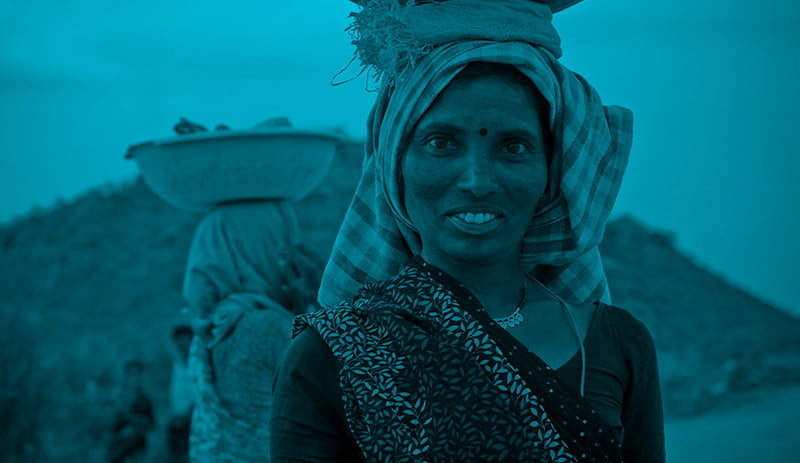
    Women’s increased participation in the paid workforce is widely seen as an important remedy for various social ills such as poverty. But their ability to engage in paid work is obstructed by pre-existing domestic burdens, which extract a heavy toll on women’s time and energy. There is a wide literature documenting women’s work for households and their strategies for managing the time required to accomplish it, but this scholarship tends to position work/life balance as an individual-level time management issue. Women are expected to come up with personal strategies to “have it all.” Drawing on ethnographic research with low income working women from rural India, Goodman and Kaplan’s research finds that women’s ability to engage in paid work outside the home is contingent on the availability of household members to take up some of their domestic responsibilities. Examining the part that other household members play in facilitating women’s workforce participation shows that it shouldn’t be seen as an individual balancing act but rather as a household negotiation, which has important implications for scholars and policy makers alike.

    Research

    Women’s increased labour force participation is seen as a crucial avenue to improved GDP at the national and global levels. Accordingly, governments, businesses, and non-profits have channeled attention and funding towards initiatives aimed at pulling women into the paid workforce. Despite their efforts, women’s economic participation has stagnated in developed and developing countries alike. Research suggests that this stagnation is in part structured by norms that designate domestic work as women’s responsibility. In order to enter the paid labour force, women must find ways to reduce the demands of household labour. But the options available for doing so vary according to women’s situations.

    Research suggests that this stagnation is in part structured by norms that designate domestic work as women’s responsibility.

    Western, professional women—the focus of most management scholarship—sometimes outsource housework or seek more flexible work opportunities in an effort to balance the dual burdens of office and household work. Yet, even in Western elite contexts, such strategies have a limited impact on women’s ability to work. Therefore, scholarship and policy must move beyond its elite focus in order to help organizations and policymakers craft better work-life balance policies. New insights can be mined from examining how low-income women and those located in non-Western settings manage the heavy burden of domestic work in order to join the paid labour force.

    This paper draws on 18 months of ethnographic fieldwork conducted in the rural northern Indian state of Uttarakhand, as well as 52 interviews with working women and their family members to investigate how non-Western, working women can engage in formal work despite their onerous domestic work burdens. Household labour is especially demanding in this context, where income and infrastructure shortages limit women’s ability to rely on labor-saving devices, such as washing machines and piped water. Indeed, for many women in this context, household labor extends to farming activities and animal husbandry. How do women in this context enter paid work and still complete the time consuming, labour-intensive tasks necessary for their family’s survival?

    Findings

    The authors discovered that given the heavy burden of household work women faced, their ability to engage in formal work was contingent on the availability of household members willing to help free up women’s time by taking on some of their domestic tasks. Thus, women’s formal work outside the home was not an individual decision but a family project. In order for women to be able to take on jobs for pay, they had to negotiate new divisions of labour with their families. Family negotiations were driven by several considerations, including: the household’s need for money, their interest in securing useful social connections via women’s work relationships, and women’s ability to compel relatives to accept new divisions of labour.

    Low-income workers in western contexts are also often unable to afford privatized childcare or outsource housework. Such workers therefore tend to rely on relatives for various forms of assistance.

    These findings reflect patterns observable in other more developed world contexts. Low-income workers in Western contexts are also often unable to afford privatized childcare or outsource housework. Such workers therefore tend to rely on relatives for various forms of assistance. In the US, for instance, low-income workers are more likely to live in extended family households so that they can pool resources and secure familial assistance with domestic work. And, for elite professional workers in heterosexual relationships, it highlights the need for the male spouse to contribute more fully to household demands. Thus, this study outlines the importance of supportive family members in enabling women’s wage work.

    Implications

    • Reconceptualize ideas of work-life balance—Given the importance of family support for women’s ability to participate in wage work, it suggests that  work-life balance should be reconceptualized as a family problem, rather than an individual one. For companies, this means providing cultural support for men to take the time for parental leave and using flexible work practices so that they can participate in household care. For families, this suggests that women can move away from feeling they need to come up with personal strategies for “balance” and instead work with her family to negotiate sharing of tasks.
    • Reconceptualize ideas of unpaid labour—The research underscores the value of household labor. Tasks women undertake in their homes may be unpaid but are nevertheless crucial to their family’s survival. Thus, this research demonstrates the need for scholars and policymakers to embrace an expanded definition of work, one that considers household work as economically significant, worthy of inclusion in various national and global measures of productivity.
    • Support and extend familial assistance— This research suggests that any policy aimed at increasing women’s participation in wage work can only succeed if it finds ways to reduce women’s domestic burdens. One option for doing so is to support universal childcare, including by allowing people to use childcare subsidies for care by relatives.

    __________________________
    Research brief prepared by:

    Fauzia Husain

    [/fusion_text][fusion_separator style_type=”none” hide_on_mobile=”small-visibility,medium-visibility,large-visibility” class=”” id=”” sep_color=”” top_margin=”20″ bottom_margin=”20″ border_size=”” icon=”” icon_circle=”” icon_circle_color=”” width=”” alignment=”center” /][fusion_button link=”https://www.gendereconomy.org/research-briefs/” text_transform=”” title=”” target=”_blank” link_attributes=”” alignment=”” modal=”” hide_on_mobile=”small-visibility,medium-visibility,large-visibility” class=”” id=”” color=”custom” button_gradient_top_color=”#62bd19″ button_gradient_bottom_color=”#62bd19″ button_gradient_top_color_hover=”#00c2e2″ button_gradient_bottom_color_hover=”#00c2e2″ accent_color=”” accent_hover_color=”” type=”” bevel_color=”” size=”” stretch=”yes” icon=”” icon_position=”left” icon_divider=”no” animation_type=”” animation_direction=”left” animation_speed=”0.3″ animation_offset=””]See more research briefs[/fusion_button][fusion_separator style_type=”none” hide_on_mobile=”small-visibility,medium-visibility,large-visibility” class=”” id=”” sep_color=”” top_margin=”20″ bottom_margin=”20″ border_size=”” icon=”” icon_circle=”” icon_circle_color=”” width=”” alignment=”center” /][fusion_recent_posts layout=”default” hover_type=”none” columns=”3″ number_posts=”3″ offset=”0″ pull_by=”category” cat_slug=”research-briefs” exclude_cats=”” tag_slug=”” exclude_tags=”” thumbnail=”yes” title=”yes” meta=”no” meta_author=”no” meta_categories=”no” meta_date=”yes” meta_comments=”yes” meta_tags=”no” content_alignment=”” excerpt=”no” excerpt_length=”35″ strip_html=”yes” scrolling=”no” hide_on_mobile=”small-visibility,medium-visibility,large-visibility” class=”” id=”” animation_type=”” animation_direction=”left” animation_speed=”0.3″ animation_offset=”” /][/fusion_builder_column][fusion_builder_column type=”1_4″ layout=”1_4″ spacing=”” center_content=”no” hover_type=”none” link=”” min_height=”” hide_on_mobile=”small-visibility,medium-visibility,large-visibility” class=”” id=”” background_color=”” background_image=”” background_position=”left top” background_repeat=”no-repeat” border_color=”” border_style=”solid” border_position=”all” padding_top=”” padding_right=”” padding_bottom=”” padding_left=”” margin_top=”” margin_bottom=”” animation_type=”” animation_direction=”left” animation_speed=”0.3″ animation_offset=”” last=”true” first=”false” border_sizes_top=”0″ border_sizes_bottom=”0″ border_sizes_left=”0″ border_sizes_right=”0″][fusion_title title_type=”text” rotation_effect=”bounceIn” display_time=”1200″ highlight_effect=”circle” loop_animation=”off” highlight_width=”9″ highlight_top_margin=”0″ before_text=”” rotation_text=”” highlight_text=”” after_text=”” hide_on_mobile=”small-visibility,medium-visibility,large-visibility” class=”briefsummary” id=”” content_align=”left” size=”3″ font_size=”” animated_font_size=”” line_height=”” letter_spacing=”” margin_top=”” margin_bottom=”” margin_top_mobile=”” margin_bottom_mobile=”” text_color=”” animated_text_color=”” highlight_color=”” style_type=”none” sep_color=”” margin_top_small=”” margin_bottom_small=””]

    Title

    Work-Life Balance as A Household Negotiation: A Perspective from Rural India

    Authors

    Rachael Goodman and Sarah Kaplan

    Source

    Academy of Management Discoveries

    Published

    2019

    DOI

    10.5465/amd.2018.0105

    Link

    https://journals.aom.org/doi/10.5465/amj.2016.1215

    Research brief prepared by

    Fauzia Husain

    [/fusion_title][fusion_widget_area name=”avada-custom-sidebar-researchbriefsidebar” title_size=”” title_color=”” background_color=”” padding_top=”” padding_right=”” padding_bottom=”” padding_left=”” hide_on_mobile=”small-visibility,medium-visibility,large-visibility” class=”” id=”” /][/fusion_builder_column][/fusion_builder_row][/fusion_builder_container]

  • Remote work and gender inequality throughout and beyond the COVID-19 pandemic

    Remote work and gender inequality throughout and beyond the COVID-19 pandemic

    [fusion_builder_container admin_label=”” hundred_percent=”no” equal_height_columns=”no” menu_anchor=”” hide_on_mobile=”small-visibility,medium-visibility,large-visibility” class=”” id=”” background_color=”” background_image=”” background_position=”center center” background_repeat=”no-repeat” fade=”no” background_parallax=”none” enable_mobile=”no” parallax_speed=”0.3″ video_mp4=”” video_webm=”” video_ogv=”” video_url=”” video_aspect_ratio=”16:9″ video_loop=”yes” video_mute=”yes” video_preview_image=”” border_color=”” border_style=”solid” margin_top=”20″ margin_bottom=”” padding_top=”” padding_right=”” padding_bottom=”” padding_left=”” type=”legacy”][fusion_builder_row][fusion_builder_column type=”3_4″ layout=”3_4″ spacing=”” center_content=”no” hover_type=”none” link=”” min_height=”” hide_on_mobile=”small-visibility,medium-visibility,large-visibility” class=”” id=”” background_color=”” background_image=”” background_position=”left top” background_repeat=”no-repeat” border_color=”” border_style=”solid” border_position=”all” padding_top=”” padding_right=”” padding_bottom=”” padding_left=”” margin_top=”” margin_bottom=”” animation_type=”” animation_direction=”left” animation_speed=”0.3″ animation_offset=”” last=”false” first=”true” border_sizes_top=”0″ border_sizes_bottom=”0″ border_sizes_left=”0″ border_sizes_right=”0″ spacing_right=””][fusion_text columns=”” column_min_width=”” column_spacing=”” rule_style=”default” rule_size=”” rule_color=”” hide_on_mobile=”small-visibility,medium-visibility,large-visibility” class=”” id=”” animation_type=”” animation_direction=”left” animation_speed=”0.3″ animation_offset=””]

    Executive Summary

    Not only is the COVID-19 pandemic an unprecedented stress test on our healthcare infrastructure, but on the way we value workers, and on the way we work. The ability to work remotely is, at the best of times, a privilege not afforded to many. According to Statistics Canada census data from 2016, only 7.5 percent of workers usually worked at the same address as their home, with significant variation by occupation and industry. The closure of schools and all non-essential businesses means that more people are working remotely than ever before. Within this context, we must attend to how gender inequality can be mitigated or intensified for those who are fortunate to work from home.

    READ AND/OR DOWNLOAD THE FULL POLICY BRIEF.

    __________________________

    Policy brief prepared by:

    KIM DE LAAT, POSTDOCTORAL FELLOW, OF THE INSTITUTE FOR GENDER AND THE ECONOMY AT THE ROTMAN SCHOOL OF MANAGEMENT, UNIVERSITY OF TORONTO.

    [/fusion_text][fusion_separator style_type=”none” hide_on_mobile=”small-visibility,medium-visibility,large-visibility” class=”” id=”” sep_color=”” top_margin=”20″ bottom_margin=”20″ border_size=”” icon=”” icon_circle=”” icon_circle_color=”” width=”” alignment=”center” /][fusion_button link=”https://www.gendereconomy.org/category/policy-briefs/” text_transform=”” title=”” target=”_blank” link_attributes=”” alignment=”” modal=”” hide_on_mobile=”small-visibility,medium-visibility,large-visibility” class=”” id=”” color=”custom” button_gradient_top_color=”#62bd19″ button_gradient_bottom_color=”#62bd19″ button_gradient_top_color_hover=”#00c2e2″ button_gradient_bottom_color_hover=”#00c2e2″ accent_color=”” accent_hover_color=”” type=”” bevel_color=”” border_width=”” size=”” stretch=”yes” icon=”” icon_position=”left” icon_divider=”no” animation_type=”” animation_direction=”left” animation_speed=”0.3″ animation_offset=”” border_radius=””]See more policy briefs[/fusion_button][fusion_separator style_type=”none” hide_on_mobile=”small-visibility,medium-visibility,large-visibility” class=”” id=”” sep_color=”” top_margin=”20″ bottom_margin=”20″ border_size=”” icon=”” icon_circle=”” icon_circle_color=”” width=”” alignment=”center” /][fusion_recent_posts layout=”default” picture_size=”fixed” hover_type=”none” columns=”3″ number_posts=”3″ offset=”0″ pull_by=”category” cat_slug=”policy-briefs” exclude_cats=”” tag_slug=”” exclude_tags=”” thumbnail=”yes” title=”yes” meta=”no” meta_author=”no” meta_categories=”no” meta_date=”yes” meta_comments=”yes” meta_tags=”no” content_alignment=”” excerpt=”no” excerpt_length=”35″ strip_html=”yes” scrolling=”no” hide_on_mobile=”small-visibility,medium-visibility,large-visibility” class=”” id=”” animation_type=”” animation_direction=”left” animation_speed=”0.3″ animation_offset=”” /][/fusion_builder_column][fusion_builder_column type=”1_4″ layout=”1_4″ spacing=”” center_content=”no” hover_type=”none” link=”” min_height=”” hide_on_mobile=”small-visibility,medium-visibility,large-visibility” class=”” id=”” background_color=”” background_image=”” background_position=”left top” background_repeat=”no-repeat” border_color=”” border_style=”solid” border_position=”all” padding_top=”” padding_right=”” padding_bottom=”” padding_left=”” margin_top=”” margin_bottom=”” animation_type=”” animation_direction=”left” animation_speed=”0.3″ animation_offset=”” last=”true” first=”false” border_sizes_top=”0″ border_sizes_bottom=”0″ border_sizes_left=”0″ border_sizes_right=”0″][fusion_title title_type=”text” rotation_effect=”bounceIn” display_time=”1200″ highlight_effect=”circle” loop_animation=”off” highlight_width=”9″ highlight_top_margin=”0″ before_text=”” rotation_text=”” highlight_text=”” after_text=”” hide_on_mobile=”small-visibility,medium-visibility,large-visibility” class=”briefsummary” id=”” content_align=”left” size=”3″ font_size=”” animated_font_size=”” fusion_font_family_title_font=”” fusion_font_subset_title_font=”” fusion_font_variant_title_font=”” line_height=”” letter_spacing=”” margin_top=”” margin_bottom=”” margin_top_mobile=”” margin_bottom_mobile=”” text_color=”” animated_text_color=”” highlight_color=”” style_type=”none” sep_color=”” animation_type=”” animation_direction=”left” animation_speed=”0.3″ animation_offset=”” margin_top_small=”” margin_bottom_small=””]

    Authors

    Kim de Laat

    Published

    April 2020

    [/fusion_title][fusion_widget_area name=”avada-custom-sidebar-researchbriefsidebar” title_size=”” title_color=”” background_color=”” padding_top=”” padding_right=”” padding_bottom=”” padding_left=”” hide_on_mobile=”small-visibility,medium-visibility,large-visibility” class=”” id=”” /][/fusion_builder_column][/fusion_builder_row][/fusion_builder_container]
  • Primer on the gendered impacts of COVID-19

    Primer on the gendered impacts of COVID-19

    [fusion_builder_container admin_label=”” hundred_percent=”no” equal_height_columns=”no” menu_anchor=”” hide_on_mobile=”small-visibility,medium-visibility,large-visibility” class=”” id=”” background_color=”” background_image=”” background_position=”center center” background_repeat=”no-repeat” fade=”no” background_parallax=”none” enable_mobile=”no” parallax_speed=”0.3″ video_mp4=”” video_webm=”” video_ogv=”” video_url=”” video_aspect_ratio=”16:9″ video_loop=”yes” video_mute=”yes” video_preview_image=”” border_color=”” border_style=”solid” margin_top=”20″ margin_bottom=”” padding_top=”” padding_right=”” padding_bottom=”” padding_left=”” type=”legacy”][fusion_builder_row][fusion_builder_column type=”3_4″ layout=”3_4″ spacing=”” center_content=”no” hover_type=”none” link=”” min_height=”” hide_on_mobile=”small-visibility,medium-visibility,large-visibility” class=”” id=”” background_color=”” background_image=”” background_position=”left top” background_repeat=”no-repeat” border_color=”” border_style=”solid” border_position=”all” padding_top=”” padding_right=”” padding_bottom=”” padding_left=”” margin_top=”” margin_bottom=”” animation_type=”” animation_direction=”left” animation_speed=”0.3″ animation_offset=”” last=”false” first=”true” border_sizes_top=”0″ border_sizes_bottom=”0″ border_sizes_left=”0″ border_sizes_right=”0″ spacing_right=””][fusion_text columns=”” column_min_width=”” column_spacing=”” rule_style=”” rule_size=”” rule_color=”” hue=”” saturation=”” lightness=”” alpha=”” content_alignment_medium=”” content_alignment_small=”” content_alignment=”” hide_on_mobile=”small-visibility,medium-visibility,large-visibility” sticky_display=”normal,sticky” class=”” id=”” margin_top=”” margin_right=”” margin_bottom=”” margin_left=”” fusion_font_family_text_font=”” fusion_font_variant_text_font=”” font_size=”” line_height=”” letter_spacing=”” text_transform=”” text_color=”” animation_type=”” animation_direction=”left” animation_color=”” animation_speed=”0.3″ animation_delay=”0″ animation_offset=”” logics=””]

    Introduction

    The COVID-19 pandemic has had gendered effects. Women, especially those who are racialized, Indigenous, low-income, migrants and immigrants, and / or have disabilities, have been particularly susceptible to contracting the disease, as well as to experiencing heightened economic instability, job loss, and curtailed access to services and resources. Trans and gender diverse peoples also face increased risks due to widespread discrimination and stigma. On the other hand, some data suggest that men, particularly racialized men, have been more likely to face serious illness and death from COVID-19.

    This primer provides a summary of how gender and its intersections impact the ways the COVID-19 crisis is experienced, including key resources for further reading, and the implications for policy and action during and after the pandemic. It has been updated in July 2021 to add more resources and information to the original April 2020 version.

    1.    Women are more likely than men to be frontline workers.

    Women are more likely than men to be healthcare workers, on the frontline of the pandemic. According to the World Health Organization, across 104 countries, women comprise 70% of health and social care sector workers.[1] In Canada, they are even more represented, at 81% of health care and social assistance workers.[2] This has made women more vulnerable to COVID-19, and as of spring 2021 they made up 51% of COVID-19 cases in Canada. One study in the summer of 2020 found that of all women who tested positive for COVID-19 in Ontario, 36 per cent were employed as healthcare workers, and of those, 45 per cent were immigrants and refugees.[3] However, because there is an underrepresentation of women in leadership, especially racialized and immigrant women, their voices are not often heard in decision- and policymaking.[4]

    2.    Women, particularly racialized women, are more likely to do high-contact, unprotected, and economically insecure work.

    Women and particularly racialized and immigrant women are also concentrated in jobs in services, retail, care, and hospitality sectors. These jobs involve high contact with people, often do not offer paid sick leave, and tend to pay relatively low wages.[5] This has translated to increased risk of contracting COVID-19 for these workers and their families.

    Such jobs are also likely to provide precarious and part-time or temporary work, increasing workers’ susceptibility to layoffs and economic insecurity.[6] This latter point means women have been more severely affected by the economic recession caused by COVID-19. Data from Statistics Canada show that women made up 70% of employment losses for Canadians aged 25-64 in March of 2020.[7] Subsequent waves of COVID-19 causing further lockdowns resulted in more lost hours and temporary layoffs for core-aged women than for men, and higher unemployment for young women compared to young men.[8]

    Resources (for 1 and 2)

    Research and policy

    Media

    3.    Women’s domestic and caregiving burdens have increased.

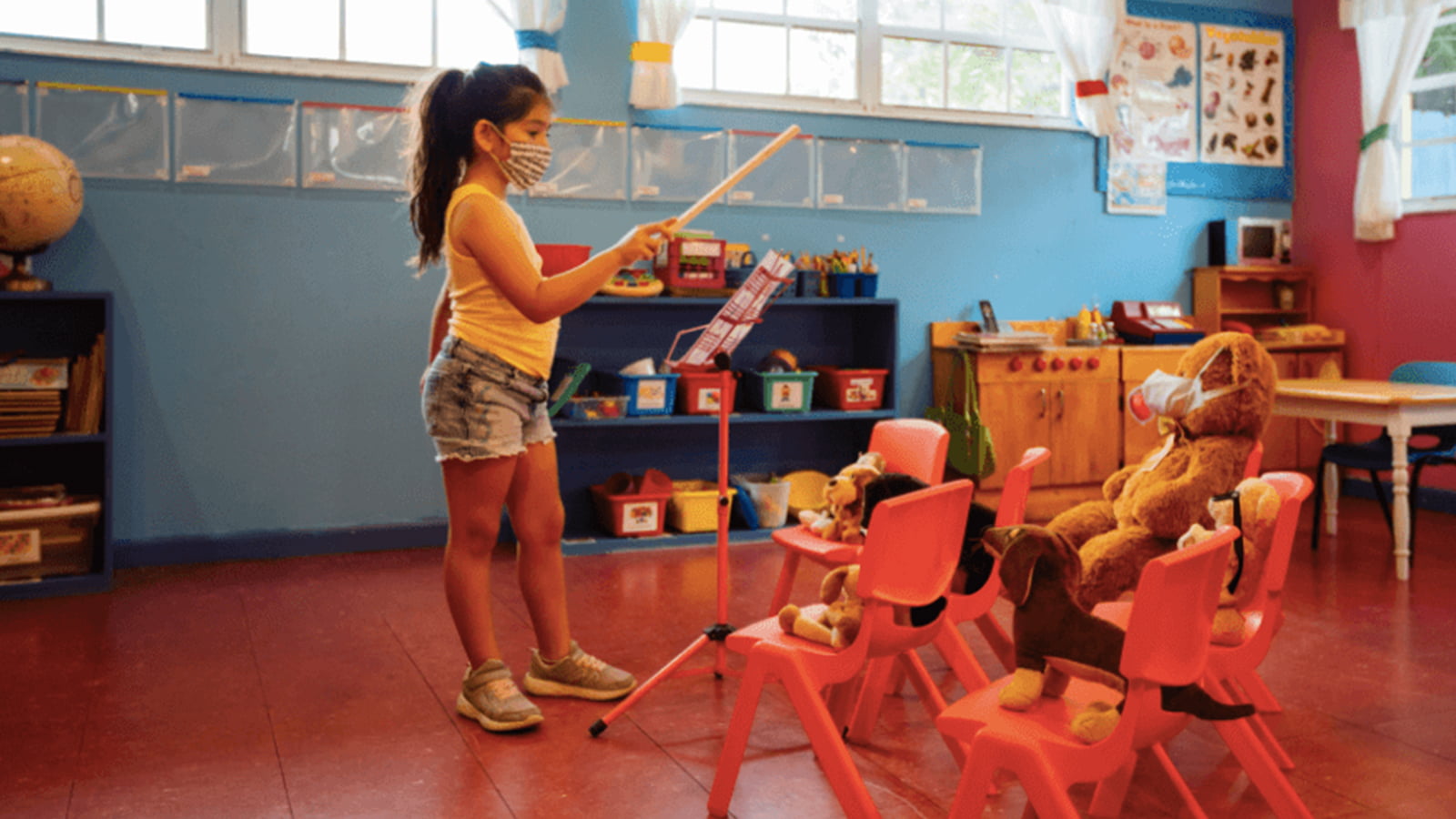
    The pandemic has brought to the fore the importance of public investment in childcare. As countries went into lockdown, women’s domestic work and caregiving burdens increased heavily. When schools and daycares closed and social distancing measures were put into place, caregiving was moved back into the home, and grandparents or other relatives could not assist with care. Sick and / or self-isolating people also needed caregiving. Due to gender norms and roles, women have been doing the majority of this unpaid labour. While both women’s and men’s time spent on domestic work increased during the pandemic, women’s tended to increase more than men.[9] Further, for single mothers, balancing caregiving and paid work is a norm, but during the pandemic this work has been an even heavier load.

    As a result, more women than men have left or reduced paid work due to caregiving responsibilities. In the summer of 2020, women’s participation in the Canadian labour force fell to 1980s levels. Between February and October of 2020, 20,600 Canadian women left the labour force while nearly 68,000 men joined.[10] In November 2020, over half of mothers with children under eighteen were working less than half their usual hours, compared to only 41% of fathers.[11] Such caregiving burdens have also resulted in increased reports of mental health issues for parents and particularly for mothers.[12]

    Research on gendered effects of the pandemic across multiple countries suggest that having the ability to telecommute reduces these gender differences in employment. However, even for parents who have been telecommuting while taking care of children, mothers still face higher productivity declines than fathers.[13]

    Studies show that investing in the care economy (i.e., through publicly funded, affordable and accessible childcare) will boost women’s participation in the labour force as well as ensure that workers in the care sector have good jobs that are paid fairly, resulting in higher quality care services for all.[14]

    Resources

    Research and policy

    Media

    4.    Gender, race and other social identities shape the risk of serious illness or death from COVID-19.

    Some evidence suggests that men have experienced more serious illness from COVID-19 than women. As of June 2021, for every ten women who died of COVID-19 around the world, thirteen men died.[15]

    Intersectional analysis is important here. Racialized people are less likely to be able to access healthcare and have access to paid sick leave. They are more likely to work in essential jobs and to be in poorer health due to poverty and inadequate access to healthy foods. Research has found that race plays a significant role in mortality, with one study from the United States showing that Black men have the highest mortality rates from COVID-19. However, Black women showed higher mortality rates than white men and women.[16]

    To better understand risks and impacts, it is vital that COVID-19 data disaggregated by sex and gender, as well as other variables such as race, ethnicity, and socioeconomic status, are made available.[17]

    Resources

    Research and policy

    Media

    5.    Vulnerability to domestic abuse and gender-based violence increases.

    Isolation and social distancing pose increased dangers to victims of abusive relationships. During a lockdown, victims face more barriers to leaving abusers or to reaching out for help to friends and family. There has also been limited access to domestic violence services such as shelters due to social distancing measures. During the spring of 2020 in China, data indicate that the number of reported domestic violence cases tripled.[18] In Canada at the beginning of the pandemic, the federal government noted that there was a 20-30% increase in domestic violence reports in some regions. It has since announced extra funding for supports and services for gender-based violence, as well as a commitment to a National Action Plan on Gender-Based Violence.[19]

    Resources

    Research and policy

    Media

    6.    Access to sexual and reproductive healthcare is curtailed.

    During a pandemic, barriers to sexual and reproductive healthcare arise globally. Research has suggested that access to contraception and menstrual products has been curtailed due to supply chain interruptions. There has also been a shortage of services providing sexual and reproductive health care, as resources have been taken away from these programs. Further, people have lacked information about what sexual and reproductive health services are available during quarantine periods.[20] [21] A recent survey of sexual and reproductive health workers in 29 countries found that 86% reported the pandemic decreased access to contraceptive services and 62% reported decreased access to surgical abortion. These results came about due to a lack of political will, the effects of lockdowns, and suspension of sexual education.[22]

    Resources

    Research and policy

    Media

    7.    Indigenous, racialized, low-income, LGBTQ+ and other marginalized groups are more affected.

    It is crucial to emphasize that Indigenous, racialized, low-income, LGBTQ+, immigrant, and other marginalized groups have been more affected by the pandemic, as they were already more likely to be in economically insecure and high-risk health circumstances.

    The resources linked below point to some different aspects of heightened risk:

    • Indigenous and racialized communities as well as immigrants and migrants have been more susceptible to the pandemic’s impacts due to overcrowded housing, unsafe water, and poor access to healthcare and safe employment.
    • The pandemic has resulted in palpable racism, hate, and xenophobia against Asian populations.
    • Low-income groups are less likely to be able to work from home or have access to paid sick leave, resulting in higher rates of COVID-19.
    • Trans and gender-diverse people continue to face high levels of discrimination and stigma, including in healthcare and in bathrooms (where handwashing is done).
    • LGBTQ+ people are more likely to face employment instability or insecurity than the general population. LGBTQ+ elders are also more likely to be isolated or living alone.
    • Persons with disabilities and chronic health conditions have faced high rates of social isolation and financial uncertainty during the pandemic, leading to increased stress, anxiety, and despair.

    Resources

    Research and policy

    Media

    Policy considerations

    Considering the above perspectives, the following actions are recommended for policymaking and decision-making during and after the COVID-19 pandemic. Pandemic recovery must use a feminist lens and focus on equity for all groups who have been disproportionately affected. A summary of the Feminist Economic Recovery Plan for Canada developed by GATE in partnership with YWCA Canada can be found below and the full version is available here.

    1. Ensure marginalized groups have a voice in decision-making around pandemic response. Pay specific attention to the needs and perspectives of women, girls, gender-diverse people, Indigenous, low-income, racialized, LGBTQ+, and other high-risk groups.
    2. Conduct a gender analysis on all pandemic policy responses, both economic- and health-related. Analysis should be intersectional and consider race, socio-economic status, sexual identity, Indigeneity, and other social demographics. Gender analysis should be considered essential.
    3. Establish a universal or targeted basic income to ensure that a livable income is not tied to access to work and that unpaid labour is valued.
    4. Prioritize ensuring that everyone has paid sick leave, high quality health care, and affordable childcare. Lack of paid sick leave and access to care puts an entire population at risk during pandemics.
    5. Fund and provide extra support for essential reproductive and sexual health services, especially for vulnerable populations. This includes access to maternal and child services, abortion, and women’s hygiene products.
    6. Fund and provide extra support for shelters and assistance for domestic violence victims and ensure that assistance services are available digitally.
    7. Promote and campaign for equal domestic work sharing among genders to concretize the importance of reducing these burdens for women.
    8. Ensure that data collection and analysis on the impacts of the pandemic is disaggregated by gender, sex, race, Indigeneity, disability status, and other social demographics.

    Further reading

    The following links provide more helpful resources on gender and COVID-19.

    Téléchargez le pdf en français ici.
    ________________________

    Policy brief prepared by:

    CARMINA RAVANERA OF THE INSTITUTE FOR GENDER AND THE ECONOMY AT THE ROTMAN SCHOOL OF MANAGEMENT, UNIVERSITY OF TORONTO, UNDER THE SUPERVISION OF PROFESSOR SARAH KAPLAN.

    References

    [1] Boniol, M., et al. (2019). Gender equity in the health workforce: Analysis of 104 countries. World Health Organization. Retrieved on March 25, 2020 from https://apps.who.int/iris/bitstream/handle/10665/311314/WHO-HIS-HWF-Gender-WP1-2019.1-eng.pdf?sequence=1&isAllowed=y

    [2] Statistics Canada (2019). Employment by class of worker, annual (x 1,000). Retrieved on March 25, 2020 from https://www150.statcan.gc.ca/t1/tbl1/en/tv.action?pid=1410002701&pickMembers%5B0%5D=1.1&pickMembers%5B1%5D=3.15&pickMembers%5B2%5D=4.3

    [3] Guttmann A. et al. (2020). COVID-19 in Immigrants, Refugees and Other Newcomers in Ontario: Characteristics of Those Tested and Those Confirmed Positive, as of June 13, 2020. Retrieved on May 20, 2021 from https://www.ices.on.ca/Publications/Atlases-and-Reports/2020/COVID-19-in-Immigrants-Refugees-and-Other-Newcomers-in-Ontario

    [4] Wenham, C., Smith, J., and Morgan, R. (March 6, 2020). COVID-19: the gendered impacts of the outbreak. The Lancet 395(10227).

    [5] Scott, K. (March 20, 2020). COVID-19 crisis response must address gender faultlines. Canadian Centre for Policy Alternatives. Retrieved on March 25, 2020 from http://behindthenumbers.ca/2020/03/20/covid-19-crisis-response-must-address-gender-faultlines/

    [6] Moyer, M (2017). Women and Paid Work. Statistics Canada. Retrieved on March 26, 2020 from https://www150.statcan.gc.ca/n1/pub/89-503-x/2015001/article/14694-eng.htm

    [7] Statistics Canada (2020). Labour Force Survey, March 2020. Retrieved on May 19, 2021 from https://www150.statcan.gc.ca/n1/daily-quotidien/200409/dq200409a-eng.htm

    [8] Statistics Canada (2021). Labour Force Survey, April 2021. Retrieved on May 19, 2021 from https://www150.statcan.gc.ca/n1/daily-quotidien/210507/dq210507a-eng.htm

    [9] Kabeer, N., Razavi, S., van der Meuelen Rodgers, Y. (2021). Feminist Economic Perspectives on the COVID-19 Pandemic. Feminist Economics 27(1-2), 1-29.

    [10] Desjardins, D. and Freestone, C. (2020). Canadian Women Continue to Exist the Labour Force. RBC Economics. Retrieved on May 19, 2021 from https://thoughtleadership.rbc.com/canadian-women-continue-to-exit-the-labour-force/

    [11] Statistics Canada (2020). Labour Force Survey, November 2020. Retrieved on May 19, 2021 from https://www150.statcan.gc.ca/n1/daily-quotidien/201204/dq201204a-eng.htm

    [12] Oxfam (2020). 71 per cent of Canadian women feeling more anxious, depressed, isolated, overworked or ill because of increased unpaid care work caused by COVID-19: Oxfam survey. Retrieved from https://www.oxfam.ca/news/71-per-cent-of-canadian-women-feeling-more-anxious-depressed-isolated-overworked-or-ill-because-of-increased-unpaid-care-work-caused-by-covid-19-oxfam-survey/

    [13] Alon, T. et al. (2021). From Mancession to Shecession: Women’s Employment in Regular and Pandemic Recessions. NBER Working Paper. Retrieved on June 28, 2021 from https://www.nber.org/system/files/working_papers/w28632/w28632.pdf

    [14] de Henau, J. and Himmelweit, J. (2021). A Care-Led Recovery From Covid-19: Investing in High-Quality Care to Stimulate And Rebalance The Economy. Feminist Economics 27(1-2).

    [15] The Sex, Gender and COVID-19 Project (2021). Retrieved on July 5, 2021 from https://globalhealth5050.org/the-sex-gender-and-covid-19-project/the-data-tracker/

    [16] Rushovich, T. et al. (2021). Sex Disparities in COVID-19 Mortality Vary Across US Racial Groups. Journal of General Internal Medicine.

    [17] Allotey, P., Reidpath, D.D. and Schwalbe, N. (2020). Are men really that much more likely to die from coronavirus? We need better data to be certain. The Conversation. Retrieved on May 19, 2021 from https://theconversation.com/are-men-really-that-much-more-likely-to-die-from-coronavirus-we-need-better-data-to-be-certain-141564

    [18] Allen-Ebrahimian, B. (March 7, 2020). China’s domestic violence epidemic. Retrieved on March 26, 2020 from https://www.axios.com/china-domestic-violence-coronavirus-quarantine-7b00c3ba-35bc-4d16-afdd-b76ecfb28882.html

    [19] Patel, R. (April 27, 2020). Minister says COVID-19 is empowering domestic violence abusers as rates rise in parts of Canada. Retrieved on June 2, 2021 from https://www.cbc.ca/news/politics/domestic-violence-rates-rising-due-to-covid19-1.5545851

    [20] Hussein, J. (2020). COVID-19: What implications for sexual and reproductive health and rights globally? Sexual and Reproductive Health Matters.

    [21] Marie Stopes International (2020). Resilience, Adaptation and Action : MSI’s Response to COVID-19. Retrieved on May 20, 2021 from https://www.msichoices.org/media/3849/resilience-adaptation-and-action.pdf

    [22] Endler, M. et al. (2020). How the coronavirus disease 2019 pandemic is impacting sexual and reproductive health and rights and response: Results from a global survey of providers, researchers, and policy makers. Acta Obstetricia et Gynecologica Scandinavica 100 (4), 571-578.

    [/fusion_text][fusion_separator style_type=”none” hide_on_mobile=”small-visibility,medium-visibility,large-visibility” class=”” id=”” sep_color=”” top_margin=”20″ bottom_margin=”20″ border_size=”” icon=”” icon_circle=”” icon_circle_color=”” width=”” alignment=”center” /][fusion_button link=”https://www.gendereconomy.org/category/policy-briefs/” text_transform=”” title=”” target=”_blank” link_attributes=”” alignment=”” modal=”” hide_on_mobile=”small-visibility,medium-visibility,large-visibility” class=”” id=”” color=”custom” button_gradient_top_color=”#62bd19″ button_gradient_bottom_color=”#62bd19″ button_gradient_top_color_hover=”#00c2e2″ button_gradient_bottom_color_hover=”#00c2e2″ accent_color=”” accent_hover_color=”” type=”” bevel_color=”” size=”” stretch=”yes” icon=”” icon_position=”left” icon_divider=”no” animation_type=”” animation_direction=”left” animation_speed=”0.3″ animation_offset=””]See more policy briefs[/fusion_button][fusion_separator style_type=”none” hide_on_mobile=”small-visibility,medium-visibility,large-visibility” class=”” id=”” sep_color=”” top_margin=”20″ bottom_margin=”20″ border_size=”” icon=”” icon_circle=”” icon_circle_color=”” width=”” alignment=”center” /][fusion_recent_posts layout=”default” picture_size=”fixed” hover_type=”none” columns=”3″ number_posts=”3″ offset=”0″ pull_by=”category” cat_slug=”policy-briefs” exclude_cats=”” tag_slug=”” exclude_tags=”” thumbnail=”yes” title=”yes” meta=”no” meta_author=”no” meta_categories=”no” meta_date=”yes” meta_comments=”yes” meta_tags=”no” content_alignment=”” excerpt=”no” excerpt_length=”35″ strip_html=”yes” scrolling=”no” hide_on_mobile=”small-visibility,medium-visibility,large-visibility” class=”” id=”” animation_type=”” animation_direction=”left” animation_speed=”0.3″ animation_offset=”” /][/fusion_builder_column][fusion_builder_column type=”1_4″ layout=”1_4″ spacing=”” center_content=”no” hover_type=”none” link=”” min_height=”” hide_on_mobile=”small-visibility,medium-visibility,large-visibility” class=”” id=”” background_color=”” background_image=”” background_position=”left top” background_repeat=”no-repeat” border_color=”” border_style=”solid” border_position=”all” padding_top=”” padding_right=”” padding_bottom=”” padding_left=”” margin_top=”” margin_bottom=”” animation_type=”” animation_direction=”left” animation_speed=”0.3″ animation_offset=”” last=”true” first=”false” border_sizes_top=”0″ border_sizes_bottom=”0″ border_sizes_left=”0″ border_sizes_right=”0″][fusion_title title_type=”text” rotation_effect=”bounceIn” display_time=”1200″ highlight_effect=”circle” loop_animation=”off” highlight_width=”9″ highlight_top_margin=”0″ before_text=”” rotation_text=”” highlight_text=”” after_text=”” title_link=”off” link_url=”” link_target=”_self” hide_on_mobile=”small-visibility,medium-visibility,large-visibility” sticky_display=”normal,sticky” class=”briefsummary” id=”” content_align_medium=”” content_align_small=”” content_align=”left” size=”3″ font_size=”” animated_font_size=”” fusion_font_family_title_font=”” fusion_font_variant_title_font=”” line_height=”” letter_spacing=”” text_shadow=”no” text_shadow_vertical=”” text_shadow_horizontal=”” text_shadow_blur=”0″ text_shadow_color=”” margin_top_medium=”” margin_right_medium=”” margin_bottom_medium=”” margin_left_medium=”” margin_top_small=”” margin_right_small=”” margin_bottom_small=”” margin_left_small=”” margin_top=”” margin_right=”” margin_bottom=”” margin_left=”” margin_top_mobile=”” margin_bottom_mobile=”” text_color=”” animated_text_color=”” highlight_color=”” style_type=”none” sep_color=”” link_color=”” link_hover_color=”” animation_type=”” animation_direction=”left” animation_speed=”0.3″ animation_offset=””]

    Authors

    Carmina Ravanera

    Published

    July 2021 (updated from April 2020)

    [/fusion_title][fusion_widget_area name=”avada-custom-sidebar-researchbriefsidebar” title_size=”” title_color=”” background_color=”” padding_top=”” padding_right=”” padding_bottom=”” padding_left=”” hide_on_mobile=”small-visibility,medium-visibility,large-visibility” class=”” id=”” /][/fusion_builder_column][/fusion_builder_row][/fusion_builder_container]
  • Care responsibilities and work-life balance

    Care responsibilities and work-life balance

    [fusion_builder_container admin_label=”” hundred_percent=”no” equal_height_columns=”no” menu_anchor=”” hide_on_mobile=”small-visibility,medium-visibility,large-visibility” class=”” id=”” background_color=”” background_image=”” background_position=”center center” background_repeat=”no-repeat” fade=”no” background_parallax=”none” enable_mobile=”no” parallax_speed=”0.3″ video_mp4=”” video_webm=”” video_ogv=”” video_url=”” video_aspect_ratio=”16:9″ video_loop=”yes” video_mute=”yes” video_preview_image=”” border_color=”” border_style=”solid” margin_top=”20″ margin_bottom=”” padding_top=”” padding_right=”” padding_bottom=”” padding_left=”” type=”legacy”][fusion_builder_row][fusion_builder_column type=”3_4″ layout=”3_4″ spacing=”” center_content=”no” hover_type=”none” link=”” min_height=”” hide_on_mobile=”small-visibility,medium-visibility,large-visibility” class=”” id=”” background_color=”” background_image=”” background_position=”left top” background_repeat=”no-repeat” border_color=”” border_style=”solid” border_position=”all” padding_top=”” padding_right=”” padding_bottom=”” padding_left=”” margin_top=”” margin_bottom=”” animation_type=”” animation_direction=”left” animation_speed=”0.3″ animation_offset=”” last=”false” border_sizes_top=”0″ border_sizes_bottom=”0″ border_sizes_left=”0″ border_sizes_right=”0″ first=”true” spacing_right=””][fusion_text columns=”” column_min_width=”” column_spacing=”” rule_style=”default” rule_size=”” rule_color=”” hide_on_mobile=”small-visibility,medium-visibility,large-visibility” class=”” id=””]

    Download this research brief (in English/en Français).
    Download the infographic (in English/en Français).

    Overview

    Since 1976, the percentage of dual-earner families has nearly doubled from 36 to 69%. This increase is driven primarily by women’s greater participation in the paid labour market. In 2014, 58% of women between the ages of 25 and 54 were employed full-time.[1] Single mothers accounted for 81% of lone-parent families.[2]

    The growing participation rates of women in the workforce have been accompanied by increasing demand for childcare services. Daycare provision helps mothers of young children stay in the paid labour market, and it facilitates peer socialization and school readiness.[3] In 2011, almost half of parents (46%) in Canada reported using some type of childcare for their children aged 14 years and younger. Of those parents paying for childcare, 31% use home daycares, 33% opt for licensed daycare centres, and 28% enlist private care.[4]

    46% of Canadian parents reported using some type of childcare for their children aged 14 years and younger.

    Sources of work-family conflict

    At the same time that their share of paid work is increasing, women spend twice as much time performing unpaid childcare as men (50.1 vs. 24.4 hours per week on average), and they spend more time on domestic work than men (13.8 vs. 8.3 hours per week).[5] Canadian women also spend less time on leisure activities, and they are more likely than men to be simultaneously engaged in unpaid work.[6]  The “second shift” performed by working women is exacerbated by unrealistic cultural norms of intensive mothering.[7] Women also make up a larger share of the “sandwich” generation, cohorts of adults who are responsible for caring for their ageing parents in addition to bringing up their own children. Nearly 6 in 10  (57%) of eldercare providers are women.[8]

    Expectations that workers are available 24/7 and job design that inhibits remote work also make it more challenging to accommodate caregiving responsibilities. The inflexibility of work hours and lack of schedule control in high-status occupations like law contributes to women’s stratification within such fields and their overall underrepresentation in such fields.[9] 

    Availability of licensed daycare space varies widely. Approximately 44% of all non-school-aged children in Canada live in communities where demand outpaces the supply of childcare. While large cities in Quebec and Prince Edward Island have the most availability, cities such as Kitchener and Brampton, ON and Saskatoon, SK have the lowest coverage rates.[10] Since 2000, Quebec has offered subsidized childcare for children ages 0-4, where the average cost of childcare is $7 per day. Since the implementation of universal childcare, estimates of the increase in mothers working full-time outside the home ranges from 8 to 12%.[11] The median cost of full-time childcare in Quebec is four times lower than the Atlantic provinces, which have a median cost of $541 per month. Childcare is most expensive in Ontario where the median monthly cost is $677.[12]

    Solutions for improving work-life balance and making care work more equitable at work

    There are several measures employers can take to improve the work-life balance of employees and help make the division of unpaid work more equitable:

    • Promote fathers’ involvement: Cultural norms around the male provider role make men feel uncomfortable taking extended parental leave.[13] Employers need to encourage this more strongly. Long parental leaves have been shown to compromise women’s career advancement.[14] Longer parental leave for men can help reduce parental leave for women, thus getting them back into the workforce more quickly. Small and medium-sized businesses might find parental leaves more disruptive than large firms, but careful and creative planning for leaves can pay off in terms of intangible benefits such as increased motivation, loyalty and retention.[15]
    • Provide flexibility: Flexible work arrangements, such as telework and flex-time, are one mechanism that make it easier for working parents to balance the responsibilities of paid and unpaid labour. But they have to be implemented correctly and there has to be buy-in from management. Given that use of flexible work arrangements increase when managers demonstrate support—and that most employees (86%) and managers (74%) do not receive training on flexible work arrangements —managerial training could be a key intervention.[16][17] For example, PepsiCo executive Robbert Rietbroek suggests that senior management “leave loudly,” thereby demonstrating to junior staff that it’s acceptable to work flexible hours in order to accommodate personal needs.[18]
    • Offer subsidized or on-site daycare: Larger firms can introduce on-site daycare. On-site childcare improves worker morale and enables parents to spend more time with their children.[19] It also helps with employee retention.[20] Smaller firms can consider subsidizing childcare or offering reimbursement for “emergency childcare” in order to improve the retention of employees with caregiving responsibilities.
    • Change job designs: There are ways of designing employment that make it easier to achieve work-life balance. Some organizations have considered introducing a 4-day workweek. This would enable female employees to take the extra time they need with their dependents while staying on the same footing as their work colleagues. And partners of men working a 4-day work week would be provided with the option of ramping up their own careers.[21]
    • Encourage change in cultural norms: In addition to workplace policy implementation, recent research points to the need to share the cognitive workload that accompanies unpaid care work. Mothers, in particular, are more likely to perform “invisible labour,” such as remembering birthdays, planning meals, scheduling extracurricular activities and scheduling doctor’s visits, which prevents them from focusing on other pursuits.[22] More attention needs to be paid to the gendered and unequal division of cognitive work that occurs in most heterosexual households.

    References

    [1] 2011 Statistics Canada Childcare in Canada report: https://www150.statcan.gc.ca/n1/pub/89-652-x/89-652-x2014005-eng.htm

    [2] Statistics Canada, Lone parent families: https://www150.statcan.gc.ca/n1/pub/75-006-x/2015001/article/14202/parent-eng.htm

    [3] Nores, M., & Barnett, W. S. (2010). Benefits of early childhood interventions across the world: (Under) Investing in the very young. Economics of Education Review, 29(2), 271–282. https://doi.org/10.1016/j.econedurev.2009.09.001

    [4] 2011 Statistics Canada Childcare in Canada report: https://www150.statcan.gc.ca/n1/pub/89-652-x/89-652-x2014005-eng.htm

    [5] Statistics Canada, Families, Living Arrangements and Unpaid Work: https://www150.statcan.gc.ca/n1/pub/89-503-x/2010001/article/11546-eng.htm#a12

    [6] Moyser, M. and Burlock, A., 2018. Time use: Total work burden, unpaid work, and leisure. Women in Canada: A Gender-based Statistical Report. Statistics Canada Catalogue, no. 89-503-X.

    [7] Collins, C. (2019). Making Motherhood Work: How Women Manage Careers and Caregiving. Princeton University Press.

    de Laat, K., & Baumann, S. (2016). Caring consumption as marketing schema: Representations of motherhood in an era of hyperconsumption. Journal of Gender Studies, 25(2), 183-199.

    Hays, S. (1998). The cultural contradictions of motherhood. Yale University Press.

    Hochschild, A., & Machung, A. (2012). The second shift: Working families and the revolution at home. Penguin

    [8] Cranswick, K., & Dosman, D. (2008). Eldercare: What we know today. Canadian social trends, 86(1), 49-57.

    [9] Kay, F., & Gorman, E. (2008). Women in the legal profession. Annual Review of Law and Social Science, 4, 299-332.

    [10] The Canadian Center for Policy Alternatives: https://www.policyalternatives.ca/publications/reports/child-care-deserts-canada

    [11] Fortin, P., Godbout, L., & St-Cerny, S. (2012). Impact of Quebec’s universal low fee childcare program on female labour force participation, domestic income, and government budgets. The Research Chair in Taxation and Public Finance at the University of Sherbrooke, Quebec, Canada.

    [12] 2011 Statistics Canada Childcare in Canada report: https://www150.statcan.gc.ca/n1/pub/89-652-x/89-652-x2014005-eng.htm

    [13] Coltrane, S., Miller, E. C., DeHaan, T., & Stewart, L. 2013. “Fathers and the flexibility stigma.” Journal of Social Issues, 69(2), 279-302.

    Rudman, L. A., & Mescher, K. 2013. “Penalizing men who request a family leave: Is flexibility stigma a femininity stigma?” Journal of Social Issues, 69(2), 322-340.

    Vandello, J. A., Hettinger, V. E., Bosson, J. K., & Siddiqi, J. (2013). When Equal Isn’t Really Equal: The Masculine Dilemma of Seeking Work Flexibility. Journal of Social Issues, 69(2), 303–321. https://doi.org/10.1111/josi.12016

    [14] Hideg, I., Krstic, A., Trau, R. N., & Zarina, T. (2018). The unintended consequences of maternity leaves: How agency interventions mitigate the negative effects of longer legislated maternity leaves. Journal of Applied Psychology, 103(10), 1155.

    Olivetti, C., & Petrongolo, B. (2017). The economic consequences of family policies: lessons from a century of legislation in high-income countries. Journal of Economic Perspectives, 31(1), 205-30.

    [15] Karen Firestone, How Should a Small Business Handle Parental Leave, Harvard Business Review: https://hbr.org/2013/05/how-should-a-small-business-ha

    [16] Conference Board of Canada 2017 study on flexible work arrangements: https://www.conferenceboard.ca/temp/dcfed0e6-3c32-4ad5-906e 66f09c02f5f1/9614_Flexible%20Work%20Agreements_RPT.pdf

    [17] Munsch, C. L., Ridgeway, C. L., & Williams, J. C. (2014). Pluralistic Ignorance and the Flexibility Bias: Understanding and Mitigating Flextime and Flexplace Bias at Work. Work and Occupations, 41(1), 40–62. https://doi.org/10.1177/0730888413515894

    [18] Leaving loudly: https://www.chicagotribune.com/news/opinion/editorials/ct-edit-work-life-balance-20170922-story.html

    [19] L. Gullekson, N., Griffeth, R., B. Vancouver, J., T. Kovner, C., & Cohen, D. (2014). Vouching for childcare assistance with two quasi-experimental studies. Journal of Managerial Psychology, 29(8), 994-1008.

    [20] Connelly, R., Degraff, D. S., & Willis, R. (2002). If you build it, they will come: parental use of on-site child care centers. Population Research and Policy Review, 21(3), 241-273.

    [21] The four-day workweek: https://qz.com/work/1530023/wellcome-trusts-four-day-week-is-great-for-gender-equality/

    [22] Hartley, G. (2018). Fed Up: Emotional Labor, Women, and the Way Forward. Harper Collins.

    [/fusion_text][fusion_separator style_type=”none” hide_on_mobile=”small-visibility,medium-visibility,large-visibility” class=”” id=”” sep_color=”” top_margin=”20″ bottom_margin=”20″ border_size=”” icon=”” icon_circle=”” icon_circle_color=”” width=”” alignment=”center” /][fusion_button link=”https://www.gendereconomy.org/research-briefs/” text_transform=”” title=”” target=”_blank” link_attributes=”” alignment=”” modal=”” hide_on_mobile=”small-visibility,medium-visibility,large-visibility” class=”” id=”” color=”custom” button_gradient_top_color=”#62bd19″ button_gradient_bottom_color=”#62bd19″ button_gradient_top_color_hover=”#00c2e2″ button_gradient_bottom_color_hover=”#00c2e2″ accent_color=”” accent_hover_color=”” type=”” bevel_color=”” border_width=”” size=”” stretch=”yes” icon=”” icon_position=”left” icon_divider=”no” animation_type=”” animation_direction=”left” animation_speed=”0.3″ animation_offset=”” border_radius=””]See more research briefs[/fusion_button][fusion_separator style_type=”none” hide_on_mobile=”small-visibility,medium-visibility,large-visibility” class=”” id=”” sep_color=”” top_margin=”20″ bottom_margin=”20″ border_size=”” icon=”” icon_circle=”” icon_circle_color=”” width=”” alignment=”center” /][fusion_recent_posts layout=”default” hover_type=”none” columns=”3″ number_posts=”3″ offset=”0″ pull_by=”category” cat_slug=”research-briefs” exclude_cats=”” tag_slug=”” exclude_tags=”” thumbnail=”yes” title=”yes” meta=”no” meta_author=”no” meta_categories=”no” meta_date=”yes” meta_comments=”yes” meta_tags=”no” content_alignment=”” excerpt=”no” excerpt_length=”35″ strip_html=”yes” scrolling=”no” hide_on_mobile=”small-visibility,medium-visibility,large-visibility” class=”” id=”” animation_type=”” animation_direction=”left” animation_speed=”0.3″ animation_offset=”” /][/fusion_builder_column][fusion_builder_column type=”1_4″ layout=”1_4″ spacing=”” center_content=”no” hover_type=”none” link=”” min_height=”” hide_on_mobile=”small-visibility,medium-visibility,large-visibility” class=”” id=”” background_color=”” background_image=”” background_position=”left top” background_repeat=”no-repeat” border_color=”” border_style=”solid” border_position=”all” padding_top=”” padding_right=”” padding_bottom=”” padding_left=”” margin_top=”” margin_bottom=”” animation_type=”” animation_direction=”left” animation_speed=”0.3″ animation_offset=”” last=”true” border_sizes_top=”0″ border_sizes_bottom=”0″ border_sizes_left=”0″ border_sizes_right=”0″ first=”false”][fusion_title hide_on_mobile=”small-visibility,medium-visibility,large-visibility” class=”briefsummary” id=”” content_align=”left” size=”3″ font_size=”” line_height=”” letter_spacing=”” margin_top=”” margin_bottom=”” margin_top_mobile=”” margin_bottom_mobile=”” text_color=”” style_type=”none” sep_color=”” margin_top_small=”” margin_bottom_small=””]

    Published

    April 23, 2019

    This research brief was funded by the Government of Canada’s Labour Program for the Women in the Workplace Symposium that took place at Rotman on May 09/10, 2019.

    The opinions and interpretations in this publication are those of the author and do not necessarily reflect those of the Government of Canada.

    To see more from this event, check out #Womenintheworkplace.

    Government of Canada logo

    [/fusion_title][fusion_widget_area name=”avada-custom-sidebar-researchbriefsidebar” title_size=”” title_color=”” background_color=”” padding_top=”” padding_right=”” padding_bottom=”” padding_left=”” hide_on_mobile=”small-visibility,medium-visibility,large-visibility” class=”” id=”” /][/fusion_builder_column][/fusion_builder_row][/fusion_builder_container]
  • Parental leave: Why we need to talk about fatherhood

    Parental leave: Why we need to talk about fatherhood

    [fusion_builder_container admin_label=”” hundred_percent=”no” equal_height_columns=”no” menu_anchor=”” hide_on_mobile=”small-visibility,medium-visibility,large-visibility” class=”” id=”” background_color=”” background_image=”” background_position=”center center” background_repeat=”no-repeat” fade=”no” background_parallax=”none” enable_mobile=”no” parallax_speed=”0.3″ video_mp4=”” video_webm=”” video_ogv=”” video_url=”” video_aspect_ratio=”16:9″ video_loop=”yes” video_mute=”yes” video_preview_image=”” border_color=”” border_style=”solid” margin_top=”20″ margin_bottom=”” padding_top=”” padding_right=”” padding_bottom=”” padding_left=”” type=”legacy”][fusion_builder_row][fusion_builder_column type=”3_4″ layout=”3_4″ spacing=”” center_content=”no” hover_type=”none” link=”” min_height=”” hide_on_mobile=”small-visibility,medium-visibility,large-visibility” class=”” id=”” background_color=”” background_image=”” background_position=”left top” background_repeat=”no-repeat” border_color=”” border_style=”solid” border_position=”all” padding_top=”” padding_right=”” padding_bottom=”” padding_left=”” margin_top=”” margin_bottom=”” animation_type=”” animation_direction=”left” animation_speed=”0.3″ animation_offset=”” last=”false” border_sizes_top=”0″ border_sizes_bottom=”0″ border_sizes_left=”0″ border_sizes_right=”0″ type=”3_4″ first=”true” spacing_right=””][fusion_text columns=”” column_min_width=”” column_spacing=”” rule_style=”default” rule_size=”” rule_color=”” hide_on_mobile=”small-visibility,medium-visibility,large-visibility” class=”” id=””]

    Download the infographic.

    “Parental leave” is often understood to be synonymous with “maternity leave,” but that’s only half of the story. Indeed, data from Statistics Canada shows that in 2017, 90% of mothers took maternity leave, but only 12% of fathers took or intended to take paternity leave.[1] However, attention is beginning to shift to paternity leaves and the role of fatherhood. Research on parenting, which has traditionally examined the effect of the mother on children’s outcomes, is now focusing on the importance of the father.[2] [3] At the organizational and policy level, decision-makers have begun to implement paternity-leave policies to encourage fathers to share child-rearing responsibilities. For example, in 2015 Goldman Sachs doubled the length of their paternity leaves from two weeks to four weeks.[4] In Canada, new federal parental leave policies created a “use it or lose it” five weeks of leave for the second parent in an effort to encourage fathers to take time off to spend with their infants.[5]

    To shed light on the implications of paternity leaves and fatherhood for policy and households, the Institute for Gender and the Economy held a panel discussion with leading scholars during its 3rd Annual Research Roundtable at the University of Toronto’s Rotman School of Management. Professors Kate Bezanson (Brock University), Natasha Cabrera (University of Maryland), Shauna Cooper (UNC Chapel Hill), Nico Lacetera (University of Toronto, Institute for Management and Innovation), and Geoff Leonardelli (University of Toronto, Rotman School) debated the issues and highlighted the important intersections of gender, race, socioeconomic status and identity that shape parenting and paternity leave.

    What are the benefits of paternity leave?

    The arguments for supporting paternity leaves have frequently been linked to the benefits of fatherhood for children, fathers and households.

    • Fathers play an important role in child development. Research in developmental psychology has documented the benefits of father-involvement for children; starting from before the child is even born and extending into their adulthood. For instance, research shows that fathers’ prenatal involvement (such as going to ultrasound appointments with the mother) is important for both the mother and child; and predicts later paternal engagement.[6] Research also finds that increased engagement of fathers at an early age, predicts children’s linguistic development (because on average, fathers’ speech patterns differ from mothers).[7] [8] In adolescence, an actively engaged father predicts increased academic achievement among adolescent girls and decreased risk behaviour among adolescent boys.[9]
    • Having a father has intergenerational effects. Research suggests that fatherhood may have benefits that extend beyond the immediate household. Research shows that men whose own fathers played an active role in their lives reported greater involvement with their own children.[10] [11] Specifically, ongoing research shows that when men reported their own fathers being involved in their lives, they modelled those fatherhood behaviours (e.g., better manage work demands and parental involvement). Men whose fathers were absent from their lives stated that they had to learn about fatherhood from the media, television, and other indirect sources. This, in turn, affected their parenting self-efficacy–these men reported perceiving lower parenting abilities than men whose fathers had been involved in their lives and, as a result, were less likely to be involved in their own children’s lives.

    Men whose fathers were absent from their lives stated that they had to learn about fatherhood from the media, television, and other indirect sources. This in turn affected their parenting self-efficacy.

    What are the barriers to fathers taking paternity leaves?

    Statistics show that even with parental leave policies in place, men do not take advantage of them. In Canada (outside of Quebec) only 12% of men take paternity leaves. In the United States, only about 10% of workers are employed at a workplace that provides paid leave specifically for having a child.[12] Nonetheless, extant evidence suggests that most American fathers (89%) take some parental leave from work, but the leave is typically no more than one week—a fraction of the leave that fathers take in many other industrialized countries.[13] For example, in Sweden, parents are currently entitled to 480 days paid parental leave, of which 90 days are exclusively reserved for fathers on a “use it or lose it” basis.[14] As of 2013, 88% of Swedish fathers took paid paternity leave,[15]accounting for a quarter of those who take paternity leave, and this number is on the rise.[16]

    This raises the question – if fathers involvement in childcare is so beneficial for households, why don’t more men take paternity leaves?

    • Psychological barriers: fatherhood ideologies. Some men may feel inadequate as a father and withdraw from their parenting role as a result. The absence of one’s own father predicts this lowered fathering self-efficacy, and factors like social class also play an important role. For instance, fathers from lower socioeconomic status (SES) backgrounds are more likely to link fatherhood to a provider role and thus, may focus solely on providing financial support for their children.[17] [18] Fatherhood ideologies are also shaped by intersections with race. For example, in the US, African American fathers are aware of the negative stereotypes specifically associated with being an African American father, such as being absent fathers or “deadbeat” fathers.[19] This can influence the likelihood that African American fathers take parental leave, as well as the way they interact with their children–something researchers call “fathering through a public lens.” [19-21] Research also shows that African American fathers who have yet to cope with their own experiences with racial discrimination feel less comfortable discussing these issues with their children, especially with boys.[19] [21] [22] As such, race, social class, and personal experiences influence the way fathers assess their own fathering abilities and ultimately how involved they are with their children.
    • Psychological barriers: conceptions of masculinity. The way fathers think about masculinity can influence their parental involvement and the likelihood of taking parental leave. Traditional beliefs of masculinity often involve being the family “breadwinner,” as well as being strong, dominant, and always in control.[23] [24] Taking a leave, like most care-taking roles that involve staying at home and “sacrificing” work for family, are stereotypically perceived as “feminine” and in direct conflict with beliefs about masculinity.[25] Therefore, men may feel as if they are obligated to preserve their masculine identity, and as a result, forgo the option to take a leave.[26] [27] [28]
    • Societal barriers: Race, class, and the privilege of parental leave. Not all fathers who want to take a leave have the privilege of doing so, yet the current leave system assumes they do. African American fathers, for example, are aware of societal stereotypes that others at work hold about race and fatherhood, so they may forgo parental leave in order to counteract these stereotypes and conform to “ideal worker” images.[19-21] Generally, low-income fathers face societal and economic barriers that fathers from middle or higher income brackets don’t. For example, they might need to prioritize financial contributions to the family over taking parental leave, and are more likely to face job loss if they take time out of the workforce.[29] [30] As such, the image of an “ideal family,” which typically implies a straight, Caucasian, middle or upper class family, can lead to a biased and oversimplified picture of fatherhood and mask the privilege of access to paternity leaves.
    • Policy barriers: lack of architecture. The design of leave policies also prevents some fathers from taking leave. Caregiving leaves do not exist within a silo, and there need to be systems of support in place to encourage uptake. For example, if the father is the higher earner in the family, his leave is potentially costlier for family finances., policies need to take into account incentives for men to take paternity leaves. Further, research shows that organizations do a poor job of integrating women back from maternity leave,[31] [32] therefore men may be discouraged from taking leave for fear of hurting their careers. To counter this, decision-makers should consider options for re-entry into organizations, and childcare, when designing family policies.
    • Policy barriers: reinforcing the privilege of paternity leave. The current policies in place also serve to reinforce the “privilege” of paternity leaves. For instance, income replacement rates for parental leaves are low, so only households that can afford a paternity leave can take it, and these households typically are middle and upper SES. [5] [33]  Research has shown that policies aimed at expanding uptake of parental and paternity leave increase the sharing of benefits across all income groups, but do so three times as much for middle and high-income families than for low-income families.[34]

    How can we remove some of these barriers to paternity leave?

    Given these barriers, improving men’s access to and use of parental leave policies will require interventions at multiple levels.

    • Removing psychological barriers: increasing fatherhood self-efficacy. One way to increase fathers’ confidence is to provide resources and room to improve. As an example, researchers have developed evidence-based parenting books for dads. These books allow fathers to recognize their unique role in parenting and provide training and resources to grow into that role. Encouraging fathers to find other men to talk to about fatherhood can also help new fathers make sense of their roles as fathers and increase involvement. Finally, mothers can also play a role by making space for fathers to try, fail, and learn about parenting, rather than succumbing to the urge to jump in and do the job themselves.
    • Removing psychological barriers: opening up definitions of masculinity. Like other identities, definitions of masculinity must be broadened to include a wider array of traits, such as being nurturing, persistent, and non-judgmental. Indeed, the latest research suggests that standard views of masculinity are not held by everyone: some people do not necessarily see masculinity as antithetical to femininity or vice versa.[35] [36] Studies have identified models for stay-at-home dads to navigate their masculine identities by incorporating their nurturing roles as domestic caregivers.[37] As a whole, these findings suggest that there is space to redefine and negotiate masculinity in ways that support fatherhood.
    • Removing societal and policy barriers: designing better leave policies. Effective policies will be designed to address the differential access to leaves for fathers from different social classes and racial groups. For example, a fixed rather than relative income replacement policy for paternity leaves could increase uptake and correct intergenerational wealth gaps. Further, policy-makers should be aware of the architecture required to support and sustain parental leave policies, such as having childcare options and paths to re-enter organizations after a leave. More importantly, policy design needs to create incentives for men to take leaves. For example, in 2006, Quebec put in place the Quebec Parental Insurance Plan (QPIP), which has an income replacement of 70% for both maternity and paternity leaves. As a result, Quebec saw the highest rate of uptake for paternity leaves: 81.2% of fathers in Quebec take parental leave, compared to 12% of fathers in the rest of Canada.[1] [34]

    Policy-makers should be aware of the architecture required to support and sustain parental and paternity leave policies, such as having childcare options and paths to re-enter organizations after a leave.

    • Removing societal and policy barriers: the role of organizations. Even if psychological and policy barriers to paternity leaves are removed, fathers may still choose not to take leaves if corporate policies or cultures are perceived to be unsupportive. For example, studies investigating company culture at a top consulting firm found that men felt pressured to maintain the ideal worker image of a workaholic. Even when there were options for flexible work practices, men took those opportunities stealthily, if at all.[26] [27] These findings suggest that corporate cultures play a major role in how fathers think their decision to take paternity leave will impact their career.

    Remaining challenges

    Attention to paternity leave is important because it can affect many other policies and economic outcomes, including but not limited to economic outcomes for women and care workers, as well as workplaces and cultures. For example, research suggests that women in Canada provide 50% more unpaid labour at home than men.[38] We also know that much of the gender wage gap is driven by women switching jobs after the birth of their first child so that they can accommodate the increased burden of household labour associated with childcare.[39] [40] By involving men in parenting from the start, we can begin to balance household responsibilities, thus creating greater economic opportunities for women and greater parenting opportunities for men.

    As our panel discussion suggests, paternity leaves are complicated. Across the board, there are benefits for the household when fathers are principal caregivers early in the child rearing process. However, the panellists highlighted several challenges and barriers that exist at the individual, societal, and policy levels that prevent fathers from taking paternity leave and reaping the benefits. 

    The consensus is that although there is no easy answer, the conversation around paternity leaves needs to continue. Bringing fatherhood to the forefront of the conversation about parental leave is the first step towards informing better policies and changing societal expectations around what it means to be a father.

    References

    [1] Statistics Canada (2018). Employment Insurance Coverage Survey, 2017. Retrieved from https://www150.statcan.gc.ca/n1/daily-quotidien/181115/dq181115a-eng.htm

    [2] Bradley, R.H., & Cabrera, N.J. (2014).Retooling: Evolution in research on fathers- A commentary. Infant Mental Health Journal, 35(5), 523-526.

    [3] Cabrera, N., Fitzgerald, H., Bradley, R., & Roggman, L. (2014). The ecology of father-child relationships: An expanded model. Journal of Family Theory and Review, 6, 336-354. DOI: 10.1111/jftr.12054

    [4] Rooney, B. (2015). Goldman Sachs doubles paternity leave to 4 weeks. Retrieved from https://money.cnn.com/2015/06/01/pf/goldman-sachs-paternity-leave/index.html

    [5] Alini, E. (2018). Liberals introduce new paternity leave, plan for pay-equity law. Retrieved from https://globalnews.ca/news/4051079/paternity-leave-federal-budget-2018/

    [6] Cabrera, N., Shannon, J., Mitchell, S., & West, J. (2009). Mexican American mothers and fathers’ prenatal attitudes and father prenatal involvement: Links to mother-infant interaction and father engagement. Sex Roles, 60, 510-526.

    [7] Rowe, M. L., Leech, K. A., & Cabrera, N. J. (2016). Going beyond input quantity: Wh-Questions matter for toddlers’ language and cognitive development. Cognitive Science.

    [8] Schwab, J. F., Rowe, M., Cabrera, N. J., Lew-Williams, C. (in press). Fathers’ repetition of words is coupled with children’s vocabularies. Journal of Experimental Child Psychology.

    [9] Cooper, S.M., White-Johnson, R., Brown Griffin, C., Metzger, I., Avery, M., Eaddy, H., Shephard, C., & Guthrie, B. (2015). Associations between community involvement and risk behavior engagement among African American adolescents: Empowerment beliefs as a mediator? Journal of Black Psychology.

    [10] Belsky, J., Jaffee, S. R., Sligo, J., Woodward, L., & Silva, P. A. (2005). Intergenerational transmission of warm‐sensitive‐stimulating parenting: A prospective study of mothers and fathers of 3‐year‐olds. Child Development76(2), 384-396.

    [11] Pleck, J. H. (2007). Why could father involvement benefit children? Theoretical perspectives. Applied Development Science11(4), 196-202.

    [12] National Partnership for Women & Families. Washington, D.C., United States of America: 2012. Expecting better: A state-by-state analysis of laws that help new parents. (2) Retrieved from: http://go.nationalpartnership.org/site/DocServer/Expecting_Better_Report.pdf?docID=10301.

    [13] Nepomnyaschy L, Waldfogel J. Paternity leave and fathers’ involvement with their young children: Evidence from the American Ecls-B. Community, Work and Family. 2007;10(4):427–453.

    [14] https://sweden.se/life/society/work-life-balance

    [15] Harrington, B., Van Deusen, F., Fraone, J. S., Eddy, S., & Haas, L. (2014). The new dad: Take your leave. Center for Work & Family, Carroll School of Management. Boston.

    [16] https://sweden.se/society/gender-equality-in-sweden/

    [17] Bryan, D. M. (2013). To parent or provide? The effect of the provider role on low-income men’s decisions about fatherhood and paternal engagement. Fathering11(1), 71-90.

    [18] Paschal, A. M., Lewis-Moss, R. K., & Hsiao, T. (2011). Perceived fatherhood roles and parenting behaviors among African American teen fathers. Journal of Adolescent Research26(1), 61-83.

    [19] Cooper, S.M., Smalls-Glover, C., Metzger, I., & Brown, C. (2015). African American fathers’ racial socialization patterns: Associations with and racial identity beliefs and discrimination experiences. Family Relations, 64(2), 278-290

    [20] Cooper, S. M., Smalls-Glover, C., Neblett, E. W., & Banks, K. H. (2015). Racial socialization practices among African American fathers: A profile-oriented approach. Psychology of Men & Masculinity16(1), 11-22.

    [21] Hammond, W.P., Matthews, D., Cooper, S.M., Johnson, S., & Caldwell, C. H. (2014). The role of paternal health socialization in preadolescent African American male health behavior, beliefs, and outcomes.  In K. Vaughans & W. Spielberg (Eds.). The Psychology of Black Boys and Adolescents. Praeger Publishers.

    [22] Stevenson Jr, H. C., Cameron, R., Herrero-Taylor, T., & Davis, G. Y. (2002). Development of the teenager experience of racial socialization scale: Correlates of race-related socialization frequency from the perspective of Black youth. Journal of Black Psychology28(2), 84-106.

    [23] Schrock, D., & Schwalbe, M. (2009). Men, masculinity, and manhood acts. Annual Review of Sociology, 35, 277–295.

    [24] Vandello, J. A., Bosson, J. K., Cohen, D., Burnaford, R. M., & Weaver, J. R. (2008). Precarious manhood. Journal of Personality and Social Psychology, 95, 1325–1339.

    [25] Bosson, J. K., & Michniewicz, K. S. (2013). Gender dichotomization at the level of ingroup identity: What it is, and why men use it more than women. Journal of Personality and Social Psychology, 105, 425– 442.

    [26] Reid, E. (2015). Why some men pretend to work 80-hour weeks. Harvard Business Review.

    [27] Reid, E. (2015). Embracing, passing, revealing, and the ideal worker image: How people navigate expected and experienced professional identities. Organization Science26(4), 997-1017.

    [28] Padavic, I., Ely, R. J., & Reid, E. M. (2016). Explaining the Persistence of Gender Inequality: The Work-Family Narrative as a Social Defense against the 24/7 Work Culture. Harvard Business School.

    [29] Cabrera, N. J., Ryan, R. M., Mitchell, S. J., Shannon, J. D., & Tamis-LeMonda, C. S. (2008). Low-income, nonresident father involvement with their toddlers: Variation by fathers’ race and ethnicity. Journal of Family Psychology22(4), 643.

    [30] Huang, C. C., Mincy, R. B., & Garfinkel, I. (2005). Child support obligations and low‐income fathers. Journal of Marriage and Family67(5), 1213-1225.

    [31] Hofferth, S. L., & Curtin, S. C. (2006). Parental leave statutes and maternal return to work after childbirth in the United States. Work and Occupations33(1), 73-105.

    [32] Aisenbrey, S., Evertsson, M., & Grunow, D. (2009). Is there a career penalty for mothers’ time out? A comparison of Germany, Sweden and the United States. Social Forces88(2), 573-605.

    [33] Government of Canada (2018). EI Maternity and Parental Benefits – Eligibility. Retrieved from https://www.canada.ca/en/services/benefits/ei/ei-maternity-parental/eligibility.html

    [34] Margolis, R., Hou, F., Haan, M., & Holm, A. (2018). Use of Parental Benefits by Family Income in Canada: Two Policy Changes. Journal of Marriage and Family.

    [35] Leonardelli, G.J. & Toh, S.M. (2015). Social categorization in intergroup contexts: Three kinds of self-categorization. Social and Personality Psychology Compass, 9(2), 69–87, DOI: 10.1111/spc3.12150

    [36] Leonardelli, G.J. (2018). Three kinds of “Us and Them”: Reconsidering what we know about ingroups, outgroups, and self-categorization. Invited presentation at the University of Toronto’s Psychology Department.

    [37] Lee, J. Y., & Lee, S. J. (2018). Caring is masculine: Stay-at-home fathers and masculine identity. Psychology of Men & Masculinity19(1), 47-48.

    [38] Statistics Canada (2019). Table  45-10-0014-01   Daily average time spent in hours on various activities by age group and sex, 15 years and over, Canada and provinces, 2015. Retrieved from https://www150.statcan.gc.ca/t1/tbl1/en/tv.action?pid=4510001401.

    [39] Angelov, Nilolay, Johansson, Per and Erica Lindahl, (2016) “Parenthood and the Gender Gap in Pay.” Journal of Labor Economics, 34(3) 545-579.

    [40] Pertold-Gebicka, Barbara, Pertold, Filip, and Nabanita Datta Gupta, (2016) “Employment Adjustments around Childbirth.” IZA Discussion Paper, No. 9685[/fusion_text][fusion_separator style_type=”none” hide_on_mobile=”small-visibility,medium-visibility,large-visibility” class=”” id=”” sep_color=”” top_margin=”20″ bottom_margin=”20″ border_size=”” icon=”” icon_circle=”” icon_circle_color=”” width=”” alignment=”center” /][fusion_button link=”https://www.gendereconomy.org/category/research-overviews/” text_transform=”” title=”” target=”_blank” link_attributes=”” alignment=”” modal=”” hide_on_mobile=”small-visibility,medium-visibility,large-visibility” class=”” id=”” color=”custom” button_gradient_top_color=”#62bd19″ button_gradient_bottom_color=”#62bd19″ button_gradient_top_color_hover=”#00c2e2″ button_gradient_bottom_color_hover=”#00c2e2″ accent_color=”” accent_hover_color=”” type=”” bevel_color=”” border_width=”” size=”” stretch=”yes” icon=”” icon_position=”left” icon_divider=”no” animation_type=”” animation_direction=”left” animation_speed=”0.3″ animation_offset=”” border_radius=””]See more research overviews[/fusion_button][fusion_separator style_type=”none” hide_on_mobile=”small-visibility,medium-visibility,large-visibility” class=”” id=”” sep_color=”” top_margin=”20″ bottom_margin=”20″ border_size=”” icon=”” icon_circle=”” icon_circle_color=”” width=”” alignment=”center” /][fusion_recent_posts layout=”default” picture_size=”fixed” hover_type=”none” columns=”3″ number_posts=”3″ offset=”0″ pull_by=”category” cat_slug=”research-overviews” exclude_cats=”” tag_slug=”” exclude_tags=”” thumbnail=”yes” title=”yes” meta=”no” meta_author=”no” meta_categories=”no” meta_date=”yes” meta_comments=”yes” meta_tags=”no” content_alignment=”” excerpt=”no” excerpt_length=”35″ strip_html=”yes” scrolling=”no” hide_on_mobile=”small-visibility,medium-visibility,large-visibility” class=”” id=”” animation_type=”” animation_direction=”left” animation_speed=”0.3″ animation_offset=”” /][/fusion_builder_column][fusion_builder_column type=”1_4″ layout=”1_4″ spacing=”” center_content=”no” hover_type=”none” link=”” min_height=”” hide_on_mobile=”small-visibility,medium-visibility,large-visibility” class=”” id=”” background_color=”” background_image=”” background_position=”left top” background_repeat=”no-repeat” border_color=”” border_style=”solid” border_position=”all” padding_top=”” padding_right=”” padding_bottom=”” padding_left=”” margin_top=”” margin_bottom=”” animation_type=”” animation_direction=”left” animation_speed=”0.3″ animation_offset=”” last=”true” border_sizes_top=”0″ border_sizes_bottom=”0″ border_sizes_left=”0″ border_sizes_right=”0″ type=”1_4″ first=”false”][fusion_title hide_on_mobile=”small-visibility,medium-visibility,large-visibility” class=”briefsummary” id=”” content_align=”left” size=”3″ font_size=”” line_height=”” letter_spacing=”” margin_top=”” margin_bottom=”” margin_top_mobile=”” margin_bottom_mobile=”” text_color=”” style_type=”none” sep_color=”” margin_top_small=”” margin_bottom_small=””]

    Research summary prepared by

    Joyce He, Ph.D. Candidate, Organizational Behavior and Human Resource Management, Rotman School of Management, U of T

    Published

    January 30, 2019

    [/fusion_title][fusion_widget_area name=”avada-custom-sidebar-researchbriefsidebar” title_size=”” title_color=”” background_color=”” padding_top=”” padding_right=”” padding_bottom=”” padding_left=”” hide_on_mobile=”small-visibility,medium-visibility,large-visibility” class=”” id=”” /][/fusion_builder_column][/fusion_builder_row][/fusion_builder_container]