Tag: Dis/ability

  • Spectrum Success: Elevating Workplace Culture Through Autism Inclusion

    Spectrum Success: Elevating Workplace Culture Through Autism Inclusion

    [fusion_builder_container hundred_percent=”no” equal_height_columns=”no” hide_on_mobile=”small-visibility,medium-visibility,large-visibility” background_position=”center center” background_repeat=”no-repeat” fade=”no” background_parallax=”none” parallax_speed=”0.3″ video_aspect_ratio=”16:9″ video_loop=”yes” video_mute=”yes” border_style=”solid” type=”legacy”][fusion_builder_row][fusion_builder_column type=”1_1″ layout=”1_1″ background_position=”left top” border_style=”solid” border_position=”all” spacing=”yes” background_repeat=”no-repeat” margin_top=”0px” margin_bottom=”0px” animation_speed=”0.3″ animation_direction=”left” hide_on_mobile=”small-visibility,medium-visibility,large-visibility” center_content=”no” last=”true” hover_type=”none” first=”true” min_height=”” link=”” background_blend_mode=”overlay”][fusion_text columns=”” column_min_width=”” column_spacing=”” rule_style=”” rule_size=”” rule_color=”” hue=”” saturation=”” lightness=”” alpha=”” content_alignment_medium=”” content_alignment_small=”” content_alignment=”” hide_on_mobile=”small-visibility,medium-visibility,large-visibility” sticky_display=”normal,sticky” class=”” id=”” margin_top=”” margin_right=”” margin_bottom=”” margin_left=”” fusion_font_family_text_font=”” fusion_font_variant_text_font=”” font_size=”” line_height=”” letter_spacing=”” text_transform=”none” text_color=”” animation_type=”” animation_direction=”left” animation_color=”” animation_speed=”0.3″ animation_delay=”0″ animation_offset=”” logics=””]

    Topic: Spectrum Success: Elevating Workplace Culture Through Autism Inclusion

    Speakers:

    The Honourable Mike Lake, Member of Parliament

    Nadira Badri, Verification Officer, CIBC

    Heather Linka, Neurodiversity Employment Consultant

    Carole Mendonca, National Leader, Deloitte Accessibility

    Maja Djikic, Associate Professor & Executive Director, Self Development Lab, Rotman School of Management (moderator)

    Synopsis:

    GATE hosted an insightful panel discussion in partnership with Spectrum Works (powered by Substance Cares) for Autism Acceptance Month. The panel discussed key topics around the successful integration of autism into workplace diversity. Panelists shared meaningful policies and programs that corporations and government can use to engage the autistic community. They also discussed strategies to bridge hiring gaps, enhance workplace culture, and support divergent thinking.

    Featuring insightful speakers and experts with firsthand experience in navigating employment with autism, the panel aimed to empower professionals to become champions of autism in the workplace.

    View the full event recording to learn the key takeaways from the event.

    [/fusion_text][fusion_separator style_type=”none” hide_on_mobile=”small-visibility,medium-visibility,large-visibility” top_margin=”20″ bottom_margin=”20″ alignment=”center” /][fusion_button link=”https://www.gendereconomy.org/events/” target=”_blank” hide_on_mobile=”small-visibility,medium-visibility,large-visibility” color=”custom” button_gradient_top_color=”#62bd19″ button_gradient_bottom_color=”#62bd19″ button_gradient_top_color_hover=”#00c2e2″ button_gradient_bottom_color_hover=”#00c2e2″ stretch=”yes” icon_position=”left” icon_divider=”no” animation_direction=”left” animation_speed=”0.3″]See more events[/fusion_button][/fusion_builder_column][/fusion_builder_row][/fusion_builder_container]

  • How do you cope?: How employees with communication impairments experience professional isolation

    How do you cope?: How employees with communication impairments experience professional isolation

    [fusion_builder_container hundred_percent=”no” equal_height_columns=”no” hide_on_mobile=”small-visibility,medium-visibility,large-visibility” background_position=”center center” background_repeat=”no-repeat” fade=”no” background_parallax=”none” enable_mobile=”no” parallax_speed=”0.3″ video_aspect_ratio=”16:9″ video_loop=”yes” video_mute=”yes” border_style=”solid” margin_top=”20″ type=”legacy”][fusion_builder_row][fusion_builder_column type=”3_4″ layout=”3_4″ center_content=”no” hover_type=”none” hide_on_mobile=”small-visibility,medium-visibility,large-visibility” background_position=”left top” background_repeat=”no-repeat” border_style=”solid” border_position=”all” animation_direction=”left” animation_speed=”0.3″ last=”false” first=”true” border_sizes_top=”0″ border_sizes_bottom=”0″ border_sizes_left=”0″ border_sizes_right=”0″ background_blend_mode=”overlay” min_height=”” link=””][fusion_text hide_on_mobile=”small-visibility,medium-visibility,large-visibility” sticky_display=”normal,sticky” text_transform=”none” animation_direction=”left” animation_speed=”0.3″ animation_delay=”0″]

    In organizations, the relationships employees form with their managers and team leaders are integral to their job performance. These are thus important relationships to understand and nurture. A key part of forming such relationships is through communication. But what about employees with communication impairments? How do they experience isolation in the workplace and what is the impact on their career outcomes?

    Brent Lyons and Camellia Bryan from York University, along with David Baldridge from Oregon State University and Liu-Qin Yang of Portland State University, studied how employees with disability-related communication impairments (including conditions such as hearing or vision loss) experience isolation at work, the quality of their relationships with their supervisors, and how their communication impairments affect their career outcomes. The findings suggest that employees with more severe communication impairments may develop coping strategies to manage challenges of professional isolation, which has an impact on career outcomes.

    While existing research focuses on how employees with more severe communication impairments experience greater stigmatization from their peers—which can lead to isolation in the workplace and other negative consequences—the authors add in a new perspective by looking at how these employees may experience psychological disengagement.

    The research was conducted through two studies involving employees with disability-related communication impairment. In the first study, the authors conducted an online survey to measure communication impairment severity, the quality of their relationship with supervisors, their perceptions of professional isolation, and career attitudes. In the second study, the authors enriched the findings of the first study by examining career outcomes, analyzing career awards such as promotions and salary.

    The authors found that employees with more severe communication impairments develop lower quality relationships with supervisors because they psychologically disengage at work. According to psychological disengagement theory, people cope with stigma and difficulties by disengaging from activities when they know that engaging might harm their views of themselves. An example of psychological disengagement is that a person might choose to withdraw from certain parts of their vibrant and busy social life if they develop a barrier to communication (thus leading to stigma or difficulties), and choose to focus their attention on fewer relationships instead.

    …employees with more severe communication impairments who experience lower-quality relationships with their supervisors are more likely to psychologically disengage as a coping mechanism and to develop resiliency.

    The researchers found that employees with more severe (rather than less severe) communication impairments experience less professional isolation when they are in lower-quality relationship with their supervisors. That is, those who experience more severe communication impairments perceive being less isolated than employees with less severe communication impairments.  Less professional isolation exposes them to fewer negative consequences with respect to their career attitudes, meaning they may have higher levels of job satisfaction and commitment than those with less severe communication impairments.

    Their findings suggest that employees with more severe communication impairments who experience lower-quality relationships with their supervisors are more likely to psychologically disengage as a coping mechanism and to develop resiliency. In other words, these employees might disengage from professional connections and as a result, they bear fewer negative consequences of professional isolation on career outcomes.

    This study shows that organizations have a role in strengthening the quality of relationships with supervisors to support those with communication impairments. For example, organizational leaders can offer coaching and mentorship opportunities with members of their team with communication impairments. In addition, access to resources – such as through training workshops that address diverse communication needs or methods in the workplace – for all team members might be able to help prevent social isolation.

    Co-author of this study, Camellia Bryan (a GATE post-doctoral fellow) notes that organizations “can encourage managers to be proactive to communicate with their team members and provide greater awareness of the diversity and challenges that team members with communication impairments face by giving company-wide resources”. Such resources can include investment in supporting wider education on communication techniques for those with communication impairments. Workplaces can also be more proactive in encouraging awareness and training for the diversity of experiences that team members might have in the workplace.

    Bryan notes further that “psychological disengagement in the workplace serves as tool for self-protection.” Another practical implication for organizations is that they can encourage these team members to engage, such as by building employee resource groups and community. Organizations can also be attentive to the diverse ways that communication can happen in the workplace.

    ______
    Research brief prepared by:

    Laura Lam

    [/fusion_text][fusion_separator style_type=”none” hide_on_mobile=”small-visibility,medium-visibility,large-visibility” top_margin=”20″ bottom_margin=”20″ alignment=”center” /][fusion_button link=”https://www.gendereconomy.org/research-briefs/” target=”_blank” hide_on_mobile=”small-visibility,medium-visibility,large-visibility” color=”custom” button_gradient_top_color=”#62bd19″ button_gradient_bottom_color=”#62bd19″ button_gradient_top_color_hover=”#00c2e2″ button_gradient_bottom_color_hover=”#00c2e2″ stretch=”yes” icon_position=”left” icon_divider=”no” animation_direction=”left” animation_speed=”0.3″]See more research briefs[/fusion_button][fusion_separator style_type=”none” hide_on_mobile=”small-visibility,medium-visibility,large-visibility” top_margin=”20″ bottom_margin=”20″ alignment=”center” /][fusion_recent_posts layout=”default” hover_type=”none” columns=”3″ number_posts=”3″ offset=”0″ pull_by=”category” cat_slug=”research-briefs” thumbnail=”yes” title=”yes” meta=”no” meta_author=”no” meta_categories=”no” meta_date=”yes” meta_comments=”yes” meta_tags=”no” excerpt=”no” excerpt_length=”35″ strip_html=”yes” scrolling=”no” hide_on_mobile=”small-visibility,medium-visibility,large-visibility” animation_direction=”left” animation_speed=”0.3″ /][/fusion_builder_column][fusion_builder_column type=”1_4″ layout=”1_4″ center_content=”no” hover_type=”none” hide_on_mobile=”small-visibility,medium-visibility,large-visibility” background_position=”left top” background_repeat=”no-repeat” border_style=”solid” border_position=”all” animation_direction=”left” animation_speed=”0.3″ last=”true” first=”false” border_sizes_top=”0″ border_sizes_bottom=”0″ border_sizes_left=”0″ border_sizes_right=”0″ background_blend_mode=”overlay” min_height=”” link=””][fusion_title title_type=”text” rotation_effect=”bounceIn” display_time=”1200″ highlight_effect=”circle” loop_animation=”off” highlight_width=”9″ highlight_top_margin=”0″ title_link=”off” link_target=”_self” hide_on_mobile=”small-visibility,medium-visibility,large-visibility” sticky_display=”normal,sticky” class=”briefsummary” content_align=”left” size=”3″ text_shadow=”no” text_shadow_blur=”0″ text_stroke=”no” text_stroke_size=”1″ text_overflow=”none” gradient_font=”no” gradient_start_position=”0″ gradient_end_position=”100″ gradient_type=”linear” radial_direction=”center center” linear_angle=”180″ style_type=”none” animation_direction=”left” animation_speed=”0.3″ animation_delay=”0″]

    Title

    Disability Severity, Professional Isolation Perceptions, and Career Outcomes: When Does Leader–Member Exchange Quality Matter?

    Author

    Brent J Lyons, David C Baldridge, Liu-Qin Yang, Camellia Bryan

    Source

    Journal of Management

    Published

    2023

    DOI

    10.1177/01492063221143714

    Link

    https://journals.sagepub.com/doi/full/10.1177/01492063221143714

    Research brief prepared by

    Laura Lam

    [/fusion_title][fusion_widget_area name=”avada-custom-sidebar-researchbriefsidebar” hide_on_mobile=”small-visibility,medium-visibility,large-visibility” /][/fusion_builder_column][/fusion_builder_row][/fusion_builder_container]


  • Discriminated and disadvantaged: Disability discrimination shows up before children enter the classroom

    Discriminated and disadvantaged: Disability discrimination shows up before children enter the classroom

    [fusion_builder_container hundred_percent=”no” equal_height_columns=”no” hide_on_mobile=”small-visibility,medium-visibility,large-visibility” background_position=”center center” background_repeat=”no-repeat” fade=”no” background_parallax=”none” enable_mobile=”no” parallax_speed=”0.3″ video_aspect_ratio=”16:9″ video_loop=”yes” video_mute=”yes” border_style=”solid” margin_top=”20″ type=”legacy”][fusion_builder_row][fusion_builder_column type=”3_4″ layout=”3_4″ center_content=”no” hover_type=”none” hide_on_mobile=”small-visibility,medium-visibility,large-visibility” background_position=”left top” background_repeat=”no-repeat” border_style=”solid” border_position=”all” animation_direction=”left” animation_speed=”0.3″ last=”false” first=”true” border_sizes_top=”0″ border_sizes_bottom=”0″ border_sizes_left=”0″ border_sizes_right=”0″ background_blend_mode=”overlay” min_height=”” link=””][fusion_text hide_on_mobile=”small-visibility,medium-visibility,large-visibility” sticky_display=”normal,sticky” text_transform=”none” animation_direction=”left” animation_speed=”0.3″ animation_delay=”0″]

    For parents, bringing children to school for the first time can be a thrilling but nerve-wracking experience. Parents need access to crucial information to decide on the right school setting that will enable their child to thrive academically and socially. This information is important for any parent, let alone for parents with children with a disability. Yet in a recent study, researchers find that access to information about schools is not equal for all parents.

    Parents’ attempts to find information pertaining to their child’s disability might come with harder toil, as discrimination happens even before the child has a chance to enter into the school system.

    Researchers Lauren Rivera and András Tilcsik find in their recent study that public school principals are less responsive to providing information about their schools to parents who have children with a disability. Black children with a disability face an additional disadvantage – parents of Black children are less likely to receive information from school principals when asked about a prospective school tour.

    …parents of Black children [with disabilities] are less likely to receive information from school principals when asked about a prospective school tour.

    The researchers sent emails from fictitious prospective parents asking for school tours to 20,000 public school principals in four states. The emails differed in terms of the child’s gender and whether the email mentioned the child’s disability. The email also differed based on the signature sign-off, which indicated the parent’s perceived race. The outcome measured was on the responsiveness of the principals to the parents’ request for a school tour – a positive outcome was an affirmative response to a tour (or equivalent meeting) and a negative outcome was a negative response to a tour or no response.

    Positive email responses were lower for the emails that indicated the child had a disability, and there was a particularly negative effect for parents of children with a disability who are Black.

    As a follow-up, the researchers also surveyed over 500 principals and found that principals viewed students with disabilities as imposing a greater burden, such as through the need for more academic or behavioural resources. Black students with a disability faced an additional disadvantage stemming from the principals’ perceptions of their parents: they unfairly believed that these parents lacked knowledge about their child’s disability, would offer fewer potential contributions to the school community (e.g., volunteering, fundraising duties) and would be less warm than their white counterparts.

    This research has significant implications for policy areas such as education, disability, and racial discrimination. It suggests the need for governments to provide sufficient funding to assist schools to support disability programs in schools. The researchers note that while the US government promised to cover 40 percent of the cost to provide special education services through law, that number has not been met to this date.

    Tilcsik notes that “as a first step towards greater equality, it is important to have resources available at the fully promised levels so that principals do not have these difficult choices to make about who to provide information to. Principals are also trying to do their best under funding constraints, with a very limited number of resources.” He also notes that other interventions to educate principals, such as professional development activities, can be another intervention to address intersecting discrimination of race and disability. Schools can also change the barriers to accessing information by having more information online for parents.

    “…it is important to have resources available at the fully promised levels so that principals do not have these difficult choices to make about who to provide information to.”

    This research has further implications for how parents find balance in career and family, especially women who are negotiating professional career advancements and caring for children.  The authors note that previous studies have found that, across race and class backgrounds, the burden of researching and gaining access to school information disproportionately falls on mothers, regardless of the disability status of their children. Barriers to gaining school information for children with disabilities can have spillover effects into career choices of their mothers, This might in turn perpetuate gender inequalities. Tilcsik suggests that employers might need to better understand that some parents of children with disabilities might need time off in order to maintain balance of both their professional and work needs.

    ______
    Research brief prepared by:

    Laura Lam

    [/fusion_text][fusion_separator style_type=”none” hide_on_mobile=”small-visibility,medium-visibility,large-visibility” top_margin=”20″ bottom_margin=”20″ alignment=”center” /][fusion_button link=”https://www.gendereconomy.org/research-briefs/” target=”_blank” hide_on_mobile=”small-visibility,medium-visibility,large-visibility” color=”custom” button_gradient_top_color=”#62bd19″ button_gradient_bottom_color=”#62bd19″ button_gradient_top_color_hover=”#00c2e2″ button_gradient_bottom_color_hover=”#00c2e2″ stretch=”yes” icon_position=”left” icon_divider=”no” animation_direction=”left” animation_speed=”0.3″]See more research briefs[/fusion_button][fusion_separator style_type=”none” hide_on_mobile=”small-visibility,medium-visibility,large-visibility” top_margin=”20″ bottom_margin=”20″ alignment=”center” /][fusion_recent_posts layout=”default” hover_type=”none” columns=”3″ number_posts=”3″ offset=”0″ pull_by=”category” cat_slug=”research-briefs” thumbnail=”yes” title=”yes” meta=”no” meta_author=”no” meta_categories=”no” meta_date=”yes” meta_comments=”yes” meta_tags=”no” excerpt=”no” excerpt_length=”35″ strip_html=”yes” scrolling=”no” hide_on_mobile=”small-visibility,medium-visibility,large-visibility” animation_direction=”left” animation_speed=”0.3″ /][/fusion_builder_column][fusion_builder_column type=”1_4″ layout=”1_4″ center_content=”no” hover_type=”none” hide_on_mobile=”small-visibility,medium-visibility,large-visibility” background_position=”left top” background_repeat=”no-repeat” border_style=”solid” border_position=”all” animation_direction=”left” animation_speed=”0.3″ last=”true” first=”false” border_sizes_top=”0″ border_sizes_bottom=”0″ border_sizes_left=”0″ border_sizes_right=”0″ background_blend_mode=”overlay” min_height=”” link=””][fusion_title title_type=”text” rotation_effect=”bounceIn” display_time=”1200″ highlight_effect=”circle” loop_animation=”off” highlight_width=”9″ highlight_top_margin=”0″ title_link=”off” link_target=”_self” hide_on_mobile=”small-visibility,medium-visibility,large-visibility” sticky_display=”normal,sticky” class=”briefsummary” content_align=”left” size=”3″ text_shadow=”no” text_shadow_blur=”0″ text_stroke=”no” text_stroke_size=”1″ text_overflow=”none” gradient_font=”no” gradient_start_position=”0″ gradient_end_position=”100″ gradient_type=”linear” radial_direction=”center center” linear_angle=”180″ style_type=”none” animation_direction=”left” animation_speed=”0.3″ animation_delay=”0″]

    Title

    Not in My Schoolyard: Disability Discrimination in Educational Access

    Author

    Lauren Rivera, András Tilcsik

    Source

    American Sociological Review

    Published

    2023

    DOI

    10.1177/00031224221150433

    Link

    https://journals.sagepub.com/doi/10.1177/00031224221150433

    Research brief prepared by

    Laura Lam

    [/fusion_title][fusion_widget_area name=”avada-custom-sidebar-researchbriefsidebar” hide_on_mobile=”small-visibility,medium-visibility,large-visibility” /][/fusion_builder_column][/fusion_builder_row][/fusion_builder_container]

  • For Students with Disabilities, Discrimination Starts Before They Even Enter School

    For Students with Disabilities, Discrimination Starts Before They Even Enter School

    [fusion_builder_container type=”flex” hundred_percent=”no” equal_height_columns=”no” menu_anchor=”” hide_on_mobile=”small-visibility,medium-visibility,large-visibility” class=”” id=”” background_color=”” background_image=”” background_position=”center center” background_repeat=”no-repeat” fade=”no” background_parallax=”none” parallax_speed=”0.3″ video_mp4=”” video_webm=”” video_ogv=”” video_url=”” video_aspect_ratio=”16:9″ video_loop=”yes” video_mute=”yes” overlay_color=”” video_preview_image=”” border_color=”” border_style=”solid” padding_top=”” padding_bottom=”” padding_left=”” padding_right=””][fusion_builder_row][fusion_builder_column type=”1_1″ layout=”1_1″ background_position=”left top” background_color=”” border_color=”” border_style=”solid” border_position=”all” spacing=”yes” background_image=”” background_repeat=”no-repeat” padding_top=”” padding_right=”” padding_bottom=”” padding_left=”” margin_top=”0px” margin_bottom=”0px” class=”” id=”” animation_type=”” animation_speed=”0.3″ animation_direction=”left” hide_on_mobile=”small-visibility,medium-visibility,large-visibility” center_content=”no” last=”true” min_height=”” hover_type=”none” link=”” border_sizes_top=”” border_sizes_bottom=”” border_sizes_left=”” border_sizes_right=”” first=”true”][fusion_text columns=”” column_min_width=”” column_spacing=”” rule_style=”” rule_size=”” rule_color=”” hue=”” saturation=”” lightness=”” alpha=”” content_alignment_medium=”” content_alignment_small=”” content_alignment=”” hide_on_mobile=”small-visibility,medium-visibility,large-visibility” sticky_display=”normal,sticky” class=”” id=”” margin_top=”” margin_right=”” margin_bottom=”” margin_left=”” fusion_font_family_text_font=”” fusion_font_variant_text_font=”” font_size=”” line_height=”” letter_spacing=”” text_transform=”none” text_color=”” animation_type=”” animation_direction=”left” animation_color=”” animation_speed=”0.3″ animation_delay=”0″ animation_offset=”” logics=””]

    Authors: András Tilcsik, Lauren Rivera 

    For parents of children with disabilities, the stakes of finding a good school could scarcely be higher. Parents’ concerns range from whether a school will have the right services and supports to help their child advance academically, to whether the school can keep their child physically safe.

    “In some cases and for some kids, having that information can be life-saving,” says Lauren Rivera, a professor of management and organizations at the Kellogg School.

    But according to new research from Rivera and András Tilcsik of the University of Toronto’s Rotman School of Management, discrimination prevents families from gaining such crucial knowledge. Their study found that public school principals are less responsive to parents of disabled children when it comes to providing information about schools. This is especially true when the parent of a disabled child is perceived to be Black.

    Read the full article here

    [/fusion_text][/fusion_builder_column][/fusion_builder_row][/fusion_builder_container]

  • Erasing Barriers: Making the Future of Work Accessible

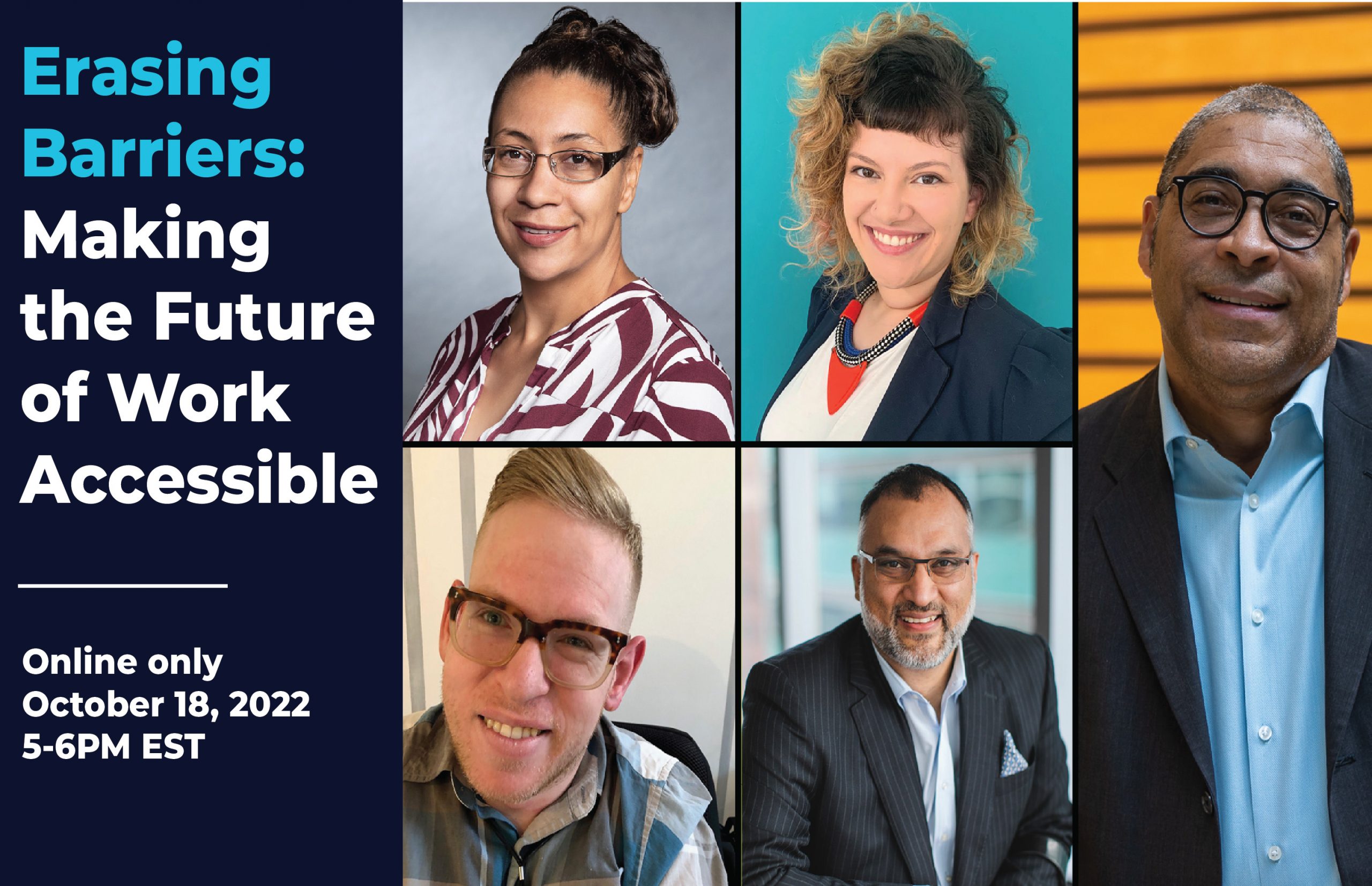
    Erasing Barriers: Making the Future of Work Accessible

    [fusion_builder_container hundred_percent=”no” equal_height_columns=”no” hide_on_mobile=”small-visibility,medium-visibility,large-visibility” background_position=”center center” background_repeat=”no-repeat” fade=”no” background_parallax=”none” parallax_speed=”0.3″ video_aspect_ratio=”16:9″ video_loop=”yes” video_mute=”yes” border_style=”solid” type=”legacy”][fusion_builder_row][fusion_builder_column type=”1_1″ layout=”1_1″ background_position=”left top” border_style=”solid” border_position=”all” spacing=”yes” background_repeat=”no-repeat” margin_top=”0px” margin_bottom=”0px” animation_speed=”0.3″ animation_direction=”left” hide_on_mobile=”small-visibility,medium-visibility,large-visibility” center_content=”no” last=”true” hover_type=”none” first=”true” min_height=”” link=”” background_blend_mode=”overlay”][fusion_text columns=”” column_min_width=”” column_spacing=”” rule_style=”” rule_size=”” rule_color=”” hue=”” saturation=”” lightness=”” alpha=”” content_alignment_medium=”” content_alignment_small=”” content_alignment=”” hide_on_mobile=”small-visibility,medium-visibility,large-visibility” sticky_display=”normal,sticky” class=”” id=”” margin_top=”” margin_right=”” margin_bottom=”” margin_left=”” fusion_font_family_text_font=”” fusion_font_variant_text_font=”” font_size=”” line_height=”” letter_spacing=”” text_transform=”none” text_color=”” animation_type=”” animation_direction=”left” animation_speed=”0.3″ animation_offset=””]

    Topic: Erasing Barriers: Making the Future of Work Accessible

    GATE co-hosted a panel discussion with Access to Success, a non-profit organization aiming to support the development of future leaders with disabilities and accessibility tech. We heard from four experts and champions for accessible workplaces—Liza Arnason, Founder and Chair of the Board of Directors, ASE Community Foundation for Black Canadians with Disabilities; Simone Lima, former GATE MBA Fellow and Senior Product Manager, Proposify; Tim Rose, Senior Consultant, Accessibility, Client Experience team, CIBC; and Gaurav Upadhya, Global Chief Actuary and Chief Risk Officer at Foresters Financial—and moderator Darrell Bowden, Director of Equity, Diversity and Inclusion at the Rotman School.  

    Nearly one-quarter of Canadians live with some form of disability, it’s essential for employers to ensure policies and environments welcome people with disabilities to attract and retain diverse talent. The panel shared their thoughts on the future of work and provided examples of how businesses can take the lessons learnt from the pandemic era about flexible working arrangements to make workplaces more inclusive for people with disabilities and everyone else.   

    Here are their recommendations for employers:  

    • When making policies and processes for people with disabilities, ensure they are “at the table” participating in that decision-making.  
    • Create tools and processes that will facilitate people with disabilities to disclose without stigma.  
    • Ask employees with disabilities what they need to be successful—don’t assume what they need.  
    • Perceive disability as a strength rather than a weakness: disability gives people a valuable lens on the world.  
    • Pay attention to intersectionality and how factors such as race and gender can amplify barriers faced by people with disabilities.  
    • Educate leaders and managers on ableism and how to stop it.   

    “Let’s turn the corporate ladder into a corporate ramp.” – Tim Rose

    Watch highlights from the discussion in which panelists explored the importance of representation in leadership positions and their advice on how to build the talent pipeline.  

    [/fusion_text][fusion_separator style_type=”none” hide_on_mobile=”small-visibility,medium-visibility,large-visibility” top_margin=”20″ bottom_margin=”20″ alignment=”center” /][fusion_button link=”https://www.gendereconomy.org/events/” target=”_blank” hide_on_mobile=”small-visibility,medium-visibility,large-visibility” color=”custom” button_gradient_top_color=”#62bd19″ button_gradient_bottom_color=”#62bd19″ button_gradient_top_color_hover=”#00c2e2″ button_gradient_bottom_color_hover=”#00c2e2″ stretch=”yes” icon_position=”left” icon_divider=”no” animation_direction=”left” animation_speed=”0.3″]See more events[/fusion_button][/fusion_builder_column][/fusion_builder_row][/fusion_builder_container]