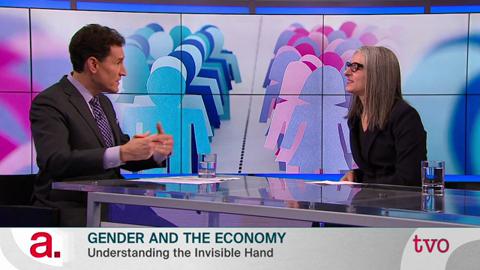
See this 17-minute segment with Sarah Kaplan on TVO’s The Agenda with Steve Paikin which aired on International Women’s Day 2017. It covers some of the key issues to consider when thinking about gender and the economy.
Tag: Diversity+inclusion
Research briefs, news, and event recaps related to diversity and inclusion.
-

Five women shortlisted for new Canadian bank notes
“We have a long, long history of women being excluded in certain ways from the economy,” said Sarah Kaplan, director of the Institute for Gender and the Economy and the University of Toronto’s Rotman School of Management.
-

Inclusion key to creating safe LGBTQ work space
There is substantial evidence that the desire for diversity has not translated into psychological safety in the workplace
-

Virtually no change in getting woman on boards in Canada, stats show
New disclosure rules show 45 per cent of Canada companies have all-male boards, and there’s been little change in this over the past year.
-

Strategies for a revolution in careers for women
The Financial Times asked experts in recruitment and management, as well as women who have navigated their way into senior corporate roles, what companies can do to improve gender diversity throughout their workforces.
-
The innovation gap: tech’s big diversity problem
It’s no secret that key parts of the innovation economy have serious underrepresentation issues when it comes to gender and race, but a new comparison with the overall labour market shows just how far behind the technology sector is.
-

Unintended consequences of diversity statements
[fusion_builder_container admin_label=”” hundred_percent=”no” equal_height_columns=”no” menu_anchor=”” hide_on_mobile=”small-visibility,medium-visibility,large-visibility” class=”” id=”” background_color=”” background_image=”” background_position=”center center” background_repeat=”no-repeat” fade=”no” background_parallax=”none” enable_mobile=”no” parallax_speed=”0.3″ video_mp4=”” video_webm=”” video_ogv=”” video_url=”” video_aspect_ratio=”16:9″ video_loop=”yes” video_mute=”yes” video_preview_image=”” border_size=”” border_color=”” border_style=”solid” margin_top=”20″ margin_bottom=”” padding_top=”” padding_right=”” padding_bottom=”” padding_left=””][fusion_builder_row][fusion_builder_column type=”3_4″ layout=”3_4″ spacing=”” center_content=”no” hover_type=”none” link=”” min_height=”” hide_on_mobile=”small-visibility,medium-visibility,large-visibility” class=”” id=”” background_color=”” background_image=”” background_position=”left top” background_repeat=”no-repeat” border_size=”0″ border_color=”” border_style=”solid” border_position=”all” padding_top=”” padding_right=”” padding_bottom=”” padding_left=”” dimension_margin=”” animation_type=”” animation_direction=”left” animation_speed=”0.3″ animation_offset=”” last=”no”][fusion_text columns=”” column_min_width=”” column_spacing=”” rule_style=”default” rule_size=”” rule_color=”” class=”” id=””]
Summary
This three-part study looks at racial discrimination in the hiring process. The researchers explore how job applicants alter or remove information that may indicate minority racial identity when applying to employment positions to protect themselves against discrimination. A laboratory experiment suggests that applicants may be less likely to engage in this behavior if employers present themselves as valuing diversity or equity by including an anti-discrimination or pro-diversity statement in the job posting. An audit study shows that employers, regardless of the presence of pro-diversity or anti-discrimination statements in their job postings, demonstrate significant bias against black and Asian applicants. The study finds that organizations that seek to challenge inequality by creating and using value statements may inadvertently be disadvantaging racial minority applicants. Job applicants, seeking to avoid discrimination, are less likely to whiten their résumés for employers they perceive as valuing diversity, but diversity statements and policies appear to have no effect on organizational bias against racial minorities in the hiring process.
Research
Prior research provides evidence that organizations offer fewer callbacks to applicants with racial cues in their résumés, such as distinctively African American or Asian names or résumés with racially distinct experiences (such as cultural or racial clubs or associations).
Organizations offer fewer callbacks to applicants with racial cues in their résumés.
Using interviews, a laboratory experiment, and an audit study, this research initiative seeks to understand how job seekers adapt to discrimination, what changes they make to their résumés and why, and how the techniques used by job seekers impact the responses of prospective employers.
To begin the study, a series of interviews were conducted with black and Asian university students. Students disclosed employing a variety of résumé-whitening techniques and their reasons for employing these techniques when applying to positions. Participants disclosed altering their names, omitting experiences, or changing the description of experiences in an attempt to conceal racial identity and avoid discrimination. Participants’ motivations for using these techniques were to help them “get a foot in the door” and/or to signal assimilation to the majority culture.
A laboratory experiment provided potential job applicants with a series of job postings and asked them to change their résumés in response to the postings. Participants were unaware that résumé whitening was the focus of the study. The experiment included 119 undergraduate business students (41 men, 78 women, 87 East Asian, 18 South Asian, and 14 black participants). In the treatment condition, students received a job posting that included a diversity statement, and an image that presented the employer as an organization that valued diversity. The control group received a generic job posting. The resulting job applications were coded for the presence or absence of racial minority indicators by a research assistant who was blind to the experimental conditions.
Résumé whitening was considered to be present when a racial minority cue was present in the original résumé but was not present in the revised résumé. This experiment confirmed that job applicants are highly sensitive to cues of pro-diversity from employers (such as value statements) and will utilize the whitening techniques described above if a job description lacks these cues. The degree of résumé whitening was 1.5 to 2 times lower when the employer presented as an organization that values diversity.
If a job applicant suspected that the employer valued diversity, they were less likely to alter their name, leave out or re-word education and extra-curricular experience.
To further test the impact of the findings from the laboratory experiment, the researchers conducted an audit study. This field experimental method involved sending fictitious, but realistic, résumés in response to actual job postings. Researchers then measured how various résumé content affected the probability of an applicant being contacted for an interview. This audit approach allowed the researchers to generate data about real employers in a real-life employment scenario.
The researchers sent résumés with various degrees of whitening: (a) no whitening, (b) whitened first name, (c) whitened experience, or (d) whitened first name and whitened experience. Résumés were otherwise identical and depicted a recent university graduate with a male first name and generic entry-level skills and experience. Applications were sent to a variety of job types/ industries in 16 different U.S. metropolitan cities. 1,600 job postings were responded to, of which 800 contained explicit pro-diversity language.
Response rates to applications indicated a strong bias against Asian and black applicants, regardless of the employer’s stated commitment to diversity.
In total, 16.7 percent of the applications led to a callback. For black applicants, the callback gap between résumés for which both the name and experiences were whitened and those résumés that were un-whitened was a ratio of roughly 2.5 to 1. For Asian applicants, the callback gap between these conditions was roughly 1.8 to 1. The statistically significant findings demonstrate that résumé whitening is effective in closing the callback gap between visibly white and non-white applicants. It also clearly confirms that bias against racial minority job applicants persists.
Specifically looking at job postings that contained explicit pro-diversity language, the patterns for callbacks found in the main sample were the same. Despite the presentation of pro-diversity values, employers demonstrated the same biases against observably non-white job applicants as those who did not state a commitment to diversity.
Implications
- Job applicants – Minorities are aware of bias and discrimination and will alter their applications if they anticipate that an employer will discriminate against them. However, if a job description includes a value or diversity statement, applicants are much less likely to engage in résumé whitening behavior. This research study found that firms have a demonstrable bias against non-white applicants, regardless of a company’s value statement. Job applicants need to be aware that a value statement in a job posting does not ensure against the occurrence of racial bias.
- Employers – Value statements do not immunize employers from inherent bias in the hiring process. In actuality, to the extent that pro-diversity statements cause minority applicant to let their guard down and present their racial identities in full thus ensuring they will be subject to discrimination, these statements may do more harm than good. Employers need to consider alternative methods for reducing bias against minority job applicants if they want to truly be equitable in their hiring and increase the diversity of their workforce.
[/fusion_text][fusion_separator style_type=”none” hide_on_mobile=”small-visibility,medium-visibility,large-visibility” class=”” id=”” sep_color=”” top_margin=”20″ bottom_margin=”20″ border_size=”” icon=”” icon_circle=”” icon_circle_color=”” width=”” alignment=”center” /][fusion_button link=”https://www.gendereconomy.org/research-briefs/” text_transform=”” title=”” target=”_blank” link_attributes=”” alignment=”” modal=”” hide_on_mobile=”small-visibility,medium-visibility,large-visibility” class=”” id=”” color=”custom” button_gradient_top_color=”#62bd19″ button_gradient_bottom_color=”#62bd19″ button_gradient_top_color_hover=”#00c2e2″ button_gradient_bottom_color_hover=”#00c2e2″ accent_color=”” accent_hover_color=”” type=”” bevel_color=”” border_width=”” size=”” stretch=”yes” shape=”” icon=”” icon_position=”left” icon_divider=”no” animation_type=”” animation_direction=”left” animation_speed=”0.3″ animation_offset=””]See more research briefs[/fusion_button][fusion_separator style_type=”none” hide_on_mobile=”small-visibility,medium-visibility,large-visibility” class=”” id=”” sep_color=”” top_margin=”20″ bottom_margin=”20″ border_size=”” icon=”” icon_circle=”” icon_circle_color=”” width=”” alignment=”center” /][fusion_recent_posts layout=”default” hover_type=”none” columns=”3″ number_posts=”3″ offset=”0″ pull_by=”category” cat_slug=”research-briefs” exclude_cats=”” tag_slug=”” exclude_tags=”” thumbnail=”yes” title=”yes” meta=”no” meta_author=”no” meta_categories=”no” meta_date=”yes” meta_comments=”yes” meta_tags=”no” content_alignment=”” excerpt=”no” excerpt_length=”35″ strip_html=”yes” scrolling=”no” hide_on_mobile=”small-visibility,medium-visibility,large-visibility” class=”” id=”” animation_type=”” animation_direction=”left” animation_speed=”0.3″ animation_offset=”” /][/fusion_builder_column][fusion_builder_column type=”1_4″ layout=”1_4″ spacing=”” center_content=”no” hover_type=”none” link=”” min_height=”” hide_on_mobile=”small-visibility,medium-visibility,large-visibility” class=”” id=”” background_color=”” background_image=”” background_position=”left top” background_repeat=”no-repeat” border_size=”0″ border_color=”” border_style=”solid” border_position=”all” padding_top=”” padding_right=”” padding_bottom=”” padding_left=”” dimension_margin=”” animation_type=”” animation_direction=”left” animation_speed=”0.3″ animation_offset=”” last=”no”][fusion_title margin_top=”” margin_bottom=”” hide_on_mobile=”small-visibility,medium-visibility,large-visibility” class=”briefsummary” id=”” size=”3″ content_align=”left” style_type=”none” sep_color=””]
Title
Whitened Résumés: Race
and Self-Presentation in
the Labor MarketAuthors
Sonia K. Kang,
Katherine A. DeCelles,
András Tilcsik,
Sora JunInstitutions
University of Toronto,
Stanford UniversitySource
Administrative Science Quarterly
Published
September 2016
DOI
http://journals.sagepub.com/doi/full/10.1177/0001839216639577
Research brief prepared by
Alyson Colón[/fusion_title][fusion_widget_area name=”avada-custom-sidebar-researchbriefsidebar” title_size=”” title_color=”” background_color=”” padding_top=”” padding_right=”” padding_bottom=”” padding_left=”” hide_on_mobile=”small-visibility,medium-visibility,large-visibility” class=”” id=”” /][/fusion_builder_column][/fusion_builder_row][/fusion_builder_container]
-

What Women Add to Boards
Women board members were likely to bring a half-dozen important skills that hadn’t been well-represented on their boards before their arrival, a study found.
