“Covering” refers to the ways in which a person conceals certain aspects of their identity in public due to a fear of backlash, discrimination, and/or bias. In this podcast, MBA Student Fellow Narjis Premjee interviews people who have covered or uncovered certain aspects of their identity in the workplace, such as their religion, ethnicity, marital status, disabilities, or sexual orientation.
In this podcast, MBA Student Fellow Narjis Premjee interviews individuals who have covered or uncovered certain aspects of their identity in the workplace, such as their religion, ethnicity, marital status, disabilities, and sexual orientation.
This podcast was supported by the Institute for Gender and the Economy (GATE) as part of the MBA Student Fellows program, which seeks to engage students in advancing the agenda on gender equality. Find out more here.
This podcast was edited by Victoria Heath, Mohammad Taqi Premjee and Narjis Premjee. A special thanks to Sarah Kaplan, Victoria Heath, Alyson Colón, Bonnie Lam and all interviewees that took part in this podcast.
*Disclaimer: This podcast series was prepared by Narjis Premjee, and the opinions expressed in this series are her own and do not necessarily reflect the views of the Institute for Gender and the Economy or the University of Toronto.
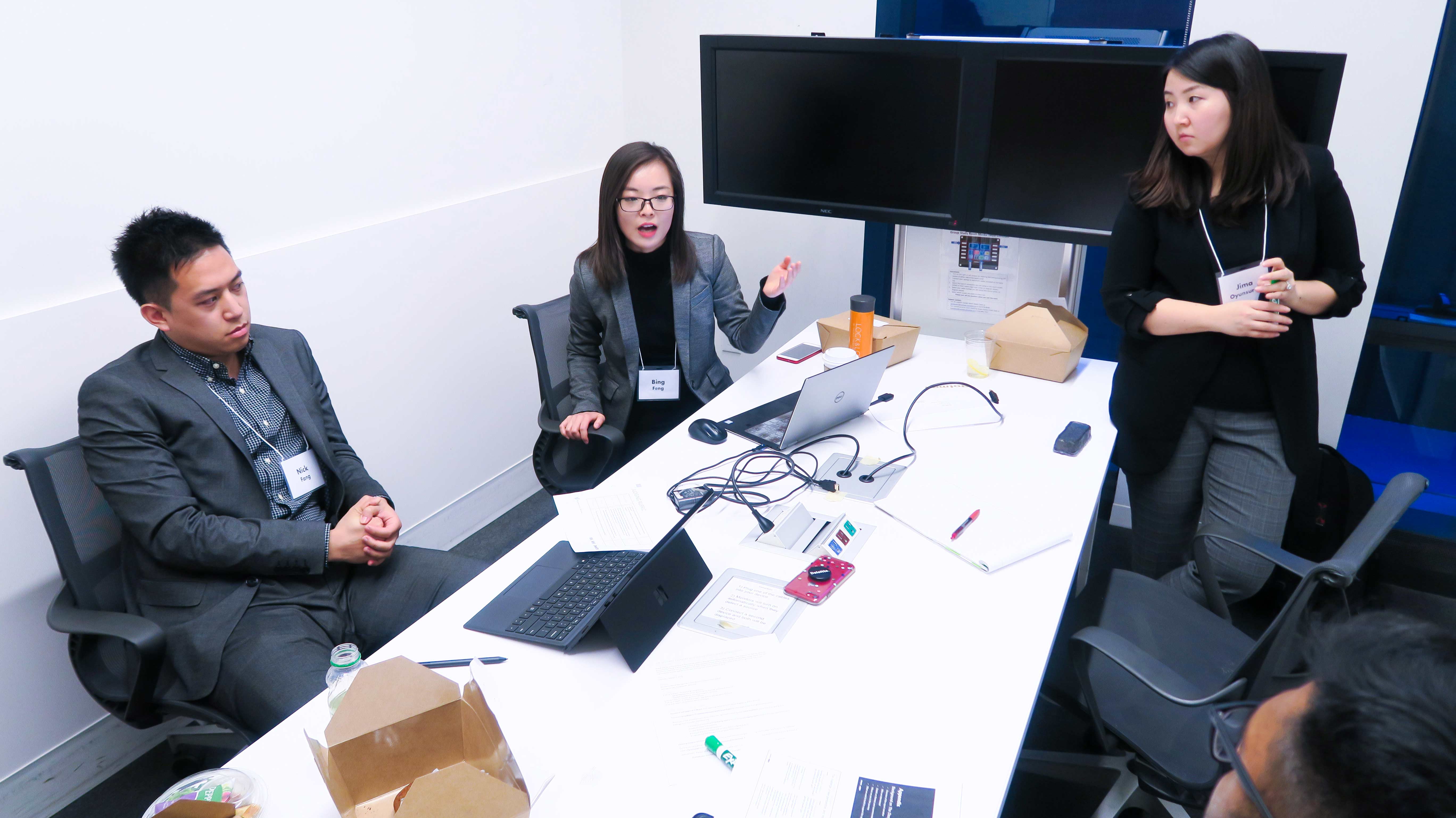
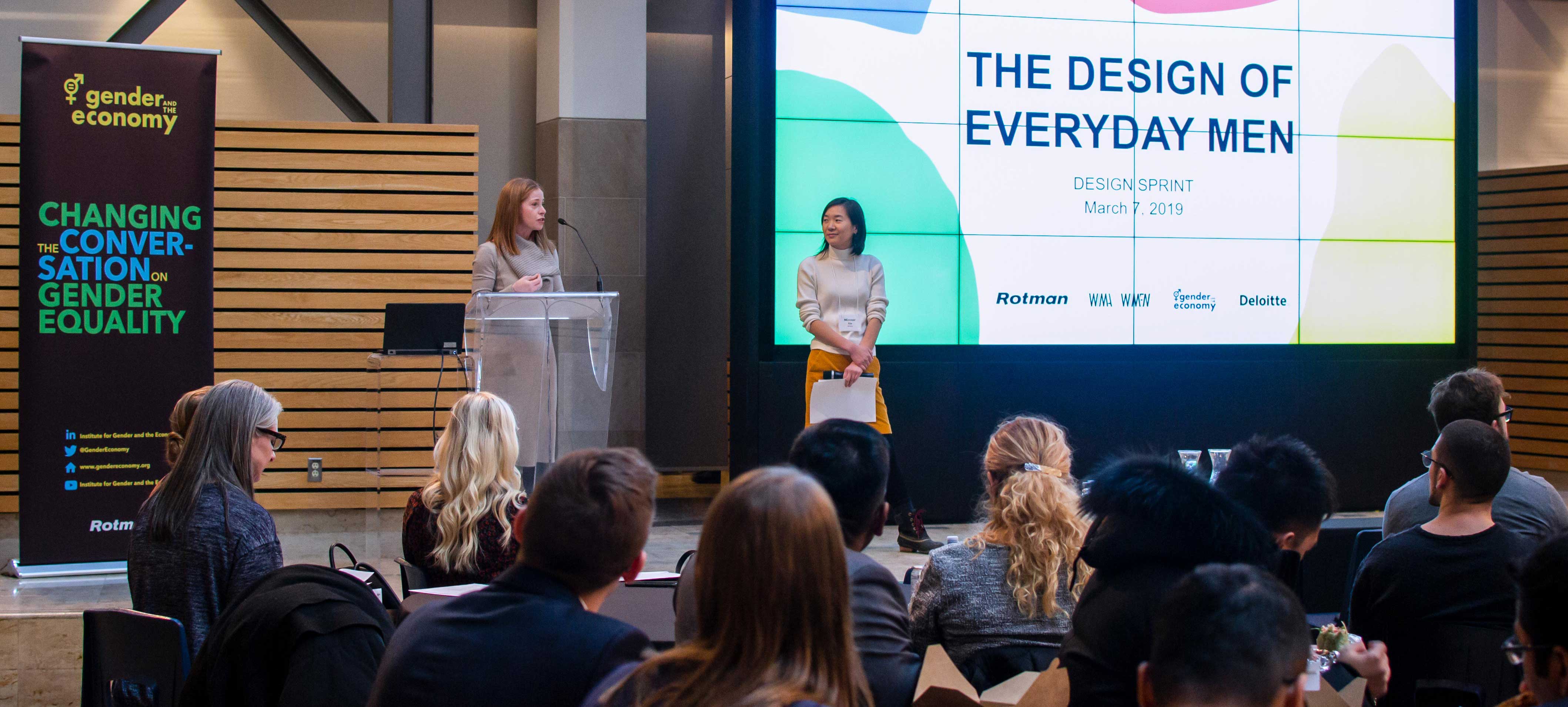
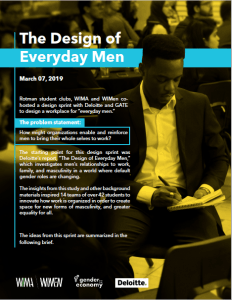
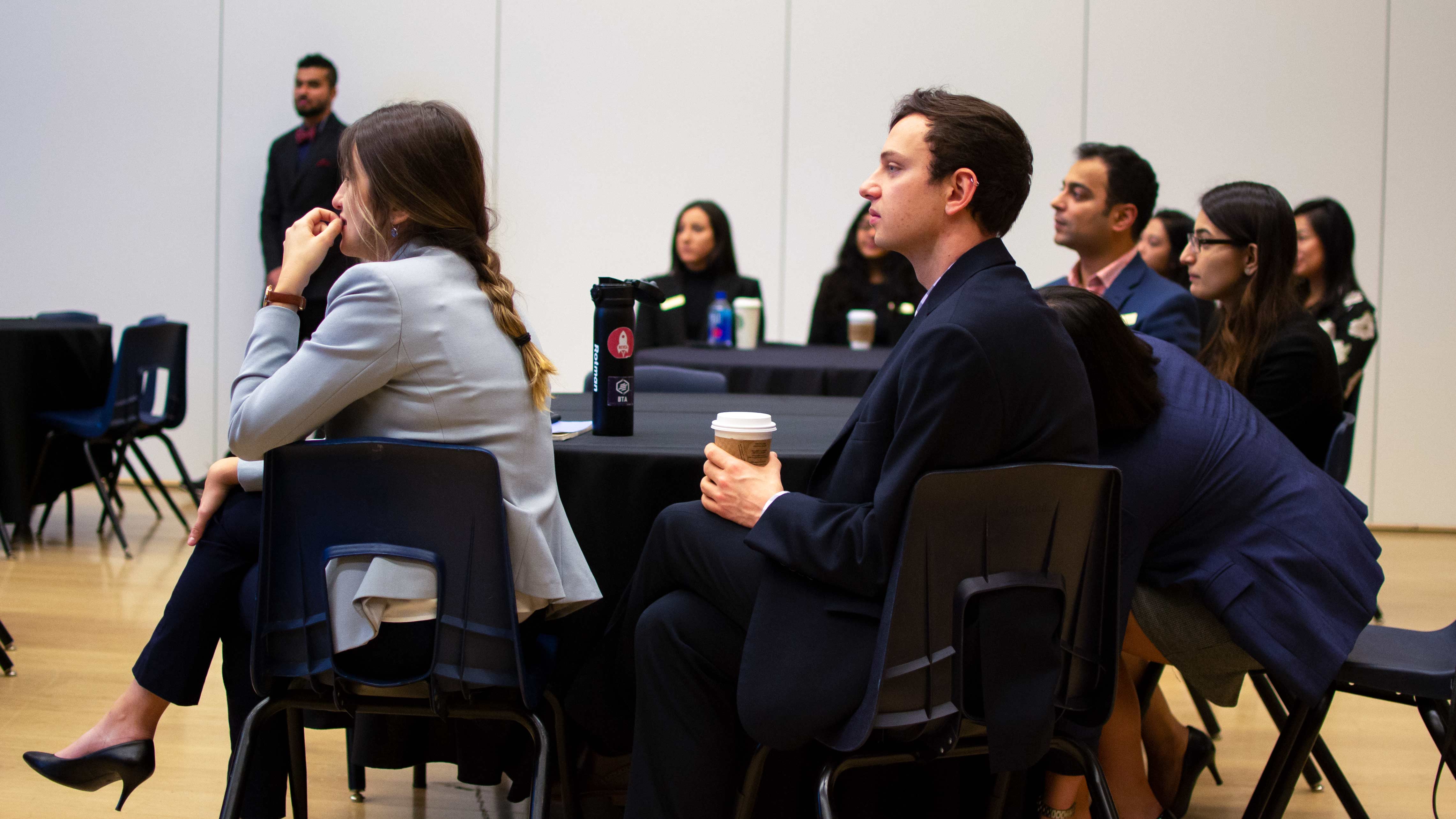
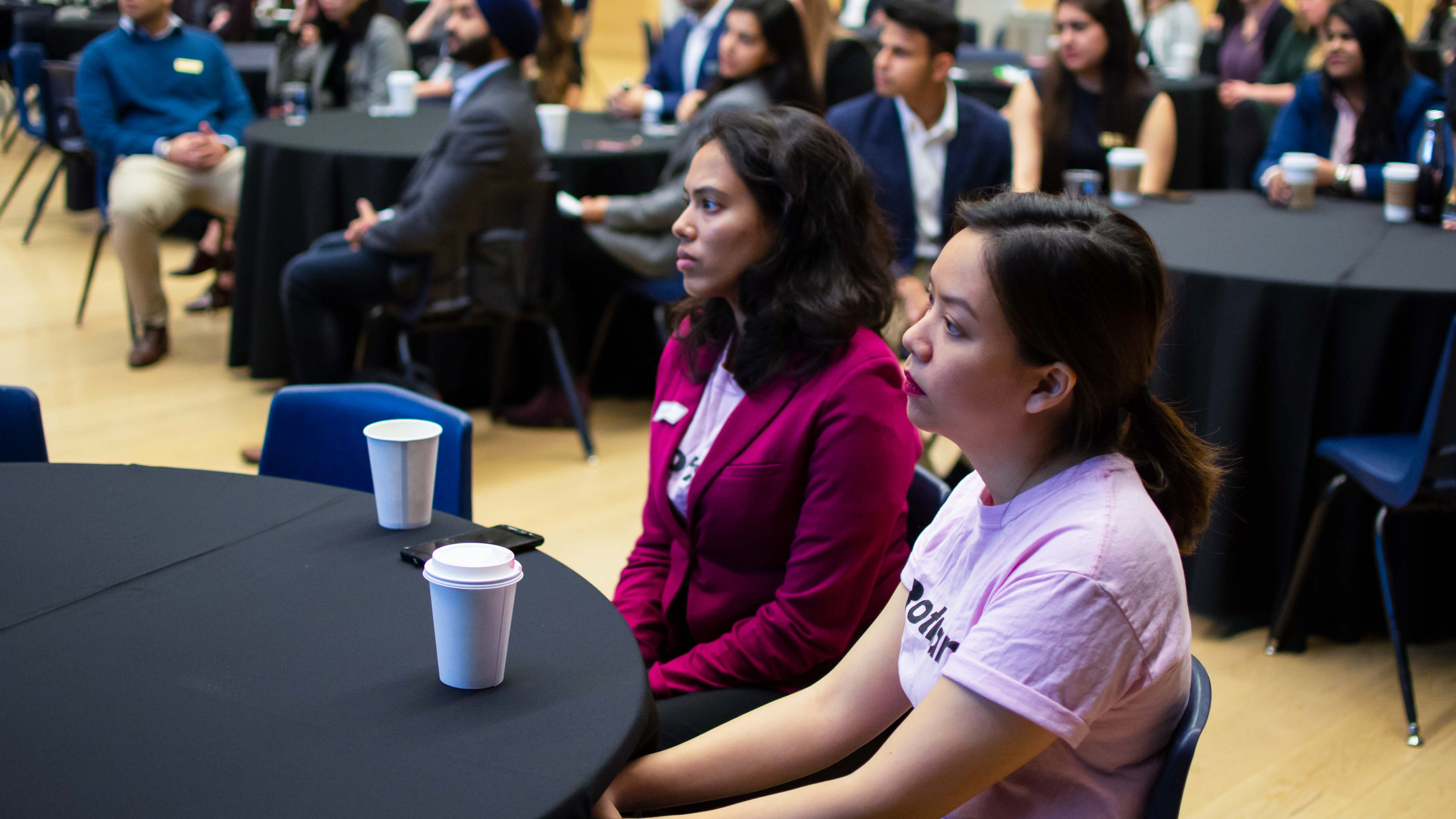
Rotman student clubs, WIMA and WIMen co-hosted a design sprint with Deloitte and GATE to design a workplace for “everyday men” on March 07, 2019; over 14 teams and 45 students participated.
The starting point for this design sprint was Deloitte’s report, “The Design of Everyday Men,” which investigates men’s relationships to work, family, and masculinity in a world where default gender roles are changing.
The insights from this study and other background materials inspired the teams to innovate how work is organized in order to create space for new forms of masculinity, and greater equality for all, based on the following problem statement:
How might organizations enable and reinforce men to bring their whole selves to work?
The Finalists
All of the teams proposed exciting ideas to overcome the barriers in organizations that are prohibiting men from bringing their whole selves to work. However, only three teams were nominated for the finals. Their ideas are outlined below:
#ShowMEn platform–A digital, integrative platform that would encourage men to bring their full selves to work by giving them a place to share personal photos and stories, as well as participate in team reward initiatives (e.g., fundraising challenge on Mother’s Day). This platform would encourage open communication and mentorship across departments, teams, and leadership. (The winning idea!)
The year of the shark–An internal campaign that would seek to eradicate “dinosaur” behaviour within senior leadership and the C-suite (e.g., upholding traditional views regarding work-life balance and paternity leave) and encourage “shark” behaviour that would embody more inclusive ideas on what’s acceptable and expected at work in terms of gender roles. It would include awareness, recognition, and accountability components.
The journal of corporate f@!* ups–An e-newsletter that would be distributed organization-wide aimed at enabling men to feel comfortable sharing and embracing failure at work. It would include three components: 1) compelling stories of failure by fellow employees, 2) reinforcing mechanisms, and 3) role modeling by senior management.
The winning team comprised of Tanya Adityan, Kyle Christian, Yi Shi, and Asli Zayim. For their prize, they will spend an hour on the trading floor with Derek Flood, RBC’s Head of Canadian Equities. As their prize, this winning team will get a tour of Doblin’s D.Studio and a lunch with the co-chairs of Deloitte’s Inclusion Advisory Council, Pat Daley and Ken Fredeen.
In addition to our finalists, 11 other teams pitched their ideas. These teams identified three areas of opportunity to help encourage men to bring their whole selves to work. Many of the barriers men face at work stem from traditional notions of masculinity and success; these include isolation, fear of failure, lack of mental health considerations, and fear of retribution for prioritizing work-life balance.
Thank you to all of the participants, coaches, and judges for being a part of this great event!
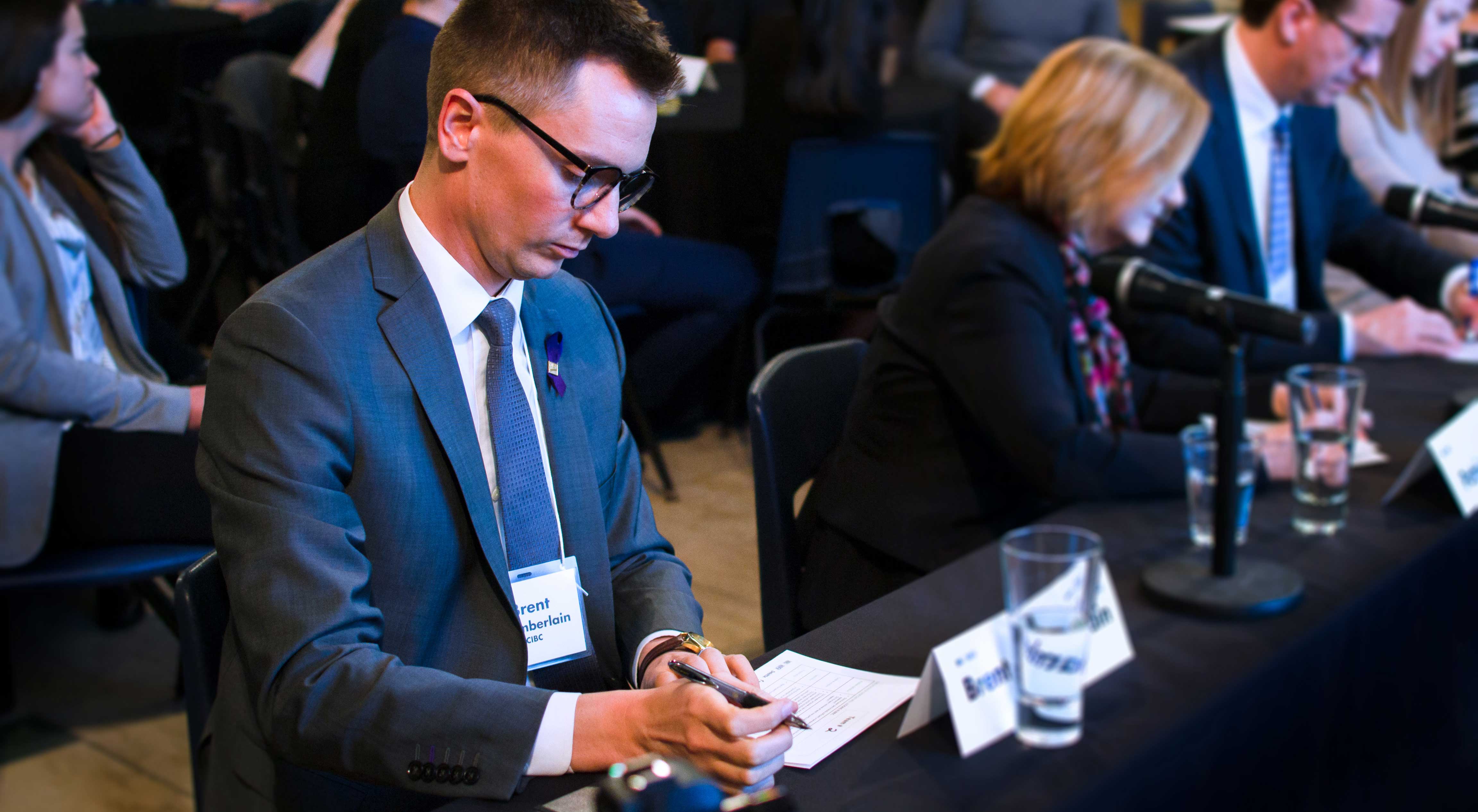
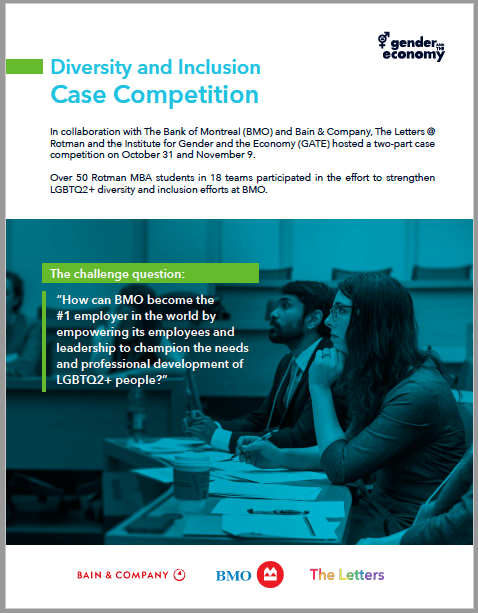
In collaboration with The Bank of Montreal (BMO) and Bain & Company, The Letters @ Rotman and the Institute for Gender and the Economy (GATE) hosted a case competition with over 50 Rotman MBA students in 18 teams to strengthen LGBTQ2+ diversity and inclusion efforts at BMO.
The challenge question:
“How can BMO become the #1 employer in the world by empowering its employees and leadership to champion the needs and professional development of LGBTQ2+ people?”
The Finalists
The students developed several ideas that offered new approaches to diversity and inclusion at BMO. Six of these ideas were selected to be presented at the final round of competition at Bain & Company.
BMO’s Family First Benefits Plan (winning idea)–A benefits coverage plan for a wide range of assisted reproduction and adoption costs, which are particularly important for LGBTQ2+ employees.
Transformation Investment Fund–A trans-centred investment fund that provides capital, mentoring and advisory services to trans-owned businesses.
BMO Art Labs–A dedicated space for employees that supports self-development and expression through art.
BMO Allies to Advocates Program–An employee program that supports and promotes ally education through seminars, Q&A sessions, and empathy exercises.
BMO Board of Diversity and Fellowship Program–A group of employees that champion LGBTQ2+ employees and an undergraduate fellowship program for young LGBTQ2+ talent.
Project Unicorn–A series of programs that support the trans community including initiating BMO Allies Pledge Week, a dedicated time during the year when allies showcase their support for the community.
The winning team comprised of Alicia Riolino, Baidong Sun, and Alison Zimmer. For their prize, they received a first round interview with Bain & Company, and lunch with BMO’s Chief Inclusion Officer, Rajini Nagendran.
In addition to the finalists, 12 other teams pitched their ideas. These ideas centred on a range of themes, including; developing inclusion and diversity policies; creating transformational programs for ally engagement; celebrating gender expression and sexual orientation; investing in LGBTQ2+ talent; developing effective metrics to measure diversity and inclusion efforts.
Thank you to all of the participants, coaches, and judges for being a part of this great event!