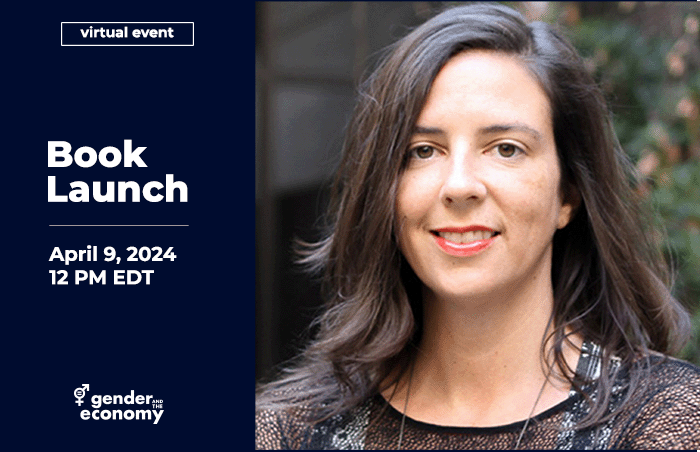
Topic: Cracking the Bro Code (The MIT Press, April 9, 2024)
GATE’s Academic Director Sonia Kang sat down with Coleen Carrigan, Associate Professor of Science, Technology and Society in the Department of Engineering and Society at the University of Virginia, to discuss her new book “Cracking the Bro Code” (The MIT Press, April 9, 2024). Cracking the Bro Code is a bold ethnographic study of sexism and racism in contemporary computing cultures theorized through the analytical frame of the “Bro Code.”
Drawing from feminist anthropology and STS, Coleen spoke about the direct experiences of women, nonbinary individuals, and people of color, including her own experiences in tech, to show that computing has a serious cultural problem. From senior leaders in the field to undergraduates in their first year of college, participants consistently report how sexism and harassment manifest themselves in computing via values, norms, behaviors, evaluations, and policies. While other STEM fields are making strides in recruiting, retaining, and respecting women workers, computing fails year after year to do so.
Coleen shared with us why dominant racial and gender groups have preferential access to jobs in computing, and how feminist labor activism in computing culture can transform the field into a force that serves democracy and social justice.
“Those three elements, the fourth estate, tech defectors and tech persisters, if we come together, we can hold these big tech leaders and those who look like them accountable.” – Coleen Carrigan
Machine Learning and the Reproduction of Inequality
Authors:Sharla Alegria and Catherine Yeh
If 2023 had a title, it would be the year of artificial intelligence (AI), especially advanced systems that use Machine Learning (ML). Universities around the world, including ours, are asking more students to take tests in classrooms to prevent them from using tools like ChatGPT to write answers for them. Meanwhile, notable computer scientists, including Geoffry Hinton, considered the “godfather of AI,” wrote open letters sounding the alarm over “existential threats” from future versions of these technologies. As much as we agree that it would be highly undesirable for computers to start wars or interfere in elections, we do not need to imagine future technologies to see that ML tools already reproduce social inequalities—often unintentionally. We hope equity-minded observers will bring a sociological lens to understand the potential for ML tools like ChatGPT to reproduce social inequalities even while appearing neutral and objective.
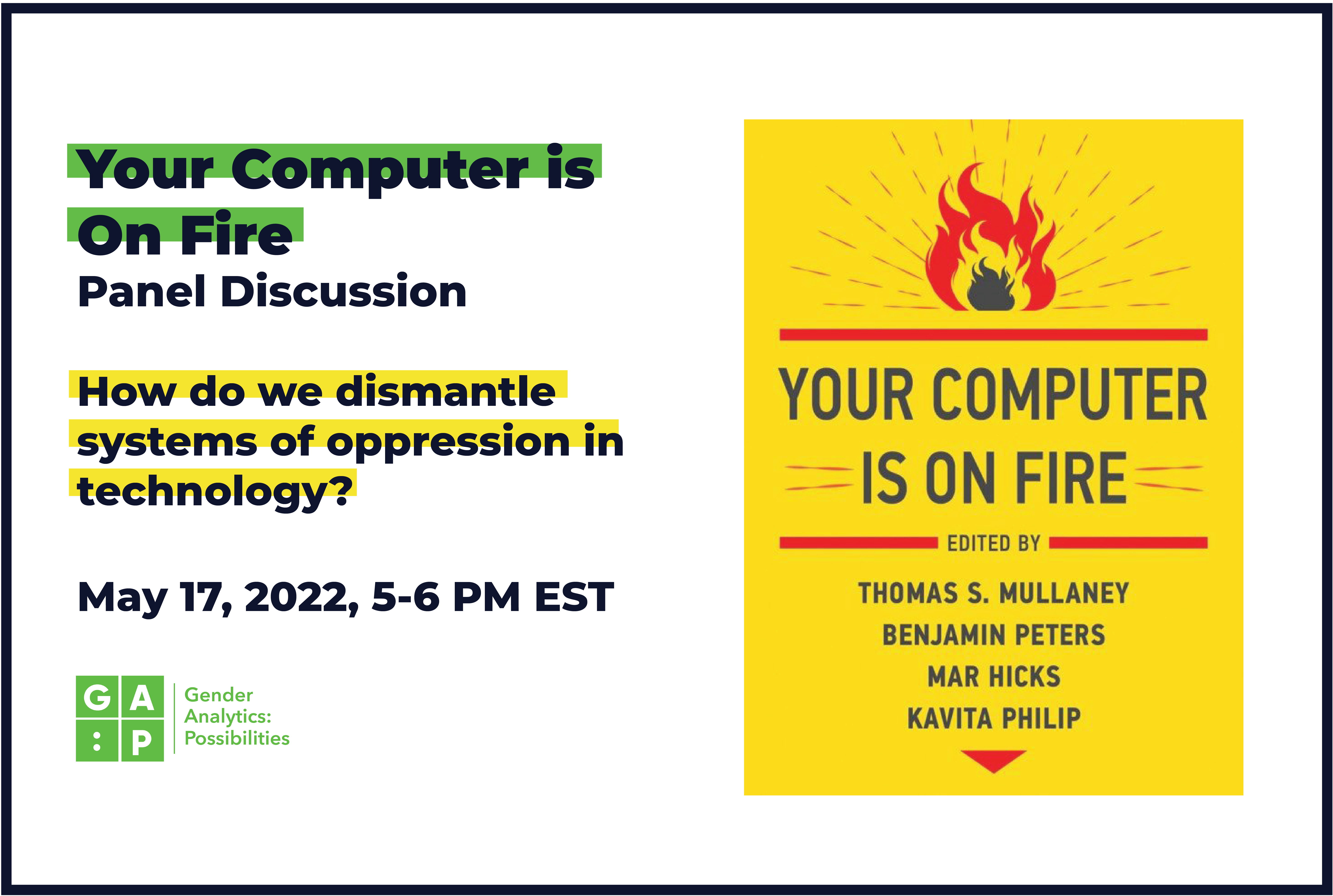
Topic:Your Computer is On Fire (The MIT Press, 2021): How do we dismantle systems of oppression in technology?
As part of the Gender Analytics: Possibilities (GA: P) event series, GATE Director Sarah Kaplan moderated a panel discussion with contributors from the book Your Computer is On Fire (The MIT Press, 2021), including Janet Abbate (Professor of Science, Technology, and Society at Virginia Tech), Kavita Philip, (Professor of English and President’s Excellence Chair in Network Cultures, University of British Columbia), and Sreela Sarkar (Associate Professor, Department of Communication, Santa Clara University).
The panel shared examples from the book about how inequality, marginalization, and biases are woven into our technological systems and how these problems are often misunderstood or ignored.
One example the panel highlighted is the pervasive myth of meritocracy and the complacency it creates about diversity and fairness in workplaces. People often believe that fields like tech are built on meritocracy, and those who are deserving will find their way into these spaces. However, the panelists argued that often when we are measuring merit, we are only measuring the cumulative advantages that someone has had over their life. This could be colleges they went to, pre-existing institutional or cultural connections, and in some cases belonging to the right families or access to the right capital. The myth of meritocracy covers up the way tech industry favors those who have been afforded privileges in their lives, and in doing so casts aside those who haven’t.
The panelists also spoke about the business case for diversity in the tech industry, which is used as an argument to increase representation in the workplace as it benefits companies financially. While the business case is important, the speakers argued that if the discussion solely focuses on increasing profits as the reason for diversity, the unspoken flipside of the argument is that “exclusion is acceptable, as long as it doesn’t affect the bottom line.” Therefore, the speakers emphasized the importance of demanding equity and justice in workplaces.
“Of course it (AI) gives us incredible ability to crunch massive amounts of data. But what we’re doing that’s so misguided is that we’re trying to shape human thinking to mimic the forms of automation that we want to implement. And that’s where we lose the rich stories that all these chapters are telling us.”
– Kavita Philip
Watch our panel of experts discuss their reflections from the book
The authors are also happy to announce that a portion of royalties from sales of the book has been pledged to the MIT Press Fund for Diverse Voices.
The Gender Analytics: Possibilities (GA:P) Event Series is an exciting multi-session online series. This unique online experience will highlight how emerging areas of analytics applied to issues around diversity and gender shape risks and opportunities for many organizations, operations and outcomes. Experts in data analytics, gender, and diversity, and inclusion more broadly will share their research and insights to an audience of business, academic, and government leaders.
Artificial Intelligence (AI) describes machines that can simulate some forms of human intelligence. Some conceptualizations of AI refer to machines that act indistinguishably from humans, while others focus more on ‘machine learning’ that can identify patterns, achieve an optimized outcome to a given problem, and/or make predictions and decisions based on prior information.
To achieve these goals, AI uses algorithms that ‘learn’ from large data sets and adjust and improve over time based on new data. While not a new concept, AI is increasingly embedded in people’s lives and will only become more pervasive.
Organizations across many sectors use AI for a variety of purposes: hiring employees, performing surgeries, tutoring school subjects, making decisions about criminal sentencing, making lending decisions, automating driving, and predicting where crime will occur, to name a few. AI is also used to make recommendations for what people watch on television or the music they listen to; to select which advertisements to show users on social media; and to display results on online search engines.
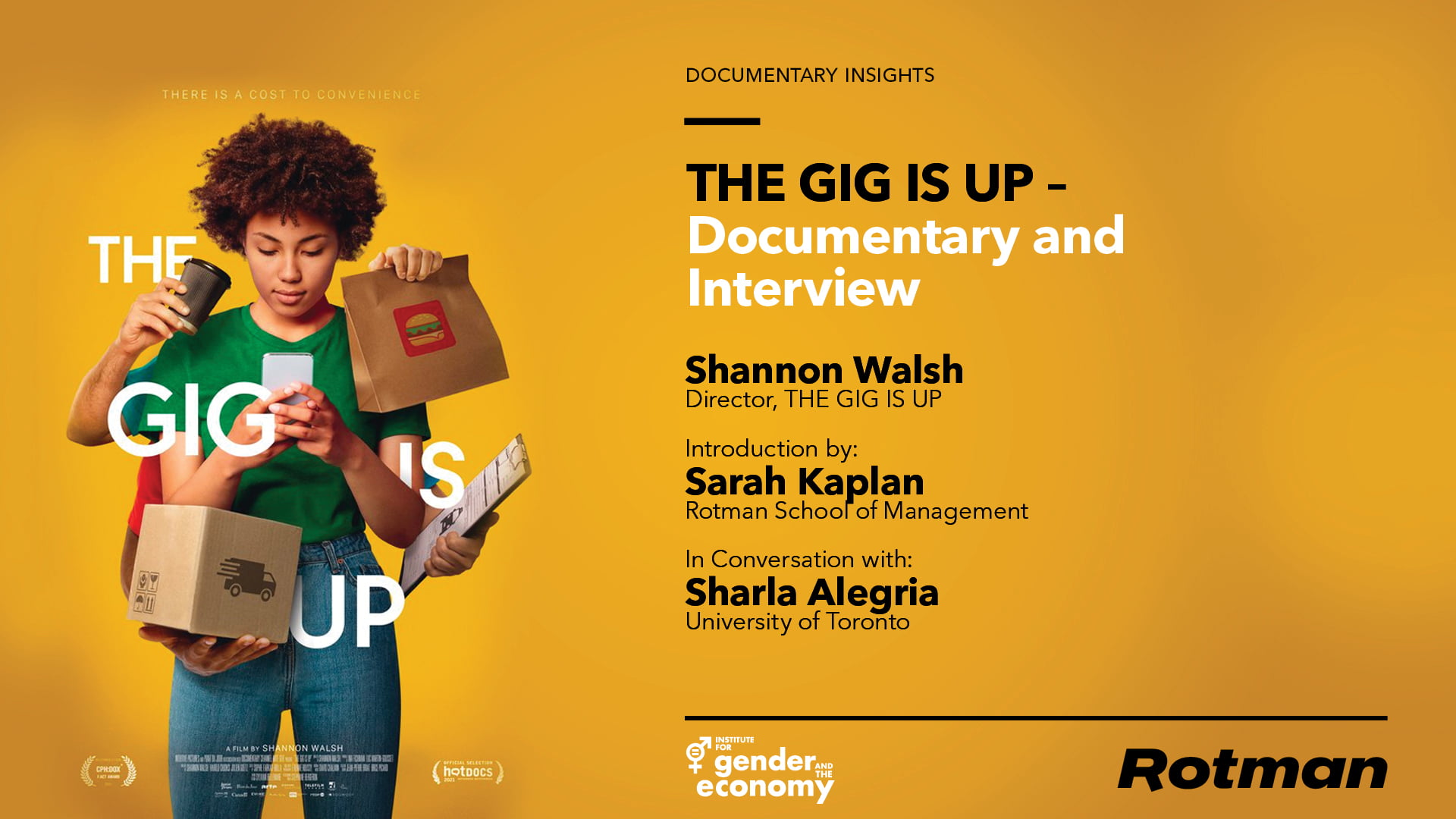
Please note:This event includes a documentary and an interview which you can watch on demand between December 6th and December 20th. On December 6th, you will receive an email with a link to access both the documentary and panel discussion. Space is limited for this event so please register early.
Documentary Synopsis: A very human tech doc, THE GIG IS UP uncovers the real costs of the platform economy through the lives of people working for companies around the world, including Uber, Amazon and Deliveroo.
From delivering food and driving ride shares to tagging images for AI, millions of people around the world are finding work task by task online. The gig economy is worth over 5 trillion USD globally, and growing. And yet the stories of the workers behind this tech revolution have gone largely neglected.
Who are the people in this shadow workforce? THE GIG IS UP brings their stories into the light.Lured by the promise of flexible work hours, independence, and control over time and money, workers from around the world have found a very different reality. Work conditions are often dangerous, pay often changes without notice, and workers can effectively be fired through deactivation or a bad rating.
Through an engaging global cast of characters, THE GIG IS UP reveals how the magic of technology we are being sold might not be magic at all.
About Our Speakers:
Speaker: Shannon Walsh has written and directed 5 award-winning feature documentaries. Her work has been theatrically released in the US, UK, Canada, and South Africa, and broadcast on ARTE, Al-Jazeera, CBC, Discovery channel, Netflix and others. Walsh’s films have screened in more than 100 festivals globally such as Hot Docs, CPH:DOX, IDFA, DOC NYC, Visions du Réel, Bejing and others. Walsh is an Associate Professor of Film Production at the University of British Columbia, and a 2020-2021 Guggenheim Fellow. She is currently touring with The Gig is Up (2021), and in development on the hybrid doc Adrianne in the Castle.
In Conversation With: Dr. Sharla Alegria is an assistant professor in the Department of Sociology and affiliate faculty in the Women and Gender Studies Institute at the University of Toronto. Her research works to understand how race and gender inequality persist in places and organizations that reject discrimination and aspire towards diversity and inclusion. Her current focus is on high-tech, scientific, and knowledge-work and workplaces.
Introduction By: Dr. Sarah Kaplan is Director, Institute for Gender and the Economy, Distinguished Professor of Gender & the Economy and Professor of Strategic Management at Rotman. She is a co-author of the bestselling business book, Creative Destruction as well as Survive and Thrive: Winning Against Strategic Threats to Your Business. Her latest book, The 360° Corporation: From Stakeholder Trade-offs to Transformation was published in September 2019. Her research has covered how organizations participate in and respond to the emergence of new fields and technologies in biotechnology, fiber optics, financial services, nanotechnology and most recently, the field emerging at the nexus of gender and finance. Her current work focuses on applying an innovation lens to understanding the challenges for achieving gender equality.
Location: Online
Venue: On December 6th Rotman events will send all registrants the link for the panel discussion and access to the documentary.
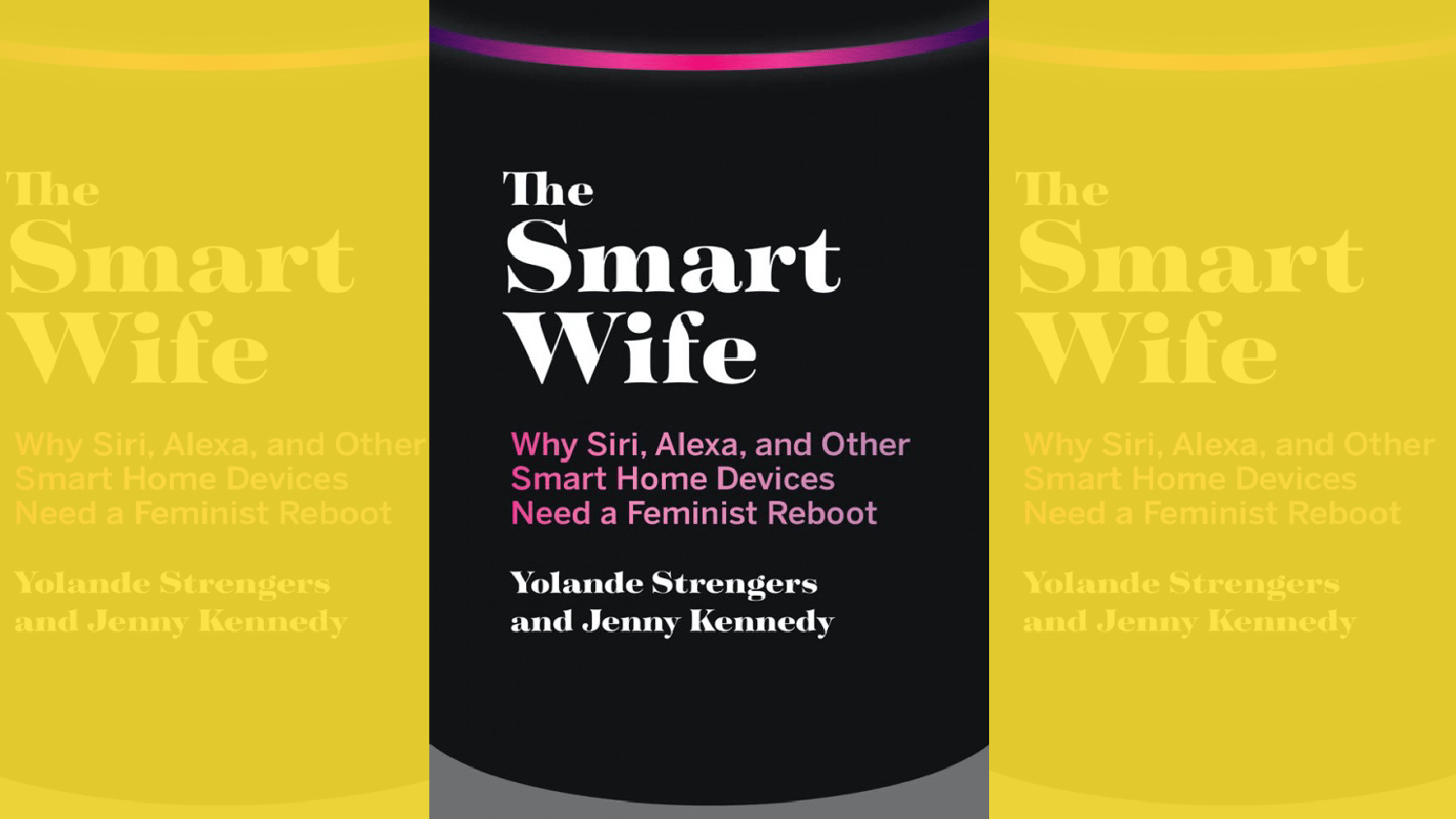
The life and times of the Smart Wife—feminized digital assistants who are friendly and sometimes flirty, occasionally glitchy but perpetually available.
Meet the Smart Wife—at your service, an eclectic collection of feminized AI, robotic, and smart devices. This digital assistant is friendly and sometimes flirty, docile and efficient, occasionally glitchy but perpetually available. She might go by Siri, or Alexa, or inhabit Google Home. She can keep us company, order groceries, vacuum the floor, turn out the lights. In The Smart Wife, Yolande Strengers and Jenny Kennedy examine the emergence of digital devices that carry out “wifework”—domestic responsibilities that have traditionally fallen to (human) wives. They show that the principal prototype for these virtual helpers—designed in male-dominated industries—is the 1950s housewife: white, middle class, heteronormative, and nurturing, with a spick-and-span home. It’s time, they say, to give the Smart Wife a reboot.
As Strengers and Kennedy remind us we like our assistants to conform to gender stereotypes. The design of gendered devices re-inscribes these outdated and unfounded stereotypes. Advanced technology is taking us backwards on gender equity. Strengers and Kennedy offer a Smart Wife “manifesta,” proposing a rebooted Smart Wife that would promote a revaluing of femininity in society in all her glorious diversity.
What is the “smart wife?”
Integral to the concept of the smart wife is “the slow death of the wife.” Women are entering the workforce which leads to a labor shortage at home: there are fewer women available to take up the roles, responsibilities, and tasks that were traditionally assigned to them. The technology industry introduced feminized digital assistants to perform some of the tasks that women traditionally did. The feminization of these smart home devices is a deliberate strategy from the tech industry to not only fill this “wife drought” but also to enable the public to be comfortable and feel un-threatened by these devices that are entering their lives and a rapid rate.
Do these smart devices save labor and time?
Kennedy says that a smart wife “brings the assumption that you should be more organized and be able to achieve more in your day”, but that is not always the case. This added pressure from smart devices to be more productive often backfires for women. The devices themselves need forms of care work. There’s a lot of energy that goes into deciding what kind of device to bring into the home, setting it up, and troubleshooting it when something goes wrong. This takes its own form of labor, which distracts women from their other obligations. It also doesn’t make it easier for men, who have traditionally been seen as the “fixers” of the house. When these smart devices break down, they have an additional form of labor as well, which is to troubleshoot and get them working again. Smart devices were initially designed to relieve work, but in many ways the caring and management of these devices is still an additional chore for families. .
How are smart wives connected to big data?
Smart devices allow large tech companies to be omnipresent and ever listening in our homes and lives. We generate a lot of data about ourselves for these companies, without really thinking about how this is shaping our lives and our society. Smart devices operate across diverse households from all ranges of income backgrounds, as digital assistants are now being given out with other purchases and subscriptions for free. Thus, big tech companies are pushing these devices into our homes while overcoming the purchase barrier. There is a big conversation to be had about data extraction. As Strengers says, ” [we need to think about] how slippery these devices are coming into our homes, and then how that draws people into these big tech ecosystems.”
Can we divorce the smart wife?
It’s unrealistic to ask people to completely divorce the smart wife. Smart devices are deeply embedded in our lives: they are in our phones, our TVs, speakers and more. These devices, despite their shortcomings, can still be useful to many. Instead of putting the onus on the consumer, pressure needs to be put on the companies and people who have the power to regulate them. In Strengers and Kennedy’s view, big tech companies need to take the responsibility to be more equitable in their practices and designs.[and, if you want to know more about how to do this, check out our Gender Analytics courses!]
Watch Yolande Strengers and Jenny Kennedy discuss “The Smart Wife.”
The Gender Analytics: Possibilities (GA:P) Event Series is an exciting multi-session online series. This unique online experience will highlight how emerging areas of analytics applied to issues around diversity and gender shape risks and opportunities for many organizations, operations and outcomes. Experts in data analytics, gender, and diversity, and inclusion more broadly will share their research and insights to an audience of business, academic, and government leaders.
The GA:P Event Series is being planned jointly by two Rotman research centers, the Institute for Gender and the Economy (GATE) and TD Management Data and Analytics Lab co-organized by Susan Christoffersen (Co-Academic Director, TD MDAL), Sarah Kaplan (Director, GATE) and Matt Mitchell (Co-Academic Director, TD MDAL)
Could your next career move be in data science? Join our panel discussion to hear about career opportunities in this rapidly growing field.
About Our Speakers:
Meghan Chayka—is a Co-Founder/co-CEO of Stathletes, a hockey data and analytics company. Stathletes provides industry leading hockey insights in over 22 leagues worldwide and has scaled to the highest professional levels across North America and Europe. In another industry role, Meghan is a Data Scientist in Residence at the Rotman School of Management at the University of Toronto. In 2019, she was featured on the insert cover of the Hockey News’ Top 100 of power and Influence, listed at 95 overall and in the Top 10 for Hockey Business Executives. Meghan and Stathletes have also been awarded Top Young Entrepreneur of the Year for 2018/2019 by the Ontario Chamber of Commerce and Top 40 under 40 in hockey for the Athletic in 2019 & 2020. She is active in Canadian consulate international events and was the keynote speaker in multiple women in technology conferences in the EU.
Jane Ho—Jane leads a Data & Analytics team at TD’s Innovation, Technology and Shared Services (ITSS) group. She has been with TD for five years and has led Analytics teams for customer facing contact centre and collections businesses. Prior to TD, Jane held increasingly senior roles in Marketing and Analytics in Telecommunications, Retail and Insurance. Jane is the Co-Chair of Women in Data & Analytics at TD, and is also President of the Queen’s University Smith Analytics & AI Alumni Club.
Caitlin MacGregor—Caitlin MacGregor has always been passionate about identifying people’s potential. That’s why, after building two businesses for other people, she founded Plum. Plum quantifies human potential through the power of Industrial/Organizational Psychology and AI, creating agile enterprises and successful employees by matching people to jobs where they thrive. Caitlin is particularly passionate about supporting women to reach their full potential; she’s a regular speaker at women entrepreneur events and a champion of #movethedial, an initiative dedicated to increasing the leadership of women in tech. Caitlin was selected by Springboard Enterprises NYC as one of the top 10 businesses led by women.
Elizabeth Richards—Senior Policy Officer, Results and Delivery Unit, Privy Council Office. Elizabeth currently supports the Prime Minister and Cabinet in achieving progress on top government priorities to build a more inclusive Canada and cultivate a strong data culture across the public service. Early in the pandemic, Elizabeth played a leadership role in advancing data on COVID-19 business programs, ensuring that decision-makers could identify the types of firms in need of federal supportꟷdata that made analysis on policy gaps and how to evolve programs in real time possible.
Moderated by:
Susanna Tai—Offering Manager, Watson Data & AI Platform, IBM Software Group
The Gender Analytics: Possibilities (GA:P) Event Series is an exciting multi-session online series. This unique online experience will highlight how emerging areas of analytics applied to issues around diversity and gender shape risks and opportunities for many organizations, operations and outcomes. Experts in data analytics, gender, and diversity, and inclusion more broadly will share their research and insights to an audience of business, academic, and government leaders.
The GA:P Event Series is being planned jointly by two Rotman research centers, the Institute for Gender and the Economy (GATE) and TD Management Data and Analytics Lab co-organized by Susan Christoffersen (Co-Academic Director, TD MDAL), Sarah Kaplan (Director, GATE) and Matt Mitchell (Co-Academic Director, TD MDAL).
This event was co-hosted by the Institute for Gender and the Economy and the TD Management Data Analytics Lab.
Stay tuned for an event recap and video.
Venue: On May 13, Rotman Events will email registrants the link to the page where you can watch the livestream.
How can the emerging field of Gender Analytics help leaders identify risks and uncover new opportunities in product and service design? This kick-off panel to the Gender Analytics: Possibilities Event Series was an exciting discussion with Vanessa Iarocci, Former CEO and President of McCarthy Uniforms; Sylvia Kwan, Chief Investment Officer of Ellevest; and Nitasha Mehta, Senior Director, CPG Brand Partnerships at Boxed; in conversation with Kathy Moscou, Assistant Professor at OCADU. Together these leaders and innovators discussed how gender analytics has helped them to find new markets, innovate, improve performance, and grow their businesses. From online retail to finance to uniform design, gender analytics led to benefits for their companies and for the customers they serve.
What barriers might someone face in implementing gender analytics within an organization?
Gender analytics is about using gender and intersectional lenses to unearth new solutions and ideas. However, it can often be misconstrued as “pink marketing” that will take away from financial returns.
In fact, gender analytics is not an add-on but a comprehensive change in understanding product and service design to uncover untapped opportunities. Organizations regularly undertake these types of processes and they can do the same through a gender lens. For example, women investors are an untapped market compared to men, particularly because investment firms historically have not acknowledged women investors’ needs or made them feel welcome. The roboadvisor start-up Ellevest has addressed this gap by using gender analytics to create financial solutions that specifically work for women.
What practices or lessons have you learned from implementing gender analytics in your organizations?
If businesses don’t adjust to prioritize equity, equality, and other social issues, the market will adjust for them through new entrants who do make this a priority.
While some may see gender analytics as financially costly in the short-term, cases such as Boxed’s removal of the pink tax on products for women show that it can lead to increased financial returns, including through improving customer loyalty and public relations.
Diverse perspectives can uncover opportunities. Equitable representation on teams can help ensure that organizations don’t have blind spots in products and services.
Employers can cultivate ideas from within their organizations by creating an open environment and / or forums that facilitate employees to speak about their ideas and talk through issues that are important to them. This can end up influencing an organization’s direction in products and services.
Watch the panelists discuss how they used gender inclusive design in their businesses.
To read more about these leaders’ successes in gender analytics and inclusive design in their organizations, see the following case studies:
The Gender Analytics: Possibilities (GA:P) Event Series is an exciting multi-session online series. This unique online experience will highlight how emerging areas of analytics applied to issues around diversity and gender shape risks and opportunities for many organizations, operations and outcomes. Experts in data analytics, gender, and diversity, and inclusion more broadly will share their research and insights to an audience of business, academic, and government leaders.
The GA:P Event Series is being planned jointly by two Rotman research centers, the Institute for Gender and the Economy (GATE) and TD Management Data and Analytics Lab co-organized by Susan Christoffersen (Co-Academic Director, TD MDAL), Sarah Kaplan (Director, GATE) and Matt Mitchell (Co-Academic Director, TD MDAL).
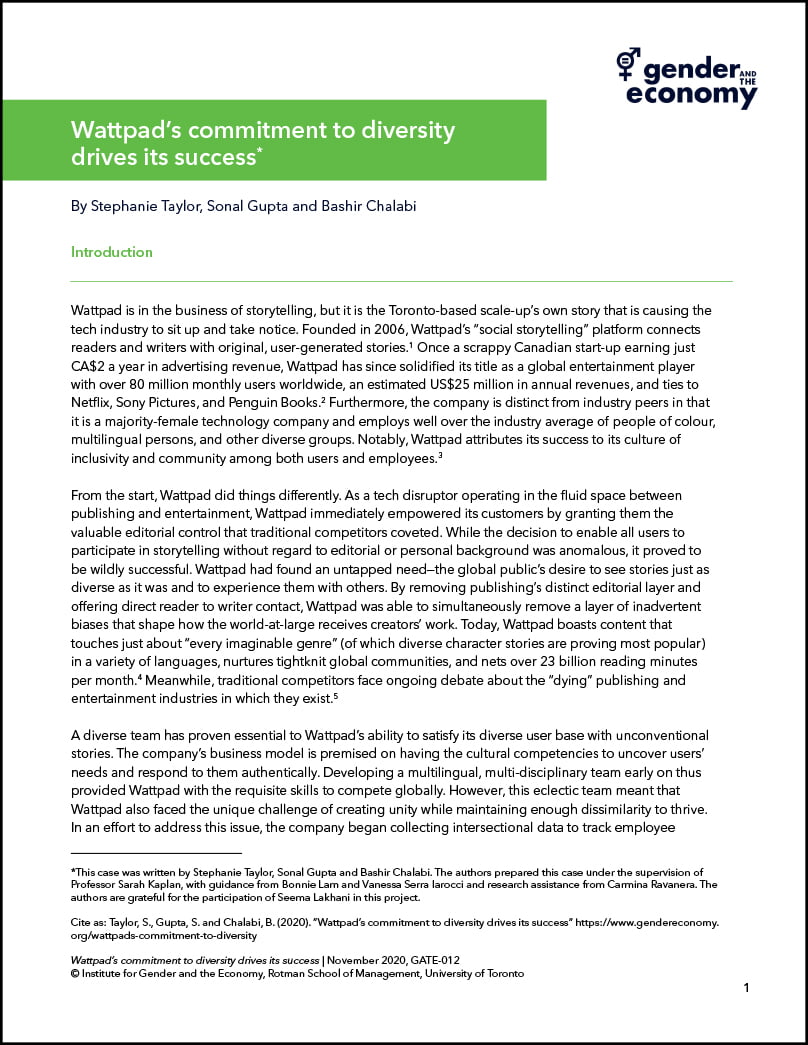
Wattpad is an online storytelling community that combines entertainment with technology. This case study focuses on how Wattpad used intersectional data collection to improve employee well-being, to support its diversity-driven business model, and to grow the business.
Course Topics:
Diversity and inclusion in business
Innovation and entrepreneurship
Leadership
Human resources and organizational theory
Business design
Introduction:
Wattpad is in the business of storytelling, but it is the Toronto-based scale-up’s own story that is causing the tech industry to sit up and take notice. Founded in 2007, Wattpad’s “social storytelling” platform connects readers and writers with original, user-generated stories. Once a scrappy Canadian start-up earning just CA$2 a year in advertising revenue, Wattpad has since solidified its title as a global entertainment player with over 80 million monthly users worldwide, an estimated US$25 million in annual revenues, and ties to Netflix, Sony Pictures, and Penguin Books. Furthermore, the company is distinct from industry peers in that it is a majority-female technology company and employs well over the industry average of people of colour, multilingual persons, and other diverse groups. Notably, Wattpad attributes its success to its culture of inclusivity and community among both users and employees.
A diverse team has proven essential to Wattpad’s ability to satisfy its diverse user base with unconventional stories. The company’s business model is premised on having the cultural competencies to uncover users’ needs and respond to them authentically. Developing a multilingual, multi-disciplinary team early on thus provided Wattpad with the requisite skills to compete globally. However, this eclectic team meant that Wattpad also faced the unique challenge of creating unity while maintaining enough dissimilarity to thrive. In an effort to address this issue, the company began collecting intersectional data to track employee well-being. By uncovering gaps in employee satisfaction and inclusion, Wattpad has been able to generate impactful, data-driven solutions that are sensitive to employees’ differing experiences within the organization. For example, after finding that women of colour at Wattpad were 13% less likely than white men to agree that they could be their authentic selves at work, Wattpad introduced a series of initiatives to address this concern and now reports that 97% of women of colour agree that Wattpad’s inclusivity efforts have positively impacted their workplace experiences. Since implementing intersectional data collection, Wattpad has seen meaningful increases in employee engagement and satisfaction across all groups, thus managing to improve team cohesion despite undergoing rapid organizational change. Today, Wattpad serves as a model for how a people-focused approach that prioritizes diversity and inclusion can accelerate a firm’s growth.
This case was written by Stephanie Taylor, Sonal Gupta and Bashir Chalabi. The authors prepared this case under the supervision of Professor Sarah Kaplan, with guidance from Bonnie Lam and Vanessa Serra Iarocci and research assistance from Carmina Ravanera. The authors are grateful for the participation of Seema Lakhani in this project.