Held on September 28, 2018, the BAD Conference was an innovative project led by GATE and BEAR (Behavioural Economics in Action at Rotman).
Bringing together over 20 speakers and 200 guests from policy, business, and academia, the conference aimed to uncover new solutions from the behavioural sciences to make real progress on diversity and inclusion.
This four-part audio series features the four panel conversations hosted at The BAD Conference. These panels focused on discussions around the roots of inequality, how to move towards real change, masculinity, and lessons from practice. Learn more about The BAD Conference, including the full list of speakers, photos, and more, by visiting badconference.com.
Episode 1 — Roots of (In)Equality: Insights from Child Psychology and Education
*Disclaimer: The opinions expressed in this series do not necessarily reflect the views of the Institute for Gender and the Economy or the University of Toronto.
Women have made up roughly half of the college-educated workforce for years, and before the onset of the economic crisis of 2020, the gap between the percentage of women and the percentage of men in the labor force was the lowest on record. But women remain underrepresented in positions of power and status. The gender pay gap, for example, shows little movement, largely because high-paying jobs are the most gender-imbalanced. Even in areas where there are roughly equal numbers of men and women, or where women actually make up the majority, leadership ranks remain male-dominated.
The endurance of these inequalities begs the question: Why haven’t we made more progress? A 2020 analysis by a team of sociologists affirms that progress, as measured by rates of women’s employment, earnings, and the types of fields and jobs they work in, has either stalled completely or slowed.
With fifty years of sweeping reforms in educational and corporate policy, it’s tempting to think that any remaining gender imbalances reflect differences in individual merit or behaviour, not organizational barriers. Much of the popular media supports this idea, with countless books and articles offering advice on what women should do to overcome challenges: lean in, speak up, do power poses, stop apologizing, and delegate more.
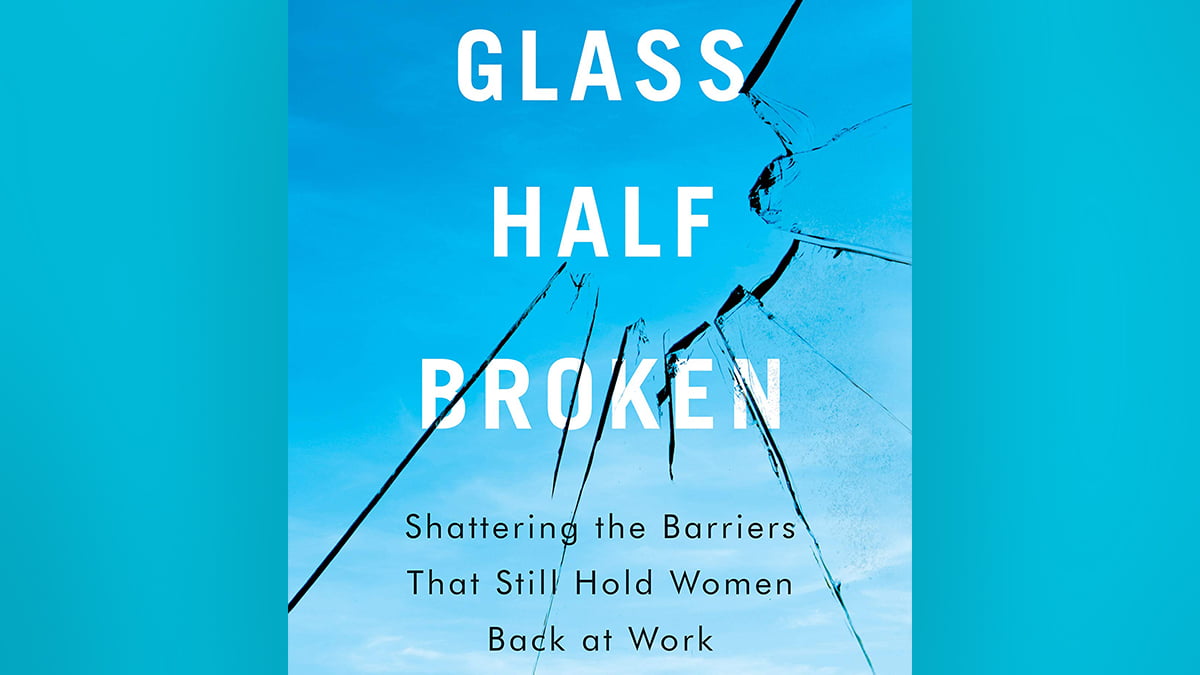
Ammerman and Groysberg focus instead on the pervasive organizational obstacles and managerial actions that create gender imbalance. Bringing to light the key findings from the latest research in psychology, sociology, and economics, Glass Half-Broken shows that along their entire career path—from entry- to mid- to senior-level positions—women get pushed out of the leadership pipeline and, at each point, for different reasons. Presenting institutional and managerial strategies designed to overcome and mitigate these barriers at each step in the career path, Glass Half-Broken is the authoritative resource that managers and leaders at all levels can use to finally shatter the glass ceiling.
Is the glass ceiling really half broken?
Data shows us that while the slope of change to increase gender equality in industries and the workforce is positive, disappointingly the numbers are low and increases are slow. Colleen Ammerman and Boris Groysberg said they named their book “Glass Half Broken” because, for the first-time, policy makers, corporate leaders and employees are all sharpening their focus on workplace equality.
What does it take for men to become allies for gender equality?
Some men become allies through their lived experiences and what Ammerman and Groysberg referred to as the “empathy factor”: if they are part of a minority group, then it is easier for them to empathize with women’s marginalization in the workplace. Another way men gain awareness of gender inequality is through their personal relationships: they could see someone they care about going through difficulties at work or witness someone consistently fighting barriers placed in their path of career advancement.
Gender equality is not a zero-sum game.
Gender equality is not a zero-sum game. For men in positions of leadership, it makes sense to hire the best talent for your company. It doesn’t benefit the company to overlook and undervalue a whole group of people. Ammerman emphasized that women often develop new skills and capabilities out of the experience of being discriminated against, ironically making them better at their jobs.
Divisions of labor at home and company policies
Research shows that, to achieve gender equality, it is important to change entire systems from hiring, development, integration, through to promotion. But, before all of this can happen, it is equally important to build better systems and processes at home in terms of the division of care work. Achieving a more balanced division of labor in which men contribute equally at home is still be stigmatized and delegitimized in many circles. To combat this, organizations can implement policy changes such as implementing dual maternity and paternity leave. The messaging that organizations send out to men who take on family accommodations is also important. Policies should be universally appealing. Framing family-friendly policies as a way to help women only further entrenches divisions of labor and stigmatization.
What’s one way that companies can fix gender inequality problems?
Data does a great job of spotlighting an issue. What organizations and managers do with these data will be a good test of how successful they are in eliminating gender biases. One example is annual compensation audits. You can analyze the data and see patterns and outcomes, and through this, you can create an action plan. Actions like these are sustainable over the long run and can create multiple opportunities to drive change.
Watch Colleen Ammerman and Boris Groysberg discuss ‘Glass Half Broken’
This event was hosted by the Institute for Gender and the Economy.[/fusion_text][fusion_separator style_type=”none” hide_on_mobile=”small-visibility,medium-visibility,large-visibility” class=”” id=”” sep_color=”” top_margin=”20″ bottom_margin=”20″ border_size=”” icon=”” icon_circle=”” icon_circle_color=”” width=”” alignment=”center” /][fusion_button link=”https://www.gendereconomy.org/events/” text_transform=”” title=”” target=”_blank” link_attributes=”” alignment=”” modal=”” hide_on_mobile=”small-visibility,medium-visibility,large-visibility” class=”” id=”” color=”custom” button_gradient_top_color=”#62bd19″ button_gradient_bottom_color=”#62bd19″ button_gradient_top_color_hover=”#00c2e2″ button_gradient_bottom_color_hover=”#00c2e2″ accent_color=”” accent_hover_color=”” type=”” bevel_color=”” size=”” stretch=”yes” icon=”” icon_position=”left” icon_divider=”no” animation_type=”” animation_direction=”left” animation_speed=”0.3″ animation_offset=””]See more events[/fusion_button][/fusion_builder_column][/fusion_builder_row][/fusion_builder_container]
Reclaiming Women’s Health with Hard Facts, Real Science and Feminism
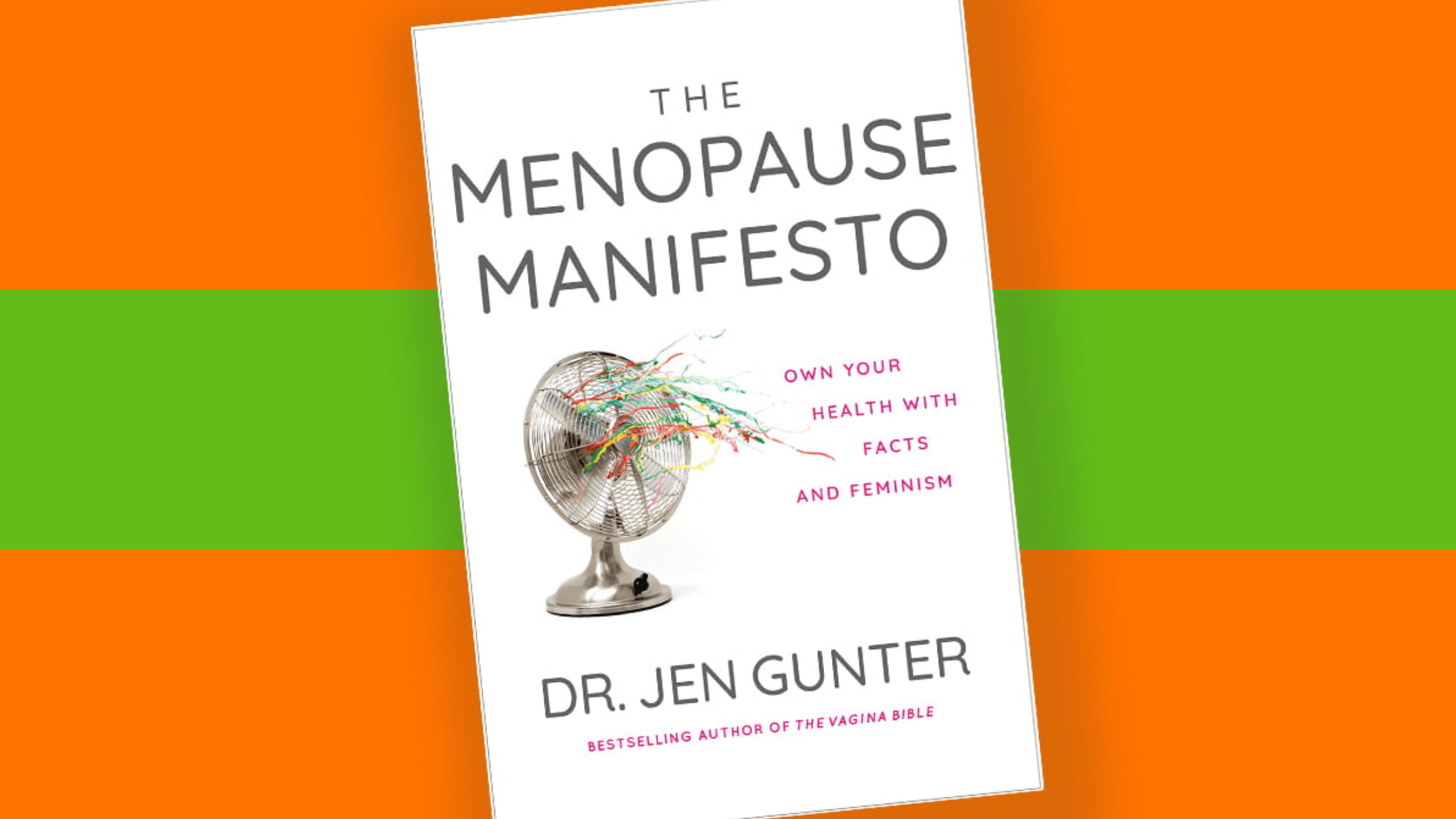
Dr. Jen Gunter returned to discuss her latest book The Menopause Manifesto: Own Your Health with Facts and Feminism (Random House Canada, May 25, 2021) with GATE director, Dr. Sarah Kaplan. (She visited us in 2019 to discuss her previous book, The Vagina Bible, and you can see a recap here.)
Together, Dr. Gunter and Dr. Kaplan explored and debunked many of the myths and misogynist attitudes surrounding menopause. They examined the impact that misinformation and a lack of reliable research has on women’s health and on their pocketbooks. Dr. Gunter discussed the science behind menopause, and separated out fact from myth.
The Grandmother Hypothesis
Rather than the patriarchal view of menopause as “ovarian failure,” menopause should be seen as women outliving their ovarian function. This leads to the “Grandmother Hypothesis” which argues that when there is a longer-lived person who can help with child-rearing and household tasks, then younger women are more likely to reproduce. The only way that grandmothers could help out with these duties and tasks was if they didn’t have children of their own to take care of. The Grandmother Hypothesis suggests that it became worthwhile for women to outlive their ovarian function and changes the economics of the family unit.
The Supplement Industry
When the medical community does not have open and meaningful discussions about topics related to women’s health, then people turn elsewhere for information. Unfortunately, this leads many people to turn towards groups that give unreliable and unsafe advice. Many supplements are unstudied and unregulated, with little research behind them and very little safety data available. Production rules around supplements are lax, making it difficult to do accurate studies on them. Supplements can be adulterated with hormones and antidepressants, often causing more harm than good. At a minimum, women are collectively spending millions on supplements that don’t actually work.
The Glass Ceiling in Medicine
Women doctors in the medical field, as in many other fields, suffer from the glass ceiling. As a doctor, you get paid less for an ovarian biopsy than you would for a testicular biopsy even though the tools, risks and processes are the same While women graduate medical school in greater numbers than men, the leadership and decision makers in the field are still dominated by men. As a result, research into women’s health is also often underfunded. Due to the lack of inclusive practices in academia, many women end up leaving the field, contributing to the pipeline problem. Research has shown that when women are involved in scientific studies, it leads to different innovations because their lived experiences are different.
Governments, Curriculums and Menopause
Half the population will experience menopause and evidence suggests that many women quit their jobs, reduce their hours or become less productive because of menopause symptoms. Yet, menopause is often not part of medical training, even for OB/GYN’s. Dr. Gunter suggests that dedicated menopause centers would radically reduce the medical and economic costs that both women and the medical system incur.
Watch Dr. Jen Gunter discuss the grandmother hypothesis and the supplement industry.
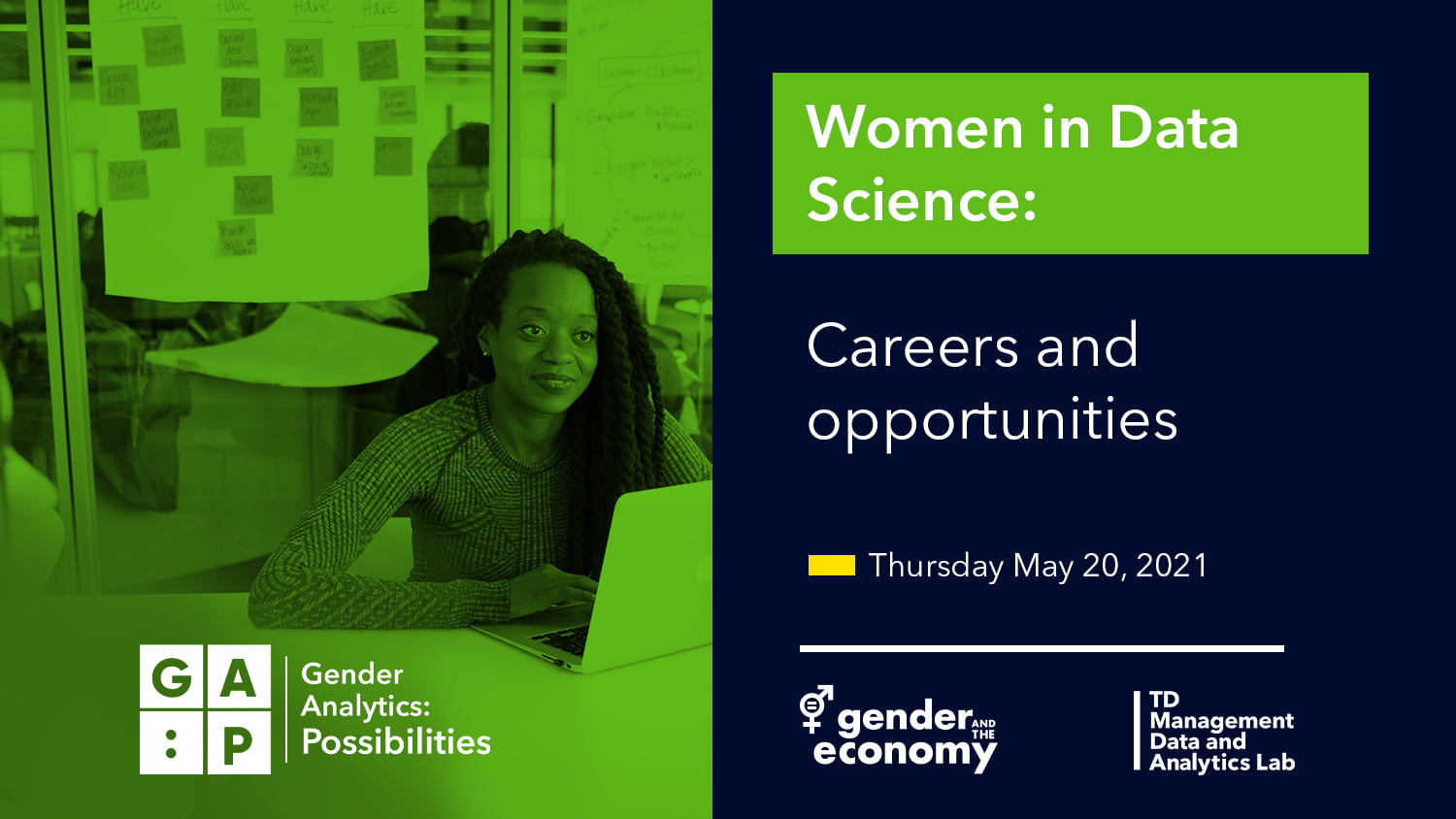
Could your next career move be in data science? Join our panel discussion to hear about career opportunities in this rapidly growing field.
About Our Speakers:
Meghan Chayka—is a Co-Founder/co-CEO of Stathletes, a hockey data and analytics company. Stathletes provides industry leading hockey insights in over 22 leagues worldwide and has scaled to the highest professional levels across North America and Europe. In another industry role, Meghan is a Data Scientist in Residence at the Rotman School of Management at the University of Toronto. In 2019, she was featured on the insert cover of the Hockey News’ Top 100 of power and Influence, listed at 95 overall and in the Top 10 for Hockey Business Executives. Meghan and Stathletes have also been awarded Top Young Entrepreneur of the Year for 2018/2019 by the Ontario Chamber of Commerce and Top 40 under 40 in hockey for the Athletic in 2019 & 2020. She is active in Canadian consulate international events and was the keynote speaker in multiple women in technology conferences in the EU.
Jane Ho—Jane leads a Data & Analytics team at TD’s Innovation, Technology and Shared Services (ITSS) group. She has been with TD for five years and has led Analytics teams for customer facing contact centre and collections businesses. Prior to TD, Jane held increasingly senior roles in Marketing and Analytics in Telecommunications, Retail and Insurance. Jane is the Co-Chair of Women in Data & Analytics at TD, and is also President of the Queen’s University Smith Analytics & AI Alumni Club.
Caitlin MacGregor—Caitlin MacGregor has always been passionate about identifying people’s potential. That’s why, after building two businesses for other people, she founded Plum. Plum quantifies human potential through the power of Industrial/Organizational Psychology and AI, creating agile enterprises and successful employees by matching people to jobs where they thrive. Caitlin is particularly passionate about supporting women to reach their full potential; she’s a regular speaker at women entrepreneur events and a champion of #movethedial, an initiative dedicated to increasing the leadership of women in tech. Caitlin was selected by Springboard Enterprises NYC as one of the top 10 businesses led by women.
Elizabeth Richards—Senior Policy Officer, Results and Delivery Unit, Privy Council Office. Elizabeth currently supports the Prime Minister and Cabinet in achieving progress on top government priorities to build a more inclusive Canada and cultivate a strong data culture across the public service. Early in the pandemic, Elizabeth played a leadership role in advancing data on COVID-19 business programs, ensuring that decision-makers could identify the types of firms in need of federal supportꟷdata that made analysis on policy gaps and how to evolve programs in real time possible.
Moderated by:
Susanna Tai—Offering Manager, Watson Data & AI Platform, IBM Software Group
The Gender Analytics: Possibilities (GA:P) Event Series is an exciting multi-session online series. This unique online experience will highlight how emerging areas of analytics applied to issues around diversity and gender shape risks and opportunities for many organizations, operations and outcomes. Experts in data analytics, gender, and diversity, and inclusion more broadly will share their research and insights to an audience of business, academic, and government leaders.
The GA:P Event Series is being planned jointly by two Rotman research centers, the Institute for Gender and the Economy (GATE) and TD Management Data and Analytics Lab co-organized by Susan Christoffersen (Co-Academic Director, TD MDAL), Sarah Kaplan (Director, GATE) and Matt Mitchell (Co-Academic Director, TD MDAL).
This event was co-hosted by the Institute for Gender and the Economy and the TD Management Data Analytics Lab.
Stay tuned for an event recap and video.
Venue: On May 13, Rotman Events will email registrants the link to the page where you can watch the livestream.
Earn your certificate and demonstrate to employers that you understand what it takes to make a truly inclusive workplace. Submit a 500 word essay on what you’ve learned.
For the 500 words, please present an insight (or insights), that you uncovered on your naviGATE journey and how that insight has impacted you.
We will accept essays until Friday, April 1st, 2022.
On April 15th we will review all submitted essays and issue certificates to students who have met the requirements for the Gender and Equity Champion Certificate as well as reward a winner of the essay contest!


 Complete your journey by earning your Gender and Equity Champion!

