Category: Multimedia

  • The challenges of gender diversity can affect whether firms “survive and thrive”

    The challenges of gender diversity can affect whether firms “survive and thrive”

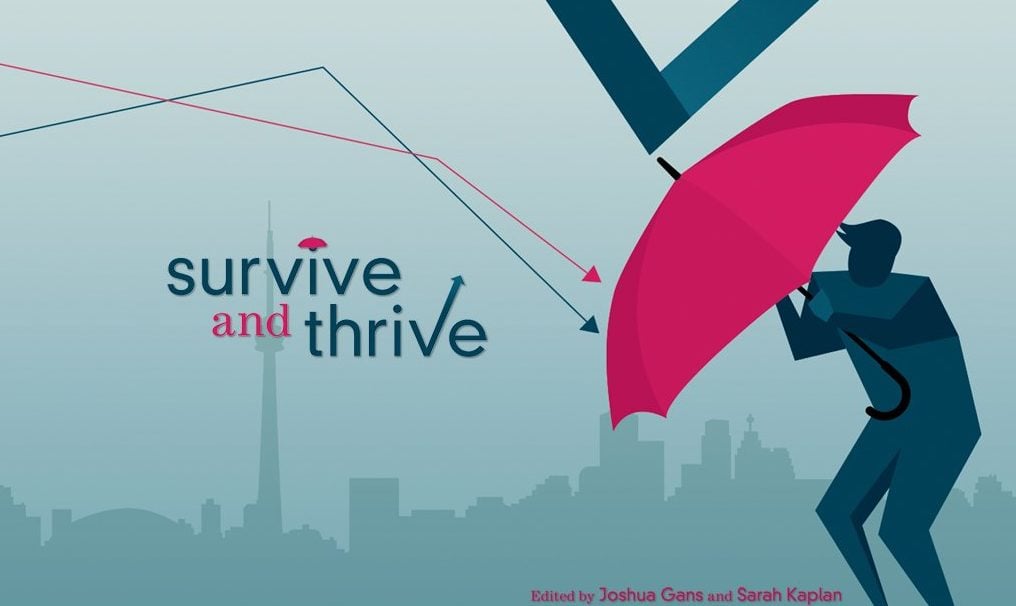
    [fusion_builder_container hundred_percent=”no” equal_height_columns=”no” menu_anchor=”” hide_on_mobile=”small-visibility,medium-visibility,large-visibility” class=”” id=”” background_color=”” background_image=”” background_position=”center center” background_repeat=”no-repeat” fade=”no” background_parallax=”none” parallax_speed=”0.3″ video_mp4=”” video_webm=”” video_ogv=”” video_url=”” video_aspect_ratio=”16:9″ video_loop=”yes” video_mute=”yes” overlay_color=”” video_preview_image=”” border_color=”” border_style=”solid” padding_top=”” padding_bottom=”” padding_left=”” padding_right=”” type=”legacy”][fusion_builder_row][fusion_builder_column type=”1_1″ layout=”1_1″ background_position=”left top” background_color=”” border_color=”” border_style=”solid” border_position=”all” spacing=”yes” background_image=”” background_repeat=”no-repeat” padding_top=”” padding_right=”” padding_bottom=”” padding_left=”” margin_top=”0px” margin_bottom=”0px” class=”” id=”” animation_type=”” animation_speed=”0.3″ animation_direction=”left” hide_on_mobile=”small-visibility,medium-visibility,large-visibility” center_content=”no” last=”true” min_height=”” hover_type=”none” link=”” border_sizes_top=”” border_sizes_bottom=”” border_sizes_left=”” border_sizes_right=”” first=”true”][fusion_text columns=”” column_min_width=”” column_spacing=”” rule_style=”” rule_size=”” rule_color=”” hue=”” saturation=”” lightness=”” alpha=”” content_alignment_medium=”” content_alignment_small=”” content_alignment=”” hide_on_mobile=”small-visibility,medium-visibility,large-visibility” sticky_display=”normal,sticky” class=”” id=”” margin_top=”” margin_right=”” margin_bottom=”” margin_left=”” fusion_font_family_text_font=”” fusion_font_variant_text_font=”” font_size=”” line_height=”” letter_spacing=”” text_transform=”” text_color=”” animation_type=”” animation_direction=”left” animation_color=”” animation_speed=”0.3″ animation_delay=”0″ animation_offset=”” logics=””]In one of four short talks on how to “Survive and Thrive,” Sarah Kaplan talks about the challenges of achieving gender diversity.

    The Rotman School strategy area launched its new book:  Survive and Thrive: Winning Against Strategic Threats to Your Business. In one of the 4 short talks launching the book, GATE director, Sarah Kaplan, spoke about the challenges of achieving gender diversity in your business on November 7, 2017.

    In it, she talks about how lack of attention to diversity issues can lead to important challenges to businesses including lawsuits, reputational damage and struggles in the war for talent. She highlights four actions individuals and organizations can do to invest in equality:  sponsoring (not just mentoring); enrolling and engaging to build support in the organization; increasing transparency of information on recruiting, pay and promotions; and monitoring people and holding them accountable.

    The full chapter is available here.

    About “Survive and Thrive”

    From Volkswagen to BP, from Blackberry to Bombardier, from United Airlines to Equifax, businesses — large and small — face threats to their survival. These worries keep corporate leaders awake and night. Is there anything businesses can do about it?

    This question and more is answered in the new book, Survive and Thrive: Winning Against Strategic Threats to Your Business, featuring a collection of insights by strategy professors at the University of Toronto’s Rotman School of Management. The book takes readers through some of the most vexing threats to business today, threats that put the very existence of organizations into question. From disruptive innovation, to social media disasters, to mistaken technical investments, to gender discrimination, to misunderstood competition, companies need to be able to anticipate crises and prepare to deal with them head on. Reading this book, readers will get warnings about four mistakes that companies commonly make – blindness to interactions between systems, getting locked in to existing ways of doing business, falling victim to cognitive biases, and derailment by short-termism.

    The good news is that mistakes can be managed. Using structured anticipation, companies can prepare, reorganise and challenge themselves to embrace rather than shirk from risk.

    Executives will find principles and practices for anticipating potential threats and creating responses that permit their businesses to not only survive but thrive.

    Editor Joshua S. Gans is a professor of strategic management and holds the Jeffrey S. Skoll Chair of Technical Innovation and Entrepreneurship at the Rotman School. He is also chief economist of the School’s Creative Destruction Lab. He wrote The Disruption Dilemma, Information Wants to be Shared, and several other books.

    Editor Sarah Kaplan, Director of the Institute for Gender and the Economy at the Rotman School, is also Distinguished Professor of Gender and the Economy and a professor of strategic management. She co-wrote the business bestseller Creative Destruction.

    “The mantra for the book is that leaders need to be alert and not panicked. While there are always threats that can take out a business, alongside those threats are manageable actions that can be deployed to either pre-empt or confront them,” say Profs. Gans and Kaplan.

    In addition to Profs. Gans and Kaplan, contributors to the book include Rotman Professors Ajay Agrawal, Anne Bowers, Kevin Bryan, Alberto Galasso, Anita McGahan, Will Mitchell, A. Rebecca Reuber, Michael Ryall, and András Tilcsik.

    Further information is available online at www.surviveandthrivebook.net or on major online booksellers.

    [/fusion_text][fusion_separator style_type=”none” hide_on_mobile=”small-visibility,medium-visibility,large-visibility” class=”” id=”” sep_color=”” top_margin=”50″ bottom_margin=”50″ border_size=”” icon=”” icon_circle=”” icon_circle_color=”” width=”” alignment=”center” /][fusion_button link=”https://www.gendereconomy.org/events/” text_transform=”” title=”” target=”_blank” link_attributes=”” alignment=”” modal=”” hide_on_mobile=”small-visibility,medium-visibility,large-visibility” class=”” id=”” color=”custom” button_gradient_top_color=”#62bd19″ button_gradient_bottom_color=”#62bd19″ button_gradient_top_color_hover=”#00c2e2″ button_gradient_bottom_color_hover=”#00c2e2″ accent_color=”” accent_hover_color=”” type=”” bevel_color=”” size=”” stretch=”yes” icon=”” icon_position=”left” icon_divider=”no” animation_type=”” animation_direction=”left” animation_speed=”0.3″ animation_offset=””]See more past events[/fusion_button][fusion_separator style_type=”none” hide_on_mobile=”small-visibility,medium-visibility,large-visibility” class=”” id=”” sep_color=”” top_margin=”20″ bottom_margin=”20″ border_size=”” icon=”” icon_circle=”” icon_circle_color=”” width=”” alignment=”center” /][fusion_title margin_top=”” margin_bottom=”” hide_on_mobile=”medium-visibility,large-visibility” class=”” id=”” size=”5″ content_align=”center” style_type=”default” sep_color=””]

    Or register below for these upcoming events

    [/fusion_title][fusion_recent_posts layout=”default” hover_type=”none” columns=”3″ number_posts=”3″ offset=”0″ pull_by=”category” cat_slug=”events” exclude_cats=”past” tag_slug=”” exclude_tags=”” thumbnail=”yes” title=”yes” meta=”no” meta_author=”no” meta_categories=”no” meta_date=”yes” meta_comments=”yes” meta_tags=”no” content_alignment=”” excerpt=”no” excerpt_length=”35″ strip_html=”yes” scrolling=”no” hide_on_mobile=”medium-visibility,large-visibility” class=”” id=”” animation_type=”” animation_direction=”left” animation_speed=”0.3″ animation_offset=”” /][/fusion_builder_column][/fusion_builder_row][/fusion_builder_container]

  • Emotional intelligence series: Stéphane Côté

    Emotional intelligence series: Stéphane Côté

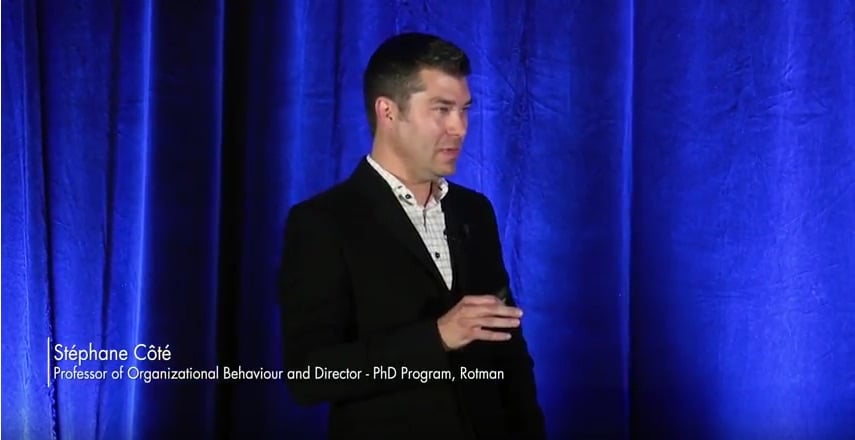
    Rotman’s Women in Management Association (WIMA) and their ally partners WiMen have launched a series of videos on gender and emotional intelligence. Part 1 is an interview with Stéphane Côté, Professor of Organizational Behaviour and HR Management at the Rotman School on how perceptions of men’s and women’s emotions affect their leadership effectiveness. More on his bio here.

  • Discrimination in Hiring

    Discrimination in Hiring

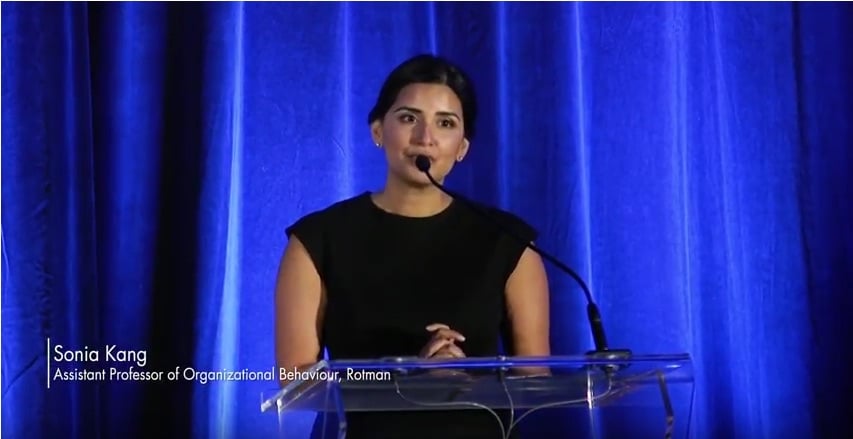
    As part of our Rotman Short Talks series, hear from Professor Sonia Kang about how diversity statements can have unintended consequences. Based on her research on whitening resumés, she shows that minorities tend to disguise their minority status when applying for jobs, understanding rightly that firms tend to select people at a lower rate when their ethnic background is more visible. Yet, when firms make statements about their desire for diverse candidates, applicants are less likely to “whiten” their resumés. Unfortunately, even these firms that make diversity statements tend to hire racialized minorities at lower rates, thus leading diversity statements to have the opposite of the intended effect.  See our research brief about the study here.

    Sonia Kang is an Assistant Professor of Organizational Behaviour and Human Resource Management in the Department of Management at the University of Toronto Mississauga, and holds a cross-appointment to the Organizational Behaviour and HR Management area at Rotman. Her research explores the challenges and opportunities of diversity, including strategies for mitigating the far-reaching effects of stigma and harnessing the power of diversity for society and organizations alike. Sonia’s research has been published in journals including the Journal of Personality and Social Psychology, Psychological Science, Administrative Science Quarterly, and the Journal of Experimental Social Psychology, and has been featured in media outlets such as The Globe and Mail and The Atlantic.

  • Why Progress is Slow on Gender Parity

    Why Progress is Slow on Gender Parity

    As part of our Rotman Short Talks series, hear from Professor Sarah Kaplan about why progress towards gender equality is slow. In it, she focuses on the risks of backlash and the discomfort associated with diversity. She argues that the myth of meritocracy is getting in the way of progress. And, she highlights that getting comfortable with discomfort is the only way to move forward.

    Sarah Kaplan is Professor of Strategic Management at the Rotman School. She is author of the New York Times business bestseller, Creative Destruction, challenging the notion of sustainable competitive advantage and the myth of excellence, and the recently released Survive and Thrive: Winning Against Strategic Threats to Your Business. The research shows that long-established companies, instead of maintaining excellence, almost always under-perform the market over time. Ironically, the very culture and meticulously maintained systems that fuel the good times cause companies to stall out. Her work has focused on generating insights that can help companies avoid this cultural lock-in and innovate at the pace and scale of the market.

    Her current research continues this exploration of how organizations participate in and respond to the emergence of new fields and technologies. Her studies examine the biotechnology, fiber optics, financial services, nanotechnology and most recently, the field emerging at the nexus of gender and finance. Her interest in gender lens investing is in understanding how whole new ecosystems can be built. She recently authored “Gender Equality as an Innovation Challenge” in the Rotman Magazine (2017), “The Risky Rhetoric of Female Risk Aversion” in the Stanford Social Innovation Review (2016), “Meritocracy: From Myth to Reality” in the Rotman Magazine (2015), “The Rise of Gender Capitalism,” in the Stanford Social Innovation Review (2014).

    Formerly a professor at the Wharton School, University of Pennsylvania (where she remains a Senior Fellow), and a consultant and innovation specialist for nearly a decade at McKinsey & Company in New York, she completed her doctoral research at the Sloan School of Management at the Massachusetts Institute of Technology (MIT).

  • How Social Class Affects Our Behaviour

    How Social Class Affects Our Behaviour

    As part of our Rotman Short Talks series, hear from Professor Stéphane Côté about how social class affects our behaviour. Based on his research, he shows that those in upper economic classes are less inclined to help others, especially when they are made aware of social inequalities. He outlines that society would function better with only moderate levels of inequality — which raises a red flag about the risks of increasing inequality in many economies.

    Stéphane Côté is Professor of Organizational Behaviour and Director of the PhD program at the Rotman School of Management at the University of Toronto. He received his PhD in organizational psychology from the University of Michigan. He studies how employees can use emotional intelligence to improve their well-being and performance, and how social class and economic inequality relate to prosocial behavior in social and organizational settings. He serves on the editorial boards of the Administrative Science Quarterly, Academy of Management Journal, and Personnel Psychology, and has served as Associate Editor of Emotion. He is a Fellow of the Society for Personality and Social Psychology. He teaches The Socially Intelligent Manager in the MBA program and seminars on organizational behavior and research methods in the PhD program.

  • Gender Equality and the War for Talent

    Gender Equality and the War for Talent

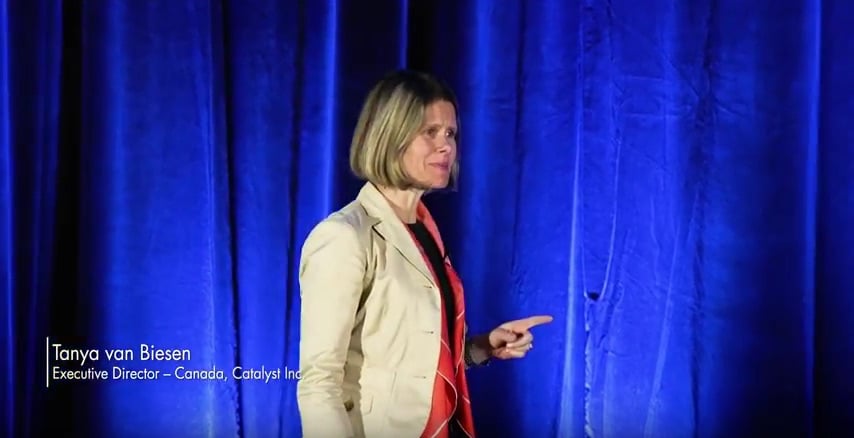
    As part of our Rotman Short Talks series, hear from Tanya van Biesen, Executive Director of Canada, Catalyst, Inc. and Rotman alumna about how working towards gender equality can position firms to do better in the War for Talent. (12 mins)


    Tanya van Biesen is Executive Director of Catalyst Canada, the leading global nonprofit working to accelerate progress for women through workplace inclusion. In this capacity, Tanya is responsible for leading the growth of Catalyst’s operations in Canada, shaping strategies to advance Catalyst’s mission with supporters, corporate partners, professional organizations, CEOs, senior leaders, and stakeholders.

    A recognized leader and influencer with deep experience in the executive search sector at the most senior levels of corporate Canada, Tanya brings more than two decades of corporate leadership and diversity experience to Catalyst. Most recently, she co-led the Financial Services Practice at Spencer Stuart and was a key member of the Canadian Boards Practice, focusing on executive search assignments at the board, CEO, and general management levels. She also led the firm’s Canadian Diversity Practice, specializing in the placement of chief diversity officers and diverse slates of candidates across all search assignments.

    Tanya began her career at Procter & Gamble, working in both Toronto and Calgary in regional and national sales leadership roles. A sought-after speaker on the topic of diversity in the boardroom, Tanya has contributed to several research studies and articles analyzing leadership trends and attributes. She holds an MBA from the University of Toronto’s Rotman School of Business and a Bachelor of Commerce from Queen’s University, and speaks English, French, and Dutch.

  • An Introduction to Thinking about Gender and the Economy

    An Introduction to Thinking about Gender and the Economy

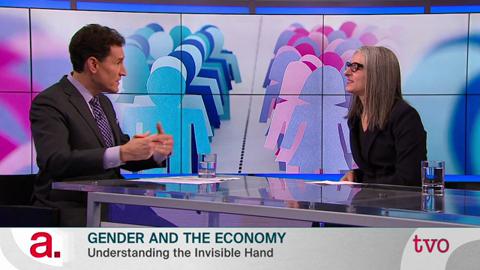
    See this 17-minute segment with Sarah Kaplan on TVO’s The Agenda with Steve Paikin which aired on International Women’s Day 2017. It covers some of the key issues to consider when thinking about gender and the economy.

  • TEDx: Gender equality as an innovation challenge

    TEDx: Gender equality as an innovation challenge

    [fusion_builder_container hundred_percent=”no” equal_height_columns=”no” menu_anchor=”” hide_on_mobile=”small-visibility,medium-visibility,large-visibility” class=”” id=”” background_color=”” background_image=”” background_position=”center center” background_repeat=”no-repeat” fade=”no” background_parallax=”none” parallax_speed=”0.3″ video_mp4=”” video_webm=”” video_ogv=”” video_url=”” video_aspect_ratio=”16:9″ video_loop=”yes” video_mute=”yes” overlay_color=”” video_preview_image=”” border_color=”” border_style=”solid” padding_top=”” padding_bottom=”” padding_left=”” padding_right=”” type=”legacy”][fusion_builder_row][fusion_builder_column type=”1_1″ layout=”1_1″ background_position=”left top” background_color=”” border_color=”” border_style=”solid” border_position=”all” spacing=”yes” background_image=”” background_repeat=”no-repeat” padding_top=”” padding_right=”” padding_bottom=”” padding_left=”” margin_top=”0px” margin_bottom=”0px” class=”” id=”” animation_type=”” animation_speed=”0.3″ animation_direction=”left” hide_on_mobile=”small-visibility,medium-visibility,large-visibility” center_content=”no” last=”true” min_height=”” hover_type=”none” link=”” border_sizes_top=”” border_sizes_bottom=”” border_sizes_left=”” border_sizes_right=”” first=”true”][fusion_text columns=”” column_min_width=”” column_spacing=”” rule_style=”” rule_size=”” rule_color=”” hue=”” saturation=”” lightness=”” alpha=”” content_alignment_medium=”” content_alignment_small=”” content_alignment=”” hide_on_mobile=”small-visibility,medium-visibility,large-visibility” sticky_display=”normal,sticky” class=”” id=”” margin_top=”” margin_right=”” margin_bottom=”” margin_left=”” fusion_font_family_text_font=”” fusion_font_variant_text_font=”” font_size=”” line_height=”” letter_spacing=”” text_transform=”” text_color=”” animation_type=”” animation_direction=”left” animation_color=”” animation_speed=”0.3″ animation_delay=”0″ animation_offset=”” logics=””]Frustrated with the lack of progress towards gender equality in the economy, proponents of diversity are building the “business case” for action. But, the “business case” may do more harm than good by sending signals that women need to be better than men in order to be included in corporate leadership, as investors or as entrepreneurs.

    About the Event

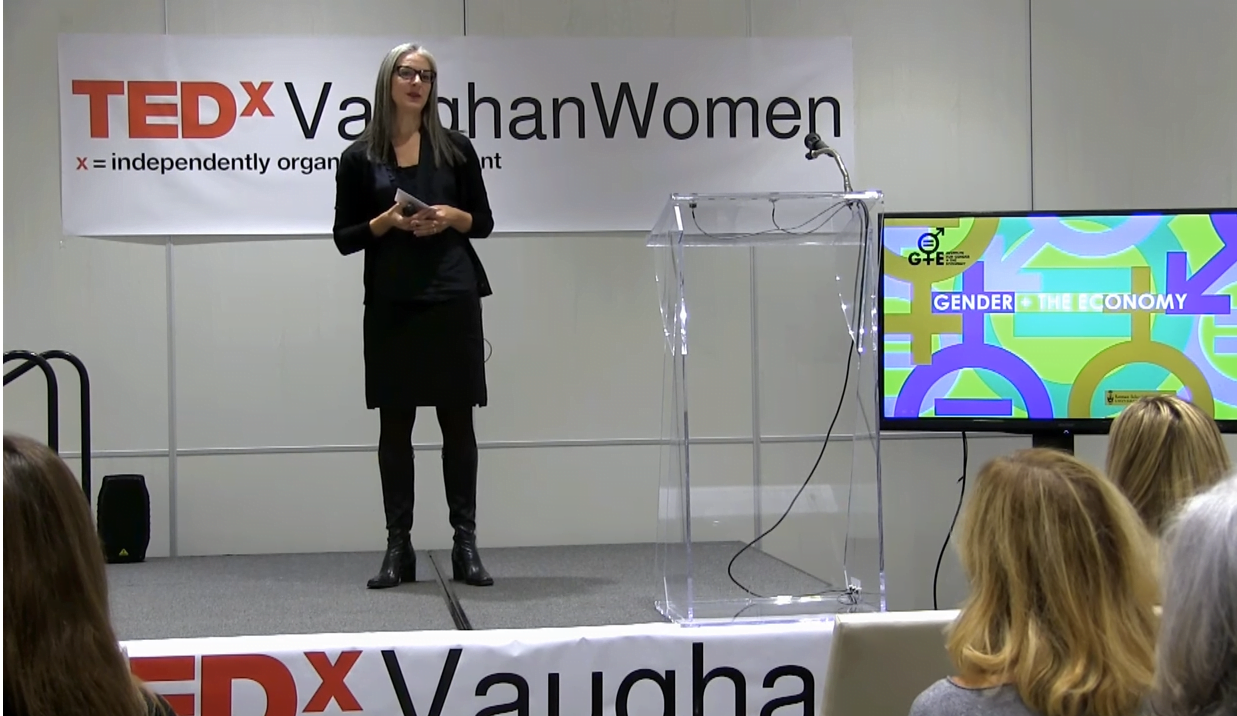
    In this TEDx talk on October 27, 2016, Sarah Kaplan shows how the myth of meritocracy unintentionally reinforces privilege and blocks further moves towards gender equality. She also suggests that if we treat the diversity challenge as an innovation problem, we can make progress.

    About TEDx

    In the spirit of TED’s mission, “ideas worth spreading,” the TEDx program helps communities, organizations and individuals produce TED-style events at the local level. TEDx events are planned and coordinated independently, on a community-by-community basis, under a free license from TED.

    About the Speaker

    Sarah Kaplan is University of Toronto Distinguished Professor of Gender and the Economy, Professor of Strategic Management and Director of the Institute for Gender + the Eco. She is author of the business bestseller, Creative Destruction which challenges the myth of sustainable competitive advantage. Her current research continues this exploration of how organizations participate in and respond to the emergence of new fields, examining biotechnology, fiber optics, financial services, nanotechnology and the field emerging at the nexus of gender and finance. Her interest in gender lens investing is in understanding how whole new ecosystems can be built. She recently authored “The Risky Rhetoric of Female Risk Aversion,” “Meritocracy: From Myth to Reality,” and “The Rise of Gender Capitalism.” Formerly a professor at the Wharton School, University of Pennsylvania, and a consultant for nearly a decade at McKinsey & Company, she received her PhD from the Sloan School of Management at MIT.[/fusion_text][fusion_separator style_type=”none” hide_on_mobile=”small-visibility,medium-visibility,large-visibility” class=”” id=”” sep_color=”” top_margin=”50″ bottom_margin=”50″ border_size=”” icon=”” icon_circle=”” icon_circle_color=”” width=”” alignment=”center” /][fusion_button link=”https://www.gendereconomy.org/events/” text_transform=”” title=”” target=”_blank” link_attributes=”” alignment=”” modal=”” hide_on_mobile=”small-visibility,medium-visibility,large-visibility” class=”” id=”” color=”custom” button_gradient_top_color=”#62bd19″ button_gradient_bottom_color=”#62bd19″ button_gradient_top_color_hover=”#00c2e2″ button_gradient_bottom_color_hover=”#00c2e2″ accent_color=”” accent_hover_color=”” type=”” bevel_color=”” size=”” stretch=”yes” icon=”” icon_position=”left” icon_divider=”no” animation_type=”” animation_direction=”left” animation_speed=”0.3″ animation_offset=””]See more past events[/fusion_button][fusion_separator style_type=”none” hide_on_mobile=”small-visibility,medium-visibility,large-visibility” class=”” id=”” sep_color=”” top_margin=”20″ bottom_margin=”20″ border_size=”” icon=”” icon_circle=”” icon_circle_color=”” width=”” alignment=”center” /][fusion_title margin_top=”” margin_bottom=”” hide_on_mobile=”medium-visibility,large-visibility” class=”” id=”” size=”5″ content_align=”center” style_type=”default” sep_color=””]

    Or register below for these upcoming events

    [/fusion_title][fusion_recent_posts layout=”default” hover_type=”none” columns=”3″ number_posts=”3″ offset=”0″ pull_by=”category” cat_slug=”events” exclude_cats=”past” tag_slug=”” exclude_tags=”” thumbnail=”yes” title=”yes” meta=”no” meta_author=”no” meta_categories=”no” meta_date=”yes” meta_comments=”yes” meta_tags=”no” content_alignment=”” excerpt=”no” excerpt_length=”35″ strip_html=”yes” scrolling=”no” hide_on_mobile=”medium-visibility,large-visibility” class=”” id=”” animation_type=”” animation_direction=”left” animation_speed=”0.3″ animation_offset=”” /][/fusion_builder_column][/fusion_builder_row][/fusion_builder_container]