Category: Multimedia

  • Beyond the Business Case: Can we fix unconscious bias in recruiting?

    Beyond the Business Case: Can we fix unconscious bias in recruiting?

    Given the global war for talent, recruiting and retaining a diverse workforce is a more competitive business issue than ever before. However, ambitions to achieve gender parity don’t often translate to actual gender parity.

    In Episode 3 of “Beyond the Business Case,” MBA Student Fellow, Vanessa Ko, busts a few myths about recruitment with Sonia Kang, Assistant Professor of Organizational Behaviour and Human Resource Management in the Department of Management at the University of Toronto; Martin Hauck, Head of Talent at Coinsquare and an Evangelist with Unbiasify; and Maaz Rana, Co-founder of Knockri.

    About this series: 

    Although gender diversity is a prominent topic in the news, particularly with headlines like, “The business case for gender diversity,” the needle hasn’t significantly moved in the past 10 to 15 years. What accounts for the gap between talk and progress?

    In the “Beyond the Business Case” podcast, Vanessa Ko interviews companies to uncover the best practices and policies they’re implementing to improve gender diversity. She also highlights innovations in the field that change the conversation on gender diversity in business.

    This podcast was supported by the Institute for Gender and the Economy (GATE) as part of the MBA Student Fellows program, which seeks to engage students in advancing the agenda on gender equality.

    Disclaimer: This podcast series was prepared by Vanessa Ko, and the opinions expressed in this series are her own and do not necessarily reflect the views of the Institute for Gender and the Economy or the University of Toronto.

    To listen to more of this podcast series, please click here.
  • Meditations on the business case for gender equality

    Meditations on the business case for gender equality

    Speaking at the University of Pennsylvania’s Wharton School, Sarah Kaplan details the mission of the Institute for Gender and the Economy (GATE) and pushes attendees to question the focus on making the “business case” for gender equality by asking three questions:

    1. What does the research say about the “business case”?
    2. Why do we need to make a “business case” for women or people of color to be included?
    3. Why is the moral imperative for gender diversity and inclusion not enough?


    DID YOU LIKE THIS VIDEO? FOLLOW US ON TWITTERLINKEDIN, AND YOUTUBE FOR MORE, AND SIGN UP FOR OUR MONTHLY NEWSLETTER.
  • What exactly is sponsorship in business?

    What exactly is sponsorship in business?

    Men are 50% more likely to attribute their advancement to the support of a senior leader than women are. Yet, 80% of companies lack a formal sponsorship program.

    High potential women are over mentored and under sponsored. But what is sponsorship?

    In this video, Rotman MBA Student Fellow, Ria Dutta, interviews several practitioners, academics, and activists from organizations such as Catalyst Canada; the University of Toronto; the Bank of Montreal; and McKinsey & Company, about sponsorship in business and how it’s different from mentorship.

    About this video: 

    This video series was supported by the Institute for Gender and the Economy (GATE) as part of the MBA Student Fellows program, which seeks to engage students in advancing the agenda on gender equality.

    Disclaimer: This video series was prepared by Ria Dutta, and the opinions expressed in this series do not necessarily reflect the views of the Institute for Gender and the Economy or the University of Toronto.

    Stay tuned this fall for the full series and subscribe to our Youtube channel for more content like this.
  • Beyond the Business Case by Vanessa Ko

    Beyond the Business Case by Vanessa Ko

    About this series: 

    Although gender diversity is a prominent topic in the news, particularly with headlines like, “The business case for gender diversity,” the needle hasn’t significantly moved in the past 10 to 15 years. What accounts for the gap between talk and progress?

    In the “Beyond the Business Case” podcast, Vanessa Ko interviews companies to uncover the best practices and policies they’re implementing to improve gender diversity. She also highlights innovations in the field that change the conversation on gender diversity in business.

    This podcast was supported by the Institute for Gender and the Economy (GATE) as part of the MBA Student Fellows program, which seeks to engage students in advancing the agenda on gender equality.

    Disclaimer: This podcast series was prepared by Vanessa Ko, and the opinions expressed in this series are her own and do not necessarily reflect the views of the Institute for Gender and the Economy or the University of Toronto.

    Listen on Spotify, Apple Podcasts

    In Episode 1 of “Beyond the Business Case,” MBA Student Fellow, Vanessa Ko, interviews Sarah Kaplan, Director of the Institute for Gender and the Economy (GATE), to discuss why we need to change the conversation on gender equality, and where the debate stands in academia today.

    Episode 1 show notes

    In episode 2 of “Beyond the Business Case,” , MBA Student Fellow, Vanessa Ko, talks to ZJ Hadley from Tulip Retail about diversity in the startup world.

    Episode 2 show notes

    In Episode 3 of “Beyond the Business Case,” MBA Student Fellow, Vanessa Ko, busts a few myths about recruitment with Sonia Kang, Assistant Professor of Organizational Behaviour and Human Resource Management in the Department of Management at the University of Toronto; Martin Hauck, Head of Talent at Coinsquare and an Evangelist with Unbiasify; and Maaz Rana, Co-founder of Knockri.

    Episode 3 show notes

    About this series: 

    Although gender diversity is a prominent topic in the news, particularly with headlines like, “The business case for gender diversity,” the needle hasn’t significantly moved in the past 10 to 15 years. What accounts for the gap between talk and progress?

    In the “Beyond the Business Case” podcast, Vanessa Ko interviews companies to uncover the best practices and policies they’re implementing to improve gender diversity. She also highlights innovations in the field that change the conversation on gender diversity in business.

    This podcast was supported by the Institute for Gender and the Economy (GATE) as part of the MBA Student Fellows program, which seeks to engage students in advancing the agenda on gender equality.

    Disclaimer: This podcast series was prepared by Vanessa Ko, and the opinions expressed in this series are her own and do not necessarily reflect the views of the Institute for Gender and the Economy or the University of Toronto.

    Listen to other GATE podcast series on the GATE audio Channel on Apple Podcasts or the GATE audio playlist on Spotify.
  • VIEW to the U: Sonia Kang on Diversity and Inclusion in the Workplace

    VIEW to the U: Sonia Kang on Diversity and Inclusion in the Workplace

    On this edition of the VIEW to the U podcast, Professor Sonia Kang charts her research path in the Department of Management within the Institute for Management and Innovation at the University of Toronto Mississauga.

    She discusses her broad program of research that touches on several areas, including managing multiple identities, résumé whitening, the psychological foundations of discrimination, and the effects of stigma and stereotyping and their connection to age, race, gender and also a new line of inquiry looking at the stigma of mental health.

    Kang also provides some advice and best practices to future academics on navigating academia.


    To learn more about Kang’s work on hiring discrimination, check out this research brief.
  • Hadiya Roderique on the gender pay gap from the law firm to academia

    Hadiya Roderique on the gender pay gap from the law firm to academia

    In this Maclean’s video, GATE-funded researcher Hadiya Roderique discusses her personal experiences with the gender wage gap and what she thinks companies can do to address the issue.

    This video is a part of a series of video interviews and articles published by Maclean’s for its February 2018 issue focused on pay equity.

    Hadiya Roderique is currently a doctoral candidate in Organizational Behavior and Human Resources Management. Her funded project is called, “Race, Gender and Agency in Leadership: An Examination of Intersectional Identities and Agentic Penalties.” This research project will examine the effect of different agentic, leadership behaviors on evaluations of Black and White women leaders. The study predicts that unlike their White counterparts, Black women will be protected from agentic penalties where the described behavior aligns with stereotypes associated with their race and gender.

  • Canadian women on the gender pay gap, and how we can fix it

    Canadian women on the gender pay gap, and how we can fix it

    In this Maclean’s video, Sarah Kaplan and GATE-funded researcher Hadiya Roderique discuss the gender pay gap alongside Rona Ambrose, Diana Matheson, Kirstine Stewart, Rudayna Bahubeshi and Jodi Kovitz.
    This video is a part of a series of video interviews and articles published by Maclean’s for its February 2018 issue focused on pay equity.

    To learn more about the gender wage gap, check out this panel discussion held on Equal Pay Day 2017.
  • Meritocracy: From Myth to Reality

    Meritocracy: From Myth to Reality

    [fusion_builder_container hundred_percent=”no” equal_height_columns=”no” menu_anchor=”” hide_on_mobile=”small-visibility,medium-visibility,large-visibility” class=”” id=”” background_color=”” background_image=”” background_position=”center center” background_repeat=”no-repeat” fade=”no” background_parallax=”none” parallax_speed=”0.3″ video_mp4=”” video_webm=”” video_ogv=”” video_url=”” video_aspect_ratio=”16:9″ video_loop=”yes” video_mute=”yes” overlay_color=”” video_preview_image=”” border_size=”” border_color=”” border_style=”solid” padding_top=”” padding_bottom=”” padding_left=”” padding_right=””][fusion_builder_row][fusion_builder_column type=”1_1″ layout=”1_1″ background_position=”left top” background_color=”” border_size=”” border_color=”” border_style=”solid” border_position=”all” spacing=”yes” background_image=”” background_repeat=”no-repeat” padding_top=”” padding_right=”” padding_bottom=”” padding_left=”” margin_top=”0px” margin_bottom=”0px” class=”” id=”” animation_type=”” animation_speed=”0.3″ animation_direction=”left” hide_on_mobile=”small-visibility,medium-visibility,large-visibility” center_content=”no” last=”no” min_height=”” hover_type=”none” link=””][fusion_text columns=”” column_min_width=”” column_spacing=”” rule_style=”default” rule_size=”” rule_color=”” class=”” id=””]

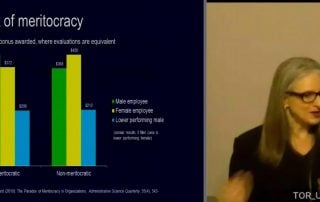
    Sarah Kaplan gave a 1-hour talk at City-Wide Medical Grand Rounds on Wednesday, January 17, 2018. The topic was: Meritocracy: From Myth to Reality” and the learning objectives were:

    1. understand how implicit bias operates,
    2. reflect on the ways that our understanding of “merit” may be biased,
    3. understand how to interrupt bias in organizational practice, and
    4. discover what practices might enable a true meritocracy to operate

    The link to the replay of the webcast is here.[/fusion_text][fusion_separator style_type=”none” hide_on_mobile=”small-visibility,medium-visibility,large-visibility” class=”” id=”” sep_color=”” top_margin=”50″ bottom_margin=”50″ border_size=”” icon=”” icon_circle=”” icon_circle_color=”” width=”” alignment=”center” /][fusion_button link=”https://www.gendereconomy.org/events/” text_transform=”” title=”” target=”_blank” link_attributes=”” alignment=”” modal=”” hide_on_mobile=”small-visibility,medium-visibility,large-visibility” class=”” id=”” color=”custom” button_gradient_top_color=”#62bd19″ button_gradient_bottom_color=”#62bd19″ button_gradient_top_color_hover=”#00c2e2″ button_gradient_bottom_color_hover=”#00c2e2″ accent_color=”” accent_hover_color=”” type=”” bevel_color=”” border_width=”” size=”” stretch=”yes” shape=”” icon=”” icon_position=”left” icon_divider=”no” animation_type=”” animation_direction=”left” animation_speed=”0.3″ animation_offset=””]See more past events[/fusion_button][fusion_separator style_type=”none” hide_on_mobile=”small-visibility,medium-visibility,large-visibility” class=”” id=”” sep_color=”” top_margin=”20″ bottom_margin=”20″ border_size=”” icon=”” icon_circle=”” icon_circle_color=”” width=”” alignment=”center” /][fusion_title margin_top=”” margin_bottom=”” hide_on_mobile=”medium-visibility,large-visibility” class=”” id=”” size=”5″ content_align=”center” style_type=”default” sep_color=””]

    Or register below for these upcoming events

    [/fusion_title][fusion_recent_posts layout=”default” hover_type=”none” columns=”3″ number_posts=”3″ offset=”0″ pull_by=”category” cat_slug=”events” exclude_cats=”past” tag_slug=”” exclude_tags=”” thumbnail=”yes” title=”yes” meta=”no” meta_author=”no” meta_categories=”no” meta_date=”yes” meta_comments=”yes” meta_tags=”no” content_alignment=”” excerpt=”no” excerpt_length=”35″ strip_html=”yes” scrolling=”no” hide_on_mobile=”medium-visibility,large-visibility” class=”” id=”” animation_type=”” animation_direction=”left” animation_speed=”0.3″ animation_offset=”” /][/fusion_builder_column][/fusion_builder_row][/fusion_builder_container]

  • “Nudging” for Diversity

    “Nudging” for Diversity

    [fusion_builder_container hundred_percent=”no” equal_height_columns=”no” menu_anchor=”” hide_on_mobile=”small-visibility,medium-visibility,large-visibility” class=”” id=”” background_color=”” background_image=”” background_position=”center center” background_repeat=”no-repeat” fade=”no” background_parallax=”none” parallax_speed=”0.3″ video_mp4=”” video_webm=”” video_ogv=”” video_url=”” video_aspect_ratio=”16:9″ video_loop=”yes” video_mute=”yes” overlay_color=”” video_preview_image=”” border_size=”” border_color=”” border_style=”solid” padding_top=”” padding_bottom=”” padding_left=”” padding_right=””][fusion_builder_row][fusion_builder_column type=”1_1″ layout=”1_1″ background_position=”left top” background_color=”” border_size=”” border_color=”” border_style=”solid” border_position=”all” spacing=”yes” background_image=”” background_repeat=”no-repeat” padding_top=”” padding_right=”” padding_bottom=”” padding_left=”” margin_top=”0px” margin_bottom=”0px” class=”” id=”” animation_type=”” animation_speed=”0.3″ animation_direction=”left” hide_on_mobile=”small-visibility,medium-visibility,large-visibility” center_content=”no” last=”no” min_height=”” hover_type=”none” link=””][fusion_text columns=”” column_min_width=”” column_spacing=”” rule_style=”default” rule_size=”” rule_color=”” class=”” id=””]

    Our colleagues at BEAR (Behavioural Economics in Action at Rotman) have a webinar series and behavioural insights. Our own Faculty Research Fellow, Prof. Sonia Kang spoke on “Nudging for Diversity” on November 9, 2017.

    Most organizations list Diversity and Inclusion at the forefront of their goals and values. However, not all efforts to increase diversity are successful, and some even end up doing more harm than good. This webinar provides an overview of the current landscape of diversity and inclusion research and practice, and a discussion of how insights from behavioural science might help us to achieve these goals. In it, Professor Kang talks about the ways we can change processes and structures in organizations – with a particular focus on hiring procedures – to moderate or eliminate implicit bias embedded in people’s beliefs and in organizational practices. She also emphasizes that change requires experimentation and companies shouldn’t be afraid to make mistakes.

    To view a replay of the webinar, click here.

    For more information on Prof. Sonia Kang, click here.

    [/fusion_text][fusion_separator style_type=”none” hide_on_mobile=”small-visibility,medium-visibility,large-visibility” class=”” id=”” sep_color=”” top_margin=”50″ bottom_margin=”50″ border_size=”” icon=”” icon_circle=”” icon_circle_color=”” width=”” alignment=”center” /][fusion_button link=”https://www.gendereconomy.org/events/” text_transform=”” title=”” target=”_blank” link_attributes=”” alignment=”” modal=”” hide_on_mobile=”small-visibility,medium-visibility,large-visibility” class=”” id=”” color=”custom” button_gradient_top_color=”#62bd19″ button_gradient_bottom_color=”#62bd19″ button_gradient_top_color_hover=”#00c2e2″ button_gradient_bottom_color_hover=”#00c2e2″ accent_color=”” accent_hover_color=”” type=”” bevel_color=”” border_width=”” size=”” stretch=”yes” shape=”” icon=”” icon_position=”left” icon_divider=”no” animation_type=”” animation_direction=”left” animation_speed=”0.3″ animation_offset=””]See more past events[/fusion_button][fusion_separator style_type=”none” hide_on_mobile=”small-visibility,medium-visibility,large-visibility” class=”” id=”” sep_color=”” top_margin=”20″ bottom_margin=”20″ border_size=”” icon=”” icon_circle=”” icon_circle_color=”” width=”” alignment=”center” /][fusion_title margin_top=”” margin_bottom=”” hide_on_mobile=”medium-visibility,large-visibility” class=”” id=”” size=”5″ content_align=”center” style_type=”default” sep_color=””]

    Or register below for these upcoming events

    [/fusion_title][fusion_recent_posts layout=”default” hover_type=”none” columns=”3″ number_posts=”3″ offset=”0″ pull_by=”category” cat_slug=”events” exclude_cats=”past” tag_slug=”” exclude_tags=”” thumbnail=”yes” title=”yes” meta=”no” meta_author=”no” meta_categories=”no” meta_date=”yes” meta_comments=”yes” meta_tags=”no” content_alignment=”” excerpt=”no” excerpt_length=”35″ strip_html=”yes” scrolling=”no” hide_on_mobile=”medium-visibility,large-visibility” class=”” id=”” animation_type=”” animation_direction=”left” animation_speed=”0.3″ animation_offset=”” /][/fusion_builder_column][/fusion_builder_row][/fusion_builder_container]

  • Black on Bay Street: Hadiya Roderique’s three ways to retain diverse talent

    Black on Bay Street: Hadiya Roderique’s three ways to retain diverse talent

    In this Globe and Mail video, GATE-funded researcher Hadiya Roderique offers three steps organizations can take to support women, racialized minorities and other diverse talent.

    This video accompanies her feature piece called Black on Bay Street” which appeared in the Globe and Mail on November 4, 2017.

    Hadiya Roderique is currently a doctoral candidate in Organizational Behavior and Human Resources Management. Her funded project is called, “Race, Gender and Agency in Leadership: An Examination of Intersectional Identities and Agentic Penalties.” This research project will examine the effect of different agentic, leadership behaviors on evaluations of Black and White women leaders. The study predicts that unlike their White counterparts, Black women will be protected from agentic penalties where the described behavior aligns with stereotypes associated with their race and gender.