
Tag: Careers+jobs

Research briefs, news, and event recaps related to careers and jobs.

  • Women more often volunteer for tasks that hinder their promotability

    Women more often volunteer for tasks that hinder their promotability

    [fusion_builder_container admin_label=”” hundred_percent=”no” equal_height_columns=”no” menu_anchor=”” hide_on_mobile=”small-visibility,medium-visibility,large-visibility” class=”” id=”” background_color=”” background_image=”” background_position=”center center” background_repeat=”no-repeat” fade=”no” background_parallax=”none” enable_mobile=”no” parallax_speed=”0.3″ video_mp4=”” video_webm=”” video_ogv=”” video_url=”” video_aspect_ratio=”16:9″ video_loop=”yes” video_mute=”yes” video_preview_image=”” border_size=”” border_color=”” border_style=”solid” margin_top=”20″ margin_bottom=”” padding_top=”” padding_right=”” padding_bottom=”” padding_left=””][fusion_builder_row][fusion_builder_column type=”3_4″ layout=”3_4″ spacing=”” center_content=”no” hover_type=”none” link=”” min_height=”” hide_on_mobile=”small-visibility,medium-visibility,large-visibility” class=”” id=”” background_color=”” background_image=”” background_position=”left top” background_repeat=”no-repeat” border_size=”0″ border_color=”” border_style=”solid” border_position=”all” padding_top=”” padding_right=”” padding_bottom=”” padding_left=”” dimension_margin=”” animation_type=”” animation_direction=”left” animation_speed=”0.3″ animation_offset=”” last=”no”][fusion_text columns=”” column_min_width=”” column_spacing=”” rule_style=”default” rule_size=”” rule_color=”” class=”” id=””]

    Summary

    There is widespread evidence that gender equality in the workforce has not been achieved. One of the reasons given for this is vertical job segregation, where men advance to higher paying positions more often than women within the same occupation. This study examines one reason men are more likely to be promoted to high-status positions: they dedicate more time to tasks that help their promotability, while women spend more time completing tasks that hinder their promotability.

    Research

    This study tests the theory that women are held back more often in job promotions compared to men because they are more likely to perform low-status tasks. Examples of low-status tasks include event planning, committee work, cleaning out the office fridge, making coffee, re-organizing filing cabinets, or other non-revenue-generating activities. Such tasks benefit the workplace, but they may hinder women’s advancement because they take time away from the pursuit of highly valued job tasks that matter for job appraisals and performance reviews.

    The authors find that women were more likely than men to take on job tasks with low promotability, and further undertook a series of lab experiments to determine the underlying cause. Participants in a group were presented with a task that only one person could volunteer to undertake. In addition, the volunteer benefited less than the others from taking on the task. The experiment design captured the incentives that group members face when asked to volunteer for a task that each member prefers someone else to complete. In other words, all group members want the task to be completed, but the person who volunteers to undertake the task is put at a relative disadvantage.

    The authors found that women were asked to volunteer for low-status tasks more often than men. When given the option of asking either a man or a woman to take on the low-status task, both men and women chose to ask a woman 39 percent of the time. By contrast, men chose to ask a man 29 percent of the time, and women chose to ask a man 26 percent of the time. In addition, while men accepted requests to perform low status tasks 51 percent of the time, women accepted such requests 76 percent of the time

    While men accepted requests to perform low status tasks 51 percent of the time, women accepted such requests 76 percent of the time.

    The group experiments also revealed that in mixed-gender groups, women were 50 percent more likely to volunteer for low status tasks. But when placed in all-female and all-male groups respectively, women were not more likely to volunteer for low-status tasks than the men were. The authors suggest that in all-female groups, individual women see their decision to volunteer as less critical, which in turn decreases their probability of volunteering. Put differently, the findings suggest that both men and women believed that greater female representation meant it was more likely that other women would agree to perform the disadvantageous task, thereby pardoning them of responsibility.

    The authors conclude that gendered differences in volunteering for tasks with low job promotability are not driven by individual preferences or altruism. Instead, they are driven by the belief that women are more likely than men to volunteer for such tasks.

    This study suggests that women’s greater tendency to perform low-status tasks is perpetuated by stereotypical gender beliefs.  In particular, it is reinforced by the belief that women are more likely to sacrifice for the greater good and perform tasks from which they do not benefit. The stereotypical beliefs fueling gendered task allocations, in turn, create barriers to women’s advancement in the workplace.

    Implications

    • Avoid subconscious stereotypes – Stereotypical beliefs about gender are often subconscious and held by both men and women. Managers can adopt explicit practices to overcome subconscious stereotypes and ensure that women are not disadvantaged by the allocation of low-status tasks. For example, one way to promote the even distribution of low-status tasks is to assign them, rather than rely on volunteers.
    • Attach rewards for undertaking low-status tasks – Such tasks could be allotted some form of acknowledgement in annual performance reviews. Attaching rewards to low-status tasks may help to destigmatize such work, and increase buy-in from both men and women.

    [/fusion_text][fusion_separator style_type=”none” hide_on_mobile=”small-visibility,medium-visibility,large-visibility” class=”” id=”” sep_color=”” top_margin=”20″ bottom_margin=”20″ border_size=”” icon=”” icon_circle=”” icon_circle_color=”” width=”” alignment=”center” /][fusion_button link=”https://www.gendereconomy.org/research-briefs/” text_transform=”” title=”” target=”_blank” link_attributes=”” alignment=”” modal=”” hide_on_mobile=”small-visibility,medium-visibility,large-visibility” class=”” id=”” color=”custom” button_gradient_top_color=”#62bd19″ button_gradient_bottom_color=”#62bd19″ button_gradient_top_color_hover=”#00c2e2″ button_gradient_bottom_color_hover=”#00c2e2″ accent_color=”” accent_hover_color=”” type=”” bevel_color=”” border_width=”” size=”” stretch=”yes” shape=”” icon=”” icon_position=”left” icon_divider=”no” animation_type=”” animation_direction=”left” animation_speed=”0.3″ animation_offset=””]See more research briefs[/fusion_button][fusion_separator style_type=”none” hide_on_mobile=”small-visibility,medium-visibility,large-visibility” class=”” id=”” sep_color=”” top_margin=”20″ bottom_margin=”20″ border_size=”” icon=”” icon_circle=”” icon_circle_color=”” width=”” alignment=”center” /][fusion_recent_posts layout=”default” hover_type=”none” columns=”3″ number_posts=”3″ offset=”0″ pull_by=”category” cat_slug=”research-briefs” exclude_cats=”” tag_slug=”” exclude_tags=”” thumbnail=”yes” title=”yes” meta=”no” meta_author=”no” meta_categories=”no” meta_date=”yes” meta_comments=”yes” meta_tags=”no” content_alignment=”” excerpt=”no” excerpt_length=”35″ strip_html=”yes” scrolling=”no” hide_on_mobile=”small-visibility,medium-visibility,large-visibility” class=”” id=”” animation_type=”” animation_direction=”left” animation_speed=”0.3″ animation_offset=”” /][/fusion_builder_column][fusion_builder_column type=”1_4″ layout=”1_4″ spacing=”” center_content=”no” hover_type=”none” link=”” min_height=”” hide_on_mobile=”small-visibility,medium-visibility,large-visibility” class=”” id=”” background_color=”” background_image=”” background_position=”left top” background_repeat=”no-repeat” border_size=”0″ border_color=”” border_style=”solid” border_position=”all” padding_top=”” padding_right=”” padding_bottom=”” padding_left=”” dimension_margin=”” animation_type=”” animation_direction=”left” animation_speed=”0.3″ animation_offset=”” last=”no”][fusion_title margin_top=”” margin_bottom=”” hide_on_mobile=”small-visibility,medium-visibility,large-visibility” class=”briefsummary” id=”” size=”3″ content_align=”left” style_type=”none” sep_color=””]

    Title

    Gender Differences in Accepting
    and Receiving Requests for
    Tasks with Low Promotability

    Authors

    Linda Babcock,
    Maria P. Recalde,
    Lise Vesterlund,
    Laurie Weingart

    Institutions

    Carnegie Mellon University,
    International Food Policy
    Research Institute Markets,
    University of Pittsburgh,
    Carnegie Mellon University

    Source

    American Economic Review

    Published

    March 2017

    Link

    https://www.aeaweb.org/articles?id=10.1257/aer.20141734[/fusion_title][fusion_widget_area name=”avada-custom-sidebar-researchbriefsidebar” title_size=”” title_color=”” background_color=”” padding_top=”” padding_right=”” padding_bottom=”” padding_left=”” hide_on_mobile=”small-visibility,medium-visibility,large-visibility” class=”” id=”” /][/fusion_builder_column][/fusion_builder_row][/fusion_builder_container]

  • ‘Whitening’ and Self-Presentation in the Labour Market

    ‘Whitening’ and Self-Presentation in the Labour Market

    by Sonia Kang, Katherine DeCelles, Andràs Tilcsik, and Sora Jun
    Modern organizations continue to play a key role in perpetuating economic inequality in society. Despite the proliferation of equal opportunity and diversity initiatives, discrimination on the basis of race remains particularly pervasive in North American labour markets. The authors show that even companies that publicly espouse an inclusive environment continue to discriminate against candidates who appear to be from non-white backgrounds. Worse yet, many non-white job candidates are proactively ‘whitening’ their resumes in order to hide their racial identity.

  • The Myth of the Classless Society

    Rotman Magazine

    An individual’s social class of origin continues to play an enduring role in shaping life and economic trajectories.

  • Strategies for a revolution in careers for women

    Strategies for a revolution in careers for women

    Financial Times

    Many businesses are opting to write mission statements that affirm their support for diversity and to put their staff through “implicit bias training”, which highlights how people make racist and sexist assumptions about others. Both steps are well-intentioned but can be counter-productive if not backed by deeper changes, warns Sarah Kaplan.

  • An Introduction to Thinking about Gender and the Economy

    An Introduction to Thinking about Gender and the Economy

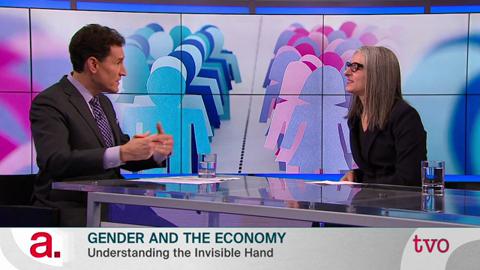
    See this 17-minute segment with Sarah Kaplan on TVO’s The Agenda with Steve Paikin which aired on International Women’s Day 2017. It covers some of the key issues to consider when thinking about gender and the economy.

  • Gender and perceived creativity

    Gender and perceived creativity

    [fusion_builder_container admin_label=”” hundred_percent=”no” equal_height_columns=”no” menu_anchor=”” hide_on_mobile=”small-visibility,medium-visibility,large-visibility” class=”” id=”” background_color=”” background_image=”” background_position=”center center” background_repeat=”no-repeat” fade=”no” background_parallax=”none” enable_mobile=”no” parallax_speed=”0.3″ video_mp4=”” video_webm=”” video_ogv=”” video_url=”” video_aspect_ratio=”16:9″ video_loop=”yes” video_mute=”yes” video_preview_image=”” border_size=”” border_color=”” border_style=”solid” margin_top=”20″ margin_bottom=”” padding_top=”” padding_right=”” padding_bottom=”” padding_left=””][fusion_builder_row][fusion_builder_column type=”3_4″ layout=”3_4″ spacing=”” center_content=”no” hover_type=”none” link=”” min_height=”” hide_on_mobile=”small-visibility,medium-visibility,large-visibility” class=”” id=”” background_color=”” background_image=”” background_position=”left top” background_repeat=”no-repeat” border_size=”0″ border_color=”” border_style=”solid” border_position=”all” padding_top=”” padding_right=”” padding_bottom=”” padding_left=”” dimension_margin=”” animation_type=”” animation_direction=”left” animation_speed=”0.3″ animation_offset=”” last=”no”][fusion_text columns=”” column_min_width=”” column_spacing=”” rule_style=”default” rule_size=”” rule_color=”” class=”” id=””]

    Summary

    The workplace and the marketplace increasingly reward those who are seen as true “innovators.” Surveys of top business executives have identified “creative thinking” as the ability valued most in employees and one of the most important skills for the future. However, stereotypical expectations of men and women’s creativity shape how creativity is judged and acknowledged. This paper finds that creativity itself is more strongly associated with stereotypically masculine characteristics and that a man’s work is more likely to be deemed creative. The research also finds that men’s ideas are more often deemed “ingenious” than women’s, even when it’s on the same topic. In particular, supervisors assess their female employees as less creative–even when they are exhibiting more of the stereotypically masculine behaviours associated with creativity.

    Research

    Famous creative thinkers (e.g. Pablo Picasso, Frank Lloyd Wright, Alfred Hitchcock) throughout time have presented a strongly masculine depiction of creativity and the creative process. When stereotypically masculine behaviour is associated with creative behaviour, this can influence how creativity is identified (or not) in women’s contributions. With the increasingly high value placed on innovation and creativity, the researchers sought to isolate the perception of creativity versus competence or intelligence (which research has long proven are predominantly associated with masculine characteristics). To do this, they undertook a series of studies, using both existing and original data, which examined different aspects of creativity and masculinity.

    This paper found multiple ways to prove that men are perceived as being more creative than women. Before they even began, the authors wanted to confirm their assumption that creativity is understood by many as divergence (a difference in opinion). They found that creative ideas (i.e. novel, outside-the-box) are indeed more often associated with divergent thought than non-divergent thought and this served as the basis for several of the studies they undertook.

    This paper found multiple ways to prove that men are perceived as being more creative than women.

    Then, the authors tested whether agentic (relating to agency, mostly considered masculine) and communal (mostly considered feminine) traits are more closely associated with creativity and whether this association is stronger if the divergent nature of creativity is emphasized. In this study, participants ranked 16 personality traits (8 stereotypically masculine, 8 stereotypically feminine) under two conditions (emphasizing divergence and non-divergence). Participants more strongly associated agentic traits, more masculine (vs. communal traits, more feminine), with creativity and even more so under the condition that emphasized creativity as divergent (different or novel) thinking. Interesting to note here is that other surveys where creative skills were defined more broadly have found that women are more highly ranked than men in some circumstances.

    Next, the authors looked at situations where the content was similar (TED Talks) and where the work product was identical (photos of buildings and clothing designs). Even here, men were considered more creative than women.

    The second study asked participants to assess men and women’s creativity in two fields: architecture (a traditionally more masculine field) and fashion design (a traditionally less masculine field). Even when shown identical work product (e.g. buildings, clothing), participants considered the male architects to be more creative than the female architects and the architects to be more creative overall than the fashion designers.

    The researchers then shifted their focus to ensure the experiments reflected what was going on in the real world. The third study examined archival data on the TED website, specifically looking at viewer ratings of the top 100 most viewed talks (28 of which were by women). Viewers were invited to select words (e.g. “ingenious,” “funny,” “informative”) to describe the talks. The study examined these ratings within different topic categories and found that women’s talks were significantly less likely to be rated as “ingenious” (creative) than men’s, even after controlling for speaker competence. Interestingly, the largest gaps were found in the categories of business and technology.

    So how does this show up in the work world? The fourth study used real-world performance evaluations from an employee’s supervisors and the people who reported to them (direct reports) to examine how these employees were rated on innovation. The study found that women’s supervisors assessed women as far less innovative compared to their male counterparts, but that direct reports assessed their male and female managers as equally innovative. The researchers believe this finding supports prior research findings that supervisors rely more heavily on stereotypes in their performance evaluations of their employees–but no real difference actually exists.

    Supervisors rely more heavily on stereotypes in their performance evaluations of their employees–but no real difference actually exists.

    So if women are evaluated differently, how does this impact their performance outcomes? The fifth study examined whether perceptions of creativity influenced whether people are thought to be deserving of more rewards (raises, etc.), particularly in higher-risk environments. The study also tested whether a woman’s behaviour could influence perceptions of her creativity.

    The results showed that men are evaluated as more creative than women when making risky decisions, however, women who act in a similar way are not considered more deserving of reward (regardless of the perception of competence). In risky decision contexts, only men are considered more agentic and therefore more creative, and thus deserving of more rewards.

    Implications

    • Critically examine the advice given to women – Women are often advised to act in more stereotypically masculine ways (e.g. “confident”) but it’s not clear that this behaviour will actually help women as, in these contexts, agentic behaviour seems to only help men. It’s important to note that much of the research in this area (modifying women’s portrayal of “confidence” in the workplace) is inconclusive or has yet to be replicated (for example, Amy Cuddy’s work on power poses).
    • Train supervisors on how to assess their employees more fairly – It appears that supervisors tend to over-inflate men’s creativity while dismissing the level of creativity displayed by women. This distortion of creativity appraisal could lead to consequential decisions about how to grow a new business or innovate within a company–companies may miss truly creative ideas by overlooking women or could be led astray by assuming men to be more innovative than they actually are.
    • Discover the underlying causes of gender imbalance in STEM – These findings also offer some explanation as to why STEM and creative fields, where innovation is highly valuable, have a dearth of women in top positions. The results are applicable to business as innovative thinking becoming increasingly vital to a company’s success.

    [/fusion_text][fusion_separator style_type=”none” hide_on_mobile=”small-visibility,medium-visibility,large-visibility” class=”” id=”” sep_color=”” top_margin=”20″ bottom_margin=”20″ border_size=”” icon=”” icon_circle=”” icon_circle_color=”” width=”” alignment=”center” /][fusion_button link=”https://www.gendereconomy.org/research-briefs/” text_transform=”” title=”” target=”_blank” link_attributes=”” alignment=”” modal=”” hide_on_mobile=”small-visibility,medium-visibility,large-visibility” class=”” id=”” color=”custom” button_gradient_top_color=”#62bd19″ button_gradient_bottom_color=”#62bd19″ button_gradient_top_color_hover=”#00c2e2″ button_gradient_bottom_color_hover=”#00c2e2″ accent_color=”” accent_hover_color=”” type=”” bevel_color=”” border_width=”” size=”” stretch=”yes” shape=”” icon=”” icon_position=”left” icon_divider=”no” animation_type=”” animation_direction=”left” animation_speed=”0.3″ animation_offset=””]See more research briefs[/fusion_button][fusion_separator style_type=”none” hide_on_mobile=”small-visibility,medium-visibility,large-visibility” class=”” id=”” sep_color=”” top_margin=”20″ bottom_margin=”20″ border_size=”” icon=”” icon_circle=”” icon_circle_color=”” width=”” alignment=”center” /][fusion_recent_posts layout=”default” hover_type=”none” columns=”3″ number_posts=”3″ offset=”0″ pull_by=”category” cat_slug=”research-briefs” exclude_cats=”” tag_slug=”” exclude_tags=”” thumbnail=”yes” title=”yes” meta=”no” meta_author=”no” meta_categories=”no” meta_date=”yes” meta_comments=”yes” meta_tags=”no” content_alignment=”” excerpt=”no” excerpt_length=”35″ strip_html=”yes” scrolling=”no” hide_on_mobile=”small-visibility,medium-visibility,large-visibility” class=”” id=”” animation_type=”” animation_direction=”left” animation_speed=”0.3″ animation_offset=”” /][/fusion_builder_column][fusion_builder_column type=”1_4″ layout=”1_4″ spacing=”” center_content=”no” hover_type=”none” link=”” min_height=”” hide_on_mobile=”small-visibility,medium-visibility,large-visibility” class=”” id=”” background_color=”” background_image=”” background_position=”left top” background_repeat=”no-repeat” border_size=”0″ border_color=”” border_style=”solid” border_position=”all” padding_top=”” padding_right=”” padding_bottom=”” padding_left=”” dimension_margin=”” animation_type=”” animation_direction=”left” animation_speed=”0.3″ animation_offset=”” last=”no”][fusion_title margin_top=”” margin_bottom=”” hide_on_mobile=”small-visibility,medium-visibility,large-visibility” class=”briefsummary” id=”” size=”3″ content_align=”left” style_type=”none” sep_color=””]

    Title

    A Gender Bias in the Attribution of Creativity: Archival and Experimental Evidence for the Perceived Association between Masculinity and Creative Thinking

    Authors

    Devon Proudfoot, Aaron C. Kay, Christy Z. Koval

    Institutions

    Duke University

    Source

    Psychological Science

    Published

    September 2015

    DOI

    10.1177/0956797615598739

    Link

    https://www.aeaweb.org/
    articles?id=10.1257/
    aer.p20161032

    [/fusion_title][fusion_widget_area name=”avada-custom-sidebar-researchbriefsidebar” title_size=”” title_color=”” background_color=”” padding_top=”” padding_right=”” padding_bottom=”” padding_left=”” hide_on_mobile=”small-visibility,medium-visibility,large-visibility” class=”” id=”” /][/fusion_builder_column][/fusion_builder_row][/fusion_builder_container]
  • The future of leadership is a woman’s business

    It’s been a frustratingly slow journey for women in business leadership.

  • The problem with working for a supposed meritocracy

    Whenever one person espouses greater diversity in the work force, leave it to some well-meaning colleague to raise the meritocracy card…

  • Jobseekers resort to ‘resumé whitening’ to get a foot in the door, study shows

    Jobseekers resort to ‘resumé whitening’ to get a foot in the door, study shows

    A major two-year study led by U of T researchers shows minority job applicants use Anglicized names, downplay ethnic experience in the hopes of landing a job.

  • Why aren’t women enrolling in Canada’s MBA schools?

    Why aren’t women enrolling in Canada’s MBA schools?

    When MBA administrators at Laurentian University learned they had the highest proportion of female students of any business school in Canada, they were shocked.