
Tag: Innovation+creativity

Research briefs, news, and event recaps related to innovation and creativity.

  • SheEO: A Transformative Paradigm for Entrepreneurial Funding

    SheEO: A Transformative Paradigm for Entrepreneurial Funding

    [fusion_builder_container hundred_percent=”no” equal_height_columns=”no” menu_anchor=”” hide_on_mobile=”small-visibility,medium-visibility,large-visibility” class=”” id=”” background_color=”” background_image=”” background_position=”center center” background_repeat=”no-repeat” fade=”no” background_parallax=”none” parallax_speed=”0.3″ video_mp4=”” video_webm=”” video_ogv=”” video_url=”” video_aspect_ratio=”16:9″ video_loop=”yes” video_mute=”yes” overlay_color=”” video_preview_image=”” border_color=”” border_style=”solid” padding_top=”” padding_bottom=”” padding_left=”” padding_right=”” type=”legacy”][fusion_builder_row][fusion_builder_column type=”1_1″ layout=”1_1″ background_position=”left top” background_color=”” border_color=”” border_style=”solid” border_position=”all” spacing=”yes” background_image=”” background_repeat=”no-repeat” padding_top=”” padding_right=”” padding_bottom=”” padding_left=”” margin_top=”0px” margin_bottom=”0px” class=”” id=”” animation_type=”” animation_speed=”0.3″ animation_direction=”left” hide_on_mobile=”small-visibility,medium-visibility,large-visibility” center_content=”no” last=”true” min_height=”” hover_type=”none” link=”” border_sizes_top=”” border_sizes_bottom=”” border_sizes_left=”” border_sizes_right=”” first=”true”][fusion_text columns=”” column_min_width=”” column_spacing=”” rule_style=”default” rule_size=”” rule_color=”” content_alignment_medium=”” content_alignment_small=”” content_alignment=”” hide_on_mobile=”small-visibility,medium-visibility,large-visibility” sticky_display=”normal,sticky” class=”” id=”” margin_top=”” margin_right=”” margin_bottom=”” margin_left=”” font_size=”” fusion_font_family_text_font=”” fusion_font_variant_text_font=”” line_height=”” letter_spacing=”” text_color=”” animation_type=”” animation_direction=”left” animation_speed=”0.3″ animation_offset=””]

    Overview

    Venture capital funding in the past has remained low for women-owned businesses. By fusing data, gender-based analysis, and their experiences as women into their innovative new way of supporting entrepreneurs this case study details how SheEO has created a new and innovative model of venture capital funding that focuses on women and non-binary entrepreneurs. 

    Course Topics:
    • Business design 
    • Innovation 
    • Social enterprise/entrepreneurship 

    Introduction:

    In response to gender inequities in venture capital funding, there has been a rise of alternative networks of angel groups, accelerators, and networking organizations that focus on businesses led by women and non-binary people, and SheEO has been at the forefront of the movement. SheEO is a new kind of innovation accelerator. It was officially launched in 2015 in Canada with a goal to provide an ecosystem in which businesses led by women and non-binary people could thrive. Fed up with the masculinized Silicon Valley model of entrepreneurship, founder Vicki Saunders sought to turn the system on its head: “We need to actually create a process that allows people to find their own way, feel comfortable in their own skin and to build a business the way they want to, not the way the system tells them they should be doing it …[because] a lot of our business models are broken, a lot of the ways that we are approaching business don’t work.”[i]

    Instead of trying to fit women into the existing approaches to entrepreneurial funding which have been shown to exclude women and other marginalized people, SheEO has been building a visionary model that focuses on women and non-binary entrepreneurs to shape their own growth trajectories. As of 2021, SheEO has expanded to the US, Australia, New Zealand and the UK, and has helped 107 Ventures with more than $10 million (CAD) of funding raised by a group of Activators around the world, who contribute as investors, advisors, mentors, and customers of the Ventures.  
    SheNative Thumbnail

    View and download the full case study.

    [/fusion_text][fusion_text columns=”” column_min_width=”” column_spacing=”” rule_style=”default” rule_size=”” rule_color=”” content_alignment_medium=”” content_alignment_small=”” content_alignment=”” hide_on_mobile=”small-visibility,medium-visibility,large-visibility” sticky_display=”normal,sticky” class=”” id=”” margin_top=”” margin_right=”” margin_bottom=”” margin_left=”” font_size=”” fusion_font_family_text_font=”” fusion_font_variant_text_font=”” line_height=”” letter_spacing=”” text_color=”” animation_type=”” animation_direction=”left” animation_speed=”0.3″ animation_offset=””]

    __________________________

    This case was written by:

    Hyeun Lee and Sarah Kaplan.

    [/fusion_text][fusion_separator style_type=”none” hide_on_mobile=”small-visibility,medium-visibility,large-visibility” sticky_display=”normal,sticky” class=”” id=”” flex_grow=”0″ top_margin=”10″ bottom_margin=”10″ width=”” alignment=”center” border_size=”” sep_color=”” icon=”” icon_size=”” icon_color=”” icon_circle=”” icon_circle_color=”” /][fusion_button link=”https://www.gendereconomy.org/education/case-studies/” text_transform=”” title=”” target=”_blank” link_attributes=”” alignment_medium=”” alignment_small=”” alignment=”” modal=”” hide_on_mobile=”small-visibility,medium-visibility,large-visibility” sticky_display=”normal,sticky” class=”” id=”” color=”custom” button_gradient_top_color=”#62bd19″ button_gradient_bottom_color=”#62bd19″ button_gradient_top_color_hover=”#00c2e2″ button_gradient_bottom_color_hover=”#00c2e2″ accent_color=”” accent_hover_color=”” type=”” bevel_color=”” border_width=”” border_radius=”” border_color=”” border_hover_color=”” size=”” stretch=”yes” margin_top=”” margin_right=”” margin_bottom=”” margin_left=”” icon=”” icon_position=”left” icon_divider=”no” animation_type=”” animation_direction=”left” animation_speed=”0.3″ animation_offset=””]See more case studies[/fusion_button][fusion_separator style_type=”none” hide_on_mobile=”small-visibility,medium-visibility,large-visibility” sticky_display=”normal,sticky” class=”” id=”” flex_grow=”0″ top_margin=”20″ bottom_margin=”20″ width=”” alignment=”center” border_size=”” sep_color=”” icon=”” icon_size=”” icon_color=”” icon_circle=”” icon_circle_color=”” /][fusion_recent_posts layout=”default” picture_size=”fixed” hover_type=”none” columns=”3″ number_posts=”3″ post_status=”” offset=”0″ pull_by=”category” cat_slug=”case-studies” exclude_cats=”” tag_slug=”” exclude_tags=”” thumbnail=”yes” title=”yes” meta=”no” meta_author=”no” meta_categories=”no” meta_date=”yes” meta_comments=”yes” meta_tags=”no” content_alignment=”” excerpt=”no” excerpt_length=”35″ strip_html=”yes” scrolling=”no” hide_on_mobile=”small-visibility,medium-visibility,large-visibility” class=”” id=”” animation_type=”” animation_direction=”left” animation_speed=”0.3″ animation_offset=”” /][/fusion_builder_column][/fusion_builder_row][/fusion_builder_container]

  • Rotman Management Magazine Speaker Series – 4 Short Talks About What’s Next

    Rotman Management Magazine Speaker Series – 4 Short Talks About What’s Next

    [fusion_builder_container hundred_percent=”no” equal_height_columns=”no” hide_on_mobile=”small-visibility,medium-visibility,large-visibility” background_position=”center center” background_repeat=”no-repeat” fade=”no” background_parallax=”none” parallax_speed=”0.3″ video_aspect_ratio=”16:9″ video_loop=”yes” video_mute=”yes” border_style=”solid” type=”legacy”][fusion_builder_row][fusion_builder_column type=”1_1″ layout=”1_1″ background_position=”left top” background_color=”” border_color=”” border_style=”solid” border_position=”all” spacing=”yes” background_image=”” background_repeat=”no-repeat” padding_top=”” padding_right=”” padding_bottom=”” padding_left=”” margin_top=”0px” margin_bottom=”0px” class=”” id=”” animation_type=”” animation_speed=”0.3″ animation_direction=”left” hide_on_mobile=”small-visibility,medium-visibility,large-visibility” center_content=”no” last=”true” min_height=”” hover_type=”none” link=”” first=”true” border_sizes_top=”” border_sizes_bottom=”” border_sizes_left=”” border_sizes_right=””][fusion_text columns=”” column_min_width=”” column_spacing=”” rule_style=”default” rule_size=”” rule_color=”” content_alignment_medium=”” content_alignment_small=”” content_alignment=”” hide_on_mobile=”small-visibility,medium-visibility,large-visibility” sticky_display=”normal,sticky” class=”” id=”” margin_top=”” margin_right=”” margin_bottom=”” margin_left=”” font_size=”” fusion_font_family_text_font=”” fusion_font_variant_text_font=”” line_height=”” letter_spacing=”” text_color=”” animation_type=”” animation_direction=”left” animation_speed=”0.3″ animation_offset=””]

    4 Short Talks About What’s Next

    GATE Research Associate Carmina Ravanera speaks about her feature article in Rotman Management Magazine in their Fall issue launch event where they explore some of the mindsets, insights and operating principles that will be required to thrive in the post-pandemic world. Join us to hear from the four contributors.

    The Speakers and their talks:

    Carmina Ravanera on The Recovery Policies We NeedCarmina Ravanera is a Research Associate at the Institute for Gender and the Economy (GATE) at the Rotman School of Management. Prior to joining GATE, she was an Analytics Manager at the Canadian Centre for Diversity and Inclusion. She is the co-author of “A Feminist Economic Recovery Plan for Canada: Making the Economy Work for Everyone”, co-authored by GATE and YWCA Canada.

    Andreas Park on Cryptocurrency: What You Need to KnowAndreas Park is a Professor of Finance co-appointed to the Rotman School of Management and the Department of Management at the UofT Mississauga. He serves as Research Director at FinHub, Rotman’s Financial Innovation Lab; is co-founder of the LedgerHub, the UofT’s blockchain research lab; is a lab economist for blockchain at the Creative Destruction Lab; is an economic advisor to Conflux Network; and is a consultant to the Ontario Securities Commission.

    Navi Radjou on The Era of the Conscious BusinessInnovation expert and best-selling author Navi Radjou has served as a Fellow at the University of Cambridge’s Judge School of Business and as a faculty member at the World Economic Forum. He has written three books, including From Smart to Wise: Acting and Leading with Wisdom. Navi has received the prestigious Thinkers50 Innovation Award, given to a management thinker reshaping how we think about and practice innovation.

    Jennifer Nachshen on Behavioural Insights for Value CreationJennifer Nachshen (Rotman MBA’17) is a Consulting Director at Bond Brand Loyalty and a Sessional Lecturer for Rotman Commerce, where she teaches the Business Design course to undergraduate students. In addition to her Rotman MBA, she holds a PhD in Clinical Psychology from Queens University.


    Venue: On September 22, Rotman Events will email registrants the link to the page where you can watch the livestream.

    Please register here for this event.

    [/fusion_text][fusion_separator style_type=”none” hide_on_mobile=”small-visibility,medium-visibility,large-visibility” class=”” id=”” sep_color=”” top_margin=”20″ bottom_margin=”20″ border_size=”” icon=”” icon_circle=”” icon_circle_color=”” width=”” alignment=”center” /][fusion_button link=”https://www.gendereconomy.org/events/” text_transform=”” title=”” target=”_blank” link_attributes=”” alignment=”” modal=”” hide_on_mobile=”small-visibility,medium-visibility,large-visibility” class=”” id=”” color=”custom” button_gradient_top_color=”#62bd19″ button_gradient_bottom_color=”#62bd19″ button_gradient_top_color_hover=”#00c2e2″ button_gradient_bottom_color_hover=”#00c2e2″ accent_color=”” accent_hover_color=”” type=”” bevel_color=”” border_width=”” size=”” stretch=”yes” icon=”” icon_position=”left” icon_divider=”no” animation_type=”” animation_direction=”left” animation_speed=”0.3″ animation_offset=”” border_radius=””]See more events[/fusion_button][/fusion_builder_column][/fusion_builder_row][/fusion_builder_container]

  • Yolande Strengers and Jenny Kennedy on “The Smart Wife”  – GA:P Event Series

    Yolande Strengers and Jenny Kennedy on “The Smart Wife” – GA:P Event Series

    [fusion_builder_container hundred_percent=”no” equal_height_columns=”no” hide_on_mobile=”small-visibility,medium-visibility,large-visibility” background_position=”center center” background_repeat=”no-repeat” fade=”no” background_parallax=”none” parallax_speed=”0.3″ video_aspect_ratio=”16:9″ video_loop=”yes” video_mute=”yes” border_style=”solid” type=”legacy”][fusion_builder_row][fusion_builder_column type=”1_1″ layout=”1_1″ background_position=”left top” background_color=”” border_color=”” border_style=”solid” border_position=”all” spacing=”yes” background_image=”” background_repeat=”no-repeat” padding_top=”” padding_right=”” padding_bottom=”” padding_left=”” margin_top=”0px” margin_bottom=”0px” class=”” id=”” animation_type=”” animation_speed=”0.3″ animation_direction=”left” hide_on_mobile=”small-visibility,medium-visibility,large-visibility” center_content=”no” last=”true” min_height=”” hover_type=”none” link=”” first=”true” border_sizes_top=”” border_sizes_bottom=”” border_sizes_left=”” border_sizes_right=””][fusion_text columns=”” column_min_width=”” column_spacing=”” rule_style=”default” rule_size=”” rule_color=”” content_alignment_medium=”” content_alignment_small=”” content_alignment=”” hide_on_mobile=”small-visibility,medium-visibility,large-visibility” sticky_display=”normal,sticky” class=”” id=”” margin_top=”” margin_right=”” margin_bottom=”” margin_left=”” font_size=”” fusion_font_family_text_font=”” fusion_font_variant_text_font=”” line_height=”” letter_spacing=”” text_transform=”none” text_color=”” animation_type=”” animation_direction=”left” animation_speed=”0.3″ animation_offset=””]

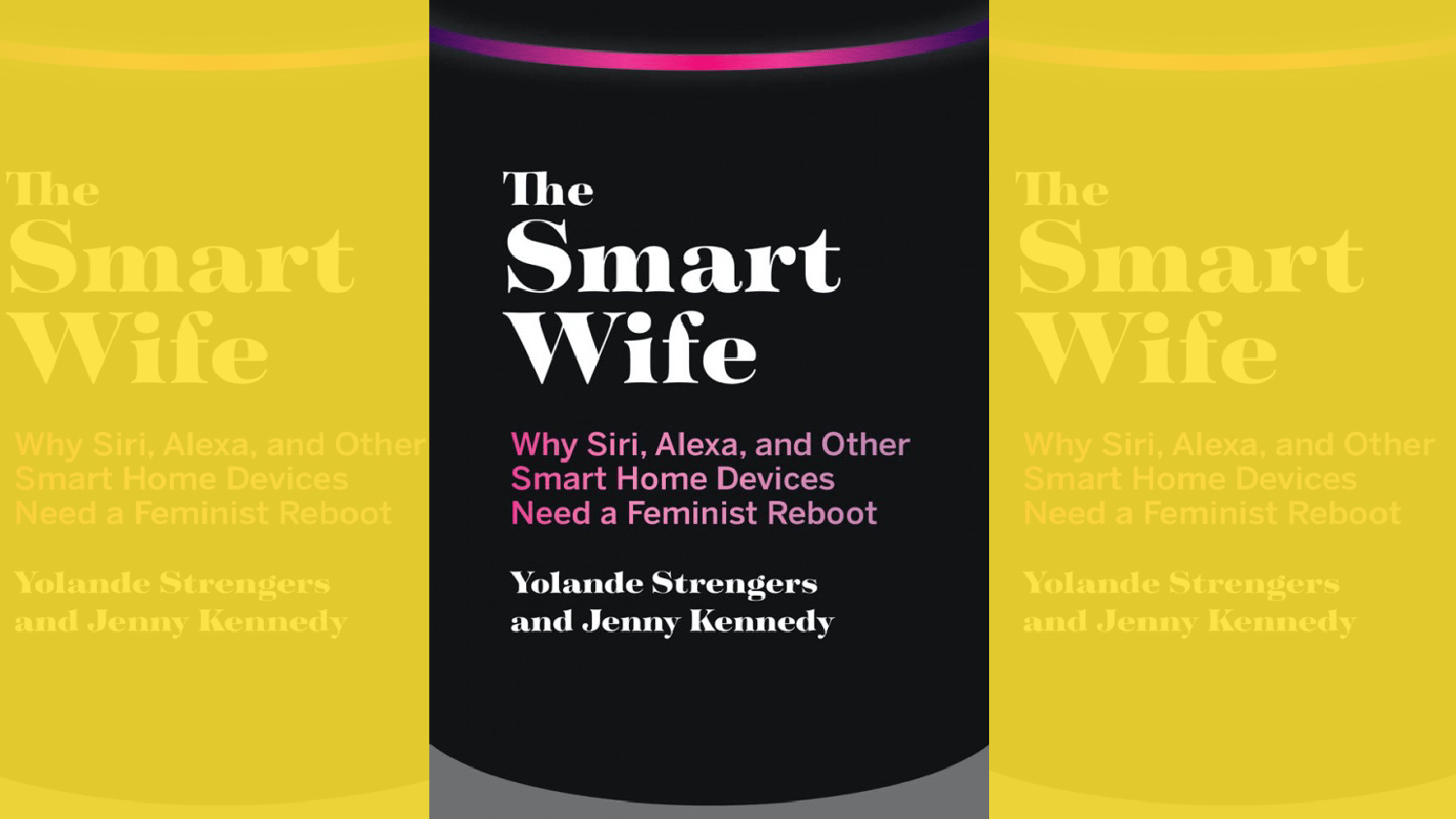
    The life and times of the Smart Wife—feminized digital assistants who are friendly and sometimes flirty, occasionally glitchy but perpetually available.

    Meet the Smart Wife—at your service, an eclectic collection of feminized AI, robotic, and smart devices. This digital assistant is friendly and sometimes flirty, docile and efficient, occasionally glitchy but perpetually available. She might go by Siri, or Alexa, or inhabit Google Home. She can keep us company, order groceries, vacuum the floor, turn out the lights. In The Smart Wife, Yolande Strengers and Jenny Kennedy examine the emergence of digital devices that carry out “wifework”—domestic responsibilities that have traditionally fallen to (human) wives. They show that the principal prototype for these virtual helpers—designed in male-dominated industries—is the 1950s housewife: white, middle class, heteronormative, and nurturing, with a spick-and-span home. It’s time, they say, to give the Smart Wife a reboot. 

    As Strengers and Kennedy remind us we like our assistants to conform to gender stereotypes. The design of gendered devices re-inscribes these outdated and unfounded stereotypes. Advanced technology is taking us backwards on gender equity. Strengers and Kennedy offer a Smart Wife “manifesta,” proposing a rebooted Smart Wife that would promote a revaluing of femininity in society in all her glorious diversity. 

    What is the “smart wife?” 

    Integral to the concept of the smart wife is “the slow death of the wife.”  Women are entering the workforce which  leads to a labor shortage at home: there are fewer women available to take up  the roles, responsibilities, and tasks that were traditionally assigned to them. The technology industry introduced feminized digital assistants to perform some of the tasks that women traditionally did.  The feminization of these smart home devices is a deliberate strategy from the tech industry to not only fill this “wife drought” but also to enable the public to be comfortable and feel un-threatened by these devices that are entering their lives and a rapid rate. 

    Do these smart devices save labor and time? 

    Kennedy says that a smart wife “brings the assumption that you should be more organized and be able to achieve more in your day”, but that is not always the case. This added pressure from smart devices to be more productive often backfires for women. The devices themselves need forms of care work. There’s a lot of energy that goes into deciding what kind of device to bring into the home, setting it up, and troubleshooting it when something goes wrong. This takes its own form of labor, which distracts women from their other obligations. It also doesn’t make it easier for men, who have traditionally been seen as the “fixers” of the house. When these smart devices break down, they have an additional form of labor as well, which is to troubleshoot and get them working again. Smart devices were initially designed to relieve work, but in many ways the caring and management of these devices is still an additional chore for families. 

    How are smart wives connected to big data?  

    Smart devices allow large tech companies to be omnipresent and ever listening in our homes and lives. We generate a lot of data about ourselves for these companies, without really thinking about how this is shaping our lives and our society. Smart devices operate across diverse households from all ranges of income backgrounds, as digital assistants are now being given out with other purchases and subscriptions for free. Thus, big tech companies are pushing these devices into our homes while overcoming the purchase barrier. There is a big conversation to be had about data extraction. As Strengers says, ” [we need to think about] how slippery these devices are coming into our homes, and then how that draws people into these big tech ecosystems.” 

    Can we divorce the smart wife? 

    It’s unrealistic to ask people to completely divorce the smart wife. Smart devices are deeply embedded in our lives: they are in our phones, our TVs, speakers and more. These devices, despite their shortcomings, can still be useful to many. Instead of putting the onus on the consumer, pressure needs to be put on the companies and people who have the power to regulate them. In Strengers and Kennedy’s view, big tech companies need to take the responsibility to be more equitable in their practices and designs. [and, if you want to know more about how to do this, check out our Gender Analytics courses!] 

    Watch Yolande Strengers and Jenny Kennedy discuss “The Smart Wife.”


    GA:P logo

    The Gender Analytics: Possibilities (GA:P) Event Series is an exciting multi-session online series. This unique online experience will highlight how emerging areas of analytics applied to issues around diversity and gender shape risks and opportunities for many organizations, operations and outcomes. Experts in data analytics, gender, and diversity, and inclusion more broadly will share their research and insights to an audience of business, academic, and government leaders.

    The GA:P Event Series is being planned jointly by two Rotman research centers, the Institute for Gender and the Economy (GATE) and TD Management Data and Analytics Lab co-organized by Susan Christoffersen (Co-Academic Director, TD MDAL), Sarah Kaplan (Director, GATE) and Matt Mitchell (Co-Academic Director, TD MDAL)

    [/fusion_text][fusion_separator style_type=”none” hide_on_mobile=”small-visibility,medium-visibility,large-visibility” class=”” id=”” sep_color=”” top_margin=”20″ bottom_margin=”20″ border_size=”” icon=”” icon_circle=”” icon_circle_color=”” width=”” alignment=”center” /][fusion_button link=”https://www.gendereconomy.org/events/” text_transform=”” title=”” target=”_blank” link_attributes=”” alignment=”” modal=”” hide_on_mobile=”small-visibility,medium-visibility,large-visibility” class=”” id=”” color=”custom” button_gradient_top_color=”#62bd19″ button_gradient_bottom_color=”#62bd19″ button_gradient_top_color_hover=”#00c2e2″ button_gradient_bottom_color_hover=”#00c2e2″ accent_color=”” accent_hover_color=”” type=”” bevel_color=”” size=”” stretch=”yes” icon=”” icon_position=”left” icon_divider=”no” animation_type=”” animation_direction=”left” animation_speed=”0.3″ animation_offset=””]See more events[/fusion_button][/fusion_builder_column][/fusion_builder_row][/fusion_builder_container]

  • SheNative: Fostering community and supporting Indigenous women

    SheNative: Fostering community and supporting Indigenous women

    [fusion_builder_container hundred_percent=”no” equal_height_columns=”no” menu_anchor=”” hide_on_mobile=”small-visibility,medium-visibility,large-visibility” class=”” id=”” background_color=”” background_image=”” background_position=”center center” background_repeat=”no-repeat” fade=”no” background_parallax=”none” parallax_speed=”0.3″ video_mp4=”” video_webm=”” video_ogv=”” video_url=”” video_aspect_ratio=”16:9″ video_loop=”yes” video_mute=”yes” overlay_color=”” video_preview_image=”” border_color=”” border_style=”solid” padding_top=”” padding_bottom=”” padding_left=”” padding_right=”” type=”legacy”][fusion_builder_row][fusion_builder_column type=”1_1″ layout=”1_1″ background_position=”left top” background_color=”” border_color=”” border_style=”solid” border_position=”all” spacing=”yes” background_image=”” background_repeat=”no-repeat” padding_top=”” padding_right=”” padding_bottom=”” padding_left=”” margin_top=”0px” margin_bottom=”0px” class=”” id=”” animation_type=”” animation_speed=”0.3″ animation_direction=”left” hide_on_mobile=”small-visibility,medium-visibility,large-visibility” center_content=”no” last=”true” min_height=”” hover_type=”none” link=”” border_sizes_top=”” border_sizes_bottom=”” border_sizes_left=”” border_sizes_right=”” first=”true”][fusion_text columns=”” column_min_width=”” column_spacing=”” rule_style=”” rule_size=”” rule_color=”” hue=”” saturation=”” lightness=”” alpha=”” content_alignment_medium=”” content_alignment_small=”” content_alignment=”” hide_on_mobile=”small-visibility,medium-visibility,large-visibility” sticky_display=”normal,sticky” class=”” id=”” margin_top=”” margin_right=”” margin_bottom=”” margin_left=”” fusion_font_family_text_font=”” fusion_font_variant_text_font=”” font_size=”” line_height=”” letter_spacing=”” text_transform=”” text_color=”” animation_type=”” animation_direction=”left” animation_color=”” animation_speed=”0.3″ animation_delay=”0″ animation_offset=”” logics=””]Overview

    Devon Fiddler created SheNative, an Indigenous and women-founded leather goods and apparel social enterprise, with a mission to empower and elevate Indigenous women. This case study details how SheNative achieves its mission, such as by using a community-based design process and considering people and the planet in all of its decision making.   

    Course Topics:
    • Business design 
    • Indigenous entrepreneurship 
    • Innovation 
    • Social enterprise/entrepreneurship 
    • Supply chain management 

    Introduction:

    Before she knew what product she wanted to produce and sell, Devon Fiddler—founder and Chief Executive Officer of SheNative—knew she wanted to start a business built around the vision of women supporting women. Everything from the company’s mission to its products and employment practices would be created with this vision in mind. For the past 6 years, Fiddler and her team at SheNative, an Indigenous and female-founded company, have successfully achieved this goal and more through a strategy centred around social impact.  

    Based in Saskatoon, Saskatchewan, SheNative is a women’s leather goods and apparel social enterprise launched in 2015. Fiddler started the company after beginning her professional career in 2011 as a business development coordinator advising First Nations entrepreneurs. In this role, Fiddler worked in Northern Saskatchewan with Meadow Lake Tribal Council “to promote entrepreneurship, and guide First Nations entrepreneurs to resources to help them build small businesses.” Through this work, helping others begin their entrepreneurial journey, Fiddler became inspired to become an entrepreneur herself. Having only the vision of her company in mind—women supporting women—Fiddler worked with a product-development consultant to assess what product would be the best match. She ultimately chose to create a “fashion lifestyle brand” selling leather accessories and clothing for women because of her life-long love of fashion and past dreams of becoming a designer.  

    SheNative Thumbnail

    View and download the full case study.

    [/fusion_text][fusion_text columns=”” column_min_width=”” column_spacing=”” rule_style=”default” rule_size=”” rule_color=”” content_alignment_medium=”” content_alignment_small=”” content_alignment=”” hide_on_mobile=”small-visibility,medium-visibility,large-visibility” sticky_display=”normal,sticky” class=”” id=”” margin_top=”” margin_right=”” margin_bottom=”” margin_left=”” font_size=”” fusion_font_family_text_font=”” fusion_font_variant_text_font=”” line_height=”” letter_spacing=”” text_color=”” animation_type=”” animation_direction=”left” animation_speed=”0.3″ animation_offset=””]

    __________________________

    This case was written by:

    This case was written by Victoria Sahagian and Ana Baseio. The authors prepared this case under the supervision of Professor Sarah Kaplan, with guidance from Alyson Colón, Bonnie Lam and Vanessa Serra Iarocci and research assistance from Carmina Ravanera and Riley Yesno. The authors are grateful for the participation Devon Fiddler in this project.

    [/fusion_text][fusion_separator style_type=”none” hide_on_mobile=”small-visibility,medium-visibility,large-visibility” sticky_display=”normal,sticky” class=”” id=”” flex_grow=”0″ top_margin=”10″ bottom_margin=”10″ width=”” alignment=”center” border_size=”” sep_color=”” icon=”” icon_size=”” icon_color=”” icon_circle=”” icon_circle_color=”” /][fusion_button link=”https://www.gendereconomy.org/education/case-studies/” text_transform=”” title=”” target=”_blank” link_attributes=”” alignment_medium=”” alignment_small=”” alignment=”” modal=”” hide_on_mobile=”small-visibility,medium-visibility,large-visibility” sticky_display=”normal,sticky” class=”” id=”” color=”custom” button_gradient_top_color=”#62bd19″ button_gradient_bottom_color=”#62bd19″ button_gradient_top_color_hover=”#00c2e2″ button_gradient_bottom_color_hover=”#00c2e2″ accent_color=”” accent_hover_color=”” type=”” bevel_color=”” border_color=”” border_hover_color=”” size=”” stretch=”yes” margin_top=”” margin_right=”” margin_bottom=”” margin_left=”” icon=”” icon_position=”left” icon_divider=”no” animation_type=”” animation_direction=”left” animation_speed=”0.3″ animation_offset=””]See more case studies[/fusion_button][fusion_separator style_type=”none” hide_on_mobile=”small-visibility,medium-visibility,large-visibility” sticky_display=”normal,sticky” class=”” id=”” flex_grow=”0″ top_margin=”20″ bottom_margin=”20″ width=”” alignment=”center” border_size=”” sep_color=”” icon=”” icon_size=”” icon_color=”” icon_circle=”” icon_circle_color=”” /][fusion_recent_posts layout=”default” picture_size=”fixed” hover_type=”none” columns=”3″ number_posts=”3″ post_status=”” offset=”0″ pull_by=”category” cat_slug=”case-studies” exclude_cats=”” tag_slug=”” exclude_tags=”” thumbnail=”yes” title=”yes” meta=”no” meta_author=”no” meta_categories=”no” meta_date=”yes” meta_comments=”yes” meta_tags=”no” content_alignment=”” excerpt=”no” excerpt_length=”35″ strip_html=”yes” scrolling=”no” hide_on_mobile=”small-visibility,medium-visibility,large-visibility” class=”” id=”” animation_type=”” animation_direction=”left” animation_speed=”0.3″ animation_offset=”” /][/fusion_builder_column][/fusion_builder_row][/fusion_builder_container]
  • Cheekbone Beauty: A social enterprise making a difference for Indigenous youth

    Cheekbone Beauty: A social enterprise making a difference for Indigenous youth

    [fusion_builder_container hundred_percent=”no” equal_height_columns=”no” menu_anchor=”” hide_on_mobile=”small-visibility,medium-visibility,large-visibility” class=”” id=”” background_color=”” background_image=”” background_position=”center center” background_repeat=”no-repeat” fade=”no” background_parallax=”none” parallax_speed=”0.3″ video_mp4=”” video_webm=”” video_ogv=”” video_url=”” video_aspect_ratio=”16:9″ video_loop=”yes” video_mute=”yes” overlay_color=”” video_preview_image=”” border_color=”” border_style=”solid” padding_top=”” padding_bottom=”” padding_left=”” padding_right=”” type=”legacy”][fusion_builder_row][fusion_builder_column type=”1_1″ layout=”1_1″ background_position=”left top” background_color=”” border_color=”” border_style=”solid” border_position=”all” spacing=”yes” background_image=”” background_repeat=”no-repeat” padding_top=”” padding_right=”” padding_bottom=”” padding_left=”” margin_top=”0px” margin_bottom=”0px” class=”” id=”” animation_type=”” animation_speed=”0.3″ animation_direction=”left” hide_on_mobile=”small-visibility,medium-visibility,large-visibility” center_content=”no” last=”true” min_height=”” hover_type=”none” link=”” border_sizes_top=”” border_sizes_bottom=”” border_sizes_left=”” border_sizes_right=”” first=”true”][fusion_text columns=”” column_min_width=”” column_spacing=”” rule_style=”default” rule_size=”” rule_color=”” content_alignment_medium=”” content_alignment_small=”” content_alignment=”” hide_on_mobile=”small-visibility,medium-visibility,large-visibility” sticky_display=”normal,sticky” class=”” id=”” margin_top=”” margin_right=”” margin_bottom=”” margin_left=”” font_size=”” fusion_font_family_text_font=”” fusion_font_variant_text_font=”” line_height=”” letter_spacing=”” text_color=”” animation_type=”” animation_direction=”left” animation_speed=”0.3″ animation_offset=””]

    Overview

    This case study details how Jenn Harper founded Cheekbone Beauty, a direct-to-consumer cosmetic brand, with the purpose-driven business model of supporting and empowering Indigenous youth. Cheekbone Beauty further aims to change the consumer-focused narrative in cosmetics by embracing and championing the circular economy, where their products are sustainable from harvest to end of life. 

    Course Topics:
    • Entrepreneurship 
    • Business design 
    • Indigenous entrepreneurship 
    • Innovation  
    • Social enterprise/entrepreneurship
    • Sustainability 

    Introduction:

    Cheekbone Beauty is a digitally native, direct-to-consumer cosmetic brand founded by Jenn Harper, an Indigenous woman who wanted to do something to empower Indigenous youth. She had a dream where she saw Indigenous girls using lip gloss, which is when she decided to create her company. Although she had 15 years of sales and marketing experience in the food industry and 12 years of experience in the hospitality industry, Harper had no background in the beauty space. However, as she explained, “[I] had always been looking, I think my whole life, for a way to connect deeper to my Indigenous roots, my First Nations community, my family.” Initially, Harper wanted to create a charity. However, financial advisors told her that it would be better to start a business and find a charity to donate to, so in 2016 Cheekbone Beauty was born. The company is a social enterprise that operates with a purpose-driven business model: to help Indigenous youth. When customers purchase Cheekbone Beauty products, they are doing good because they are supporting a company dedicated to ensuring equal opportunities for education for Indigenous youth; feeling good about buying from a cruelty-free and environmentally friendly brand; and looking good because the makeup highlights their favourite characteristics. 

    View and download the full case study.

    [/fusion_text][fusion_text columns=”” column_min_width=”” column_spacing=”” rule_style=”default” rule_size=”” rule_color=”” content_alignment_medium=”” content_alignment_small=”” content_alignment=”” hide_on_mobile=”small-visibility,medium-visibility,large-visibility” sticky_display=”normal,sticky” class=”” id=”” margin_top=”” margin_right=”” margin_bottom=”” margin_left=”” font_size=”” fusion_font_family_text_font=”” fusion_font_variant_text_font=”” line_height=”” letter_spacing=”” text_color=”” animation_type=”” animation_direction=”left” animation_speed=”0.3″ animation_offset=””]

    __________________________

    This case was written by:

    This case was written by Ana Baseio and Victoria Sahagian. The authors prepared this case under the supervision of Professor Sarah Kaplan, with guidance from Alyson Colón, Bonnie Lam and Vanessa Serra Iarocci and research assistance from Carmina Ravanera and Riley Yesno. The authors are grateful for the participation of Jenn Harper in this project.

    [/fusion_text][fusion_separator style_type=”none” hide_on_mobile=”small-visibility,medium-visibility,large-visibility” sticky_display=”normal,sticky” class=”” id=”” flex_grow=”0″ top_margin=”10″ bottom_margin=”10″ width=”” alignment=”center” border_size=”” sep_color=”” icon=”” icon_size=”” icon_color=”” icon_circle=”” icon_circle_color=”” /][fusion_button link=”https://www.gendereconomy.org/education/case-studies/” text_transform=”” title=”” target=”_blank” link_attributes=”” alignment_medium=”” alignment_small=”” alignment=”” modal=”” hide_on_mobile=”small-visibility,medium-visibility,large-visibility” sticky_display=”normal,sticky” class=”” id=”” color=”custom” button_gradient_top_color=”#62bd19″ button_gradient_bottom_color=”#62bd19″ button_gradient_top_color_hover=”#00c2e2″ button_gradient_bottom_color_hover=”#00c2e2″ accent_color=”” accent_hover_color=”” type=”” bevel_color=”” border_color=”” border_hover_color=”” size=”” stretch=”yes” margin_top=”” margin_right=”” margin_bottom=”” margin_left=”” icon=”” icon_position=”left” icon_divider=”no” animation_type=”” animation_direction=”left” animation_speed=”0.3″ animation_offset=””]See more case studies[/fusion_button][fusion_separator style_type=”none” hide_on_mobile=”small-visibility,medium-visibility,large-visibility” sticky_display=”normal,sticky” class=”” id=”” flex_grow=”0″ top_margin=”20″ bottom_margin=”20″ width=”” alignment=”center” border_size=”” sep_color=”” icon=”” icon_size=”” icon_color=”” icon_circle=”” icon_circle_color=”” /][fusion_recent_posts layout=”default” picture_size=”fixed” hover_type=”none” columns=”3″ number_posts=”3″ post_status=”” offset=”0″ pull_by=”category” cat_slug=”case-studies” exclude_cats=”” tag_slug=”” exclude_tags=”” thumbnail=”yes” title=”yes” meta=”no” meta_author=”no” meta_categories=”no” meta_date=”yes” meta_comments=”yes” meta_tags=”no” content_alignment=”” excerpt=”no” excerpt_length=”35″ strip_html=”yes” scrolling=”no” hide_on_mobile=”small-visibility,medium-visibility,large-visibility” class=”” id=”” animation_type=”” animation_direction=”left” animation_speed=”0.3″ animation_offset=”” /][/fusion_builder_column][/fusion_builder_row][/fusion_builder_container]