Author: Carmina Ravanera

  • An Equity Lens on Artificial Intelligence

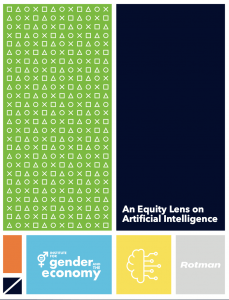
    An Equity Lens on Artificial Intelligence

    [fusion_builder_container admin_label=”” hundred_percent=”no” equal_height_columns=”no” menu_anchor=”” hide_on_mobile=”small-visibility,medium-visibility,large-visibility” class=”” id=”” background_color=”” background_image=”” background_position=”center center” background_repeat=”no-repeat” fade=”no” background_parallax=”none” enable_mobile=”no” parallax_speed=”0.3″ video_mp4=”” video_webm=”” video_ogv=”” video_url=”” video_aspect_ratio=”16:9″ video_loop=”yes” video_mute=”yes” video_preview_image=”” border_color=”” border_style=”solid” margin_top=”20″ margin_bottom=”” padding_top=”” padding_right=”” padding_bottom=”” padding_left=”” type=”legacy”][fusion_builder_row][fusion_builder_column type=”3_4″ layout=”3_4″ spacing=”” center_content=”no” hover_type=”none” link=”” min_height=”” hide_on_mobile=”small-visibility,medium-visibility,large-visibility” class=”” id=”” background_color=”” background_image=”” background_position=”left top” background_repeat=”no-repeat” border_color=”” border_style=”solid” border_position=”all” padding_top=”” padding_right=”” padding_bottom=”” padding_left=”” margin_top=”” margin_bottom=”” animation_type=”” animation_direction=”left” animation_speed=”0.3″ animation_offset=”” last=”false” border_sizes_top=”0″ border_sizes_bottom=”0″ border_sizes_left=”0″ border_sizes_right=”0″ first=”true” spacing_right=””][fusion_text columns=”” column_min_width=”” column_spacing=”” rule_style=”default” rule_size=”” rule_color=”” content_alignment_medium=”” content_alignment_small=”” content_alignment=”” hide_on_mobile=”small-visibility,medium-visibility,large-visibility” sticky_display=”normal,sticky” class=”” id=”” margin_top=”” margin_right=”” margin_bottom=”” margin_left=”” font_size=”” fusion_font_family_text_font=”” fusion_font_variant_text_font=”” line_height=”” letter_spacing=”” text_color=”” animation_type=”” animation_direction=”left” animation_speed=”0.3″ animation_offset=””]

    DOWNLOAD THIS RESEARCH OVERVIEW IN ENGLISH/ EN FRANÇAIS
          

    OVERVIEW:

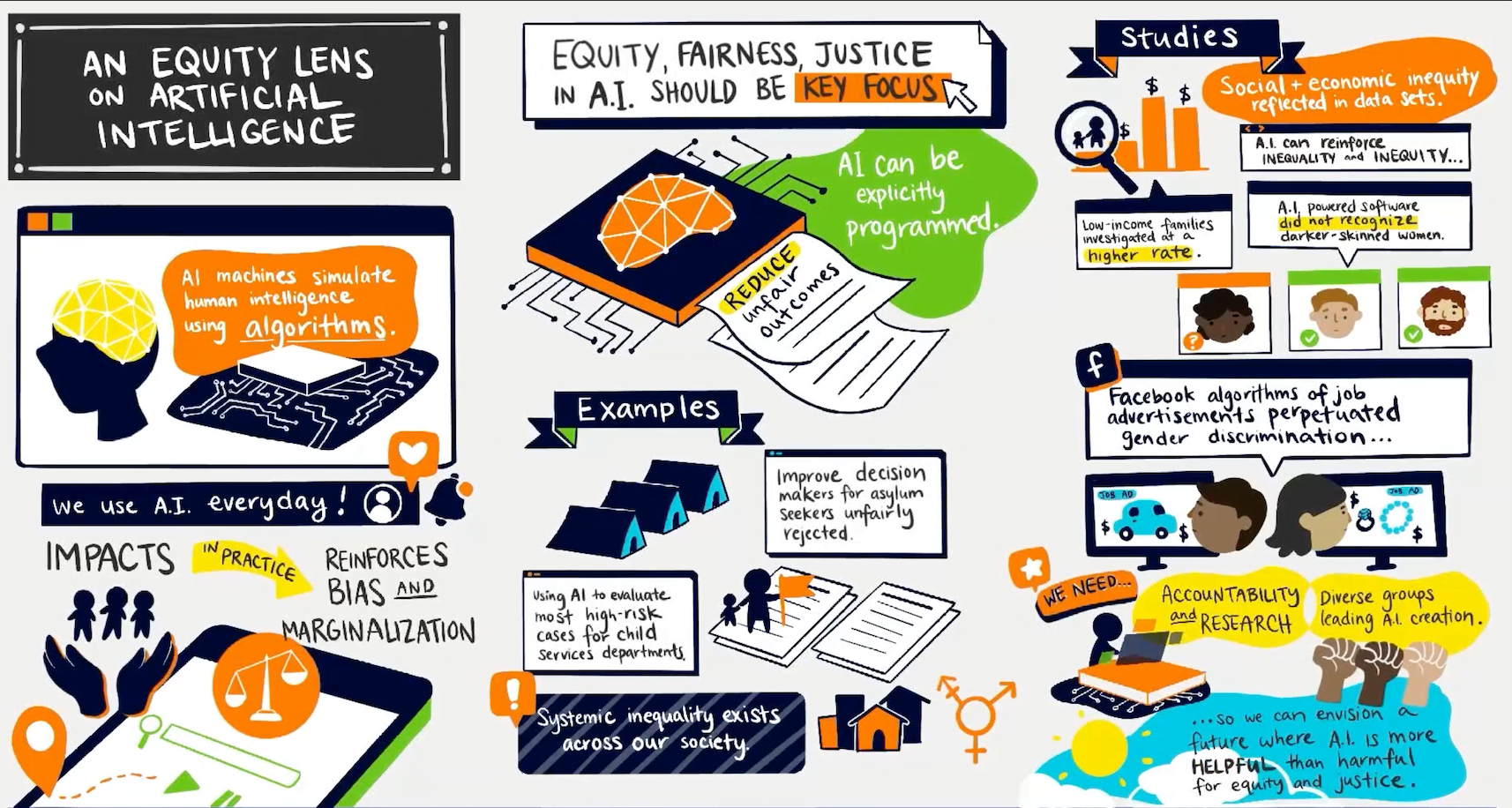
    Artificial intelligence (AI) describes machines that can simulate some forms of human intelligence, such as identifying patterns and making predictions and decisions. Today, AI is used by organizations across many sectors for a variety of purposes, from hiring employees, to assessing risk, to making investment recommendations, to recommending criminal sentencing. However, it is well-known that social relations and contexts are reflected and reproduced in technology, and AI is no exception: it has the potential to reinforce underlying biases, discrimination, and inequities. Although AI can be used to benefit marginalized groups, a concerted focus on equity in AI by businesses and governments is necessary to mitigate possible harms. Here we provide a resource for scholars and practitioners for viewing AI through the lens of equity, with the objectives of synthesizing existing research and knowledge about the connection between AI and (in)equity and suggesting considerations for public and private sector leaders to be aware of when implementing AI.

    The key Insight: AI is a double-edged sword, with potential to both mitigate and reinforce bias:

    • Because AI uses statistical prediction methods that can be audited, it has the potential to create outcomes that help groups facing marginalization in situations where human decisions may be clouded by cognitive biases.
    • Despite this potential, because inequality and inequity are often reflected in technologies, some AI can and has reinforced marginalization of certain groups, such as women, gender minorities, and racialized and low-income communities. AI-powered products and services mayuse biased data sets that reproduce this bias; amplify stereotypes and marginalization, sometimes for profit; and/or widen asymmetries of power.
    • The reinforcement of inequity and inequality has occurred because of embedded bias or significant omissions in datasets; the complexity and trade-offs involved in aligning AI with social values when profits are also at stake; a lack of transparency from those creating and implementing AI; a lack of accountability to the public or other users of AI; and limited participation by marginalized and diverse groups in the technology sector.
    • There are also varied potential impacts of AI and automation on jobs and labour. It is possible that women, racialized, and low-income groups may be more susceptible to job loss or displacement due to automation across an increasing number of blue-, white- and pink- collar jobs.

    These results suggest the following considerations for businesses and governments:

    • Technology companies and governments can focus on initiatives for equitable representation in AI development
    • Creators, researchers and implementors of AI can prioritize aligning AI with social values such as fairness, despite possible trade-offs for efficiency and profit
    • Governments can create policies for AI that prioritize accountability and transparency, and require organizations to adhere to these principles
    • Governments and companies can work towards economic security for workers who are being doubly impacted by new technologies and a global pandemic through attention on reskilling and/or upskilling programs
    • Academic researchers can deepen knowledge on AI and inequity, such as by continuing cross-disciplinary work on the social, political and environmental impacts of AI and developing new and different alternatives that prioritize mitigation of harm.

    VIDEO SUMMARY:

    __________________________

    RESEARCH OVERVIEW PREPARED BY

    Carmina Ravanera, Sarah Kaplan

    VIDEO ANIMATION

    Fuselight Creative

    “An Equity Lens on Artificial Intelligence” is co-funded by the Social Sciences and Humanities Research Council and the Government of Canada’s Future Skills Program Grant #872-2020-0011.

    [/fusion_text][fusion_separator style_type=”none” hide_on_mobile=”small-visibility,medium-visibility,large-visibility” class=”” id=”” sep_color=”” top_margin=”20″ bottom_margin=”20″ border_size=”” icon=”” icon_circle=”” icon_circle_color=”” width=”” alignment=”center” /][fusion_button link=”https://www.gendereconomy.org/category/research-overviews/” text_transform=”” title=”” target=”_blank” link_attributes=”” alignment_medium=”” alignment_small=”” alignment=”” modal=”” hide_on_mobile=”small-visibility,medium-visibility,large-visibility” sticky_display=”normal,sticky” class=”” id=”” color=”custom” button_gradient_top_color=”#62bd19″ button_gradient_bottom_color=”#62bd19″ button_gradient_top_color_hover=”#00c2e2″ button_gradient_bottom_color_hover=”#00c2e2″ accent_color=”” accent_hover_color=”” type=”” bevel_color=”” border_color=”” border_hover_color=”” size=”” stretch=”yes” margin_top=”” margin_right=”” margin_bottom=”” margin_left=”” icon=”” icon_position=”left” icon_divider=”no” animation_type=”” animation_direction=”left” animation_speed=”0.3″ animation_offset=””]See more research overviews[/fusion_button][fusion_separator style_type=”none” hide_on_mobile=”small-visibility,medium-visibility,large-visibility” class=”” id=”” sep_color=”” top_margin=”20″ bottom_margin=”20″ border_size=”” icon=”” icon_circle=”” icon_circle_color=”” width=”” alignment=”center” /][fusion_recent_posts layout=”default” hover_type=”none” columns=”3″ number_posts=”3″ offset=”0″ pull_by=”category” cat_slug=”research-briefs” exclude_cats=”” tag_slug=”” exclude_tags=”” thumbnail=”yes” title=”yes” meta=”no” meta_author=”no” meta_categories=”no” meta_date=”yes” meta_comments=”yes” meta_tags=”no” content_alignment=”” excerpt=”no” excerpt_length=”35″ strip_html=”yes” scrolling=”no” hide_on_mobile=”small-visibility,medium-visibility,large-visibility” class=”” id=”” animation_type=”” animation_direction=”left” animation_speed=”0.3″ animation_offset=”” /][/fusion_builder_column][fusion_builder_column type=”1_4″ layout=”1_4″ spacing=”” center_content=”no” hover_type=”none” link=”” min_height=”” hide_on_mobile=”small-visibility,medium-visibility,large-visibility” class=”” id=”” background_color=”” background_image=”” background_position=”left top” background_repeat=”no-repeat” border_color=”” border_style=”solid” border_position=”all” padding_top=”” padding_right=”” padding_bottom=”” padding_left=”” margin_top=”” margin_bottom=”” animation_type=”” animation_direction=”left” animation_speed=”0.3″ animation_offset=”” last=”true” border_sizes_top=”0″ border_sizes_bottom=”0″ border_sizes_left=”0″ border_sizes_right=”0″ first=”false”][fusion_title title_type=”text” rotation_effect=”bounceIn” display_time=”1200″ highlight_effect=”circle” loop_animation=”off” highlight_width=”9″ highlight_top_margin=”0″ before_text=”” rotation_text=”” highlight_text=”” after_text=”” title_link=”off” link_url=”” link_target=”_self” hide_on_mobile=”small-visibility,medium-visibility,large-visibility” sticky_display=”normal,sticky” class=”briefsummary” id=”” content_align_medium=”” content_align_small=”” content_align=”left” size=”3″ font_size=”” animated_font_size=”” fusion_font_family_title_font=”” fusion_font_variant_title_font=”” line_height=”” letter_spacing=”” text_shadow=”no” text_shadow_vertical=”” text_shadow_horizontal=”” text_shadow_blur=”0″ text_shadow_color=”” margin_top_medium=”” margin_right_medium=”” margin_bottom_medium=”” margin_left_medium=”” margin_top_small=”” margin_right_small=”” margin_bottom_small=”” margin_left_small=”” margin_top=”” margin_right=”” margin_bottom=”” margin_left=”” margin_top_mobile=”” margin_bottom_mobile=”” text_color=”” animated_text_color=”” gradient_font=”no” gradient_start_color=”” gradient_end_color=”” gradient_start_position=”0″ gradient_end_position=”100″ gradient_type=”linear” radial_direction=”center center” linear_angle=”180″ highlight_color=”” style_type=”none” sep_color=”” link_color=”” link_hover_color=”” animation_type=”” animation_direction=”left” animation_speed=”0.3″ animation_offset=””]

    Research Overview prepared by

    Carmina Ravanera, Sarah Kaplan

    Published

    September, 2021

    [/fusion_title][fusion_widget_area name=”avada-custom-sidebar-researchbriefsidebar” title_size=”” title_color=”” background_color=”” padding_top=”” padding_right=”” padding_bottom=”” padding_left=”” hide_on_mobile=”small-visibility,medium-visibility,large-visibility” class=”” id=”” /][/fusion_builder_column][/fusion_builder_row][/fusion_builder_container]

  • Protected: Heather McGhee on “The Sum of Us: What Racism Costs Everyone and How We Can Prosper Together”

    Protected: Heather McGhee on “The Sum of Us: What Racism Costs Everyone and How We Can Prosper Together”

    This content is password protected. To view it please enter your password below:

  • Questions for Pamela Newkirk, New York University Professor and Author, Diversity Inc.

    Questions for Pamela Newkirk, New York University Professor and Author, Diversity Inc.

    Pamela Newkirk, a journalist, academic and author explains why the diversity business isn’t working, and how to turn it around.

    How would you describe the billion-dollar diversity business?

    In writing the book (Diversity Inc.), I wanted to explore the tension between the constant rhetoric about diversity and the billions of dollars that are spent annually on consultants and anti-bias training — and the fact that most of these organizations barely move the needle when it comes to hiring people of colour. Whether it’s creative fields like fashion and Hollywood, academia, law or business, people of colour remain radically under-represented in every influential field. They make up close to 40 per cent of the U.S. population, but they are in the single digits in most influential fields.

    Why are some of the fields that should be the most progressive not making any headway?

    That was actually one of the surprises of my research. The creative and cultural fields — museums, Hollywood, fashion — that position themselves as being the most socially progressive are among the least diverse. Corporate America has made far greater strides than any of these fields. It still has problems, particularly in the upper echelons of leadership, but it is far more diverse. That’s because, first of all, there are many more jobs to fill, so there is greater competition, and they really want to get the best of the best. And secondly, they often have structures in place like anti-nepotism clauses, which force them to reach outside of their tiny sphere of influence. Because we live in such a rigorously segregated society, people are still generally hiring who they know and who their friends know — and these spheres of influence often exclude people of colour.

    Read GATE Faculty Research Fellow Sonia Kang’s discussion with Pamela Newkirk here.

  • SheNative: Fostering community and supporting Indigenous women

    SheNative: Fostering community and supporting Indigenous women

    [fusion_builder_container hundred_percent=”no” equal_height_columns=”no” menu_anchor=”” hide_on_mobile=”small-visibility,medium-visibility,large-visibility” class=”” id=”” background_color=”” background_image=”” background_position=”center center” background_repeat=”no-repeat” fade=”no” background_parallax=”none” parallax_speed=”0.3″ video_mp4=”” video_webm=”” video_ogv=”” video_url=”” video_aspect_ratio=”16:9″ video_loop=”yes” video_mute=”yes” overlay_color=”” video_preview_image=”” border_color=”” border_style=”solid” padding_top=”” padding_bottom=”” padding_left=”” padding_right=”” type=”legacy”][fusion_builder_row][fusion_builder_column type=”1_1″ layout=”1_1″ background_position=”left top” background_color=”” border_color=”” border_style=”solid” border_position=”all” spacing=”yes” background_image=”” background_repeat=”no-repeat” padding_top=”” padding_right=”” padding_bottom=”” padding_left=”” margin_top=”0px” margin_bottom=”0px” class=”” id=”” animation_type=”” animation_speed=”0.3″ animation_direction=”left” hide_on_mobile=”small-visibility,medium-visibility,large-visibility” center_content=”no” last=”true” min_height=”” hover_type=”none” link=”” border_sizes_top=”” border_sizes_bottom=”” border_sizes_left=”” border_sizes_right=”” first=”true”][fusion_text columns=”” column_min_width=”” column_spacing=”” rule_style=”” rule_size=”” rule_color=”” hue=”” saturation=”” lightness=”” alpha=”” content_alignment_medium=”” content_alignment_small=”” content_alignment=”” hide_on_mobile=”small-visibility,medium-visibility,large-visibility” sticky_display=”normal,sticky” class=”” id=”” margin_top=”” margin_right=”” margin_bottom=”” margin_left=”” fusion_font_family_text_font=”” fusion_font_variant_text_font=”” font_size=”” line_height=”” letter_spacing=”” text_transform=”” text_color=”” animation_type=”” animation_direction=”left” animation_color=”” animation_speed=”0.3″ animation_delay=”0″ animation_offset=”” logics=””]Overview

    Devon Fiddler created SheNative, an Indigenous and women-founded leather goods and apparel social enterprise, with a mission to empower and elevate Indigenous women. This case study details how SheNative achieves its mission, such as by using a community-based design process and considering people and the planet in all of its decision making.   

    Course Topics:
    • Business design 
    • Indigenous entrepreneurship 
    • Innovation 
    • Social enterprise/entrepreneurship 
    • Supply chain management 

    Introduction:

    Before she knew what product she wanted to produce and sell, Devon Fiddler—founder and Chief Executive Officer of SheNative—knew she wanted to start a business built around the vision of women supporting women. Everything from the company’s mission to its products and employment practices would be created with this vision in mind. For the past 6 years, Fiddler and her team at SheNative, an Indigenous and female-founded company, have successfully achieved this goal and more through a strategy centred around social impact.  

    Based in Saskatoon, Saskatchewan, SheNative is a women’s leather goods and apparel social enterprise launched in 2015. Fiddler started the company after beginning her professional career in 2011 as a business development coordinator advising First Nations entrepreneurs. In this role, Fiddler worked in Northern Saskatchewan with Meadow Lake Tribal Council “to promote entrepreneurship, and guide First Nations entrepreneurs to resources to help them build small businesses.” Through this work, helping others begin their entrepreneurial journey, Fiddler became inspired to become an entrepreneur herself. Having only the vision of her company in mind—women supporting women—Fiddler worked with a product-development consultant to assess what product would be the best match. She ultimately chose to create a “fashion lifestyle brand” selling leather accessories and clothing for women because of her life-long love of fashion and past dreams of becoming a designer.  

    SheNative Thumbnail

    View and download the full case study.

    [/fusion_text][fusion_text columns=”” column_min_width=”” column_spacing=”” rule_style=”default” rule_size=”” rule_color=”” content_alignment_medium=”” content_alignment_small=”” content_alignment=”” hide_on_mobile=”small-visibility,medium-visibility,large-visibility” sticky_display=”normal,sticky” class=”” id=”” margin_top=”” margin_right=”” margin_bottom=”” margin_left=”” font_size=”” fusion_font_family_text_font=”” fusion_font_variant_text_font=”” line_height=”” letter_spacing=”” text_color=”” animation_type=”” animation_direction=”left” animation_speed=”0.3″ animation_offset=””]

    __________________________

    This case was written by:

    This case was written by Victoria Sahagian and Ana Baseio. The authors prepared this case under the supervision of Professor Sarah Kaplan, with guidance from Alyson Colón, Bonnie Lam and Vanessa Serra Iarocci and research assistance from Carmina Ravanera and Riley Yesno. The authors are grateful for the participation Devon Fiddler in this project.

    [/fusion_text][fusion_separator style_type=”none” hide_on_mobile=”small-visibility,medium-visibility,large-visibility” sticky_display=”normal,sticky” class=”” id=”” flex_grow=”0″ top_margin=”10″ bottom_margin=”10″ width=”” alignment=”center” border_size=”” sep_color=”” icon=”” icon_size=”” icon_color=”” icon_circle=”” icon_circle_color=”” /][fusion_button link=”https://www.gendereconomy.org/education/case-studies/” text_transform=”” title=”” target=”_blank” link_attributes=”” alignment_medium=”” alignment_small=”” alignment=”” modal=”” hide_on_mobile=”small-visibility,medium-visibility,large-visibility” sticky_display=”normal,sticky” class=”” id=”” color=”custom” button_gradient_top_color=”#62bd19″ button_gradient_bottom_color=”#62bd19″ button_gradient_top_color_hover=”#00c2e2″ button_gradient_bottom_color_hover=”#00c2e2″ accent_color=”” accent_hover_color=”” type=”” bevel_color=”” border_color=”” border_hover_color=”” size=”” stretch=”yes” margin_top=”” margin_right=”” margin_bottom=”” margin_left=”” icon=”” icon_position=”left” icon_divider=”no” animation_type=”” animation_direction=”left” animation_speed=”0.3″ animation_offset=””]See more case studies[/fusion_button][fusion_separator style_type=”none” hide_on_mobile=”small-visibility,medium-visibility,large-visibility” sticky_display=”normal,sticky” class=”” id=”” flex_grow=”0″ top_margin=”20″ bottom_margin=”20″ width=”” alignment=”center” border_size=”” sep_color=”” icon=”” icon_size=”” icon_color=”” icon_circle=”” icon_circle_color=”” /][fusion_recent_posts layout=”default” picture_size=”fixed” hover_type=”none” columns=”3″ number_posts=”3″ post_status=”” offset=”0″ pull_by=”category” cat_slug=”case-studies” exclude_cats=”” tag_slug=”” exclude_tags=”” thumbnail=”yes” title=”yes” meta=”no” meta_author=”no” meta_categories=”no” meta_date=”yes” meta_comments=”yes” meta_tags=”no” content_alignment=”” excerpt=”no” excerpt_length=”35″ strip_html=”yes” scrolling=”no” hide_on_mobile=”small-visibility,medium-visibility,large-visibility” class=”” id=”” animation_type=”” animation_direction=”left” animation_speed=”0.3″ animation_offset=”” /][/fusion_builder_column][/fusion_builder_row][/fusion_builder_container]
  • Cheekbone Beauty: A social enterprise making a difference for Indigenous youth

    Cheekbone Beauty: A social enterprise making a difference for Indigenous youth

    [fusion_builder_container hundred_percent=”no” equal_height_columns=”no” menu_anchor=”” hide_on_mobile=”small-visibility,medium-visibility,large-visibility” class=”” id=”” background_color=”” background_image=”” background_position=”center center” background_repeat=”no-repeat” fade=”no” background_parallax=”none” parallax_speed=”0.3″ video_mp4=”” video_webm=”” video_ogv=”” video_url=”” video_aspect_ratio=”16:9″ video_loop=”yes” video_mute=”yes” overlay_color=”” video_preview_image=”” border_color=”” border_style=”solid” padding_top=”” padding_bottom=”” padding_left=”” padding_right=”” type=”legacy”][fusion_builder_row][fusion_builder_column type=”1_1″ layout=”1_1″ background_position=”left top” background_color=”” border_color=”” border_style=”solid” border_position=”all” spacing=”yes” background_image=”” background_repeat=”no-repeat” padding_top=”” padding_right=”” padding_bottom=”” padding_left=”” margin_top=”0px” margin_bottom=”0px” class=”” id=”” animation_type=”” animation_speed=”0.3″ animation_direction=”left” hide_on_mobile=”small-visibility,medium-visibility,large-visibility” center_content=”no” last=”true” min_height=”” hover_type=”none” link=”” border_sizes_top=”” border_sizes_bottom=”” border_sizes_left=”” border_sizes_right=”” first=”true”][fusion_text columns=”” column_min_width=”” column_spacing=”” rule_style=”default” rule_size=”” rule_color=”” content_alignment_medium=”” content_alignment_small=”” content_alignment=”” hide_on_mobile=”small-visibility,medium-visibility,large-visibility” sticky_display=”normal,sticky” class=”” id=”” margin_top=”” margin_right=”” margin_bottom=”” margin_left=”” font_size=”” fusion_font_family_text_font=”” fusion_font_variant_text_font=”” line_height=”” letter_spacing=”” text_color=”” animation_type=”” animation_direction=”left” animation_speed=”0.3″ animation_offset=””]

    Overview

    This case study details how Jenn Harper founded Cheekbone Beauty, a direct-to-consumer cosmetic brand, with the purpose-driven business model of supporting and empowering Indigenous youth. Cheekbone Beauty further aims to change the consumer-focused narrative in cosmetics by embracing and championing the circular economy, where their products are sustainable from harvest to end of life. 

    Course Topics:
    • Entrepreneurship 
    • Business design 
    • Indigenous entrepreneurship 
    • Innovation  
    • Social enterprise/entrepreneurship
    • Sustainability 

    Introduction:

    Cheekbone Beauty is a digitally native, direct-to-consumer cosmetic brand founded by Jenn Harper, an Indigenous woman who wanted to do something to empower Indigenous youth. She had a dream where she saw Indigenous girls using lip gloss, which is when she decided to create her company. Although she had 15 years of sales and marketing experience in the food industry and 12 years of experience in the hospitality industry, Harper had no background in the beauty space. However, as she explained, “[I] had always been looking, I think my whole life, for a way to connect deeper to my Indigenous roots, my First Nations community, my family.” Initially, Harper wanted to create a charity. However, financial advisors told her that it would be better to start a business and find a charity to donate to, so in 2016 Cheekbone Beauty was born. The company is a social enterprise that operates with a purpose-driven business model: to help Indigenous youth. When customers purchase Cheekbone Beauty products, they are doing good because they are supporting a company dedicated to ensuring equal opportunities for education for Indigenous youth; feeling good about buying from a cruelty-free and environmentally friendly brand; and looking good because the makeup highlights their favourite characteristics. 

    View and download the full case study.

    [/fusion_text][fusion_text columns=”” column_min_width=”” column_spacing=”” rule_style=”default” rule_size=”” rule_color=”” content_alignment_medium=”” content_alignment_small=”” content_alignment=”” hide_on_mobile=”small-visibility,medium-visibility,large-visibility” sticky_display=”normal,sticky” class=”” id=”” margin_top=”” margin_right=”” margin_bottom=”” margin_left=”” font_size=”” fusion_font_family_text_font=”” fusion_font_variant_text_font=”” line_height=”” letter_spacing=”” text_color=”” animation_type=”” animation_direction=”left” animation_speed=”0.3″ animation_offset=””]

    __________________________

    This case was written by:

    This case was written by Ana Baseio and Victoria Sahagian. The authors prepared this case under the supervision of Professor Sarah Kaplan, with guidance from Alyson Colón, Bonnie Lam and Vanessa Serra Iarocci and research assistance from Carmina Ravanera and Riley Yesno. The authors are grateful for the participation of Jenn Harper in this project.

    [/fusion_text][fusion_separator style_type=”none” hide_on_mobile=”small-visibility,medium-visibility,large-visibility” sticky_display=”normal,sticky” class=”” id=”” flex_grow=”0″ top_margin=”10″ bottom_margin=”10″ width=”” alignment=”center” border_size=”” sep_color=”” icon=”” icon_size=”” icon_color=”” icon_circle=”” icon_circle_color=”” /][fusion_button link=”https://www.gendereconomy.org/education/case-studies/” text_transform=”” title=”” target=”_blank” link_attributes=”” alignment_medium=”” alignment_small=”” alignment=”” modal=”” hide_on_mobile=”small-visibility,medium-visibility,large-visibility” sticky_display=”normal,sticky” class=”” id=”” color=”custom” button_gradient_top_color=”#62bd19″ button_gradient_bottom_color=”#62bd19″ button_gradient_top_color_hover=”#00c2e2″ button_gradient_bottom_color_hover=”#00c2e2″ accent_color=”” accent_hover_color=”” type=”” bevel_color=”” border_color=”” border_hover_color=”” size=”” stretch=”yes” margin_top=”” margin_right=”” margin_bottom=”” margin_left=”” icon=”” icon_position=”left” icon_divider=”no” animation_type=”” animation_direction=”left” animation_speed=”0.3″ animation_offset=””]See more case studies[/fusion_button][fusion_separator style_type=”none” hide_on_mobile=”small-visibility,medium-visibility,large-visibility” sticky_display=”normal,sticky” class=”” id=”” flex_grow=”0″ top_margin=”20″ bottom_margin=”20″ width=”” alignment=”center” border_size=”” sep_color=”” icon=”” icon_size=”” icon_color=”” icon_circle=”” icon_circle_color=”” /][fusion_recent_posts layout=”default” picture_size=”fixed” hover_type=”none” columns=”3″ number_posts=”3″ post_status=”” offset=”0″ pull_by=”category” cat_slug=”case-studies” exclude_cats=”” tag_slug=”” exclude_tags=”” thumbnail=”yes” title=”yes” meta=”no” meta_author=”no” meta_categories=”no” meta_date=”yes” meta_comments=”yes” meta_tags=”no” content_alignment=”” excerpt=”no” excerpt_length=”35″ strip_html=”yes” scrolling=”no” hide_on_mobile=”small-visibility,medium-visibility,large-visibility” class=”” id=”” animation_type=”” animation_direction=”left” animation_speed=”0.3″ animation_offset=”” /][/fusion_builder_column][/fusion_builder_row][/fusion_builder_container]