
Author: Carmina Ravanera

  • How the “specter of motherhood” impacts all women in STEM  – and likely beyond

    How the “specter of motherhood” impacts all women in STEM – and likely beyond

    [fusion_builder_container hundred_percent=”no” equal_height_columns=”no” hide_on_mobile=”small-visibility,medium-visibility,large-visibility” background_position=”center center” background_repeat=”no-repeat” fade=”no” background_parallax=”none” enable_mobile=”no” parallax_speed=”0.3″ video_aspect_ratio=”16:9″ video_loop=”yes” video_mute=”yes” border_style=”solid” margin_top=”20″ type=”legacy”][fusion_builder_row][fusion_builder_column type=”3_4″ layout=”3_4″ center_content=”no” hover_type=”none” hide_on_mobile=”small-visibility,medium-visibility,large-visibility” background_position=”left top” background_repeat=”no-repeat” border_style=”solid” border_position=”all” animation_direction=”left” animation_speed=”0.3″ last=”false” first=”true” border_sizes_top=”0″ border_sizes_bottom=”0″ border_sizes_left=”0″ border_sizes_right=”0″ min_height=”” link=”” background_blend_mode=”overlay”][fusion_text columns=”” column_min_width=”” column_spacing=”” rule_style=”” rule_size=”” rule_color=”” hue=”” saturation=”” lightness=”” alpha=”” content_alignment_medium=”” content_alignment_small=”” content_alignment=”” hide_on_mobile=”small-visibility,medium-visibility,large-visibility” sticky_display=”normal,sticky” class=”” id=”” margin_top=”” margin_right=”” margin_bottom=”” margin_left=”” fusion_font_family_text_font=”” fusion_font_variant_text_font=”” font_size=”” line_height=”” letter_spacing=”” text_transform=”none” text_color=”” animation_type=”” animation_direction=”left” animation_color=”” animation_speed=”0.3″ animation_delay=”0″ animation_offset=”” logics=””]

    The persistent underrepresentation of women in STEM fields (science, technology, engineering and math) has far-reaching consequences for both women and society: it contributes to the gender wage gap and decreases the innovation we produce for women. Recent research indicates that workplace cultures that perceive motherhood as incompatible with career commitment create significant barriers for women in STEM and increase their chance of leaving the profession, further perpetuating the underrepresentation of women in STEM.

    In Canada, fewer women than men pursue studies or careers in science, technology, engineering, or mathematics. Women make up 41.8% of all students in STEM and 23.5% of all employees in the natural and applied sciences and related occupations.[1] This disparity has implications for innovation and the gender wage gap. First, STEM fields are associated with higher levels of innovation, compared to other fields. However, recent studies have shown that gender matters for whom we innovate: the more women who innovate, the more women-health focused inventions are patented.[2] Thus, an underrepresentation of women in STEM may lead to lower levels of innovation directed at women. Second, jobs in STEM fields tend to be highly paid. A systematic underrepresentation of women suggests that this is one of the drivers of the persistent gender wage gap. Therefore, it is important to understand why fewer women choose to enter careers in STEM and many decide to leave.

    New research by researchers Sarah Thébaud and Catherine J. Taylor highlights the “specter of motherhood” as a significant cultural barrier faced by young women academics in STEM fields. Parenthood is perceived as a career distractor for women, while men do not face such expectations. As Thébaud explained in our conversation, “The young women and men that we talked to described a pervasive workplace culture that frames motherhood, but not fatherhood, in opposition to legitimacy as a scientist or engineer. In this context, motherhood is generally believed to be controversial, and as something that should be feared, rejected, and hidden. We call this phenomenon ‘the specter of motherhood.’”

    “…motherhood is generally believed to be controversial, and as something that should be feared, rejected, and hidden. We call this phenomenon ‘the specter of motherhood.’”

    Women experience the “specter of motherhood” throughout their careers. For their research, Thébaud and Taylor conducted 57 interviews with men and women doctoral students and postdoctoral scholars in the United States. Thébaud recalled that several of the women interviewees shared with her that their advisers explicitly told them they have to choose between an academic career and a family and that “there’s more to life than babies.” Because these women experienced intense pressure to reject, denigrate, or hide the mere possibility of motherhood for fear of no longer being taken seriously, some went to great lengths, such as hiding medically dangerous miscarriages or strategically telling others that they didn’t intend to have children. Thébaud adds that these workplace norms and expectations came across to respondents as “extreme,” “odd,” and generally out of step with “normal” people. Nevertheless, these experiences were consequential. The conclusion of their study is that these ideas about motherhood disadvantaged women in their day-to-day interactions and, ultimately, motivated some of the women respondents to leave academia. By contrast, ideas about parenting in academia did not have bearing on any men respondent’s future career plans.

    As such, the “specter of motherhood” presents a significant obstacle for junior women scientists in STEM, forcing them to choose whether they see themselves primarily as a mother or as a scientist. This gendered cultural narrative contributes to the underrepresentation of women in STEM, impacting innovation and perpetuating the gender wage gap. To achieve gender equity, targeted interventions that address and challenge these cultural norms are crucial. As Thébaud and Taylor’s work highlights, interventions have to go beyond the provision of childcare or parental leave and begin to change narratives.

    When asked how she would like policymakers or firms to act given their research, Thébaud put it as follows: “Certainly, policies that lead to better recruitment and retention of mothers, like tenure clock extensions, are necessary. But our work also reveals that interventions that target the content and, importantly, the tone of cultural narratives about motherhood are also critical. For instance, programs that raise awareness about the many mothers who are successful academic scientists, or that describe the benefits of academia to mothers—like, scheduling flexibility and job stability—could help dispel the negativity that often characterizes conversations about motherhood. Moreover, programs that address how motherhood is discussed by graduate advisors, or that normalize seeing and talking about children in workplace settings, could also play a critical role.”

    “…the “specter of motherhood” presents a significant obstacle for junior women scientists in STEM, forcing them to choose whether they see themselves primarily as a mother or as a scientist.”

    The extent to which the “specter of motherhood” prevails across different STEM fields, institutions, or departments requires further investigation. Thébaud acknowledges that the sample size of the study limited their ability to speak to important questions about how these gendered experiences intersect with race, ethnicity, and national background. However, this research made Thébaud reflect on other domains to which the “specter of motherhood” might translate. As she pointed out, “An outstanding question is the extent to which women in elite and male-dominated occupations that we did not study, like corporate law and finance, might be similarly affected by the ‘specter of motherhood.’ Some evidence suggests that they are. If the problem is pervasive across many industries and workplaces, targeted policies like improved childcare or more flexible hours are important, but not enough. Leaders also need to proactively challenge the narrative that motherhood can’t coexist with success in an elite career.”

    References

    [1] Catalyst. 2022. “Women in Science, Technology, Engineering, and Mathematics (STEM).” August 24, 2022. https://www.catalyst.org/research/women-in-science-technology-engineering-and-mathematics-stem

    [2] Koning, Rembrand, Sampsa Samila, and John-Paul Ferguson. 2021. “Who Do We Invent for? Patents by Women Focus More on Women’s Health, but Few Women Get to Invent.” Science 372 (6548): 1345–48. https://doi.org/10.1126/science.aba6990.

    ______
    Research brief prepared by:

    Manuela R. Collis

    [/fusion_text][fusion_separator style_type=”none” hide_on_mobile=”small-visibility,medium-visibility,large-visibility” top_margin=”20″ bottom_margin=”20″ alignment=”center” /][fusion_button link=”https://www.gendereconomy.org/research-briefs/” target=”_blank” hide_on_mobile=”small-visibility,medium-visibility,large-visibility” color=”custom” button_gradient_top_color=”#62bd19″ button_gradient_bottom_color=”#62bd19″ button_gradient_top_color_hover=”#00c2e2″ button_gradient_bottom_color_hover=”#00c2e2″ stretch=”yes” icon_position=”left” icon_divider=”no” animation_direction=”left” animation_speed=”0.3″]See more research briefs[/fusion_button][fusion_separator style_type=”none” hide_on_mobile=”small-visibility,medium-visibility,large-visibility” top_margin=”20″ bottom_margin=”20″ alignment=”center” /][fusion_recent_posts layout=”default” hover_type=”none” columns=”3″ number_posts=”3″ offset=”0″ pull_by=”category” cat_slug=”research-briefs” thumbnail=”yes” title=”yes” meta=”no” meta_author=”no” meta_categories=”no” meta_date=”yes” meta_comments=”yes” meta_tags=”no” excerpt=”no” excerpt_length=”35″ strip_html=”yes” scrolling=”no” hide_on_mobile=”small-visibility,medium-visibility,large-visibility” animation_direction=”left” animation_speed=”0.3″ /][/fusion_builder_column][fusion_builder_column type=”1_4″ layout=”1_4″ center_content=”no” hover_type=”none” hide_on_mobile=”small-visibility,medium-visibility,large-visibility” background_position=”left top” background_repeat=”no-repeat” border_style=”solid” border_position=”all” animation_direction=”left” animation_speed=”0.3″ last=”true” first=”false” border_sizes_top=”0″ border_sizes_bottom=”0″ border_sizes_left=”0″ border_sizes_right=”0″ min_height=”” link=”” background_blend_mode=”overlay”][fusion_title title_type=”text” rotation_effect=”bounceIn” display_time=”1200″ highlight_effect=”circle” loop_animation=”off” highlight_width=”9″ highlight_top_margin=”0″ before_text=”” rotation_text=”” highlight_text=”” after_text=”” title_link=”off” link_url=”” link_target=”_self” hide_on_mobile=”small-visibility,medium-visibility,large-visibility” sticky_display=”normal,sticky” class=”briefsummary” id=”” content_align_medium=”” content_align_small=”” content_align=”left” size=”3″ animated_font_size=”” fusion_font_family_title_font=”” fusion_font_variant_title_font=”” font_size=”” line_height=”” letter_spacing=”” text_transform=”” text_color=”” hue=”” saturation=”” lightness=”” alpha=”” animated_text_color=”” text_shadow=”no” text_shadow_vertical=”” text_shadow_horizontal=”” text_shadow_blur=”0″ text_shadow_color=”” text_stroke=”no” text_stroke_size=”1″ text_stroke_color=”” text_overflow=”none” margin_top_medium=”” margin_right_medium=”” margin_bottom_medium=”” margin_left_medium=”” margin_top_small=”” margin_right_small=”” margin_bottom_small=”” margin_left_small=”” margin_top=”” margin_right=”” margin_bottom=”” margin_left=”” margin_top_mobile=”” margin_bottom_mobile=”” gradient_font=”no” gradient_start_color=”” gradient_end_color=”” gradient_start_position=”0″ gradient_end_position=”100″ gradient_type=”linear” radial_direction=”center center” linear_angle=”180″ highlight_color=”” style_type=”none” sep_color=”” link_color=”” link_hover_color=”” animation_type=”” animation_direction=”left” animation_color=”” animation_speed=”0.3″ animation_delay=”0″ animation_offset=””]

    Title

    The Specter of Motherhood: Culture and the Production of Gendered Career Aspirations in Science and Engineering

    Author

    Sarah Thébaud, Catherine J. Taylor

    Source

    Gender & Society

    Published

    2021

    DOI

    10.1177/08912432211006037

    Link

    https://doi.org/10.1177/08912432211006037

    Research brief prepared by

    Manuela R. Collis

    [/fusion_title][fusion_widget_area name=”avada-custom-sidebar-researchbriefsidebar” hide_on_mobile=”small-visibility,medium-visibility,large-visibility” /][/fusion_builder_column][/fusion_builder_row][/fusion_builder_container]


  • Hindered by marriage?: How marital status affects mothers’ time use

    Hindered by marriage?: How marital status affects mothers’ time use

    [fusion_builder_container hundred_percent=”no” equal_height_columns=”no” hide_on_mobile=”small-visibility,medium-visibility,large-visibility” background_position=”center center” background_repeat=”no-repeat” fade=”no” background_parallax=”none” enable_mobile=”no” parallax_speed=”0.3″ video_aspect_ratio=”16:9″ video_loop=”yes” video_mute=”yes” border_style=”solid” margin_top=”20″ type=”legacy”][fusion_builder_row][fusion_builder_column type=”3_4″ layout=”3_4″ center_content=”no” hover_type=”none” hide_on_mobile=”small-visibility,medium-visibility,large-visibility” background_position=”left top” background_repeat=”no-repeat” border_style=”solid” border_position=”all” animation_direction=”left” animation_speed=”0.3″ last=”false” first=”true” border_sizes_top=”0″ border_sizes_bottom=”0″ border_sizes_left=”0″ border_sizes_right=”0″ min_height=”” link=”” background_blend_mode=”overlay”][fusion_text columns=”” column_min_width=”” column_spacing=”” rule_style=”” rule_size=”” rule_color=”” hue=”” saturation=”” lightness=”” alpha=”” content_alignment_medium=”” content_alignment_small=”” content_alignment=”” hide_on_mobile=”small-visibility,medium-visibility,large-visibility” sticky_display=”normal,sticky” class=”” id=”” margin_top=”” margin_right=”” margin_bottom=”” margin_left=”” fusion_font_family_text_font=”” fusion_font_variant_text_font=”” font_size=”” line_height=”” letter_spacing=”” text_transform=”none” text_color=”” animation_type=”” animation_direction=”left” animation_color=”” animation_speed=”0.3″ animation_delay=”0″ animation_offset=””]

    When we consider who is part of a household and who shares the tasks and duties within the household, often the narrative is that another extra set of hands makes things easier. That is what the “time poverty” argument in research suggests: unmarried mothers are doubly disadvantaged by the absence of a spouse, while mothers with partners benefit from having someone to share in the paid work and household responsibilities. 

    Another argument explores the “gendered perspective” of marriage. Scholars have suggested that marriage intensifies gendered behaviour, meaning it reinforces how gender motivates and constrains behaviours in intimate relationships. An example is how a married women might feel responsible to provide homecooked meals for her partner, symbolic of her love and an extension of her femininity. 

    Sociologists Joanna Pepin, Liana Sayer, and Lynne Casper set out to put these theoretical perspectives to the test. They studied how the marital status of mothers (married, never-married, cohabiting, and divorced) affected their time allocation on childcare, housework, leisure, and sleep.  

    The researchers used American Time Use Surveys (ATUS) data between 2003-2012, consisting of a sample of over 23,000 mothers aged 18–54. Their results showed that partnered mothers (married or cohabiting) reported more housework and less leisure than non-partnered mothers.  That is, mothers who were living with a male partner were more likely to spend more time on housework and have less free time. Partnered and non-partnered mothers reported they spent about the same amount of time providing childcare.  

    “…mothers who were living with a male partner were more likely [than single mothers] to spend more time on housework and have less free time.”

    However, having another adult in the household in general reduced mothers’ time spent on housework and childcare (but it had no association with leisure and sleep). Having another presence in the household thus creates a time benefit for mothers. But as the authors note: “it is not just an additional pair of hands that is important; to whom those hands belong also matters.” In other words, when there is other familial support, there is a reduction in mothers’ time spent on housework and childcare, but this is not true when they are living with a male partner.  

    The research supports the “gendered perspective” thesis and not the “time poverty” thesis, because married mothers spent more time in housework and less time in leisure and sleep (among employed mothers) than other mothers. As other scholars have theorized, the family becomes a site of “performing” gender.  

    How can this site of disparate time use be mitigated? Dr. Pepin urges that beyond simply understanding time use, it is important to focus on other attributes that might contribute to inequalities. She adds: It’s important to remember that both women and men respond to incentives and constraints. So long as the average woman earns less than the average man, it isn’t surprising that married women might look at their contribution to home life as an important part of their identity. Therefore, gender pay equity may play an important role. Men are constrained by expectations that they provide financially for their families, which often requires prioritizing paid work over family time, and long work hours can impede their contributions at home. Policies that facilitate, even encourage, fathers’ involvement in family life may be another way to disrupt the unequal burden of housework and leisure time between mothers and fathers.”  

    “…when there is other familial support, there is a reduction in mothers’ time spent on housework and childcare, but this is not true when they are living with a male partner.”

    As remote work and hybrid workplaces have become more common after the pandemic, researchers have looked at how gender inequality in households should continue to be a focal point. Dr. Pepin elaborates that a key future research direction on time use in households would be to determine which families might benefit from remote/hybrid workplace policies, under what types of circumstances, and for which types of tasks. 

    Research brief prepared by:

    Laura Lam

    [/fusion_text][fusion_separator style_type=”none” hide_on_mobile=”small-visibility,medium-visibility,large-visibility” top_margin=”20″ bottom_margin=”20″ alignment=”center” /][fusion_button link=”https://www.gendereconomy.org/research-briefs/” target=”_blank” hide_on_mobile=”small-visibility,medium-visibility,large-visibility” color=”custom” button_gradient_top_color=”#62bd19″ button_gradient_bottom_color=”#62bd19″ button_gradient_top_color_hover=”#00c2e2″ button_gradient_bottom_color_hover=”#00c2e2″ stretch=”yes” icon_position=”left” icon_divider=”no” animation_direction=”left” animation_speed=”0.3″]See more research briefs[/fusion_button][fusion_separator style_type=”none” hide_on_mobile=”small-visibility,medium-visibility,large-visibility” top_margin=”20″ bottom_margin=”20″ alignment=”center” /][fusion_recent_posts layout=”default” hover_type=”none” columns=”3″ number_posts=”3″ offset=”0″ pull_by=”category” cat_slug=”research-briefs” thumbnail=”yes” title=”yes” meta=”no” meta_author=”no” meta_categories=”no” meta_date=”yes” meta_comments=”yes” meta_tags=”no” excerpt=”no” excerpt_length=”35″ strip_html=”yes” scrolling=”no” hide_on_mobile=”small-visibility,medium-visibility,large-visibility” animation_direction=”left” animation_speed=”0.3″ /][/fusion_builder_column][fusion_builder_column type=”1_4″ layout=”1_4″ center_content=”no” hover_type=”none” hide_on_mobile=”small-visibility,medium-visibility,large-visibility” background_position=”left top” background_repeat=”no-repeat” border_style=”solid” border_position=”all” animation_direction=”left” animation_speed=”0.3″ last=”true” first=”false” border_sizes_top=”0″ border_sizes_bottom=”0″ border_sizes_left=”0″ border_sizes_right=”0″ min_height=”” link=”” background_blend_mode=”overlay”][fusion_title title_type=”text” rotation_effect=”bounceIn” display_time=”1200″ highlight_effect=”circle” loop_animation=”off” highlight_width=”9″ highlight_top_margin=”0″ before_text=”” rotation_text=”” highlight_text=”” after_text=”” title_link=”off” link_url=”” link_target=”_self” hide_on_mobile=”small-visibility,medium-visibility,large-visibility” sticky_display=”normal,sticky” class=”briefsummary” id=”” content_align_medium=”” content_align_small=”” content_align=”left” size=”3″ animated_font_size=”” fusion_font_family_title_font=”” fusion_font_variant_title_font=”” font_size=”” line_height=”” letter_spacing=”” text_transform=”” text_color=”” hue=”” saturation=”” lightness=”” alpha=”” animated_text_color=”” text_shadow=”no” text_shadow_vertical=”” text_shadow_horizontal=”” text_shadow_blur=”0″ text_shadow_color=”” margin_top_medium=”” margin_right_medium=”” margin_bottom_medium=”” margin_left_medium=”” margin_top_small=”” margin_right_small=”” margin_bottom_small=”” margin_left_small=”” margin_top=”” margin_right=”” margin_bottom=”” margin_left=”” margin_top_mobile=”” margin_bottom_mobile=”” gradient_font=”no” gradient_start_color=”” gradient_end_color=”” gradient_start_position=”0″ gradient_end_position=”100″ gradient_type=”linear” radial_direction=”center center” linear_angle=”180″ highlight_color=”” style_type=”none” sep_color=”” link_color=”” link_hover_color=”” animation_type=”” animation_direction=”left” animation_color=”” animation_speed=”0.3″ animation_delay=”0″ animation_offset=””]

    Title

    Marital Status and Mothers’ Time Use: Childcare, Housework, Leisure, and Sleep 

    Author

    Joanna R. Pepin, Liana C. Sayer, Lynne M. Casper 

    Source

    Demography

    Published

    2018

    DOI

    10.1007/s13524-018-0647-x 

    Link

    https://pubmed.ncbi.nlm.nih.gov/29423629/

    Research brief prepared by

    Laura Lam

    [/fusion_title][fusion_widget_area name=”avada-custom-sidebar-researchbriefsidebar” hide_on_mobile=”small-visibility,medium-visibility,large-visibility” /][/fusion_builder_column][/fusion_builder_row][/fusion_builder_container]
  • How sharing information about others’ beliefs about gender can shape gender norms

    How sharing information about others’ beliefs about gender can shape gender norms

    [fusion_builder_container hundred_percent=”no” equal_height_columns=”no” hide_on_mobile=”small-visibility,medium-visibility,large-visibility” background_position=”center center” background_repeat=”no-repeat” fade=”no” background_parallax=”none” enable_mobile=”no” parallax_speed=”0.3″ video_aspect_ratio=”16:9″ video_loop=”yes” video_mute=”yes” border_style=”solid” margin_top=”20″ type=”legacy”][fusion_builder_row][fusion_builder_column type=”3_4″ layout=”3_4″ center_content=”no” hover_type=”none” hide_on_mobile=”small-visibility,medium-visibility,large-visibility” background_position=”left top” background_repeat=”no-repeat” border_style=”solid” border_position=”all” animation_direction=”left” animation_speed=”0.3″ last=”false” first=”true” border_sizes_top=”0″ border_sizes_bottom=”0″ border_sizes_left=”0″ border_sizes_right=”0″ min_height=”” link=”” background_blend_mode=”overlay”][fusion_text columns=”” column_min_width=”” column_spacing=”” rule_style=”” rule_size=”” rule_color=”” hue=”” saturation=”” lightness=”” alpha=”” content_alignment_medium=”” content_alignment_small=”” content_alignment=”” hide_on_mobile=”small-visibility,medium-visibility,large-visibility” sticky_display=”normal,sticky” class=”” id=”” margin_top=”” margin_right=”” margin_bottom=”” margin_left=”” fusion_font_family_text_font=”” fusion_font_variant_text_font=”” font_size=”” line_height=”” letter_spacing=”” text_transform=”none” text_color=”” animation_type=”” animation_direction=”left” animation_color=”” animation_speed=”0.3″ animation_delay=”0″ animation_offset=””]

    Norms are informal rules that influence our daily decisions and play a crucial role in maintaining order. However, attitudes can change over time, leading to a disconnect between people’s existing norms and their desired norms. A recent study by Bursztyn, Gonzales, and Yanagizawa-Drott highlights this disconnect in the case of working wives in Saudi Arabia. The study found that husbands often overestimate society’s opposition to working wives, leading to persistently low labor market participation for women. Providing information about others’ beliefs proves to be a powerful intervention: it helps correct husbands’ believed gender norms and leads to a large increase in their wives’ job applications. 

    “Providing information about others’ beliefs proves to be a powerful intervention: it helps correct husbands’ believed gender norms”

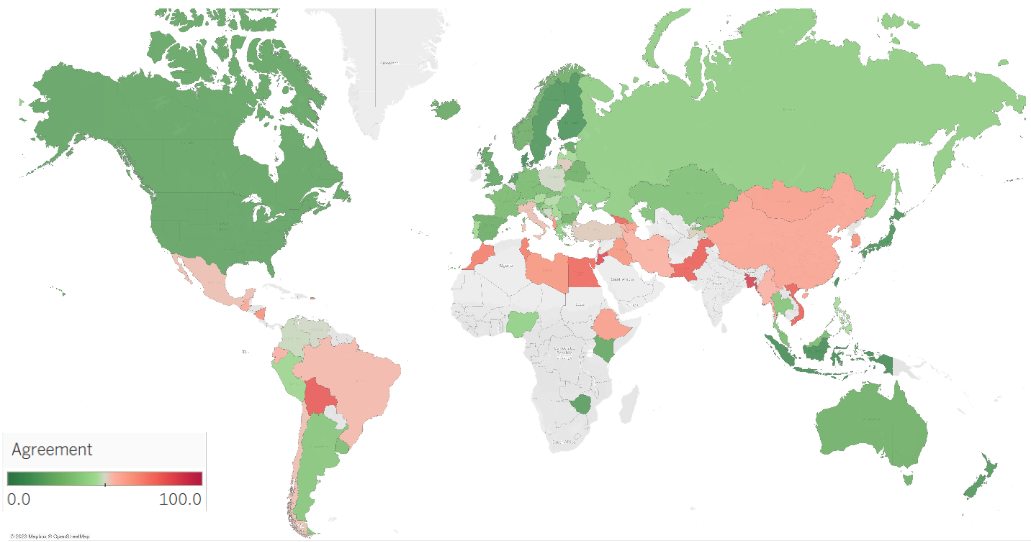
    Norms guide us through many situations in life. When we travel to a new country, we observe different ways of living and try to comply with local semi-formal rules such as tipping policies or how to queue. When we start a new job, we observe how colleagues dress and where they leave their coats, and often mimic and assimilate to those new environments. Similar efforts to assimilate have been observed with gender norms. Gender norms are informal rules and shared beliefs that produce different expected behaviours based on gender identity. Gender norms are widely known to perpetuate gender gaps in the labor market, but they are relevant at the household level too, where they may shape the decision of whether a woman can go to work or how much she should work. While gender norms impact both men and women, a particular focus is usually set on our attitudes towards women. Those attitudes have been measured with surveys where respondents are given statements such as “When a mother works for pay, the children suffer,” and asked for their level of agreement. The map below, for example, shows the average amount of agreement to that statement worldwide, where the color indicates the share of the respondents who agree or strongly agree.[1] The dark red color suggests that there is full agreement with the statement and the dark green color suggests that there is no agreement. The level of agreement varies considerably across countries. 

    Data source: Haerpfer et al. (2022), illustrated by Manuela Collis 

    Recent research by Bursztyn, Gonzales, and Yanagizawa-Drott studies the consequences and resolution of gender norms when a woman would like to work, but her husband believes that society won’t accept it, even though he is supportive of her working. These beliefs are referred to as “third-order beliefs,” meaning they are an individual’s perceptions of someone else’s beliefs. If these third-order beliefs are incorrect, it leads to a phenomenon known as “pluralistic ignorance.” 

    The researchers examine Saudi Arabia as a prime illustration of women’s low labor force participation. The unique aspect of the Saudi Arabian context is the tradition of men’s guardianship, where husbands have the final say on their wives’ employment, clearly demonstrating who holds decision-making power in the household. In 2017, only 15% of Saudi women over the age of 15 were employed, as per official statistics.[2] The proportion of married women in the workforce is even lower, with a national survey conducted by the researchers indicating that only 4% of married women work outside the home.  

    Through surveys, the researchers uncovered substantial evidence of “pluralistic ignorance” among Saudi Arabian husbands. Specifically, 79% of men aged 18-35 in Saudi Arabia would support their wives working outside the home, yet they mistakenly believe that other men do not hold this view. They estimate that only 63% of men support women working outside the home. This inaccurate third-party perception leads 72% of husbands in the study to underestimate the level of support from other husbands for working wives. As a result, pluralistic ignorance leads to the outcome where fewer women who desire to work are able to do so because their husbands misperceive their peers’ opinions. 

    The researchers explored the potential for reducing pluralistic ignorance by providing husbands with accurate information on other husbands’ views. They then evaluated the impact on husbands’ decisions to submit their wives’ work applications. The findings showed that providing this information led to an update of beliefs in the long-term and a change in behaviour. Specifically, the intervention led to a 180% increase in job applications from wives, rising from 5.8% to 16.2%. Furthermore, providing information about other husbands’ support for women working outside the home altered husbands’ perceptions beyond that topic, making them more open to other changes, such as allowing their wives to attend driving lessons. 

    “gender norms can be changed by collecting individuals’ true beliefs and then sharing the group’s average beliefs.”

    This study highlights the role of gender norms in affecting women’s participation in the labor market and how incorrect beliefs about these norms contribute to the low number of married women in the workforce. The study suggests that gender norms can be changed by collecting individuals’ true beliefs and then sharing the group’s average beliefs. Updating gender norms is challenging, and this approach may be an untapped resource in promoting gender equality across different contexts. For example, in the workplace, organizations could start experimenting with the way they communicate outcomes from climate surveys, surveys designed to collect data on attitudes at the workplace. However, more research is needed to understand misperceived gender norms, their impact on career outcomes, and whether information on others’ attitudes will translate into behavioral change as they did in the context of Saudi Arabia’s labor market.  

    References

    [1] Haerpfer, C., Inglehart, R., Moreno, A., Welzel, C., Kizilova, K., Diez-Medrano J., M. Lagos, P. Norris, E. Ponarin & B. Puranen (eds.). 2022. World Values Survey: Round Seven – Country-Pooled Datafile Version 5.0. Madrid, Spain & Vienna, Austria: JD Systems Institute & WVSA Secretariat. doi:10.14281/18241.20

    [2] Bursztyn, Leonardo, Alessandra L. González, and David Yanagizawa-Drott. 2020. “Misperceived Social Norms: Women Working Outside the Home in Saudi Arabia.” The American Economic Review 110 (10): 2997–3029.

    ______

    Research brief prepared by:

    Manuela R. Collis

    [/fusion_text][fusion_separator style_type=”none” hide_on_mobile=”small-visibility,medium-visibility,large-visibility” top_margin=”20″ bottom_margin=”20″ alignment=”center” /][fusion_button link=”https://www.gendereconomy.org/research-briefs/” target=”_blank” hide_on_mobile=”small-visibility,medium-visibility,large-visibility” color=”custom” button_gradient_top_color=”#62bd19″ button_gradient_bottom_color=”#62bd19″ button_gradient_top_color_hover=”#00c2e2″ button_gradient_bottom_color_hover=”#00c2e2″ stretch=”yes” icon_position=”left” icon_divider=”no” animation_direction=”left” animation_speed=”0.3″]See more research briefs[/fusion_button][fusion_separator style_type=”none” hide_on_mobile=”small-visibility,medium-visibility,large-visibility” top_margin=”20″ bottom_margin=”20″ alignment=”center” /][fusion_recent_posts layout=”default” hover_type=”none” columns=”3″ number_posts=”3″ offset=”0″ pull_by=”category” cat_slug=”research-briefs” thumbnail=”yes” title=”yes” meta=”no” meta_author=”no” meta_categories=”no” meta_date=”yes” meta_comments=”yes” meta_tags=”no” excerpt=”no” excerpt_length=”35″ strip_html=”yes” scrolling=”no” hide_on_mobile=”small-visibility,medium-visibility,large-visibility” animation_direction=”left” animation_speed=”0.3″ /][/fusion_builder_column][fusion_builder_column type=”1_4″ layout=”1_4″ center_content=”no” hover_type=”none” hide_on_mobile=”small-visibility,medium-visibility,large-visibility” background_position=”left top” background_repeat=”no-repeat” border_style=”solid” border_position=”all” animation_direction=”left” animation_speed=”0.3″ last=”true” first=”false” border_sizes_top=”0″ border_sizes_bottom=”0″ border_sizes_left=”0″ border_sizes_right=”0″ min_height=”” link=”” background_blend_mode=”overlay”][fusion_title title_type=”text” rotation_effect=”bounceIn” display_time=”1200″ highlight_effect=”circle” loop_animation=”off” highlight_width=”9″ highlight_top_margin=”0″ before_text=”” rotation_text=”” highlight_text=”” after_text=”” title_link=”off” link_url=”” link_target=”_self” hide_on_mobile=”small-visibility,medium-visibility,large-visibility” sticky_display=”normal,sticky” class=”briefsummary” id=”” content_align_medium=”” content_align_small=”” content_align=”left” size=”3″ animated_font_size=”” fusion_font_family_title_font=”” fusion_font_variant_title_font=”” font_size=”” line_height=”” letter_spacing=”” text_transform=”” text_color=”” hue=”” saturation=”” lightness=”” alpha=”” animated_text_color=”” text_shadow=”no” text_shadow_vertical=”” text_shadow_horizontal=”” text_shadow_blur=”0″ text_shadow_color=”” margin_top_medium=”” margin_right_medium=”” margin_bottom_medium=”” margin_left_medium=”” margin_top_small=”” margin_right_small=”” margin_bottom_small=”” margin_left_small=”” margin_top=”” margin_right=”” margin_bottom=”” margin_left=”” margin_top_mobile=”” margin_bottom_mobile=”” gradient_font=”no” gradient_start_color=”” gradient_end_color=”” gradient_start_position=”0″ gradient_end_position=”100″ gradient_type=”linear” radial_direction=”center center” linear_angle=”180″ highlight_color=”” style_type=”none” sep_color=”” link_color=”” link_hover_color=”” animation_type=”” animation_direction=”left” animation_color=”” animation_speed=”0.3″ animation_delay=”0″ animation_offset=””]

    Title

    Misperceived Social Norms: Women Working outside the Home in Saudi Arabia  

    Author

    Leonardo Bursztyn, Alessandra L. González, David Yanagizawa-Drott

    Source

    American Economic Review

    Published

    2020

    DOI

    10.1257/aer.20180975

    Link

    https://doi.org/10.1257/aer.20180975

    Research brief prepared by

    Manuela R. Collis

    [/fusion_title][fusion_widget_area name=”avada-custom-sidebar-researchbriefsidebar” hide_on_mobile=”small-visibility,medium-visibility,large-visibility” /][/fusion_builder_column][/fusion_builder_row][/fusion_builder_container]

  • The incomplete revolution for equal work

    The incomplete revolution for equal work

    [fusion_builder_container hundred_percent=”no” equal_height_columns=”no” hide_on_mobile=”small-visibility,medium-visibility,large-visibility” background_position=”center center” background_repeat=”no-repeat” fade=”no” background_parallax=”none” enable_mobile=”no” parallax_speed=”0.3″ video_aspect_ratio=”16:9″ video_loop=”yes” video_mute=”yes” border_style=”solid” margin_top=”20″ type=”legacy”][fusion_builder_row][fusion_builder_column type=”3_4″ layout=”3_4″ center_content=”no” hover_type=”none” hide_on_mobile=”small-visibility,medium-visibility,large-visibility” background_position=”left top” background_repeat=”no-repeat” border_style=”solid” border_position=”all” animation_direction=”left” animation_speed=”0.3″ last=”false” first=”true” border_sizes_top=”0″ border_sizes_bottom=”0″ border_sizes_left=”0″ border_sizes_right=”0″ min_height=”” link=”” background_blend_mode=”overlay”][fusion_text columns=”” column_min_width=”” column_spacing=”” rule_style=”” rule_size=”” rule_color=”” hue=”” saturation=”” lightness=”” alpha=”” content_alignment_medium=”” content_alignment_small=”” content_alignment=”” hide_on_mobile=”small-visibility,medium-visibility,large-visibility” sticky_display=”normal,sticky” class=”” id=”” margin_top=”” margin_right=”” margin_bottom=”” margin_left=”” fusion_font_family_text_font=”” fusion_font_variant_text_font=”” font_size=”” line_height=”” letter_spacing=”” text_transform=”none” text_color=”” animation_type=”” animation_direction=”left” animation_speed=”0.3″ animation_offset=””]

    A simple image search on the internet for “housework” returns a myriad of photos of a vacuum rigorously used on a carpet, piles of laundry in a basket being carried down a bustling hallway of a rummaged house, dishes looming over a dirty sink in the process of being cleaned.  

    Who is the central character in these photos? Mostly women.  

    Countless research articles, news articles and surveys have shown how women conduct the bulk of housework around the world – which typically consists of “pink jobs” such as housekeeping or cooking. Women also experience different stressors and burdens on their time compared to men. However, during the pandemic, there seemed to be a glimmer of hope that men in households were contributing more equally (although this also depended on the type of task). Indeed, in recent years, there appears to have been a gender convergence – women appear to be doing less housework and men doing more.  

    In their 2019 study, researchers from the University British Columbia explored what factors might explain this convergence using time use data from Statistics Canada’s General Social Survey (GSS) from 1986 to 2015. Time use data is gathered when respondents are asked to record all their activities (and time spent on these activities) in a 24-hour period.  

    One of their key findings is that there are structural changes happening in household labour. Women have had increased involvement in the labour market over the last 30 years. Simultaneously, men have had a significant uptake in domestic duties, and take on shorter hours in a paid job. This is what the authors note as “symmetry trumps asymmetry,” where both women and men have altered their behaviours – women are doing less housework and men are doing more.  

    The study also reveals which forms of domestic labour are affected by gender convergence. While household labour can range from housekeeping, cooking, cleaning, maintenance and childcaring, “women’s work” is typically designated as housekeeping or childcaring. In their analysis, these researchers find that even “women’s work” is showing a gender convergence in terms of time spent on these duties. However, the authors caution there might still be further areas of exploration to undertake, as specific childcare duties might still be experiencing unequal time and contributions.  

    “Women still do the brunt of the work. In other words, this work is still unbalanced. The revolution for equal work is therefore incomplete.”

    Equally interesting is how factors of cultural and demographic changes do not have significant explanatory power on gender convergence in the household division of labour. The researchers explored how cultural factors, such as the “silent revolution” of shifting values in society, have resulted in greater egalitarian values between men and women and a focus on human rights. This may have changed how men view historically gendered work, and their involvement and participation. In this study, however, findings show that in Canada, cultural factors have not had as dramatic an effect on changes in housework and childcare as women’s increased participation in the labour market. Demographic factors also have an impact on the changing dynamics around childcare – having children increases domestic work — but this affects both men and women.  

    Does this mean that gender equality has been achieved when it comes to the gendered division of labour? Not quite. The researchers end on the note that while they see strong support of a gender convergence in household labour, women still do the brunt of the work. In other words, this work is still unbalanced. The revolution for equal work is therefore incomplete.   

    Beyond measuring time for household tasks, there might also be implications for “invisible work” – work that goes on unnoticed and unacknowledged in the background, such as planning to organize childcare, or preparing a grocery list to make sure the fridge is stocked. Future research into understanding the gendered division of labour should also consider the emotional and the mental work it requires, beyond the physical.  

    The researchers also note in a recent conversation that the future implications and research agenda for understanding this gendered division of labour might concern who is in a household. Many families in our society are now no longer composed of the traditional, nuclear household – for example, single parents experience the division of household labour in an entirely different way. How we define “equality” needs to be continually examined. While the uneven allocation of housework is an indicator of inequality between men and women, the researchers encourage thinking beyond simply men and women’s household labour, but also looking at other areas where equality should be achieved. How are other marginalized populations, such as migrant populations, coming in to take on the responsibility of household labour by performing low-wage, precarious work? Is equality accessible for all? 

    “How are other marginalized populations, such as migrant populations, coming in to take on the responsibility of household labour by performing low-wage, precarious work?”

    In the last 30 years, structural factors that have impacted women’s entry into the labour market have indeed helped with the gender convergence of domestic labour. However, the researchers also note that the nuances of family life still need to be further studied. The current measurements of willingness to engage in housework and the time spent on such work are important, but future research and policies can explore the intricacies and richness of diverse family lives and arrangements and their contribution to gender equality in housework. 

    While there might be improvements in gender equality in household labour, we should caution against celebrating too soon. This research shows glimmers of hope that we are moving in the right direction, but there is still work to do.  

    ________________________

    Research brief prepared by:

    Laura Lam

    [/fusion_text][fusion_separator style_type=”none” hide_on_mobile=”small-visibility,medium-visibility,large-visibility” top_margin=”20″ bottom_margin=”20″ alignment=”center” /][fusion_button link=”https://www.gendereconomy.org/research-briefs/” target=”_blank” hide_on_mobile=”small-visibility,medium-visibility,large-visibility” color=”custom” button_gradient_top_color=”#62bd19″ button_gradient_bottom_color=”#62bd19″ button_gradient_top_color_hover=”#00c2e2″ button_gradient_bottom_color_hover=”#00c2e2″ stretch=”yes” icon_position=”left” icon_divider=”no” animation_direction=”left” animation_speed=”0.3″]See more research briefs[/fusion_button][fusion_separator style_type=”none” hide_on_mobile=”small-visibility,medium-visibility,large-visibility” top_margin=”20″ bottom_margin=”20″ alignment=”center” /][fusion_recent_posts layout=”default” hover_type=”none” columns=”3″ number_posts=”3″ offset=”0″ pull_by=”category” cat_slug=”research-briefs” thumbnail=”yes” title=”yes” meta=”no” meta_author=”no” meta_categories=”no” meta_date=”yes” meta_comments=”yes” meta_tags=”no” excerpt=”no” excerpt_length=”35″ strip_html=”yes” scrolling=”no” hide_on_mobile=”small-visibility,medium-visibility,large-visibility” animation_direction=”left” animation_speed=”0.3″ /][/fusion_builder_column][fusion_builder_column type=”1_4″ layout=”1_4″ center_content=”no” hover_type=”none” hide_on_mobile=”small-visibility,medium-visibility,large-visibility” background_position=”left top” background_repeat=”no-repeat” border_style=”solid” border_position=”all” animation_direction=”left” animation_speed=”0.3″ last=”true” first=”false” border_sizes_top=”0″ border_sizes_bottom=”0″ border_sizes_left=”0″ border_sizes_right=”0″ min_height=”” link=”” background_blend_mode=”overlay”][fusion_title title_type=”text” rotation_effect=”bounceIn” display_time=”1200″ highlight_effect=”circle” loop_animation=”off” highlight_width=”9″ highlight_top_margin=”0″ before_text=”” rotation_text=”” highlight_text=”” after_text=”” title_link=”off” link_url=”” link_target=”_self” hide_on_mobile=”small-visibility,medium-visibility,large-visibility” sticky_display=”normal,sticky” class=”briefsummary” id=”” content_align_medium=”” content_align_small=”” content_align=”left” size=”3″ animated_font_size=”” fusion_font_family_title_font=”” fusion_font_variant_title_font=”” font_size=”” line_height=”” letter_spacing=”” text_transform=”” text_color=”” hue=”” saturation=”” lightness=”” alpha=”” animated_text_color=”” text_shadow=”no” text_shadow_vertical=”” text_shadow_horizontal=”” text_shadow_blur=”0″ text_shadow_color=”” margin_top_medium=”” margin_right_medium=”” margin_bottom_medium=”” margin_left_medium=”” margin_top_small=”” margin_right_small=”” margin_bottom_small=”” margin_left_small=”” margin_top=”” margin_right=”” margin_bottom=”” margin_left=”” margin_top_mobile=”” margin_bottom_mobile=”” gradient_font=”no” gradient_start_color=”” gradient_end_color=”” gradient_start_position=”0″ gradient_end_position=”100″ gradient_type=”linear” radial_direction=”center center” linear_angle=”180″ highlight_color=”” style_type=”none” sep_color=”” link_color=”” link_hover_color=”” animation_type=”” animation_direction=”left” animation_speed=”0.3″ animation_offset=””]

    Title

    Social Change and the Gendered Division of Household Labor in Canada

    Author

    Neil Guppy, Larissa Sakumoto, Rima Wilkes

    Source

    Canadian Review of Sociology/Revue canadienne de sociologie

    Published

    2019

    DOI

    10.1111/cars.12242 

    Link

    https://onlinelibrary.wiley.com/doi/full/10.1111/cars.12242

    Research brief prepared by

    Laura Lam

    [/fusion_title][fusion_widget_area name=”avada-custom-sidebar-researchbriefsidebar” hide_on_mobile=”small-visibility,medium-visibility,large-visibility” /][/fusion_builder_column][/fusion_builder_row][/fusion_builder_container]

  • Biting the hand that feeds you?: The isolation of women and racialized managers

    Biting the hand that feeds you?: The isolation of women and racialized managers

    [fusion_builder_container hundred_percent=”no” equal_height_columns=”no” hide_on_mobile=”small-visibility,medium-visibility,large-visibility” background_position=”center center” background_repeat=”no-repeat” fade=”no” background_parallax=”none” enable_mobile=”no” parallax_speed=”0.3″ video_aspect_ratio=”16:9″ video_loop=”yes” video_mute=”yes” border_style=”solid” margin_top=”20″ type=”legacy”][fusion_builder_row][fusion_builder_column type=”3_4″ layout=”3_4″ center_content=”no” hover_type=”none” hide_on_mobile=”small-visibility,medium-visibility,large-visibility” background_position=”left top” background_repeat=”no-repeat” border_style=”solid” border_position=”all” animation_direction=”left” animation_speed=”0.3″ last=”false” first=”true” border_sizes_top=”0″ border_sizes_bottom=”0″ border_sizes_left=”0″ border_sizes_right=”0″ min_height=”” link=”” background_blend_mode=”overlay”][fusion_text columns=”” column_min_width=”” column_spacing=”” rule_style=”” rule_size=”” rule_color=”” hue=”” saturation=”” lightness=”” alpha=”” content_alignment_medium=”” content_alignment_small=”” content_alignment=”” hide_on_mobile=”small-visibility,medium-visibility,large-visibility” sticky_display=”normal,sticky” class=”” id=”” margin_top=”” margin_right=”” margin_bottom=”” margin_left=”” fusion_font_family_text_font=”” fusion_font_variant_text_font=”” font_size=”” line_height=”” letter_spacing=”” text_transform=”none” text_color=”” animation_type=”” animation_direction=”left” animation_speed=”0.3″ animation_offset=””]

    In 2021, women leaders left their companies at a higher rate than their male counterparts, citing lack of management support as a key reason for their departure. This trend sparks interest in understanding why women and racial minority top managers may experience greater isolation when climbing the corporate ladder. Recent research by Gareth D. Keeves and James D. Westphal sheds light on this issue by investigating how peer support may decline when people experience career successes. “Our research suggests that women and racial minorities tend to be disadvantaged and relatively isolated in help networks,” said Keeves, “in part because white males are often biased about the value of the advice that they give to (and receive from) minorities.” 

    Keeves and Westphal were motivated to understand the challenges faced by women and racial minority executives when they reach senior positions. “A positive development in the recent time period has been an increased number of female and racial minorities gaining senior management positions,” Keeves said. “Given that the success of leaders is influenced by the support that they received from colleagues, we felt it important to consider additional challenges that female and racial minorities may face in gaining access to support following their advancement.” 

    “White males are often biased about the value of the advice that they give to (and receive from) minorities.”

    Research shows that top managers depend on the help of their peers to advance their careers and improve their decision-making.  This help can take many forms, such as referrals to a board of directors, information sharing, and advice. However, as managers rise in their careers, they often find it harder to obtain this type of support from their peers. In some cases, managers even report that peers who used to help them stop supporting their work. 

    Past research has also shown that women and racial minorities often receive help differently due to their minority status in the corporate world. For example, when a woman or a racial minority executive is appointed CEO of a company, white male executives in that company are less likely to provide support to their female and racial minority colleagues than they did before their appointment.   

    To better understand these phenomena, Keeves and Westphal surveyed US CEOs and top managers over a nine-year period. They asked managers about the advice and information they provided to or received from their peers in the past year. More importantly, they also inquired about managers’ perceptions of how their peers help others. 

    The results showed a clear pattern. Managers perceived that their peers who were newly appointed to corporate and non-corporate board positions did not return the help that the managers had given them. As a result, these managers shared less information with their peers and assessed their peers’ performance in a more negative light. They were also more likely to blame poor financial results on their peers’ decisions rather than on external factors. 

    The researchers identified two social psychological factors that contribute to these perceptions. First, the managers tended to overestimate the value of their own help. Second, newly appointed peers that received help were more likely to attribute their success to their own individual work and effort rather than the help they received. The distortions between givers and receivers on how help is valued explain why managers often perceive their help as being under-reciprocated. 

    Next, Keeves and Westphal explored whether women and racial minority managers are differently affected than white male managers. They found that white male managers were more likely to perceive newly appointed women and racial minority peers as not reciprocating their help compared to newly appointed white male peers. This occurred for two reasons. On the one hand, white male managers had a distorted view of how much their help contributed to the success of women and racial minority managers.  That is, they underestimated the ability of women and racial minority managers to be successful without their help. Rather—due to bias—they believed the success of these managers came about because of external circumstances or supports.  

    “While much policy focus has been on increasing the number of women and racial minority executives in senior leadership positions, this study suggests that a lack of support may hinder their ability to succeed in these positions.”

    On the other hand, women and racial minority managers did not share the same expectations as white male managers that they should reciprocate the help previously given to them. Women and racial minority managers were instead more likely to help others because of their own difficult experiences starting their careers, rather than expecting benefits in return.  

    However, real consequences arise when women and racial minority managers are seen as not returning the help that was given them. It may explain why they feel further isolated when they are appointed to senior leadership positions. While much policy focus has been on increasing the number of women and racial minority executives in senior leadership positions, this study suggests that a lack of support may hinder their ability to succeed in these positions. When asked about the practical implications of this study, Keeves recommended that organizations “sponsor support groups of women and racial minority leaders who meet periodically to exchange input and advice, and crucially, to share their contacts to leaders and experts outside the group who can provide advice on the specific job and career-related challenges that they’re facing.” 

    Keeves added that “minority support groups can be valuable in linking women and minority leaders to relatively supportive, fair-minded, and experienced white male colleagues, as well as to fellow minorities who are facing similar challenges.” In the meantime, to put it in their own words, Keeves and Westphal hope that their study ultimately drives increased attention to how such challenges can be reduced. “Being aware of this general tendency towards systematic differences in the perceptions of the value of help, and to thus seek to reciprocate more generously, may be a way for managers to counteract this,” Keeves said.  

    References  

    LeanIn.Org and McKinsey & Company (2022) Women in the Workplace. https://www.mckinsey.com/featured-insights/diversity-and-inclusion/women-in-the-workplace 

    Gareth D. Keeves, James D. Westphal (2021) From Help to Harm: Increases in Status, Perceived Under-Reciprocation, and the Consequences for Access to Strategic Help and Social Undermining Among Female, Racial Minority, and White Male Top Managers. Organization Science 32(4):1120-1148.  

    McDonald, M. L., Keeves, G. D., & Westphal, J. D. (2018). One step forward, one step back: White male top manager organizational identification and helping behavior toward other executives following the appointment of a female or racial minority CEO. Academy of Management Journal, 61(2), 405-439. 

    ________________________

    Research brief prepared by:

    Daphne Baldassari

    [/fusion_text][fusion_separator style_type=”none” hide_on_mobile=”small-visibility,medium-visibility,large-visibility” top_margin=”20″ bottom_margin=”20″ alignment=”center” /][fusion_button link=”https://www.gendereconomy.org/research-briefs/” target=”_blank” hide_on_mobile=”small-visibility,medium-visibility,large-visibility” color=”custom” button_gradient_top_color=”#62bd19″ button_gradient_bottom_color=”#62bd19″ button_gradient_top_color_hover=”#00c2e2″ button_gradient_bottom_color_hover=”#00c2e2″ stretch=”yes” icon_position=”left” icon_divider=”no” animation_direction=”left” animation_speed=”0.3″]See more research briefs[/fusion_button][fusion_separator style_type=”none” hide_on_mobile=”small-visibility,medium-visibility,large-visibility” top_margin=”20″ bottom_margin=”20″ alignment=”center” /][fusion_recent_posts layout=”default” hover_type=”none” columns=”3″ number_posts=”3″ offset=”0″ pull_by=”category” cat_slug=”research-briefs” thumbnail=”yes” title=”yes” meta=”no” meta_author=”no” meta_categories=”no” meta_date=”yes” meta_comments=”yes” meta_tags=”no” excerpt=”no” excerpt_length=”35″ strip_html=”yes” scrolling=”no” hide_on_mobile=”small-visibility,medium-visibility,large-visibility” animation_direction=”left” animation_speed=”0.3″ /][/fusion_builder_column][fusion_builder_column type=”1_4″ layout=”1_4″ center_content=”no” hover_type=”none” hide_on_mobile=”small-visibility,medium-visibility,large-visibility” background_position=”left top” background_repeat=”no-repeat” border_style=”solid” border_position=”all” animation_direction=”left” animation_speed=”0.3″ last=”true” first=”false” border_sizes_top=”0″ border_sizes_bottom=”0″ border_sizes_left=”0″ border_sizes_right=”0″ min_height=”” link=”” background_blend_mode=”overlay”][fusion_title title_type=”text” rotation_effect=”bounceIn” display_time=”1200″ highlight_effect=”circle” loop_animation=”off” highlight_width=”9″ highlight_top_margin=”0″ before_text=”” rotation_text=”” highlight_text=”” after_text=”” title_link=”off” link_url=”” link_target=”_self” hide_on_mobile=”small-visibility,medium-visibility,large-visibility” sticky_display=”normal,sticky” class=”briefsummary” id=”” content_align_medium=”” content_align_small=”” content_align=”left” size=”3″ animated_font_size=”” fusion_font_family_title_font=”” fusion_font_variant_title_font=”” font_size=”” line_height=”” letter_spacing=”” text_transform=”” text_color=”” hue=”” saturation=”” lightness=”” alpha=”” animated_text_color=”” text_shadow=”no” text_shadow_vertical=”” text_shadow_horizontal=”” text_shadow_blur=”0″ text_shadow_color=”” margin_top_medium=”” margin_right_medium=”” margin_bottom_medium=”” margin_left_medium=”” margin_top_small=”” margin_right_small=”” margin_bottom_small=”” margin_left_small=”” margin_top=”” margin_right=”” margin_bottom=”” margin_left=”” margin_top_mobile=”” margin_bottom_mobile=”” gradient_font=”no” gradient_start_color=”” gradient_end_color=”” gradient_start_position=”0″ gradient_end_position=”100″ gradient_type=”linear” radial_direction=”center center” linear_angle=”180″ highlight_color=”” style_type=”none” sep_color=”” link_color=”” link_hover_color=”” animation_type=”” animation_direction=”left” animation_speed=”0.3″ animation_offset=””]

    Title

    From Help to Harm: Increases in Status, Perceived Under-Reciprocation, and the Consequences for Access to Strategic Help and Social Undermining Among Female, Racial Minority, and White Male Top Managers

    Author

    Gareth D. Keeves, James D. Westphal

    Source

    Organization Science

    Published

    2021

    DOI

    10.1287/orsc.2020.1422

    Link

    https://doi.org/10.1287/orsc.2020.1422

    Research brief prepared by

    Daphne Baldassari

    [/fusion_title][fusion_widget_area name=”avada-custom-sidebar-researchbriefsidebar” hide_on_mobile=”small-visibility,medium-visibility,large-visibility” /][/fusion_builder_column][/fusion_builder_row][/fusion_builder_container]
  • How international trade shapes gender gaps in employment

    How international trade shapes gender gaps in employment

    [fusion_builder_container hundred_percent=”no” equal_height_columns=”no” hide_on_mobile=”small-visibility,medium-visibility,large-visibility” background_position=”center center” background_repeat=”no-repeat” fade=”no” background_parallax=”none” enable_mobile=”no” parallax_speed=”0.3″ video_aspect_ratio=”16:9″ video_loop=”yes” video_mute=”yes” border_style=”solid” margin_top=”20″ type=”legacy”][fusion_builder_row][fusion_builder_column type=”3_4″ layout=”3_4″ center_content=”no” hover_type=”none” hide_on_mobile=”small-visibility,medium-visibility,large-visibility” background_position=”left top” background_repeat=”no-repeat” border_style=”solid” border_position=”all” animation_direction=”left” animation_speed=”0.3″ last=”false” first=”true” border_sizes_top=”0″ border_sizes_bottom=”0″ border_sizes_left=”0″ border_sizes_right=”0″ min_height=”” link=”” background_blend_mode=”overlay”][fusion_text columns=”” column_min_width=”” column_spacing=”” rule_style=”” rule_size=”” rule_color=”” hue=”” saturation=”” lightness=”” alpha=”” content_alignment_medium=”” content_alignment_small=”” content_alignment=”” hide_on_mobile=”small-visibility,medium-visibility,large-visibility” sticky_display=”normal,sticky” class=”” id=”” margin_top=”” margin_right=”” margin_bottom=”” margin_left=”” fusion_font_family_text_font=”” fusion_font_variant_text_font=”” font_size=”” line_height=”” letter_spacing=”” text_transform=”none” text_color=”” animation_type=”” animation_direction=”left” animation_speed=”0.3″ animation_offset=””]

    We often associate globalization with the availability of more products for a more affordable price. But the impact of globalization goes beyond the availability and pricing of goods. While the academic consensus is that globalization has made us better off overall, the discourse equally recognizes that not everyone benefited from it. Recent research by Pamela Medina, Hani Mansour, and Andrea Velásquez shows that people with less education – and women specifically – are particularly vulnerable to the consequences of globalization.[1] Through the analysis of national household survey data, the authors found that with increased trade, women with lower levels of education are more likely to drop out of the labor force or switch employment sectors.

    The signing of the General Agreement on Tariffs and Trade (GATT) in 1947 and the subsequent establishment of the World Trade Organization (WTO) in 1995 resulted in a decrease in tariffs and improved access to international trade partners. As a result, international trade soared. Since the establishment of GATT, international trade volume increased by 4300%.[2] However, these benefits are not equally distributed across countries, institutional sectors, or sociodemographic groups. The work by Mansour, Medina, and Velásquez zooms in on this issue.

    “The authors found that with increased trade, women with lower levels of education are more likely to drop out of the labor force or switch employment sectors.”

    As Medina, Assistant Professor at University of Toronto, puts it: “There is a vast literature in trade looking at the effects on workers, analyzing effects on employment and their subsequent impact on health outcomes, and even death. Within this literature, there is an understanding that some workers will be more affected than others. Recent studies have looked at who are these workers, and why are they more affected? We believe one of these important angles to consider regarding this impact is gender.” The issue is that these past studies don’t allow us to examine gender because they focus on developed countries where, more often than not, the affected industries are heavily men-dominated, making a comparison across gender difficult.

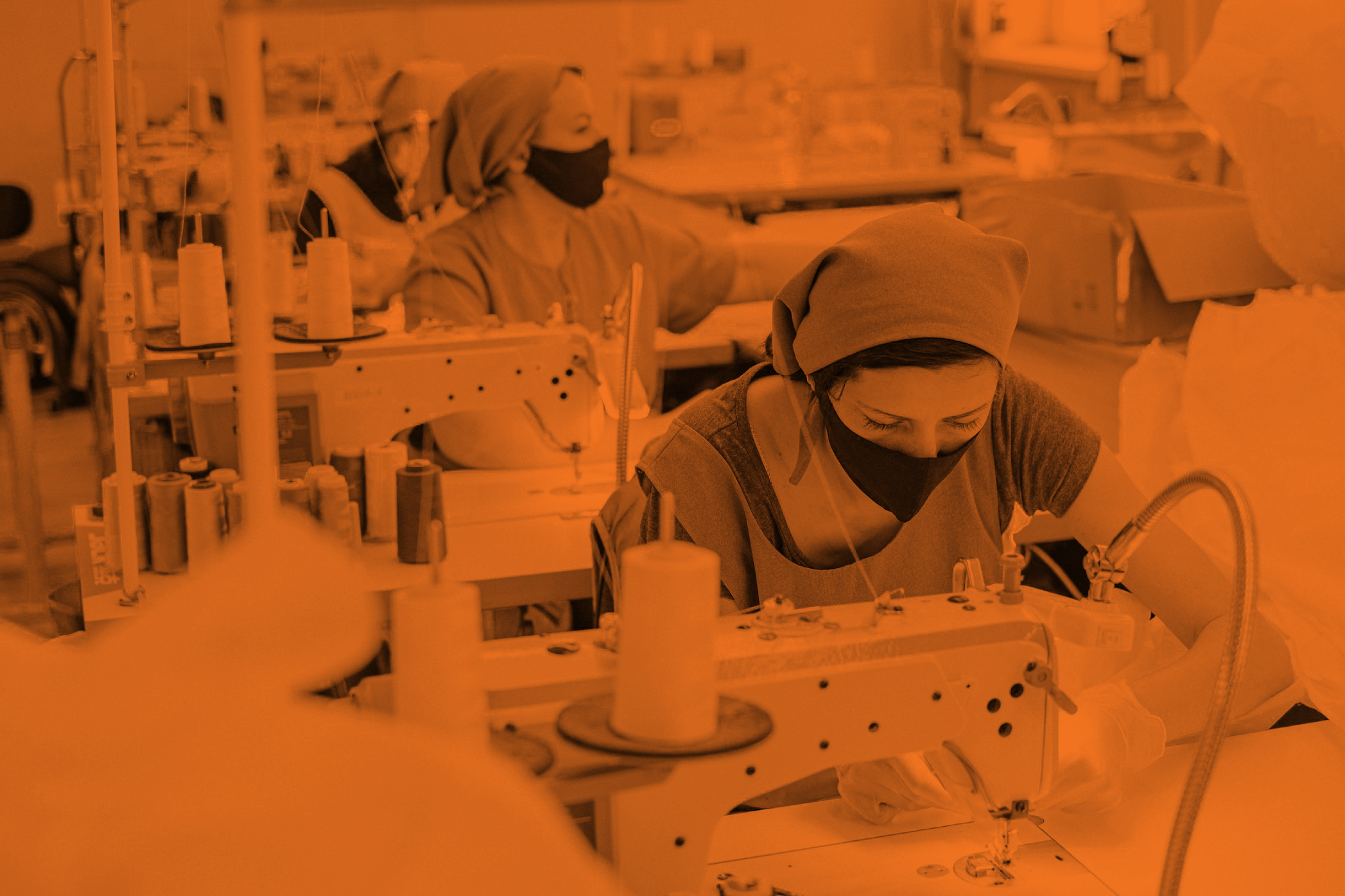
    Therefore, the researchers turned to Peru to compare the effect international trade has on men and women. Trade plays a vital role for the country. The authors study one significant expansion in Peru’s trade relations: in 2001, China was admitted to the World Trade Organization. This admission resulted in a decrease in tariffs on products imported from China. Medina remarks that Peru provides the perfect conditions to study how international trade affects men and women workers because the sudden and significant increase in trade with China impacted sectors where both women and men workers were well represented. Examples of those industries are apparel, textiles, furniture, and electronics.

    Medina and her co-authors show that this new, large trading partner had a noticeable impact on Peru’s labor market. In the years following China’s joining the WTO, sectors affected by trade showed a relative decrease in employment share, a finding in line with other studies. When they looked more closely to see whether the trade shock impacted men and women equally, they found that this was not the case. Medina remarks that the effect on men’s unemployment disappeared after ten years, but the effect on women’s unemployment did not.

    The researchers find that the difference can be attributed to industry-specific factors. Women in the tradable sector (examples of which are copper, textiles, pharmaceuticals, machinery) were disproportionally affected by the trade shock. “We find that, while men could reallocate within manufacturing to other growing sectors, women couldn’t and some of them were absorbed by the service sector, but some of them had to leave the labor force altogether.” This is particularly true for women who have fewer years of formal education. As Medina notes, this did not happen to men. That is, men didn’t show that pattern of sector-switching or exiting the labor force.

    “Medina remarks that the effect on men’s unemployment disappeared after ten years, but the effect on women’s unemployment did not.”

    However, why women’s response to the trade shock is so different from men’s remains an open question – a question Medina wished she had the data to answer. In particular, she says “we would have liked to have more data on how the environment for the women […] changed.” This would have allowed them to analyze what was different for the women who could reallocate compared to those who could not. Was there a difference in social norms, alternative opportunities, or in the need for household work ? We can’t say for sure.

    But for now, she hopes that her work is being taken seriously by policy makers. “We want to highlight the fact that men and women face different adjustment labor costs, ” Medina notes. “It is important to identify and quantify them in order for the government to be able to put in place policies to mitigate the adverse effects of trade and redistribute gains.” In other words, governments need to measure the extent to which their trade and employment policies impact socio-demographic groups differently, for example in the form of a gender-based analysis.

    Gender-based analyses allow policy makers to develop more targeted interventions leading to more equitable outcomes. We can turn to the COVID-19 pandemic for illustration. Data from many countries have shown that women were disproportionally more likely to exit the labor market during that period, oftentimes to provide educational support to their children and care for the sick.

    At the same time, some governments developed large financial aid packages to mitigate these effects. The International Monetary Fund published a report with a battery of policy interventions which would allow a government to use those financial aid packages towards a more equitable outcome.[3] One concrete example comes from Chile. The country made it more attractive for companies to re-activate suspended contracts, and subsidized employment contracts for women, young people, and persons with disabilities.

    The researchers think that policy makers shouldn’t stop short at the gendered effects of trade shocks on labor market outcomes: Medina poses that they may have social and demographic consequences, such as marriage and fertility decisions, too – a consideration their team is currently investigating.

    References

    [1] Mansour, Hani, Pamela Medina, and Andrea Velásquez. 2022. “Import Competition and Gender Differences in Labor Reallocation.” Labour Economics 76 (June): 102149.

    [2] World Trade Organization. n.d. “Evolution of Trade under the WTO: Handy Statistics.” Accessed November 17, 2022. https://www.wto.org/english/res_e/statis_e/trade_evolution_e/evolution_trade_wto_e.htm.

    [3] Tang, Vincent, Aroa Santiago, Zohra Khan, David Amaglobeli, Esuna Dugarova, Katherine Gifford, Laura Gores, et al. 2021. “Gender Equality and COVID-19: Policies and Institutions for Mitigating the Crisis.”IMF | Fiscal Affairs. Accessed November 22, 2022.

    ________________________

    Research brief prepared by:

    Manuela R. Collis

    [/fusion_text][fusion_separator style_type=”none” hide_on_mobile=”small-visibility,medium-visibility,large-visibility” top_margin=”20″ bottom_margin=”20″ alignment=”center” /][fusion_button link=”https://www.gendereconomy.org/research-briefs/” target=”_blank” hide_on_mobile=”small-visibility,medium-visibility,large-visibility” color=”custom” button_gradient_top_color=”#62bd19″ button_gradient_bottom_color=”#62bd19″ button_gradient_top_color_hover=”#00c2e2″ button_gradient_bottom_color_hover=”#00c2e2″ stretch=”yes” icon_position=”left” icon_divider=”no” animation_direction=”left” animation_speed=”0.3″]See more research briefs[/fusion_button][fusion_separator style_type=”none” hide_on_mobile=”small-visibility,medium-visibility,large-visibility” top_margin=”20″ bottom_margin=”20″ alignment=”center” /][fusion_recent_posts layout=”default” hover_type=”none” columns=”3″ number_posts=”3″ offset=”0″ pull_by=”category” cat_slug=”research-briefs” thumbnail=”yes” title=”yes” meta=”no” meta_author=”no” meta_categories=”no” meta_date=”yes” meta_comments=”yes” meta_tags=”no” excerpt=”no” excerpt_length=”35″ strip_html=”yes” scrolling=”no” hide_on_mobile=”small-visibility,medium-visibility,large-visibility” animation_direction=”left” animation_speed=”0.3″ /][/fusion_builder_column][fusion_builder_column type=”1_4″ layout=”1_4″ center_content=”no” hover_type=”none” hide_on_mobile=”small-visibility,medium-visibility,large-visibility” background_position=”left top” background_repeat=”no-repeat” border_style=”solid” border_position=”all” animation_direction=”left” animation_speed=”0.3″ last=”true” first=”false” border_sizes_top=”0″ border_sizes_bottom=”0″ border_sizes_left=”0″ border_sizes_right=”0″ min_height=”” link=”” background_blend_mode=”overlay”][fusion_title title_type=”text” rotation_effect=”bounceIn” display_time=”1200″ highlight_effect=”circle” loop_animation=”off” highlight_width=”9″ highlight_top_margin=”0″ title_link=”off” link_target=”_self” hide_on_mobile=”small-visibility,medium-visibility,large-visibility” sticky_display=”normal,sticky” class=”briefsummary” content_align=”left” size=”3″ text_shadow=”no” text_shadow_blur=”0″ gradient_font=”no” gradient_start_position=”0″ gradient_end_position=”100″ gradient_type=”linear” radial_direction=”center center” linear_angle=”180″ style_type=”none” animation_direction=”left” animation_speed=”0.3″]

    Title

    Import Competition and Gender Differences in Labor Reallocation

    Author

    Pamela Medina, Hani Mansour, Andrea Velásquez

    Source

    Labour Economics

    Published

    2022 

    DOI

    10.1016/j.labeco.2022.102149

    Link

    https://doi.org/10.1016/j.labeco.2022.102149

    Research brief prepared by

    Manuela R. Collis

    [/fusion_title][fusion_widget_area name=”avada-custom-sidebar-researchbriefsidebar” hide_on_mobile=”small-visibility,medium-visibility,large-visibility” /][/fusion_builder_column][/fusion_builder_row][/fusion_builder_container]

  • 7th Annual Research Roundtable | February 2023

    7th Annual Research Roundtable | February 2023

    [fusion_builder_container hundred_percent=”no” hundred_percent_height=”no” hundred_percent_height_scroll=”no” hundred_percent_height_center_content=”yes” equal_height_columns=”no” menu_anchor=”” hide_on_mobile=”small-visibility,medium-visibility,large-visibility” status=”published” publish_date=”” class=”” id=”” border_color=”” border_style=”solid” margin_top=”” margin_bottom=”” padding_top=”” padding_right=”” padding_bottom=”2px” padding_left=”” gradient_start_color=”” gradient_end_color=”” gradient_start_position=”0″ gradient_end_position=”100″ gradient_type=”linear” radial_direction=”center center” linear_angle=”180″ background_color=”” background_image=”” background_position=”center center” background_repeat=”no-repeat” fade=”no” background_parallax=”none” enable_mobile=”no” parallax_speed=”0.3″ background_blend_mode=”none” video_mp4=”” video_webm=”” video_ogv=”” video_url=”” video_aspect_ratio=”16:9″ video_loop=”yes” video_mute=”yes” video_preview_image=”” filter_hue=”0″ filter_saturation=”100″ filter_brightness=”100″ filter_contrast=”100″ filter_invert=”0″ filter_sepia=”0″ filter_opacity=”100″ filter_blur=”0″ filter_hue_hover=”0″ filter_saturation_hover=”100″ filter_brightness_hover=”100″ filter_contrast_hover=”100″ filter_invert_hover=”0″ filter_sepia_hover=”0″ filter_opacity_hover=”100″ filter_blur_hover=”0″ type=”legacy”][fusion_builder_row][fusion_builder_column type=”1_1″ layout=”1_1″ spacing=”” center_content=”no” link=”” target=”_self” min_height=”” hide_on_mobile=”small-visibility,medium-visibility,large-visibility” class=”” id=”” hover_type=”none” border_color=”” border_style=”solid” border_position=”all” border_radius=”” box_shadow=”no” dimension_box_shadow=”” box_shadow_blur=”0″ box_shadow_spread=”0″ box_shadow_color=”” box_shadow_style=”” padding_top=”” padding_right=”” padding_bottom=”” padding_left=”” margin_top=”” margin_bottom=”” background_type=”single” gradient_start_color=”” gradient_end_color=”” gradient_start_position=”0″ gradient_end_position=”100″ gradient_type=”linear” radial_direction=”center center” linear_angle=”180″ background_color=”” background_image=”” background_image_id=”” background_position=”left top” background_repeat=”no-repeat” background_blend_mode=”none” animation_type=”” animation_direction=”left” animation_speed=”0.3″ animation_offset=”” filter_type=”regular” filter_hue=”0″ filter_saturation=”100″ filter_brightness=”100″ filter_contrast=”100″ filter_invert=”0″ filter_sepia=”0″ filter_opacity=”100″ filter_blur=”0″ filter_hue_hover=”0″ filter_saturation_hover=”100″ filter_brightness_hover=”100″ filter_contrast_hover=”100″ filter_invert_hover=”0″ filter_sepia_hover=”0″ filter_opacity_hover=”100″ filter_blur_hover=”0″ last=”true” first=”true” border_sizes_top=”0″ border_sizes_bottom=”0″ border_sizes_left=”0″ border_sizes_right=”0″][fusion_text columns=”” column_min_width=”” column_spacing=”” rule_style=”” rule_size=”” rule_color=”” hue=”” saturation=”” lightness=”” alpha=”” content_alignment_medium=”” content_alignment_small=”” content_alignment=”” hide_on_mobile=”small-visibility,medium-visibility,large-visibility” sticky_display=”normal,sticky” class=”” id=”” margin_top=”” margin_right=”” margin_bottom=”” margin_left=”” fusion_font_family_text_font=”” fusion_font_variant_text_font=”” font_size=”” line_height=”” letter_spacing=”” text_transform=”” text_color=”” animation_type=”” animation_direction=”left” animation_color=”” animation_speed=”0.3″ animation_delay=”0″ animation_offset=”” logics=””]

    GATE’s 7th annual research roundtable brought together a multidisciplinary group of established and emerging scholars from across the University of Toronto who have won research grants from GATE to support their work. The event allowed them to share their latest research, provided an opportunity to gain valuable feedback, and facilitated networking and connection. What did we learn? 

    Gender wage gap 

    • Gender-based violence contributes significantly to the persistent gender wage gap in Canada, as well as to a staggering host of macroeconomic consequences including judicial, health, and productivity deficiencies. (Candace Milinkovic and Sujata Mishra) 
    • Contrary to previous thinking, the wage gap between male and female emergency room physicians is not due to women’s avoidance of more highly paying shifts, but rather due to women having to work fewer hours in total because of their caregiving responsibilities for young children (Shannon Potter) 

    Diversity interventions in organizations 

    • Members of traditionally high-status social groups often feel threatened by diversity initiatives and may react by shutting themselves off to new learning. Interventions that leverage remarkable events and interactions could encourage these individuals to open themselves up to transformation instead. (Camellia Bryan) 
    • Industry awards confer status and visibility to winners, but evaluation biases can limit their equitable distribution. Making awards committees more diverse may not only increase the diversity of award winners, but also increase the representation of women and visible minorities in the industry overall by encouraging more diversity in hiring decisions. (Daphne Baldassari) 
    • Many organizations have developed community-specific learning spaces for BIPOC employees, but not much is known about whether they increase feelings of belonging and confidence. Current research is exploring how to design these spaces and learning experiences to better ensure positive outcomes for BIPOC employees. (Angie Min Ah Park)  
    • Gender differences in risk-taking are contextual. Women financial analysts increase risk-taking if information about their evaluations is made public. (Hyeun Lee) 
    • Identification with different social groups is more complex than a simple “I’m in” or “I’m out”. A complex and dynamic interplay between one’s group identities, identification levels, and social contexts combine to create uniquely individual experiences of group membership. (Geoffrey Leonardelli) 

    Gender in global contexts 

    • Exposure to information about different values, attitudes, and beliefs through 3G internet decreased traditional values and increased progressive values (i.e., support for gender equality and LGBT+ rights) across Africa. (Lucienne Talba) 
    • In an experiment with male and female merchants in a food market in India, women were approached more but were also asked more frequently for discounts. Interestingly, even when women didn’t give a discount, they still sold more than their male counterparts. (Laura Doering)  
    • Publication rates for women in STEM in East Germany—which had strong labour market opportunities for women and full-time childcare—decreased if they moved to West Germany after reunification, because similar opportunities and supports were not available. (Manuela Collis)  

    [/fusion_text][fusion_separator style_type=”none” hide_on_mobile=”small-visibility,medium-visibility,large-visibility” class=”” id=”” sep_color=”” top_margin=”20″ bottom_margin=”20″ border_size=”” icon=”” icon_circle=”” icon_circle_color=”” width=”” alignment=”center” /][fusion_button link=”http://whttps://www.gendereconomy.org/past-events/” title=”” target=”_blank” link_attributes=”” alignment=”” modal=”” hide_on_mobile=”small-visibility,medium-visibility,large-visibility” class=”” id=”” color=”custom” button_gradient_top_color=”#62bd19″ button_gradient_bottom_color=”#62bd19″ button_gradient_top_color_hover=”#00c2e2″ button_gradient_bottom_color_hover=”#00c2e2″ accent_color=”” accent_hover_color=”” type=”” bevel_color=”” size=”” stretch=”yes” icon=”” icon_position=”left” icon_divider=”no” animation_type=”” animation_direction=”left” animation_speed=”0.3″ animation_offset=”” border_radius_top_left=”2px” border_radius_top_right=”2px” border_radius_bottom_right=”2px” border_radius_bottom_left=”2px”]See more past events[/fusion_button][fusion_recent_posts layout=”default” hover_type=”none” columns=”3″ number_posts=”3″ offset=”0″ pull_by=”category” cat_slug=”events” exclude_cats=”past” tag_slug=”” exclude_tags=”” thumbnail=”yes” title=”yes” meta=”no” excerpt=”no” excerpt_length=”35″ strip_html=”yes” hide_on_mobile=”small-visibility,medium-visibility,large-visibility” class=”” id=”” animation_type=”” animation_direction=”left” animation_speed=”0.3″ animation_offset=”” /][/fusion_builder_column][/fusion_builder_row][/fusion_builder_container]

  • Yolande Strengers and Jenny Kennedy on “The Smart Wife”  – GA:P Event Series

    Yolande Strengers and Jenny Kennedy on “The Smart Wife” – GA:P Event Series

    [fusion_builder_container hundred_percent=”no” equal_height_columns=”no” hide_on_mobile=”small-visibility,medium-visibility,large-visibility” background_position=”center center” background_repeat=”no-repeat” fade=”no” background_parallax=”none” parallax_speed=”0.3″ video_aspect_ratio=”16:9″ video_loop=”yes” video_mute=”yes” border_style=”solid” type=”legacy”][fusion_builder_row][fusion_builder_column type=”1_1″ layout=”1_1″ background_position=”left top” background_color=”” border_color=”” border_style=”solid” border_position=”all” spacing=”yes” background_image=”” background_repeat=”no-repeat” padding_top=”” padding_right=”” padding_bottom=”” padding_left=”” margin_top=”0px” margin_bottom=”0px” class=”” id=”” animation_type=”” animation_speed=”0.3″ animation_direction=”left” hide_on_mobile=”small-visibility,medium-visibility,large-visibility” center_content=”no” last=”true” min_height=”” hover_type=”none” link=”” first=”true” border_sizes_top=”” border_sizes_bottom=”” border_sizes_left=”” border_sizes_right=””][fusion_text columns=”” column_min_width=”” column_spacing=”” rule_style=”default” rule_size=”” rule_color=”” content_alignment_medium=”” content_alignment_small=”” content_alignment=”” hide_on_mobile=”small-visibility,medium-visibility,large-visibility” sticky_display=”normal,sticky” class=”” id=”” margin_top=”” margin_right=”” margin_bottom=”” margin_left=”” font_size=”” fusion_font_family_text_font=”” fusion_font_variant_text_font=”” line_height=”” letter_spacing=”” text_transform=”none” text_color=”” animation_type=”” animation_direction=”left” animation_speed=”0.3″ animation_offset=””]

    The life and times of the Smart Wife—feminized digital assistants who are friendly and sometimes flirty, occasionally glitchy but perpetually available.

    Meet the Smart Wife—at your service, an eclectic collection of feminized AI, robotic, and smart devices. This digital assistant is friendly and sometimes flirty, docile and efficient, occasionally glitchy but perpetually available. She might go by Siri, or Alexa, or inhabit Google Home. She can keep us company, order groceries, vacuum the floor, turn out the lights. In The Smart Wife, Yolande Strengers and Jenny Kennedy examine the emergence of digital devices that carry out “wifework”—domestic responsibilities that have traditionally fallen to (human) wives. They show that the principal prototype for these virtual helpers—designed in male-dominated industries—is the 1950s housewife: white, middle class, heteronormative, and nurturing, with a spick-and-span home. It’s time, they say, to give the Smart Wife a reboot. 

    As Strengers and Kennedy remind us we like our assistants to conform to gender stereotypes. The design of gendered devices re-inscribes these outdated and unfounded stereotypes. Advanced technology is taking us backwards on gender equity. Strengers and Kennedy offer a Smart Wife “manifesta,” proposing a rebooted Smart Wife that would promote a revaluing of femininity in society in all her glorious diversity. 

    What is the “smart wife?” 

    Integral to the concept of the smart wife is “the slow death of the wife.”  Women are entering the workforce which  leads to a labor shortage at home: there are fewer women available to take up  the roles, responsibilities, and tasks that were traditionally assigned to them. The technology industry introduced feminized digital assistants to perform some of the tasks that women traditionally did.  The feminization of these smart home devices is a deliberate strategy from the tech industry to not only fill this “wife drought” but also to enable the public to be comfortable and feel un-threatened by these devices that are entering their lives and a rapid rate. 

    Do these smart devices save labor and time? 

    Kennedy says that a smart wife “brings the assumption that you should be more organized and be able to achieve more in your day”, but that is not always the case. This added pressure from smart devices to be more productive often backfires for women. The devices themselves need forms of care work. There’s a lot of energy that goes into deciding what kind of device to bring into the home, setting it up, and troubleshooting it when something goes wrong. This takes its own form of labor, which distracts women from their other obligations. It also doesn’t make it easier for men, who have traditionally been seen as the “fixers” of the house. When these smart devices break down, they have an additional form of labor as well, which is to troubleshoot and get them working again. Smart devices were initially designed to relieve work, but in many ways the caring and management of these devices is still an additional chore for families. 

    How are smart wives connected to big data?  

    Smart devices allow large tech companies to be omnipresent and ever listening in our homes and lives. We generate a lot of data about ourselves for these companies, without really thinking about how this is shaping our lives and our society. Smart devices operate across diverse households from all ranges of income backgrounds, as digital assistants are now being given out with other purchases and subscriptions for free. Thus, big tech companies are pushing these devices into our homes while overcoming the purchase barrier. There is a big conversation to be had about data extraction. As Strengers says, ” [we need to think about] how slippery these devices are coming into our homes, and then how that draws people into these big tech ecosystems.” 

    Can we divorce the smart wife? 

    It’s unrealistic to ask people to completely divorce the smart wife. Smart devices are deeply embedded in our lives: they are in our phones, our TVs, speakers and more. These devices, despite their shortcomings, can still be useful to many. Instead of putting the onus on the consumer, pressure needs to be put on the companies and people who have the power to regulate them. In Strengers and Kennedy’s view, big tech companies need to take the responsibility to be more equitable in their practices and designs. [and, if you want to know more about how to do this, check out our Gender Analytics courses!] 

    Watch Yolande Strengers and Jenny Kennedy discuss “The Smart Wife.”


    GA:P logo

    The Gender Analytics: Possibilities (GA:P) Event Series is an exciting multi-session online series. This unique online experience will highlight how emerging areas of analytics applied to issues around diversity and gender shape risks and opportunities for many organizations, operations and outcomes. Experts in data analytics, gender, and diversity, and inclusion more broadly will share their research and insights to an audience of business, academic, and government leaders.

    The GA:P Event Series is being planned jointly by two Rotman research centers, the Institute for Gender and the Economy (GATE) and TD Management Data and Analytics Lab co-organized by Susan Christoffersen (Co-Academic Director, TD MDAL), Sarah Kaplan (Director, GATE) and Matt Mitchell (Co-Academic Director, TD MDAL)

    [/fusion_text][fusion_separator style_type=”none” hide_on_mobile=”small-visibility,medium-visibility,large-visibility” class=”” id=”” sep_color=”” top_margin=”20″ bottom_margin=”20″ border_size=”” icon=”” icon_circle=”” icon_circle_color=”” width=”” alignment=”center” /][fusion_button link=”https://www.gendereconomy.org/events/” text_transform=”” title=”” target=”_blank” link_attributes=”” alignment=”” modal=”” hide_on_mobile=”small-visibility,medium-visibility,large-visibility” class=”” id=”” color=”custom” button_gradient_top_color=”#62bd19″ button_gradient_bottom_color=”#62bd19″ button_gradient_top_color_hover=”#00c2e2″ button_gradient_bottom_color_hover=”#00c2e2″ accent_color=”” accent_hover_color=”” type=”” bevel_color=”” size=”” stretch=”yes” icon=”” icon_position=”left” icon_divider=”no” animation_type=”” animation_direction=”left” animation_speed=”0.3″ animation_offset=””]See more events[/fusion_button][/fusion_builder_column][/fusion_builder_row][/fusion_builder_container]