Tag: Careers+jobs

Research briefs, news, and event recaps related to careers and jobs.

  • The Unintended Consequences of Diversity Statements

    The Unintended Consequences of Diversity Statements

    Harvard Business Review

    Simply advertising oneself as an equal-opportunity or diversity-friendly employer, however, does not solve the underlying problem of discrimination. Pro-diversity statements may give you a more diverse applicant pool, but it takes more to make workplaces truly fair and inclusive.

  • Meritocracy: From Myth to Reality

    Meritocracy: From Myth to Reality

    Our frames of reference and procedures contain implicit biases that devalue women’s contributions and reinforce the privileges of dominant groups. Here’s what to do about it. By Professor Sarah Kaplan, Rotman School of Management.

  • Parental Leave: More Time with the Kids

    Parental Leave: More Time with the Kids

    New federal rules extending the maximum parental leave from 12 to 18 months will soon be in place in Canada. No additional funds have been allocated, which means EI payments for longer leave will be lower than if the shorter time is taken. While the federal government has been touting the increased flexibility of the new plan, critics wonder whether most Canadians will be able to afford to take advantage of it. The Agenda debates the pros and cons of the new plan.

  • New family care policies provide more flexibility, but for whom?

    New family care policies provide more flexibility, but for whom?

    Sarah Kaplan comments on new family care policies in an op-ed in the Toronto Star — pointing out that it might not help, and might event hurt. It is unclear if these newly announced federal policies will solve the family care problems they were meant to address, especially when it comes to parental leave.

  • Black on Bay Street: Hadiya Roderique’s three ways to retain diverse talent

    Black on Bay Street: Hadiya Roderique’s three ways to retain diverse talent

    In this Globe and Mail video, GATE-funded researcher Hadiya Roderique offers three steps organizations can take to support women, racialized minorities and other diverse talent.

    This video accompanies her feature piece called Black on Bay Street” which appeared in the Globe and Mail on November 4, 2017.

    Hadiya Roderique is currently a doctoral candidate in Organizational Behavior and Human Resources Management. Her funded project is called, “Race, Gender and Agency in Leadership: An Examination of Intersectional Identities and Agentic Penalties.” This research project will examine the effect of different agentic, leadership behaviors on evaluations of Black and White women leaders. The study predicts that unlike their White counterparts, Black women will be protected from agentic penalties where the described behavior aligns with stereotypes associated with their race and gender.

  • Emotional intelligence series: Stéphane Côté

    Emotional intelligence series: Stéphane Côté

    Rotman’s Women in Management Association (WIMA) and their ally partners WiMen have launched a series of videos on gender and emotional intelligence. Part 1 is an interview with Stéphane Côté, Professor of Organizational Behaviour and HR Management at the Rotman School on how perceptions of men’s and women’s emotions affect their leadership effectiveness. More on his bio here.

  • Leaning out: Bad experiences in recruiting add to the gender gap

    Leaning out: Bad experiences in recruiting add to the gender gap

    [fusion_builder_container admin_label=”” hundred_percent=”no” equal_height_columns=”no” menu_anchor=”” hide_on_mobile=”small-visibility,medium-visibility,large-visibility” class=”” id=”” background_color=”” background_image=”” background_position=”center center” background_repeat=”no-repeat” fade=”no” background_parallax=”none” enable_mobile=”no” parallax_speed=”0.3″ video_mp4=”” video_webm=”” video_ogv=”” video_url=”” video_aspect_ratio=”16:9″ video_loop=”yes” video_mute=”yes” video_preview_image=”” border_size=”” border_color=”” border_style=”solid” margin_top=”20″ margin_bottom=”” padding_top=”” padding_right=”” padding_bottom=”” padding_left=””][fusion_builder_row][fusion_builder_column type=”3_4″ layout=”3_4″ spacing=”” center_content=”no” hover_type=”none” link=”” min_height=”” hide_on_mobile=”small-visibility,medium-visibility,large-visibility” class=”” id=”” background_color=”” background_image=”” background_position=”left top” background_repeat=”no-repeat” border_size=”0″ border_color=”” border_style=”solid” border_position=”all” padding_top=”” padding_right=”” padding_bottom=”” padding_left=”” dimension_margin=”” animation_type=”” animation_direction=”left” animation_speed=”0.3″ animation_offset=”” last=”no”][fusion_text columns=”” column_min_width=”” column_spacing=”” rule_style=”default” rule_size=”” rule_color=”” class=”” id=””]

    Summary

    Women remain significantly underrepresented in leadership positions, holding just 16% of senior executive roles in Fortune 500 companies and only 5% of CEO positions. While many explanations for this disparity center on the choices women make, considerable evidence points to employers’ practices–e.g. unconscious bias, stereotyping, and promotion barriers–as the real reason. This paper examines how employers’ recruiting practices may influence a woman’s willingness to consider roles in the same organization in the future. The research shows that women are less likely than men to consider another job at an employer who has previously rejected them–they “lean out” of competition for future jobs. This is not because they subsequently lack confidence but because–when they are in a minority status–women (or any minorities) may interpret the rejection as a sign that they do not belong.

    Research

    For both men and women, rejection is an undesirable but normal part of the process of rising to the top of organizations. It is not unusual to get rejected for promotions, key assignments, or moves. Indeed, rejection is a sign that executives have put their hats in the ring.

    However, for women in a minority status–rejection prompts them to consider whether they belong in the group that rejected them. They begin to wonder if their contributions would be valued in that company. In business, because individuals must apply for many positions and promotions over the course of their careers, this has significant implications for the advancement of women to senior levels because it reduces the number of applicants for key jobs. The researchers examined three sources of data: (1) an archival data set of more than 10,000 people from an executive search firm, (2) a survey, and (3) a lab experiment.

    The first study used data from a UK-based executive search firm and was restricted to individuals who had considered multiple jobs through the search firm. The authors were able to determine whether an individual had been rejected by a company in the past and look at their decisions about whether they accepted an interview at the same company again. They found that women are less willing than men to consider a job opportunity if they were rejected by the firm in the past.

    Women are less willing than men to consider a job opportunity if they were rejected by the firm in the past.

    The authors then used a survey to look at why this rejection might reduce the likelihood that a woman would apply to the same company in the future. This survey asked a number of questions about a time when the respondent had been rejected for a job that they wanted and had interviewed for. In particular, the respondents were asked about their perception of fair or unfair treatment by the company. All of the respondents who indicated that they would not be interested in applying to the same company again signalled that this was due to unfair treatment or an unfair decision-making process. However, this perception of unfair treatment more strongly affected women’s (versus men’s) decision on whether to apply for a position in this company again.

    The authors then tested the influence that this “belonging uncertainty” and “perceived procedural injustice” had on executives in an experimental setting. The participants were assigned a job applicant’s profile and told they were either accepted or rejected for the position. They were then asked a series of questions to assess how the rejection or acceptance influenced their sense of belonging or injustice.

    The results indicated that for women, rejection triggers “belonging uncertainty,” priming them to perceive less fair treatment and thus making them unwilling to apply to the same firm again.

    The conclusion is that firms may want to focus less on women “leaning in” and more on preventing them from “leaning out.”

    Implications

    • Examine the recruitment process – While there has been increasing attention paid to gender bias in hiring practices, companies should also consider the long-term implications of an unfair recruitment process. For companies seeking to increase the number of women in executive management, their hiring practices at every level of the organization could impact their ability to attract and retain top talent at the executive level. They would do well to communicate very clearly to applicants about the process and how the decisions were made.
    • Deciphering between a “demand” problem and a “supply” problem – The gender gap at executive levels in corporations has often been attributed to individual’s behavior or preferences, resulting in the so-called “supply” or “pipeline” problem (not enough women seeking these kinds of roles). There is mounting evidence that points to a demand-side problem instead: companies are contributing to the gender disparity in executive management through their recruiting behaviors that do not signal a welcoming culture.

    [/fusion_text][fusion_separator style_type=”none” hide_on_mobile=”small-visibility,medium-visibility,large-visibility” class=”” id=”” sep_color=”” top_margin=”20″ bottom_margin=”20″ border_size=”” icon=”” icon_circle=”” icon_circle_color=”” width=”” alignment=”center” /][fusion_button link=”https://www.gendereconomy.org/research-briefs/” text_transform=”” title=”” target=”_blank” link_attributes=”” alignment=”” modal=”” hide_on_mobile=”small-visibility,medium-visibility,large-visibility” class=”” id=”” color=”custom” button_gradient_top_color=”#62bd19″ button_gradient_bottom_color=”#62bd19″ button_gradient_top_color_hover=”#00c2e2″ button_gradient_bottom_color_hover=”#00c2e2″ accent_color=”” accent_hover_color=”” type=”” bevel_color=”” border_width=”” size=”” stretch=”yes” shape=”” icon=”” icon_position=”left” icon_divider=”no” animation_type=”” animation_direction=”left” animation_speed=”0.3″ animation_offset=””]See more research briefs[/fusion_button][fusion_separator style_type=”none” hide_on_mobile=”small-visibility,medium-visibility,large-visibility” class=”” id=”” sep_color=”” top_margin=”20″ bottom_margin=”20″ border_size=”” icon=”” icon_circle=”” icon_circle_color=”” width=”” alignment=”center” /][fusion_recent_posts layout=”default” hover_type=”none” columns=”3″ number_posts=”3″ offset=”0″ pull_by=”category” cat_slug=”research-briefs” exclude_cats=”” tag_slug=”” exclude_tags=”” thumbnail=”yes” title=”yes” meta=”no” meta_author=”no” meta_categories=”no” meta_date=”yes” meta_comments=”yes” meta_tags=”no” content_alignment=”” excerpt=”no” excerpt_length=”35″ strip_html=”yes” scrolling=”no” hide_on_mobile=”small-visibility,medium-visibility,large-visibility” class=”” id=”” animation_type=”” animation_direction=”left” animation_speed=”0.3″ animation_offset=”” /][/fusion_builder_column][fusion_builder_column type=”1_4″ layout=”1_4″ spacing=”” center_content=”no” hover_type=”none” link=”” min_height=”” hide_on_mobile=”small-visibility,medium-visibility,large-visibility” class=”” id=”” background_color=”” background_image=”” background_position=”left top” background_repeat=”no-repeat” border_size=”0″ border_color=”” border_style=”solid” border_position=”all” padding_top=”” padding_right=”” padding_bottom=”” padding_left=”” dimension_margin=”” animation_type=”” animation_direction=”left” animation_speed=”0.3″ animation_offset=”” last=”no”][fusion_title margin_top=”” margin_bottom=”” hide_on_mobile=”small-visibility,medium-visibility,large-visibility” class=”briefsummary” id=”” size=”3″ content_align=”left” style_type=”none” sep_color=””]

    Title

    Leaning Out: How Negative Recruitment Experiences Shape Women’s Decisions to Compete for Executive Roles

    Authors

    Raina A. Brands and Isabel Fernandez-Mateo

    Institutions

    London Business School

    Source

    Administrative Science Quarterly

    Published

    December 2016

    Link

    http://journals.sagepub.com/doi/full/10.1177/0001839216682728

    Research brief prepared by

    Celeste Jalbert

    [/fusion_title][fusion_widget_area name=”avada-custom-sidebar-researchbriefsidebar” title_size=”” title_color=”” background_color=”” padding_top=”” padding_right=”” padding_bottom=”” padding_left=”” hide_on_mobile=”small-visibility,medium-visibility,large-visibility” class=”” id=”” /][/fusion_builder_column][/fusion_builder_row][/fusion_builder_container]

  • Discrimination in Hiring

    Discrimination in Hiring

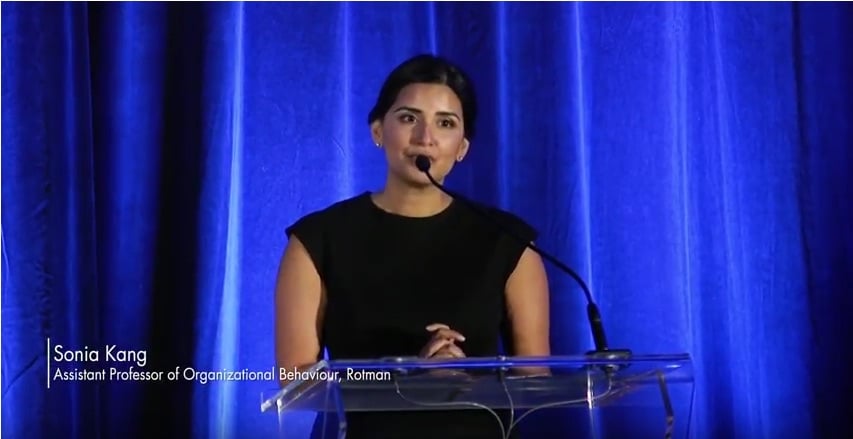
    As part of our Rotman Short Talks series, hear from Professor Sonia Kang about how diversity statements can have unintended consequences. Based on her research on whitening resumés, she shows that minorities tend to disguise their minority status when applying for jobs, understanding rightly that firms tend to select people at a lower rate when their ethnic background is more visible. Yet, when firms make statements about their desire for diverse candidates, applicants are less likely to “whiten” their resumés. Unfortunately, even these firms that make diversity statements tend to hire racialized minorities at lower rates, thus leading diversity statements to have the opposite of the intended effect.  See our research brief about the study here.

    Sonia Kang is an Assistant Professor of Organizational Behaviour and Human Resource Management in the Department of Management at the University of Toronto Mississauga, and holds a cross-appointment to the Organizational Behaviour and HR Management area at Rotman. Her research explores the challenges and opportunities of diversity, including strategies for mitigating the far-reaching effects of stigma and harnessing the power of diversity for society and organizations alike. Sonia’s research has been published in journals including the Journal of Personality and Social Psychology, Psychological Science, Administrative Science Quarterly, and the Journal of Experimental Social Psychology, and has been featured in media outlets such as The Globe and Mail and The Atlantic.

  • Gender Equality and the War for Talent

    Gender Equality and the War for Talent

    As part of our Rotman Short Talks series, hear from Tanya van Biesen, Executive Director of Canada, Catalyst, Inc. and Rotman alumna about how working towards gender equality can position firms to do better in the War for Talent. (12 mins)


    Tanya van Biesen is Executive Director of Catalyst Canada, the leading global nonprofit working to accelerate progress for women through workplace inclusion. In this capacity, Tanya is responsible for leading the growth of Catalyst’s operations in Canada, shaping strategies to advance Catalyst’s mission with supporters, corporate partners, professional organizations, CEOs, senior leaders, and stakeholders.

    A recognized leader and influencer with deep experience in the executive search sector at the most senior levels of corporate Canada, Tanya brings more than two decades of corporate leadership and diversity experience to Catalyst. Most recently, she co-led the Financial Services Practice at Spencer Stuart and was a key member of the Canadian Boards Practice, focusing on executive search assignments at the board, CEO, and general management levels. She also led the firm’s Canadian Diversity Practice, specializing in the placement of chief diversity officers and diverse slates of candidates across all search assignments.

    Tanya began her career at Procter & Gamble, working in both Toronto and Calgary in regional and national sales leadership roles. A sought-after speaker on the topic of diversity in the boardroom, Tanya has contributed to several research studies and articles analyzing leadership trends and attributes. She holds an MBA from the University of Toronto’s Rotman School of Business and a Bachelor of Commerce from Queen’s University, and speaks English, French, and Dutch.

  • Your ambition is showing

    Your ambition is showing

    [fusion_builder_container admin_label=”” hundred_percent=”no” equal_height_columns=”no” menu_anchor=”” hide_on_mobile=”small-visibility,medium-visibility,large-visibility” class=”” id=”” background_color=”” background_image=”” background_position=”center center” background_repeat=”no-repeat” fade=”no” background_parallax=”none” enable_mobile=”no” parallax_speed=”0.3″ video_mp4=”” video_webm=”” video_ogv=”” video_url=”” video_aspect_ratio=”16:9″ video_loop=”yes” video_mute=”yes” video_preview_image=”” border_size=”” border_color=”” border_style=”solid” margin_top=”20″ margin_bottom=”” padding_top=”” padding_right=”” padding_bottom=”” padding_left=””][fusion_builder_row][fusion_builder_column type=”3_4″ layout=”3_4″ spacing=”” center_content=”no” hover_type=”none” link=”” min_height=”” hide_on_mobile=”small-visibility,medium-visibility,large-visibility” class=”” id=”” background_color=”” background_image=”” background_position=”left top” background_repeat=”no-repeat” border_size=”0″ border_color=”” border_style=”solid” border_position=”all” padding_top=”” padding_right=”” padding_bottom=”” padding_left=”” dimension_margin=”” animation_type=”” animation_direction=”left” animation_speed=”0.3″ animation_offset=”” last=”no”][fusion_text columns=”” column_min_width=”” column_spacing=”” rule_style=”default” rule_size=”” rule_color=”” class=”” id=””]

    Summary

    Research shows that men avoid female partners who are more ambitious or more highly educated than they are. This puts single women in a position where their professional behavior (including speaking up in meetings and working late) may influence how “desirable” they are perceived to be by potential male partners. This paper explores the ways in which single women avoid sending “negative” signals to the marriage market.

    Research

    Single people seeking a partner are most likely to meet that partner within their professional network. However, research shows that heterosexual men prefer partners who are less professionally ambitious than they are which sets up an interesting tension within the workplace marriage market.

    Heterosexual men prefer partners who are less professionally ambitious than they are, which sets up tension within the workplace marriage market.

    This paper explores whether single heterosexual women alter their behavior in the workplace to avoid sending “undesirable” signals about their professional ambition to their single coworkers. To test this, the authors conducted studies at an elite MBA program where many students are seeking long-term partners, and where students’ behavior is relevant for the labor market.

    To start, first-year MBA students took a survey asking them to think back over their prior two years of work experience and whether they ever avoided certain actions they thought would help their careers because they were concerned it would make them “look too ambitious, assertive, or pushy.” There were significant differences in the answers between women and men, and also between single and married/partnered women. For example, 64% of single women had avoided asking for a raise or promotion for that reason compared to 39% of married/partnered women, and only 27% of men. 73% of single women said they had avoided at least one career-enhancing action for fear of appearing too ambitious.

    73% of single women said they had avoided at least one career-enhancing action for fear of appearing too ambitious.

    This behavior apparently continued in business school, as unmarried female MBA students had lower class participation marks on average than their married female peers (with no apparent difference on other marks for exams or homework).

    To isolate single women’s behavior in different contexts, the authors conducted two field experiments in partnership with the career office at the MBA program. In order to test whether women made different choices depending on whether or not their actions would be observed publicly by their classmates, the students in a career class were given a questionnaire about their job performance. Some students were told that their specific answers would be discussed in the career class, while others were told that the answers would be shared anonymously. There was no difference between single and non-single women’s answers when the students were told their answers would be anonymous. However, when students were told their answers would be shared publicly, single women reported lower willingness to travel for work, a desire to work fewer hours per week, and even said they aspired to a lower salary than their non-single female peers. Men and non-single women’s answers did not vary depending on whether their answers would be shared or anonymous.

    Next, the authors tested whether single women’s reported preferences changed when they believed their answers would be seen by single men in particular. In another career class, the students were placed into small groups with either all men, all women, or a mix of both. The students were asked to make choices between three pairs of hypothetical jobs and told they would discuss their answers in the small groups. When in all-female groups, 68% of women reported that they would prefer a job with a higher salary that required more hours of work per week over a job that paid less and required fewer hours. However, when in groups with male peers, single women were 26% less likely to make that same choice. Additionally, in groups with more single men, single women were less likely to choose a more career-focused option.

    Implications

    • Corporations – We see this discrepancy between true and admitted ambition in large part because we still operate in a society that expects men to achieve more than women. For single, heterosexual women to feel more comfortable being honest about their ambition, society’s expectations about her ambition must shift. Corporate policies around family leave that create equal opportunities for men and women to participate in family life may eventually contribute to changes in expectations about the roles that men and women play at work and at home, ultimately making a woman’s ambition, less of an “undesirable” trait in the marriage market.
    • Universities – How and when single, heterosexual women are asked about career preferences could influence their answers. Care should be taken when using this kind of information to place students on certain career tracks as it may not reflect their true desires.
    • Individuals – Most women are likely not aware that they are self-censoring their ambitions in this way. Increased awareness of the subconscious pressure to conform to marriage market “desirability” standards may cause them to be more forthright with their preferences.

    [/fusion_text][fusion_separator style_type=”none” hide_on_mobile=”small-visibility,medium-visibility,large-visibility” class=”” id=”” sep_color=”” top_margin=”20″ bottom_margin=”20″ border_size=”” icon=”” icon_circle=”” icon_circle_color=”” width=”” alignment=”center” /][fusion_button link=”https://www.gendereconomy.org/research-briefs/” text_transform=”” title=”” target=”_blank” link_attributes=”” alignment=”” modal=”” hide_on_mobile=”small-visibility,medium-visibility,large-visibility” class=”” id=”” color=”custom” button_gradient_top_color=”#62bd19″ button_gradient_bottom_color=”#62bd19″ button_gradient_top_color_hover=”#00c2e2″ button_gradient_bottom_color_hover=”#00c2e2″ accent_color=”” accent_hover_color=”” type=”” bevel_color=”” border_width=”” size=”” stretch=”yes” shape=”” icon=”” icon_position=”left” icon_divider=”no” animation_type=”” animation_direction=”left” animation_speed=”0.3″ animation_offset=””]See more research briefs[/fusion_button][fusion_separator style_type=”none” hide_on_mobile=”small-visibility,medium-visibility,large-visibility” class=”” id=”” sep_color=”” top_margin=”20″ bottom_margin=”20″ border_size=”” icon=”” icon_circle=”” icon_circle_color=”” width=”” alignment=”center” /][fusion_recent_posts layout=”default” hover_type=”none” columns=”3″ number_posts=”3″ offset=”0″ pull_by=”category” cat_slug=”research-briefs” exclude_cats=”” tag_slug=”” exclude_tags=”” thumbnail=”yes” title=”yes” meta=”no” meta_author=”no” meta_categories=”no” meta_date=”yes” meta_comments=”yes” meta_tags=”no” content_alignment=”” excerpt=”no” excerpt_length=”35″ strip_html=”yes” scrolling=”no” hide_on_mobile=”small-visibility,medium-visibility,large-visibility” class=”” id=”” animation_type=”” animation_direction=”left” animation_speed=”0.3″ animation_offset=”” /][/fusion_builder_column][fusion_builder_column type=”1_4″ layout=”1_4″ spacing=”” center_content=”no” hover_type=”none” link=”” min_height=”” hide_on_mobile=”small-visibility,medium-visibility,large-visibility” class=”” id=”” background_color=”” background_image=”” background_position=”left top” background_repeat=”no-repeat” border_size=”0″ border_color=”” border_style=”solid” border_position=”all” padding_top=”” padding_right=”” padding_bottom=”” padding_left=”” dimension_margin=”” animation_type=”” animation_direction=”left” animation_speed=”0.3″ animation_offset=”” last=”no”][fusion_title margin_top=”” margin_bottom=”” hide_on_mobile=”small-visibility,medium-visibility,large-visibility” class=”briefsummary” id=”” size=”3″ content_align=”left” style_type=”none” sep_color=””]

    Title

    “Acting Wife”: The Impacts of Gender Norms and Women’s Relationship Status on Career Ambitions in the United States

    Authors

    Leonardo Bursztyn, Thomas
    Fujiwara, Amanda Pallais

    Institutions

    University of Chicago,
    Princeton University,
    Harvard University

    Source

    American Economic Review

    Published

    January 2017

    Link

    10.3386/w23043

    Research brief prepared by

    Celeste Jalbert[/fusion_title][fusion_widget_area name=”avada-custom-sidebar-researchbriefsidebar” title_size=”” title_color=”” background_color=”” padding_top=”” padding_right=”” padding_bottom=”” padding_left=”” hide_on_mobile=”small-visibility,medium-visibility,large-visibility” class=”” id=”” /][/fusion_builder_column][/fusion_builder_row][/fusion_builder_container]