
Tag: Diversity+inclusion

Research briefs, news, and event recaps related to diversity and inclusion.

  • How Black job seekers are disadvantaged in network-based job searches

    How Black job seekers are disadvantaged in network-based job searches

    [fusion_builder_container admin_label=”” hundred_percent=”no” equal_height_columns=”no” menu_anchor=”” hide_on_mobile=”small-visibility,medium-visibility,large-visibility” class=”” id=”” background_color=”” background_image=”” background_position=”center center” background_repeat=”no-repeat” fade=”no” background_parallax=”none” enable_mobile=”no” parallax_speed=”0.3″ video_mp4=”” video_webm=”” video_ogv=”” video_url=”” video_aspect_ratio=”16:9″ video_loop=”yes” video_mute=”yes” video_preview_image=”” border_size=”” border_color=”” border_style=”solid” margin_top=”20″ margin_bottom=”” padding_top=”” padding_right=”” padding_bottom=”” padding_left=””][fusion_builder_row][fusion_builder_column type=”3_4″ layout=”3_4″ spacing=”” center_content=”no” hover_type=”none” link=”” min_height=”” hide_on_mobile=”small-visibility,medium-visibility,large-visibility” class=”” id=”” background_color=”” background_image=”” background_position=”left top” background_repeat=”no-repeat” border_size=”0″ border_color=”” border_style=”solid” border_position=”all” padding_top=”” padding_right=”” padding_bottom=”” padding_left=”” margin_top=”” margin_bottom=”” animation_type=”” animation_direction=”left” animation_speed=”0.3″ animation_offset=”” last=”false” first=”true”][fusion_text columns=”” column_min_width=”” column_spacing=”” rule_style=”default” rule_size=”” rule_color=”” hide_on_mobile=”small-visibility,medium-visibility,large-visibility” class=”” id=””]

    Summary

    Research suggests that about half of all jobs are found through network-based job searching: receiving a job lead from family, friends, or acquaintances. This study examined how social networks affect racial disparity in employment opportunity. The researchers discovered that although Black and white job seekers use their social networks to find jobs at similar rates, Black job seekers are less likely to receive a job offer through their networks. This disparity occurs through two mechanisms: Black job seekers are less likely than white job seekers to know someone who works at the companies to which they are applying, and they are less likely to have their social network contact an employer on their behalf.

    Among job seekers who used their social networks, Blacks were 5% less likely than whites to receive a job offer.

    Research

    This study investigated why the networks of Black job seekers may be less effective than those of white job seekers in producing job offers. The researchers used data from the National Longitudinal Study of Job Search. Their sample consisted of 1,617 U.S. job seekers who responded to nine survey waves between February 2013 and November 2014. Respondents were between the ages of 18 and 64 and had looked for work in the four weeks prior to participation in the survey. Respondents gave detailed information on their demographics, employment histories, job search behaviours, and whether they had received job offers or not.

    Findings

    The authors discovered that Black and white job seekers used social networks to find jobs at similar rates. This indicates that the disparity in attaining a job through networks was not based on Blacks’ lack of access to networks. Researchers also found that using networks to find a job as opposed to a formal application process resulted in a higher chance of receiving a job offer, regardless of race. However, among job seekers who used their social networks, Blacks were 5% less likely than whites to receive a job offer.

    The researchers predicted two mechanisms by which this disparity occurred:“network placement” and “network mobilization”. For network placement, Blacks may be less likely than whites to have contacts with hiring authority or in high status-positions, which could influence whether they receive a job offer. For network mobilization, Black applicants’ contacts in their social networks may be more hesitant than whites’ to mobilize their resources and contact companies on behalf of the applicant. This is because making a job referral can be risky, and in Black communities, individuals tend to have less secure employment.

    Data analysis showed that the researchers’ predictions were correct: Black job seekers who used networks were less likely than white job seekers to know someone working at the company to which they applied. Specifically, white job seekers knew someone at the company for 65.2% of their network-based applications, compared to only 56.3% for Black job seekers. Black job seekers’ networks were also less likely to contact the company on their behalf than white job seekers’ networks: whites’ contacts contacted the company on their behalf 25.4% of the time, compared to 20.0% for Blacks. Together, these mechanisms can explain one-fifth of the disparity in job offers between Black and white job seekers.

    Implications

    • Network-based job search benefits Black job seekers less than white job seekers — This research demonstrates that Black and white job seekers use social networks to find jobs at similar rates. However, they do not receive job offers at similar rates, because Black job seekers’ networks are less well-positioned. Hiring managers should pay attention to who they are hiring based on referrals, and assess whether these networks are unfairly disadvantaging certain demographic groups.
    • Diverse teams can facilitate further hiring from diverse groups — If Blacks and other marginalized groups were better represented in organizations, and particularly in positions of power rather than in insecure or low-paying jobs, they would likely use their social networks to facilitate more diverse hiring. Ensuring the retaining and promoting of employees from diverse groups is an important step to facilitate more diverse hires in general.

    __________________________

    Research brief prepared by: CARMINA RAVANERA

    Reference: Pedulla, D. S., & Pager, D. (2019). Race and Networks in the Job Search Process. American Sociological Review, 84(6), 983–1012. doi: 10.1177/0003122419883255

    [/fusion_text][fusion_separator style_type=”none” hide_on_mobile=”small-visibility,medium-visibility,large-visibility” class=”” id=”” sep_color=”” top_margin=”20″ bottom_margin=”20″ border_size=”” icon=”” icon_circle=”” icon_circle_color=”” width=”” alignment=”center” /][fusion_button link=”https://www.gendereconomy.org/research-briefs/” text_transform=”” title=”” target=”_blank” link_attributes=”” alignment=”” modal=”” hide_on_mobile=”small-visibility,medium-visibility,large-visibility” class=”” id=”” color=”custom” button_gradient_top_color=”#62bd19″ button_gradient_bottom_color=”#62bd19″ button_gradient_top_color_hover=”#00c2e2″ button_gradient_bottom_color_hover=”#00c2e2″ accent_color=”” accent_hover_color=”” type=”” bevel_color=”” border_width=”” size=”” stretch=”yes” icon=”” icon_position=”left” icon_divider=”no” animation_type=”” animation_direction=”left” animation_speed=”0.3″ animation_offset=”” border_radius=””]See more research briefs[/fusion_button][fusion_separator style_type=”none” hide_on_mobile=”small-visibility,medium-visibility,large-visibility” class=”” id=”” sep_color=”” top_margin=”20″ bottom_margin=”20″ border_size=”” icon=”” icon_circle=”” icon_circle_color=”” width=”” alignment=”center” /][fusion_recent_posts layout=”default” hover_type=”none” columns=”3″ number_posts=”3″ offset=”0″ pull_by=”category” cat_slug=”research-briefs” exclude_cats=”” tag_slug=”” exclude_tags=”” thumbnail=”yes” title=”yes” meta=”no” meta_author=”no” meta_categories=”no” meta_date=”yes” meta_comments=”yes” meta_tags=”no” content_alignment=”” excerpt=”no” excerpt_length=”35″ strip_html=”yes” scrolling=”no” hide_on_mobile=”small-visibility,medium-visibility,large-visibility” class=”” id=”” animation_type=”” animation_direction=”left” animation_speed=”0.3″ animation_offset=”” /][/fusion_builder_column][fusion_builder_column type=”1_4″ layout=”1_4″ spacing=”” center_content=”no” hover_type=”none” link=”” min_height=”” hide_on_mobile=”small-visibility,medium-visibility,large-visibility” class=”” id=”” background_color=”” background_image=”” background_position=”left top” background_repeat=”no-repeat” border_size=”0″ border_color=”” border_style=”solid” border_position=”all” padding_top=”” padding_right=”” padding_bottom=”” padding_left=”” margin_top=”” margin_bottom=”” animation_type=”” animation_direction=”left” animation_speed=”0.3″ animation_offset=”” last=”true” first=”false”][fusion_title hide_on_mobile=”small-visibility,medium-visibility,large-visibility” class=”briefsummary” id=”” content_align=”left” size=”3″ font_size=”” line_height=”” letter_spacing=”” margin_top=”” margin_bottom=”” margin_top_mobile=”” margin_bottom_mobile=”” text_color=”” style_type=”none” sep_color=””]

    Title

    Race and Networks in the Job Search Process

    Authors

    David S. Pedulla, Devah Pager

    Source

    American Sociological Review

    Published

    2019

    DOI

    10.1177/0003122419883255

    Link

    https://journals.sagepub.com/doi/10.1177/0003122419883255

    Research brief prepared by

    Carmina Ravanera

    [/fusion_title][fusion_widget_area name=”avada-custom-sidebar-researchbriefsidebar” title_size=”” title_color=”” background_color=”” padding_top=”” padding_right=”” padding_bottom=”” padding_left=”” hide_on_mobile=”small-visibility,medium-visibility,large-visibility” class=”” id=”” /][/fusion_builder_column][/fusion_builder_row][/fusion_builder_container]

  • The mixed effects of online diversity training

    The mixed effects of online diversity training

    [fusion_builder_container admin_label=”” hundred_percent=”no” equal_height_columns=”no” menu_anchor=”” hide_on_mobile=”small-visibility,medium-visibility,large-visibility” class=”” id=”” background_color=”” background_image=”” background_position=”center center” background_repeat=”no-repeat” fade=”no” background_parallax=”none” enable_mobile=”no” parallax_speed=”0.3″ video_mp4=”” video_webm=”” video_ogv=”” video_url=”” video_aspect_ratio=”16:9″ video_loop=”yes” video_mute=”yes” video_preview_image=”” border_size=”” border_color=”” border_style=”solid” margin_top=”20″ margin_bottom=”” padding_top=”” padding_right=”” padding_bottom=”” padding_left=””][fusion_builder_row][fusion_builder_column type=”3_4″ layout=”3_4″ spacing=”” center_content=”no” hover_type=”none” link=”” min_height=”” hide_on_mobile=”small-visibility,medium-visibility,large-visibility” class=”” id=”” background_color=”” background_image=”” background_position=”left top” background_repeat=”no-repeat” border_size=”0″ border_color=”” border_style=”solid” border_position=”all” padding_top=”” padding_right=”” padding_bottom=”” padding_left=”” margin_top=”” margin_bottom=”” animation_type=”” animation_direction=”left” animation_speed=”0.3″ animation_offset=”” last=”false” first=”true”][fusion_text columns=”” column_min_width=”” column_spacing=”” rule_style=”default” rule_size=”” rule_color=”” hide_on_mobile=”small-visibility,medium-visibility,large-visibility” class=”” id=””]

    Summary

    Online diversity training is a common tool used by organizations to change attitudes and behaviours around bias and discrimination. This study used a field experiment at a large, global organization to investigate the effects of a one-hour online diversity training course on employee attitudes and behaviours. The authors discovered that, for employees who were relatively less supportive of women, online diversity training produced attitudinal change but not behavioural change. For employees who were already supportive of women (e.g., women employees in the United States), diversity training resulted in behavioural change to act more inclusively towards women. Therefore, while online diversity training may change behaviours for some demographics, most groups, particularly socially dominant groups, may not be affected.

    For employees who were relatively less supportive of women, online diversity training produced attitudinal change but not behavioural change.

    Research

    Evidence shows that more than half of midsized and large employers in the United States implement diversity training for their employees. However, it is uncertain what the effects of diversity training are on employee attitudes and behaviours. The researchers of this study investigated this question by partnering with a large, global organization. They conducted a one-hour long, voluntary online training session with 3,016 of the organization’s employees from 63 different countries. The sample was 61.5% male, and 38.5% were from the United States.

    The employees were assigned to three different experimental conditions: gender bias training, general bias training, and control training, that was focused on psychological safety and active listening. At the end of the training session, the researchers measured attitudes through surveys. Weeks and months after the training, they unobtrusively measured workplace behaviours. They combined the results for gender bias and general bias training groups for data analysis.

    Findings

    The authors discovered that employees who received diversity training showed stronger attitudinal support for women, were more willing to acknowledge their gender biases, and showed more gender inclusivity when presented with workplace scenarios, compared to those who did not receive diversity training. However, this result was primarily driven by employees outside of the United States, who had relatively less supportive attitudes towards women than employees from the United States to begin with, and thus had more room to improve.

    Further, diversity training had an effect on employees’ behaviours towards women, but only for groups who already showed strong attitudinal support of women (i.e., women themselves):

    • Three weeks after training, in a mentorship initiative designed by the organization, US employees who had received diversity training selected women as mentees significantly more than those who had not received diversity training. This effect was primarily driven by women employees choosing to mentor other women.
    • Three weeks later, through an organizational initiative to recognize employee excellence, US employees who had received diversity training nominated a significantly higher number of women for recognition, compared to those who had not received diversity training.
    • Fourteen weeks after training, the organization asked employees whether they would spend 15 minutes on a phone call with a new hire. Women employees who had received diversity training signed up to speak with a woman new hire significantly more than those who had not received diversity training.

    Since behavioural change only occurred for groups who were already inclined to support diversity, online diversity training cannot be the only effort to encourage diversity and inclusion in organizations.

    Implications

    • Online diversity training may improve attitudes and behaviours about diversity, but only for certain groups — The results of this study show that short, online diversity training programs can prompt people who are already supportive of women to behave more inclusively towards women. Online diversity training could serve as an encouragement to act on their existing attitudes. For those who are not strongly attitudinally supportive of women, diversity training could improve their attitudes, but may not change behaviour.
    • Online diversity training needs to occur in the context of organizational culture change — Since behavioural change only occurred for groups who were already inclined to support diversity, it is clear that online diversity training cannot be the only effort to encourage diversity and inclusion in organizations. Rather, organizations need to use training in coordination with other initiatives, such as hiring more women and minorities into positions of power, and transforming other practices where bias and discrimination may be embedded.

    __________________________

    Research brief prepared by: CARMINA RAVANERA

    Reference

    Chang, E. H., Milkman, K. L., Gromet, D. M., Rebele, R. W., Massey, C., Duckworth, A. L., & Grant, A. M. (2019). The mixed effects of online diversity training. Proceedings of the National Academy of Sciences, 116(16), 7778–7783. doi: 10.1073/pnas.1816076116

    [/fusion_text][fusion_separator style_type=”none” hide_on_mobile=”small-visibility,medium-visibility,large-visibility” class=”” id=”” sep_color=”” top_margin=”20″ bottom_margin=”20″ border_size=”” icon=”” icon_circle=”” icon_circle_color=”” width=”” alignment=”center” /][fusion_button link=”https://www.gendereconomy.org/research-briefs/” text_transform=”” title=”” target=”_blank” link_attributes=”” alignment=”” modal=”” hide_on_mobile=”small-visibility,medium-visibility,large-visibility” class=”” id=”” color=”custom” button_gradient_top_color=”#62bd19″ button_gradient_bottom_color=”#62bd19″ button_gradient_top_color_hover=”#00c2e2″ button_gradient_bottom_color_hover=”#00c2e2″ accent_color=”” accent_hover_color=”” type=”” bevel_color=”” border_width=”” size=”” stretch=”yes” icon=”” icon_position=”left” icon_divider=”no” animation_type=”” animation_direction=”left” animation_speed=”0.3″ animation_offset=”” border_radius=””]See more research briefs[/fusion_button][fusion_separator style_type=”none” hide_on_mobile=”small-visibility,medium-visibility,large-visibility” class=”” id=”” sep_color=”” top_margin=”20″ bottom_margin=”20″ border_size=”” icon=”” icon_circle=”” icon_circle_color=”” width=”” alignment=”center” /][fusion_recent_posts layout=”default” hover_type=”none” columns=”3″ number_posts=”3″ offset=”0″ pull_by=”category” cat_slug=”research-briefs” exclude_cats=”” tag_slug=”” exclude_tags=”” thumbnail=”yes” title=”yes” meta=”no” meta_author=”no” meta_categories=”no” meta_date=”yes” meta_comments=”yes” meta_tags=”no” content_alignment=”” excerpt=”no” excerpt_length=”35″ strip_html=”yes” scrolling=”no” hide_on_mobile=”small-visibility,medium-visibility,large-visibility” class=”” id=”” animation_type=”” animation_direction=”left” animation_speed=”0.3″ animation_offset=”” /][/fusion_builder_column][fusion_builder_column type=”1_4″ layout=”1_4″ spacing=”” center_content=”no” hover_type=”none” link=”” min_height=”” hide_on_mobile=”small-visibility,medium-visibility,large-visibility” class=”” id=”” background_color=”” background_image=”” background_position=”left top” background_repeat=”no-repeat” border_size=”0″ border_color=”” border_style=”solid” border_position=”all” padding_top=”” padding_right=”” padding_bottom=”” padding_left=”” margin_top=”” margin_bottom=”” animation_type=”” animation_direction=”left” animation_speed=”0.3″ animation_offset=”” last=”true” first=”false”][fusion_title hide_on_mobile=”small-visibility,medium-visibility,large-visibility” class=”briefsummary” id=”” content_align=”left” size=”3″ font_size=”” line_height=”” letter_spacing=”” margin_top=”” margin_bottom=”” margin_top_mobile=”” margin_bottom_mobile=”” text_color=”” style_type=”none” sep_color=””]

    Title

    The mixed effects of online diversity training

    Authors

    Edward H. Chang, Katherine L. Milkman, Dena M. Gromet, Robert W. Rebele, Cade Massey, Angela L. Duckworth, and Adam M. Grant

    Source

    Proceedings of the National Academy of Sciences

    Published

    2019

    DOI

    10.1073/pnas.1816076116

    Link

    https://www.pnas.org/content/116/16/7778

    Research brief prepared by

    Carmina Ravanera

    [/fusion_title][fusion_widget_area name=”avada-custom-sidebar-researchbriefsidebar” title_size=”” title_color=”” background_color=”” padding_top=”” padding_right=”” padding_bottom=”” padding_left=”” hide_on_mobile=”small-visibility,medium-visibility,large-visibility” class=”” id=”” /][/fusion_builder_column][/fusion_builder_row][/fusion_builder_container]
  • 4th Annual Research Roundtable | November 2019

    4th Annual Research Roundtable | November 2019

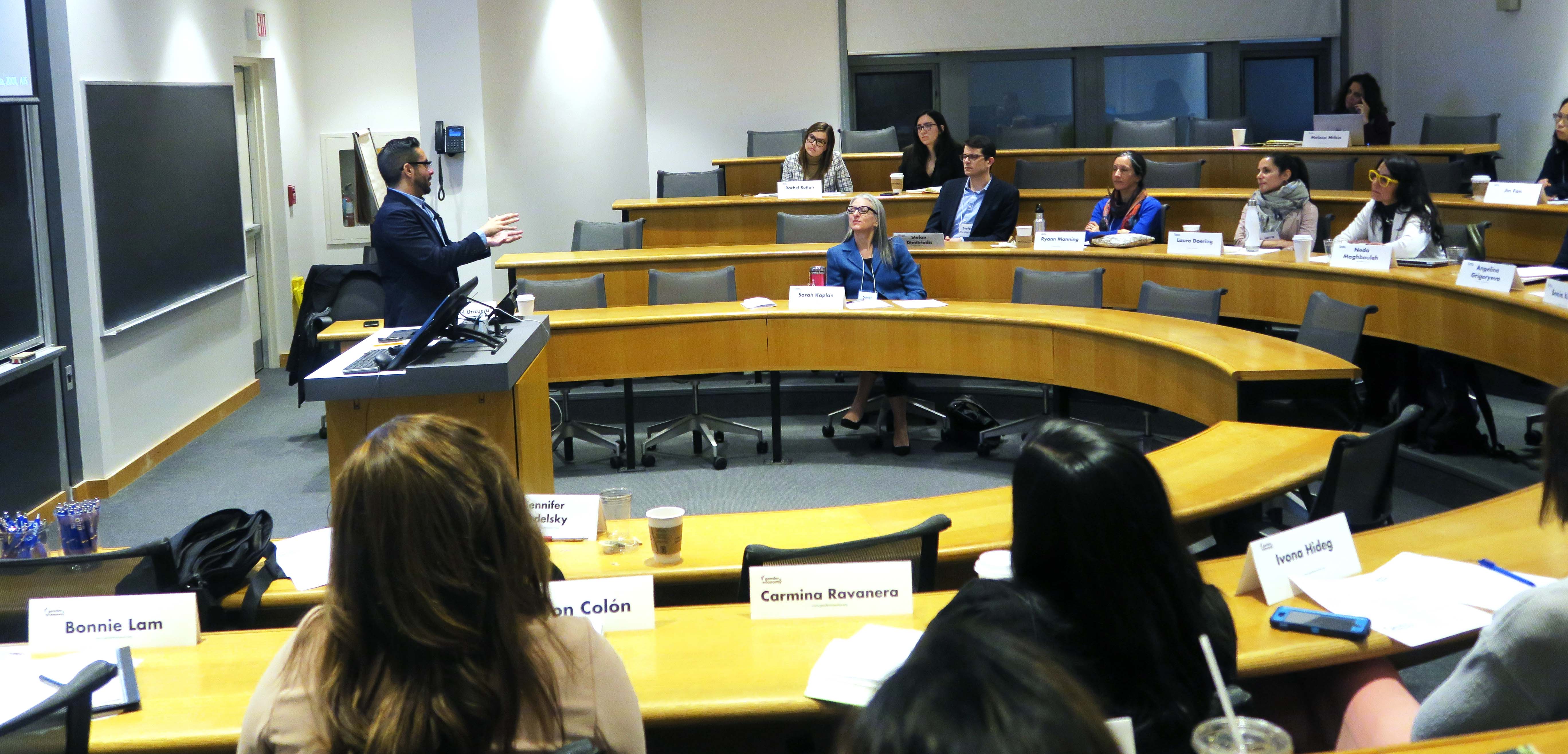
    [fusion_builder_container hundred_percent=”no” hundred_percent_height=”no” hundred_percent_height_scroll=”no” hundred_percent_height_center_content=”yes” equal_height_columns=”no” menu_anchor=”” hide_on_mobile=”small-visibility,medium-visibility,large-visibility” status=”published” publish_date=”” class=”” id=”” border_color=”” border_style=”solid” margin_top=”” margin_bottom=”” padding_top=”” padding_right=”” padding_bottom=”2px” padding_left=”” gradient_start_color=”” gradient_end_color=”” gradient_start_position=”0″ gradient_end_position=”100″ gradient_type=”linear” radial_direction=”center center” linear_angle=”180″ background_color=”” background_image=”” background_position=”center center” background_repeat=”no-repeat” fade=”no” background_parallax=”none” enable_mobile=”no” parallax_speed=”0.3″ background_blend_mode=”none” video_mp4=”” video_webm=”” video_ogv=”” video_url=”” video_aspect_ratio=”16:9″ video_loop=”yes” video_mute=”yes” video_preview_image=”” filter_hue=”0″ filter_saturation=”100″ filter_brightness=”100″ filter_contrast=”100″ filter_invert=”0″ filter_sepia=”0″ filter_opacity=”100″ filter_blur=”0″ filter_hue_hover=”0″ filter_saturation_hover=”100″ filter_brightness_hover=”100″ filter_contrast_hover=”100″ filter_invert_hover=”0″ filter_sepia_hover=”0″ filter_opacity_hover=”100″ filter_blur_hover=”0″ type=”legacy”][fusion_builder_row][fusion_builder_column type=”1_1″ layout=”1_1″ spacing=”” center_content=”no” link=”” target=”_self” min_height=”” hide_on_mobile=”small-visibility,medium-visibility,large-visibility” class=”” id=”” hover_type=”none” border_color=”” border_style=”solid” border_position=”all” border_radius=”” box_shadow=”no” dimension_box_shadow=”” box_shadow_blur=”0″ box_shadow_spread=”0″ box_shadow_color=”” box_shadow_style=”” padding_top=”” padding_right=”” padding_bottom=”” padding_left=”” margin_top=”” margin_bottom=”” background_type=”single” gradient_start_color=”” gradient_end_color=”” gradient_start_position=”0″ gradient_end_position=”100″ gradient_type=”linear” radial_direction=”center center” linear_angle=”180″ background_color=”” background_image=”” background_image_id=”” background_position=”left top” background_repeat=”no-repeat” background_blend_mode=”none” animation_type=”” animation_direction=”left” animation_speed=”0.3″ animation_offset=”” filter_type=”regular” filter_hue=”0″ filter_saturation=”100″ filter_brightness=”100″ filter_contrast=”100″ filter_invert=”0″ filter_sepia=”0″ filter_opacity=”100″ filter_blur=”0″ filter_hue_hover=”0″ filter_saturation_hover=”100″ filter_brightness_hover=”100″ filter_contrast_hover=”100″ filter_invert_hover=”0″ filter_sepia_hover=”0″ filter_opacity_hover=”100″ filter_blur_hover=”0″ last=”true” first=”true” border_sizes_top=”0″ border_sizes_bottom=”0″ border_sizes_left=”0″ border_sizes_right=”0″][fusion_text columns=”” column_min_width=”” column_spacing=”” rule_style=”” rule_size=”” rule_color=”” hue=”” saturation=”” lightness=”” alpha=”” content_alignment_medium=”” content_alignment_small=”” content_alignment=”” hide_on_mobile=”small-visibility,medium-visibility,large-visibility” sticky_display=”normal,sticky” class=”” id=”” margin_top=”” margin_right=”” margin_bottom=”” margin_left=”” fusion_font_family_text_font=”” fusion_font_variant_text_font=”” font_size=”” line_height=”” letter_spacing=”” text_transform=”” text_color=”” animation_type=”” animation_direction=”left” animation_color=”” animation_speed=”0.3″ animation_delay=”0″ animation_offset=”” logics=””]On November 12, 2019, GATE was excited to once again convene research scholars to discuss the latest findings on gender and the economy. The event included a keynote address from Miguel M. Unzueta, Senior Associate Dean of MBA Programs and Professor of Management and Organizations at the UCLA Anderson School of Management, on “Defining Diversity: How Contemporary Diversity Rhetoric Might Be Undermining Equity”.

    WATCH A CLIP OF MIGUEL M. UNZUETA’S KEYNOTE BELOW.

    THE ROUNDTABLE ALSO INCLUDED AN IDEA BLITZ FEATURING THE FOLLOWING RESEARCH TOPICS:

    • ‘Like a Nervous Condition’: How Syrian Refugee Mothers Experience Parental Strain in Early Retirement
    • Closing the Gender Gap in Entrepreneurial Business Performance: How Institutional Affiliations Benefit Women Entrepreneurs in Developing Countries
    • Gender and Financial Management in Families
    • A Care Manifesto: (Part)-Time for All

    [/fusion_text][fusion_gallery lightbox=”yes” hide_on_mobile=”small-visibility,medium-visibility,large-visibility”][fusion_gallery_image image=”https://cdn.gendereconomy.org/wp-content/uploads/2019/11/IMG_1563-edited.jpg” image_id=”6641″ link=”” linktarget=”_self” /][fusion_gallery_image image=”https://cdn.gendereconomy.org/wp-content/uploads/2019/11/IMG_1607.jpg” image_id=”6649|medium” link=”” linktarget=”_self” /][fusion_gallery_image image=”https://cdn.gendereconomy.org/wp-content/uploads/2019/11/IMG_1660-edited.jpg” image_id=”6645″ link=”” linktarget=”_self” /][fusion_gallery_image image=”https://cdn.gendereconomy.org/wp-content/uploads/2019/11/IMG_1591-edited.jpg” image_id=”6642|medium” link=”” linktarget=”_self” /][fusion_gallery_image image=”https://cdn.gendereconomy.org/wp-content/uploads/2019/11/IMG_1639-edited.jpg” image_id=”6644|medium” link=”” linktarget=”_self” /][fusion_gallery_image image=”https://cdn.gendereconomy.org/wp-content/uploads/2019/11/IMG_1612-edited.jpg” image_id=”6648|medium” link=”” linktarget=”_self” /][/fusion_gallery][fusion_text columns=”” column_min_width=”” column_spacing=”” rule_style=”default” rule_size=”” rule_color=”” hide_on_mobile=”small-visibility,medium-visibility,large-visibility” class=”” id=”” animation_type=”” animation_direction=”left” animation_speed=”0.3″ animation_offset=””]


    During the roundtable, GATE also hosted an Oxford debate examining the following proposition: Anti-sexual-harassment training programs are useful and effective tools for reducing sexual harassment at work. The debate was moderated by GATE faculty research fellow, Sonia K. Kang, and featured leading scholars, including; Ivona Hideg (Lazaridis School of Business & Economics, Wilfred Laurier University), Rachel Ruttan (Rotman School of Management, University of Toronto), Laura Derksen (University of Toronto, Mississauga), and Heidi Matthews (Osgoode Hall Law School, York University).

    Read the research overview from this roundtable debate, “Anti-sexual harassment training: does it work?,” here!

    Woman standing doing a presentation in office with one seated male attendee

    [/fusion_text][fusion_separator style_type=”none” hide_on_mobile=”small-visibility,medium-visibility,large-visibility” class=”” id=”” sep_color=”” top_margin=”20″ bottom_margin=”20″ border_size=”” icon=”” icon_circle=”” icon_circle_color=”” width=”” alignment=”center” /][fusion_button link=”http://whttps://www.gendereconomy.org/past-events/” title=”” target=”_blank” link_attributes=”” alignment=”” modal=”” hide_on_mobile=”small-visibility,medium-visibility,large-visibility” class=”” id=”” color=”custom” button_gradient_top_color=”#62bd19″ button_gradient_bottom_color=”#62bd19″ button_gradient_top_color_hover=”#00c2e2″ button_gradient_bottom_color_hover=”#00c2e2″ accent_color=”” accent_hover_color=”” type=”” bevel_color=”” size=”” stretch=”yes” icon=”” icon_position=”left” icon_divider=”no” animation_type=”” animation_direction=”left” animation_speed=”0.3″ animation_offset=”” border_radius_top_left=”2px” border_radius_top_right=”2px” border_radius_bottom_right=”2px” border_radius_bottom_left=”2px”]See more past events[/fusion_button][fusion_title title_type=”text” rotation_effect=”bounceIn” display_time=”1200″ highlight_effect=”circle” loop_animation=”off” highlight_width=”9″ highlight_top_margin=”0″ before_text=”” rotation_text=”” highlight_text=”” after_text=”” hide_on_mobile=”small-visibility,medium-visibility,large-visibility” class=”” id=”” content_align=”left” size=”5″ font_size=”” animated_font_size=”” line_height=”” letter_spacing=”” margin_top=”” margin_bottom=”” margin_top_mobile=”” margin_bottom_mobile=”” text_color=”” animated_text_color=”” highlight_color=”” style_type=”default” sep_color=”” margin_top_small=”” margin_bottom_small=””]


    OR REGISTER BELOW FOR THESE UPCOMING EVENTS.

    [/fusion_title][fusion_recent_posts layout=”default” hover_type=”none” columns=”3″ number_posts=”3″ offset=”0″ pull_by=”category” cat_slug=”events” exclude_cats=”past” tag_slug=”” exclude_tags=”” thumbnail=”yes” title=”yes” meta=”no” excerpt=”no” excerpt_length=”35″ strip_html=”yes” hide_on_mobile=”small-visibility,medium-visibility,large-visibility” class=”” id=”” animation_type=”” animation_direction=”left” animation_speed=”0.3″ animation_offset=”” /][/fusion_builder_column][/fusion_builder_row][/fusion_builder_container]

  • Women and investing: Cutting-edge research insights from 3 Rotman professors

    Women and investing: Cutting-edge research insights from 3 Rotman professors

    [fusion_builder_container hundred_percent=”no” equal_height_columns=”no” menu_anchor=”” hide_on_mobile=”small-visibility,medium-visibility,large-visibility” class=”” id=”” background_color=”” background_image=”” background_position=”center center” background_repeat=”no-repeat” fade=”no” background_parallax=”none” parallax_speed=”0.3″ video_mp4=”” video_webm=”” video_ogv=”” video_url=”” video_aspect_ratio=”16:9″ video_loop=”yes” video_mute=”yes” overlay_color=”” video_preview_image=”” border_size=”” border_color=”” border_style=”solid” padding_top=”” padding_bottom=”” padding_left=”” padding_right=””][fusion_builder_row][fusion_builder_column type=”1_1″ layout=”1_1″ background_position=”left top” background_color=”” border_size=”” border_color=”” border_style=”solid” border_position=”all” spacing=”yes” background_image=”” background_repeat=”no-repeat” padding_top=”” padding_right=”” padding_bottom=”” padding_left=”” margin_top=”0px” margin_bottom=”0px” class=”” id=”” animation_type=”” animation_speed=”0.3″ animation_direction=”left” hide_on_mobile=”small-visibility,medium-visibility,large-visibility” center_content=”no” last=”no” min_height=”” hover_type=”none” link=””][fusion_text columns=”” column_min_width=”” column_spacing=”” rule_style=”default” rule_size=”” rule_color=”” hide_on_mobile=”small-visibility,medium-visibility,large-visibility” class=”” id=”” animation_type=”” animation_direction=”left” animation_speed=”0.3″ animation_offset=””]

    The gender investing gap is a pressing issue in discussions on gender and the economy. Women are known to save and invest less than men, which leads to greater financial insecurity, particularly in retirement age. There are several contributing factors to the gender investing gap, including women’s relatively lower wages. Recently, innovative solutions for the gender investing gap have come to the fore, particularly through the recognition that finance and investment industries have been created by and for men.

    “Women and Investing”, on October 7, featured three professors from the Rotman School of Management discussing their research on this topic. The speakers were Claire Célérier, Assistant Professor of Finance; Laura Doering, Assistant Professor of Strategic Management; and Avni Shah, Assistant Professor of Marketing. Their conversation was moderated by Jacqueline Thorpe, Toronto Bureau Chief of Bloomberg News.

    The professors’ work covered a variety of topics with data gathered from around the world. Célérier’s work used a Swedish data set and discovered that offering capital-protected financial products cause risk-averse investors to invest more. This is notable for women, who have been found to be risk-averse in their investments. Shah’s research found that sending an SMS “nudge” to banking customers in Mexico caused them to increase their voluntary contributions to retirement, specifically when the “nudge” told them how contributions could help their families. However, this method did not work for young women, suggesting that the financial industry could be more targeted to diverse groups to create better financial outcomes for them. And, Doering’s research from a Latin American microfinance bank discovered that when borrowers are originally paired with women loan managers, they are less compliant with subsequent managers, regardless of their gender. That is, when customers consider a job as feminine, they afford it less authority.

    The work of Célérier and Shah tells us that financial products and services need to be designed to be more inclusive of different demographic groups’ contexts. Meanwhile, Doering’s work shows how gender biases permeate the finance industry, suggesting senior leaders need to be aware of it and consistently endorse women’s authority, especially for jobs that people view as feminized.

    To see more of this event, view the videos below. 

    [/fusion_text][fusion_separator style_type=”none” hide_on_mobile=”small-visibility,medium-visibility,large-visibility” class=”” id=”” sep_color=”” top_margin=”20″ bottom_margin=”20″ border_size=”” icon=”” icon_circle=”” icon_circle_color=”” width=”” alignment=”center” /][fusion_button link=”https://www.gendereconomy.org/events/” text_transform=”” title=”” target=”_blank” link_attributes=”” alignment=”” modal=”” hide_on_mobile=”small-visibility,medium-visibility,large-visibility” class=”” id=”” color=”custom” button_gradient_top_color=”#62bd19″ button_gradient_bottom_color=”#62bd19″ button_gradient_top_color_hover=”#00c2e2″ button_gradient_bottom_color_hover=”#00c2e2″ accent_color=”” accent_hover_color=”” type=”” bevel_color=”” border_width=”” size=”” stretch=”yes” icon=”” icon_position=”left” icon_divider=”no” animation_type=”” animation_direction=”left” animation_speed=”0.3″ animation_offset=”” border_radius=””]See more events[/fusion_button][/fusion_builder_column][/fusion_builder_row][/fusion_builder_container]

  • Industry Partner Workshop | September 2019

    Industry Partner Workshop | September 2019

    [fusion_builder_container hundred_percent=”no” equal_height_columns=”no” menu_anchor=”” hide_on_mobile=”small-visibility,medium-visibility,large-visibility” class=”” id=”” background_color=”” background_image=”” background_position=”center center” background_repeat=”no-repeat” fade=”no” background_parallax=”none” parallax_speed=”0.3″ video_mp4=”” video_webm=”” video_ogv=”” video_url=”” video_aspect_ratio=”16:9″ video_loop=”yes” video_mute=”yes” overlay_color=”” video_preview_image=”” border_size=”” border_color=”” border_style=”solid” padding_top=”” padding_bottom=”” padding_left=”” padding_right=””][fusion_builder_row][fusion_builder_column type=”1_1″ layout=”1_1″ background_position=”left top” background_color=”” border_size=”” border_color=”” border_style=”solid” border_position=”all” spacing=”yes” background_image=”” background_repeat=”no-repeat” padding_top=”” padding_right=”” padding_bottom=”” padding_left=”” margin_top=”0px” margin_bottom=”0px” class=”” id=”” animation_type=”” animation_speed=”0.3″ animation_direction=”left” hide_on_mobile=”small-visibility,medium-visibility,large-visibility” center_content=”no” last=”no” min_height=”” hover_type=”none” link=””][fusion_text columns=”” column_min_width=”” column_spacing=”” rule_style=”default” rule_size=”” rule_color=”” hide_on_mobile=”small-visibility,medium-visibility,large-visibility” class=”” id=””]

    Let’s change the conversation…

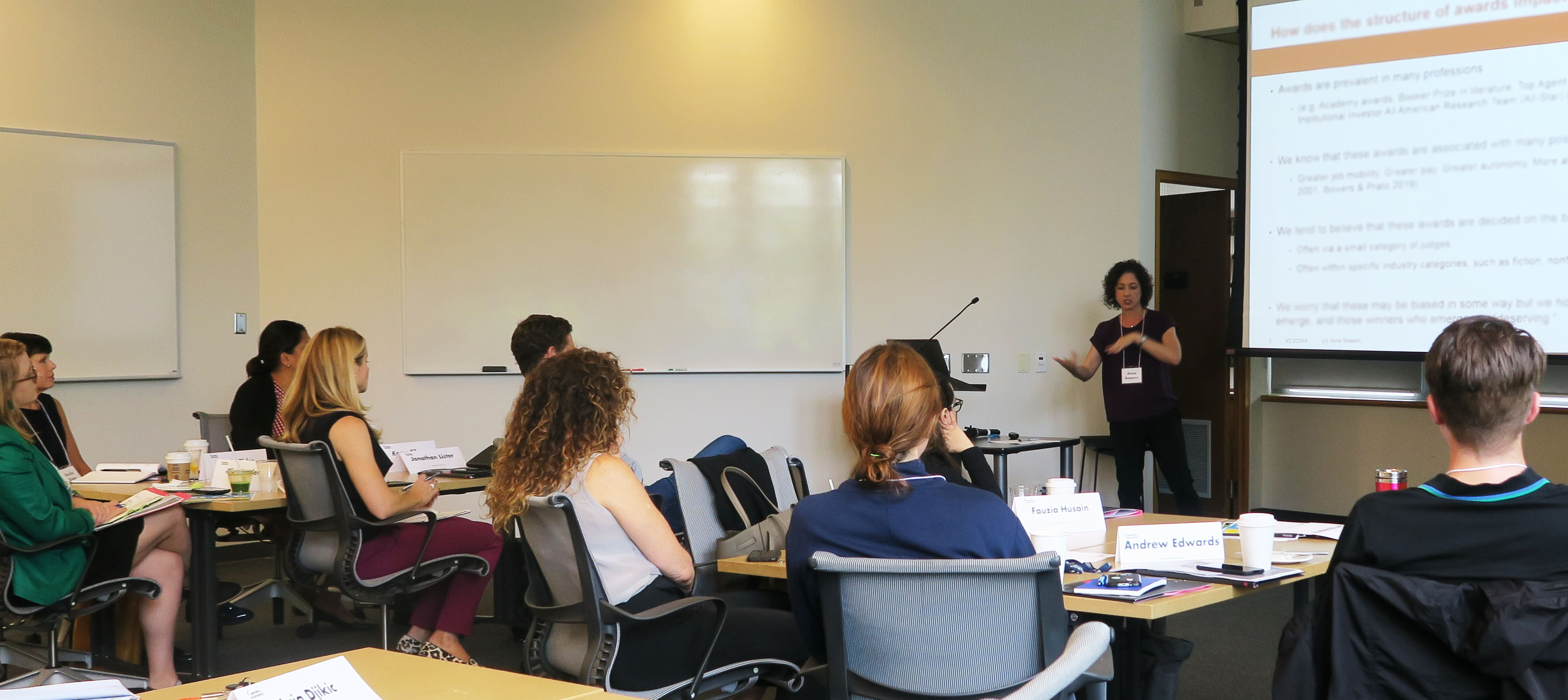
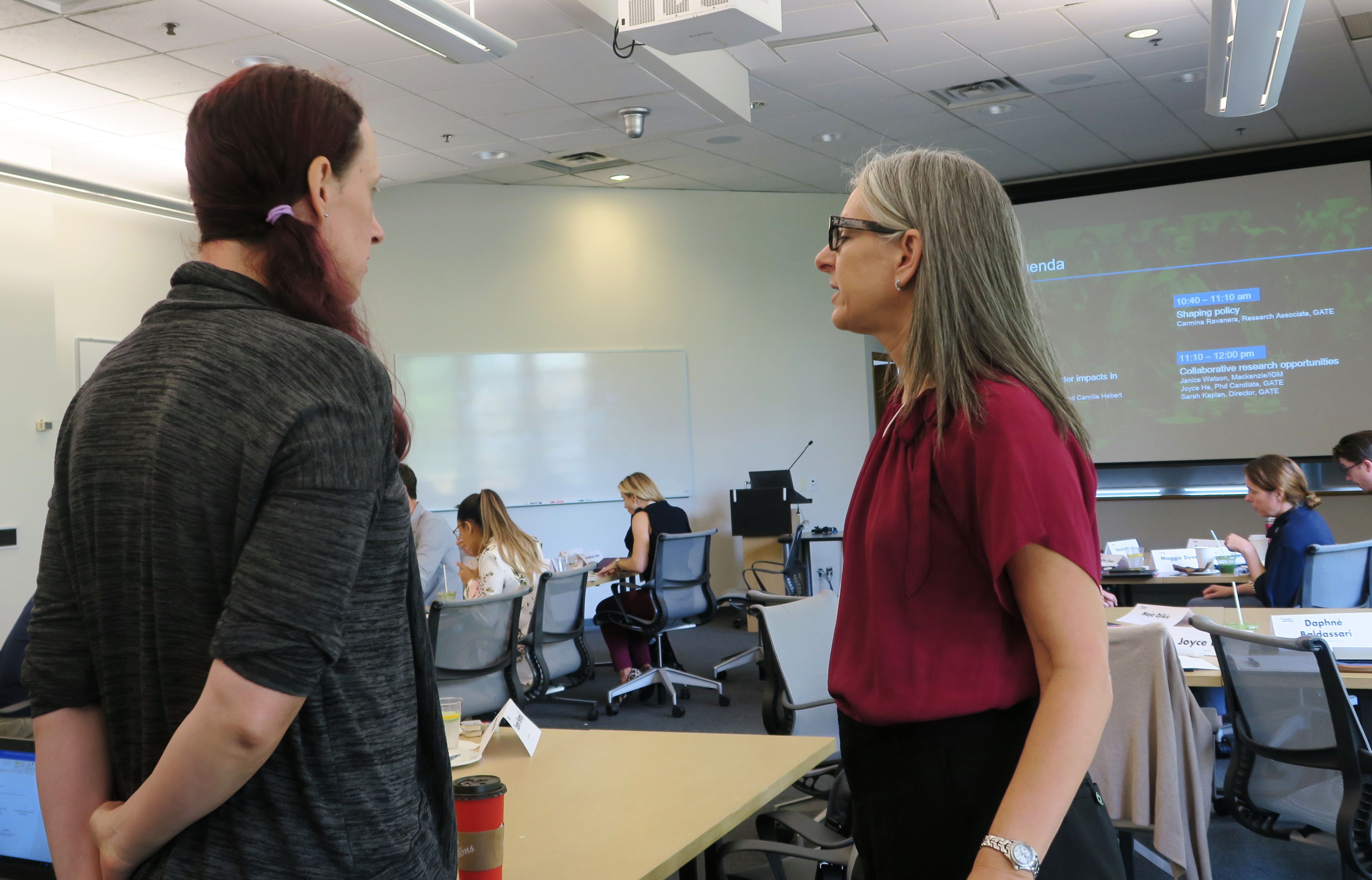
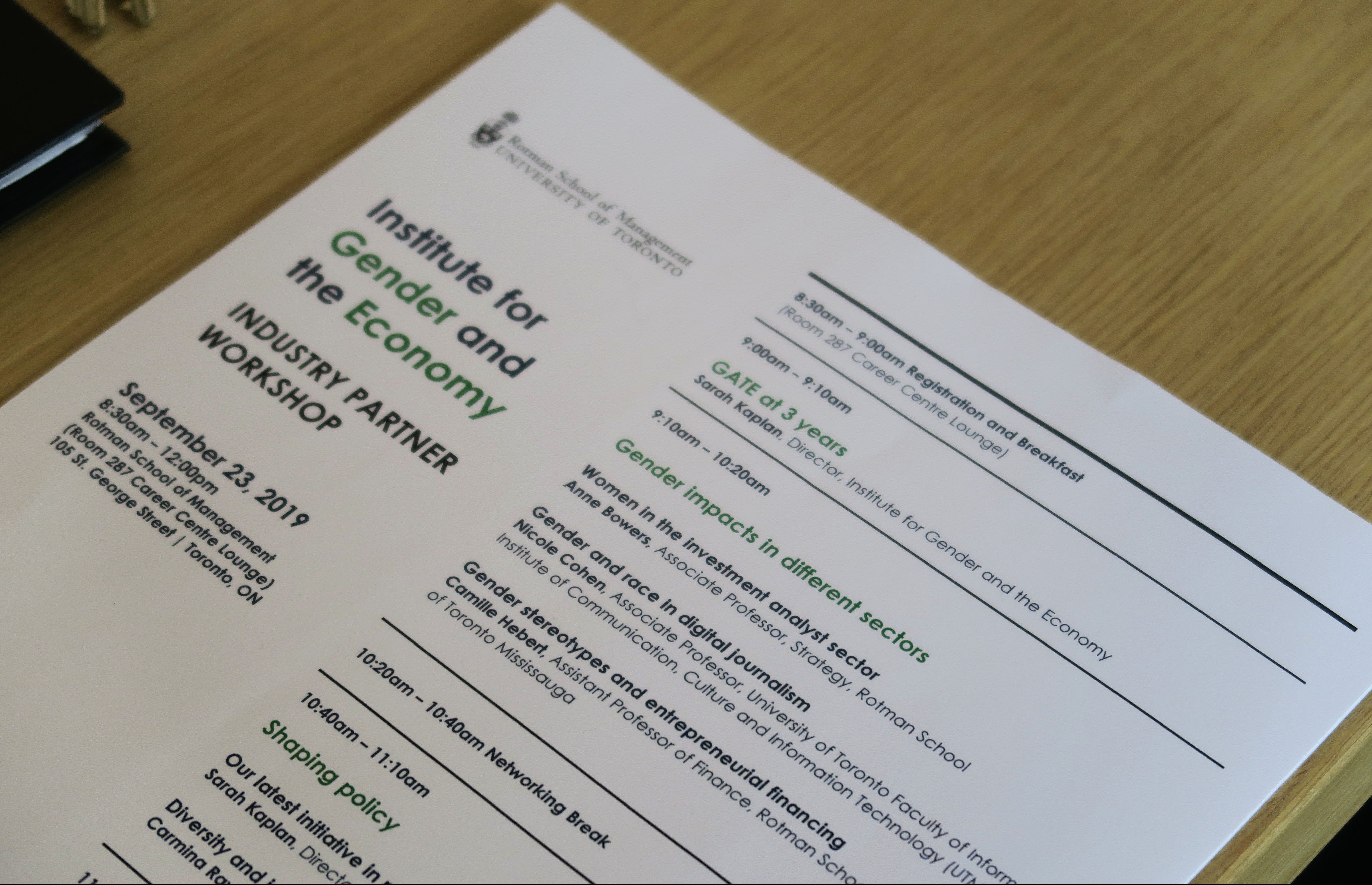
    A distinctive part of an industry partnership with GATE is to engage with university researchers on the cutting-edge topics of the day. Partners get a chance to learn about research in progress before it gets published and engage in dialogue with our researchers. In our fourth Industry Partner Workshop, researchers shared their latest insights on:

    • Women in the investment analyst sector
    • Gender and race in digital journalism
    • Gender stereotypes and entrepreneurial financing
    • Diversity and inclusion in small and medium enterprises

    In an exciting development, we also were able to share collaborative research on de-biasing job postings that we did jointly with one of our industry partners!

    Download key insights from the workshop, and a resource list, here.
    Are you interested in supporting our research as an Industry Partner? Find out more here.

    [/fusion_text][fusion_separator style_type=”none” hide_on_mobile=”small-visibility,medium-visibility,large-visibility” class=”” id=”” sep_color=”” top_margin=”25″ bottom_margin=”25″ border_size=”” icon=”” icon_circle=”” icon_circle_color=”” width=”” alignment=”center” /][fusion_button link=”https://www.gendereconomy.org/past-events/” text_transform=”” title=”” target=”_blank” link_attributes=”” alignment=”” modal=”” hide_on_mobile=”small-visibility,medium-visibility,large-visibility” class=”” id=”” color=”custom” button_gradient_top_color=”#62bd19″ button_gradient_bottom_color=”#62bd19″ button_gradient_top_color_hover=”#00c2e2″ button_gradient_bottom_color_hover=”#00c2e2″ accent_color=”” accent_hover_color=”” type=”” bevel_color=”” border_width=”” size=”” stretch=”yes” shape=”” icon=”” icon_position=”left” icon_divider=”no” animation_type=”” animation_direction=”left” animation_speed=”0.3″ animation_offset=””]See more past events[/fusion_button][fusion_separator style_type=”none” hide_on_mobile=”small-visibility,medium-visibility,large-visibility” class=”” id=”” sep_color=”” top_margin=”20″ bottom_margin=”20″ border_size=”” icon=”” icon_circle=”” icon_circle_color=”” width=”” alignment=”center” /][fusion_title margin_top=”” margin_bottom=”” hide_on_mobile=”medium-visibility,large-visibility” class=”” id=”” size=”5″ content_align=”center” style_type=”default” sep_color=””]

    Or register below for these upcoming events

    [/fusion_title][fusion_recent_posts layout=”default” hover_type=”none” columns=”3″ number_posts=”3″ offset=”0″ pull_by=”category” cat_slug=”events” exclude_cats=”past” tag_slug=”” exclude_tags=”” thumbnail=”yes” title=”yes” meta=”no” meta_author=”no” meta_categories=”no” meta_date=”yes” meta_comments=”yes” meta_tags=”no” content_alignment=”” excerpt=”no” excerpt_length=”35″ strip_html=”yes” scrolling=”no” hide_on_mobile=”medium-visibility,large-visibility” class=”” id=”” animation_type=”” animation_direction=”left” animation_speed=”0.3″ animation_offset=”” /][/fusion_builder_column][/fusion_builder_row][/fusion_builder_container]

  • BEAR x BIOrg Webinar Series: Designing for Equality—5 Myths and 5 Solutions

    BEAR x BIOrg Webinar Series: Designing for Equality—5 Myths and 5 Solutions

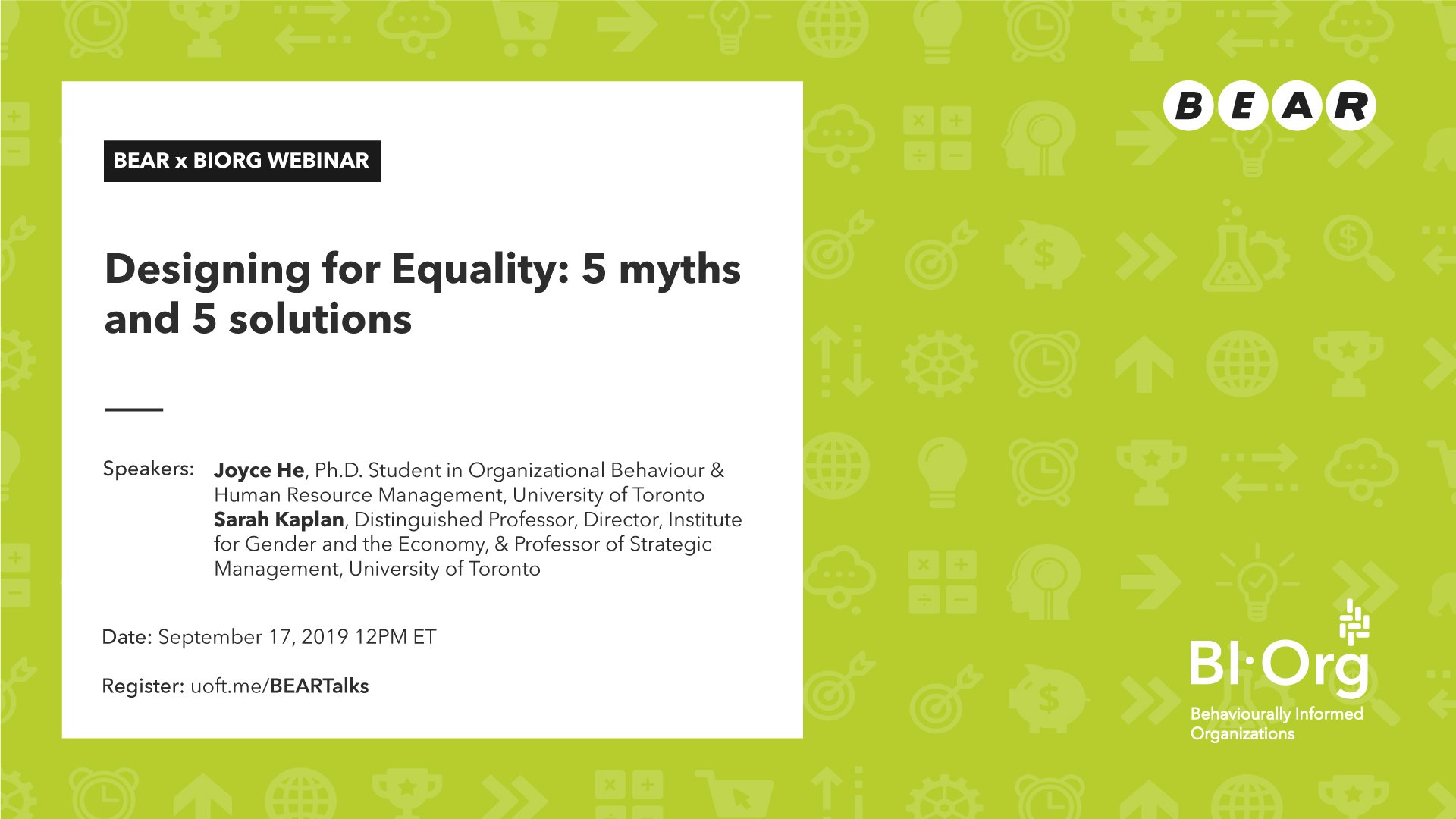
    In a webinar hosted by Behavioural Economics in Action at Rotman (BEAR) on September 17, 2019, Joyce He and Sarah Kaplan of the University of Toronto’s Institute for Gender and the Economy used insights from scholarly research to shed light on how to achieve gender equality.

    Statistics show that women are still substantially underrepresented in many professions, such as in STEM occupations. This webinar explains five myths that surround conversations around gender equality in the workplace, such as the myth that under-representation of women is a “pipeline problem”, and the myth that promoting diversity contravenes meritocracy. It then discusses five solutions based on behavioural approaches, including creating a culture in which people feel personally responsible for change, and implementing behavioural guidelines and action plans.

    A replay of the webinar:

    Click here for more information on Joyce He, and here for more information on Sarah Kaplan.