Tag: Feminism

Research briefs, news, and event recaps related to feminism.

  • Journalism and the #Metoo moment

    Journalism and the #Metoo moment

    [fusion_builder_container hundred_percent=”no” equal_height_columns=”no” menu_anchor=”” hide_on_mobile=”small-visibility,medium-visibility,large-visibility” class=”” id=”” background_color=”” background_image=”” background_position=”center center” background_repeat=”no-repeat” fade=”no” background_parallax=”none” parallax_speed=”0.3″ video_mp4=”” video_webm=”” video_ogv=”” video_url=”” video_aspect_ratio=”16:9″ video_loop=”yes” video_mute=”yes” overlay_color=”” video_preview_image=”” border_color=”” border_style=”solid” padding_top=”” padding_bottom=”” padding_left=”” padding_right=”” type=”legacy”][fusion_builder_row][fusion_builder_column type=”1_1″ layout=”1_1″ background_position=”left top” background_color=”” border_color=”” border_style=”solid” border_position=”all” spacing=”yes” background_image=”” background_repeat=”no-repeat” padding_top=”” padding_right=”” padding_bottom=”” padding_left=”” margin_top=”0px” margin_bottom=”0px” class=”” id=”” animation_type=”” animation_speed=”0.3″ animation_direction=”left” hide_on_mobile=”small-visibility,medium-visibility,large-visibility” center_content=”no” last=”true” min_height=”” hover_type=”none” link=”” border_sizes_top=”” border_sizes_bottom=”” border_sizes_left=”” border_sizes_right=”” first=”true”][fusion_text columns=”” column_min_width=”” column_spacing=”” rule_style=”default” rule_size=”” rule_color=”” class=”” id=””]

    “Confronting the powerful is why we get up in the morning.”

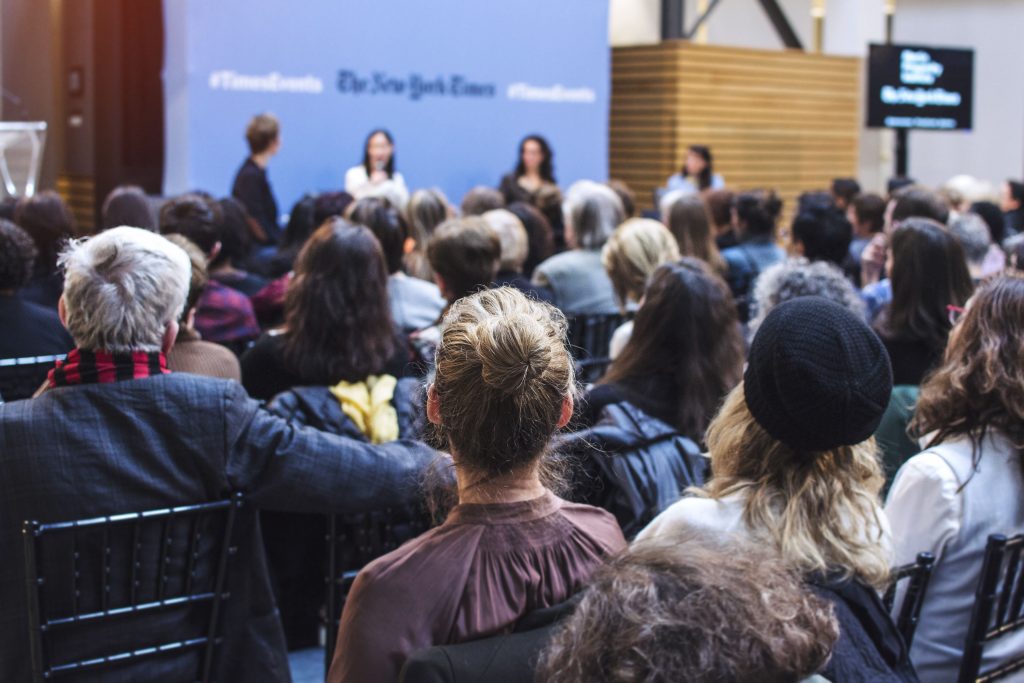
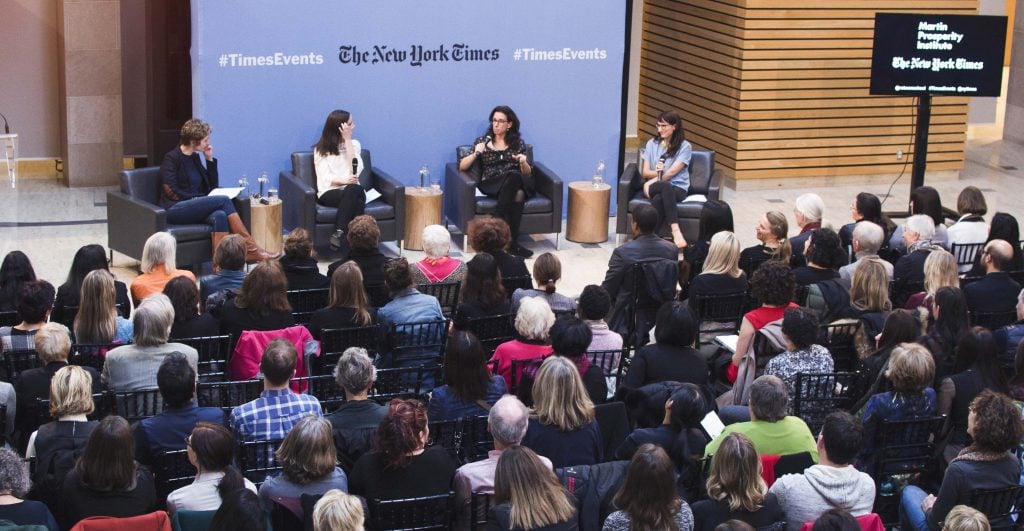
    Jodi Kantor is not one to hide from a challenge or a threat. Especially if it serves a story she is chasing. At the “Journalism and the #Metoo Moment” event hosted by GATE, The New York Times (NYT), and The Martin Prosperity Institute, Kantor described her experiences (alongside NYT’s Emily Steel and Jessica Bennett) working for months to expose the sexual harassment scandals of Bill O’Reilly and Harvey Weinstein. The latter of which exploded into a viral campaign to end sexual abuse and harassment globally – symbolized by #MeToo.

    During the standing-room-only event at Rotman’s Fleck Atrium moderated by the NYT’s Canada bureau chief Catherine Porter, the panelists not only detailed the lengthy process of building these stories, which included talking to over 200 people, following paper trails, and dealing with legal threats, but they also delved into the broader topic of the impact of the movement itself.

    Throughout the event, the panelists outlined a few key lessons-learned, and some outstanding insights.

    Harassment is not an individual experience.

    We are now recognizing that sexual harassment is, in fact, a collective experience; there is a pattern of harassment that is emerging in the mainstream consciousness. That recognition has empowered more victims to talk openly about their experiences and take action to protect others from future violence.

    We are starting to consider how we balance “due process” with swift condemnation.

    We are at the very beginning of a long and messy debate about how harassment is addressed. The backlash against the #MeToo movement is centred on the idea that the accused are too quickly found guilty in the court of public opinion. Should such allegations be made public before they are proven? Will change happen without public pressure? How can workplaces address harassment and what are the trade-offs? For example, many workplaces have a “zero tolerance” policy for harassment, which means that offenders will be punished quickly, but in mild cases, victims may not want to come forward because they worry the penalty will be too harsh on their colleague.  How can workplaces determine what constitutes a fireable offense versus a slap-on-the-hand?

    We need to talk about consent.

    The movement has encouraged a much-needed conversation about consent. For example, should a non-consensual dating experience (such as that described in the Aziz Ansari allegation) be considered assault? How do questions of masculinity and courtship rituals play into the issue of consent? What about the influence of pop culture? These are all significant questions that society, and particularly journalists covering the #MeToo movement, continue to work through.

    We need to support investigative journalism.

    The panelists also emphasized that in an age of Trump, when journalism is being attacked both ideologically and financially all over the world, individuals need to step up and support outlets that are producing investigative pieces, such as The New York Times.

    Critique is not necessarily “backlash.”

    When asked by an audience member about the “backlash” from the movement, Jodi Kantor specifically pointed out that we need to use this word carefully. Backlash, in her opinion, is the tide of change going in the reverse direction not necessarily critiques of the movement. Although there may be disagreements on the mechanics of how to end the issue of sexual harassment and abuse, there is still an overall agreement that A) it exists and B) it has to end.

    What does it mean that so many of the men who have been brought down with harassment allegations, such as Matt Lauer, Harvey Weinstein, Paul Haggis, Charlie Rose, Glenn Thrush, Russell Simmons, Senator Al Franken, etc., were the very men who shaped our culture and told our stories for decades?

    Once perpetrators of gender-based harassment and abuse are booted out of positions of power and influence, who will take their place? What in our culture will change?

    These panelists concluded that it may ultimately be women who step into the gaps left behind, and confront the dominant ideas, systems, and individuals that have led us to this point of reckoning.

    To read more about the #MeToo event, check out this summary by U of T News

    [/fusion_text][fusion_separator style_type=”none” hide_on_mobile=”small-visibility,medium-visibility,large-visibility” class=”” id=”” sep_color=”” top_margin=”50″ bottom_margin=”50″ border_size=”” icon=”” icon_circle=”” icon_circle_color=”” width=”” alignment=”center” /][fusion_button link=”https://www.gendereconomy.org/events/” text_transform=”” title=”” target=”_blank” link_attributes=”” alignment=”” modal=”” hide_on_mobile=”small-visibility,medium-visibility,large-visibility” class=”” id=”” color=”custom” button_gradient_top_color=”#62bd19″ button_gradient_bottom_color=”#62bd19″ button_gradient_top_color_hover=”#00c2e2″ button_gradient_bottom_color_hover=”#00c2e2″ accent_color=”” accent_hover_color=”” type=”” bevel_color=”” size=”” stretch=”yes” icon=”” icon_position=”left” icon_divider=”no” animation_type=”” animation_direction=”left” animation_speed=”0.3″ animation_offset=””]See more past events[/fusion_button][fusion_separator style_type=”none” hide_on_mobile=”small-visibility,medium-visibility,large-visibility” class=”” id=”” sep_color=”” top_margin=”20″ bottom_margin=”20″ border_size=”” icon=”” icon_circle=”” icon_circle_color=”” width=”” alignment=”center” /][fusion_title margin_top=”” margin_bottom=”” hide_on_mobile=”medium-visibility,large-visibility” class=”” id=”” size=”5″ content_align=”center” style_type=”default” sep_color=””]

    Or register below for these upcoming events

    [/fusion_title][fusion_recent_posts layout=”default” hover_type=”none” columns=”3″ number_posts=”3″ offset=”0″ pull_by=”category” cat_slug=”events” exclude_cats=”past” tag_slug=”” exclude_tags=”” thumbnail=”yes” title=”yes” meta=”no” meta_author=”no” meta_categories=”no” meta_date=”yes” meta_comments=”yes” meta_tags=”no” content_alignment=”” excerpt=”no” excerpt_length=”35″ strip_html=”yes” scrolling=”no” hide_on_mobile=”medium-visibility,large-visibility” class=”” id=”” animation_type=”” animation_direction=”left” animation_speed=”0.3″ animation_offset=”” /][/fusion_builder_column][/fusion_builder_row][/fusion_builder_container]

  • Gender budgeting: A tool for achieving equality

    Gender budgeting: A tool for achieving equality

    [fusion_builder_container admin_label=”” hundred_percent=”no” equal_height_columns=”no” menu_anchor=”” hide_on_mobile=”small-visibility,medium-visibility,large-visibility” class=”” id=”” background_color=”” background_image=”” background_position=”center center” background_repeat=”no-repeat” fade=”no” background_parallax=”none” enable_mobile=”no” parallax_speed=”0.3″ video_mp4=”” video_webm=”” video_ogv=”” video_url=”” video_aspect_ratio=”16:9″ video_loop=”yes” video_mute=”yes” video_preview_image=”” border_size=”” border_color=”” border_style=”solid” margin_top=”20″ margin_bottom=”” padding_top=”” padding_right=”” padding_bottom=”” padding_left=””][fusion_builder_row][fusion_builder_column type=”3_4″ layout=”3_4″ spacing=”” center_content=”no” hover_type=”none” link=”” min_height=”” hide_on_mobile=”small-visibility,medium-visibility,large-visibility” class=”” id=”” background_color=”” background_image=”” background_position=”left top” background_repeat=”no-repeat” border_size=”0″ border_color=”” border_style=”solid” border_position=”all” padding_top=”” padding_right=”” padding_bottom=”” padding_left=”” margin_top=”” margin_bottom=”” animation_type=”” animation_direction=”left” animation_speed=”0.3″ animation_offset=”” last=”no”][fusion_text columns=”” column_min_width=”” column_spacing=”” rule_style=”default” rule_size=”” rule_color=”” class=”” id=””]

    Download the infographic.  View the video explainer.

    In a context of widening social and economic inequalities, governments can use budgets as tools to achieve social justice objectives concurrently with economic objectives. “Gender budgeting” is one such approach and was the topic of an April 2017 discussion and debate at a workshop co-hosted by the Gender Budget Lab @ York and the Rotman School of Management’s Institute for Gender and the Economy at the University of Toronto. The event featured keynote speakers Diane Elson, Emeritus Professor, University of Essex and Former Chair of the UK Women’s Budget Group and Janet Stotsky, an economist with the International Monetary Fund. Other participating scholars and professionals included: Isabella Bakker, Barbara Cameron, Lisa Phillips, and Brenda Spotton Visano from the Gender Budget Lab @ York, Kerry Rittich from the University of Toronto Faculty of Law, Diana Sarosi of Oxfam Canada, Armine Yalnizyan of CBC Radio Business, and Sarah Kaplan, founder of the Institute for Gender and Economy. The points below summarize the main themes and takeaways from our discussions.

    What is gender budgeting?

    Gender budgeting is a way for governments and non-governmental organizations to promote gender equality using administrative and fiscal policy.

    It involves understanding the differences in a budget’s impact on men and women and subsequently creating policies to remedy inequalities. For example, an analysis by the UK Women’s Budget Group showed that the cumulative impact of changes in taxes and benefits led to decreased income for women at all levels of wealth and only created benefits for men in the top 10 percent, and that this effect was compounded when considering race as well as gender. Some people might object to this analysis, saying that it is not about any kind of intentional discrimination and that “it just happens to work out that way” or “it is just because of demographics.” However, gender budgeting aims at uncovering the often-unintended outcomes that increase inequality in society. For example, in Canada’s recent budget, analysis suggests that the new caregiver credit will actually benefit men overall more than women because a beneficiary has to have a market income in order to gain the tax credit.

    The aim of gender budgeting is to build a process at national and subnational levels that produce gender-sensitive budgets. An example of the gender budgeting process would be to analyze the ways in which cutting funding for child care services may disproportionately impact women who tend to provide more unpaid labour at home and may reduce productivity (if women are forced to abandon paid work if childcare is not funded).

    Why does gender budgeting create value?

    By applying a gender lens to budgets, governments can understand the different needs of their constituents and plan, execute and monitor expenditures and revenues more effectively.

    This method of policy intervention helps governments raise and allocate public money toward those in need, focusing on the plights of marginalized communities. Gender budgeting is not necessarily a “zero sum game.” Applying a gender lens to budgets is often positively correlated to economic outcomes. In Austria, for example, gender budgeting resulted in a reform that increased workforce participation and productivity: the income tax was amended to reduce effective taxation on secondary earners, encouraging greater female labor force participation.

    How does gender budgeting work?

    There are two major levers governments can pull in gender budgeting – tax measures (such as tax-advantaged savings plans) and direct expenditures (such as welfare, childcare, old age support). Both should be analyzed through a gender lens. There are no “rules” with regard to the best way to implement gender budgeting, but best practices include:

    • A gender needs assessment, including views and opinions from stakeholders and civil society representatives, of the extent to which government policies and programs meet gender equality needs, with a view to identifying priorities for policy action in the budgetary context.
    • An ex-ante assessment of individual budget measures or their impact on gender equality, in advance of their inclusion in the budget. The annual budget is accompanied with an official assessment, conducted by the central budget authority (or under its authority) of the budget’s overall impact in promoting gender equality, including a gender- disaggregated analysis of specific policy measures (both revenue- and expenditure-related).
    • Requirements prescribing that a minimum proportion of budget-related performance objectives and budgeted resources be allocated towards gender-responsive policies.
    • An ex-post impact assessment of individual budget measures of the extent to which gender equality is effectively promoted and/or attained through the policies set out in the annual budget. Ideally, this would come in the form of a gender audit of the budget conducted by an authority different from the central budget authority.

    What makes gender budgeting work well?

    • Gender budgeting must start with a needs assessment. Effective gender budgeting recognizes differences in women and men’s circumstances. For example, if more women live in poverty than men, then they should receive more welfare benefits. Or, if tax rebates are offered for childcare, the benefit might not reach the people who need this childcare support the most – women who are too poor to pay much in taxes and need childcare to increase their incomes.
    • Budgets should reframe spending on human capital as an “investment.” Government accounting lists spending on infrastructure as a capital investment but spending on human development (e.g., childcare) as an expenditure. Alternative gender-based budgets recognize that spending on human capital is also an investment. For example, in developed countries such as England, investment in free universal childcare (40 hours per week, for 48 weeks a year, to all pre-school children from the age of 6 months) could cut the gender pay gap by 3 percentage points and the employment gap by 5 percentage points.
    • Budget and tax cuts should be analyzed as much as expenditures. Cuts to public services impact women more severely than men because they earn less, live in greater poverty and rely in higher numbers on welfare benefits. This is often referred to as the “triple whammy” impact of cuts to social services: women are the primary users and deliverers of public services and most likely to pick up the slack when services are cut. Women are more likely to replace losses in public benefits with unpaid work, constraining women’s ability to participate in the labor force.  In the case of childcare, multiple factors must be assessed before governments propose solutions to budget cuts. For example, the benefits of tax rebates offered for childcare do not extend to women who are in low tax brackets. Consequently, if women cannot send their children to daycare, they cannot go out to work and earn a large enough income for tax exemptions. Also, tax cuts for fuel consumption may disproportionately benefit men because of the pattern of car ownership (they own larger vehicles and drive them more often).

    Why might gender budgeting not work well?

    • Gender budgeting should not just be about equally distributing government spending to men and women. To implement policy changes, gender budgeting analysis takes into account a range of identity factors such as age, education, language, ethnic backgrounds, geography, culture and income. By placing an emphasis on these intersectional factors, gender budgeting can create and inform better decision making that can improve conditions for women as well as other marginalized peoples. Equal distribution of resources would not address the differential needs of the different populations.
    • Gender budgeting should not simply list the areas of expenditure associated with “women’s issues.” While gender budgeting does call attention to issues such as childcare which has been framed historically as “women’s issues,” it also focuses on all of the ways that government budget and fiscal policy can have differential effects on women and men. For example, investment in infrastructure has a primary job creation benefit for men who dominate the construction trades. Another example can be taken from Canada’s labour market in 2005. If newcomers and women in Canada had been granted the same opportunities as men, personal income would have been $168 billion higher, an additional 1.6 million women would have been employed, and the GDP would have increased by 21%. Failure to create gender-sensitive budgets results in economic loss. Though many government policies are seemingly fair or well-intentioned, the consequences of not reviewing policies through a gender lens can generate inequalities and disadvantages.

    If governments do use gender budgeting, how can they avoid the pitfalls?

    • The Ministry of Finance (or equivalent) needs to lead gender budgeting. If the people who hold the purse strings and allocate the resources are not applying a gender lens to budgets, then the impact will be low. Gender budgeting cannot be relegated to the Ministry for the Status of Women or equivalent department. Ministries or departments of government must identify objectives consistent with gender-related development goals, adopt policies consistent with these goals, and fund programs to achieve them. It is also necessary to set measurable targets and track results.
    • Look to successful programs for inspiration. Many of the practices of developing countries – e.g., Rwanda – could be role models for developed economies. In Rwanda, the Ministry of Finance led the creation of gender budgeting pilots in four gender-sensitive ministries: education, health, agriculture, and infrastructure. Working within this framework, Rwanda improved on key education and health indicators at a faster rate than other African countries. One area of improvement was in land registration, which focused on providing an equal basis for women and men to make use of property for economic and other purposes. Indicators were set to measure progress, and a gender monitoring office evaluated outcomes and held ministries and other government entities accountable. Although not directly causal, the positive outcomes of persistent government involvement in Rwanda are indicative of how gender budgeting analysis in combination with fiscal policies can be used to achieve goals. While the specific issue of land ownership may not be relevant to all countries, we learn from Rwanda that a gender analysis of the budgets can highlight key bottlenecks and support policy changes.

    What can non-governmental organizations do to encourage governments to adopt gender budgeting?

    In the absence of adequate government efforts in gender budgeting, non-governmental and non-profit organizations can play a critical role in producing statistics, research, and assessments to provide policy leaders and government officials with the knowledge of how to further gender equality goals. One prominent example of a gender budgeting organization is the UK Women’s Budget Group. Started in 1989, this not-for-profit network includes academics, policy researchers, trade unionists, and activists, funded by donations, grants, and commissions, working in both paid and voluntary positions. The group’s analysis shed light on gender issues through an on-going dialogue with HM Treasury and more recently, as austerity measures were introduced in the Conservative government, with MPs. The group provides alternative plans that seek to address issues of inequality in absence of adequate government support of gender budgeting. However, while non-profit organizations such as the UK Women’s Budget Group can assist societies in promoting gender equality, more sustainable solutions require direct government involvement in gender budgeting processes.

    Conclusion

    While it is a start, it is not enough for a government to conduct gender impact assessments of budgets.

    Good assessments need to recognize that discrimination doesn’t have to be overt but may happen indirectly based on the unintended consequences of budgets.

    Gender budgeting draws our attention to the current gendered structures in our society that lead women to perform more unpaid work than men and to make economic sacrifices to manage childcare. Gender budgeting also encourages a process of engagement with politicians and civil society groups to ensure policies meet the needs of marginalized communities.The key insight from the workshop is that budgeting – through taxes and expenditures – can be an important tool for achieving greater social equality. Gender budgeting is the process by which these goals can be accomplished.

    [/fusion_text][fusion_separator style_type=”none” hide_on_mobile=”small-visibility,medium-visibility,large-visibility” class=”” id=”” sep_color=”” top_margin=”20″ bottom_margin=”20″ border_size=”” icon=”” icon_circle=”” icon_circle_color=”” width=”” alignment=”center” /][fusion_button link=”https://www.gendereconomy.org/research-briefs/” text_transform=”” title=”” target=”_blank” link_attributes=”” alignment=”” modal=”” hide_on_mobile=”small-visibility,medium-visibility,large-visibility” class=”” id=”” color=”custom” button_gradient_top_color=”#62bd19″ button_gradient_bottom_color=”#62bd19″ button_gradient_top_color_hover=”#00c2e2″ button_gradient_bottom_color_hover=”#00c2e2″ accent_color=”” accent_hover_color=”” type=”” bevel_color=”” border_width=”” size=”” stretch=”yes” shape=”” icon=”” icon_position=”left” icon_divider=”no” animation_type=”” animation_direction=”left” animation_speed=”0.3″ animation_offset=””]See more research briefs[/fusion_button][fusion_separator style_type=”none” hide_on_mobile=”small-visibility,medium-visibility,large-visibility” class=”” id=”” sep_color=”” top_margin=”20″ bottom_margin=”20″ border_size=”” icon=”” icon_circle=”” icon_circle_color=”” width=”” alignment=”center” /][fusion_recent_posts layout=”default” hover_type=”none” columns=”3″ number_posts=”3″ offset=”0″ pull_by=”category” cat_slug=”research-briefs” exclude_cats=”” tag_slug=”” exclude_tags=”” thumbnail=”yes” title=”yes” meta=”no” meta_author=”no” meta_categories=”no” meta_date=”yes” meta_comments=”yes” meta_tags=”no” content_alignment=”” excerpt=”no” excerpt_length=”35″ strip_html=”yes” scrolling=”no” hide_on_mobile=”small-visibility,medium-visibility,large-visibility” class=”” id=”” animation_type=”” animation_direction=”left” animation_speed=”0.3″ animation_offset=”” /][/fusion_builder_column][fusion_builder_column type=”1_4″ layout=”1_4″ spacing=”” center_content=”no” hover_type=”none” link=”” min_height=”” hide_on_mobile=”small-visibility,medium-visibility,large-visibility” class=”” id=”” background_color=”” background_image=”” background_position=”left top” background_repeat=”no-repeat” border_size=”0″ border_color=”” border_style=”solid” border_position=”all” padding_top=”” padding_right=”” padding_bottom=”” padding_left=”” margin_top=”” margin_bottom=”” animation_type=”” animation_direction=”left” animation_speed=”0.3″ animation_offset=”” last=”no”][fusion_title hide_on_mobile=”small-visibility,medium-visibility,large-visibility” class=”briefsummary” id=”” content_align=”left” size=”3″ font_size=”” line_height=”” letter_spacing=”” margin_top=”” margin_bottom=”” text_color=”” style_type=”none” sep_color=””]

    Research brief prepared by

    Zainab Coovadia and Sarah Kaplan

    Published

    October 20, 2017

    [/fusion_title][fusion_widget_area name=”avada-custom-sidebar-researchbriefsidebar” title_size=”” title_color=”” background_color=”” padding_top=”” padding_right=”” padding_bottom=”” padding_left=”” hide_on_mobile=”small-visibility,medium-visibility,large-visibility” class=”” id=”” /][/fusion_builder_column][/fusion_builder_row][/fusion_builder_container]


  • The Façade of Post-Feminism

    A new book shows why—despite the supposed ascendency of women and girls—feminism can’t rest on its laurels.

  • Catherine Mayer on the “Attack of the Fifty Foot Women”

    Catherine Mayer on the “Attack of the Fifty Foot Women”

    [fusion_builder_container hundred_percent=”no” equal_height_columns=”no” menu_anchor=”” hide_on_mobile=”small-visibility,medium-visibility,large-visibility” class=”” id=”” background_color=”” background_image=”” background_position=”center center” background_repeat=”no-repeat” fade=”no” background_parallax=”none” parallax_speed=”0.3″ video_mp4=”” video_webm=”” video_ogv=”” video_url=”” video_aspect_ratio=”16:9″ video_loop=”yes” video_mute=”yes” overlay_color=”” video_preview_image=”” border_color=”” border_style=”solid” padding_top=”” padding_bottom=”” padding_left=”” padding_right=”” type=”legacy”][fusion_builder_row][fusion_builder_column type=”1_1″ layout=”1_1″ background_position=”left top” background_color=”” border_color=”” border_style=”solid” border_position=”all” spacing=”yes” background_image=”” background_repeat=”no-repeat” padding_top=”” padding_right=”” padding_bottom=”” padding_left=”” margin_top=”0px” margin_bottom=”0px” class=”” id=”” animation_type=”” animation_speed=”0.3″ animation_direction=”left” hide_on_mobile=”small-visibility,medium-visibility,large-visibility” center_content=”no” last=”true” min_height=”” hover_type=”none” link=”” border_sizes_top=”” border_sizes_bottom=”” border_sizes_left=”” border_sizes_right=”” first=”true”][fusion_text columns=”” column_min_width=”” column_spacing=”” rule_style=”” rule_size=”” rule_color=”” hue=”” saturation=”” lightness=”” alpha=”” content_alignment_medium=”” content_alignment_small=”” content_alignment=”” hide_on_mobile=”small-visibility,medium-visibility,large-visibility” sticky_display=”normal,sticky” class=”” id=”” margin_top=”” margin_right=”” margin_bottom=”” margin_left=”” fusion_font_family_text_font=”” fusion_font_variant_text_font=”” font_size=”” line_height=”” letter_spacing=”” text_transform=”” text_color=”” animation_type=”” animation_direction=”left” animation_color=”” animation_speed=”0.3″ animation_delay=”0″ animation_offset=”” logics=””]If gender equality promises benefits to everyone, why aren’t we embracing it?

    Are politicians such as Angela Merkel, Theresa May and Hillary Clinton, and public figures including Beyoncé, the 50-foot women we need to save the day?

    Catherine Mayer tackled those questions and more in Attack of the Fifty Foot Women: How Gender Equality Can Save the World! on April 26, 2017.

    About the book:

    Catherine Mayer’s book, Attack of the Fifty Foot Women, takes readers through her years as a journalist and as Editor at Large for TIME magazine, her experiences in forming the Women’s Equality Party, and insightful research into the global reality of gender inequality.

    Mayer says:

    “You may have noticed a popular refrain in public life at the moment: ‘Men have made a mess. We need women of stature to clear it up’. This book tests that proposition and asks what else the power of women, unleashed, might achieve. A lot of research points to the economic benefits of increasing female participation but what else would change? Are Equalians happier? What’s going on in Equalian homes and workplaces? Who’s looking after the children? Does the air smell cleaner? What’s on TV? It wasn’t until I started advocating for gender equality on doorsteps and at meetings of the Women’s Equality Party that I realized everyone struggles to imagine a gender equal society because nowhere on the planet does such a society exist. My book works to plug that gap.”

    Through deep and sometimes hilarious accounts of her own journey, as well as studies and interviews with experts and leaders in diverse fields, Mayer illuminates the obstacles holding women back and how much women contribute in the face of these daily setbacks. She also reveals her visions of a truly gender-balanced society—a place that she calls “Equalia,” and shows readers how to get there.

    About the author:

    Catherine Mayer is a bestselling British author and journalist, and the co-founder of the Women’s Equality Party (WE) in the UK.[/fusion_text][fusion_separator style_type=”none” hide_on_mobile=”small-visibility,medium-visibility,large-visibility” class=”” id=”” sep_color=”” top_margin=”50″ bottom_margin=”50″ border_size=”” icon=”” icon_circle=”” icon_circle_color=”” width=”” alignment=”center” /][fusion_button link=”https://www.gendereconomy.org/events/” text_transform=”” title=”” target=”_blank” link_attributes=”” alignment=”” modal=”” hide_on_mobile=”small-visibility,medium-visibility,large-visibility” class=”” id=”” color=”custom” button_gradient_top_color=”#62bd19″ button_gradient_bottom_color=”#62bd19″ button_gradient_top_color_hover=”#00c2e2″ button_gradient_bottom_color_hover=”#00c2e2″ accent_color=”” accent_hover_color=”” type=”” bevel_color=”” size=”” stretch=”yes” icon=”” icon_position=”left” icon_divider=”no” animation_type=”” animation_direction=”left” animation_speed=”0.3″ animation_offset=””]See more past events[/fusion_button][fusion_separator style_type=”none” hide_on_mobile=”small-visibility,medium-visibility,large-visibility” class=”” id=”” sep_color=”” top_margin=”20″ bottom_margin=”20″ border_size=”” icon=”” icon_circle=”” icon_circle_color=”” width=”” alignment=”center” /][fusion_title margin_top=”” margin_bottom=”” hide_on_mobile=”medium-visibility,large-visibility” class=”” id=”” size=”5″ content_align=”center” style_type=”default” sep_color=””]

    Or register below for these upcoming events

    [/fusion_title][fusion_recent_posts layout=”default” hover_type=”none” columns=”3″ number_posts=”3″ offset=”0″ pull_by=”category” cat_slug=”events” exclude_cats=”past” tag_slug=”” exclude_tags=”” thumbnail=”yes” title=”yes” meta=”no” meta_author=”no” meta_categories=”no” meta_date=”yes” meta_comments=”yes” meta_tags=”no” content_alignment=”” excerpt=”no” excerpt_length=”35″ strip_html=”yes” scrolling=”no” hide_on_mobile=”medium-visibility,large-visibility” class=”” id=”” animation_type=”” animation_direction=”left” animation_speed=”0.3″ animation_offset=”” /][/fusion_builder_column][/fusion_builder_row][/fusion_builder_container]
  • Andi Zeisler on Marketplace Feminism

    Andi Zeisler on Marketplace Feminism

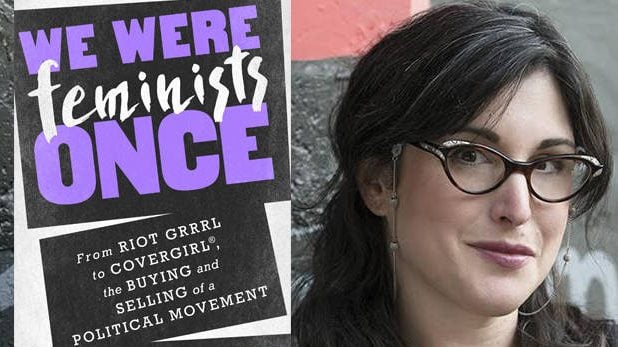
    [fusion_builder_container hundred_percent=”no” equal_height_columns=”no” menu_anchor=”” hide_on_mobile=”small-visibility,medium-visibility,large-visibility” class=”” id=”” background_color=”” background_image=”” background_position=”center center” background_repeat=”no-repeat” fade=”no” background_parallax=”none” parallax_speed=”0.3″ video_mp4=”” video_webm=”” video_ogv=”” video_url=”” video_aspect_ratio=”16:9″ video_loop=”yes” video_mute=”yes” overlay_color=”” video_preview_image=”” border_color=”” border_style=”solid” padding_top=”” padding_bottom=”” padding_left=”” padding_right=”” type=”legacy”][fusion_builder_row][fusion_builder_column type=”1_1″ layout=”1_1″ background_position=”left top” background_color=”” border_color=”” border_style=”solid” border_position=”all” spacing=”yes” background_image=”” background_repeat=”no-repeat” padding_top=”” padding_right=”” padding_bottom=”” padding_left=”” margin_top=”0px” margin_bottom=”0px” class=”” id=”” animation_type=”” animation_speed=”0.3″ animation_direction=”left” hide_on_mobile=”small-visibility,medium-visibility,large-visibility” center_content=”no” last=”true” min_height=”” hover_type=”none” link=”” border_sizes_top=”” border_sizes_bottom=”” border_sizes_left=”” border_sizes_right=”” first=”true”][fusion_text columns=”” column_min_width=”” column_spacing=”” rule_style=”” rule_size=”” rule_color=”” hue=”” saturation=”” lightness=”” alpha=”” content_alignment_medium=”” content_alignment_small=”” content_alignment=”” hide_on_mobile=”small-visibility,medium-visibility,large-visibility” sticky_display=”normal,sticky” class=”” id=”” margin_top=”” margin_right=”” margin_bottom=”” margin_left=”” fusion_font_family_text_font=”” fusion_font_variant_text_font=”” font_size=”” line_height=”” letter_spacing=”” text_transform=”” text_color=”” animation_type=”” animation_direction=”left” animation_color=”” animation_speed=”0.3″ animation_delay=”0″ animation_offset=”” logics=””]Andi Zeisler, Co-founder and Creative/Editorial Director of Bitch Media, and author of We Were Feminists Once: From Riot Grrrl to CoverGirl ®, the Buying and Selling of a Political Movement spoke on September 21, 2016.

    Event Synopsis: 

    Feminism has hit the big time. Once a dirty word brushed away with a grimace, “feminist” has been rebranded as a shiny label sported by movie and pop stars, fashion designers, and multi-hyphenate powerhouses like Beyoncé. It drives advertising and marketing campaigns for everything from wireless plans to underwear to perfume, presenting what’s long been a movement for social justice as just another consumer choice in a vast market. Individual self-actualization is the goal, shopping more often than not the means, and celebrities the mouthpieces.

    But what does it mean when social change becomes a brand identity?

    Feminism’s splashy arrival at the center of today’s media and pop-culture marketplace, after all, hasn’t offered solutions to the movement’s unfinished business. Planned Parenthood is under sustained attack, women are still paid 77 percent—or less—of the man’s dollar, and vicious attacks on women, both on- and offline, are utterly routine.

    Andi Zeisler, a founding editor of Bitch Media, draws on more than twenty years’ experience interpreting popular culture in this biting history of how feminism has been co-opted, watered down, and turned into a gyratory media trend. Surveying movies, television, advertising, fashion, and more, Zeisler reveals a media landscape brimming with the language of empowerment but offering little in the way of transformational change. Witty, fearless, and unflinching, We Were Feminists Once is the story of how we let this happen, and how we can amplify feminism’s real purpose and power.[/fusion_text][fusion_separator style_type=”none” hide_on_mobile=”small-visibility,medium-visibility,large-visibility” class=”” id=”” sep_color=”” top_margin=”50″ bottom_margin=”50″ border_size=”” icon=”” icon_circle=”” icon_circle_color=”” width=”” alignment=”center” /][fusion_button link=”https://www.gendereconomy.org/events/” text_transform=”” title=”” target=”_blank” link_attributes=”” alignment=”” modal=”” hide_on_mobile=”small-visibility,medium-visibility,large-visibility” class=”” id=”” color=”custom” button_gradient_top_color=”#62bd19″ button_gradient_bottom_color=”#62bd19″ button_gradient_top_color_hover=”#00c2e2″ button_gradient_bottom_color_hover=”#00c2e2″ accent_color=”” accent_hover_color=”” type=”” bevel_color=”” size=”” stretch=”yes” icon=”” icon_position=”left” icon_divider=”no” animation_type=”” animation_direction=”left” animation_speed=”0.3″ animation_offset=””]See more past events[/fusion_button][fusion_separator style_type=”none” hide_on_mobile=”small-visibility,medium-visibility,large-visibility” class=”” id=”” sep_color=”” top_margin=”20″ bottom_margin=”20″ border_size=”” icon=”” icon_circle=”” icon_circle_color=”” width=”” alignment=”center” /][fusion_title margin_top=”” margin_bottom=”” hide_on_mobile=”medium-visibility,large-visibility” class=”” id=”” size=”5″ content_align=”center” style_type=”default” sep_color=””]

    Or register below for these upcoming events

    [/fusion_title][fusion_recent_posts layout=”default” hover_type=”none” columns=”3″ number_posts=”3″ offset=”0″ pull_by=”category” cat_slug=”events” exclude_cats=”past” tag_slug=”” exclude_tags=”” thumbnail=”yes” title=”yes” meta=”no” meta_author=”no” meta_categories=”no” meta_date=”yes” meta_comments=”yes” meta_tags=”no” content_alignment=”” excerpt=”no” excerpt_length=”35″ strip_html=”yes” scrolling=”no” hide_on_mobile=”medium-visibility,large-visibility” class=”” id=”” animation_type=”” animation_direction=”left” animation_speed=”0.3″ animation_offset=”” /][/fusion_builder_column][/fusion_builder_row][/fusion_builder_container]