Tag: Leadership

Research briefs, news, and event recaps related to leadership.

  • Debate: Does diversity training work?

    Debate: Does diversity training work?

    [fusion_builder_container admin_label=”” hundred_percent=”no” equal_height_columns=”no” menu_anchor=”” hide_on_mobile=”small-visibility,medium-visibility,large-visibility” class=”” id=”” background_color=”” background_image=”” background_position=”center center” background_repeat=”no-repeat” fade=”no” background_parallax=”none” enable_mobile=”no” parallax_speed=”0.3″ video_mp4=”” video_webm=”” video_ogv=”” video_url=”” video_aspect_ratio=”16:9″ video_loop=”yes” video_mute=”yes” video_preview_image=”” border_size=”” border_color=”” border_style=”solid” margin_top=”20″ margin_bottom=”” padding_top=”” padding_right=”” padding_bottom=”” padding_left=””][fusion_builder_row][fusion_builder_column type=”3_4″ layout=”3_4″ spacing=”” center_content=”no” hover_type=”none” link=”” min_height=”” hide_on_mobile=”small-visibility,medium-visibility,large-visibility” class=”” id=”” background_color=”” background_image=”” background_position=”left top” background_repeat=”no-repeat” border_size=”0″ border_color=”” border_style=”solid” border_position=”all” padding_top=”” padding_right=”” padding_bottom=”” padding_left=”” margin_top=”” margin_bottom=”” animation_type=”” animation_direction=”left” animation_speed=”0.3″ animation_offset=”” last=”no”][fusion_text columns=”” column_min_width=”” column_spacing=”” rule_style=”default” rule_size=”” rule_color=”” class=”” id=””]

    Download the infographicView the video explainer.

    What do we know about diversity training?

    In our increasingly diverse society, organizations are constantly challenged to create environments for every employee to feel included and valued. Unfortunately, despite a company’s best efforts, many employees end up feeling excluded ­– be it due to implicit bias or explicit prejudice. In response to this challenge, many organizations look to diversity training programs to help employees understand their own biases, increase employee engagement and satisfaction, and create an environment that fosters diversity and inclusion. Indeed, as many as 67% of U.S. organizations report some use of diversity training[1], and 15% of organizations have staff dedicated to diversity and inclusion.

    There are strong motivations for the adoption of diversity training. Making advances in diversity can lend organizations visibility and status, improve talent recruitment, customer orientation, employee satisfaction, and innovation, and, more cynically, can shield organizations from expensive lawsuits. As a result, many organizations have invested heavily in this kind of training. However, recent research has suggested that diversity training may not be effective, and can, in some cases, do more harm than good. So, what does the evidence say? Should companies invest in diversity training or not?

    Recent research has suggested that diversity training may not be effective, and can, in some cases, do more harm than good.

    To answer this question, leading scholars gathered to debate the pros and cons of diversity training at a Research Roundtable on Gender and the Economy held at the Rotman School of Management at the University of Toronto. In the format of an Oxford-style debate, Professors Rafael Gomez (University of Toronto, Centre for Industrial Relations and Human Resources), Sonia Kang (University of Toronto, Rotman School), Eden King (Dept. of Psychology, Rice University) and Winny Shen (Dept. of Psychology, University of Waterloo) presented their research-based arguments for and against diversity training as a useful and effective tool for reducing bias and improving organizational life. The points below are a summary of the main arguments made in the debate.

    What is diversity training? Who implements diversity training?

    Diversity training is a distinct set of programs or interventions intended to reduce prejudice and bias, improve communications and inter-group relations, and increase the knowledge, skills, and motivation of employees so that they can perform more effectively in a diverse working environment. Diversity training seeks to produce a more successful organization with higher-performing employees, generate compliance to legal and ethical standards, increase employee satisfaction and retention, and support the development of a diversity of ideas.[2]

    Diversity training activities can include disseminating information on the organization’s policies and expectations, building awareness, teaching skills, motivating behavioural change, and providing employees with new experiences.[3] There are many versions of diversity training, and companies often use a combination of practices.

    Probably the most common form of diversity training these days is Implicit Bias Training. The goal is to make participants aware of bias and prejudices that may not be conscious, but nonetheless shape decisions and behavior. Implicit bias testing, such as the Implicit Association Tests provided by Project Implicit at Harvard University, reveal the gaps between our explicitly-stated and internally-held attitudes toward a variety of social groups. Training can encourage participants to develop an awareness of attitudes and beliefs that support prejudice so that alternative perspectives can be adopted.

    Over the years, many other types of diversity training programs have been developed by consultants and academics alike. Anti-Bias Training presents value-based principles and methodologies to cultivate a respect of differences that will lead to the elimination of bias. Classical Conditioning pairs images or representations of stigmatized groups with positive images and words to eliminate implicit biases held by participants. Sensitivity Training raises awareness of attitudes and behaviours that may cause harm to others. This type of training can also involve developing empathy. An example would be asking participants to write an essay from the perspective of someone different from them. Cross-Cultural Training educates participants on differences across cultures to engender an understanding of diverse motivations and perspectives. Also referred to as cultural competence or multicultural education, programs may utilize the Multicultural Awareness-Knowledge Skill Survey (MAKSS) or the Multicultural Counselling Awareness Scale (MCAS). Contact Interventions utilise direct contact between members of different groups. Also called cooperative contact, these diversity training programs can include peer-led discussion groups or guided communication training where participants from different groups interact with each other.

    What are the worries about diversity training?

    Although many firms have invested in these diversity programs, recent evidence suggests that they may not always be effective.

    • Are the results reliable? Many diversity training programs evaluate success with a self-administered survey on bias or prejudice. Changes in participants’ evaluations over time may be the result of participants learning the evaluation goals, or becoming more familiar with the questionnaire, and may not reflect actual change in prejudiced attitudes or beliefs. Research also shows that employees with more positive attitudes toward diversity are more likely to participate in non-mandatory diversity initiatives, suggesting that training programs may not reach the employees who have the most severe biases.[4]
    • Reduced diversity. Mandatory diversity training can result in strong backlash. Studies show that diversity interventions like training, testing, and grievance systems can make firms less diverse as managers resist threats to their autonomy to make decisions.[5] For example, in one study, organizations that implemented mandatory diversity training had 6% fewer black women in management positions after five years.[6]
    • Worse behaviour. Diversity training can lead to worse behaviours. A study found that ethnic minority employees stated that the behaviour of their coworkers worsened after they participated in a diversity training program. Backlash effects can occur if trainees resent being selected for diversity training and view training as punishment for prior insensitive behaviour.[7]

    Backlash effects can occur if trainees resent being selected for diversity training and view training as punishment for prior insensitive behaviour.

    • Illusion of fairness. Even the presence of diversity training alone can create the illusion that an organization is fair, and inequality is not a problem. A study found that white male participants who were told that diversity training had occurred felt women were treated more fairly, even when faced with evidence of the contrary.[8]
    • Stereotype rebound. In some cases, attempts to increase awareness reinforce stereotype norms, and participants who are instructed to avoid stereotypes enact more stereotypical behaviours and discrimination.[9] A study found that business students who participated in a diversity training where they watched a video that instructed them to supress negative stereotypes about the elderly, evaluated older job applicants more negatively.[10]

    This research suggests that diversity training may have unintended consequences for the participants, for the potential beneficiaries of the programs, and for the organizations that sponsor them. Does this mean that companies should stop doing diversity training?

    What are the possible benefits of diversity training?

    Proponents of diversity training argue that its overall impacts are positive despite the limitations to current diversity training models. A meta-analysis of hundreds of diversity training studies shows that although outliers exist, diversity training has had real and significant positive effects overall.[11]

    • Real outcomes in skills, knowledge and learning: The average or typical diversity-training program produces significant positive effects on knowledge (learning), acquisition of diversity skills, and improvements to diversity-related motivation and attitudes. For example, people attending a typical training program would be 64% more likely to experience an increase in their knowledge or skills around diversity than someone who does not attend that program.[12]
    • Effects on behaviour. Research indicates that diversity training may have only a small direct influence on attitudes, both implicit and explicit; however, changes in knowledge and behaviour may lead to larger changes in attitudes over time. For example, someone might learn how to communicate more effectively with people different from them, and after many interactions with others, may develop an improved attitude toward diverse groups.[13]
    • Create a culture of change. Another significant value of diversity training is that it can help to cultivate a growth mindset regarding the malleability of diversity-related behaviours. Goal-setting theory tells us that building awareness through diversity training can signal that diversity is an important issue to an organization and set expectations for employees. Research shows that those who set positive behavioural goals immediately after attending training sessions exhibit more diversity-supportive behaviours post-training.[14]

    Goal-setting theory tells us that building awareness through diversity training can signal that diversity is an important issue to an organization and set expectations for employees.

    • Unlock the creative potential of teams. People have long argued that diverse teams can be a source of creativity and innovation. However, we know that diversity can also lead to conflict or difficulties in communicating. Research shows that for teams to benefit from diversity, team members need to take the perspectives of those who are different from them. Diversity training can be the intervention that enhances perspective-taking and helps teams reach their creative potential.[15]

    Proponents of diversity training point out that these benefits have been realized even when many of the programs have been poorly implemented. Further, the research evidence to date is largely in direct contrast to the prevalent “myth” that diversity training is ineffective, which may be largely the result of a vocal, but small, minority of individuals who do not like such training programs. One might anticipate that these benefits would further increase if companies were using research-informed best practices.

    If you are going to do diversity training, how to do it right.

    There is a tremendous upside for organizations if they can get diversity – and more importantly – inclusion right. But, inclusion requires more than just putting diverse people together. Research shows that the key to high performing diverse groups is intervention to help people overcome diversity challenges. Here are some guidelines to avoid pitfalls and ensure maximum impact:

    • Take a behavioural approach. We know from research on dieting, exercise, work addiction, and other issues, that it is very hard to turn attitudes into behaviours. For diversity training to be successful, it needs to make a connection to behaviour. Research shows that the overall effect of behaviour-based training has a significantly higher impact than diversity training that focuses only on awareness.[16] Effective diversity training needs to supply behavioural alternatives so participants have a repertoire of potential actions in place when confronted with difficult scenarios, such as a colleague making sexist or racist jokes in the workplace.
    • Use data. Organizations must think like scientists: collecting, analyzing, and disseminating data to inform how they structure and deliver diversity initiatives. Having clear measurements of the organizations’ progress towards goals can help them avoid pitfalls like the illusion of fairness, which happens when people assume an organization is fair simply because it signals that it is fair. Letting the data tell the story can motivate change.
    • Host your training in an educational setting. Research shows that participants are more likely to enjoy diversity training that takes place in an educational setting than within their organization. It signals that there is something new to be learned and opens up people’s minds to thinking differently.[17]
    • Make it voluntary. Research shows that mandatory diversity programs have negative or no effects. Individuals have strong negative reactions to threats to personal autonomy and may resent being selected for training. In contrast to mandatory training, voluntary training, and other voluntary approaches such as mentoring and assigning diversity managers have strong, positive effects. Creating a sense of ownership, autonomy, and pride can lead to better outcomes and less backlash.[18] [19]
    • Create new norms. The backlash to diversity training shows us that imposing values on people in a mandatory setting is ineffective. Instead, stakeholders should decide together what the norms should be. Once in place, those in positions of authority need to set the example through their own behaviour. If new behavioural norms are established, organizations can capitalize on the human desire to fit in.[20]
    • Keep the focus on inequality. In the service of making training more palatable, there may be a temptation to use diversity as a blanket term for difference. The risk is that the training does not help intervene on the real sources of inequality in organizations. Calling attention to inequality and privilege is more effective than a broad-brush treatment of diversity. Research shows that diversity training that focuses on specific aspects of diversity and their intersections (e.g., gender, race, sexual orientation, etc.) is more effective than those that use a broad approach.[21]

    Calling attention to inequality and privilege is more effective than a broad-brush treatment of diversity.

    • Take the long view. Most diversity training programs are not very long, taking place over only a day or two. Numerous studies show positive effects when training sessions are spread out over multiple weeks. In addition, each training session should be substantial in length so that people have time to mull over the issues, move beyond surface impressions, and have the opportunity to practice new skills. Research supports a time-frame of 4.5-6 hours as having the greatest impact on changing attitudes towards diversity.[22]
    • Integrate with other policies and programs. Integrated diversity training programs (when there are other diversity initiatives in the environment – like mentoring programs) are more effective than standalone diversity training programs. Presence of diversity training, in concert with other diversity practices and policies, may help demonstrate an organization’s sincerity and commitment to diversity.

    What are the alternatives to training?

    Of course, diversity training is not the be-all-and-end-all of enhancing inclusiveness in organizations. It is tempting to think that a specific intervention such as training would be able to fix the challenges of inequality in organizations, but, even at its most effective, there are other types of interventions that can serve as important complements to training or perhaps more practical substitutes for training in certain contexts.

    • Review hiring practices. Organizations can look at how job postings are framed or worded. Is the language and positioning used attracting a diverse audience? Is the organization getting a diverse slate of candidates? How is the organization making hiring decisions? For example, research shows that determining hiring criteria in advance of seeing the hiring slate can reduce gender discrimination in the hiring process.[23]
    • Skills-based assessments. When it comes to recruiting and promotion, some organizations are turning to skills-based assessments to counteract bias. For example, applicants for a coding position may be asked to code a program and submit it, rather than submitting their traditional application package. Employees want to know who can actually do the job, not whose credentials suggest that they should be able to. However, research suggests that the application of skill tests needs to be uniform to be effective. Currently, when it comes to race, white candidates are more likely to be exempted from testing, while minority candidates are more likely to have skill test results used as a reason for not being hired or promoted.[24]
    • Mentoring and sponsorship programs. Organizations can investigate if diverse employees are supported in the talent pipeline. Is key talent from diverse populations being lost because the culture is not supportive or inclusive? Are diverse candidates promoted? Organizations can add mentoring and sponsorship elements to talent management practices to ensure diverse employees are receiving visibility and support. Research shows that structuring accountability into these programs makes them significantly more effective.[25]
    • Diversity committees or task forces. A task force or committee comprised of employees from multiple departments and managerial levels can be charged with overseeing diversity initiatives and monitoring progress. While more than 60% of large organizations collect measurements and metrics on diversity-related practices, only 34% have a method in place for measuring the impact of those practices. Only 7% of organizations conduct analysis to determine a return on investment for diversity initiatives.[26] An important role of leadership is to measure, monitor, and hold people accountable for progress.

    While more than 60% of large organizations collect measurements and metrics on diversity-related practices, only 34% have a method in place for measuring the impact of those practices.

    In conclusion, people are right to raise alarms about the potential unintended consequences of diversity training. The press today is filled with stories of backlash in organizations to an increased attention to diversity and inclusion. On the other hand, it is clear that there is no turning back: the workforce is only becoming more diverse and companies that want to attract and retain excellent talent will want to create the most inclusive environment possible. So, where does that leave us? Our Oxford-style debate highlighted best practices for training programs and complementary activities that any organization could adopt as they move forward. The key to understanding the usefulness of diversity training is to see how it creates an environment in which the benefits of diversity can be cultivated.

    Suggested Reading List

    Dobbin, F., & Kalev, A. (2016, July & Aug.). Why Diversity Programs Fail. Harvard Business Review, 52-60.

    Lindsey, A., King, E., Membere, A. & Cheung, H. K. (2017, July). Two Types of Diversity Training That Really Work. Harvard Business Review.

    Emerson, J. (2018). Don’t Give Up on Unconscious Bias Training – Make it Better. Harvard Business Review.

    Williams, M. (2018). Diversity Isn’t a Numbers Game. Harvard Business Review.

    References

    [1] Kulik, C.T., & Roberson, L. (2008). Common Goals and Golden Opportunities: Evaluations of Diversity Education in Academic and Organizational Settings. Academy Of Management Learning & Education, 7(3), 309-331.

    [2] Phillips, B.N., Deiches, J., Morrison, B. et al. (2016). Disability Diversity Training in the Workplace: Systematic Review and Future Directions. Journal of Occupational Rehabilitation, 26, 264-275.

    [3] Kulik, C.T., & Roberson, L. (2008). Common Goals and Golden Opportunities: Evaluations of Diversity Education in Academic and Organizational Settings. Academy Of Management Learning & Education, 7(3), 309-331.

    [4] Paluck, E.L., & Green, D. (2009). Prejudice Reduction: What Works? A Review and Assessment of Research and Practice. Annual Review of Psychology, 60, 339-367.

    [5] Dobbin, F., & Kalev, A. (2016, July & Aug.). Why Diversity Programs Fail. Harvard Business Review, 52-60.

    [6] Kalev, A., Kelly, E., & Dobbin, F. (2006). Best Practices or Best Guesses? Assessing the Efficacy of Corporate Affirmative Action and Diversity Policies. American Sociological Review, 71(4), 589-617.

    [7] Sanchez, J., & Medkik, N. (2004). The Effects of Diversity Awareness Training on Differential Treatment. Group & Organization Management29(4), 517–536.

    [8] Kaiser, C. R., Major, B., Jurcevic, I., Dover, T. L., Brady, L. M., & Shapiro, J. R. (2013). Presumed fair: Ironic effects of organizational diversity structures. Journal of Personality and Social Psychology, 104(3), 504-519.

    [9] Macrae, C. N., Bodenhausen, G. V., Milne, A. B., & Jetten, J. (1994). Out of mind but back in sight: Stereotypes on the rebound. Journal of Personality and Social Psychology, 67(5), 808-817.

    [10] Kulik CT, Perry EL, & Bourhis AC. (2000). Ironic evaluation processes: effects of thought suppression on evaluations of older job applicants. Journal of Organizational Behaviour. 21, 689–71.

    [11] Bezrukova, K., Spell, C.S., Perry, J., & Jehn, K. (2016). A meta-analytical integration of over 40 years of research on diversity training evaluation. Psychological Bulletin142(11), 1227–1274.

    [12] Bezrukova, K., Spell, C.S., Perry, J., & Jehn, K. (2016). A meta-analytical integration of over 40 years of research on diversity training evaluation. Psychological Bulletin142(11), 1227–1274.

    [13] Kalinoski, Z.T., Steele-Johnson, D., Peyton, E.J., Leas, K.A., Steinke, J., & Bowing, N.A. (2013). A meta-analytic evaluation of diversity training outcomes. Journal of Organizational Behaviour, 34(8), 1076-104.

    [14] Madera, J.M., King, EB, & Hebl, M.R. (2013). Enhancing the effects of sexual orientation diversity training: the effects of setting goals and training mentors on attitudes and behaviours. Journal of Business Psychology, 28 (1), 79-91.

    [15] Hoever, I., van Knippenberg, D., van Ginkel, W., & Barkema, H. (2012). Fostering team creativity: perspective taking as key to unlocking diversity’s potential. The Journal of Applied Psychology97(5), 982–996.

    [16] Bezrukova, K., Spell, C.S., Perry, J., & Jehn, K. (2016). A meta-analytical integration of over 40 years of research on diversity training evaluation. Psychological Bulletin142(11), 1227–1274.

    [17] Bezrukova, K., Spell, C.S., Perry, J., & Jehn, K. (2016). A meta-analytical integration of over 40 years of research on diversity training evaluation. Psychological Bulletin142(11), 1227–1274.

    [19] Legault, L., Gutsell, J. and Inzlicht, M. (2011). Ironic Effects of Antiprejudice Messages. Psychological Science, 22(12), pp. 1472-1477.

    [20] Dobbin, F., & Kalev, A. (2016, July & Aug.). Why Diversity Programs Fail. Harvard Business Review, 52-60.

    [21] Kalinoski, Z.T., Steele-Johnson, D., Peyton, E.J., Leas, K.A., Steinke, J., & Bowing, N.A. (2013). A meta-analytic evaluation of diversity training outcomes. Journal of Organizational Behaviour, 34(8), 1076-104.

    [22] Phillips, B.N., Deiches, J., Morrison, B. et al. (2016). Disability Diversity Training in the Workplace: Systematic Review and Future Directions. Journal of Occupational Rehabilitation, 26, 264-275. Bezrukova, K., Spell, C.S., Perry, J., & Jehn, K. (2016). A meta-analytical integration of over 40 years of research on diversity training evaluation. Psychological Bulletin142(11), 1227–1274.

    [23] Uhlmann, E. L., & Cohen, G. L. (2005). Constructed Criteria: Redefining Merit to Justify Discrimination. Psychological Science, 16(6), 474-480.

    [24] Dobbin, F., & Kalev, A. (2016, July & Aug.). Why Diversity Programs Fail. Harvard Business Review, 52-60.

    [25] Kalev, A., Kelly, E., & Dobbin, F. (2006). Best Practices or Best Guesses? Assessing the Efficacy of Corporate Affirmative Action and Diversity Policies. American Sociological Review, 71(4), 589-617.

    [26] Scanlan, S. (2013). SHRM Survey Findings: Diversity and Inclusion. Alexandria, VA: Society for Human Resource Management.

    [/fusion_text][fusion_separator style_type=”none” hide_on_mobile=”small-visibility,medium-visibility,large-visibility” class=”” id=”” sep_color=”” top_margin=”20″ bottom_margin=”20″ border_size=”” icon=”” icon_circle=”” icon_circle_color=”” width=”” alignment=”center” /][fusion_button link=”https://www.gendereconomy.org/category/research-overviews/” text_transform=”” title=”” target=”_blank” link_attributes=”” alignment=”” modal=”” hide_on_mobile=”small-visibility,medium-visibility,large-visibility” class=”” id=”” color=”custom” button_gradient_top_color=”#62bd19″ button_gradient_bottom_color=”#62bd19″ button_gradient_top_color_hover=”#00c2e2″ button_gradient_bottom_color_hover=”#00c2e2″ accent_color=”” accent_hover_color=”” type=”” bevel_color=”” border_width=”” size=”” stretch=”yes” shape=”” icon=”” icon_position=”left” icon_divider=”no” animation_type=”” animation_direction=”left” animation_speed=”0.3″ animation_offset=””]See more research overviews[/fusion_button][fusion_separator style_type=”none” hide_on_mobile=”small-visibility,medium-visibility,large-visibility” class=”” id=”” sep_color=”” top_margin=”20″ bottom_margin=”20″ border_size=”” icon=”” icon_circle=”” icon_circle_color=”” width=”” alignment=”center” /][fusion_recent_posts layout=”default” picture_size=”fixed” hover_type=”none” columns=”3″ number_posts=”3″ offset=”0″ pull_by=”category” cat_slug=”research-overviews” exclude_cats=”” tag_slug=”” exclude_tags=”” thumbnail=”yes” title=”yes” meta=”no” meta_author=”no” meta_categories=”no” meta_date=”yes” meta_comments=”yes” meta_tags=”no” content_alignment=”” excerpt=”no” excerpt_length=”35″ strip_html=”yes” scrolling=”no” hide_on_mobile=”small-visibility,medium-visibility,large-visibility” class=”” id=”” animation_type=”” animation_direction=”left” animation_speed=”0.3″ animation_offset=”” /][/fusion_builder_column][fusion_builder_column type=”1_4″ layout=”1_4″ spacing=”” center_content=”no” hover_type=”none” link=”” min_height=”” hide_on_mobile=”small-visibility,medium-visibility,large-visibility” class=”” id=”” background_color=”” background_image=”” background_position=”left top” background_repeat=”no-repeat” border_size=”0″ border_color=”” border_style=”solid” border_position=”all” padding_top=”” padding_right=”” padding_bottom=”” padding_left=”” margin_top=”” margin_bottom=”” animation_type=”” animation_direction=”left” animation_speed=”0.3″ animation_offset=”” last=”no”][fusion_title hide_on_mobile=”small-visibility,medium-visibility,large-visibility” class=”briefsummary” id=”” content_align=”left” size=”3″ font_size=”” line_height=”” letter_spacing=”” margin_top=”” margin_bottom=”” text_color=”” style_type=”none” sep_color=””]

    Research brief prepared by

    Alyson Colón

    Published

    January 15, 2018

    [/fusion_title][fusion_widget_area name=”avada-custom-sidebar-researchbriefsidebar” title_size=”” title_color=”” background_color=”” padding_top=”” padding_right=”” padding_bottom=”” padding_left=”” hide_on_mobile=”small-visibility,medium-visibility,large-visibility” class=”” id=”” /][/fusion_builder_column][/fusion_builder_row][/fusion_builder_container]

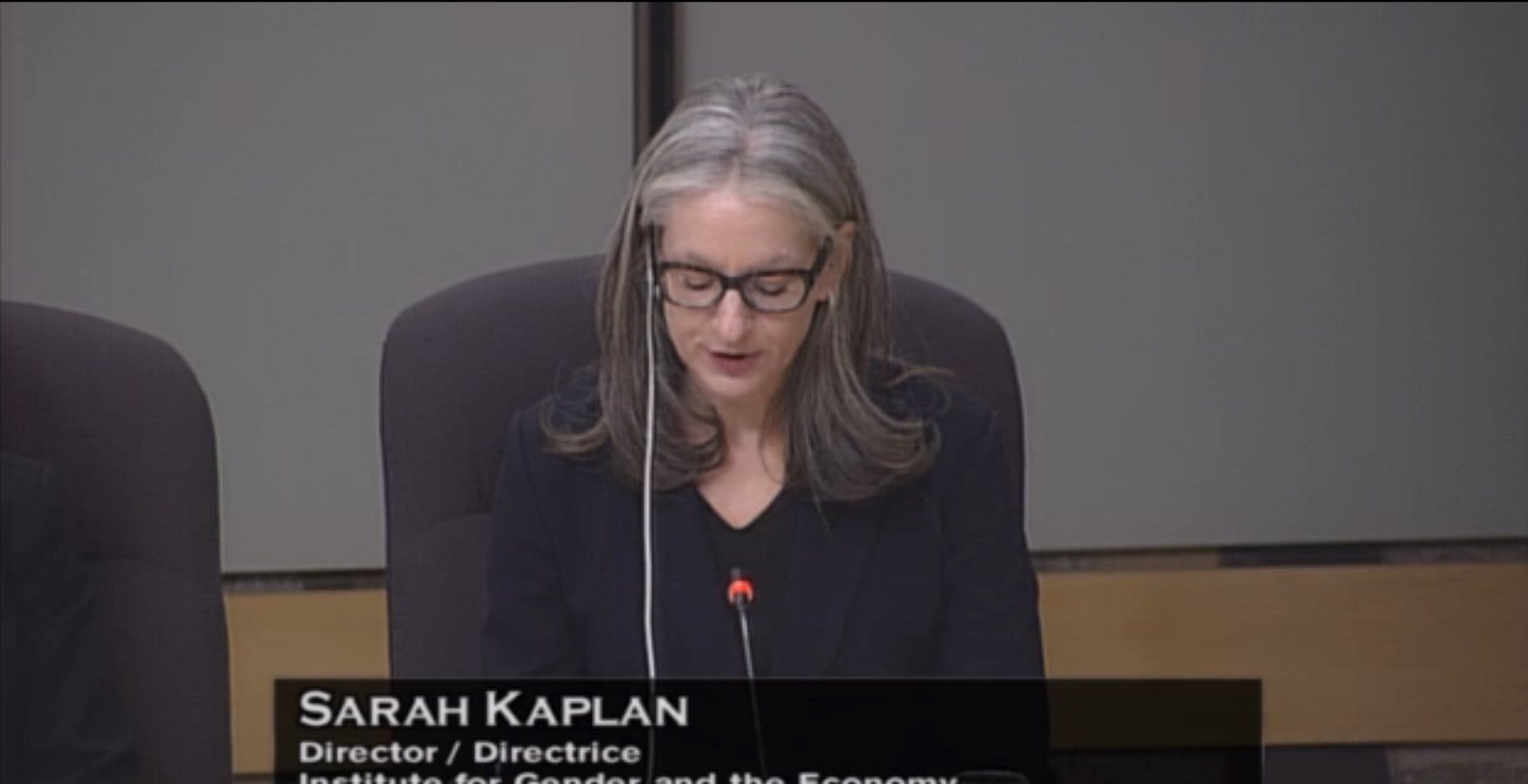
  • Sarah Kaplan appears before Standing Senate Committee on Banking, Trade and Commerce

    Sarah Kaplan appears before Standing Senate Committee on Banking, Trade and Commerce

    Bill C-25 has been contemplated by the legislature since 2014. Among other provisions, it includes a “comply or explain” provision to improve diversity on corporate boards. On December 6, 2017, Sarah Kaplan was invited to be a witness to the Standing Senate Committee on Banking, Trade and Commerce.

    The video of the full testimony and Q&A period is available here. (You can start at 16:25:40 for the beginning of her testimony).

    A copy of her opening remarks is here and below.

    The Globe and Mail op-ed “Why Ottawa needs to nudge Canada’s boards toward greater diversity,” by Senators Omidvar and Massicotte proposing two key amendments for which we advocated – requiring targets and defining diversity – is here.


    Testimony before Senate Standing Committee on Banking, Trade and Commerce

    Good afternoon. Je voudrais remercier le Comité de m’avoir invité aujourd’hui.

    It is an honor to appear before this Committee to comment on Bill C-25, in particular as it relates to diversity in the boardroom and the executive suite.

    I am a Professor and Director of the Institute for Gender and the Economy at the Rotman School of Management at the University of Toronto. In this role, I promote the use of rigorous academic research to inform policy and practice, which is particularly important in the realm of gender and diversity where many common beliefs are not actually supported by data and may end up getting in the way of progress.

    The goal of the diversity provisions of Bill C-25 is to increase representation of women and other underrepresented groups in business leadership. From a legislative and regulatory standpoint, there are two ways to achieve this goal. The first is quotas and the second is regulated disclosure. Bill C-25, and its precursor at the OSC, follows the latter path.

    The working hypothesis underlying this “comply or explain” approach is that disclosure of diversity statistics will be enough to motivate firms to become more inclusively representative.

    Unlike when Bill C-25 was first proposed, we now ­– in late 2017 – have the benefit of 3 years of evidence about whether this hypothesis has been proven.

    Where do we see the 40% figure in Canada? Almost 40% of companies still have no women on their board.

    When we look at practices to promote diversity, only 35% of companies reported having a written diversity policy, and only 11% of firms had diversity targets.

    Disappointingly, of the 505 board seats that were filled last year, 74% were filled by men. At this rate, parity will be far beyond our reach for decades. If, as suggested in your hearing last week, replacement is the barometer of progress, then we are not making much headway.

    These figures raise a question about whether the current bill will achieve its objectives. A wealth of social science research has observed the powerful effect of bias that is embedded not only in our minds but also in our systems, processes and structures. This manifests itself in the faulty assumption that qualified women do not exist or that the current imbalance we see today was produced by a meritocratic process. For a law to have a fighting chance of displacing these dynamics, it must be equally powerful. And, this is why more and more countries are opting for quotas which have meaningful consequences for not meeting targets (specifically: substantial fines, invalidating new board appointments, withholding of board compensation, ineligibility for government contracts or dissolution of the company).

    Given that Bill C-25 does not contemplate quotas, I would like to suggest three areas where the Bill could be strengthened to increase the likelihood that it helps Canadian business achieve more appropriate representation of women and other underrepresented groups.

    As a preface, let me note that – as an American immigrant to Canada – it is my view that the Canadian government has an opportunity to show global leadership on inclusion and representation. We are at a moment in the world when Canada can be a beacon for social justice, and I hope we can grasp every opportunity to do so.

    1) First, it is a global advance for the Bill to consider forms of diversity other than gender. It is again an opportunity for Canada to be at the forefront. This additional specification is important because research suggests that many diversity initiatives tend to benefit white women while ignoring other underrepresented groups.

    In the current form of the Bill and regulations, diversity remains undefined. The risk here is that the lack of detail will lead firms to use an overly broad definition that will not accomplish the intended representation goals. In the United States, where the Securities Exchange Commission requires publicly traded companies to report on whether they consider diversity in director appointments, the majority of firms used broad definitions focused on a director’s experience or skills, which then justified failure to appoint people from underrepresented groups.

    This is the challenge with the “marketplace framework” suggested by Minister Bains in his testimony last week before this committee in which he focused on “diversity of thought, perspectives and ideas.” As a result, I recommend that a clear definition of diversity be included, likely from the Employment Equity Act, and not just as “guidance.”

    2) Second, the Bill in its current form only requires firms to report whether or not they have targets. My fear is that this voluntary approach will not move us beyond the 11% percent that report having targets now. I suggest that it would usefully include a requirement that firms set and report targets, rather than just explaining why they don’t. Targets are valuable because they give citizens and shareholders a means for holding firms accountable. They are also valuable because they help firms achieve a critical mass of female representation on the board so that women are not reduced to token status, which research shows, reduces their effectiveness.

    3) Third, and finally, I suggest a separate or supplemental reporting mechanism rather than just requiring the information to be listed in company Proxy statement. “Comply or explain” relies on comparison across peers and shareholder pressure to improve representation on boards. However, it is very hard to accomplish this goal when the required information can be placed anywhere and in any form in a lengthy proxy statement. To collect the information across firms, someone has to read each statement individually, look for these data and then pull them together in a report. If, however, this information were reported by companies in a separate web form, the data could be easily compiled and reported to all Canadians on an annual basis. Companies could be easily ranked and their progress tracked over time. Comply or explain’s mechanisms are substantially weakened if the comparative data are not readily accessible to shareholders and to all Canadians.

    I am at your disposal to answer any questions including to continue the conversation from last week about the business case for diversity, the implications for meritocracy or other topics.

    Thank you very much. Merci beaucoup.


  • 2nd Annual Research Roundtable on Gender and the Economy

    2nd Annual Research Roundtable on Gender and the Economy

    [fusion_builder_container hundred_percent=”no” equal_height_columns=”no” menu_anchor=”” hide_on_mobile=”small-visibility,medium-visibility,large-visibility” class=”” id=”” background_color=”” background_image=”” background_position=”center center” background_repeat=”no-repeat” fade=”no” background_parallax=”none” parallax_speed=”0.3″ video_mp4=”” video_webm=”” video_ogv=”” video_url=”” video_aspect_ratio=”16:9″ video_loop=”yes” video_mute=”yes” overlay_color=”” video_preview_image=”” border_color=”” border_style=”solid” padding_top=”” padding_bottom=”” padding_left=”” padding_right=”” type=”legacy”][fusion_builder_row][fusion_builder_column type=”1_1″ layout=”1_1″ background_position=”left top” background_color=”” border_color=”” border_style=”solid” border_position=”all” spacing=”yes” background_image=”” background_repeat=”no-repeat” padding_top=”” padding_right=”” padding_bottom=”” padding_left=”” margin_top=”0px” margin_bottom=”0px” class=”” id=”” animation_type=”” animation_speed=”0.3″ animation_direction=”left” hide_on_mobile=”small-visibility,medium-visibility,large-visibility” center_content=”no” last=”true” min_height=”” hover_type=”none” link=”” border_sizes_top=”” border_sizes_bottom=”” border_sizes_left=”” border_sizes_right=”” first=”true”][fusion_text columns=”” column_min_width=”” column_spacing=”” rule_style=”” rule_size=”” rule_color=”” hue=”” saturation=”” lightness=”” alpha=”” content_alignment_medium=”” content_alignment_small=”” content_alignment=”” hide_on_mobile=”small-visibility,medium-visibility,large-visibility” sticky_display=”normal,sticky” class=”” id=”” margin_top=”” margin_right=”” margin_bottom=”” margin_left=”” fusion_font_family_text_font=”” fusion_font_variant_text_font=”” font_size=”” line_height=”” letter_spacing=”” text_transform=”” text_color=”” animation_type=”” animation_direction=”left” animation_color=”” animation_speed=”0.3″ animation_delay=”0″ animation_offset=”” logics=””]In the fall of 2017, we hosted our 2nd Annual Research Roundtable for academic researchers. The discussion featured a keynote from Professor Laura Morgan Roberts, idea blitzes from Laura Doering, Bryan Gaensler, Joyce He, Matti Siemiatycki and Wally Smieliauskas, and a debate on the pros and cons of diversity training featuring Rafael Gomez, Sonia Kang, Eden King, and Winny Shen.

    Check out the research brief: Does diversity training really work?

    See some recaps of Laura Morgan Roberts’ talk: “Seven Conversations (We Should Be Having) About Diversity” below:

    The Pitfalls of the Virtuous Self

    The Authentic Self and Power

    [/fusion_text][fusion_separator style_type=”none” hide_on_mobile=”small-visibility,medium-visibility,large-visibility” class=”” id=”” sep_color=”” top_margin=”50″ bottom_margin=”50″ border_size=”” icon=”” icon_circle=”” icon_circle_color=”” width=”” alignment=”center” /][fusion_button link=”https://www.gendereconomy.org/events/” text_transform=”” title=”” target=”_blank” link_attributes=”” alignment=”” modal=”” hide_on_mobile=”small-visibility,medium-visibility,large-visibility” class=”” id=”” color=”custom” button_gradient_top_color=”#62bd19″ button_gradient_bottom_color=”#62bd19″ button_gradient_top_color_hover=”#00c2e2″ button_gradient_bottom_color_hover=”#00c2e2″ accent_color=”” accent_hover_color=”” type=”” bevel_color=”” size=”” stretch=”yes” icon=”” icon_position=”left” icon_divider=”no” animation_type=”” animation_direction=”left” animation_speed=”0.3″ animation_offset=””]See more past events[/fusion_button][fusion_separator style_type=”none” hide_on_mobile=”small-visibility,medium-visibility,large-visibility” class=”” id=”” sep_color=”” top_margin=”20″ bottom_margin=”20″ border_size=”” icon=”” icon_circle=”” icon_circle_color=”” width=”” alignment=”center” /][fusion_title margin_top=”” margin_bottom=”” hide_on_mobile=”medium-visibility,large-visibility” class=”” id=”” size=”5″ content_align=”center” style_type=”default” sep_color=””]

    Or register below for these upcoming events

    [/fusion_title][fusion_recent_posts layout=”default” hover_type=”none” columns=”3″ number_posts=”3″ offset=”0″ pull_by=”category” cat_slug=”events” exclude_cats=”past” tag_slug=”” exclude_tags=”” thumbnail=”yes” title=”yes” meta=”no” meta_author=”no” meta_categories=”no” meta_date=”yes” meta_comments=”yes” meta_tags=”no” content_alignment=”” excerpt=”no” excerpt_length=”35″ strip_html=”yes” scrolling=”no” hide_on_mobile=”medium-visibility,large-visibility” class=”” id=”” animation_type=”” animation_direction=”left” animation_speed=”0.3″ animation_offset=”” /][/fusion_builder_column][/fusion_builder_row][/fusion_builder_container]

  • Emotional intelligence series: Stéphane Côté

    Emotional intelligence series: Stéphane Côté

    Rotman’s Women in Management Association (WIMA) and their ally partners WiMen have launched a series of videos on gender and emotional intelligence. Part 1 is an interview with Stéphane Côté, Professor of Organizational Behaviour and HR Management at the Rotman School on how perceptions of men’s and women’s emotions affect their leadership effectiveness. More on his bio here.

  • The debate about quotas

    The debate about quotas

    [fusion_builder_container admin_label=”” hundred_percent=”no” equal_height_columns=”no” menu_anchor=”” hide_on_mobile=”small-visibility,medium-visibility,large-visibility” class=”” id=”” background_color=”” background_image=”” background_position=”center center” background_repeat=”no-repeat” fade=”no” background_parallax=”none” enable_mobile=”no” parallax_speed=”0.3″ video_mp4=”” video_webm=”” video_ogv=”” video_url=”” video_aspect_ratio=”16:9″ video_loop=”yes” video_mute=”yes” video_preview_image=”” border_size=”” border_color=”” border_style=”solid” margin_top=”20″ margin_bottom=”” padding_top=”” padding_right=”” padding_bottom=”” padding_left=””][fusion_builder_row][fusion_builder_column type=”3_4″ layout=”3_4″ spacing=”” center_content=”no” hover_type=”none” link=”” min_height=”” hide_on_mobile=”small-visibility,medium-visibility,large-visibility” class=”” id=”” background_color=”” background_image=”” background_position=”left top” background_repeat=”no-repeat” border_size=”0″ border_color=”” border_style=”solid” border_position=”all” padding_top=”” padding_right=”” padding_bottom=”” padding_left=”” margin_top=”” margin_bottom=”” animation_type=”” animation_direction=”left” animation_speed=”0.3″ animation_offset=”” last=”no”][fusion_text columns=”” column_min_width=”” column_spacing=”” rule_style=”default” rule_size=”” rule_color=”” hide_on_mobile=”small-visibility,medium-visibility,large-visibility” class=”” id=””]

    Download the infographic. View the video explainer.

    The gender equality challenge

    Policy makers and organizations have been working toward achieving gender diversity for many decades, but progress has been slow and is perhaps even stagnating. Only 5% of the 500 CEOs on the 2016 Fortune 500 list are women, a mere 27 out of 500. Men are two to three times more likely to hold senior management positions, a figure that has stagnated for almost 30 years despite widespread efforts to remedy this imbalance. Employers still lean toward hiring men over women who have similar qualifications, and the gender wage gap persists in numerous occupations. In Canada, despite implementation of a “comply or explain” disclosure regime to facilitate gender diversity on boards of directors, 45% of companies still have no women on their boards.1 Notwithstanding extensive research on the topic and widespread diversity initiatives, gender representation remains a persistent problem in corporate leadership and in the workforce.

    Only 5% of the 500 CEOs on the 2016 Fortune 500 list are women, a mere 27 out of 500.

    Many have believed that it would be enough to develop “gender blind” or “gender neutral” management practices. The argument has been, if employers introduce structures and systems that focus on the objective merit of employees and job candidates, they should be able to overcome discrimination based on implicit or explicit biases. Yet, these systems seem not to have helped organizations make enough progress. Even some gender aware policies, such as requirements to fill candidate pools with underrepresented minorities without setting hard quotas, have failed to solve the key problem of female representation. At the rate we are going in North America, achieving 30% female representation on boards of directors, for example, would require at least 30 years.

    Achieving 30% female representation on boards of directors would require at least 30 years.

    Because of this sluggish progress toward gender equality, organizations and policy makers are increasingly considering the possibility of implementing quotas, particularly at the level of board directors, to achieve gender parity. Quotas, it is argued, would jump start the process of achieving equal representation. Yet, the idea of imposing quotas on employers – even only at the level of the board of directors – has been met with resistance. As a result, quotas have remained shrouded in controversy about their expected benefits and potential pitfalls.

    Recently, leading scholars gathered to debate this question during the Gender and the Economy Research Roundtable held at the Rotman School of Management at the University of Toronto. In the format of an Oxford-style debate, Professors Tiziana Casciaro (University of Toronto, Rotman School), Aaron Dhir (Osgoode Hall Law School, York University), Lisa Leslie (NYU Stern School) and Nico Lacetera (University of Toronto, Institute for Management and Innovation; National Bureau of Economic Research) presented their research-based arguments for and against quotas as an important and useful tool for achieving gender equality in the workforce. The points below are a summary of the main arguments made in the debate.

    Why quotas might not work

    Research suggests that there might be a number of reasons for being concerned about the effect of quotas.

    • Illegal or perceived as unjust. In some jurisdictions, quotas may violate legislation. In the United States, for example, constitutional law would likely present insurmountable obstacles to the promulgation of a quota-based regime. Even where quotas are legal, people may interpret quotas as a violation of perceptions of justice at the individual level, even if they are creating more fairness in terms of gender distribution at the societal level.2 From a psychological perspective, any gain for one group (in this case, women) is often perceived as a loss for another group (in this case, men), leading men potentially to perceive quotas as unfair.3
    • Potential stigma. One risk is that those women who are included in boards due to the imposition of quotas might be stigmatized. There is a possibility that they will be seen as less qualified and only on the board because of the quotas. This may hurt their ability to contribute to board discussions and undermine their effectiveness. This is particularly true if women are added to boards at token levels. Evidence suggests that a single woman on a board will likely be marginalized or delegitimized.4

    When a woman is the only female member on a board, she will likely be marginalized or delegitimized

    • Reduced employee engagement. Perceptions of unfairness can trigger unintended negative consequences. Employers who impose quotas may become less attractive to male job applicants. Quotas may also lead to low engagement and negative job attitudes among male employees. Furthermore, this perception of unfairness may cause men to become less supportive of diversity policies than they were prior to implementing quotas.
    • Reduced support for diversity initiatives. Research has long established that people can be motivated by intrinsic (personal) or extrinsic (externally provided) rewards. Quotas act as an extrinsic motivator because they are a rule imposed externally that forces managers to behave in a certain way. Psychological research has consistently shown that when someone else forces or rewards people for doing something, they become less motivated about the task: they attribute their motivation to coercion. In the case of quotas, even if employees personally believe in working toward gender diversity, imposed quotas can make them believe that they only care about diversity because the company wants them to, not because they do personally. Indeed, research suggests that external prompts, such as mandatory diversity training or grievance systems, are associated with negative impacts on the representation of women.5

    Psychological research has consistently shown that when someone else forces or rewards people for doing something, they become less motivated about the task

    • No trickle down. Much of the conversation about quotas has focused on assuring that more women are represented on corporate boards of directors. This has the effect of democratizing access to opportunities in an important area of leadership. However, there is evidence that such quotas fail to lead to broader organizational impacts. For example, the quotas implemented in Norway did result in women holding 40% of board seats, but the positive effects in the boardrooms did not trickle down to lower levels in companies. A study showed that the benefits were strictly limited to the board level, and underrepresentation and wage disparities persisted at all other levels.6 For those who have argued that greater proportions of women on boards are correlated with performance, little evidence was found in Norway to support this claim.7 8 9
    • Failure to address underlying discrimination. Evidence from Norway suggests that quotas may not change anything about the deeper-rooted problem. For example, many Norwegian companies delisted from the stock exchange at the time quotas were imposed (though some of this may have been due to a contemporaneous modification in rules that changed the requirement that financial firms had to be public). In the early days of the quota implementation, a small group of women called the “golden skirts” came to hold several board positions at different organizations. Quotas merely require a certain number of women to be present in a workplace, and this imposed number can distort the real purposes for promoting gender parity and diversity.

    Why quotas could work

    Yet, other evidence suggests that concerns about the negative impacts of quotas may be overblown.

    • Fears not realized. In interviews of board members in the US and Europe, it appeared that there is hostility toward quotas in countries that don’t have them and enthusiasm for quotas in countries that do have them.10 In other words, only those who were unfamiliar with quotas thought they were a bad thing. Indeed, when examining the lived experiences of board members in Norway, there was a strong narrative of change.11 While directors in the Norwegian companies had initially strongly opposed quotas, once quotas were imposed by the government, the directors eventually changed their minds. According to these directors, their fears were unfounded, and, after a period of transition, they felt that the increased representation of women on boards actually improved overall governance and decision making. One analogy that some have made is to that of banning smoking in restaurants and bars. These policies – initially vehemently opposed by business establishments as risking financial losses – now are widely accepted and favourably viewed as a public good by almost everyone.

    There is hostility toward quotas in countries that don’t have them and enthusiasm for quotas in countries that do have them

    • No pipeline problem. An initial question about imposing quotas is always: where will we find the women? A survey of more than 1,000 board members found that men attributed the existing imbalance to a lack of women in the candidate pools, whereas women explained it as a function of established closed male networks and biases. While in Norway, there was an initial “golden skirt” effect where a few women held many seats, after a few years this problem resolved itself and now there are many different women represented on the country’s boards of directors. The imposition of quotas led boards to search more creatively and expansively for board members – beyond their Rolodexes – and this dramatically increased the candidate pool.
    • No stigma. Evidence from the Norwegian experience suggests that few female board members who had been beneficiaries of the quotas reported feeling stigmatized or isolated. This was in part because with a 40% quota, women achieved a critical mass on every board. At 40% representation, a group is no longer marginalized. Simply having enough women is a means for countering the potential negative stigma, while adding only one or two women leads to tokenization and delegitimization.

    With a 40% quota, women achieved a critical mass on every board

    • Substantial Positive effects. Research suggests that insisting on a critical mass of women on boards can lead to several benefits in terms of board governance, including more robust deliberation, disruption of groupthink, more effective risk management, higher quality monitoring of management, and more systematic work.12 Indeed, because searches for women board members often lead to candidates who may not fit the typical profile, women end up bringing more diverse experience in a wider variety of functional areas than men – often adding skills in the areas of HR, government relations, and marketing that might have been lacking.13 The new women board members introduced new viewpoints not previously considered.

    The new women board members introduced new viewpoints not previously considered.

    • A useful shock to the system. As ample research has established, gender biases are built into many organizational systems and human decision making processes. Psychological research shows that we are susceptible to unconscious biases and stereotypes. Additionally, research tells us that we form networks with others who are socially similar to ourselves. As a whole, these unconscious processes are deeply embedded in individuals and organizational systems, and it is unrealistic to expect that these will disappear without an abrupt external shock. Under the Canadian “comply or explain” approach to board diversity, the primary explanation offered by companies who do not adopt gender targets is that they recruit “based on merit.”14 However, research shows that supposedly meritocratic systems are as susceptible to these biases as other systems (and perhaps even more).15 Thus, quotas provide a stringent and structured framework to overcome these unconscious biases such that there is less room for unintended discrimination to emerge.

    Next steps

    We can glean advice from this debate about what mistakes and pitfalls to avoid when enforcing quotas – or more broadly, affirmative action programs – and what some alternatives to this form of action may be.

    If you do impose quotas, how can you avoid the pitfalls?

    The debated suggested that quotas can be very effective and even well-received if implemented with care. Some actions include:

    • Change the narrative. There is evidence that how affirmative action plans are framed matters. In particular, when decision makers justify an affirmative action (quota) plan because of the need to remedy past discrimination or the desire to increase diversity, they reduce negative reactions to the policy. Alternatively, just saying that a certain group is underrepresented increases negative reactions.16
    • Establish a critical mass. A quota of 20% women is unlikely to perpetuate any positive change and will instead incur negative reactions. As shown in interviews with female directors in Norway, marginalization becomes difficult when 40% of the workforce are women. This is a potential difficulty with the “comply or explain” approach. It may lead boards to make incremental progress, adding one woman at a time. Where there is low representation, then the risks of stigmatization and tokenism increase.

    As shown in interviews with female directors in Norway, marginalization becomes difficult when 40% of the board members are women.

    • Expand your search. To avoid the problem of having the same small group of women getting appointed to various different boards or positions – termed “golden skirts” in Norway – employers should be actively seeking and reaching out to women so they have a large qualified pool from which they can extract large numbers of qualified women.
    • Expand your definition of the ideal candidate. There are competent and qualified women out there, but companies must look beyond their typical circle of recruitment and reach out. Research has shown that people have prototypes about the ideal worker, or the ideal leader, which is typically male. Recruiters need to expand their idea of an ideal candidate beyond the male prototype and create a large pool of qualified female candidates.
    • Provide support to facilitate quota implementation. Simply imposing a quota is not enough, and there should be support in the form of policies to facilitate quotas. For example, parental leave policies and work re-entry programs for both men and women should be in place to avoid potential pitfalls and help smooth out the process.
    • Expect some discomfort. Moving to quotas may not be a smooth process. Even in Norway, where there is general satisfaction with quotas now, there was a period of transition. Organizational change is never easy, but it is the price to pay for the benefits.

    If you don’t use quotas, how can you make enough progress?17 18

    The debate suggested some tools for making change without using quotas. These include:

    • Engage in targeted recruiting. Reach out and find women to apply for jobs and offer them resources for training, but do not impose a required number of women to be hired. Research shows that the larger number of women in your candidate pool, the higher the chance you will hire a woman. Recent research has shown that when you have just one woman in the finalist candidate pool, there is statistically no chance that she will be hired.19

    The larger number of women in your candidate pool, the higher the chance you will hire a woman

    • Provide voluntary opportunities for diversity training. Voluntary diversity training for managers are programs where they can voluntarily sign up for training sessions that teach them the benefits of diversity and how to reduce unconscious bias. These programs, when voluntary, have been shown through research to increase diversity efforts and beliefs, and increase the number of women and minorities hired.
    • Appoint diversity managers. Designating specific roles dedicated to creating and sustaining diversity at the workplace will signal that the organization is committed to diversity and will create more awareness about diversity issues. Research has also shown that appointing diversity managers increases social accountability, or the desire to look more fair-minded for other managers, and increases the hiring rate of women and other minorities.
    • Create corporate diversity task forces. Effective task forces include department heads and other line executives as well as members of underrepresented groups. Task forces can analyze information on diversity for the whole company, for business units, and for departments to figure out what needs attention and then develop action plans for change. These task forces also help promote social accountability of the organization as a whole.
    • Hold people accountable. One form of accountability is through transparency, as research shows that people monitor their own biases when they expect that others will see what decisions they make. A second form of accountability is through external monitoring, in which achieving diversity targets is part of a person’s compensation and reward system.

    People monitor their own biases when they expect that others will see what decisions they make.

    The debate helps bring research-based evidence to change the conversation about quotas.

    Suggested reading list for more information

    Dhir, Aaron A. Challenging boardroom homogeneity: Corporate law, governance, and diversity. Cambridge University Press, 2015.

    Dhir, Aaron A. “What Norway Can Teach the U.S. About Getting More Women Into Boardrooms.” The Atlantic. Atlantic Media Company, 4 May 2015.

    Dobbin, Frank, and Alexandra Kalev. “Why Diversity Programs Fail.” Harvard Business Review. Harvard Business Publishing, Aug. 2016.

    Johnson, Stefanie K., David R. Hekman, and Elsa T. Chan. “If There’s Only One Woman in Your Candidate Pool, There’s Statistically No Chance She’ll Be Hired.” Harvard Business Review. Harvard Business Publishing, 26 Apr. 2016.

    Kaplan, Sarah (2015). “Meritocracy: From Myth to Reality.” Rotman Magazine (Spring: 48-53)

    Wiersema, Margarethe, and Marie Louise Mors. “What Board Directors Really Think of Gender Quotas.” Harvard Business Review. Harvard Business Press, 14 Nov. 2016.


    References cited in summary

    CSA Multilateral Staff Notice 58-308 Staff Review of Women on Boards and in Executive Officer Positions – Compliance with NI 58-101 Disclosure of Corporate Governance Practices, September 28, 2016

    Lowery, B. S., Unzueta, M. M., Knowles, E. D., & Goff, P. A. (2006). Concern for the in-group and opposition to affirmative action. Journal of Personality and Social Psychology, 90, 961-974.

    Shteynberg, G., Leslie, L. M., Knight, A. P., & Mayer, D. M. (2011). But affirmative action hurts us! Race-related beliefs shape perceptions of White disadvantage and policy unfairness. Organizational Behavior and Human Decision Processes, 115, 1-12.

    Leslie, L. M., Mayer, D. M., & Kravitz, D. A. (2014). The stigma of affirmative action: A stereotyping-based theory and meta-analytic test of the consequences for performance. Academy of Management Journal, 57, 964-989.

    Dobbin, F., Schrage, D., & Kalev, A. (2015). Rage against the Iron Cage: The Varied Effects of Bureaucratic Personnel Reforms on Diversity. American Sociological Review.

    Bertrand, M., Black, S. E., Jensen, S., & Lleras-Muney, A. (2014). Breaking the glass ceiling? The effect of board quotas on female labor market outcomes in Norway (No. w20256). National Bureau of Economic Research.

    Adams, R. B., & Ferreira, D. (2009). Women in the boardroom and their impact on governance and performance. Journal of Financial Economics, 94, 291-309.

    Ahern, K. R., & Dittmar, A. K. (2012). The changing of the boards: The impact on firm valuation of mandated female board representation. Quarterly Journal of Economics, 127, 137-197.

    Matsa, D. A., & Miller, A. R. (2013). A female style in corporate leadership? Evidence from quotas. American Economic Journal: Applied Economics, 5, 136-69.

    10 Wiersema, Margarethe, and Marie Louise Mors. “What Board Directors Really Think of Gender Quotas.” Harvard Business Review. Harvard Business Press, 14 Nov. 2016.

    11 Dhir, Aaron A. Challenging boardroom homogeneity: Corporate law, governance, and diversity. Cambridge University Press, 2015.

    12 Dhir, Aaron A. Challenging boardroom homogeneity: Corporate law, governance, and diversity. Cambridge University Press, 2015.

    13 Kim, Daehyun & Laura Starks, Gender Diversity on Corporate Boards: Do Women Contribute Unique Skills? American Economic Review: Papers & Proceedings, 106(5): 267-27

    14 CSA Multilateral Staff Notice 58-308 Staff Review of Women on Boards and in Executive Officer Positions – Compliance with NI 58-101 Disclosure of Corporate Governance Practices, September 28, 2016, p. 6.

    15 Kaplan, Sarah (2015). Meritocracy: From Myth to Reality. Rotman Magazine (Spring: 48-53)

    16 Harrison, D. A., Kravitz, D. A., Mayer, D. M., Leslie, L. M., & Lev-Arey, D. (2006). Understanding attitudes toward affirmative action programs in employment: Summary and meta-analysis of 35 years of research. Journal of Applied Psychology, 91, 1013-1036.

    17 Dobbin, Frank, and Alexandra Kalev. “Why Diversity Programs Fail.” Harvard Business Review. Harvard Business Publishing, Aug. 2016.

    Dobbin, F., Schrage, D., & Kalev, A. (2015). Rage against the Iron Cage: The Varied Effects of Bureaucratic Personnel Reforms on Diversity. American Sociological Review.

    19 Johnson, Stefanie K., David R. Hekman, and Elsa T. Chan. “If There’s Only One Woman in Your Candidate Pool, There’s Statistically No Chance She’ll Be Hired.” Harvard Business Review. Harvard Business Publishing, 26 Apr. 2016.[/fusion_text][fusion_separator style_type=”none” hide_on_mobile=”small-visibility,medium-visibility,large-visibility” class=”” id=”” sep_color=”” top_margin=”20″ bottom_margin=”20″ border_size=”” icon=”” icon_circle=”” icon_circle_color=”” width=”” alignment=”center” /][fusion_button link=”https://www.gendereconomy.org/category/research-overviews/” text_transform=”” title=”” target=”_blank” link_attributes=”” alignment=”” modal=”” hide_on_mobile=”small-visibility,medium-visibility,large-visibility” class=”” id=”” color=”custom” button_gradient_top_color=”#62bd19″ button_gradient_bottom_color=”#62bd19″ button_gradient_top_color_hover=”#00c2e2″ button_gradient_bottom_color_hover=”#00c2e2″ accent_color=”” accent_hover_color=”” type=”” bevel_color=”” border_width=”” size=”” stretch=”yes” shape=”” icon=”” icon_position=”left” icon_divider=”no” animation_type=”” animation_direction=”left” animation_speed=”0.3″ animation_offset=””]See more research overviews[/fusion_button][fusion_separator style_type=”none” hide_on_mobile=”small-visibility,medium-visibility,large-visibility” class=”” id=”” sep_color=”” top_margin=”20″ bottom_margin=”20″ border_size=”” icon=”” icon_circle=”” icon_circle_color=”” width=”” alignment=”center” /][fusion_recent_posts layout=”default” picture_size=”fixed” hover_type=”none” columns=”3″ number_posts=”3″ offset=”0″ pull_by=”category” cat_slug=”research-overviews” exclude_cats=”” tag_slug=”” exclude_tags=”” thumbnail=”yes” title=”yes” meta=”no” meta_author=”no” meta_categories=”no” meta_date=”yes” meta_comments=”yes” meta_tags=”no” content_alignment=”” excerpt=”no” excerpt_length=”35″ strip_html=”yes” scrolling=”no” hide_on_mobile=”small-visibility,medium-visibility,large-visibility” class=”” id=”” animation_type=”” animation_direction=”left” animation_speed=”0.3″ animation_offset=”” /][/fusion_builder_column][fusion_builder_column type=”1_4″ layout=”1_4″ spacing=”” center_content=”no” hover_type=”none” link=”” min_height=”” hide_on_mobile=”small-visibility,medium-visibility,large-visibility” class=”” id=”” background_color=”” background_image=”” background_position=”left top” background_repeat=”no-repeat” border_size=”0″ border_color=”” border_style=”solid” border_position=”all” padding_top=”” padding_right=”” padding_bottom=”” padding_left=”” margin_top=”” margin_bottom=”” animation_type=”” animation_direction=”left” animation_speed=”0.3″ animation_offset=”” last=”no”][fusion_title hide_on_mobile=”small-visibility,medium-visibility,large-visibility” class=”briefsummary” id=”” content_align=”left” size=”3″ font_size=”” line_height=”” letter_spacing=”” margin_top=”” margin_bottom=”” text_color=”” style_type=”none” sep_color=””]

    Research brief prepared by

    Joyce He and Sarah Kaplan

    Published

    October 26, 2017

    [/fusion_title][fusion_widget_area name=”avada-custom-sidebar-researchbriefsidebar” title_size=”” title_color=”” background_color=”” padding_top=”” padding_right=”” padding_bottom=”” padding_left=”” hide_on_mobile=”small-visibility,medium-visibility,large-visibility” class=”” id=”” /][/fusion_builder_column][/fusion_builder_row][/fusion_builder_container]

  • Leaning out: Bad experiences in recruiting add to the gender gap

    Leaning out: Bad experiences in recruiting add to the gender gap

    [fusion_builder_container admin_label=”” hundred_percent=”no” equal_height_columns=”no” menu_anchor=”” hide_on_mobile=”small-visibility,medium-visibility,large-visibility” class=”” id=”” background_color=”” background_image=”” background_position=”center center” background_repeat=”no-repeat” fade=”no” background_parallax=”none” enable_mobile=”no” parallax_speed=”0.3″ video_mp4=”” video_webm=”” video_ogv=”” video_url=”” video_aspect_ratio=”16:9″ video_loop=”yes” video_mute=”yes” video_preview_image=”” border_size=”” border_color=”” border_style=”solid” margin_top=”20″ margin_bottom=”” padding_top=”” padding_right=”” padding_bottom=”” padding_left=””][fusion_builder_row][fusion_builder_column type=”3_4″ layout=”3_4″ spacing=”” center_content=”no” hover_type=”none” link=”” min_height=”” hide_on_mobile=”small-visibility,medium-visibility,large-visibility” class=”” id=”” background_color=”” background_image=”” background_position=”left top” background_repeat=”no-repeat” border_size=”0″ border_color=”” border_style=”solid” border_position=”all” padding_top=”” padding_right=”” padding_bottom=”” padding_left=”” dimension_margin=”” animation_type=”” animation_direction=”left” animation_speed=”0.3″ animation_offset=”” last=”no”][fusion_text columns=”” column_min_width=”” column_spacing=”” rule_style=”default” rule_size=”” rule_color=”” class=”” id=””]

    Summary

    Women remain significantly underrepresented in leadership positions, holding just 16% of senior executive roles in Fortune 500 companies and only 5% of CEO positions. While many explanations for this disparity center on the choices women make, considerable evidence points to employers’ practices–e.g. unconscious bias, stereotyping, and promotion barriers–as the real reason. This paper examines how employers’ recruiting practices may influence a woman’s willingness to consider roles in the same organization in the future. The research shows that women are less likely than men to consider another job at an employer who has previously rejected them–they “lean out” of competition for future jobs. This is not because they subsequently lack confidence but because–when they are in a minority status–women (or any minorities) may interpret the rejection as a sign that they do not belong.

    Research

    For both men and women, rejection is an undesirable but normal part of the process of rising to the top of organizations. It is not unusual to get rejected for promotions, key assignments, or moves. Indeed, rejection is a sign that executives have put their hats in the ring.

    However, for women in a minority status–rejection prompts them to consider whether they belong in the group that rejected them. They begin to wonder if their contributions would be valued in that company. In business, because individuals must apply for many positions and promotions over the course of their careers, this has significant implications for the advancement of women to senior levels because it reduces the number of applicants for key jobs. The researchers examined three sources of data: (1) an archival data set of more than 10,000 people from an executive search firm, (2) a survey, and (3) a lab experiment.

    The first study used data from a UK-based executive search firm and was restricted to individuals who had considered multiple jobs through the search firm. The authors were able to determine whether an individual had been rejected by a company in the past and look at their decisions about whether they accepted an interview at the same company again. They found that women are less willing than men to consider a job opportunity if they were rejected by the firm in the past.

    Women are less willing than men to consider a job opportunity if they were rejected by the firm in the past.

    The authors then used a survey to look at why this rejection might reduce the likelihood that a woman would apply to the same company in the future. This survey asked a number of questions about a time when the respondent had been rejected for a job that they wanted and had interviewed for. In particular, the respondents were asked about their perception of fair or unfair treatment by the company. All of the respondents who indicated that they would not be interested in applying to the same company again signalled that this was due to unfair treatment or an unfair decision-making process. However, this perception of unfair treatment more strongly affected women’s (versus men’s) decision on whether to apply for a position in this company again.

    The authors then tested the influence that this “belonging uncertainty” and “perceived procedural injustice” had on executives in an experimental setting. The participants were assigned a job applicant’s profile and told they were either accepted or rejected for the position. They were then asked a series of questions to assess how the rejection or acceptance influenced their sense of belonging or injustice.

    The results indicated that for women, rejection triggers “belonging uncertainty,” priming them to perceive less fair treatment and thus making them unwilling to apply to the same firm again.

    The conclusion is that firms may want to focus less on women “leaning in” and more on preventing them from “leaning out.”

    Implications

    • Examine the recruitment process – While there has been increasing attention paid to gender bias in hiring practices, companies should also consider the long-term implications of an unfair recruitment process. For companies seeking to increase the number of women in executive management, their hiring practices at every level of the organization could impact their ability to attract and retain top talent at the executive level. They would do well to communicate very clearly to applicants about the process and how the decisions were made.
    • Deciphering between a “demand” problem and a “supply” problem – The gender gap at executive levels in corporations has often been attributed to individual’s behavior or preferences, resulting in the so-called “supply” or “pipeline” problem (not enough women seeking these kinds of roles). There is mounting evidence that points to a demand-side problem instead: companies are contributing to the gender disparity in executive management through their recruiting behaviors that do not signal a welcoming culture.

    [/fusion_text][fusion_separator style_type=”none” hide_on_mobile=”small-visibility,medium-visibility,large-visibility” class=”” id=”” sep_color=”” top_margin=”20″ bottom_margin=”20″ border_size=”” icon=”” icon_circle=”” icon_circle_color=”” width=”” alignment=”center” /][fusion_button link=”https://www.gendereconomy.org/research-briefs/” text_transform=”” title=”” target=”_blank” link_attributes=”” alignment=”” modal=”” hide_on_mobile=”small-visibility,medium-visibility,large-visibility” class=”” id=”” color=”custom” button_gradient_top_color=”#62bd19″ button_gradient_bottom_color=”#62bd19″ button_gradient_top_color_hover=”#00c2e2″ button_gradient_bottom_color_hover=”#00c2e2″ accent_color=”” accent_hover_color=”” type=”” bevel_color=”” border_width=”” size=”” stretch=”yes” shape=”” icon=”” icon_position=”left” icon_divider=”no” animation_type=”” animation_direction=”left” animation_speed=”0.3″ animation_offset=””]See more research briefs[/fusion_button][fusion_separator style_type=”none” hide_on_mobile=”small-visibility,medium-visibility,large-visibility” class=”” id=”” sep_color=”” top_margin=”20″ bottom_margin=”20″ border_size=”” icon=”” icon_circle=”” icon_circle_color=”” width=”” alignment=”center” /][fusion_recent_posts layout=”default” hover_type=”none” columns=”3″ number_posts=”3″ offset=”0″ pull_by=”category” cat_slug=”research-briefs” exclude_cats=”” tag_slug=”” exclude_tags=”” thumbnail=”yes” title=”yes” meta=”no” meta_author=”no” meta_categories=”no” meta_date=”yes” meta_comments=”yes” meta_tags=”no” content_alignment=”” excerpt=”no” excerpt_length=”35″ strip_html=”yes” scrolling=”no” hide_on_mobile=”small-visibility,medium-visibility,large-visibility” class=”” id=”” animation_type=”” animation_direction=”left” animation_speed=”0.3″ animation_offset=”” /][/fusion_builder_column][fusion_builder_column type=”1_4″ layout=”1_4″ spacing=”” center_content=”no” hover_type=”none” link=”” min_height=”” hide_on_mobile=”small-visibility,medium-visibility,large-visibility” class=”” id=”” background_color=”” background_image=”” background_position=”left top” background_repeat=”no-repeat” border_size=”0″ border_color=”” border_style=”solid” border_position=”all” padding_top=”” padding_right=”” padding_bottom=”” padding_left=”” dimension_margin=”” animation_type=”” animation_direction=”left” animation_speed=”0.3″ animation_offset=”” last=”no”][fusion_title margin_top=”” margin_bottom=”” hide_on_mobile=”small-visibility,medium-visibility,large-visibility” class=”briefsummary” id=”” size=”3″ content_align=”left” style_type=”none” sep_color=””]

    Title

    Leaning Out: How Negative Recruitment Experiences Shape Women’s Decisions to Compete for Executive Roles

    Authors

    Raina A. Brands and Isabel Fernandez-Mateo

    Institutions

    London Business School

    Source

    Administrative Science Quarterly

    Published

    December 2016

    Link

    http://journals.sagepub.com/doi/full/10.1177/0001839216682728

    Research brief prepared by

    Celeste Jalbert

    [/fusion_title][fusion_widget_area name=”avada-custom-sidebar-researchbriefsidebar” title_size=”” title_color=”” background_color=”” padding_top=”” padding_right=”” padding_bottom=”” padding_left=”” hide_on_mobile=”small-visibility,medium-visibility,large-visibility” class=”” id=”” /][/fusion_builder_column][/fusion_builder_row][/fusion_builder_container]

  • Gender Equality and the War for Talent

    Gender Equality and the War for Talent

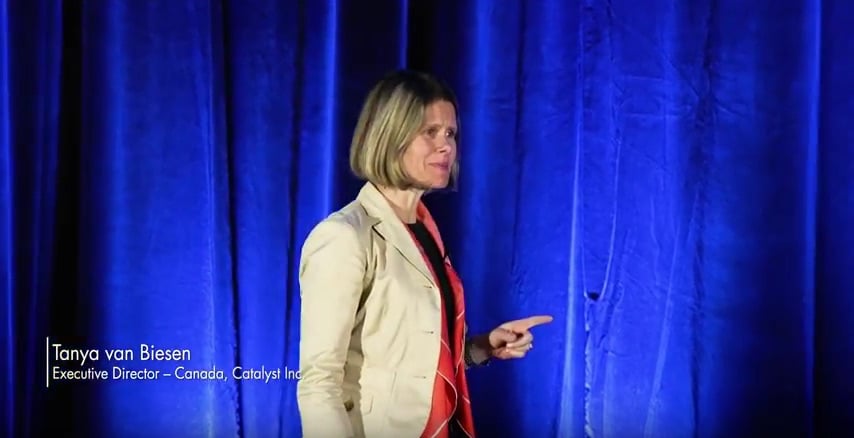
    As part of our Rotman Short Talks series, hear from Tanya van Biesen, Executive Director of Canada, Catalyst, Inc. and Rotman alumna about how working towards gender equality can position firms to do better in the War for Talent. (12 mins)


    Tanya van Biesen is Executive Director of Catalyst Canada, the leading global nonprofit working to accelerate progress for women through workplace inclusion. In this capacity, Tanya is responsible for leading the growth of Catalyst’s operations in Canada, shaping strategies to advance Catalyst’s mission with supporters, corporate partners, professional organizations, CEOs, senior leaders, and stakeholders.

    A recognized leader and influencer with deep experience in the executive search sector at the most senior levels of corporate Canada, Tanya brings more than two decades of corporate leadership and diversity experience to Catalyst. Most recently, she co-led the Financial Services Practice at Spencer Stuart and was a key member of the Canadian Boards Practice, focusing on executive search assignments at the board, CEO, and general management levels. She also led the firm’s Canadian Diversity Practice, specializing in the placement of chief diversity officers and diverse slates of candidates across all search assignments.

    Tanya began her career at Procter & Gamble, working in both Toronto and Calgary in regional and national sales leadership roles. A sought-after speaker on the topic of diversity in the boardroom, Tanya has contributed to several research studies and articles analyzing leadership trends and attributes. She holds an MBA from the University of Toronto’s Rotman School of Business and a Bachelor of Commerce from Queen’s University, and speaks English, French, and Dutch.

  • Women more often volunteer for tasks that hinder their promotability

    Women more often volunteer for tasks that hinder their promotability

    [fusion_builder_container admin_label=”” hundred_percent=”no” equal_height_columns=”no” menu_anchor=”” hide_on_mobile=”small-visibility,medium-visibility,large-visibility” class=”” id=”” background_color=”” background_image=”” background_position=”center center” background_repeat=”no-repeat” fade=”no” background_parallax=”none” enable_mobile=”no” parallax_speed=”0.3″ video_mp4=”” video_webm=”” video_ogv=”” video_url=”” video_aspect_ratio=”16:9″ video_loop=”yes” video_mute=”yes” video_preview_image=”” border_size=”” border_color=”” border_style=”solid” margin_top=”20″ margin_bottom=”” padding_top=”” padding_right=”” padding_bottom=”” padding_left=””][fusion_builder_row][fusion_builder_column type=”3_4″ layout=”3_4″ spacing=”” center_content=”no” hover_type=”none” link=”” min_height=”” hide_on_mobile=”small-visibility,medium-visibility,large-visibility” class=”” id=”” background_color=”” background_image=”” background_position=”left top” background_repeat=”no-repeat” border_size=”0″ border_color=”” border_style=”solid” border_position=”all” padding_top=”” padding_right=”” padding_bottom=”” padding_left=”” dimension_margin=”” animation_type=”” animation_direction=”left” animation_speed=”0.3″ animation_offset=”” last=”no”][fusion_text columns=”” column_min_width=”” column_spacing=”” rule_style=”default” rule_size=”” rule_color=”” class=”” id=””]

    Summary

    There is widespread evidence that gender equality in the workforce has not been achieved. One of the reasons given for this is vertical job segregation, where men advance to higher paying positions more often than women within the same occupation. This study examines one reason men are more likely to be promoted to high-status positions: they dedicate more time to tasks that help their promotability, while women spend more time completing tasks that hinder their promotability.

    Research

    This study tests the theory that women are held back more often in job promotions compared to men because they are more likely to perform low-status tasks. Examples of low-status tasks include event planning, committee work, cleaning out the office fridge, making coffee, re-organizing filing cabinets, or other non-revenue-generating activities. Such tasks benefit the workplace, but they may hinder women’s advancement because they take time away from the pursuit of highly valued job tasks that matter for job appraisals and performance reviews.

    The authors find that women were more likely than men to take on job tasks with low promotability, and further undertook a series of lab experiments to determine the underlying cause. Participants in a group were presented with a task that only one person could volunteer to undertake. In addition, the volunteer benefited less than the others from taking on the task. The experiment design captured the incentives that group members face when asked to volunteer for a task that each member prefers someone else to complete. In other words, all group members want the task to be completed, but the person who volunteers to undertake the task is put at a relative disadvantage.

    The authors found that women were asked to volunteer for low-status tasks more often than men. When given the option of asking either a man or a woman to take on the low-status task, both men and women chose to ask a woman 39 percent of the time. By contrast, men chose to ask a man 29 percent of the time, and women chose to ask a man 26 percent of the time. In addition, while men accepted requests to perform low status tasks 51 percent of the time, women accepted such requests 76 percent of the time

    While men accepted requests to perform low status tasks 51 percent of the time, women accepted such requests 76 percent of the time.

    The group experiments also revealed that in mixed-gender groups, women were 50 percent more likely to volunteer for low status tasks. But when placed in all-female and all-male groups respectively, women were not more likely to volunteer for low-status tasks than the men were. The authors suggest that in all-female groups, individual women see their decision to volunteer as less critical, which in turn decreases their probability of volunteering. Put differently, the findings suggest that both men and women believed that greater female representation meant it was more likely that other women would agree to perform the disadvantageous task, thereby pardoning them of responsibility.

    The authors conclude that gendered differences in volunteering for tasks with low job promotability are not driven by individual preferences or altruism. Instead, they are driven by the belief that women are more likely than men to volunteer for such tasks.

    This study suggests that women’s greater tendency to perform low-status tasks is perpetuated by stereotypical gender beliefs.  In particular, it is reinforced by the belief that women are more likely to sacrifice for the greater good and perform tasks from which they do not benefit. The stereotypical beliefs fueling gendered task allocations, in turn, create barriers to women’s advancement in the workplace.

    Implications

    • Avoid subconscious stereotypes – Stereotypical beliefs about gender are often subconscious and held by both men and women. Managers can adopt explicit practices to overcome subconscious stereotypes and ensure that women are not disadvantaged by the allocation of low-status tasks. For example, one way to promote the even distribution of low-status tasks is to assign them, rather than rely on volunteers.
    • Attach rewards for undertaking low-status tasks – Such tasks could be allotted some form of acknowledgement in annual performance reviews. Attaching rewards to low-status tasks may help to destigmatize such work, and increase buy-in from both men and women.

    [/fusion_text][fusion_separator style_type=”none” hide_on_mobile=”small-visibility,medium-visibility,large-visibility” class=”” id=”” sep_color=”” top_margin=”20″ bottom_margin=”20″ border_size=”” icon=”” icon_circle=”” icon_circle_color=”” width=”” alignment=”center” /][fusion_button link=”https://www.gendereconomy.org/research-briefs/” text_transform=”” title=”” target=”_blank” link_attributes=”” alignment=”” modal=”” hide_on_mobile=”small-visibility,medium-visibility,large-visibility” class=”” id=”” color=”custom” button_gradient_top_color=”#62bd19″ button_gradient_bottom_color=”#62bd19″ button_gradient_top_color_hover=”#00c2e2″ button_gradient_bottom_color_hover=”#00c2e2″ accent_color=”” accent_hover_color=”” type=”” bevel_color=”” border_width=”” size=”” stretch=”yes” shape=”” icon=”” icon_position=”left” icon_divider=”no” animation_type=”” animation_direction=”left” animation_speed=”0.3″ animation_offset=””]See more research briefs[/fusion_button][fusion_separator style_type=”none” hide_on_mobile=”small-visibility,medium-visibility,large-visibility” class=”” id=”” sep_color=”” top_margin=”20″ bottom_margin=”20″ border_size=”” icon=”” icon_circle=”” icon_circle_color=”” width=”” alignment=”center” /][fusion_recent_posts layout=”default” hover_type=”none” columns=”3″ number_posts=”3″ offset=”0″ pull_by=”category” cat_slug=”research-briefs” exclude_cats=”” tag_slug=”” exclude_tags=”” thumbnail=”yes” title=”yes” meta=”no” meta_author=”no” meta_categories=”no” meta_date=”yes” meta_comments=”yes” meta_tags=”no” content_alignment=”” excerpt=”no” excerpt_length=”35″ strip_html=”yes” scrolling=”no” hide_on_mobile=”small-visibility,medium-visibility,large-visibility” class=”” id=”” animation_type=”” animation_direction=”left” animation_speed=”0.3″ animation_offset=”” /][/fusion_builder_column][fusion_builder_column type=”1_4″ layout=”1_4″ spacing=”” center_content=”no” hover_type=”none” link=”” min_height=”” hide_on_mobile=”small-visibility,medium-visibility,large-visibility” class=”” id=”” background_color=”” background_image=”” background_position=”left top” background_repeat=”no-repeat” border_size=”0″ border_color=”” border_style=”solid” border_position=”all” padding_top=”” padding_right=”” padding_bottom=”” padding_left=”” dimension_margin=”” animation_type=”” animation_direction=”left” animation_speed=”0.3″ animation_offset=”” last=”no”][fusion_title margin_top=”” margin_bottom=”” hide_on_mobile=”small-visibility,medium-visibility,large-visibility” class=”briefsummary” id=”” size=”3″ content_align=”left” style_type=”none” sep_color=””]

    Title

    Gender Differences in Accepting
    and Receiving Requests for
    Tasks with Low Promotability

    Authors

    Linda Babcock,
    Maria P. Recalde,
    Lise Vesterlund,
    Laurie Weingart

    Institutions

    Carnegie Mellon University,
    International Food Policy
    Research Institute Markets,
    University of Pittsburgh,
    Carnegie Mellon University

    Source

    American Economic Review

    Published

    March 2017

    Link

    https://www.aeaweb.org/articles?id=10.1257/aer.20141734[/fusion_title][fusion_widget_area name=”avada-custom-sidebar-researchbriefsidebar” title_size=”” title_color=”” background_color=”” padding_top=”” padding_right=”” padding_bottom=”” padding_left=”” hide_on_mobile=”small-visibility,medium-visibility,large-visibility” class=”” id=”” /][/fusion_builder_column][/fusion_builder_row][/fusion_builder_container]