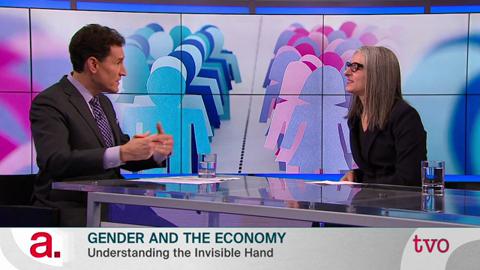
Is the invisible hand fair to all? On International Women’s Day, Sarah Kaplan, director of the Institute for Gender and the Economy at the Rotman School of Management, spoke with Steve Paikin on TVO’s The Agenda about how gender affects economic outcomes.
Tag: Leadership
Research briefs, news, and event recaps related to leadership.
-
An Introduction to Thinking about Gender and the Economy
See this 17-minute segment with Sarah Kaplan on TVO’s The Agenda with Steve Paikin which aired on International Women’s Day 2017. It covers some of the key issues to consider when thinking about gender and the economy.
-

Conversations that Need to Happen
kaplan and mahrt-smith-faculty focus-rotman mag-2017
Conversations that Need to Happen: Two Rotman School of Management professors have the type of conversation we need, more of (in the Rotman Management magazine)
-
How to advocate for LGBTQ+ employees
[fusion_builder_container hundred_percent=”no” equal_height_columns=”no” menu_anchor=”” hide_on_mobile=”small-visibility,medium-visibility,large-visibility” class=”” id=”” background_color=”” background_image=”” background_position=”center center” background_repeat=”no-repeat” fade=”no” background_parallax=”none” parallax_speed=”0.3″ video_mp4=”” video_webm=”” video_ogv=”” video_url=”” video_aspect_ratio=”16:9″ video_loop=”yes” video_mute=”yes” overlay_color=”” video_preview_image=”” border_color=”” border_style=”solid” padding_top=”” padding_bottom=”” padding_left=”” padding_right=”” type=”legacy”][fusion_builder_row][fusion_builder_column type=”1_1″ layout=”1_1″ background_position=”left top” background_color=”” border_color=”” border_style=”solid” border_position=”all” spacing=”yes” background_image=”” background_repeat=”no-repeat” padding_top=”” padding_right=”” padding_bottom=”” padding_left=”” margin_top=”0px” margin_bottom=”0px” class=”” id=”” animation_type=”” animation_speed=”0.3″ animation_direction=”left” hide_on_mobile=”small-visibility,medium-visibility,large-visibility” center_content=”no” last=”true” min_height=”” hover_type=”none” link=”” border_sizes_top=”” border_sizes_bottom=”” border_sizes_left=”” border_sizes_right=”” first=”true”][fusion_text columns=”” column_min_width=”” column_spacing=”” rule_style=”default” rule_size=”” rule_color=”” content_alignment_medium=”” content_alignment_small=”” content_alignment=”” hide_on_mobile=”small-visibility,medium-visibility,large-visibility” sticky_display=”normal,sticky” class=”” id=”” margin_top=”” margin_right=”” margin_bottom=”” margin_left=”” font_size=”” fusion_font_family_text_font=”” fusion_font_variant_text_font=”” line_height=”” letter_spacing=”” text_color=”” animation_type=”” animation_direction=”left” animation_speed=”0.3″ animation_offset=””]
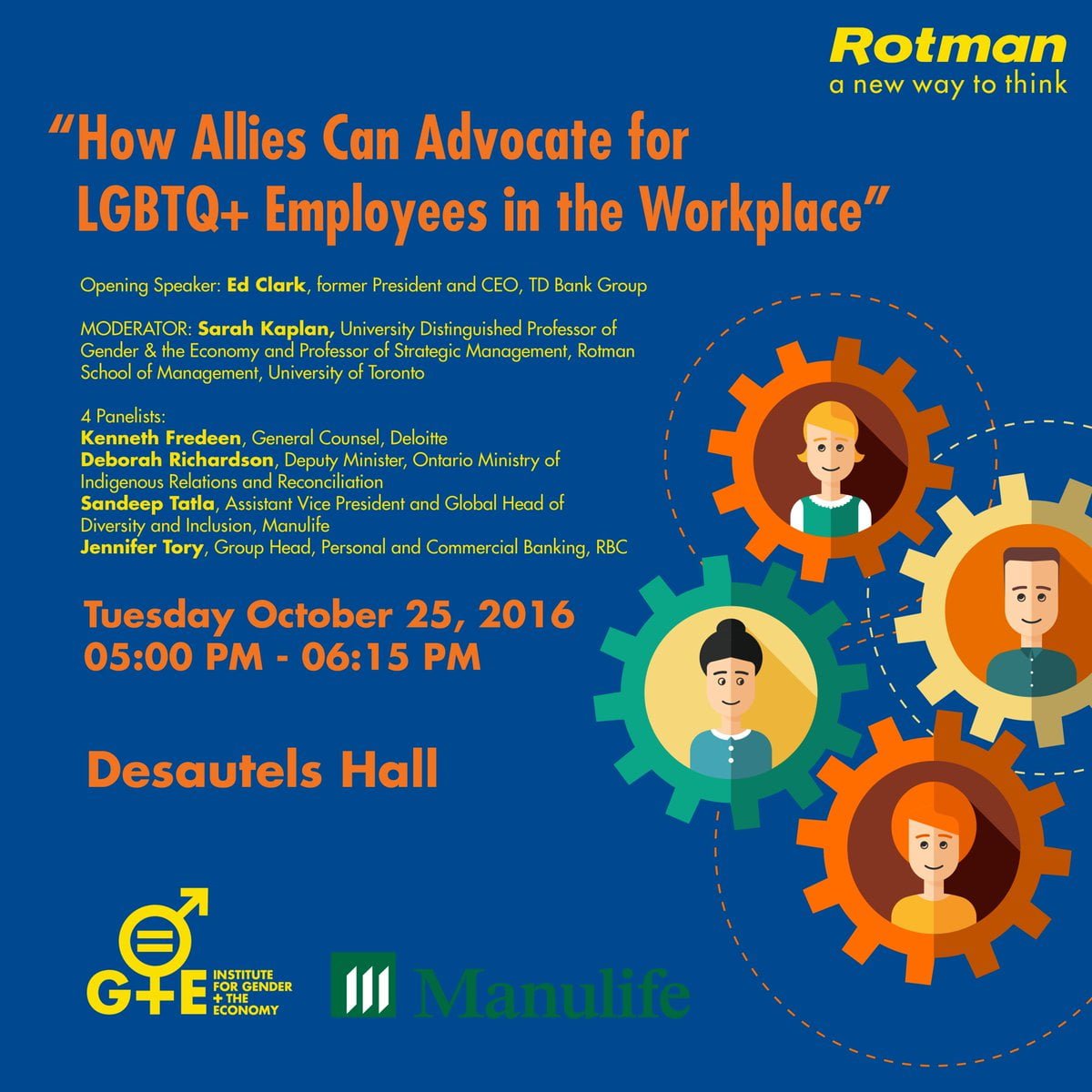
Panel Discussion: How Allies Can Advocate For LGBTQ+ Employees in the Workplace on October 25, 2016.
For a summary and infographic of the panel discussion, click here.
Opening Speaker:
Ed Clark, former President and CEO, TD Bank Group
Moderator:
Sarah Kaplan, University Distinguished Professor of Gender & the Economy and Professor of Strategic Management, Rotman School of Management, University of Toronto
Four panelists:
Kenneth Fredeen, General Counsel, Deloitte
Deborah Richardson, Deputy Minister, Ontario Ministry of Indigenous Relations and Reconciliation
Sandeep Tatla, Assistant Vice President and Global Head of Diversity and Inclusion, Manulife
Jennifer Tory, Group Head, Personal and Commercial Banking, RBCFor the full event video »
Event sponsor:

CO-SPONSOR: Institute for Gender and the Economy @ Rotman
The Letters at Rotman Student Club – Difference and diversity, including sexual diversity, are increasingly recognized as a fundamental strength of any organization. A home for Rotman’s LGBTQ students and their friends and allies, the Letters offers opportunities for networking, self-development and fun.
[/fusion_text][fusion_separator style_type=”none” hide_on_mobile=”small-visibility,medium-visibility,large-visibility” class=”” id=”” sep_color=”” top_margin=”50″ bottom_margin=”50″ border_size=”” icon=”” icon_circle=”” icon_circle_color=”” width=”” alignment=”center” /][fusion_button link=”https://www.gendereconomy.org/events/” text_transform=”” title=”” target=”_blank” link_attributes=”” alignment=”” modal=”” hide_on_mobile=”small-visibility,medium-visibility,large-visibility” class=”” id=”” color=”custom” button_gradient_top_color=”#62bd19″ button_gradient_bottom_color=”#62bd19″ button_gradient_top_color_hover=”#00c2e2″ button_gradient_bottom_color_hover=”#00c2e2″ accent_color=”” accent_hover_color=”” type=”” bevel_color=”” border_width=”” size=”” stretch=”yes” icon=”” icon_position=”left” icon_divider=”no” animation_type=”” animation_direction=”left” animation_speed=”0.3″ animation_offset=”” border_radius=””]See more past events[/fusion_button][fusion_separator style_type=”none” hide_on_mobile=”small-visibility,medium-visibility,large-visibility” class=”” id=”” sep_color=”” top_margin=”20″ bottom_margin=”20″ border_size=”” icon=”” icon_circle=”” icon_circle_color=”” width=”” alignment=”center” /][fusion_title margin_top=”” margin_bottom=”” hide_on_mobile=”medium-visibility,large-visibility” class=”” id=”” size=”5″ content_align=”center” style_type=”default” sep_color=””]
Or register below for these upcoming events
[/fusion_title][fusion_recent_posts layout=”default” hover_type=”none” columns=”3″ number_posts=”3″ offset=”0″ pull_by=”category” cat_slug=”events” exclude_cats=”past” tag_slug=”” exclude_tags=”” thumbnail=”yes” title=”yes” meta=”no” meta_author=”no” meta_categories=”no” meta_date=”yes” meta_comments=”yes” meta_tags=”no” content_alignment=”” excerpt=”no” excerpt_length=”35″ strip_html=”yes” scrolling=”no” hide_on_mobile=”medium-visibility,large-visibility” class=”” id=”” animation_type=”” animation_direction=”left” animation_speed=”0.3″ animation_offset=”” /][/fusion_builder_column][/fusion_builder_row][/fusion_builder_container]
-

The challenges and opportunities of being out and a leader at work
[fusion_builder_container admin_label=”” hundred_percent=”no” equal_height_columns=”no” menu_anchor=”” hide_on_mobile=”small-visibility,medium-visibility,large-visibility” class=”” id=”” background_color=”” background_image=”” background_position=”center center” background_repeat=”no-repeat” fade=”no” background_parallax=”none” enable_mobile=”no” parallax_speed=”0.3″ video_mp4=”” video_webm=”” video_ogv=”” video_url=”” video_aspect_ratio=”16:9″ video_loop=”yes” video_mute=”yes” video_preview_image=”” border_size=”” border_color=”” border_style=”solid” margin_top=”20″ margin_bottom=”” padding_top=”” padding_right=”” padding_bottom=”” padding_left=””][fusion_builder_row][fusion_builder_column type=”3_4″ layout=”3_4″ spacing=”” center_content=”no” hover_type=”none” link=”” min_height=”” hide_on_mobile=”small-visibility,medium-visibility,large-visibility” class=”” id=”” background_color=”” background_image=”” background_position=”left top” background_repeat=”no-repeat” border_size=”0″ border_color=”” border_style=”solid” border_position=”all” padding_top=”” padding_right=”” padding_bottom=”” padding_left=”” margin_top=”” margin_bottom=”” animation_type=”” animation_direction=”left” animation_speed=”0.3″ animation_offset=”” last=”no”][fusion_text columns=”” column_min_width=”” column_spacing=”” rule_style=”default” rule_size=”” rule_color=”” hide_on_mobile=”small-visibility,medium-visibility,large-visibility” class=”” id=”” animation_type=”” animation_direction=”left” animation_speed=”0.3″ animation_offset=””]
For a video and description of the panel event, click here.
For an infographic of the event, click hereEven in the second decade of the 21st century, we have yet to create a culture where LGBTQ employees consistently feel safe being out at work. Although advances have been made for LGBTQ rights over time, the public sphere of work remains a gray area for being out and being visible. To talk about these challenges and opportunities of being out at work, four leaders of top organizations gathered in a panel hosted by The Letters, a student group home to the LGBTQ community and allies at the Rotman School of Management.
In an engaging panel discussion moderated by Professor Sarah Kaplan, Director of Rotman’s Institute for Gender + the Economy, the panelists discussed the various challenges of being out and a leader at work, and also the opportunities and benefits that come as a result of being out. The panelists included Christopher Walker, Chief Compliance Officer at Manulife Asset Management and Executive Advisor to Proud, which is Manulife’s LGBTQ network; Pia Schmidt-Hansen, Manager of Fraud Risk Oversight at BMO Financial Group and Chair of BMO Pride, their LGBTQ Employee Resource Group; Tim Thompson, Chief Operating Officer of TD Asset Management and Chair of TD’s Lesbian, Gay, Bisexual, Transgender and Allies Diversity Committee; and, Connie Bonello, Associate Partner at IBM Canada and chair of the Advisory Board at the Bonham Center for Sexual Diversity Studies at the University of Toronto. As a whole, the panelists agreed that, although being out and being visible can be difficult at times, ultimately, it is worth it for the abundance of personal and organizational benefits. The points below summarize the main themes and takeaways from the discussion.
1. Where to come out?
One major theme that surfaced again and again in the discussion was the importance of the workplace environment. Whether or not the environment at work or in a work group feels safe and comfortable plays a large role in whether an LGBTQ employee will decide to come out or not. For example, many panelists shared the same experience of choosing to remain in the closet when they perceived the culture to be less safe or less welcoming.
Many panelists shared the same experience of choosing to remain in the closet when they perceived the culture to be less safeOnce they sensed the workplace was more inclusive and open to discussions around LGBTQ issues, they became more open to considering coming out at work.
An important implication for organizations who advocate for LGBTQ rights is to create an environment where employees feel safe and comfortable expressing their identity. As leaders of organizations, one way to create safety is to have employee resource groups where workers can feel comfortable discussing being their authentic selves. The benefits of employee resource groups are numerous, including the establishment of a safe space for discussion with like-minded people who can offer social support and the opportunity to be out without the fear of being judged. By creating these resources and groups, organizations signal to individuals that the leaders and top management care about these issues and these rights.2. How to come out?
While in movies and the media “coming out” is typically portrayed one big “reveal,” coming out at work is not just a one-time event. As LGBTQ employees encounter new work groups, clients, colleagues, or new situations, they must face the decision to come out over and over again to different audiences. As one can imagine, making the decision of whether to come out is difficult enough, but the accumulation of these decisions is even more stressful and challenging. The panelists described this continuous coming out as mental gymnastics, where LGBTQ workers must constantly juggle decisions and consequences such as who to come out to, what those people will think of them, and how to come out to different people. Thus, coming out is challenging each time and cumulatively over time.
The way that panelists described coming out at work was also not as grandiose as the stories portrayed in the media. The panelists tended to first assess whether it is appropriate to come out or be out. It may be easier to come out in indirect or subtle ways by giving colleagues cues. The panelists shared their various experiences such as putting up a photo of themselves with their partner to initiate conversations, or starting by dropping the term “partner” to a conversation and then slipping in some pronouns. The decision of how to come out at work is complex because one must take into account the appropriateness of disclosure of any kind of personal information at work.
3. When to come out?
Ideally, everyone would feel free to be out at work. Many panelists voiced the same experience of choosing to come out later on in their careers once they had established their place in the organization. After ascending the ranks, it may feel safer to come out because even though coming out still poses a personal risk, it is less of a financial or career-related risk. Thus, young professionals or workers who are starting in entry-level positions have to face the challenge of deciding when to come out in their career timeline. This decision, however, can be made easier if companies create a culture of inclusion and acceptance. Deciding when or how or where to come out ultimately comes down to what environment top leaders and management instill and maintain.
4. Personal authenticity
Despite the risks associated with coming out at work, the payoff can be substantial.
One benefit that the panelists discussed was personal authenticity. They described all of the energy that can be devoted to being in the closet – something like a 10 percent tax on one’s attention and energy. Being safely out at work allows people to be their authentic selves, and operate at their maximum effectiveness and engagement. For leaders, being able to express one’s authentic self enables them to lead and connect with colleagues and subordinates in a more meaningful way that is ultimately critical for leadership effectiveness. Authentic leadership also has positive spillover effects: when leaders are authentic and truthful, this promotes a culture of openness and acceptance for other LGBTQ workers.
5. Employee engagement and performance
Creating a culture of inclusion and having more employees who are comfortable coming out and being out ultimately translates to organizational performance. Research shows that where people feel comfortable coming out, there is higher employee engagement, such that employees connect with the organization in a meaningful way and have a sense of purpose and belonging at work. This boost in employee engagement can trigger a cascade of positive outcomes that include, higher job satisfaction, higher retention rates, more prosocial behaviour, and better performance.
Conclusions
The challenges and difficulties of coming out at work are complex and nuanced. Like any important choice, there are various factors to take into account when making the choice to come out at work. LGBTQ employees take into account where, when, and how they should come out when they make this decision, and the decision is not always easy. However, both research and anecdotal evidence show that the benefits of being out at work are numerous and important for the LGBTQ employees, customers and clients, and organizations themselves. At the end of the day, it is up to the organizations and their leaders to instill an inclusive culture where employees feel comfortable expression their identity, no matter what letter of the alphabet.
[/fusion_text][fusion_separator style_type=”none” hide_on_mobile=”small-visibility,medium-visibility,large-visibility” class=”” id=”” sep_color=”” top_margin=”20″ bottom_margin=”20″ border_size=”” icon=”” icon_circle=”” icon_circle_color=”” width=”” alignment=”center” /][fusion_button link=”https://www.gendereconomy.org/lessons-from-practice/” text_transform=”” title=”” target=”_blank” link_attributes=”” alignment=”” modal=”” hide_on_mobile=”small-visibility,medium-visibility,large-visibility” class=”” id=”” color=”custom” button_gradient_top_color=”#62bd19″ button_gradient_bottom_color=”#62bd19″ button_gradient_top_color_hover=”#00c2e2″ button_gradient_bottom_color_hover=”#00c2e2″ accent_color=”” accent_hover_color=”” type=”” bevel_color=”” border_width=”” size=”” stretch=”yes” icon=”” icon_position=”left” icon_divider=”no” animation_type=”” animation_direction=”left” animation_speed=”0.3″ animation_offset=”” border_radius=””]See more lessons from practice[/fusion_button][fusion_separator style_type=”none” hide_on_mobile=”small-visibility,medium-visibility,large-visibility” class=”” id=”” sep_color=”” top_margin=”20″ bottom_margin=”20″ border_size=”” icon=”” icon_circle=”” icon_circle_color=”” width=”” alignment=”center” /][fusion_recent_posts layout=”default” picture_size=”fixed” hover_type=”none” columns=”3″ number_posts=”3″ offset=”0″ pull_by=”category” cat_slug=”lessons-from-practice” exclude_cats=”” tag_slug=”” exclude_tags=”” thumbnail=”yes” title=”yes” meta=”no” meta_author=”no” meta_categories=”no” meta_date=”yes” meta_comments=”yes” meta_tags=”no” content_alignment=”” excerpt=”no” excerpt_length=”35″ strip_html=”yes” scrolling=”no” hide_on_mobile=”small-visibility,medium-visibility,large-visibility” class=”” id=”” animation_type=”” animation_direction=”left” animation_speed=”0.3″ animation_offset=”” /][/fusion_builder_column][fusion_builder_column type=”1_4″ layout=”1_4″ spacing=”” center_content=”no” hover_type=”none” link=”” min_height=”” hide_on_mobile=”small-visibility,medium-visibility,large-visibility” class=”” id=”” background_color=”” background_image=”” background_position=”left top” background_repeat=”no-repeat” border_size=”0″ border_color=”” border_style=”solid” border_position=”all” padding_top=”” padding_right=”” padding_bottom=”” padding_left=”” margin_top=”” margin_bottom=”” animation_type=”” animation_direction=”left” animation_speed=”0.3″ animation_offset=”” last=”no”][fusion_title hide_on_mobile=”small-visibility,medium-visibility,large-visibility” class=”briefsummary” id=”” content_align=”left” size=”3″ font_size=”” line_height=”” letter_spacing=”” margin_top=”” margin_bottom=”” margin_top_mobile=”” margin_bottom_mobile=”” text_color=”” style_type=”none” sep_color=””]
Published
August 2017
[/fusion_title][fusion_widget_area name=”avada-custom-sidebar-researchbriefsidebar” title_size=”” title_color=”” background_color=”” padding_top=”” padding_right=”” padding_bottom=”” padding_left=”” hide_on_mobile=”small-visibility,medium-visibility,large-visibility” class=”” id=”” /][/fusion_builder_column][/fusion_builder_row][/fusion_builder_container]
-

Rotman’s Women in Management Association (WIMA)
WIMA (Women in Management Association) promotes women in all aspects of business and management, encouraging and fostering the growth, development and advancement of women in the business community. Leveraging its strong, and diverse, network of students, alumnae and industry representatives, WIMA helps members develop the skills necessary to achieve their goals and confidently take on challenges in the work place.
To see our work in action, check out the Women in Capital Markets design sprint here.
-

WiMen
WiMen is a network of men who are committed to understanding and increasing diversity and gender inclusion in the Rotman community and in the workplace. WiMen espouses 3 core pillars: building knowledge about unconscious bias and gender differences, becoming empowered to become better leaders, and championing a unified force to improve gender equity.
To see our work in action, check out the design of everyday men design sprint here.
-
The future of leadership is a woman’s business
It’s been a frustratingly slow journey for women in business leadership.
-

Inclusion key to creating safe LGBTQ work space
There is substantial evidence that the desire for diversity has not translated into psychological safety in the workplace
