Tag: Public policy

Research briefs, news, and event recaps related to public policy.

  • Remote work and gender inequality throughout and beyond the COVID-19 pandemic

    Remote work and gender inequality throughout and beyond the COVID-19 pandemic

    [fusion_builder_container admin_label=”” hundred_percent=”no” equal_height_columns=”no” menu_anchor=”” hide_on_mobile=”small-visibility,medium-visibility,large-visibility” class=”” id=”” background_color=”” background_image=”” background_position=”center center” background_repeat=”no-repeat” fade=”no” background_parallax=”none” enable_mobile=”no” parallax_speed=”0.3″ video_mp4=”” video_webm=”” video_ogv=”” video_url=”” video_aspect_ratio=”16:9″ video_loop=”yes” video_mute=”yes” video_preview_image=”” border_color=”” border_style=”solid” margin_top=”20″ margin_bottom=”” padding_top=”” padding_right=”” padding_bottom=”” padding_left=”” type=”legacy”][fusion_builder_row][fusion_builder_column type=”3_4″ layout=”3_4″ spacing=”” center_content=”no” hover_type=”none” link=”” min_height=”” hide_on_mobile=”small-visibility,medium-visibility,large-visibility” class=”” id=”” background_color=”” background_image=”” background_position=”left top” background_repeat=”no-repeat” border_color=”” border_style=”solid” border_position=”all” padding_top=”” padding_right=”” padding_bottom=”” padding_left=”” margin_top=”” margin_bottom=”” animation_type=”” animation_direction=”left” animation_speed=”0.3″ animation_offset=”” last=”false” first=”true” border_sizes_top=”0″ border_sizes_bottom=”0″ border_sizes_left=”0″ border_sizes_right=”0″ spacing_right=””][fusion_text columns=”” column_min_width=”” column_spacing=”” rule_style=”default” rule_size=”” rule_color=”” hide_on_mobile=”small-visibility,medium-visibility,large-visibility” class=”” id=”” animation_type=”” animation_direction=”left” animation_speed=”0.3″ animation_offset=””]

    Executive Summary

    Not only is the COVID-19 pandemic an unprecedented stress test on our healthcare infrastructure, but on the way we value workers, and on the way we work. The ability to work remotely is, at the best of times, a privilege not afforded to many. According to Statistics Canada census data from 2016, only 7.5 percent of workers usually worked at the same address as their home, with significant variation by occupation and industry. The closure of schools and all non-essential businesses means that more people are working remotely than ever before. Within this context, we must attend to how gender inequality can be mitigated or intensified for those who are fortunate to work from home.

    READ AND/OR DOWNLOAD THE FULL POLICY BRIEF.

    __________________________

    Policy brief prepared by:

    KIM DE LAAT, POSTDOCTORAL FELLOW, OF THE INSTITUTE FOR GENDER AND THE ECONOMY AT THE ROTMAN SCHOOL OF MANAGEMENT, UNIVERSITY OF TORONTO.

    [/fusion_text][fusion_separator style_type=”none” hide_on_mobile=”small-visibility,medium-visibility,large-visibility” class=”” id=”” sep_color=”” top_margin=”20″ bottom_margin=”20″ border_size=”” icon=”” icon_circle=”” icon_circle_color=”” width=”” alignment=”center” /][fusion_button link=”https://www.gendereconomy.org/category/policy-briefs/” text_transform=”” title=”” target=”_blank” link_attributes=”” alignment=”” modal=”” hide_on_mobile=”small-visibility,medium-visibility,large-visibility” class=”” id=”” color=”custom” button_gradient_top_color=”#62bd19″ button_gradient_bottom_color=”#62bd19″ button_gradient_top_color_hover=”#00c2e2″ button_gradient_bottom_color_hover=”#00c2e2″ accent_color=”” accent_hover_color=”” type=”” bevel_color=”” border_width=”” size=”” stretch=”yes” icon=”” icon_position=”left” icon_divider=”no” animation_type=”” animation_direction=”left” animation_speed=”0.3″ animation_offset=”” border_radius=””]See more policy briefs[/fusion_button][fusion_separator style_type=”none” hide_on_mobile=”small-visibility,medium-visibility,large-visibility” class=”” id=”” sep_color=”” top_margin=”20″ bottom_margin=”20″ border_size=”” icon=”” icon_circle=”” icon_circle_color=”” width=”” alignment=”center” /][fusion_recent_posts layout=”default” picture_size=”fixed” hover_type=”none” columns=”3″ number_posts=”3″ offset=”0″ pull_by=”category” cat_slug=”policy-briefs” exclude_cats=”” tag_slug=”” exclude_tags=”” thumbnail=”yes” title=”yes” meta=”no” meta_author=”no” meta_categories=”no” meta_date=”yes” meta_comments=”yes” meta_tags=”no” content_alignment=”” excerpt=”no” excerpt_length=”35″ strip_html=”yes” scrolling=”no” hide_on_mobile=”small-visibility,medium-visibility,large-visibility” class=”” id=”” animation_type=”” animation_direction=”left” animation_speed=”0.3″ animation_offset=”” /][/fusion_builder_column][fusion_builder_column type=”1_4″ layout=”1_4″ spacing=”” center_content=”no” hover_type=”none” link=”” min_height=”” hide_on_mobile=”small-visibility,medium-visibility,large-visibility” class=”” id=”” background_color=”” background_image=”” background_position=”left top” background_repeat=”no-repeat” border_color=”” border_style=”solid” border_position=”all” padding_top=”” padding_right=”” padding_bottom=”” padding_left=”” margin_top=”” margin_bottom=”” animation_type=”” animation_direction=”left” animation_speed=”0.3″ animation_offset=”” last=”true” first=”false” border_sizes_top=”0″ border_sizes_bottom=”0″ border_sizes_left=”0″ border_sizes_right=”0″][fusion_title title_type=”text” rotation_effect=”bounceIn” display_time=”1200″ highlight_effect=”circle” loop_animation=”off” highlight_width=”9″ highlight_top_margin=”0″ before_text=”” rotation_text=”” highlight_text=”” after_text=”” hide_on_mobile=”small-visibility,medium-visibility,large-visibility” class=”briefsummary” id=”” content_align=”left” size=”3″ font_size=”” animated_font_size=”” fusion_font_family_title_font=”” fusion_font_subset_title_font=”” fusion_font_variant_title_font=”” line_height=”” letter_spacing=”” margin_top=”” margin_bottom=”” margin_top_mobile=”” margin_bottom_mobile=”” text_color=”” animated_text_color=”” highlight_color=”” style_type=”none” sep_color=”” animation_type=”” animation_direction=”left” animation_speed=”0.3″ animation_offset=”” margin_top_small=”” margin_bottom_small=””]

    Authors

    Kim de Laat

    Published

    April 2020

    [/fusion_title][fusion_widget_area name=”avada-custom-sidebar-researchbriefsidebar” title_size=”” title_color=”” background_color=”” padding_top=”” padding_right=”” padding_bottom=”” padding_left=”” hide_on_mobile=”small-visibility,medium-visibility,large-visibility” class=”” id=”” /][/fusion_builder_column][/fusion_builder_row][/fusion_builder_container]


  • Primer on the gendered impacts of COVID-19

    Primer on the gendered impacts of COVID-19

    [fusion_builder_container admin_label=”” hundred_percent=”no” equal_height_columns=”no” menu_anchor=”” hide_on_mobile=”small-visibility,medium-visibility,large-visibility” class=”” id=”” background_color=”” background_image=”” background_position=”center center” background_repeat=”no-repeat” fade=”no” background_parallax=”none” enable_mobile=”no” parallax_speed=”0.3″ video_mp4=”” video_webm=”” video_ogv=”” video_url=”” video_aspect_ratio=”16:9″ video_loop=”yes” video_mute=”yes” video_preview_image=”” border_color=”” border_style=”solid” margin_top=”20″ margin_bottom=”” padding_top=”” padding_right=”” padding_bottom=”” padding_left=”” type=”legacy”][fusion_builder_row][fusion_builder_column type=”3_4″ layout=”3_4″ spacing=”” center_content=”no” hover_type=”none” link=”” min_height=”” hide_on_mobile=”small-visibility,medium-visibility,large-visibility” class=”” id=”” background_color=”” background_image=”” background_position=”left top” background_repeat=”no-repeat” border_color=”” border_style=”solid” border_position=”all” padding_top=”” padding_right=”” padding_bottom=”” padding_left=”” margin_top=”” margin_bottom=”” animation_type=”” animation_direction=”left” animation_speed=”0.3″ animation_offset=”” last=”false” first=”true” border_sizes_top=”0″ border_sizes_bottom=”0″ border_sizes_left=”0″ border_sizes_right=”0″ spacing_right=””][fusion_text columns=”” column_min_width=”” column_spacing=”” rule_style=”” rule_size=”” rule_color=”” hue=”” saturation=”” lightness=”” alpha=”” content_alignment_medium=”” content_alignment_small=”” content_alignment=”” hide_on_mobile=”small-visibility,medium-visibility,large-visibility” sticky_display=”normal,sticky” class=”” id=”” margin_top=”” margin_right=”” margin_bottom=”” margin_left=”” fusion_font_family_text_font=”” fusion_font_variant_text_font=”” font_size=”” line_height=”” letter_spacing=”” text_transform=”” text_color=”” animation_type=”” animation_direction=”left” animation_color=”” animation_speed=”0.3″ animation_delay=”0″ animation_offset=”” logics=””]

    Introduction

    The COVID-19 pandemic has had gendered effects. Women, especially those who are racialized, Indigenous, low-income, migrants and immigrants, and / or have disabilities, have been particularly susceptible to contracting the disease, as well as to experiencing heightened economic instability, job loss, and curtailed access to services and resources. Trans and gender diverse peoples also face increased risks due to widespread discrimination and stigma. On the other hand, some data suggest that men, particularly racialized men, have been more likely to face serious illness and death from COVID-19.

    This primer provides a summary of how gender and its intersections impact the ways the COVID-19 crisis is experienced, including key resources for further reading, and the implications for policy and action during and after the pandemic. It has been updated in July 2021 to add more resources and information to the original April 2020 version.

    1.    Women are more likely than men to be frontline workers.

    Women are more likely than men to be healthcare workers, on the frontline of the pandemic. According to the World Health Organization, across 104 countries, women comprise 70% of health and social care sector workers.[1] In Canada, they are even more represented, at 81% of health care and social assistance workers.[2] This has made women more vulnerable to COVID-19, and as of spring 2021 they made up 51% of COVID-19 cases in Canada. One study in the summer of 2020 found that of all women who tested positive for COVID-19 in Ontario, 36 per cent were employed as healthcare workers, and of those, 45 per cent were immigrants and refugees.[3] However, because there is an underrepresentation of women in leadership, especially racialized and immigrant women, their voices are not often heard in decision- and policymaking.[4]

    2.    Women, particularly racialized women, are more likely to do high-contact, unprotected, and economically insecure work.

    Women and particularly racialized and immigrant women are also concentrated in jobs in services, retail, care, and hospitality sectors. These jobs involve high contact with people, often do not offer paid sick leave, and tend to pay relatively low wages.[5] This has translated to increased risk of contracting COVID-19 for these workers and their families.

    Such jobs are also likely to provide precarious and part-time or temporary work, increasing workers’ susceptibility to layoffs and economic insecurity.[6] This latter point means women have been more severely affected by the economic recession caused by COVID-19. Data from Statistics Canada show that women made up 70% of employment losses for Canadians aged 25-64 in March of 2020.[7] Subsequent waves of COVID-19 causing further lockdowns resulted in more lost hours and temporary layoffs for core-aged women than for men, and higher unemployment for young women compared to young men.[8]

    Resources (for 1 and 2)

    Research and policy

    Media

    3.    Women’s domestic and caregiving burdens have increased.

    The pandemic has brought to the fore the importance of public investment in childcare. As countries went into lockdown, women’s domestic work and caregiving burdens increased heavily. When schools and daycares closed and social distancing measures were put into place, caregiving was moved back into the home, and grandparents or other relatives could not assist with care. Sick and / or self-isolating people also needed caregiving. Due to gender norms and roles, women have been doing the majority of this unpaid labour. While both women’s and men’s time spent on domestic work increased during the pandemic, women’s tended to increase more than men.[9] Further, for single mothers, balancing caregiving and paid work is a norm, but during the pandemic this work has been an even heavier load.

    As a result, more women than men have left or reduced paid work due to caregiving responsibilities. In the summer of 2020, women’s participation in the Canadian labour force fell to 1980s levels. Between February and October of 2020, 20,600 Canadian women left the labour force while nearly 68,000 men joined.[10] In November 2020, over half of mothers with children under eighteen were working less than half their usual hours, compared to only 41% of fathers.[11] Such caregiving burdens have also resulted in increased reports of mental health issues for parents and particularly for mothers.[12]

    Research on gendered effects of the pandemic across multiple countries suggest that having the ability to telecommute reduces these gender differences in employment. However, even for parents who have been telecommuting while taking care of children, mothers still face higher productivity declines than fathers.[13]

    Studies show that investing in the care economy (i.e., through publicly funded, affordable and accessible childcare) will boost women’s participation in the labour force as well as ensure that workers in the care sector have good jobs that are paid fairly, resulting in higher quality care services for all.[14]

    Resources

    Research and policy

    Media

    4.    Gender, race and other social identities shape the risk of serious illness or death from COVID-19.

    Some evidence suggests that men have experienced more serious illness from COVID-19 than women. As of June 2021, for every ten women who died of COVID-19 around the world, thirteen men died.[15]

    Intersectional analysis is important here. Racialized people are less likely to be able to access healthcare and have access to paid sick leave. They are more likely to work in essential jobs and to be in poorer health due to poverty and inadequate access to healthy foods. Research has found that race plays a significant role in mortality, with one study from the United States showing that Black men have the highest mortality rates from COVID-19. However, Black women showed higher mortality rates than white men and women.[16]

    To better understand risks and impacts, it is vital that COVID-19 data disaggregated by sex and gender, as well as other variables such as race, ethnicity, and socioeconomic status, are made available.[17]

    Resources

    Research and policy

    Media

    5.    Vulnerability to domestic abuse and gender-based violence increases.

    Isolation and social distancing pose increased dangers to victims of abusive relationships. During a lockdown, victims face more barriers to leaving abusers or to reaching out for help to friends and family. There has also been limited access to domestic violence services such as shelters due to social distancing measures. During the spring of 2020 in China, data indicate that the number of reported domestic violence cases tripled.[18] In Canada at the beginning of the pandemic, the federal government noted that there was a 20-30% increase in domestic violence reports in some regions. It has since announced extra funding for supports and services for gender-based violence, as well as a commitment to a National Action Plan on Gender-Based Violence.[19]

    Resources

    Research and policy

    Media

    6.    Access to sexual and reproductive healthcare is curtailed.

    During a pandemic, barriers to sexual and reproductive healthcare arise globally. Research has suggested that access to contraception and menstrual products has been curtailed due to supply chain interruptions. There has also been a shortage of services providing sexual and reproductive health care, as resources have been taken away from these programs. Further, people have lacked information about what sexual and reproductive health services are available during quarantine periods.[20] [21] A recent survey of sexual and reproductive health workers in 29 countries found that 86% reported the pandemic decreased access to contraceptive services and 62% reported decreased access to surgical abortion. These results came about due to a lack of political will, the effects of lockdowns, and suspension of sexual education.[22]

    Resources

    Research and policy

    Media

    7.    Indigenous, racialized, low-income, LGBTQ+ and other marginalized groups are more affected.

    It is crucial to emphasize that Indigenous, racialized, low-income, LGBTQ+, immigrant, and other marginalized groups have been more affected by the pandemic, as they were already more likely to be in economically insecure and high-risk health circumstances.

    The resources linked below point to some different aspects of heightened risk:

    • Indigenous and racialized communities as well as immigrants and migrants have been more susceptible to the pandemic’s impacts due to overcrowded housing, unsafe water, and poor access to healthcare and safe employment.
    • The pandemic has resulted in palpable racism, hate, and xenophobia against Asian populations.
    • Low-income groups are less likely to be able to work from home or have access to paid sick leave, resulting in higher rates of COVID-19.
    • Trans and gender-diverse people continue to face high levels of discrimination and stigma, including in healthcare and in bathrooms (where handwashing is done).
    • LGBTQ+ people are more likely to face employment instability or insecurity than the general population. LGBTQ+ elders are also more likely to be isolated or living alone.
    • Persons with disabilities and chronic health conditions have faced high rates of social isolation and financial uncertainty during the pandemic, leading to increased stress, anxiety, and despair.

    Resources

    Research and policy

    Media

    Policy considerations

    Considering the above perspectives, the following actions are recommended for policymaking and decision-making during and after the COVID-19 pandemic. Pandemic recovery must use a feminist lens and focus on equity for all groups who have been disproportionately affected. A summary of the Feminist Economic Recovery Plan for Canada developed by GATE in partnership with YWCA Canada can be found below and the full version is available here.

    1. Ensure marginalized groups have a voice in decision-making around pandemic response. Pay specific attention to the needs and perspectives of women, girls, gender-diverse people, Indigenous, low-income, racialized, LGBTQ+, and other high-risk groups.
    2. Conduct a gender analysis on all pandemic policy responses, both economic- and health-related. Analysis should be intersectional and consider race, socio-economic status, sexual identity, Indigeneity, and other social demographics. Gender analysis should be considered essential.
    3. Establish a universal or targeted basic income to ensure that a livable income is not tied to access to work and that unpaid labour is valued.
    4. Prioritize ensuring that everyone has paid sick leave, high quality health care, and affordable childcare. Lack of paid sick leave and access to care puts an entire population at risk during pandemics.
    5. Fund and provide extra support for essential reproductive and sexual health services, especially for vulnerable populations. This includes access to maternal and child services, abortion, and women’s hygiene products.
    6. Fund and provide extra support for shelters and assistance for domestic violence victims and ensure that assistance services are available digitally.
    7. Promote and campaign for equal domestic work sharing among genders to concretize the importance of reducing these burdens for women.
    8. Ensure that data collection and analysis on the impacts of the pandemic is disaggregated by gender, sex, race, Indigeneity, disability status, and other social demographics.

    Further reading

    The following links provide more helpful resources on gender and COVID-19.

    Téléchargez le pdf en français ici.
    ________________________

    Policy brief prepared by:

    CARMINA RAVANERA OF THE INSTITUTE FOR GENDER AND THE ECONOMY AT THE ROTMAN SCHOOL OF MANAGEMENT, UNIVERSITY OF TORONTO, UNDER THE SUPERVISION OF PROFESSOR SARAH KAPLAN.

    References

    [1] Boniol, M., et al. (2019). Gender equity in the health workforce: Analysis of 104 countries. World Health Organization. Retrieved on March 25, 2020 from https://apps.who.int/iris/bitstream/handle/10665/311314/WHO-HIS-HWF-Gender-WP1-2019.1-eng.pdf?sequence=1&isAllowed=y

    [2] Statistics Canada (2019). Employment by class of worker, annual (x 1,000). Retrieved on March 25, 2020 from https://www150.statcan.gc.ca/t1/tbl1/en/tv.action?pid=1410002701&pickMembers%5B0%5D=1.1&pickMembers%5B1%5D=3.15&pickMembers%5B2%5D=4.3

    [3] Guttmann A. et al. (2020). COVID-19 in Immigrants, Refugees and Other Newcomers in Ontario: Characteristics of Those Tested and Those Confirmed Positive, as of June 13, 2020. Retrieved on May 20, 2021 from https://www.ices.on.ca/Publications/Atlases-and-Reports/2020/COVID-19-in-Immigrants-Refugees-and-Other-Newcomers-in-Ontario

    [4] Wenham, C., Smith, J., and Morgan, R. (March 6, 2020). COVID-19: the gendered impacts of the outbreak. The Lancet 395(10227).

    [5] Scott, K. (March 20, 2020). COVID-19 crisis response must address gender faultlines. Canadian Centre for Policy Alternatives. Retrieved on March 25, 2020 from http://behindthenumbers.ca/2020/03/20/covid-19-crisis-response-must-address-gender-faultlines/

    [6] Moyer, M (2017). Women and Paid Work. Statistics Canada. Retrieved on March 26, 2020 from https://www150.statcan.gc.ca/n1/pub/89-503-x/2015001/article/14694-eng.htm

    [7] Statistics Canada (2020). Labour Force Survey, March 2020. Retrieved on May 19, 2021 from https://www150.statcan.gc.ca/n1/daily-quotidien/200409/dq200409a-eng.htm

    [8] Statistics Canada (2021). Labour Force Survey, April 2021. Retrieved on May 19, 2021 from https://www150.statcan.gc.ca/n1/daily-quotidien/210507/dq210507a-eng.htm

    [9] Kabeer, N., Razavi, S., van der Meuelen Rodgers, Y. (2021). Feminist Economic Perspectives on the COVID-19 Pandemic. Feminist Economics 27(1-2), 1-29.

    [10] Desjardins, D. and Freestone, C. (2020). Canadian Women Continue to Exist the Labour Force. RBC Economics. Retrieved on May 19, 2021 from https://thoughtleadership.rbc.com/canadian-women-continue-to-exit-the-labour-force/

    [11] Statistics Canada (2020). Labour Force Survey, November 2020. Retrieved on May 19, 2021 from https://www150.statcan.gc.ca/n1/daily-quotidien/201204/dq201204a-eng.htm

    [12] Oxfam (2020). 71 per cent of Canadian women feeling more anxious, depressed, isolated, overworked or ill because of increased unpaid care work caused by COVID-19: Oxfam survey. Retrieved from https://www.oxfam.ca/news/71-per-cent-of-canadian-women-feeling-more-anxious-depressed-isolated-overworked-or-ill-because-of-increased-unpaid-care-work-caused-by-covid-19-oxfam-survey/

    [13] Alon, T. et al. (2021). From Mancession to Shecession: Women’s Employment in Regular and Pandemic Recessions. NBER Working Paper. Retrieved on June 28, 2021 from https://www.nber.org/system/files/working_papers/w28632/w28632.pdf

    [14] de Henau, J. and Himmelweit, J. (2021). A Care-Led Recovery From Covid-19: Investing in High-Quality Care to Stimulate And Rebalance The Economy. Feminist Economics 27(1-2).

    [15] The Sex, Gender and COVID-19 Project (2021). Retrieved on July 5, 2021 from https://globalhealth5050.org/the-sex-gender-and-covid-19-project/the-data-tracker/

    [16] Rushovich, T. et al. (2021). Sex Disparities in COVID-19 Mortality Vary Across US Racial Groups. Journal of General Internal Medicine.

    [17] Allotey, P., Reidpath, D.D. and Schwalbe, N. (2020). Are men really that much more likely to die from coronavirus? We need better data to be certain. The Conversation. Retrieved on May 19, 2021 from https://theconversation.com/are-men-really-that-much-more-likely-to-die-from-coronavirus-we-need-better-data-to-be-certain-141564

    [18] Allen-Ebrahimian, B. (March 7, 2020). China’s domestic violence epidemic. Retrieved on March 26, 2020 from https://www.axios.com/china-domestic-violence-coronavirus-quarantine-7b00c3ba-35bc-4d16-afdd-b76ecfb28882.html

    [19] Patel, R. (April 27, 2020). Minister says COVID-19 is empowering domestic violence abusers as rates rise in parts of Canada. Retrieved on June 2, 2021 from https://www.cbc.ca/news/politics/domestic-violence-rates-rising-due-to-covid19-1.5545851

    [20] Hussein, J. (2020). COVID-19: What implications for sexual and reproductive health and rights globally? Sexual and Reproductive Health Matters.

    [21] Marie Stopes International (2020). Resilience, Adaptation and Action : MSI’s Response to COVID-19. Retrieved on May 20, 2021 from https://www.msichoices.org/media/3849/resilience-adaptation-and-action.pdf

    [22] Endler, M. et al. (2020). How the coronavirus disease 2019 pandemic is impacting sexual and reproductive health and rights and response: Results from a global survey of providers, researchers, and policy makers. Acta Obstetricia et Gynecologica Scandinavica 100 (4), 571-578.

    [/fusion_text][fusion_separator style_type=”none” hide_on_mobile=”small-visibility,medium-visibility,large-visibility” class=”” id=”” sep_color=”” top_margin=”20″ bottom_margin=”20″ border_size=”” icon=”” icon_circle=”” icon_circle_color=”” width=”” alignment=”center” /][fusion_button link=”https://www.gendereconomy.org/category/policy-briefs/” text_transform=”” title=”” target=”_blank” link_attributes=”” alignment=”” modal=”” hide_on_mobile=”small-visibility,medium-visibility,large-visibility” class=”” id=”” color=”custom” button_gradient_top_color=”#62bd19″ button_gradient_bottom_color=”#62bd19″ button_gradient_top_color_hover=”#00c2e2″ button_gradient_bottom_color_hover=”#00c2e2″ accent_color=”” accent_hover_color=”” type=”” bevel_color=”” size=”” stretch=”yes” icon=”” icon_position=”left” icon_divider=”no” animation_type=”” animation_direction=”left” animation_speed=”0.3″ animation_offset=””]See more policy briefs[/fusion_button][fusion_separator style_type=”none” hide_on_mobile=”small-visibility,medium-visibility,large-visibility” class=”” id=”” sep_color=”” top_margin=”20″ bottom_margin=”20″ border_size=”” icon=”” icon_circle=”” icon_circle_color=”” width=”” alignment=”center” /][fusion_recent_posts layout=”default” picture_size=”fixed” hover_type=”none” columns=”3″ number_posts=”3″ offset=”0″ pull_by=”category” cat_slug=”policy-briefs” exclude_cats=”” tag_slug=”” exclude_tags=”” thumbnail=”yes” title=”yes” meta=”no” meta_author=”no” meta_categories=”no” meta_date=”yes” meta_comments=”yes” meta_tags=”no” content_alignment=”” excerpt=”no” excerpt_length=”35″ strip_html=”yes” scrolling=”no” hide_on_mobile=”small-visibility,medium-visibility,large-visibility” class=”” id=”” animation_type=”” animation_direction=”left” animation_speed=”0.3″ animation_offset=”” /][/fusion_builder_column][fusion_builder_column type=”1_4″ layout=”1_4″ spacing=”” center_content=”no” hover_type=”none” link=”” min_height=”” hide_on_mobile=”small-visibility,medium-visibility,large-visibility” class=”” id=”” background_color=”” background_image=”” background_position=”left top” background_repeat=”no-repeat” border_color=”” border_style=”solid” border_position=”all” padding_top=”” padding_right=”” padding_bottom=”” padding_left=”” margin_top=”” margin_bottom=”” animation_type=”” animation_direction=”left” animation_speed=”0.3″ animation_offset=”” last=”true” first=”false” border_sizes_top=”0″ border_sizes_bottom=”0″ border_sizes_left=”0″ border_sizes_right=”0″][fusion_title title_type=”text” rotation_effect=”bounceIn” display_time=”1200″ highlight_effect=”circle” loop_animation=”off” highlight_width=”9″ highlight_top_margin=”0″ before_text=”” rotation_text=”” highlight_text=”” after_text=”” title_link=”off” link_url=”” link_target=”_self” hide_on_mobile=”small-visibility,medium-visibility,large-visibility” sticky_display=”normal,sticky” class=”briefsummary” id=”” content_align_medium=”” content_align_small=”” content_align=”left” size=”3″ font_size=”” animated_font_size=”” fusion_font_family_title_font=”” fusion_font_variant_title_font=”” line_height=”” letter_spacing=”” text_shadow=”no” text_shadow_vertical=”” text_shadow_horizontal=”” text_shadow_blur=”0″ text_shadow_color=”” margin_top_medium=”” margin_right_medium=”” margin_bottom_medium=”” margin_left_medium=”” margin_top_small=”” margin_right_small=”” margin_bottom_small=”” margin_left_small=”” margin_top=”” margin_right=”” margin_bottom=”” margin_left=”” margin_top_mobile=”” margin_bottom_mobile=”” text_color=”” animated_text_color=”” highlight_color=”” style_type=”none” sep_color=”” link_color=”” link_hover_color=”” animation_type=”” animation_direction=”left” animation_speed=”0.3″ animation_offset=””]

    Authors

    Carmina Ravanera

    Published

    July 2021 (updated from April 2020)

    [/fusion_title][fusion_widget_area name=”avada-custom-sidebar-researchbriefsidebar” title_size=”” title_color=”” background_color=”” padding_top=”” padding_right=”” padding_bottom=”” padding_left=”” hide_on_mobile=”small-visibility,medium-visibility,large-visibility” class=”” id=”” /][/fusion_builder_column][/fusion_builder_row][/fusion_builder_container]

  • Towards a more equitable gig economy

    Towards a more equitable gig economy

    [fusion_builder_container admin_label=”” hundred_percent=”no” equal_height_columns=”no” menu_anchor=”” hide_on_mobile=”small-visibility,medium-visibility,large-visibility” class=”” id=”” background_color=”” background_image=”” background_position=”center center” background_repeat=”no-repeat” fade=”no” background_parallax=”none” enable_mobile=”no” parallax_speed=”0.3″ video_mp4=”” video_webm=”” video_ogv=”” video_url=”” video_aspect_ratio=”16:9″ video_loop=”yes” video_mute=”yes” video_preview_image=”” border_size=”” border_color=”” border_style=”solid” margin_top=”20″ margin_bottom=”” padding_top=”” padding_right=”” padding_bottom=”” padding_left=””][fusion_builder_row][fusion_builder_column type=”3_4″ layout=”3_4″ spacing=”” center_content=”no” hover_type=”none” link=”” min_height=”” hide_on_mobile=”small-visibility,medium-visibility,large-visibility” class=”” id=”” background_color=”” background_image=”” background_position=”left top” background_repeat=”no-repeat” border_size=”0″ border_color=”” border_style=”solid” border_position=”all” padding_top=”” padding_right=”” padding_bottom=”” padding_left=”” margin_top=”” margin_bottom=”” animation_type=”” animation_direction=”left” animation_speed=”0.3″ animation_offset=”” last=”no”][fusion_text columns=”” column_min_width=”” column_spacing=”” rule_style=”default” rule_size=”” rule_color=”” hide_on_mobile=”small-visibility,medium-visibility,large-visibility” class=”” id=””]

    Executive summary

    The concept of the “gig economy” is popular in discussions about the future of work, and is sometimes hailed as a solution to underemployment and unemployment. In particular, a main advantage of gig work is that it allows flexible hours and worker independence, as compared to a standard nine-to-five role. This is especially relevant for those who are disadvantaged by standard models of employment and would benefit from the ability to choose how and when they work, such as caregivers or persons with a disability. An article in The Globe and Mail in 2017 claimed that “For women with children, the gig economy is a means to balancing family duties with a fulfilling professional career…[it] gives women the option to scale up or scale down as necessary and without the repercussions that often come with traditional employment.”

    However, it is arguable whether the gig economy is a viable alternative to standard work. Although the concept itself may suggest possibilities for a liberating transformation in labour, many companies have taken advantage of the abundance of people willing to work gigs, and have deprioritized worker welfare in order to increase profits. Gender inequity, as well as racial and class inequities, also persist within and may be enhanced by gig work. Thus, while the gig economy can be beneficial for those who are looking to pad their incomes, it can have dire consequences—such as financial precariousness, an absence of benefits, vulnerability to harassment, and overwork— for those belonging to less privileged groups. Companies, governments, worker cooperatives and researchers therefore face an imperative to ensure the safety and rights of gig workers, many of whom are struggling to make living wages and find secure employment in difficult labour markets.

    Read and/or download the full policy brief.

    [/fusion_text][fusion_separator style_type=”none” hide_on_mobile=”small-visibility,medium-visibility,large-visibility” class=”” id=”” sep_color=”” top_margin=”20″ bottom_margin=”20″ border_size=”” icon=”” icon_circle=”” icon_circle_color=”” width=”” alignment=”center” /][fusion_button link=”https://www.gendereconomy.org/category/policy-briefs/” text_transform=”” title=”” target=”_blank” link_attributes=”” alignment=”” modal=”” hide_on_mobile=”small-visibility,medium-visibility,large-visibility” class=”” id=”” color=”custom” button_gradient_top_color=”#62bd19″ button_gradient_bottom_color=”#62bd19″ button_gradient_top_color_hover=”#00c2e2″ button_gradient_bottom_color_hover=”#00c2e2″ accent_color=”” accent_hover_color=”” type=”” bevel_color=”” border_width=”” size=”” stretch=”yes” shape=”” icon=”” icon_position=”left” icon_divider=”no” animation_type=”” animation_direction=”left” animation_speed=”0.3″ animation_offset=””]See more policy briefs[/fusion_button][fusion_separator style_type=”none” hide_on_mobile=”small-visibility,medium-visibility,large-visibility” class=”” id=”” sep_color=”” top_margin=”20″ bottom_margin=”20″ border_size=”” icon=”” icon_circle=”” icon_circle_color=”” width=”” alignment=”center” /][fusion_recent_posts layout=”default” picture_size=”fixed” hover_type=”none” columns=”3″ number_posts=”3″ offset=”0″ pull_by=”category” cat_slug=”policy-briefs” exclude_cats=”” tag_slug=”” exclude_tags=”” thumbnail=”yes” title=”yes” meta=”no” meta_author=”no” meta_categories=”no” meta_date=”yes” meta_comments=”yes” meta_tags=”no” content_alignment=”” excerpt=”no” excerpt_length=”35″ strip_html=”yes” scrolling=”no” hide_on_mobile=”small-visibility,medium-visibility,large-visibility” class=”” id=”” animation_type=”” animation_direction=”left” animation_speed=”0.3″ animation_offset=”” /][/fusion_builder_column][fusion_builder_column type=”1_4″ layout=”1_4″ spacing=”” center_content=”no” hover_type=”none” link=”” min_height=”” hide_on_mobile=”small-visibility,medium-visibility,large-visibility” class=”” id=”” background_color=”” background_image=”” background_position=”left top” background_repeat=”no-repeat” border_size=”0″ border_color=”” border_style=”solid” border_position=”all” padding_top=”” padding_right=”” padding_bottom=”” padding_left=”” margin_top=”” margin_bottom=”” animation_type=”” animation_direction=”left” animation_speed=”0.3″ animation_offset=”” last=”no”][fusion_title hide_on_mobile=”small-visibility,medium-visibility,large-visibility” class=”briefsummary” id=”” content_align=”left” size=”3″ font_size=”” line_height=”” letter_spacing=”” margin_top=”” margin_bottom=”” margin_top_mobile=”” margin_bottom_mobile=”” text_color=”” style_type=”none” sep_color=””]

    Authors

    Carmina Ravanera

    Published

    August 2019

    [/fusion_title][fusion_widget_area name=”avada-custom-sidebar-researchbriefsidebar” title_size=”” title_color=”” background_color=”” padding_top=”” padding_right=”” padding_bottom=”” padding_left=”” hide_on_mobile=”small-visibility,medium-visibility,large-visibility” class=”” id=”” /][/fusion_builder_column][/fusion_builder_row][/fusion_builder_container]

  • Diversity and inclusion in small and medium enterprises (SME’s)

    Diversity and inclusion in small and medium enterprises (SME’s)

    [fusion_builder_container admin_label=”” hundred_percent=”no” equal_height_columns=”no” menu_anchor=”” hide_on_mobile=”small-visibility,medium-visibility,large-visibility” class=”” id=”” background_color=”” background_image=”” background_position=”center center” background_repeat=”no-repeat” fade=”no” background_parallax=”none” enable_mobile=”no” parallax_speed=”0.3″ video_mp4=”” video_webm=”” video_ogv=”” video_url=”” video_aspect_ratio=”16:9″ video_loop=”yes” video_mute=”yes” video_preview_image=”” border_size=”” border_color=”” border_style=”solid” margin_top=”20″ margin_bottom=”” padding_top=”” padding_right=”” padding_bottom=”” padding_left=””][fusion_builder_row][fusion_builder_column type=”3_4″ layout=”3_4″ spacing=”” center_content=”no” hover_type=”none” link=”” min_height=”” hide_on_mobile=”small-visibility,medium-visibility,large-visibility” class=”” id=”” background_color=”” background_image=”” background_position=”left top” background_repeat=”no-repeat” border_size=”0″ border_color=”” border_style=”solid” border_position=”all” padding_top=”” padding_right=”” padding_bottom=”” padding_left=”” margin_top=”” margin_bottom=”” animation_type=”” animation_direction=”left” animation_speed=”0.3″ animation_offset=”” last=”no”][fusion_text columns=”” column_min_width=”” column_spacing=”” rule_style=”default” rule_size=”” rule_color=”” hide_on_mobile=”small-visibility,medium-visibility,large-visibility” class=”” id=””]

    Executive summary

    Small and medium enterprises (SMEs) (below 500 employees) employ more than 90% of the private labour force and provide nearly 60% of all jobs in Canada. Therefore, to achieve inclusion of all underrepresented groups at work, policy makers must focus on helping these employers develop robust diversity and inclusion practices.

    While much of the policy focus on diversity in SMEs has been on improving access to capital for women and other underrepresented groups to form or grow businesses, a larger impact might come from attending to all SMEs and their ability to implement diversity and inclusion in their work. This would be helpful not only for business owners in general, but also the 16% of SMEs that are owned and operated by women. Many or all of these enterprises are subject to laws and regulations mandating equal treatment, such as the Human Rights code, pay equity and pay transparency legislation, parental leave, and other. At the same time, SMEs do not necessarily have the scale for full-time human resources managers, nor the capacity to implement and assure compliance. Further, smaller businesses may not perceive they have the resources to appropriately address these issues. Unfortunately, little research has been done on what SMEs are doing or what they might do to promote equality for all. This policy brief summarizes what is known about diversity and inclusion in SMEs in the Canadian context and what could be done going forward.

    Read and/or download the full policy brief.

    [/fusion_text][fusion_separator style_type=”none” hide_on_mobile=”small-visibility,medium-visibility,large-visibility” class=”” id=”” sep_color=”” top_margin=”20″ bottom_margin=”20″ border_size=”” icon=”” icon_circle=”” icon_circle_color=”” width=”” alignment=”center” /][fusion_button link=”https://www.gendereconomy.org/category/policy-briefs/” text_transform=”” title=”” target=”_blank” link_attributes=”” alignment=”” modal=”” hide_on_mobile=”small-visibility,medium-visibility,large-visibility” class=”” id=”” color=”custom” button_gradient_top_color=”#62bd19″ button_gradient_bottom_color=”#62bd19″ button_gradient_top_color_hover=”#00c2e2″ button_gradient_bottom_color_hover=”#00c2e2″ accent_color=”” accent_hover_color=”” type=”” bevel_color=”” border_width=”” size=”” stretch=”yes” shape=”” icon=”” icon_position=”left” icon_divider=”no” animation_type=”” animation_direction=”left” animation_speed=”0.3″ animation_offset=””]See more policy briefs[/fusion_button][fusion_separator style_type=”none” hide_on_mobile=”small-visibility,medium-visibility,large-visibility” class=”” id=”” sep_color=”” top_margin=”20″ bottom_margin=”20″ border_size=”” icon=”” icon_circle=”” icon_circle_color=”” width=”” alignment=”center” /][fusion_recent_posts layout=”default” picture_size=”fixed” hover_type=”none” columns=”3″ number_posts=”3″ offset=”0″ pull_by=”category” cat_slug=”policy-briefs” exclude_cats=”” tag_slug=”” exclude_tags=”” thumbnail=”yes” title=”yes” meta=”no” meta_author=”no” meta_categories=”no” meta_date=”yes” meta_comments=”yes” meta_tags=”no” content_alignment=”” excerpt=”no” excerpt_length=”35″ strip_html=”yes” scrolling=”no” hide_on_mobile=”small-visibility,medium-visibility,large-visibility” class=”” id=”” animation_type=”” animation_direction=”left” animation_speed=”0.3″ animation_offset=”” /][/fusion_builder_column][fusion_builder_column type=”1_4″ layout=”1_4″ spacing=”” center_content=”no” hover_type=”none” link=”” min_height=”” hide_on_mobile=”small-visibility,medium-visibility,large-visibility” class=”” id=”” background_color=”” background_image=”” background_position=”left top” background_repeat=”no-repeat” border_size=”0″ border_color=”” border_style=”solid” border_position=”all” padding_top=”” padding_right=”” padding_bottom=”” padding_left=”” margin_top=”” margin_bottom=”” animation_type=”” animation_direction=”left” animation_speed=”0.3″ animation_offset=”” last=”no”][fusion_title hide_on_mobile=”small-visibility,medium-visibility,large-visibility” class=”briefsummary” id=”” content_align=”left” size=”3″ font_size=”” line_height=”” letter_spacing=”” margin_top=”” margin_bottom=”” margin_top_mobile=”” margin_bottom_mobile=”” text_color=”” style_type=”none” sep_color=””]

    Authors

    Carmina Ravanera and Sarah Kaplan

    Published

    July 2019

    [/fusion_title][fusion_widget_area name=”avada-custom-sidebar-researchbriefsidebar” title_size=”” title_color=”” background_color=”” padding_top=”” padding_right=”” padding_bottom=”” padding_left=”” hide_on_mobile=”small-visibility,medium-visibility,large-visibility” class=”” id=”” /][/fusion_builder_column][/fusion_builder_row][/fusion_builder_container]

  • What it means to create a “feminist city”

    What it means to create a “feminist city”

    [fusion_builder_container admin_label=”” hundred_percent=”no” equal_height_columns=”no” menu_anchor=”” hide_on_mobile=”small-visibility,medium-visibility,large-visibility” class=”” id=”” background_color=”” background_image=”” background_position=”center center” background_repeat=”no-repeat” fade=”no” background_parallax=”none” enable_mobile=”no” parallax_speed=”0.3″ video_mp4=”” video_webm=”” video_ogv=”” video_url=”” video_aspect_ratio=”16:9″ video_loop=”yes” video_mute=”yes” video_preview_image=”” border_size=”” border_color=”” border_style=”solid” margin_top=”20″ margin_bottom=”” padding_top=”” padding_right=”” padding_bottom=”” padding_left=””][fusion_builder_row][fusion_builder_column type=”3_4″ layout=”3_4″ spacing=”” center_content=”no” hover_type=”none” link=”” min_height=”” hide_on_mobile=”small-visibility,medium-visibility,large-visibility” class=”” id=”” background_color=”” background_image=”” background_position=”left top” background_repeat=”no-repeat” border_size=”0″ border_color=”” border_style=”solid” border_position=”all” padding_top=”” padding_right=”” padding_bottom=”” padding_left=”” margin_top=”” margin_bottom=”” animation_type=”” animation_direction=”left” animation_speed=”0.3″ animation_offset=”” last=”no”][fusion_text columns=”” column_min_width=”” column_spacing=”” rule_style=”default” rule_size=”” rule_color=”” hide_on_mobile=”small-visibility,medium-visibility,large-visibility” class=”” id=””]

    Introduction

    Nearly 40 years on from Dolores Hayden’s famous envisioning of a feminist city in her 1980 article “What Would a Non-Sexist City Be Like?” the city remains deeply inequitable. Many cities in Canada and around the world are struggling with systemic inequity. For instance, in the Greater Toronto Area (GTA) Indigenous peoples, as well as visible minorities and immigrants, are disproportionately represented in low-income brackets. Further, over the last few decades, income inequality has increased. Since 1980, the average income of racialized groups has stagnated, while the average income has increased for non-racialized groups. Additionally, the average income for young people has decreased–in some regions by over 20%. At the same time, the costs of renting and homeownership in cities like Toronto are steadily becoming more unaffordable as precarious employment becomes more common. Between 2016 and 2017, for example, the monthly cost of living for a single young person in Toronto increased by an average of $400 (due primarily to the exponential increase in rental prices).

    Thus, it is crucial that urban planners, policy makers, architects, and activists design and build cities that are accessible to their inhabitants, particularly those experiencing poverty, financial insecurity, and other dire circumstances. To discuss the barriers and the possibilities to build more equitable cities, the Institute for Gender and the Economy (GATE) and the School of Cities co-hosted the event, “What could a feminist city look like?” on March 27, 2019. This discussion featured:

    • Kofi Hope, Senior Policy Advisor, Wellesley Institute; Bousfield Distinguished Visitor, Department of Geography and Planning, University of Toronto
    • Olivia Nuamah, Executive Director, Pride Toronto
    • Rosemarie Powell, Executive Director, Toronto Community Benefits Network
    • Brigitte Shim, Professor, John H. Daniels Faculty of Architecture, Landscape, and Design, University of Toronto; Principal, Shim-Sutcliffe Architects

    This panel was moderated by Sarah Kaplan, Director of GATE and Professor at the Rotman School of Management, and Matti Siemiatycki, Director and Professor at the School of Cities in the University of Toronto.

    How can we create a “feminist city”?

    Prioritize community benefits in infrastructure development

    Urban infrastructure development should not disadvantage the communities that have invested and lived in their neighbourhoods for generations. Rather, development projects can prioritize community benefits by integrating the community’s broader goals, which may include poverty reduction, environmental sustainability, and local economic development, among others. For instance, community members can benefit from job creation during and after infrastructure development projects. This could occur through employment on construction sites, or through the creation of prospects for local suppliers. Prioritizing community benefits also means ensuring hiring opportunities for these jobs are equitable, and that proper job training is provided to workers so they can learn and implement new skills. To understand exactly what communities need, developers and city planners can form partnerships with organizations like the Toronto Community Benefits Network.

    Urban spaces can be embedded with certain values, influencing how inclusive it is to the community it serves.

    Embed inclusivity into urban spaces

    Urban spaces can be embedded with certain values, influencing how inclusive it is to the community it serves. This starts with how spaces are designed, and who designs them. For example, in order to win a contract, construction companies could be required to agree to inclusive behaviours on their worksite, ensuring that community members and other workers do not feel unsafe or vulnerable during development projects.

    Embedding inclusivity can also be done once a space is designed and built, through posted rules and signage. For example, during the Pride Toronto Festival, rules are posted to ensure Pride creates a safe space for the LGBTQ2+ community. This embeds the city streets with inclusivity and instructs how people should treat each other.

    In 2001, the United Kingdom reinstated free admission to all national museums in order to impart the value of accessibility to arts and culture. Despite this move by the UK government, however, barriers still remain for some individuals to access these spaces. This indicates that in order to make spaces truly inclusive for everyone, more nuanced solutions are often needed.

    Pair inclusive program delivery with urban development

    To fully benefit diverse populations, urban development needs to be inclusive in both its physical design and service delivery. For example, the Regent Park Aquatic Centre in Toronto was created with the area’s substantial immigrant population in mind. To serve the Muslim community, for example, mechanized screens were installed in front of the pool’s glass walls, providing space for Muslim women to swim in a private area if they wish to do so. Further, in order to ensure the centre is accessible to the entire community, all programming is free. The centre also holds instructional sessions for members who have not been previously exposed to swimming culture and protocols, offering information on pool rules and appropriate swimwear.

    To fully benefit diverse populations, urban development needs to be inclusive in both its physical design and service delivery.

    Without such considerations, the pool would remain inaccessible to many in the local community. Equitable urban design requires a comprehensive understanding of local communities and their unique socio-economic or cultural barriers and priorities, as well as a focus on programming rather than just the built environment.

    Conclusions

    As the global population ages, income inequality increases, and the world rapidly urbanizes, prioritizing equity and accessibility in cities is becoming more crucial. The panellists at “What could a feminist city look like?” agreed that a feminist city is based on human-centred design: it prioritizes the needs of the most marginalized communities and aims to reduce their barriers to services like transit and recreation. Further, rather than pushing communities out of developing neighbourhoods, a feminist city would recognize and invest in them by creating accessible spaces and promoting local economic, social, and cultural development.

    To learn more about this panel, check out the event summary and video clips. 

    [/fusion_text][fusion_separator style_type=”none” hide_on_mobile=”small-visibility,medium-visibility,large-visibility” class=”” id=”” sep_color=”” top_margin=”20″ bottom_margin=”20″ border_size=”” icon=”” icon_circle=”” icon_circle_color=”” width=”” alignment=”center” /][fusion_button link=”https://www.gendereconomy.org/lessons-from-practice/” text_transform=”” title=”” target=”_blank” link_attributes=”” alignment=”” modal=”” hide_on_mobile=”small-visibility,medium-visibility,large-visibility” class=”” id=”” color=”custom” button_gradient_top_color=”#62bd19″ button_gradient_bottom_color=”#62bd19″ button_gradient_top_color_hover=”#00c2e2″ button_gradient_bottom_color_hover=”#00c2e2″ accent_color=”” accent_hover_color=”” type=”” bevel_color=”” border_width=”” size=”” stretch=”yes” shape=”” icon=”” icon_position=”left” icon_divider=”no” animation_type=”” animation_direction=”left” animation_speed=”0.3″ animation_offset=””]See more lessons from practice[/fusion_button][fusion_separator style_type=”none” hide_on_mobile=”small-visibility,medium-visibility,large-visibility” class=”” id=”” sep_color=”” top_margin=”20″ bottom_margin=”20″ border_size=”” icon=”” icon_circle=”” icon_circle_color=”” width=”” alignment=”center” /][fusion_recent_posts layout=”default” picture_size=”fixed” hover_type=”none” columns=”3″ number_posts=”3″ offset=”0″ pull_by=”category” cat_slug=”lessons-from-practice” exclude_cats=”” tag_slug=”” exclude_tags=”” thumbnail=”yes” title=”yes” meta=”no” meta_author=”no” meta_categories=”no” meta_date=”yes” meta_comments=”yes” meta_tags=”no” content_alignment=”” excerpt=”no” excerpt_length=”35″ strip_html=”yes” scrolling=”no” hide_on_mobile=”small-visibility,medium-visibility,large-visibility” class=”” id=”” animation_type=”” animation_direction=”left” animation_speed=”0.3″ animation_offset=”” /][/fusion_builder_column][fusion_builder_column type=”1_4″ layout=”1_4″ spacing=”” center_content=”no” hover_type=”none” link=”” min_height=”” hide_on_mobile=”small-visibility,medium-visibility,large-visibility” class=”” id=”” background_color=”” background_image=”” background_position=”left top” background_repeat=”no-repeat” border_size=”0″ border_color=”” border_style=”solid” border_position=”all” padding_top=”” padding_right=”” padding_bottom=”” padding_left=”” margin_top=”” margin_bottom=”” animation_type=”” animation_direction=”left” animation_speed=”0.3″ animation_offset=”” last=”no”][fusion_title hide_on_mobile=”small-visibility,medium-visibility,large-visibility” class=”briefsummary” id=”” content_align=”left” size=”3″ font_size=”” line_height=”” letter_spacing=”” margin_top=”” margin_bottom=”” margin_top_mobile=”” margin_bottom_mobile=”” text_color=”” style_type=”none” sep_color=””]

    Published

    July 2019

    Prepared by

    Carmina Ravanera

    [/fusion_title][fusion_widget_area name=”avada-custom-sidebar-researchbriefsidebar” title_size=”” title_color=”” background_color=”” padding_top=”” padding_right=”” padding_bottom=”” padding_left=”” hide_on_mobile=”small-visibility,medium-visibility,large-visibility” class=”” id=”” /][/fusion_builder_column][/fusion_builder_row][/fusion_builder_container]

  • Rebooting the gender equality conversation

    Rebooting the gender equality conversation

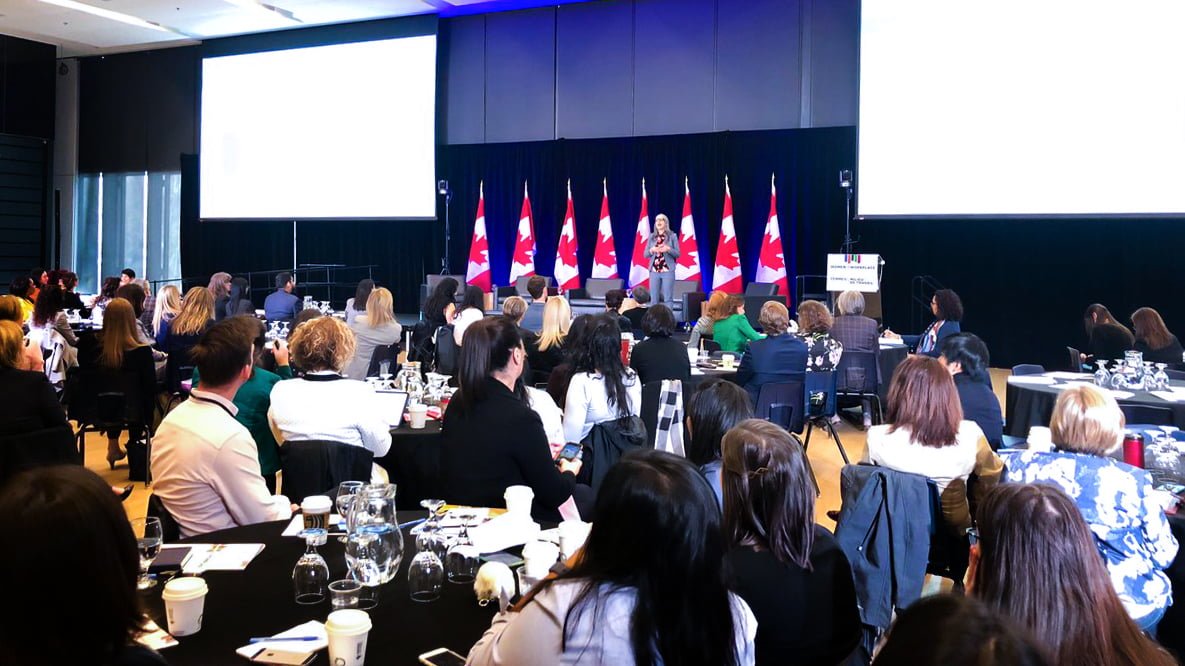
    In May 2019, the Rotman School of Management hosted the Women and the Workplace Symposium, a two-day event funded by the Government of Canada’s Labour Program. The symposium brought together leaders and champions of workplace diversity from across Canada to share tools and best practices employers need to advance women in the workforce and participate in an ongoing dialogue.

    In the video below, GATE Director Sarah Kaplan busts five myths regarding women in the workplace and outlines actions organizations and governments can take to achieve progress towards gender equality.

    The myths include:
    1. Promoting diversity contravenes meritocracy
    2. Gender career gaps are a product of “choice”
    3. We have to “fix the women”
    4. Controlling bias is about changing individuals
    5. Focusing on large corporations will change the game

    To learn more, check out the research briefs and infographics prepared by GATE as the #Womenintheworkplace Symposium Knowledge Partner, here.
  • The gender wage gap

    The gender wage gap

    [fusion_builder_container admin_label=”” hundred_percent=”no” equal_height_columns=”no” menu_anchor=”” hide_on_mobile=”small-visibility,medium-visibility,large-visibility” class=”” id=”” background_color=”” background_image=”” background_position=”center center” background_repeat=”no-repeat” fade=”no” background_parallax=”none” enable_mobile=”no” parallax_speed=”0.3″ video_mp4=”” video_webm=”” video_ogv=”” video_url=”” video_aspect_ratio=”16:9″ video_loop=”yes” video_mute=”yes” video_preview_image=”” border_size=”” border_color=”” border_style=”solid” margin_top=”20″ margin_bottom=”” padding_top=”” padding_right=”” padding_bottom=”” padding_left=””][fusion_builder_row][fusion_builder_column type=”3_4″ layout=”3_4″ spacing=”” center_content=”no” hover_type=”none” link=”” min_height=”” hide_on_mobile=”small-visibility,medium-visibility,large-visibility” class=”” id=”” background_color=”” background_image=”” background_position=”left top” background_repeat=”no-repeat” border_size=”0″ border_color=”” border_style=”solid” border_position=”all” padding_top=”” padding_right=”” padding_bottom=”” padding_left=”” margin_top=”” margin_bottom=”” animation_type=”” animation_direction=”left” animation_speed=”0.3″ animation_offset=”” last=”no”][fusion_text columns=”” column_min_width=”” column_spacing=”” rule_style=”default” rule_size=”” rule_color=”” hide_on_mobile=”small-visibility,medium-visibility,large-visibility” class=”” id=””]

    Download this research brief (in English/en Français).
    Download the infographic (in English/en Français).

    Overview

    The gender wage gap is the difference in remuneration for paid work between women and men. There are many ways to calculate the gap, depending on what employment dynamics you want to identify.[1] Failure to offer equal pay for equal work, where women are paid less than men for performing the same job, accounts for a ~95 cent wage gap. More of the wage gap is explained by mothers who change jobs to ones with greater flexibility to manage their carework responsibilities. This often means switching to jobs that pay less and takes the wage gap to ~88 cents. When comparing annual earnings for both part-time and full-time workers in Canada, an even larger gender wage gap exists of ~70 cents, primarily because women more often work part-time in order to accommodate carework responsibilities.[2]

    In Canada, the gender wage gap ranges from 95 cents to 70 cents.

    Sources of the gender wage gap

    The gender wage gap varies by race and ethnicity.[3] According to The 2011 National Household Survey, when full-time median employment income is analyzed there is a ~92 cent wage gap between visible and non-visible minority women and a ~72 cent wage gap between visible minority men and women.[4] Earnings disparities are evident among transgender individuals as well. The 2011 Trans PULSE survey finds that while 71% of trans people in Ontario surveyed have at least some college or university education, about half make $15,000 per year or less.[5] 

    One major cause of the wage gap is job segregation. A whole host of factors conspire to segregate women into occupational fields that pay less,[6] such as childcare and retail.[7] Within firms, this might mean that women end up in internal, back-office roles rather than external or revenue-producing roles. Women also confront a motherhood penalty. Mothers are perceived to be less competent, and the time they take off work to have children decelerates salary raises and promotions.[8]    

    People looking to get ahead in their jobs must often work long hours, but the gendered allocation of family responsibilities prevents women from being able to do this.[9] As a result, jobs requiring employees to work long hours produce some of the largest wage gaps.[10] 

    How to address the gender wage gap

    Several efforts have been put forth for addressing the gender wage gap, some of which have mixed results:

    • Pay transparency: Pay transparency (such as Provincial Sunshine laws) can reduce the wage gap. Recent regulation in the UK has mainly highlighted the dearth of women in top earning roles and has had less to say about actual problems with equal pay for equal work. Compelling pay transparency may risk that companies focus on public relations rather than on substantive change.[11]
    • Pay equity: Canada is a leader in Pay Equity legislation. Evidence suggests that pay equity has provided gains for women working in the public sector but because its application is focused on relatively narrow comparisons of job classes, it has not had a substantial impact on the larger wage gap.[12]   
    • Salary history bans: Because women have wage disparities beginning with their first job, salary history bans (in which employers are prohibited from asking potential employees about prior salaries) could be a helpful intervention in preventing the gap from widening.[13] However, employers can also find ways around the ban by asking about salary expectations instead of previous salaries.[14]   

    Management might also consider:

    • Redesign job structures: In the pharmacy industry, technological improvements to job design such as the standardization of procedures and the creation of online databases, have decreased the costs of temporal flexibility for female pharmacists, and basically closed the gender wage gap in that field. [15]   
    • Reconsider valorizing working long hours: In many professions, it may be assumed that long hours and extensive “face time” is associated with top performance. But, some of those assumptions are out dated. Leaders can transform workplace cultures that place too much emphasis on working long hours and instead focus on outcomes.[16]
    • Support more accessible childcare: As long as family responsibilities are unequally shared, the gender gap is not likely to close.[17] Providing affordable and accessible onsite childcare or subsidizing access to other child care sources may help parents who wish to work full-time.
    • Provide growth opportunities: Many organizations assume that mothers are not interested in advancement or tough assignments that might lead to promotions. Organizations can do a better job of giving opportunities to people who want them and would benefit from them.

    References

    [1] Rubery, J., & Grimshaw, D. (2014). The 40-year pursuit of equal pay: a case of constantly moving goalposts. Cambridge Journal of Economics, 39(2), 319-343.

    [2] Canadian Women’s Foundation, The Facts About The Gender Wage Gap in Canada: https://www.canadianwomen.org/the-facts/the-wage-gap/

    Sarah Kaplan, The Motherhood Penalty, University of Toronto Magazine: https://magazine.utoronto.ca/opinion/the-motherhood-penalty-gender-wage-gap-sarah-kaplan/

    [3] Kate McInturff, The Gendered And Racialized Wage Gap, Canadian Women’s Foundation: https://www.canadianwomen.org/deficit-worth-worrying-gendered-racialized-wage-gap/

    [4] Statistics Canada, Visible Minority Women: https://www150.statcan.gc.ca/n1/pub/89-503-x/2015001/article/14315-eng.htm

    [5] Bauer G, Nussbaum N, Travers R, Munro L, Pyne J, Redman N. We’ve Got Work to Do: Workplace Discrimination and Employment Challenges for Trans People in Ontario. Trans PULSE e-Bulletin, 30 May, 2011. 2(1). Downloadable in English or French at http://www.transpulseproject.ca

    [6] Petersen, T., & Morgan, L. A. (1995). Separate and unequal: Occupation-establishment sex segregation and the gender wage gap. American Journal of Sociology, 101(2), 329-365.

    Reskin, B. F., & Roos, P. A. (2009). Job queues, gender queues: Explaining women’s inroads into male occupations. Temple University Press.

    Levanon, A., England, P., & Allison, P. (2009). Occupational feminization and pay: Assessing causal dynamics using 1950–2000 US census data. Social Forces, 88(2), 865-891.

    [7] England, P., Budig, M., & Folbre, N. (2002). Wages of virtue: The relative pay of care work. Social problems, 49(4), 455-473.

    [8] Budig, M. J., & England, P. (2001). The wage penalty for motherhood. American sociological review, 204-225.

    Budig, M. J., Misra, J., & Boeckmann, I. (2012). The motherhood penalty in cross-national perspective: The importance of work-family policies and cultural attitudes. Social Politics, 19(2), 163-193.

    Kleven, H., Landais, C., and Søgaard J. E.. (2018). “Children and Gender Inequality: Evidence from Denmark.” Working Paper. National Bureau of Economic Research, 1-57. 

    [9] Acker, J. (1990). Hierarchies, jobs, bodies: A theory of gendered organizations. Gender & Society, 4(2), 139-158.

    Reid, E. (2015). Embracing, passing, revealing, and the ideal worker image: How people navigate expected and experienced professional identities. Organization Science, 26(4), 997-1017.

    [10] Goldin, C., 2014. A grand gender convergence: Its last chapter. American Economic Review, 104(4), pp.1091–1119.

    [11] Sarah Kaplan, The Motherhood Penalty, University of Toronto Magazine: https://magazine.utoronto.ca/opinion/the-motherhood-penalty-gender-wage-gap-sarah-kaplan/

    [12] Singh, P., & Peng, P. (2010). Canada’s bold experiment with pay equity. Gender in Management: An International Journal, 25(7), 570-585.

    [13] Corbett, C., & Hill, C. (2012). Graduating to a Pay Gap: The Earnings of Women and Men One Year after College Graduation. American Association of University Women.

    Christina Cauterucci, Equal Pay Legislation Banning Salary History Questions Is Absolutely Based in Data, Slate: https://slate.com/human-interest/2017/04/equal-pay-legislation-banning-salary-history-questions-is-based-in-data.html

    [14] Adler, Laura. 2019. “You’re Worth What You’re Paid: Why Employers Use Past Pay to Set Future Pay.” Working Paper. Harvard University.

    [15] Goldin, C., & Katz, L. F. (2016). A most egalitarian profession: pharmacy and the evolution of a family-friendly occupation. Journal of Labor Economics, 34(3), 705-746.

    [16] Goldin, C., 2014. A grand gender convergence: Its last chapter. American Economic Review, 104(4), pp.1091–1119.

    [17] Angelov, N., Johansson, P. and Lindahl, E., 2016. Parenthood and the gender gap in Pay. Journal of Labor Economics, 34(3), pp.545-579.

    [/fusion_text][fusion_separator style_type=”none” hide_on_mobile=”small-visibility,medium-visibility,large-visibility” class=”” id=”” sep_color=”” top_margin=”20″ bottom_margin=”20″ border_size=”” icon=”” icon_circle=”” icon_circle_color=”” width=”” alignment=”center” /][fusion_button link=”https://www.gendereconomy.org/research-briefs/” text_transform=”” title=”” target=”_blank” link_attributes=”” alignment=”” modal=”” hide_on_mobile=”small-visibility,medium-visibility,large-visibility” class=”” id=”” color=”custom” button_gradient_top_color=”#62bd19″ button_gradient_bottom_color=”#62bd19″ button_gradient_top_color_hover=”#00c2e2″ button_gradient_bottom_color_hover=”#00c2e2″ accent_color=”” accent_hover_color=”” type=”” bevel_color=”” border_width=”” size=”” stretch=”yes” shape=”” icon=”” icon_position=”left” icon_divider=”no” animation_type=”” animation_direction=”left” animation_speed=”0.3″ animation_offset=””]See more research briefs[/fusion_button][fusion_separator style_type=”none” hide_on_mobile=”small-visibility,medium-visibility,large-visibility” class=”” id=”” sep_color=”” top_margin=”20″ bottom_margin=”20″ border_size=”” icon=”” icon_circle=”” icon_circle_color=”” width=”” alignment=”center” /][fusion_recent_posts layout=”default” hover_type=”none” columns=”3″ number_posts=”3″ offset=”0″ pull_by=”category” cat_slug=”research-briefs” exclude_cats=”” tag_slug=”” exclude_tags=”” thumbnail=”yes” title=”yes” meta=”no” meta_author=”no” meta_categories=”no” meta_date=”yes” meta_comments=”yes” meta_tags=”no” content_alignment=”” excerpt=”no” excerpt_length=”35″ strip_html=”yes” scrolling=”no” hide_on_mobile=”small-visibility,medium-visibility,large-visibility” class=”” id=”” animation_type=”” animation_direction=”left” animation_speed=”0.3″ animation_offset=”” /][/fusion_builder_column][fusion_builder_column type=”1_4″ layout=”1_4″ spacing=”” center_content=”no” hover_type=”none” link=”” min_height=”” hide_on_mobile=”small-visibility,medium-visibility,large-visibility” class=”” id=”” background_color=”” background_image=”” background_position=”left top” background_repeat=”no-repeat” border_size=”0″ border_color=”” border_style=”solid” border_position=”all” padding_top=”” padding_right=”” padding_bottom=”” padding_left=”” margin_top=”” margin_bottom=”” animation_type=”” animation_direction=”left” animation_speed=”0.3″ animation_offset=”” last=”no”][fusion_title hide_on_mobile=”small-visibility,medium-visibility,large-visibility” class=”briefsummary” id=”” content_align=”left” size=”3″ font_size=”” line_height=”” letter_spacing=”” margin_top=”” margin_bottom=”” margin_top_mobile=”” margin_bottom_mobile=”” text_color=”” style_type=”none” sep_color=””]

    Published

    April 23, 2019

    This research brief was funded by the Government of Canada’s Labour Program for the Women in the Workplace Symposium that took place at Rotman on May 09/10, 2019.

    The opinions and interpretations in this publication are those of the author and do not necessarily reflect those of the Government of Canada.

    To see more from this event, check out #Womenintheworkplace.

    Government of Canada logo

    [/fusion_title][fusion_widget_area name=”avada-custom-sidebar-researchbriefsidebar” title_size=”” title_color=”” background_color=”” padding_top=”” padding_right=”” padding_bottom=”” padding_left=”” hide_on_mobile=”small-visibility,medium-visibility,large-visibility” class=”” id=”” /][/fusion_builder_column][/fusion_builder_row][/fusion_builder_container]

  • The impact of a family’s income level on the use of parental leave benefits

    The impact of a family’s income level on the use of parental leave benefits

    [fusion_builder_container admin_label=”” hundred_percent=”no” equal_height_columns=”no” menu_anchor=”” hide_on_mobile=”small-visibility,medium-visibility,large-visibility” class=”” id=”” background_color=”” background_image=”” background_position=”center center” background_repeat=”no-repeat” fade=”no” background_parallax=”none” enable_mobile=”no” parallax_speed=”0.3″ video_mp4=”” video_webm=”” video_ogv=”” video_url=”” video_aspect_ratio=”16:9″ video_loop=”yes” video_mute=”yes” video_preview_image=”” border_size=”” border_color=”” border_style=”solid” margin_top=”20″ margin_bottom=”” padding_top=”” padding_right=”” padding_bottom=”” padding_left=””][fusion_builder_row][fusion_builder_column type=”3_4″ layout=”3_4″ spacing=”” center_content=”no” hover_type=”none” link=”” min_height=”” hide_on_mobile=”small-visibility,medium-visibility,large-visibility” class=”” id=”” background_color=”” background_image=”” background_position=”left top” background_repeat=”no-repeat” border_size=”0″ border_color=”” border_style=”solid” border_position=”all” padding_top=”” padding_right=”” padding_bottom=”” padding_left=”” margin_top=”” margin_bottom=”” animation_type=”” animation_direction=”left” animation_speed=”0.3″ animation_offset=”” last=”no”][fusion_text columns=”” column_min_width=”” column_spacing=”” rule_style=”default” rule_size=”” rule_color=”” hide_on_mobile=”small-visibility,medium-visibility,large-visibility” class=”” id=””]

    Summary

    How does a family’s income level affect their use of parental leave benefits, especially the sharing of benefits between mothers and fathers? This study uses administrative data to explore how two policy changes to Canada’s parental leave policy in 2001 (Federal) and 2006 (Québec) affected the percentage of people in heterosexual couples taking parental leave and the rate of sharing among both parents. Using descriptive statistics and probability estimates, the authors found:

    • Both policies disproportionately increased the use of leave among low-income families, although low-income families still took leave at lower rates than middle- and high-income families.
    • Benefit sharing, where both parents take leave, also occurred at unequal rates depending on income, even after Québec’s 2006 policy to reserve leave for fathers.
    • Although more low-income parents did take leave once the policies were implemented, the rate of only mothers taking leave did not decrease.
    • However, the rate of only mothers taking leave did significantly decrease among middle- and high-income families.

    These findings indicate that more research needs to be done in order to understand the barriers low-income parents (particularly fathers) face when it comes to taking advantage of parental leave and how policies can address these barriers.

    Canada’s parental leave policy changes in 2001 (Federal) and 2006 (Québec) disproportionately increased the use of leave among low-income families, although low-income families still took leave at lower rates.

    Research

    The authors used quantitative data from tax files to analyze leave-taking among heterosexual couples with newborns in the years 1998 to 2012, which included around 2.5 million families. They paid specific attention to how policy changes in 2001 and 2006 affected the use of leave. In 2001, the federal government in Canada marginally expanded access to leave and increased the length of time that leave could be taken. For families earning less than $26,000 CAD, leave benefits were supplemented up to 80% of those earnings. In 2006, the provincial government of Québec further expanded access to parental leave for parents in limited or non-traditional employment, increased the benefit rates and the earnings ceiling, and created 5 weeks of non-transferable leave for fathers. The study considered parents who used leave or received employment insurance income during the year of the child’s birth, as well as those who took leave the year before or after birth. The authors looked at variations in the use of leave by the age of the parents, the number of previous children under 16, the province of residence, marital status, and the relative contribution of each parent to the family’s income in the descriptive analysis. These factors were controlled for in the probability estimates which focused on variation by income in the years before and after the 2001 and 2006 policy changes. The study divided families into three income categories: less than $30,000 (low-income), $30,000 to $89,999 (middle-income), and $90,000 or more (high-income).

    Findings

    The authors found that the use of parental leave was lowest among low-income families (43%) compared to middle and high-income families with rates over 70 and 80%. The use of parental benefits increased significantly between 1998 and 2012 due to an increase in both parents using benefits. The 2001 and 2006 policy changes significantly increased the percentage of families using benefits, especially both parents. However, there was substantial variation across income groups. The federal policy reform in 2001 increased use more significantly for low- and middle-income families, than for high-income families. For low-income families, mothers only using leave increased by 2.6 percentage points, while both parents using leave increased by only 1.6 percentage points. For middle-income families both parents using leave increased by 4.8 percentage points, while mothers only using leave actually declined. For high-income families, these effects were even more pronounced, with the rate of only mothers using parental leave decreasing by 4.6 percentage points and both parent use increasing by 6.6.

    The effects of the 2006 leave policy in Québec were more significant for low-income families, who increased their overall use of parental leave by 11 percentage points. Middle-income families increased their use by only 6.8 percentage points and high-income families increased their use by 5.3. However, the effects were reversed when it came to the sharing of benefits. For middle- and high-income families, the 2006 policy led to an increase in both parents using leave of over 20 percentage points and a decrease in only mothers using leave of over 15 percentage points.

    Research indicates that in middle- and high-income families where only mothers had taken leave before the policy changes, both parents were taking leave afterwards.

    For low-income families, both parents taking leave increased by a modest 8.6% and there was no significant decrease in only mothers taking leave. Although more low-income families took leave after the 2006 policy change in Québec, the rate of only mothers taking leave remained relatively constant.

    Implications

    • Parental leave policies have differential effects–Parental leave policies do not benefit all people equally. Middle- and upper-income parents are more likely to take leave and more likely to share benefits among both parents in a heterosexual couple than low-income families.
    • Different tactics are necessary to increase leave among low-income parents–Policies that broaden access to leave benefits by reducing the amount of time people must work to earn benefits, increasing the benefit rate, and/or eliminating waiting times for benefits disproportionately improve use among low-income families. Although, it’s important to note, that these policies have not increased rates enough to make them equivalent to those among middle- and high-income families. While reserving time for fathers to take leave did increase both parents’ use of leave across the income spectrum, these increases were more pronounced for middle- and high-income families.
    • More research is needed to address potential barriers–This study, and several others in European countries have shown disparities in the use of leave across income-levels. However, none of these studies have explored why these disparities persist even in countries with more generous benefit rates and non-transferable paternity leave. Are economic factors, job-specific factors, social factors, or some combination keeping low-income families from using these benefits? More research is needed to discover what these barriers are so that policies can be developed to address them.

    [/fusion_text][fusion_separator style_type=”none” hide_on_mobile=”small-visibility,medium-visibility,large-visibility” class=”” id=”” sep_color=”” top_margin=”20″ bottom_margin=”20″ border_size=”” icon=”” icon_circle=”” icon_circle_color=”” width=”” alignment=”center” /][fusion_button link=”https://www.gendereconomy.org/research-briefs/” text_transform=”” title=”” target=”_blank” link_attributes=”” alignment=”” modal=”” hide_on_mobile=”small-visibility,medium-visibility,large-visibility” class=”” id=”” color=”custom” button_gradient_top_color=”#62bd19″ button_gradient_bottom_color=”#62bd19″ button_gradient_top_color_hover=”#00c2e2″ button_gradient_bottom_color_hover=”#00c2e2″ accent_color=”” accent_hover_color=”” type=”” bevel_color=”” border_width=”” size=”” stretch=”yes” shape=”” icon=”” icon_position=”left” icon_divider=”no” animation_type=”” animation_direction=”left” animation_speed=”0.3″ animation_offset=””]See more research briefs[/fusion_button][fusion_separator style_type=”none” hide_on_mobile=”small-visibility,medium-visibility,large-visibility” class=”” id=”” sep_color=”” top_margin=”20″ bottom_margin=”20″ border_size=”” icon=”” icon_circle=”” icon_circle_color=”” width=”” alignment=”center” /][fusion_recent_posts layout=”default” hover_type=”none” columns=”3″ number_posts=”3″ offset=”0″ pull_by=”category” cat_slug=”research-briefs” exclude_cats=”” tag_slug=”” exclude_tags=”” thumbnail=”yes” title=”yes” meta=”no” meta_author=”no” meta_categories=”no” meta_date=”yes” meta_comments=”yes” meta_tags=”no” content_alignment=”” excerpt=”no” excerpt_length=”35″ strip_html=”yes” scrolling=”no” hide_on_mobile=”small-visibility,medium-visibility,large-visibility” class=”” id=”” animation_type=”” animation_direction=”left” animation_speed=”0.3″ animation_offset=”” /][/fusion_builder_column][fusion_builder_column type=”1_4″ layout=”1_4″ spacing=”” center_content=”no” hover_type=”none” link=”” min_height=”” hide_on_mobile=”small-visibility,medium-visibility,large-visibility” class=”” id=”” background_color=”” background_image=”” background_position=”left top” background_repeat=”no-repeat” border_size=”0″ border_color=”” border_style=”solid” border_position=”all” padding_top=”” padding_right=”” padding_bottom=”” padding_left=”” margin_top=”” margin_bottom=”” animation_type=”” animation_direction=”left” animation_speed=”0.3″ animation_offset=”” last=”no”][fusion_title hide_on_mobile=”small-visibility,medium-visibility,large-visibility” class=”briefsummary” id=”” content_align=”left” size=”3″ font_size=”” line_height=”” letter_spacing=”” margin_top=”” margin_bottom=”” text_color=”” style_type=”none” sep_color=””]

    Title

    Use of Parental Benefits by Family Income in Canada: Two Policy Changes

    Authors

    Rachel Margolis, Feng Hou, Michael Haan, and Anders Holm

    Source

    Journal of Marriage and Family

    Published

    2019

    DOI

    10.1111/jomf.12542

    Link

    https://onlinelibrary.wiley.com/doi/abs/10.1111/jomf.12542

    Research brief prepared by

    Rachael Goodman

    [/fusion_title][fusion_widget_area name=”avada-custom-sidebar-researchbriefsidebar” title_size=”” title_color=”” background_color=”” padding_top=”” padding_right=”” padding_bottom=”” padding_left=”” hide_on_mobile=”small-visibility,medium-visibility,large-visibility” class=”” id=”” /][/fusion_builder_column][/fusion_builder_row][/fusion_builder_container]