[fusion_builder_container type=”flex” hundred_percent=”no” equal_height_columns=”no” hide_on_mobile=”small-visibility,medium-visibility,large-visibility” background_position=”center center” background_repeat=”no-repeat” fade=”no” background_parallax=”none” parallax_speed=”0.3″ video_aspect_ratio=”16:9″ video_loop=”yes” video_mute=”yes” border_style=”solid”][fusion_builder_row][fusion_builder_column type=”1_1″ layout=”1_1″ background_position=”left top” border_style=”solid” border_position=”all” spacing=”yes” background_repeat=”no-repeat” margin_top=”0px” margin_bottom=”0px” animation_speed=”0.3″ animation_direction=”left” hide_on_mobile=”small-visibility,medium-visibility,large-visibility” center_content=”no” last=”true” hover_type=”none” first=”true” background_blend_mode=”overlay” min_height=”” link=””][fusion_text hide_on_mobile=”small-visibility,medium-visibility,large-visibility” sticky_display=”normal,sticky” animation_direction=”left” animation_speed=”0.3″]
Does achieving gender equality only benefit women? Are gender quotas thwarting meritocracy? Are women more risk averse than men? If you think you know the answers to these questions, then think again! Busted is an audio podcast series that busts prominent myths surrounding gender and the economy by teaming up with leading experts in the field. We uncover the origins of each myth and give you the tools to bust each myth yourself!
Listen now on Spotify or Apple Podcasts
You can support our work by rating and subscribing to this podcast! Help us get the word out.
[/fusion_text][fusion_accordion type=”toggles” inactive_icon=”” active_icon=”” margin_top=”” margin_bottom=”” hide_on_mobile=”small-visibility,medium-visibility,large-visibility” class=”” id=”” boxed_mode=”” border_size=”1″ border_color=”” hue=”” saturation=”” lightness=”” alpha=”” hover_color=”” background_color=”” divider_line=”” divider_hover_color=”” divider_color=”” padding_top=”” padding_right=”” padding_bottom=”” padding_left=”” title_tag=”h4″ fusion_font_family_title_font=”” fusion_font_variant_title_font=”” title_font_size=”” title_line_height=”” title_letter_spacing=”” title_text_transform=”” title_color=”#333333″ icon_size=”” icon_color=”” icon_boxed_mode=”” icon_box_color=”” icon_alignment=”” fusion_font_family_content_font=”” fusion_font_variant_content_font=”” content_font_size=”” content_line_height=”” content_letter_spacing=”” content_text_transform=”” content_color=”#111111″ toggle_hover_accent_color=”” toggle_active_accent_color=”” parent_dynamic_content=””][fusion_toggle title=”Busted Season Four” open=”yes” awb-switch-editor-focus=”” class=”” id=”” fusion_font_family_title_font=”” fusion_font_variant_title_font=”” title_font_size=”” title_line_height=”” title_letter_spacing=”” title_text_transform=”” title_color=”#333333″ hue=”” saturation=”” lightness=”” alpha=”” fusion_font_family_content_font=”” fusion_font_variant_content_font=”” content_font_size=”” content_line_height=”” content_letter_spacing=”” content_text_transform=”” content_color=”#111111″]
Episode 24: Busting myths around Indigenous entrepreneurship
Indigenous entrepreneurship has existed across Turtle Island long before settler colonization. But today, there are still so many myths about Indigenous businesses — including the idea that Indigenous people aren’t entrepreneurs, that they rely on government handouts, and that they need to be taught how to build successful businesses. None of that is true. In fact, Indigenous entrepreneurship is thriving — and it’s rooted in long-standing traditions of innovation, sustainability, and community care. In this episode, we bust those myths and explore how Indigenous ways of doing business can challenge — and improve — how we all think about entrepreneurship.
View show notes
Episode 23: Myth: Philanthropy belongs to rich, white men
When most people think about philanthropy, they picture rich, often white, men, writing huge cheques for whatever cause they decide to get behind. And billionaire philanthropy has faced growing criticism: is it really philanthropy, or is it just a sneaky way for the wealthy to avoid taxes and reinforce inequality? But this perspective leaves out a much broader, richer history – one where women, members of racialized communities, LGBTQ+ folks, and others have long used the power of voluntary giving to contribute to the public good and drive important social change. In this episode, we speak to researchers who are challenging the dominant narrative, expanding our understanding of who gives, why they give, and how philanthropy has always belonged to more than just a select few.
View show notes
Episode 22: Myth: Care work is low value
During the COVID-19 pandemic, we got a sense of how devalued care work really is. Care workers were, and still are, working long hours in poor conditions, for low pay, to support elders, children, and people with disabilities. These care workers provide some of the most essential labour in our society, but their work is often overlooked. We rarely stop to think about how much we rely on care, and how everything would fall apart without it. That neglect has consequences: care workers have been leaving the sector, and we’re now facing a global care crisis, with not nearly enough carers to support everyone who needs care. In this episode, we’ll be busting the myth that care work is low value, and talk about what it would look like if society recognized that our communities and economies are built on and sustained by care.
View show notes
Episode 21: Myth: The tradwife movement empowers women by affirming traditional gender roles
If you’ve been on social media lately, you might have seen some content about the tradwife movement and from tradwives themselves. Popular tradwife accounts post photos and videos of an idealized domestic lifestyle – taking care of children, cooking from scratch, baking bread, and keeping a clean and organized house – often with a feminine aesthetic that harkens back to the 1950s. They make beautiful content that showcases the value of “traditionally” gendered households, where men are the bread-winners and women are the bread-makers. It might be easy to think that this movement is simply about empowering women to return to tradition. But, when you dig deeper, there’s much more to the story. In this episode, we speak with researchers to unpack the tradwife movement, what it does, and who it really benefits.
View show notes
Episode 20: Myth: The business case for diversity is effective in creating equality
When we talk about an organization’s “case” for diversity, we’re talking about the set of justifications or reasons it gives for why diversity is an important organizational value. A common case that organizations make for promoting DEI is the business case for diversity: the idea that diversity is important because it boosts an organization’s bottom line. The business case seems harmless, or maybe even helpful, but research has found that using it to advocate for equality could, in some cases, be doing more harm than good. This episode debunks the myth that the business case for diversity is effective for creating equality for marginalized groups.
View show notes
Episode 19: Myth: Women should step aside as they age; men should step up
While anyone can experience ageism at work, research shows that women tend to have unique, and typically more severe, experiences. No matter how accomplished they are and no matter how effective they continue to be, older women are perceived as ageing out of relevance. It’s a different story for older men. They’re usually perceived as aging into wisdom and given more power and leadership opportunities. In this episode, we’ll bust this myth—that older women should step aside while older men should step up—and explore the gendered nature of ageism.
View show notes
[/fusion_toggle][fusion_toggle title=”Busted Season Three” open=”yes” title_color=”#333333″ content_color=”#111111″]
Episode 18: Myth: Artificial intelligence is bias-free
Many people think of AI as objective and neutral, something that not only makes our lives easier, but also helps us to eliminate the biases that plague human cognition and decision-making. While it’s true AI can do a lot for us, it’s a myth that AI is bias-free. In fact, AI can amplify the bias and perpetuate the inequality that is already rampant in our society. In this episode, we’ll explore how and why AI isn’t as fair as we’d like to believe, the consequences of bias in AI, and what responsible and ethical AI could look like.
Download show notes
Episode 17: Special Episode – Dr. Jen Gunter on menstruation myths
Dr. Jen Gunter joined us at the Rotman School of Management to talk about her new book, Blood: The Science, Medicine, and Mythology of Menstruation. In this conversation with GATE’s founding director, Dr. Sarah Kaplan, she discusses the many myths around menstruation and the impact that misinformation and stigma about menstruation have on women’s health and on society. Listen in to learn about how periods and reproductive health are linked to purity culture and patriarchy, as well as to social, economic, and political outcomes.
Download show notes
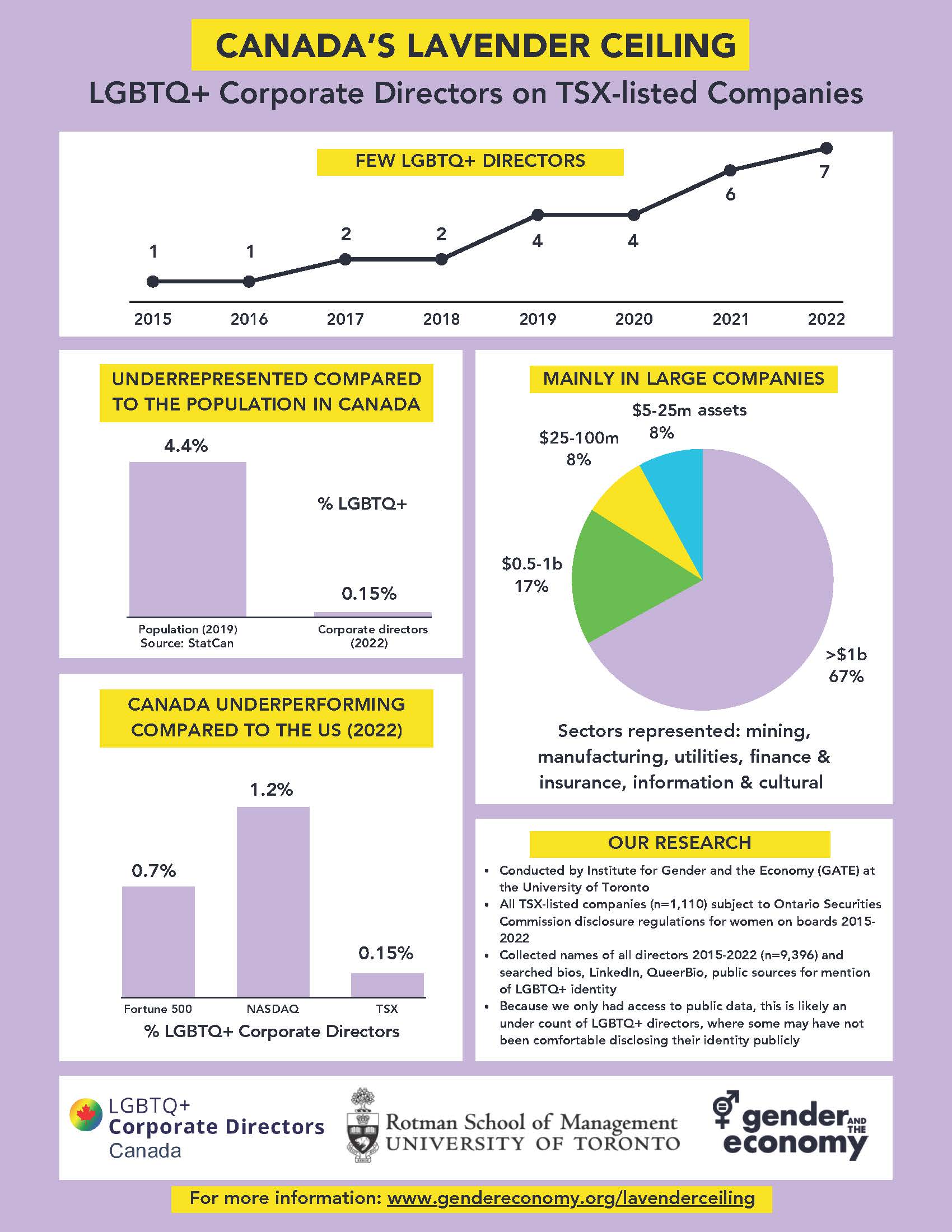
Episode 16: Myth: Being LGBTQ+ doesn’t matter at work
What does being LGBTQ+ have to do with your job? Actually, a whole lot. LGBTQ+ people face many barriers at work, and to being employed in the first place – like hiring discrimination, microaggressions, and lower earnings. And, if people feel like they have to hide who they are at work, it can take a huge toll. Sexual and gender identity are a part of who we are, and like other aspects of our identities, they affect how people perceive us and the opportunities we have. This episode busts the myth that being LGBTQ+ doesn’t matter at work.
Download show notes
Episode 15: Myth: Women don’t make good political leaders
In Canada, only 30% of Members of Parliament are women, and only 16% belong to a racial minority group, well below their 26% representation in the overall Canadian population. On the other hand, white men are over-represented in political leadership, and that’s not only the case in Canada, but in many other countries as well. People may – consciously or subconsciously – think that that’s because women, racialized folks, and members of other underrepresented groups just don’t make good political leaders. But the reality is that there are a lot of factors contributing to the political underrepresentation we see today. In this episode, we’re going to be busting the myth that women and members of other underrepresented groups just aren’t suited to political leadership.
Download show notes
Episode 14: Myth: Accessibility is optional
Accessibility is about making information, resources, activities, and environments, well, accessible. That means that everyone should be able to engage with these things with minimal effort and as meaningfully as possible. Countries around the world including Canada and the US have adopted accessibility laws, but there’s still a huge disconnect between how important this issue is and how much attention it receives. Many people don’t think about accessibility at all. Or if they do, they think of it as a nice-to-have that’s kind of optional or that’s it’s just about accommodations and modification to physical space.
Download show notes
Episode 13: Myth: Care work is women’s work
Care work is foundational to societies and to humanity. But even though everyone needs care, care work and those who provide it are often ignored, trivialized, or devalued. Why? Part of the reason is that care work is gendered: there’s a myth that care work is women’s work and that women just have the natural skill to be carers. In this episode, experts share research that shows that caring for others is a skill that anyone can and should learn – and if everyone participated in care, we could have more empathetic, healthier societies and relationships.
Download show notes
[/fusion_toggle][fusion_toggle title=”Busted Season Two” open=”yes” title_color=”#333333″ content_color=”#111111″]
Episode 12: Special Episode–Dr. Sarah Kaplan on the gender pay gap
What causes the gender pay gap? Is it just because women are choosing lower-paying jobs? Are they just not qualified enough to make higher salaries? Think again. There are structural and historical dynamics that lead to unequal outcomes we observe in pay today. This episode with GATE founder, Dr. Sarah Kaplan, delves into how labour market biases influences the gender pay gap.
Download show notes
Episode 11: Special Episode–Dr. Tina Opie on Shared Sisterhood
How can we make meaningful progress on equity and inclusion? Now that we’ve busted many different myths about gender and the economy, you might be wondering about more concrete steps you can take to change inequality in your workplace and daily life. On this special episode, Dr. Tina Opie shares three practices for dismantling systemic inequities from her book Shared Sisterhood: How to Take Collective Action for Racial and Gender Equity at Work, co-authored with Dr. Beth A. Livingston. This special episode was written and produced by the team at our sister podcast, Rotman Visiting Experts.
Download show notes
Episode 10 – Myth: Gender-based violence is a private issue
Overview: There’s a perception that gender-based violence (GBV) only happens in the home, and that means it’s a private matter, just for families or partners to deal with. This is a misconception that can keep survivors from reporting violence and finding support. Gender-based violence is a human rights violation that encompasses many types of actions including harassment, assault, manipulation, and abuse. It can happen anywhere, including in workplaces, schools, and public spaces, and has significant consequences for all of society. In this episode, we hear from experts from different organizations working against gender-based violence to understand why it is not a private issue but something that everyone should be working to address.
Download show notes
Episode 9 – Special Episode – Busting Myths on Remote Work and Inequality
Since the pandemic, remote work has become much more commonplace, especially for knowledge workers. While it has many advantages for workers, remote work isn’t going to mitigate inequality unless organizations implement it purposefully and with the intention to prioritize well-being and equity for workers. This episode delves into the effects of remote work on workplace inequality and makes suggestions for better workplaces for all. This special episode was written and produced by Rotman Executive Summary and features GATE’s director, Sarah Kaplan, and Senior Research Associate Carmina Ravanera.
Download show notes
Episode 8 – Myth – Women don’t negotiate
If women just negotiated more, maybe they’d close the gender pay gap, right? Think again. While some popular media has characterized women as just needing to step up and ask for more to change inequality, research shows that when they do negotiate, they often face backlash for going against gender norms. In this episode, we discuss how people of different social groups experience different responses when they try to negotiate – and how women negotiate in many different ways beyond just for pay.
Download show notes
Episode 7 – Myth – Good leadership is masculine leadership
What makes a good leader? When you hear this question, do you think about traits like assertiveness, ambition, and determination? A lot of people may be surprised to realize that as a society, we often associate good leadership with stereotypically masculine traits. In fact, a range of different traits—including both stereotypically masculine and feminine traits—make effective leaders. This episode delves into the myth that good leadership is masculine leadership and explores how we can facilitate more diverse and representative leaders across our workplaces and our societies.
Download show notes
Episode 6 – Myth: Gender inequality has a one-size-fits-all solution
What is intersectionality, anyway? We’ll demystify it in this episode–and delve into the myth that gender inequality can have a one-size-fits-all solution. Intersectionality shows us how we need to consider how our different social identities such as race, gender, religion, Indigeneity, immigrant status, disability, and sexual identity all intersect to play a significant role in how we experience the world. So, rather than creating policies, services, and research that homogenize people, we need to make sure we apply intersectionality—or we risk leaving people behind.
Download show notes
[/fusion_toggle][fusion_toggle title=”Busted Season One” open=”yes” title_color=”#333333″ content_color=”#111111″]Episode 1 – Myth: Gender Equality Only Benefits Women
Conversations around gender equality tend to focus on the significant barriers to resources and opportunities that women face. As a result of this focus, there is a pervasive myth that gender equality will only benefit women. Yet, contrary to this myth, gender equality benefits everyone. All people grapple with gender roles and stereotypes. We bust this myth with leading experts to show how, faster child development, greater peace, and economic prosperity are related to gender equality!
Download show notes here
Episode 2 — Myth: Gender quotas thwart meritocracy
The issue of whether to implement gender quotas for leadership positions, boards, political parties, and other groups is hotly debated. Some have argued that quotas are necessary to push gender equality forward and create a more level playing field. Others believe that implementing quotas gives an unfair advantage to women who do not deserve these positions: if they did deserve them, they would achieve them on their own merit. In other words, they perceive that gender quotas thwart meritocracy. We bust this myth with leading experts to show how quotas can actually be more beneficial than harmful.
Download show notes here
Episode 3 — Myth: It’s Not Us, It’s the Pipeline
There is a common belief that women are underrepresented in fields dominated by men, such as in science, technology, engineering and math (STEM) sectors, because there are just not enough women in the pipeline. Some have argued that women choose not to enter these careers because they simply have different preferences or aspirations. In turn, this implies that companies and firms do not have responsibility for a lack of gender diversity. However, this is a myth. A substantial number of women are qualified to work in fields dominated by men. For instance, in 2015 in Canada, women accounted for 43% of university graduates from STEM programs. Yet, women with STEM degrees are less likely than men with the same degrees to work in science and technology occupations. We bust this myth with leading experts to show that companies and firms need to take more action to make STEM fields more equitable and less gender-segregated.
Download show notes here
Episode 4 — Myth: Women Are More Risk-Averse Than Men
Popular discourse tends to depict women as less likely than men to take risks. Christine LaGarde, Managing Director of the International Monetary Fund, famously implied that women make less risky financial decisions when she stated that the financial crisis of 2008 would not have occurred “if it had been Lehman Sisters rather than Lehman Brothers”. But are women really more risk-averse than men? Research has in fact shown that men and women are more similar in their risk preferences than commonly believed. We bust this myth with leading experts to show that women may act more risk-averse only because of gender norms that place expectations on them to do so.
Download show notes here
Episode 5 — Myth: Sexual Harassment is a Women’s Issue and a Result of Sexual Desire
Sexual harassment is often portrayed as an issue that only concerns women, where women are victims of harassment because they were “asking for it” through their behaviours or dress. This portrayal puts the onus on women to stop harassment by simply changing their actions. . Yet, sexual harassment is not a “women’s issue” in the sense that victims can be of any gender and perpetrators tend to be men. This perception also ignores the reality that sexual harassment is often about having power and control over someone else. We bust this common myth to show that it is imperative that the social norms that drive harassment and toxic work cultures are addressed instead of blaming the actions of women
Download show notes here[/fusion_toggle][/fusion_accordion][fusion_separator style_type=”default” hide_on_mobile=”small-visibility,medium-visibility,large-visibility” sticky_display=”normal,sticky” flex_grow=”0″ alignment=”center” /][/fusion_builder_column][/fusion_builder_row][/fusion_builder_container]