
Speaking at Rotman Management Magazine’s “Short Talks: Art of Change” event in May 2019, Sarah Kaplan discusses her latest book, The 360° Corporation: From Stakeholder Trade-offs to Transformation, and how businesses can approach inequality as an innovation challenge.
Category: Video
-

The uses and abuses of storytelling
Speaking at Digital Jove, a conference in Spain for digital creatives, Victoria Heath (GATE’s Digital Storyteller) examines the uses and abuses of storytelling and explains how we can be more responsible storytellers in the world of education and activism, particularly in regards to gender and diversity. In this presentation, she discusses a variety of storytelling examples from politics, education, advertising, and the news, and outlines six ways to tell stories more responsibly:
- Draw from truth and have integrity
- Understand your positionality and check your narrative
- Aim to change behaviour, not attitudes
- Provoke empathy, but give viewers a responsible action to take
- The narrative should frame the data, not the other way around
- Value your audience and engage with them
Watch or listen to the full presentation below.
-
Rebooting the gender equality conversation
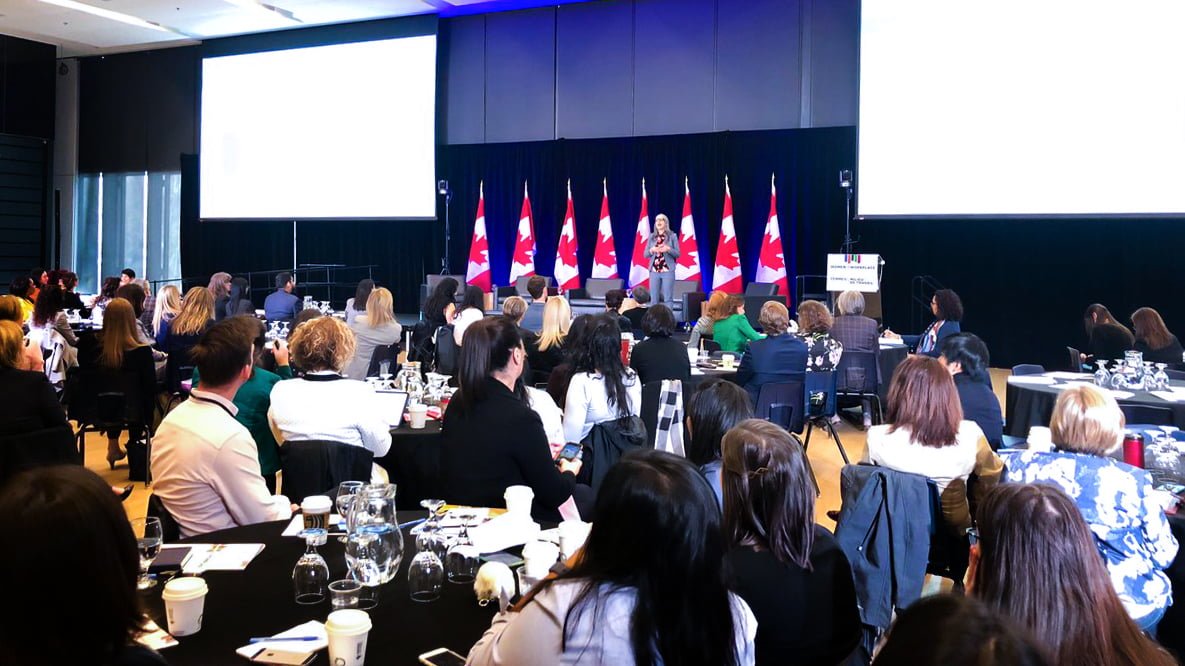
In May 2019, the Rotman School of Management hosted the Women and the Workplace Symposium, a two-day event funded by the Government of Canada’s Labour Program. The symposium brought together leaders and champions of workplace diversity from across Canada to share tools and best practices employers need to advance women in the workforce and participate in an ongoing dialogue.
In the video below, GATE Director Sarah Kaplan busts five myths regarding women in the workplace and outlines actions organizations and governments can take to achieve progress towards gender equality.
The myths include:
- Promoting diversity contravenes meritocracy
- Gender career gaps are a product of “choice”
- We have to “fix the women”
- Controlling bias is about changing individuals
- Focusing on large corporations will change the game
To learn more, check out the research briefs and infographics prepared by GATE as the #Womenintheworkplace Symposium Knowledge Partner, here.
-

A new model: Gender equality as an innovation challenge
Speaking at Canadian Tech@Scale, Sarah Kaplan argues for a Canadian–more inclusive–model of innovation ecosystems and superclusters. A model that deviates from the Silicon Valley model and the systemic inequalities it has yet to successfully address.
DID YOU LIKE THIS VIDEO? FOLLOW US ON TWITTER, LINKEDIN, AND YOUTUBE FOR MORE, AND SIGN UP FOR OUR MONTHLY NEWSLETTER.</a
-

Meditations on the business case for gender equality
Speaking at the University of Pennsylvania’s Wharton School, Sarah Kaplan details the mission of the Institute for Gender and the Economy (GATE) and pushes attendees to question the focus on making the “business case” for gender equality by asking three questions:
- What does the research say about the “business case”?
- Why do we need to make a “business case” for women or people of color to be included?
- Why is the moral imperative for gender diversity and inclusion not enough?
DID YOU LIKE THIS VIDEO? FOLLOW US ON TWITTER, LINKEDIN, AND YOUTUBE FOR MORE, AND SIGN UP FOR OUR MONTHLY NEWSLETTER.
-

The Brief: Do gender quotas work?
Policy makers and organizations have been working toward achieving gender diversity for many decades, but progress has been slow and is perhaps even stagnating. Only 5% of the 500 CEOs on the 2016 Fortune 500 list are women, a mere 27 out of 500. In Canada, despite 3 years of “comply or explain” regulation from the Ontario Securities Commission, only 12% of board seats are held by women.
Notwithstanding extensive research on the topic and widespread diversity initiatives, gender representation remains a persistent problem in corporate leadership and in the workforce.
Because of this sluggish progress toward gender equality, organizations and policy makers are increasingly considering the possibility of implementing quotas, particularly at the level of board directors, to achieve gender parity. While some people remain very concerned about the use of quotas, research suggests they aren’t as scary as people think.
This explainer is based an Oxford-style debate on the effectiveness of gender quotas hosted by the Institute for Gender and the Economy (GATE) in 2017.
View the full research brief here.
Did you like this video? Follow us on Twitter, LinkedIn, and Youtube for more, and sign up for our monthly newsletter.
-

The Brief: How can gender budgeting promote equality?
In Canada, the current federal government has put forth for the first time a “gender equality budget.” But, what is gender budgeting? It is a way for governments and non-governmental organizations to promote gender equality using administrative and fiscal policy by assessing the differing needs people of different genders, designing policies to remedy them and subsequently testing to see if the policies had their intended impacts.
Gender budgeting should not just be about equally distributing government spending to men and women.
To implement policy changes, gender budgeting analysis takes into account a range of identity factors such as age, education, language, ethnic backgrounds, geography, culture and income. By placing an emphasis on these intersectional factors, gender budgeting can create and inform better decision making that can improve conditions for women as well as other marginalized peoples.
This explainer is based on a workshop on gender budgeting hosted by the Institute for Gender and the Economy (GATE) in 2016.
View the full research brief here.
Did you like this video? Follow us on Twitter, LinkedIn, and Youtube for more, and sign up for our monthly newsletter.
-

The Brief: Does diversity training work?
In our increasingly diverse society, organizations are constantly challenged to create environments for every employee to feel included and valued. Unfortunately, despite companies’ best efforts, employees can end up feeling excluded – be it due to implicit bias or explicit prejudice. In response to this challenge, many organizations look to diversity training programs to help employees understand their own biases, increase employee engagement and satisfaction, and create an environment that fosters diversity and inclusion. But, these efforts haven’t always been successful and sometimes have resulted in backlash within organizations.
So, what does the evidence say about the effectiveness of diversity training? Should companies invest in diversity training or not?
This explainer is based on an Oxford-style debate on the effectiveness of diversity training hosted by the Institute for Gender and the Economy (GATE) in 2017.
View the full research brief here.
Did you like this video? Follow us on Twitter, LinkedIn, and Youtube for more, and sign up for our monthly newsletter.
-

What exactly is sponsorship in business?
Men are 50% more likely to attribute their advancement to the support of a senior leader than women are. Yet, 80% of companies lack a formal sponsorship program.
High potential women are over mentored and under sponsored. But what is sponsorship?
In this video, Rotman MBA Student Fellow, Ria Dutta, interviews several practitioners, academics, and activists from organizations such as Catalyst Canada; the University of Toronto; the Bank of Montreal; and McKinsey & Company, about sponsorship in business and how it’s different from mentorship.
About this video:
This video series was supported by the Institute for Gender and the Economy (GATE) as part of the MBA Student Fellows program, which seeks to engage students in advancing the agenda on gender equality.
Disclaimer: This video series was prepared by Ria Dutta, and the opinions expressed in this series do not necessarily reflect the views of the Institute for Gender and the Economy or the University of Toronto.
Stay tuned this fall for the full series and subscribe to our Youtube channel for more content like this.
-
Pay transparency legislation
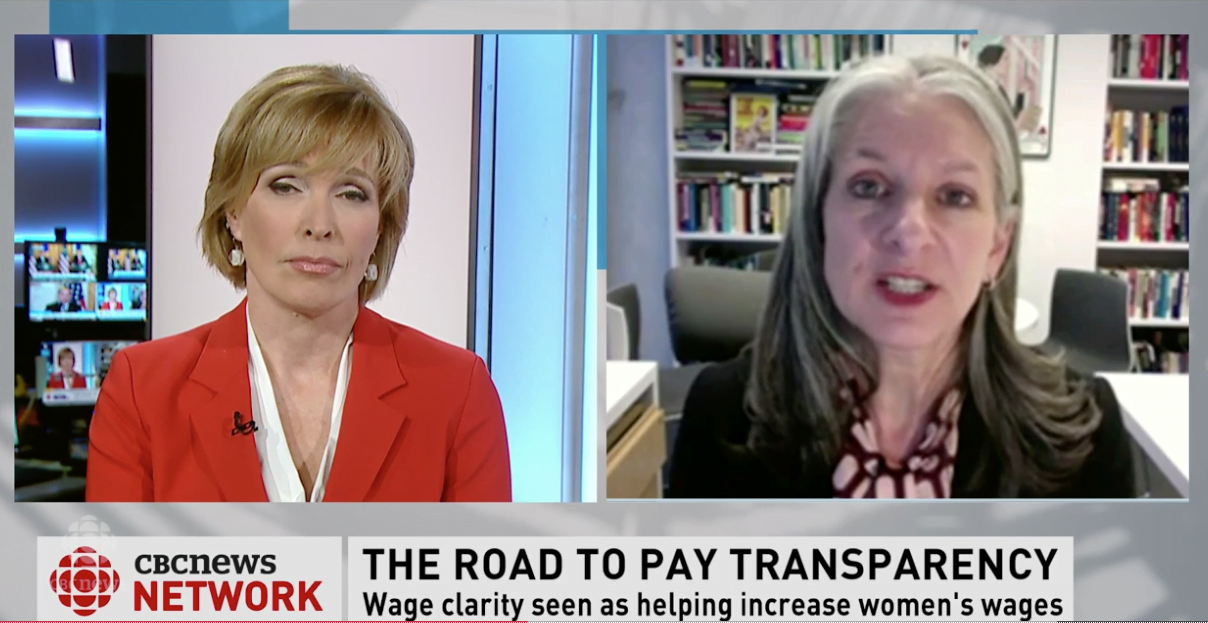
In this CBC Business News video, Sarah Kaplan discusses the impact of pay transparency legislation in Ontario.
This recently introduced bill – called Then Now Next: Ontario’s Strategy for Women’s Economic Empowerment – aims to implement pay transparency measures in order to close the gender wage gap, but will it work?