Author: Salwa Iqbal

  • Anne Chow on ‘Lead Bigger: The Transformative Power of Inclusion’

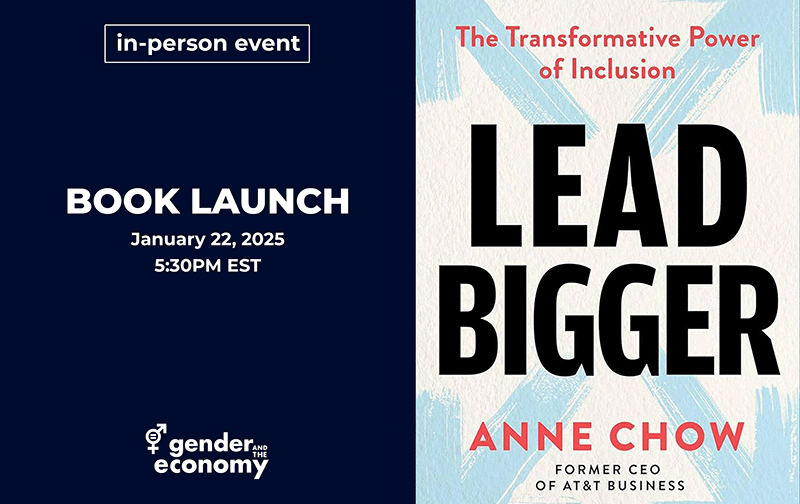
    Anne Chow on ‘Lead Bigger: The Transformative Power of Inclusion’


    Topic: Lead Bigger: The Transformative Power of Inclusion (Simon & Schuster, September 2024)

    Date: January 22, 2025, 5:30PM EST

    Synopsis:

    Drawing from over three decades of experience, former CEO of AT&T Business Anne Chow shares how to lead bigger by leveraging inclusion beyond DEI, to elevate your work, workforce, and workplace.For generations, when we’ve needed to innovate and grow, we’ve been told to “think bigger”—it’s now time to Lead Bigger.

    In a world that’s become more interconnected yet polarized, inclusion has been overly politicized and narrowly defined to issues of gender and race. As a result, we need a new approach to inclusive leadership that goes beyond DEI, harnessing its power for innovation and growth. In Lead Bigger, Anne Chow reframes inclusion as the required leadership competency of expanding our perspectives for greater performance in our work, workforce, and workplace.

    As former CEO of AT&T Business, she was the first woman of color to hold the position of CEO in the company’s over one hundred and forty year history. Chow draws from her expertise in transforming organizations to teach you how to create a dynamic environment that engages everyone you and your company interact with—as well as those you wish to be connected to—while adapting to the ever-changing world. This book equips you with the necessary tools to expand your inclusive leadership skills, including prompts, tactics, and enriching insights from leadership visionaries General Stanley McChrystal, Arianna Huffington, and Adam Grant.

    Chow illuminates a seismic shift in the business world, in which a more humanistic approach is required as technology upends work as we know it. If you’re committed to advancing work that matters, engaging a dynamic workforce, and fostering an agile workplace, you’re ready to Lead Bigger.

    REGISTRATION LINK

    Speaker:

    Anne Chow, Former CEO, AT&T Business

    In Conversation with: Nouman Ashraf, Associate Professor, Teaching Stream, Organizational Behaviour and Human Resource Management

    About our Speaker:

    As the former CEO of AT&T Business, Anne Chow was the first woman and first woman of color to hold the position of CEO at AT&T in 2019, overseeing more than 35,000 employees who collectively served 3 million business customers worldwide during her time there. She is currently the Lead Director on the board of Franklin Covey, serves on the board of 3M and CSX, and teaches at Northwestern University’s Kellogg School of Management. You can listen to Anne on Harvard Business Review’s Race at Work, WFAA and MSNBC.

    Nouman Ashraf is Assistant Professor, Teaching Stream within the Organizational Behavior and Human Resources Management area at the Rotman School of Management. He possesses a broad range of professional, academic and research interests, with a specialized focus on enabling innovative and inclusive practices within organization life. For the last decade and a half, he has held progressively senior roles at the University of Toronto. He is a recognized thought leader in governance, and has taught thousands of directors in the national Rotman program on Not for Profit Governance in partnership with the Institute for Corporate Directors since its inception in 2007.

    An award winning faculty member, Nouman teaches Emancipatory Leadership within the Executive MBA as well as the OMNIUM Global Executive MBA Program, Leading Social Innovation within the 2 and 3 Year MBA programs, and Leading across Differences within the Rotman Commerce Program. He is the Academic Director of various custom leadership programs in partnership with Rotman Executive Program clients. His previous consulting clients include Telus, Cliffs Natural Resources, Bayer, the Canadian Broadcasting Corporation, the Ontario Trillium Foundation, United Way Toronto, and numerous post-secondary and healthcare institutions. At Lunch time, he can be found at Massey College within the University of Toronto, where he mentors exceptional post-graduate students in his capacity as Senior Fellow.

    Event Logistics:

    This event is available to attend in-person only.

    Rotman Events is committed to accessibility for all people. If you have any access needs or if there are any ways we can support your full participation in this session, please email [events@rotman.utoronto.ca] no later than 2 weeks in advance of the event and we will be glad to work with you to make the appropriate arrangements.

    General Admission: In-Person Ticket Details

    The event will be hosted in Desautels Hall at the Rotman School of Management (105 Saint George Street, Toronto, ON M5S 3E6).

    Cancellation & Refund Policy

    • Refunds will only be issued for cancellations received in writing NO LATER than 24 hours prior to the event. Please email events@rotman.utoronto.ca for processing.
    • In-person registrants who do not pick up their book at the event will have 5 business days to request postal delivery by emailing us at events@rotman.utoronto.ca. All unclaimed books will be returned to the publisher after that time.

    Questions: events@rotman.utoronto.ca, Megan Murphy

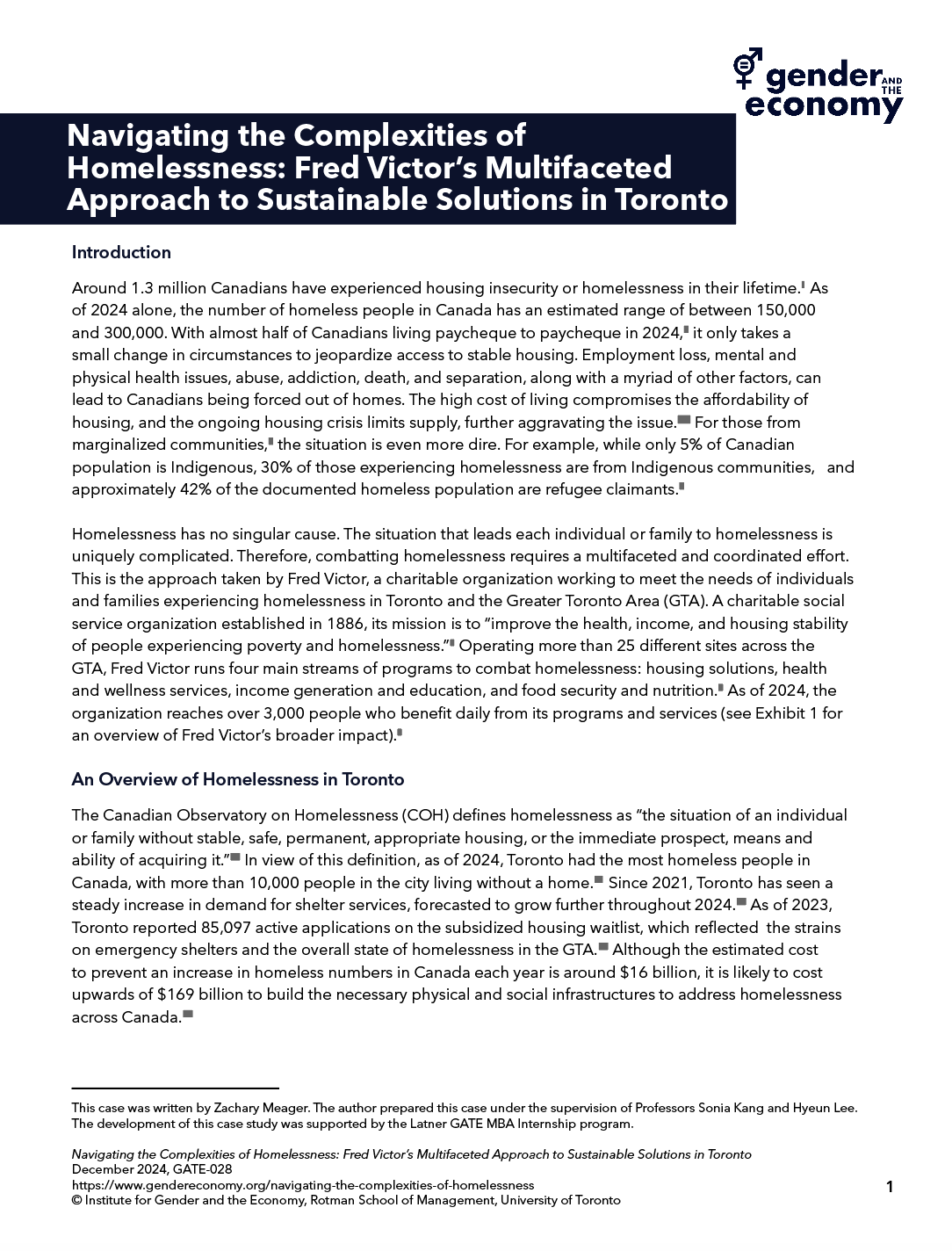
  • Navigating the Complexities of Homelessness: Fred Victor’s Multifaceted Approach to Sustainable Solutions in Toronto

    Navigating the Complexities of Homelessness: Fred Victor’s Multifaceted Approach to Sustainable Solutions in Toronto


     Introduction

     Around 1.3 million Canadians have experienced housing insecurity or homelessness in their lifetime. As of 2024 alone, the number of homeless people in Canada has an estimated range of between 150,000 and 300,000. With almost half of Canadians living paycheque to paycheque in 2024, it only takes a small change in circumstances to jeopardize access to stable housing. Employment loss, mental and physical health issues, abuse, addiction, death, and separation, along with a myriad of other factors, can lead to Canadians being forced out of homes. The high cost of living compromises the affordability of housing, and the ongoing housing crisis limits supply, further aggravating the issue. For those from marginalized communities, the situation is even more dire. For example, while only 5% of Canadian population is Indigenous, 30% of those experiencing homelessness are from Indigenous communities, and approximately 42% of the documented homeless population are refugee claimants.

    Homelessness has no singular cause. The situation that leads each individual or family to homelessness is uniquely complicated. Therefore, combatting homelessness requires a multifaceted and coordinated effort. This is the approach taken by Fred Victor, a charitable organization working to meet the needs of individuals and families experiencing homelessness in Toronto and the Greater Toronto Area (GTA). A charitable social service organization established in 1886, its mission is to “improve the health, income, and housing stability of people experiencing poverty and homelessness.” Operating more than 25 different sites across the GTA, Fred Victor runs four main streams of programs to combat homelessness: housing solutions, health and wellness services, income generation and education, and food security and nutrition. As of 2024, the organization reaches over 3,000 people who benefit daily from its programs and services (see Exhibit 1 for an overview of Fred Victor’s broader impact).

    TO VIEW AND DOWNLOAD THE FULL CASE STUDY, FOLLOW THESE INSTRUCTIONS.

     This case was written by Zachary Meager. The author prepared this case under the supervision of Professors Sonia Kang and Hyeun Lee. 

    The development of this case study was supported by the Latner GATE MBA Internships program. 


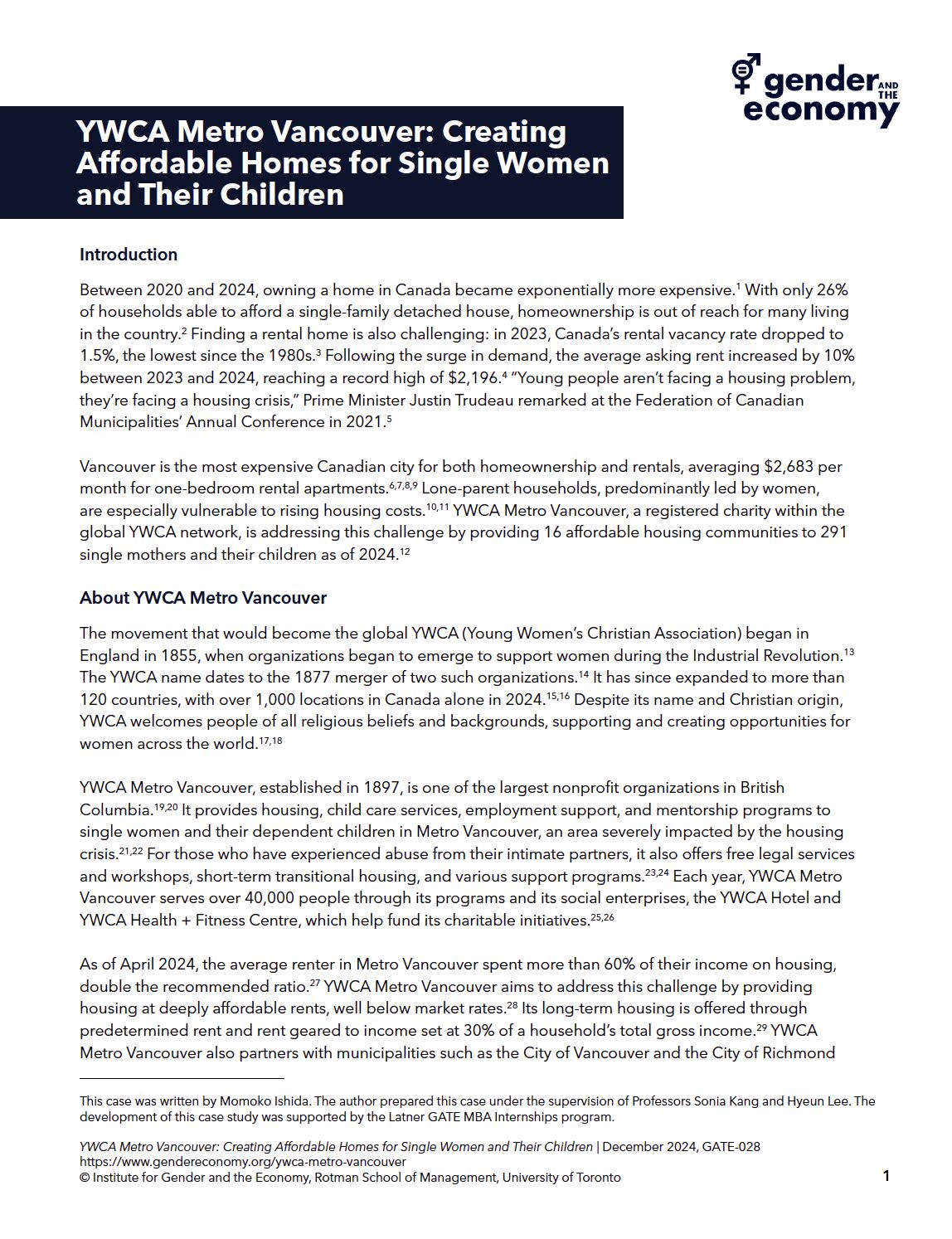
  • YWCA Metro Vancouver: Creating Affordable Homes for Single Women and Their Children

    YWCA Metro Vancouver: Creating Affordable Homes for Single Women and Their Children


     Introduction

     Between 2020 and 2024, owning a home in Canada became exponentially more expensive. With only 26% of households able to afford a single-family detached house, homeownership is out of reach for many living in the country. Finding a rental home is also challenging: in 2023, Canada’s rental vacancy rate dropped to 1.5%, the lowest since the 1980s. Following the surge in demand, the average asking rent increased by 10% between 2023 and 2024, reaching a record high of $2,196. “Young people aren’t facing a housing problem, they’re facing a housing crisis,” Prime Minister Justin Trudeau remarked at the Federation of Canadian Municipalities’ Annual Conference in 2021.

    Vancouver is the most expensive Canadian city for both homeownership and rentals, averaging $2,683 per month for one-bedroom rental apartments. Lone-parent households, predominantly led by women, are especially vulnerable to rising housing costs. YWCA Metro Vancouver, a registered charity within the global YWCA network, is addressing this challenge by providing 16 affordable housing communities to 291 single mothers and their children as of 2024.

    TO VIEW AND DOWNLOAD THE FULL CASE STUDY, FOLLOW THESE INSTRUCTIONS.

     This case was written by Momoko Ishida. The author prepared this case under the supervision of Professors Sonia Kang and Hyeun Lee. 

    The development of this case study was supported by the Latner GATE MBA Internships program. 


  • Feminist City 5.0: Cities as Safe Havens

    Feminist City 5.0: Cities as Safe Havens

    [fusion_builder_container type=”flex” hundred_percent=”no” equal_height_columns=”no” hide_on_mobile=”small-visibility,medium-visibility,large-visibility” background_position=”center center” background_repeat=”no-repeat” fade=”no” background_parallax=”none” parallax_speed=”0.3″ video_aspect_ratio=”16:9″ video_loop=”yes” video_mute=”yes” border_style=”solid”][fusion_builder_row][fusion_builder_column type=”1_1″ type=”1_1″ background_position=”left top” border_style=”solid” border_position=”all” spacing=”yes” background_repeat=”no-repeat” margin_top=”0px” margin_bottom=”0px” animation_speed=”0.3″ animation_direction=”left” hide_on_mobile=”small-visibility,medium-visibility,large-visibility” center_content=”no” last=”no” hover_type=”none” min_height=”” link=””][fusion_text]


    Feminist City 5.0: Designing Safe Havens in Urban Spaces

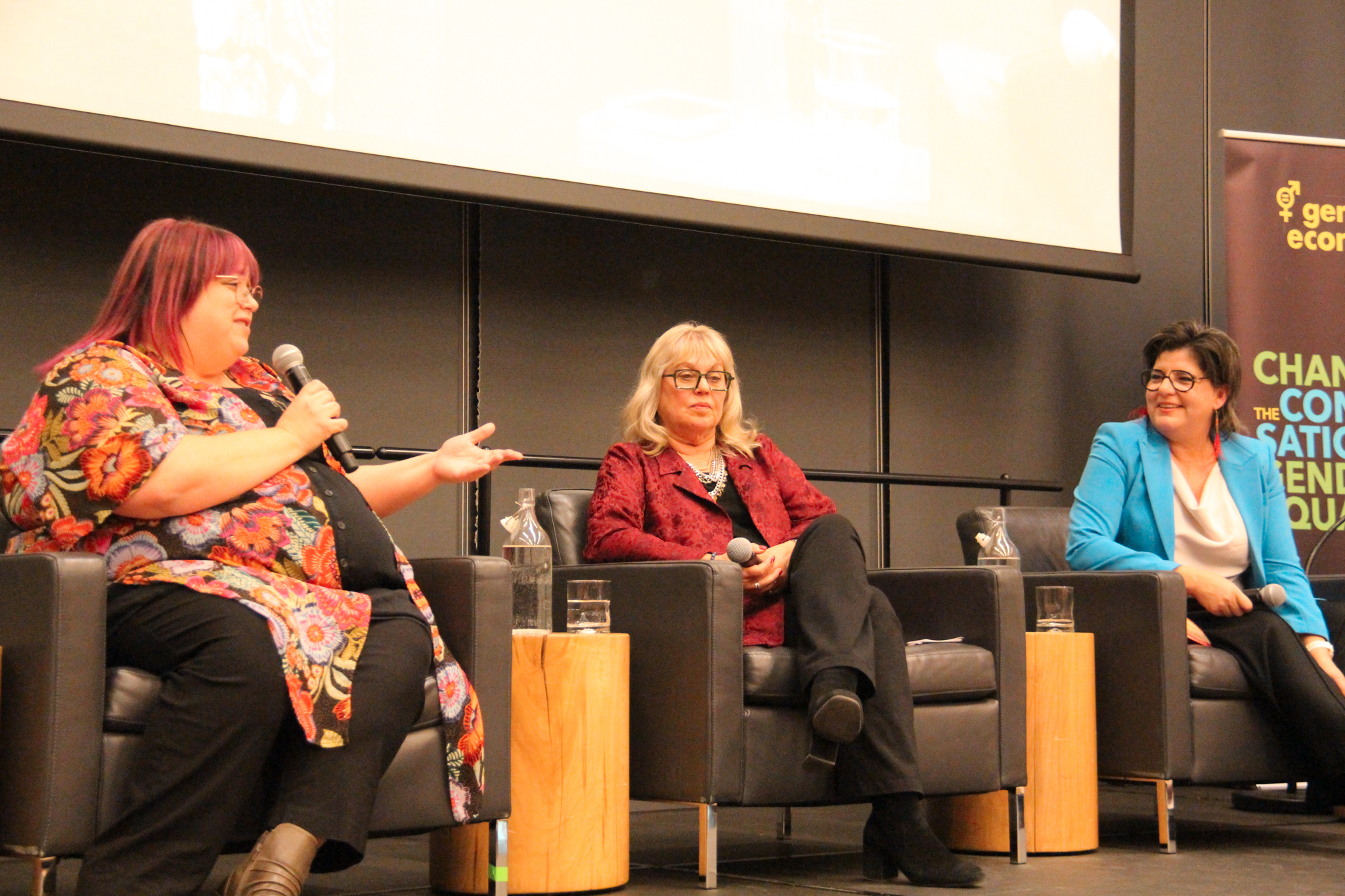
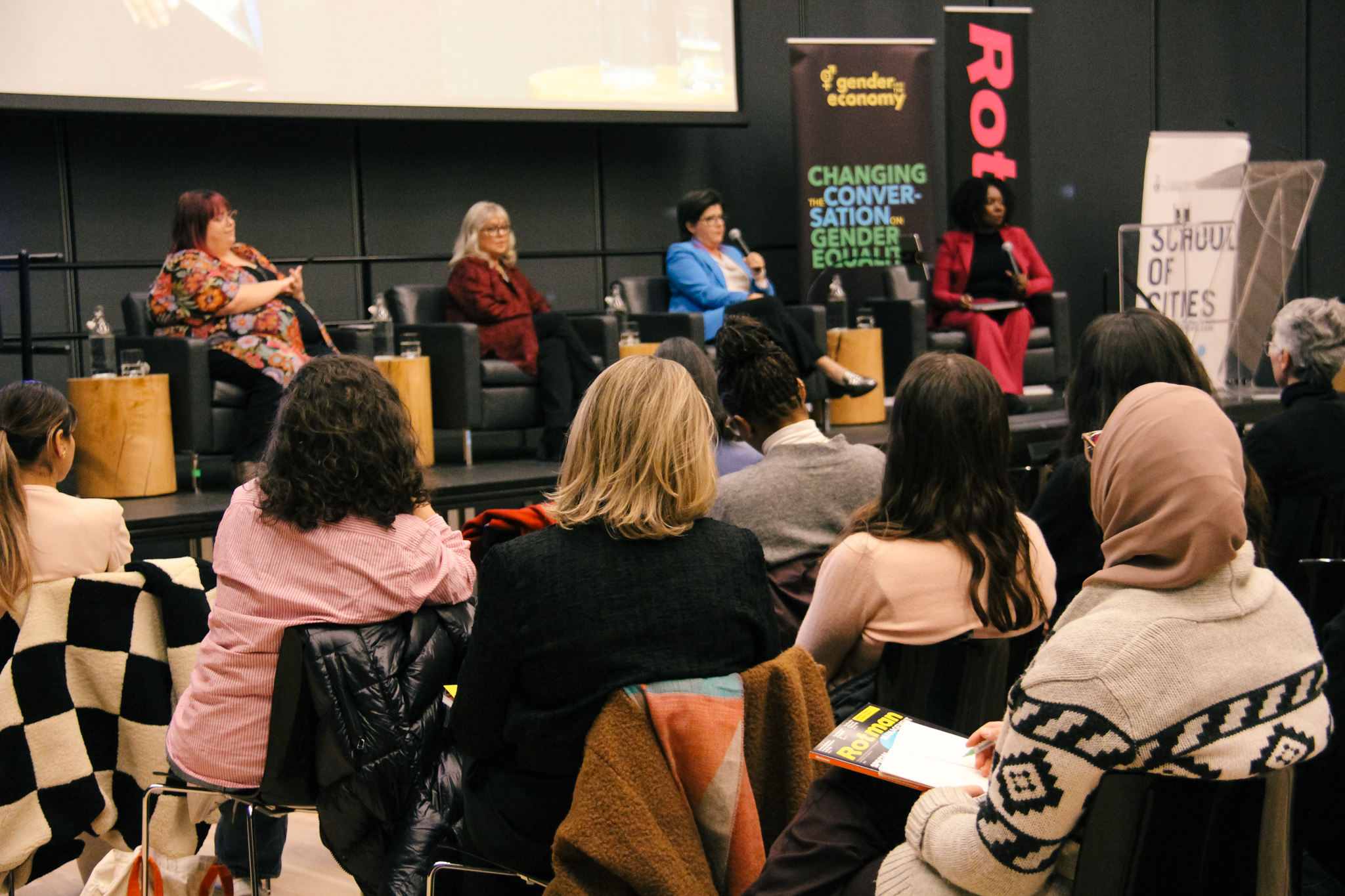
    On December 3, 2025, the Institute for Gender and the Economy (GATE) at the Rotman School of Management partnered with the School of Cities to host the fifth annual Feminist City event. This thought-provoking event explored how we can make our cities equitable, inclusive, and safe for all, particularly marginalized communities.


    The event took place during two global observances: the 16 Days of Activism Against Gender-Based Violenceand the International Day of Persons with Disabilities. These milestones framed the discussion around the urgent need to address the housing crisis at the nexus of gender-based violence, homelessness, and the systemic barriers that prevent equitable access to urban spaces.


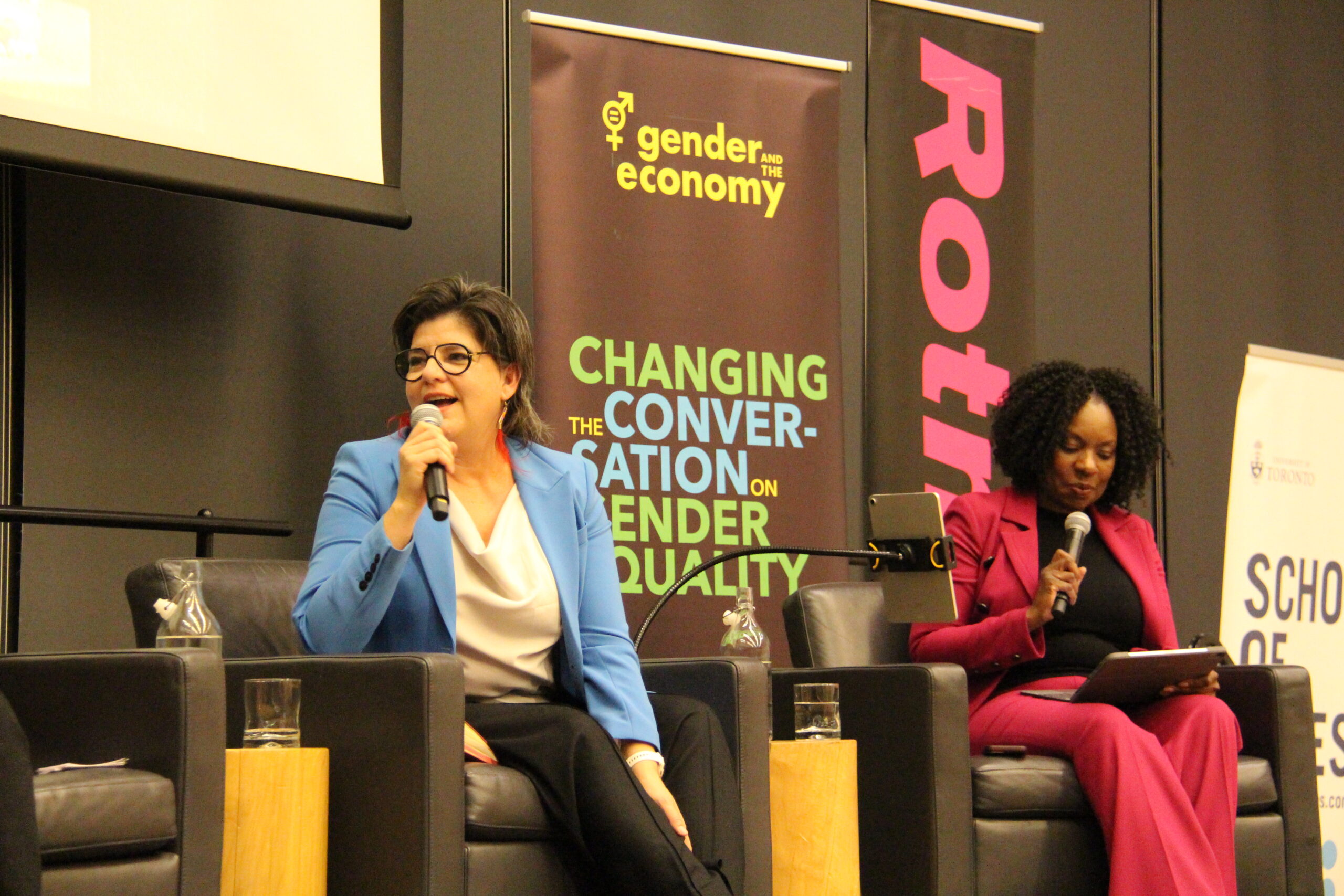
    The panel, moderated by Mitzie Hunter, President and CEO of the Canadian Women’s Foundation and a Canadian Urban Leader at the School of Cities, featured experts with diverse perspectives on how cities can better serve vulnerable populations, including Ramona, Alaggia, Professor and Acting Associate Dean and Margaret & Wallace McCain Family Chair in Child & Family, Factor-Inwentash Faculty of Social Work, University of Toronto, Nelly Dennene, President, the Conseil des Montréalaises, Jennifer Gordon, Manager, Plan to End Chronic Homelessness, Region of Waterloo, and Sara Wolfe, GATE’s Executive-in-Residence.


    The conversation centred on the following themes:

    • Panelists defined “safe havens” as spaces where everyone feels safe and has valued.
    • Speakers highlighted how marginalized groups, including women, gender-diverse individuals, Indigenous communities, and those experiencing homelessness, disproportionately face systemic barriers in urban environments.
    • The panel underscored the structural challenges, including inadequate childcare, legal support, and banking services, which perpetuate inequity and trap women in abusive relationships. They emphasized the need for systems that support safety, housing, and care without placing the onus on individuals to navigate systemic failings
    • Drawing from examples like Montreal’s equity index and gender-focused housing initiatives, panelists advocated for bold, systemic reforms. Solutions included increasing investment in social housing, implementing universal childcare, and fostering trauma-informed community support systems.

    The event concluded with a call to reimagine cities as resilient, inclusive communities where everyone can thrive with equitable access to housing, care, and economic development opportunities.

    “Resilience has really been misunderstood and framed in a neoliberal theoretical framework where it’s up to the individual to be resilient or not resilient, and we don’t subscribe to that. Individuals need environments that promote their resilience, and that provide opportunities for resilience. That’s how resilience is fostered for individuals, families and communities.”

    Ramona, Alaggia

  • Removing Accessibility Barriers for Inclusive Living: The Daniels Corporation’s Accessible Designs Strategy

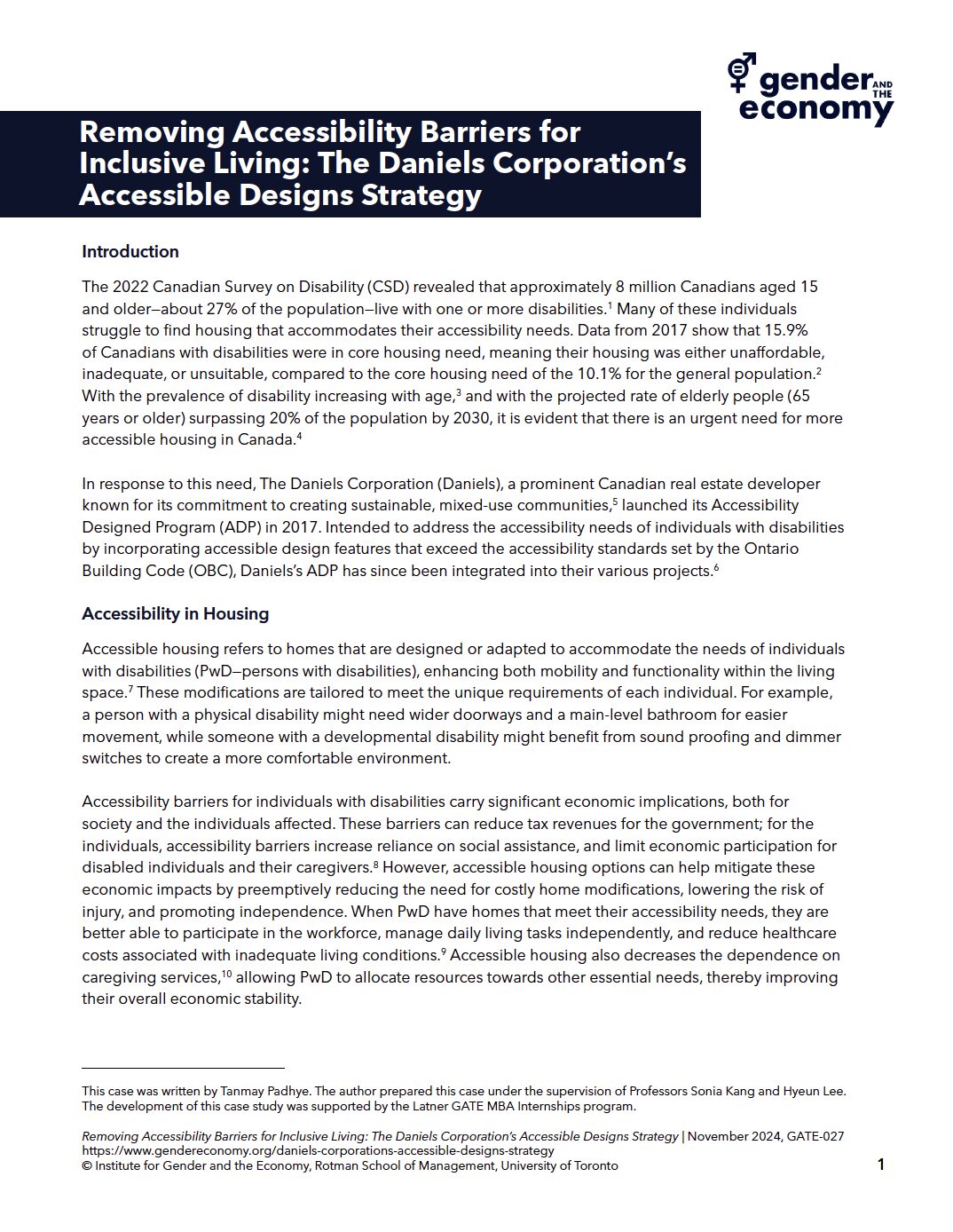
    Removing Accessibility Barriers for Inclusive Living: The Daniels Corporation’s Accessible Designs Strategy


     Introduction

    The 2022 Canadian Survey on Disability (CSD) revealed that approximately 8 million Canadians aged 15 and older—about 27% of the population—live with one or more disabilities. Many of these individuals struggle to find housing that accommodates their accessibility needs. Data from 2017 show that 15.9% of Canadians with disabilities were in core housing need, meaning their housing was either unaffordable, inadequate, or unsuitable, compared to the core housing need of the 10.1% for the general population. With the prevalence of disability increasing with age, and with the projected rate of elderly people (65 years or older) surpassing 20% of the population by 2030, it is evident that there is an urgent need for more accessible housing in Canada.

    In response to this need, The Daniels Corporation (Daniels), a prominent Canadian real estate developer known for its commitment to creating sustainable, mixed-use communities, launched its Accessibility Designed Program (ADP) in 2017. Intended to address the accessibility needs of individuals with disabilities by incorporating accessible design features that exceed the accessibility standards set by the Ontario Building Code (OBC), Daniels’s ADP has since been integrated into their various projects.

    TO VIEW AND DOWNLOAD THE FULL CASE STUDY, FOLLOW THESE INSTRUCTIONS.

     This case was written by Tanmay Padhye. The author prepared this case under the supervision of Professors Sonia Kang and Hyeun Lee.

    The development of this case study was supported by the Latner GATE MBA Internships program. 


  • Mila’s AI4Humanity and Biasly: Best  Practices to Develop Socially Responsible AI

    Mila’s AI4Humanity and Biasly: Best Practices to Develop Socially Responsible AI


    Introduction

    We are in an era of unprecedented development, growth, and adoption of artificial intelligence (AI). Companies across industries and sectors are increasingly integrating AI to gain a competitive advantage. As of 2024, the adoption rate of AI in at least one business function was 72% of all organizations, with AI expected to see an annual growth rate of 37.3% from 2023 to 2030. 

    However, this untampered growth poses significant risks. However, this untampered growth poses significant risks. Because AI systems rely on human input for datasets, training, and algorithmic design, they can inadvertently perpetuate human biases and historical patterns of discrimination. With growth outpacing regulatory and policy frameworks designed to ensure ethical standards and safety, there is an emergent need for best practices in the development and deployment of AI systems in a manner that is ethical, transparent, and beneficial while aiming to minimize biases, ensure privacy, and promote fairness and accountability.

    Mila, a Quebec-based AI research institute, is at the forefront of such AI development. With a community of 1,400+ professors, researchers, trainees, and students (in both professional master’s and graduate diploma programs), Mila boasts the world’s largest concentration of deep learning academic researchers. Mila engages with a range of stakeholders and multidisciplinary teams of specialists to promote the responsible use of AI across different sectors and industries, and has created distinct initiatives that have the potential to serve as open-source resources and guides of best practice for building socially responsible AI. For instance, its project Biasly is an expert-annotated dataset that can be used to train models to detect, categorize, provide a severity score for, and mitigate subtle misogyny in English text by providing detailed annotations identifying and rewriting misogynistic language. Biasly cannot debias datasets itself, but can be used to teach models how to help people identify their own biased language. What is distinctive about Biasly in the space of AI development are the processes behind its creation, which serve as a potential model of best practice for incorporating socially responsible methods into AI creation processes.

    TO VIEW AND DOWNLOAD THE FULL CASE STUDY, FOLLOW THESE INSTRUCTIONS.

     This case was written by Zachary Meager. The author prepared this case under the supervision of Professors Sonia Kang and Hyeun Lee.

    The development of this case study was supported by the Latner GATE MBA Internships program. 


  • Freshco: Redefining the Blue-Collar Sector

    Freshco: Redefining the Blue-Collar Sector


    Introduction

     “So, you’re kind of like a fresh face in the industry,” a friend remarked during dinner in 1995. The term “fresh” felt right to Mandy Rennehan. Twenty years old, with no formal education in either construction or business management, she had just started breaking into the male-dominated facility construction industry. Through cold calling local contractors and word-of-mouth referrals, she had built onsite experience in various trades such as HVAC, roofing, plumbing, and concrete. Shortly after the dinner, Freshco, the first full-service, 24/7, on-call retail facilities company in Canada, was born.

    Between 1995 and 2024, Freshco, with Rennehan as founder and CEO, grew into a multi-million dollar business, trusted by retailers such as Apple, Gap, lululemon, and Nike, to name a few. Rennehan achieved this success as a woman and a lesbian in an industry that, according to her, “barely knows what to do with either.” Due in large part to Rennehan’s advocacy for women in the trades, as of 2024, women comprised over 70% of Freshco’s workforce, despite the persistent male dominance in the industry.

    TO VIEW AND DOWNLOAD THE FULL CASE STUDY, FOLLOW THESE INSTRUCTIONS.

     This case was written by Momoko Ishida. The author prepared this case under the supervision of Professors Sarah Kaplan and Hyeun Lee.

    The development of this case study was supported by the Latner GATE MBA Internships program.