Author: Carmina Ravanera

  • It’s in the family: The impact of care costs on family income

    It’s in the family: The impact of care costs on family income

    [fusion_builder_container hundred_percent=”no” equal_height_columns=”no” hide_on_mobile=”small-visibility,medium-visibility,large-visibility” background_position=”center center” background_repeat=”no-repeat” fade=”no” background_parallax=”none” enable_mobile=”no” parallax_speed=”0.3″ video_aspect_ratio=”16:9″ video_loop=”yes” video_mute=”yes” border_style=”solid” margin_top=”20″ type=”legacy”][fusion_builder_row][fusion_builder_column type=”3_4″ layout=”3_4″ center_content=”no” hover_type=”none” hide_on_mobile=”small-visibility,medium-visibility,large-visibility” background_position=”left top” background_repeat=”no-repeat” border_style=”solid” border_position=”all” animation_direction=”left” animation_speed=”0.3″ last=”false” first=”true” border_sizes_top=”0″ border_sizes_bottom=”0″ border_sizes_left=”0″ border_sizes_right=”0″ background_blend_mode=”overlay” min_height=”” link=””][fusion_text hide_on_mobile=”small-visibility,medium-visibility,large-visibility” sticky_display=”normal,sticky” text_transform=”none” animation_direction=”left” animation_speed=”0.3″ animation_delay=”0″]


    Highlights

    • While scholars have studied the impact of the motherhood penalty on women’s labour market outcomes, few have explored the impact of these penalties on family income inequality.
    • This research finds that the rising cost of care can negatively impact family income (total combined earnings for a family), particularly when mothers do not have college degrees.
    • If governments provide greater care supports—such as subsidized access to paid caregivers, or income transfers to offset childcare costs—there is potential to help reduce family income inequality.

    We know that children can significantly affect mothers’ labour and earnings, shaping their individual labour outcomes in multiple ways. However, these individual outcomes can also have lasting consequences for their families.

    Historically, government policies have sought to address these potential impacts by developing childcare policies intended to reduce financial burdens on families. In the United States, such policies have often been insufficient—for example, through the lack of an income transfer program for unpaid caregivers or a myopic focus on the traditional male-breadwinner family model, which has negatively impacted poor and non-White families. Childcare in the U.S. is among the most expensive in the OECD (alongside countries like Canada, New Zealand and the United Kingdom).

    Do rising childcare costs affect family income?

    Researchers Pilar Gonalons-Pons and Ioana Marinescu explore the impact of births on family income and potential policy implications in their recent paper in American Sociological Review. The authors investigate the impact of the cost of care infrastructures, defined as the policy environment that shapes how care needs are met, including policies that affect the availability and prices of paid childcare services as well as policies that provide income transfers for unpaid caregiving. In their empirical analysis, the authors focus specifically on childcare prices, measured as the market cost of paid childcare services, as an indicator of how affordable formal care is for families.

    The authors used data from the Survey of Income and Program Participation (SIPP), nationally representative panel data on households, to explore how births and childcare costs affect family income. In addition, they looked at the impact of childcare costs on mothers’ monthly earnings and hours of work, and those of their partners.

    Rising care costs affect women without college degrees

    The findings show that childcare costs substantially exacerbate inequalities by pushing some mothers to cut back on paid work after having a child, which in turn widens family income gaps. Focusing on partnered women, the researchers find that a $1,000 increase in the annual price of childcare—approximately a 7 percent increase relative to the mean—is associated with a 0.5-hour decline in weekly work hours and an 8 percent decline in monthly earnings for women without a college degree. These earnings losses translate into a 2.3 percent decline in family income for this group.

    In contrast, childcare costs have no statistically significant effect on the work hours or earnings of women with a college degree, underscoring the role of earnings potential in shaping mothers’ ability to absorb childcare costs. In other words, education supports mothers in maintaining their earnings even with rising costs of care.

    …a $1,000 increase in the annual price of childcare—approximately a 7 percent increase relative to the mean—is associated with a 0.5-hour decline in weekly work hours and an 8 percent decline in monthly earnings for women without a college degree.

    Importantly, the authors also find no corresponding increase in male partners’ earnings or labour supply. This suggests that partners’ income does not replace women’s post-birth earnings losses.

    Taken together, increases to childcare costs widen the family income gap between women with and without college degrees by 34 percent, revealing how market-priced childcare amplifies inequalities.

    The importance of care support

    One implication of this research is that rising childcare costs impact mothers’ earnings if they do not have a college degree, which translates into widening family income inequality because partners’ earnings are unable to compensate.  Another implication is that families, not just mothers, are impacted by the motherhood penalty and by high costs of care.

    If governments provide greater care supports—such as subsidized access to paid caregivers, or income transfers to offset childcare costs—there is potential to help reduce family income inequality.

    ______
    Research brief prepared by:

    Laura Lam

    [/fusion_text][fusion_separator style_type=”none” hide_on_mobile=”small-visibility,medium-visibility,large-visibility” top_margin=”20″ bottom_margin=”20″ alignment=”center” /][fusion_button link=”https://www.gendereconomy.org/research-briefs/” target=”_blank” hide_on_mobile=”small-visibility,medium-visibility,large-visibility” color=”custom” button_gradient_top_color=”#62bd19″ button_gradient_bottom_color=”#62bd19″ button_gradient_top_color_hover=”#00c2e2″ button_gradient_bottom_color_hover=”#00c2e2″ stretch=”yes” icon_position=”left” icon_divider=”no” animation_direction=”left” animation_speed=”0.3″]See more research briefs[/fusion_button][fusion_separator style_type=”none” hide_on_mobile=”small-visibility,medium-visibility,large-visibility” top_margin=”20″ bottom_margin=”20″ alignment=”center” /][fusion_recent_posts layout=”default” hover_type=”none” columns=”3″ number_posts=”3″ offset=”0″ pull_by=”category” cat_slug=”research-briefs” thumbnail=”yes” title=”yes” meta=”no” meta_author=”no” meta_categories=”no” meta_date=”yes” meta_comments=”yes” meta_tags=”no” excerpt=”no” excerpt_length=”35″ strip_html=”yes” scrolling=”no” hide_on_mobile=”small-visibility,medium-visibility,large-visibility” animation_direction=”left” animation_speed=”0.3″ /][/fusion_builder_column][fusion_builder_column type=”1_4″ layout=”1_4″ center_content=”no” hover_type=”none” hide_on_mobile=”small-visibility,medium-visibility,large-visibility” background_position=”left top” background_repeat=”no-repeat” border_style=”solid” border_position=”all” animation_direction=”left” animation_speed=”0.3″ last=”true” first=”false” border_sizes_top=”0″ border_sizes_bottom=”0″ border_sizes_left=”0″ border_sizes_right=”0″ background_blend_mode=”overlay” min_height=”” link=””][fusion_title title_type=”text” rotation_effect=”bounceIn” display_time=”1200″ highlight_effect=”circle” loop_animation=”off” highlight_width=”9″ highlight_top_margin=”0″ title_link=”off” link_target=”_self” hide_on_mobile=”small-visibility,medium-visibility,large-visibility” sticky_display=”normal,sticky” class=”briefsummary” content_align=”left” size=”3″ text_shadow=”no” text_shadow_blur=”0″ text_stroke=”no” text_stroke_size=”1″ text_overflow=”none” gradient_font=”no” gradient_start_position=”0″ gradient_end_position=”100″ gradient_type=”linear” radial_direction=”center center” linear_angle=”180″ style_type=”none” animation_direction=”left” animation_speed=”0.3″ animation_delay=”0″]

    Title

    Care Labor and Family Income Inequality: How Childcare Costs Exacerbate Inequality among U.S. Families

    Author

    Pilar Gonalons-Pons, Ioana Marinescu

    Source

    American Sociological Review

    Published

    2024

    Link

    https://doi.org/10.1177/00031224241297247

    Research brief prepared by

    Laura Lam

    [/fusion_title][fusion_widget_area name=”avada-custom-sidebar-researchbriefsidebar” hide_on_mobile=”small-visibility,medium-visibility,large-visibility” /][/fusion_builder_column][/fusion_builder_row][/fusion_builder_container]

  • Do employees work less for women leaders?

    Do employees work less for women leaders?

    [fusion_builder_container hundred_percent=”no” equal_height_columns=”no” hide_on_mobile=”small-visibility,medium-visibility,large-visibility” background_position=”center center” background_repeat=”no-repeat” fade=”no” background_parallax=”none” enable_mobile=”no” parallax_speed=”0.3″ video_aspect_ratio=”16:9″ video_loop=”yes” video_mute=”yes” border_style=”solid” margin_top=”20″ type=”legacy”][fusion_builder_row][fusion_builder_column type=”3_4″ layout=”3_4″ center_content=”no” hover_type=”none” hide_on_mobile=”small-visibility,medium-visibility,large-visibility” background_position=”left top” background_repeat=”no-repeat” border_style=”solid” border_position=”all” animation_direction=”left” animation_speed=”0.3″ last=”false” first=”true” border_sizes_top=”0″ border_sizes_bottom=”0″ border_sizes_left=”0″ border_sizes_right=”0″ background_blend_mode=”overlay” min_height=”” link=””][fusion_text hide_on_mobile=”small-visibility,medium-visibility,large-visibility” sticky_display=”normal,sticky” text_transform=”none” animation_direction=”left” animation_speed=”0.3″ animation_delay=”0″]


    Highlights

    • Female-founded ventures receive less work from employees for equal pay. Employees are more likely to decline requests for additional labour from female founders than from male founders, giving rise to what the researchers term employee labour imbalance.
    • These findings document a previously overlooked source of founder disadvantage and challenge the assumption that workplace bias primarily originates from leaders. Instead, employees’ gendered stereotypes about female leaders can lead their requests to be perceived as more unfair and difficult.
    • Since employee labour bias is rooted in ingrained norms and stereotypes, addressing it likely requires a combination of interventions, including awareness and training, broader cultural change, and increased representation of women in leadership roles.

    Existing research on gender inequality in entrepreneurship has long focused on the barriers women face at the point of entry, particularly when seeking early-stage funding and investor support. Far less attention has been paid to what happens next. This gap is striking given that even after successfully launching their ventures, many female-founded firms continue to struggle to scale and achieve long-term performance.

    Researchers Olenka Kacperczyk, Peter Younkin, and Vera Rocha set out to investigate why female founders experience persistent hardship after entry. They examined how a founder’s gender influences employee labour by using an approach that combined a large-scale dataset of all new ventures with employees in Portugal (2002–2012) and online experiments in which participants completed paid tasks for a fictional startup.

    Imbalances in employee labour

    Evidence from the data shows that full-time employees in female-founded ventures work fewer regular hours and less overtime than those in male-founded firms. Subsequent online experiments replicated this pattern: participants were less willing to offer extra labour to a female founder than to a male founder.

    Follow-up experiments suggest that these differences are partly driven by employees’ expectations about work demands. Specifically, employees perceive requests for additional labour from female founders as less fair and the work itself as more difficult than expected, which in turn reduces the amount of work they are willing to do.

    …employees perceive requests for additional labour from female founders as less fair and the work itself as more difficult than expected, which in turn reduces the amount of work they are willing to do.

    Taken together, these findings shed light on a previously overlooked source of bias – termed employee labor imbalance – whereby employees vary the amount of work they do depending on a founder’s gender.

    Rethinking the direction of workplace bias

    This research  shows that bias does not flow only from supervisors to employees. Under certain conditions, employees may hold gendered stereotypes about female leaders that make them less responsive to their requests. As a result, the challenges faced by female founders do not end once a firm is created. Instead, gender-based disadvantages can continue to shape everyday workplace interactions in ways that undermine long-term organizational outcomes. Recognizing this bottom-up dynamic of bias also complicates efforts to address it, highlighting that there is no immediate or straightforward remedy.

    Accordingly, Kacperczyk emphasizes that while the research documents a clear  barrier to female entrepreneurs’ success, addressing this imbalance requires more than a single intervention. Instead, several broader implications emerge:

    • Awareness and training may help – but are not sufficient
      Raising awareness of this bias and training workers to recognize it may be a useful starting point. However, given the deeply ingrained and largely unconscious nature of gender stereotypes, such efforts are unlikely to fully eliminate the problem on their own.
    • Cultural change matters more than narrow policy fixes
      Because the bias reflects broad cultural perceptions of women as leaders, Kacperczyk notes that it is difficult to address through isolated organizational policies. Meaningful progress is more likely to require longer-term shifts in cultural norms and leadership stereotypes.
    • Increasing representation may be a key lever
      One implication highlighted by Kacperczyk is the importance of increasing the visibility and prevalence of women in leadership roles. Greater representation, both within organizations and in public life (e.g., politics), may help weaken stereotypes that portray women as demanding leaders.
    • The issue extends beyond entrepreneurship
      Although the study focuses on entrepreneurial settings, the underlying dynamics are likely to operate across a wide range of leadership contexts, including established organizations, politics, and public life. The findings speak to gender inequality in leadership more broadly, not only within startup environments.
    ______
    Research brief prepared by:

    Kuan Su

    [/fusion_text][fusion_separator style_type=”none” hide_on_mobile=”small-visibility,medium-visibility,large-visibility” top_margin=”20″ bottom_margin=”20″ alignment=”center” /][fusion_button link=”https://www.gendereconomy.org/research-briefs/” target=”_blank” hide_on_mobile=”small-visibility,medium-visibility,large-visibility” color=”custom” button_gradient_top_color=”#62bd19″ button_gradient_bottom_color=”#62bd19″ button_gradient_top_color_hover=”#00c2e2″ button_gradient_bottom_color_hover=”#00c2e2″ stretch=”yes” icon_position=”left” icon_divider=”no” animation_direction=”left” animation_speed=”0.3″]See more research briefs[/fusion_button][fusion_separator style_type=”none” hide_on_mobile=”small-visibility,medium-visibility,large-visibility” top_margin=”20″ bottom_margin=”20″ alignment=”center” /][fusion_recent_posts layout=”default” hover_type=”none” columns=”3″ number_posts=”3″ offset=”0″ pull_by=”category” cat_slug=”research-briefs” thumbnail=”yes” title=”yes” meta=”no” meta_author=”no” meta_categories=”no” meta_date=”yes” meta_comments=”yes” meta_tags=”no” excerpt=”no” excerpt_length=”35″ strip_html=”yes” scrolling=”no” hide_on_mobile=”small-visibility,medium-visibility,large-visibility” animation_direction=”left” animation_speed=”0.3″ /][/fusion_builder_column][fusion_builder_column type=”1_4″ layout=”1_4″ center_content=”no” hover_type=”none” hide_on_mobile=”small-visibility,medium-visibility,large-visibility” background_position=”left top” background_repeat=”no-repeat” border_style=”solid” border_position=”all” animation_direction=”left” animation_speed=”0.3″ last=”true” first=”false” border_sizes_top=”0″ border_sizes_bottom=”0″ border_sizes_left=”0″ border_sizes_right=”0″ background_blend_mode=”overlay” min_height=”” link=””][fusion_title title_type=”text” rotation_effect=”bounceIn” display_time=”1200″ highlight_effect=”circle” loop_animation=”off” highlight_width=”9″ highlight_top_margin=”0″ title_link=”off” link_target=”_self” hide_on_mobile=”small-visibility,medium-visibility,large-visibility” sticky_display=”normal,sticky” class=”briefsummary” content_align=”left” size=”3″ text_shadow=”no” text_shadow_blur=”0″ text_stroke=”no” text_stroke_size=”1″ text_overflow=”none” gradient_font=”no” gradient_start_position=”0″ gradient_end_position=”100″ gradient_type=”linear” radial_direction=”center center” linear_angle=”180″ style_type=”none” animation_direction=”left” animation_speed=”0.3″ animation_delay=”0″]

    Title

    Do Employees Work Less for Female Leaders? A Multi-Method Study of Entrepreneurial Firms

    Author

    Olenka Kacperczyk, Peter Younkin, Vera Rocha

    Source

    Organization Science

    Published

    2023

    Link

    https://pubsonline.informs.org/doi/10.1287/orsc.2022.1611

    Research brief prepared by

    Kuan Su

    [/fusion_title][fusion_widget_area name=”avada-custom-sidebar-researchbriefsidebar” hide_on_mobile=”small-visibility,medium-visibility,large-visibility” /][/fusion_builder_column][/fusion_builder_row][/fusion_builder_container]
  • Valuing Care: Policies and Practices to Advance an Equitable and High-Quality Care Economy

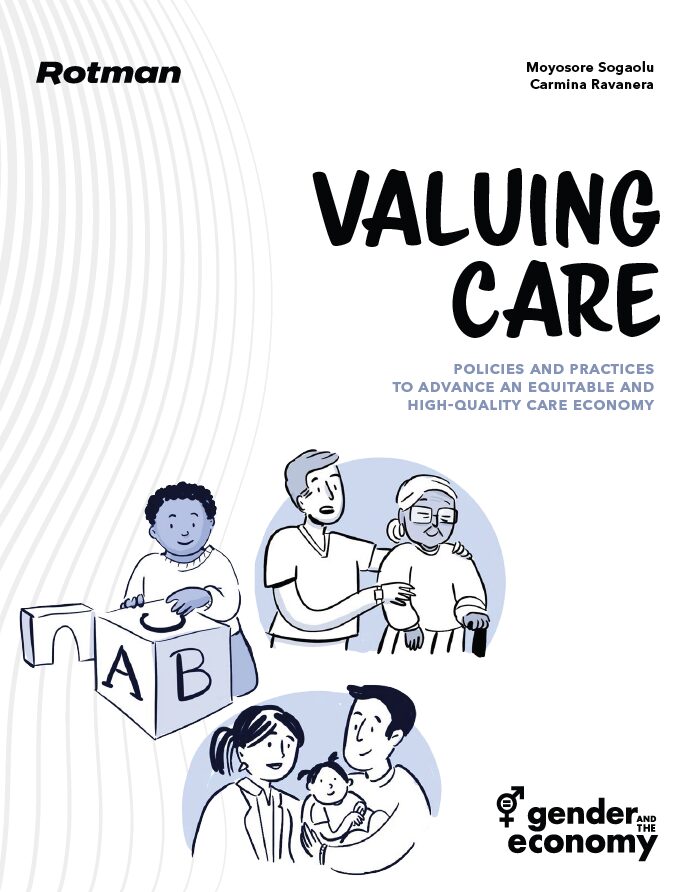
    Valuing Care: Policies and Practices to Advance an Equitable and High-Quality Care Economy

    [fusion_builder_container admin_label=”” hundred_percent=”no” equal_height_columns=”no” menu_anchor=”” hide_on_mobile=”small-visibility,medium-visibility,large-visibility” class=”” id=”” background_color=”” background_image=”” background_position=”center center” background_repeat=”no-repeat” fade=”no” background_parallax=”none” enable_mobile=”no” parallax_speed=”0.3″ video_mp4=”” video_webm=”” video_ogv=”” video_url=”” video_aspect_ratio=”16:9″ video_loop=”yes” video_mute=”yes” video_preview_image=”” border_color=”” border_style=”solid” margin_top=”20″ margin_bottom=”” padding_top=”” padding_right=”” padding_bottom=”” padding_left=”” type=”legacy”][fusion_builder_row][fusion_builder_column type=”3_4″ layout=”3_4″ spacing=”” center_content=”no” hover_type=”none” link=”” min_height=”” hide_on_mobile=”small-visibility,medium-visibility,large-visibility” class=”” id=”” background_color=”” background_image=”” background_position=”left top” background_repeat=”no-repeat” border_color=”” border_style=”solid” border_position=”all” padding_top=”” padding_right=”” padding_bottom=”” padding_left=”” margin_top=”” margin_bottom=”” animation_type=”” animation_direction=”left” animation_speed=”0.3″ animation_offset=”” last=”false” border_sizes_top=”0″ border_sizes_bottom=”0″ border_sizes_left=”0″ border_sizes_right=”0″ first=”true” spacing_right=””][fusion_text columns=”” column_min_width=”” column_spacing=”” rule_style=”” rule_size=”” rule_color=”” hue=”” saturation=”” lightness=”” alpha=”” content_alignment_medium=”” content_alignment_small=”” content_alignment=”” hide_on_mobile=”small-visibility,medium-visibility,large-visibility” sticky_display=”normal,sticky” class=”” id=”” margin_top=”” margin_right=”” margin_bottom=”” margin_left=”” fusion_font_family_text_font=”” fusion_font_variant_text_font=”” font_size=”” line_height=”” letter_spacing=”” text_transform=”” text_color=”” animation_type=”” animation_direction=”left” animation_color=”” animation_speed=”0.3″ animation_delay=”0″ animation_offset=””]

    Care is the invisible infrastructure that sustains our societies and economies. Every one of us has needed care in the past, and all of us will rely on it again as we age. Many also provide care, whether for children, elders, or others in need, often at great personal and economic cost. Yet, care remains undervalued, underfunded, and overlooked in public policy, even though it underpins our communities and drives economic productivity. At a moment of demographic change, global inequality, and rising demand, investing in care is not only a moral imperative but also an economic necessity.

    The research covered in this report suggests several policy implications for governments and employers in creating more equitable, high-quality, and resilient care systems. A focus on improving care systems will improve outcomes for care recipients as well as the caregivers who support them. Policy can aim to ensure that everyone has access to high-quality care, especially those belonging to marginalized communities, that carers are working in fair conditions with sustainable wages, and that future trends relating to migration, aging populations, technology, and climate change are key considerations.

    • Public investment in care systems, such as universal or targeted care systems and subsidies, benefits families, the economy, and care workers, and advances gender equality. These systems help unpaid carers share responsibilities, which in turn fosters women’s participation in the workforce and improves well-being for caregivers and care recipients. However, to ensure high-quality care for all who need it, policymakers can focus on mitigating issues that may arise from publicly funded care programs. These include excess demand, a lack of spaces for all those who need them, and inequity in access for groups who face marginalization.
    • Employers that support caregivers through providing care benefits may see gains in recruitment and retention, productivity, and job satisfaction, as well as reducing employee absences. Benefits may include care stipends, care services on or near-site, paid parental leave, and employee assistance programs for caregivers.
    • Excluding unpaid care from economic measurement conceals its significance for women’s employment and income, as well as for family well-being, especially when public care options are unavailable. Prioritizing the measurement of unpaid care is essential for improving the accuracy of economic and social policy design related to care provision and labour market outcomes.
    • Prioritizing stability and well-being of care workers through improving job quality and wages will result in higher quality care systems for both care recipients and caregivers, and will help increase the supply of care workers. Better working conditions will also mitigate gender and racial inequalities and better support immigrants, since most care workers are women and racialized and immigrant women are disproportionately represented as carers. Improving working conditions in the sector may also encourage more men to participate.
    • One-size-fits-all solutions will not work effectively to reduce inequalities in care systems. Public care policies will be more robust and reduce bias in access to care through consideration of differing experiences, cultures, and histories of marginalized families, such as those who are low-income, Indigenous, and racialized groups.
    • Care policies can become more resilient to global trends such as rapidly aging populations, as well as the climate crisis and resulting migration patterns, by preparing proactively rather than reacting after the fact.

    The report is based on insights and themes presented at The University of Toronto Institute for Gender and the Economy’s research April 29, 2025 roundtable: “Advancing the Care Economy: Policies and Practices for Equitable and High-Quality Care.” Speakers included multi-disciplinary scholars who shared research findings on the future of the care economy, including Samantha Burns (University of Toronto), Maria Floro (American University), Ludovica Gambaro (Federal Institute for Population Research, Germany), Pilar Gonalons-Pons (University of Pennsylvania), Eva Jewell (Toronto Metropolitan University), Laura Lam (University of Toronto), Guida Man (York University), Izumi Niki (University of Toronto), LaShawnDa Pittman (University of Washington), Susan Prentice (University of Manitoba), Moyosore Sogaolu (University of Toronto), Carieta Thomas (Carleton University), and Brenda Yeoh (National University Singapore).

    DOWNLOAD THE FULL REPORT (IN ENGLISH/EN FRANÇAIS)

    The report was written by Moyosore Sogaolu and Carmina Ravanera and was supported by the Social Sciences and Humanities Research Council of Canada and SDGs@UofT.

    [/fusion_text][fusion_separator style_type=”none” hide_on_mobile=”small-visibility,medium-visibility,large-visibility” class=”” id=”” sep_color=”” top_margin=”20″ bottom_margin=”20″ border_size=”” icon=”” icon_circle=”” icon_circle_color=”” width=”” alignment=”center” /][fusion_button link=”https://www.gendereconomy.org/category/research-overviews/” text_transform=”” title=”” target=”_blank” link_attributes=”” alignment_medium=”” alignment_small=”” alignment=”” modal=”” hide_on_mobile=”small-visibility,medium-visibility,large-visibility” sticky_display=”normal,sticky” class=”” id=”” color=”custom” button_gradient_top_color=”#62bd19″ button_gradient_bottom_color=”#62bd19″ button_gradient_top_color_hover=”#00c2e2″ button_gradient_bottom_color_hover=”#00c2e2″ accent_color=”” accent_hover_color=”” type=”” bevel_color=”” border_color=”” border_hover_color=”” size=”” stretch=”yes” margin_top=”” margin_right=”” margin_bottom=”” margin_left=”” icon=”” icon_position=”left” icon_divider=”no” animation_type=”” animation_direction=”left” animation_speed=”0.3″ animation_offset=””]See more research overviews[/fusion_button][fusion_separator style_type=”none” hide_on_mobile=”small-visibility,medium-visibility,large-visibility” class=”” id=”” sep_color=”” top_margin=”20″ bottom_margin=”20″ border_size=”” icon=”” icon_circle=”” icon_circle_color=”” width=”” alignment=”center” /][fusion_recent_posts layout=”default” hover_type=”none” columns=”3″ number_posts=”3″ offset=”0″ pull_by=”category” cat_slug=”research-briefs” exclude_cats=”” tag_slug=”” exclude_tags=”” thumbnail=”yes” title=”yes” meta=”no” meta_author=”no” meta_categories=”no” meta_date=”yes” meta_comments=”yes” meta_tags=”no” content_alignment=”” excerpt=”no” excerpt_length=”35″ strip_html=”yes” scrolling=”no” hide_on_mobile=”small-visibility,medium-visibility,large-visibility” class=”” id=”” animation_type=”” animation_direction=”left” animation_speed=”0.3″ animation_offset=”” /][/fusion_builder_column][fusion_builder_column type=”1_4″ layout=”1_4″ spacing=”” center_content=”no” hover_type=”none” link=”” min_height=”” hide_on_mobile=”small-visibility,medium-visibility,large-visibility” class=”” id=”” background_color=”” background_image=”” background_position=”left top” background_repeat=”no-repeat” border_color=”” border_style=”solid” border_position=”all” padding_top=”” padding_right=”” padding_bottom=”” padding_left=”” margin_top=”” margin_bottom=”” animation_type=”” animation_direction=”left” animation_speed=”0.3″ animation_offset=”” last=”true” border_sizes_top=”0″ border_sizes_bottom=”0″ border_sizes_left=”0″ border_sizes_right=”0″ first=”false”][fusion_title title_type=”text” rotation_effect=”bounceIn” display_time=”1200″ highlight_effect=”circle” loop_animation=”off” highlight_width=”9″ highlight_top_margin=”0″ before_text=”” rotation_text=”” highlight_text=”” after_text=”” title_link=”off” link_url=”” link_target=”_self” hide_on_mobile=”small-visibility,medium-visibility,large-visibility” sticky_display=”normal,sticky” class=”briefsummary” id=”” content_align_medium=”” content_align_small=”” content_align=”left” size=”3″ animated_font_size=”” fusion_font_family_title_font=”” fusion_font_variant_title_font=”” font_size=”” line_height=”” letter_spacing=”” text_transform=”” text_color=”” hue=”” saturation=”” lightness=”” alpha=”” animated_text_color=”” text_shadow=”no” text_shadow_vertical=”” text_shadow_horizontal=”” text_shadow_blur=”0″ text_shadow_color=”” margin_top_medium=”” margin_right_medium=”” margin_bottom_medium=”” margin_left_medium=”” margin_top_small=”” margin_right_small=”” margin_bottom_small=”” margin_left_small=”” margin_top=”” margin_right=”” margin_bottom=”” margin_left=”” margin_top_mobile=”” margin_bottom_mobile=”” gradient_font=”no” gradient_start_color=”” gradient_end_color=”” gradient_start_position=”0″ gradient_end_position=”100″ gradient_type=”linear” radial_direction=”center center” linear_angle=”180″ highlight_color=”” style_type=”none” sep_color=”” link_color=”” link_hover_color=”” animation_type=”” animation_direction=”left” animation_color=”” animation_speed=”0.3″ animation_delay=”0″ animation_offset=””]

  • From “dependable” to “panicky”: How evaluations reinforce gender barriers in leadership

    From “dependable” to “panicky”: How evaluations reinforce gender barriers in leadership

    [fusion_builder_container hundred_percent=”no” equal_height_columns=”no” hide_on_mobile=”small-visibility,medium-visibility,large-visibility” background_position=”center center” background_repeat=”no-repeat” fade=”no” background_parallax=”none” enable_mobile=”no” parallax_speed=”0.3″ video_aspect_ratio=”16:9″ video_loop=”yes” video_mute=”yes” border_style=”solid” margin_top=”20″ type=”legacy”][fusion_builder_row][fusion_builder_column type=”3_4″ layout=”3_4″ center_content=”no” hover_type=”none” hide_on_mobile=”small-visibility,medium-visibility,large-visibility” background_position=”left top” background_repeat=”no-repeat” border_style=”solid” border_position=”all” animation_direction=”left” animation_speed=”0.3″ last=”false” first=”true” border_sizes_top=”0″ border_sizes_bottom=”0″ border_sizes_left=”0″ border_sizes_right=”0″ background_blend_mode=”overlay” min_height=”” link=””][fusion_text hide_on_mobile=”small-visibility,medium-visibility,large-visibility” sticky_display=”normal,sticky” text_transform=”none” animation_direction=”left” animation_speed=”0.3″ animation_delay=”0″]


    Highlights

    • In this study, women received just as much positive feedback as men in performance evaluations—but evaluators relied on only a handful of descriptors for them, while men’s praise spread across a much wider variety of words.
    • Women were tagged with significantly more negative traits than men, and over two-thirds of those negatives were feminine stereotypes (e.g., “panicky,” “temperamental,” and “passive”).
    • When women don’t match the “tough” and “decisive” leader image, evaluators default to gendered clichés to explain their shortcomings, quietly reinforcing barriers to women’s leadership.

    In today’s organizations, performance evaluations are meant to spotlight talent and potential. Yet a 2019 study by researcher David G. Smith and colleagues reveals that the very words chosen to describe leaders can reinforce gender hierarchies rather than dismantle them.

    Drawing on 4,344 anonymous leadership assessments of U.S. Naval Academy students, the researchers provided evaluators with a fixed menu of 44 positive and 45 negative traits—each pre‐classified as masculine, feminine, or neutral—to isolate how language choices vary by the target’s gender. By holding the pool of possible descriptors constant, the researchers were able to focus on evaluators’ implicit biases rather than differences in performance itself.

    Skewed feedback: Narrow praise and gendered criticism

    Despite receiving an equal total number of positive descriptors, women leaders were funneled into a much narrower set of praises. Evaluators repeatedly used only a handful of positive terms—such as “enthusiastic”, “compassionate”, and “organized”—when describing women, whereas men’s evaluations covered a richer variety of attributes—such as “analytical”, “competent”, and “practical”. In effect, although women demonstrated equivalent leadership qualities, the limited range of praise implied their successes only “counted” when described in those few, pre-approved ways.

    More striking still, women attracted a greater share of negative descriptors than men did. Of the 14 negative leadership traits that showed a significant gender gap, women were tagged more often with 12 of them: selfish, opportunistic, vain, inept, frivolous, passive, scattered, gossip, excitable, panicky, temperamental, and indecisive. On the other hand, men were labeled more often on only two traits: arrogant and irresponsible.

    It is especially telling that almost all of the traits applied more to women draw on classic feminine stereotypes—for example, emotional volatility (“panicky,” “temperamental”), passivity (“passive,” “indecisive”), and triviality (“frivolous,” “gossip”). This suggests that evaluators default to gendered tropes rather than objective performance standards when evaluating women leaders.

    …almost all of the traits applied more to women draw on classic feminine stereotypes—for example, emotional volatility, passivity, and triviality.

    In short, women received fewer varieties of praise and tougher, stereotype-based criticism. Evaluators didn’t hold them to the same neutral benchmarks applied to men; instead, they leaned on gendered clichés—using words like “excitable,” “emotional,” and “indecisive”—to explain any shortcomings. This double standard in language reinforces barriers that keep women from being seen as fully capable leaders.

    When language reflects bias

    These findings align with status characteristics theory, which can be thought of as a “fit test” between who we are and the role we occupy. We all carry a mental image of a leader: confident, decisive, maybe a bit tough. When someone doesn’t match that mould—for example, a woman stereotyped as warm or emotional—evaluators experience a mismatch and instinctively reach for familiar explanations. Instead of judging her by the same neutral standards they apply to men, they choose negative descriptors rooted in feminine stereotypes, using words like “panicky” and “temperamental.”

    Instead of judging her by the same neutral standards they apply to men, they choose negative descriptors rooted in feminine stereotypes, using words like “panicky” and “temperamental.”

    By both narrowing the range of positive praise for women and labeling them with these stereotype-driven critiques, evaluators, even if unwittingly, send the message that women don’t quite “fit” the leader role. This linguistic double bind erodes perceptions of women’s competence and agency.

    Minimizing language bias in evaluations

    Even well‐intentioned feedback systems can perpetuate bias through word choice. To rewrite this narrative, the researchers urge organizations to:

    • Anchor evaluations in objective metrics. Replace vague descriptors with behavior‐based criteria (e.g., “delivered 90% of team milestones” rather than “dependable”).
    • Audit and refine your lexicon. Regularly review evaluation forms to eliminate gendered descriptors and expand the pool of neutral performance terms.
    • Train evaluators on bias in language. Equip evaluators to spot gendered or stereotype-laden words, and instead use concrete, performance-based terms that accurate reflect a person’s leadership skills.
    ______
    Research brief prepared by:

    Alice Choe

    [/fusion_text][fusion_separator style_type=”none” hide_on_mobile=”small-visibility,medium-visibility,large-visibility” top_margin=”20″ bottom_margin=”20″ alignment=”center” /][fusion_button link=”https://www.gendereconomy.org/research-briefs/” target=”_blank” hide_on_mobile=”small-visibility,medium-visibility,large-visibility” color=”custom” button_gradient_top_color=”#62bd19″ button_gradient_bottom_color=”#62bd19″ button_gradient_top_color_hover=”#00c2e2″ button_gradient_bottom_color_hover=”#00c2e2″ stretch=”yes” icon_position=”left” icon_divider=”no” animation_direction=”left” animation_speed=”0.3″]See more research briefs[/fusion_button][fusion_separator style_type=”none” hide_on_mobile=”small-visibility,medium-visibility,large-visibility” top_margin=”20″ bottom_margin=”20″ alignment=”center” /][fusion_recent_posts layout=”default” hover_type=”none” columns=”3″ number_posts=”3″ offset=”0″ pull_by=”category” cat_slug=”research-briefs” thumbnail=”yes” title=”yes” meta=”no” meta_author=”no” meta_categories=”no” meta_date=”yes” meta_comments=”yes” meta_tags=”no” excerpt=”no” excerpt_length=”35″ strip_html=”yes” scrolling=”no” hide_on_mobile=”small-visibility,medium-visibility,large-visibility” animation_direction=”left” animation_speed=”0.3″ /][/fusion_builder_column][fusion_builder_column type=”1_4″ layout=”1_4″ center_content=”no” hover_type=”none” hide_on_mobile=”small-visibility,medium-visibility,large-visibility” background_position=”left top” background_repeat=”no-repeat” border_style=”solid” border_position=”all” animation_direction=”left” animation_speed=”0.3″ last=”true” first=”false” border_sizes_top=”0″ border_sizes_bottom=”0″ border_sizes_left=”0″ border_sizes_right=”0″ background_blend_mode=”overlay” min_height=”” link=””][fusion_title title_type=”text” rotation_effect=”bounceIn” display_time=”1200″ highlight_effect=”circle” loop_animation=”off” highlight_width=”9″ highlight_top_margin=”0″ title_link=”off” link_target=”_self” hide_on_mobile=”small-visibility,medium-visibility,large-visibility” sticky_display=”normal,sticky” class=”briefsummary” content_align=”left” size=”3″ text_shadow=”no” text_shadow_blur=”0″ text_stroke=”no” text_stroke_size=”1″ text_overflow=”none” gradient_font=”no” gradient_start_position=”0″ gradient_end_position=”100″ gradient_type=”linear” radial_direction=”center center” linear_angle=”180″ style_type=”none” animation_direction=”left” animation_speed=”0.3″ animation_delay=”0″]

    Title

    The Power of Language: Gender, Status, and Agency in Performance Evaluations

    Author

    David G. Smith, Judith E. Rosenstein, Margaret C. Nikolov & Darby A. Chaney

    Source

    Sex Roles

    Published

    2019

    Link

    https://doi.org/10.1007/s11199-018-0923-7

    Research brief prepared by

    Alice Choe

    [/fusion_title][fusion_widget_area name=”avada-custom-sidebar-researchbriefsidebar” hide_on_mobile=”small-visibility,medium-visibility,large-visibility” /][/fusion_builder_column][/fusion_builder_row][/fusion_builder_container]
  • Who gets to be an ally?: The role of racial minority leaders in racial justice advocacy

    Who gets to be an ally?: The role of racial minority leaders in racial justice advocacy

    [fusion_builder_container hundred_percent=”no” equal_height_columns=”no” hide_on_mobile=”small-visibility,medium-visibility,large-visibility” background_position=”center center” background_repeat=”no-repeat” fade=”no” background_parallax=”none” enable_mobile=”no” parallax_speed=”0.3″ video_aspect_ratio=”16:9″ video_loop=”yes” video_mute=”yes” border_style=”solid” margin_top=”20″ type=”legacy”][fusion_builder_row][fusion_builder_column type=”3_4″ layout=”3_4″ center_content=”no” hover_type=”none” hide_on_mobile=”small-visibility,medium-visibility,large-visibility” background_position=”left top” background_repeat=”no-repeat” border_style=”solid” border_position=”all” animation_direction=”left” animation_speed=”0.3″ last=”false” first=”true” border_sizes_top=”0″ border_sizes_bottom=”0″ border_sizes_left=”0″ border_sizes_right=”0″ background_blend_mode=”overlay” min_height=”” link=””][fusion_text hide_on_mobile=”small-visibility,medium-visibility,large-visibility” sticky_display=”normal,sticky” text_transform=”none” animation_direction=”left” animation_speed=”0.3″ animation_delay=”0″]


    Highlights

    • Racial minority leaders are often expected to lead the way on equity and inclusion efforts, but when they advocate for people from their own racial group, others may view them as self-interested.
    • These perceptions reduce their perceived effectiveness as leaders and make others less willing to support equity efforts.
    • Framing their actions as responses to concerns raised by their team (voice amplification) can reduce this backlash.

    Leaders are increasingly expected to speak up about racism and promote fairness for everyone. Racial minority leaders in particular are often seen as champions of these efforts. But new research reveals an unexpected challenge they face: when these leaders advocate for people from their own racial group, others may see them as biased—even if their intentions are to create a more equitable organization.

    Allyship or favouritism?

    Researchers Preston and colleagues conducted three studies to understand how employees respond to racial minority leaders who engage in racial justice work. In one study, employees recalled real workplace situations. In others, participants read about hypothetical scenarios. Across all three, one finding stood out: when racial minority leaders advocated for their own group (for example, a Black leader advocating for Black employees), other people were more likely to see them as favouring their group and less likely to see them as effective leaders or allies.

    These perceptions matter. Leaders who were seen as biased not only received lower ratings—they also found it harder to gain support for their equity initiatives. People were less willing to work on their projects or support their cause. The problem wasn’t the leader’s message—it was the assumption that the message served their personal interests.

    Leaders who were seen as biased not only received lower ratings—they also found it harder to gain support for their equity initiatives.

    But there’s a way to reframe this narrative. In their third study, the researchers tested a strategy called “voice amplification.” This means leaders clearly explained that their actions are based on what they’ve heard from their team—especially employees in more junior roles. For example, a leader might say: “Several team members have raised concerns about representation, and I want to bring those voices forward.”

    When leaders framed their actions this way, the backlash disappeared. People no longer assumed the leader was acting out of self-interest, and they were more supportive of both the leader and the equity effort.

    Framing the message of allyship

    This research offers a powerful reminder: being a good ally isn’t just about speaking up—it’s also about how the message is framed and who is seen as credible. For organizations that want to create more inclusive cultures, this means rethinking how allyship is encouraged, supported, and received.

    First, organizations can support racial minority leaders by helping them navigate the tricky dynamics of perception. This might include offering training and resources on how to use framing techniques like voice amplification. They can also normalize the idea that leaders can and should speak up for their own communities—especially when they do so in ways that highlight shared concerns.

    Second, organizations can make it clear that leadership roles carry influence—and that all leaders, regardless of race, have a role to play in promoting equity. Allyship shouldn’t be reserved only for White leaders or outsiders to the issue. Racial minority leaders bring valuable perspectives and often deep personal commitment to this work, and should be recognized and supported in doing so.

    Finally, organizations can prepare teams to understand the bigger picture. Equity work often involves targeted support for specific groups, especially when those groups have faced long-standing disadvantages. Organizations can help by providing context and education around why these efforts matter for everyone’s success, not just for the groups being supported.

    Driving racial equity

    Racial minority leaders are uniquely positioned to drive racial equity—but their impact depends on how their efforts are seen. When organizations create a culture that supports inclusive advocacy and equips leaders with the right tools, they make it easier for equity work to take root—and for all employees to thrive.

    ______
    Research brief prepared by:

    Grusha Agarwal

    [/fusion_text][fusion_separator style_type=”none” hide_on_mobile=”small-visibility,medium-visibility,large-visibility” top_margin=”20″ bottom_margin=”20″ alignment=”center” /][fusion_button link=”https://www.gendereconomy.org/research-briefs/” target=”_blank” hide_on_mobile=”small-visibility,medium-visibility,large-visibility” color=”custom” button_gradient_top_color=”#62bd19″ button_gradient_bottom_color=”#62bd19″ button_gradient_top_color_hover=”#00c2e2″ button_gradient_bottom_color_hover=”#00c2e2″ stretch=”yes” icon_position=”left” icon_divider=”no” animation_direction=”left” animation_speed=”0.3″]See more research briefs[/fusion_button][fusion_separator style_type=”none” hide_on_mobile=”small-visibility,medium-visibility,large-visibility” top_margin=”20″ bottom_margin=”20″ alignment=”center” /][fusion_recent_posts layout=”default” hover_type=”none” columns=”3″ number_posts=”3″ offset=”0″ pull_by=”category” cat_slug=”research-briefs” thumbnail=”yes” title=”yes” meta=”no” meta_author=”no” meta_categories=”no” meta_date=”yes” meta_comments=”yes” meta_tags=”no” excerpt=”no” excerpt_length=”35″ strip_html=”yes” scrolling=”no” hide_on_mobile=”small-visibility,medium-visibility,large-visibility” animation_direction=”left” animation_speed=”0.3″ /][/fusion_builder_column][fusion_builder_column type=”1_4″ layout=”1_4″ center_content=”no” hover_type=”none” hide_on_mobile=”small-visibility,medium-visibility,large-visibility” background_position=”left top” background_repeat=”no-repeat” border_style=”solid” border_position=”all” animation_direction=”left” animation_speed=”0.3″ last=”true” first=”false” border_sizes_top=”0″ border_sizes_bottom=”0″ border_sizes_left=”0″ border_sizes_right=”0″ background_blend_mode=”overlay” min_height=”” link=””][fusion_title title_type=”text” rotation_effect=”bounceIn” display_time=”1200″ highlight_effect=”circle” loop_animation=”off” highlight_width=”9″ highlight_top_margin=”0″ title_link=”off” link_target=”_self” hide_on_mobile=”small-visibility,medium-visibility,large-visibility” sticky_display=”normal,sticky” class=”briefsummary” content_align=”left” size=”3″ text_shadow=”no” text_shadow_blur=”0″ text_stroke=”no” text_stroke_size=”1″ text_overflow=”none” gradient_font=”no” gradient_start_position=”0″ gradient_end_position=”100″ gradient_type=”linear” radial_direction=”center center” linear_angle=”180″ style_type=”none” animation_direction=”left” animation_speed=”0.3″ animation_delay=”0″]

    Title

    An ally by any other name: Examining the effects of racial minority leaders as allies for advancing racial justice

    Author

    McKenzie C. Preston, Terrance L. Boyd, Angelica Leigh, Richard Burgess, Victor Marsh

    Source

    Organizational Behavior and Human Decision Processes

    Published

    2024

    Link

    https://doi.org/10.1016/j.obhdp.2024.104321

    Research brief prepared by

    Grusha Agarwal

    [/fusion_title][fusion_widget_area name=”avada-custom-sidebar-researchbriefsidebar” hide_on_mobile=”small-visibility,medium-visibility,large-visibility” /][/fusion_builder_column][/fusion_builder_row][/fusion_builder_container]