Tag: Indigenous

  • David Robertson on Walking With Indigenous Peoples on the Path to Healing

    David Robertson on Walking With Indigenous Peoples on the Path to Healing

    [fusion_builder_container type=”flex” hundred_percent=”no” equal_height_columns=”no” hide_on_mobile=”small-visibility,medium-visibility,large-visibility” background_position=”center center” background_repeat=”no-repeat” fade=”no” background_parallax=”none” parallax_speed=”0.3″ video_aspect_ratio=”16:9″ video_loop=”yes” video_mute=”yes” border_style=”solid”][fusion_builder_row][fusion_builder_column type=”1_1″ layout=”1_1″ background_position=”left top” border_style=”solid” border_position=”all” spacing=”yes” background_repeat=”no-repeat” margin_top=”0px” margin_bottom=”0px” animation_speed=”0.3″ animation_direction=”left” hide_on_mobile=”small-visibility,medium-visibility,large-visibility” center_content=”no” last=”true” hover_type=”none” min_height=”” link=”” background_blend_mode=”overlay” first=”true”][fusion_text]

    IN-PERSON AND VIRTUAL EVENT

    Date: September 29, 2025 at 5:30 PM – 6:30 PM EDT

    In-person location: Desautels Hall, Rotman School of Management, 105 St George Street, Toronto

    Co-presented by: Rotman Events

    Agenda:

    5:30 pm – Author presentation + interview with moderated Q&A
    6:30 pm – Light refreshments + book signing

    Book Synopsis:

    From bestselling author of the Misewa Saga series David A. Robertson, this is the essential guide for all Canadians to understand how small and attainable acts towards reconciliation can make an enormous difference in our collective efforts to build a reconciled country.

    52 Ways to Reconcile is an accessible, friendly guide for non-Indigenous people eager to learn, or Indigenous people eager to do more in our collective effort towards reconciliation, as people, and as a country. As much as non-Indigenous people want to walk the path of reconciliation, they often aren’t quite sure what to do, and they’re afraid of making mistakes. This book is the answer and the long overdue guide.The idea of this book is simple: 52 small acts of reconciliation to consider, one per week, for an entire year. They’re all doable, and they’re all meaningful.

    All 52 steps take readers in the right direction, towards a healthier relationship between Indigenous and non-Indigenous people and a time when we are past trauma. By following these steps, we can live in stronger and healthier communities equally, and respectfully, together.

    Speaker

    David A. Robertson is the author of numerous books for young readers including Governor General’s Literary Award winners On the Trapline and When We Were Alone. The Barren Grounds, Book 1 of The Misewa Saga series, was a Kirkus, NPR, and Quill & Quire best middle-grade book of 2020, as well as a USBBY and Texas Lone Star selection. Winner of the Writers’ Union of Canada’s Freedom to Read Award, as well as the 2021 Globe and Mail Children’s Storyteller of the Year recipient, Dave is a member of Norway House Cree Nation and currently lives in Winnipeg, Canada. For more information, visit his website: www.darobertson.ca and follow him on X: @DaveAlexRoberts.

    Moderator

    Jordyn Hrenyk is a Michif researcher from Métis Nation Saskatchewan, Local #7. She is a Provost’s Postdoctoral Research Fellow at the Rotman School of Management. Jordyn’s research is focused on Indigenous entrepreneurship and values-aligned business. She often examines the theoretical and empirical intersections between Indigenous art, spirituality, and entrepreneurship. Jordyn is a passionate advocate for Indigenous business students and she also conducts research focused on Indigenizing and decolonizing the business school.

    For more information on event logistics and registration, visit the Rotman Events website.

    [/fusion_text][/fusion_builder_column][/fusion_builder_row][/fusion_builder_container]

  • Book review: Upholding Indigenous Economic Relationships: nehiyawak ᓀᐦᐃᔭᐊᐧᐠ narratives

    Book review: Upholding Indigenous Economic Relationships: nehiyawak ᓀᐦᐃᔭᐊᐧᐠ narratives

    [fusion_builder_container type=”flex” hundred_percent=”no” equal_height_columns=”no” menu_anchor=”” hide_on_mobile=”small-visibility,medium-visibility,large-visibility” class=”” id=”” background_color=”” background_image=”” background_position=”center center” background_repeat=”no-repeat” fade=”no” background_parallax=”none” parallax_speed=”0.3″ video_mp4=”” video_webm=”” video_ogv=”” video_url=”” video_aspect_ratio=”16:9″ video_loop=”yes” video_mute=”yes” overlay_color=”” video_preview_image=”” border_color=”” border_style=”solid” padding_top=”” padding_bottom=”” padding_left=”” padding_right=””][fusion_builder_row][fusion_builder_column type=”1_1″ layout=”1_1″ background_position=”left top” background_color=”” border_color=”” border_style=”solid” border_position=”all” spacing=”yes” background_image=”” background_repeat=”no-repeat” padding_top=”” padding_right=”” padding_bottom=”” padding_left=”” margin_top=”0px” margin_bottom=”0px” class=”” id=”” animation_type=”” animation_speed=”0.3″ animation_direction=”left” hide_on_mobile=”small-visibility,medium-visibility,large-visibility” center_content=”no” last=”true” min_height=”” hover_type=”none” link=”” border_sizes_top=”” border_sizes_bottom=”” border_sizes_left=”” border_sizes_right=”” first=”true”][fusion_text columns=”” column_min_width=”” column_spacing=”” rule_style=”” rule_size=”” rule_color=”” hue=”” saturation=”” lightness=”” alpha=”” content_alignment_medium=”” content_alignment_small=”” content_alignment=”” hide_on_mobile=”small-visibility,medium-visibility,large-visibility” sticky_display=”normal,sticky” class=”” id=”” margin_top=”” margin_right=”” margin_bottom=”” margin_left=”” fusion_font_family_text_font=”” fusion_font_variant_text_font=”” font_size=”” line_height=”” letter_spacing=”” text_transform=”none” text_color=”” animation_type=”” animation_direction=”left” animation_color=”” animation_speed=”0.3″ animation_delay=”0″ animation_offset=”” logics=””]

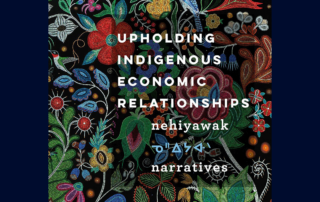
    Book review: Shalene Wuttunee Jobin, Upholding Indigenous Economic Relationships: nehiyawak ᓀᐦᐃᔭᐊᐧᐠ narratives

    Author: Sarah Kaplan

    The topics of recent conferences and articles on responsible management, corporate purpose, and stakeholder theory suggest that many management scholars are searching for solutions to an economic system that has produced crises of global warming, inequality, pollution, and other issues. Yet, we tend to look at our navels when we do so: thinking from within the current system rather than exploring whole different ways of knowing. That’s why concepts such as shared value and environmental, social, and governance metrics dominate the conversation: by arguing that you can do well by doing good, we act as if we can solve these problems without disrupting existing power and economic arrangements. We often fail to appreciate that the economic system reflecting these arrangements is inherently a colonial one that was originally designed to exploit people and exploit the land, and if we are going to find solutions, they will have to come from radically different understandings of what the economy is and what well-being could be.
     
    This is precisely what Shalene Wuttunee Jobin does for us in her excellent new book. Along with recent contributions from other Indigenous writers such as Hilton’s Indigenomics (2021) and Yunkaporta’s Sand Talk(2019), Jobin unpacks how the current system is designed for exploitation, and she offers an alternative economic model based in Cree worldviews.

    Read the full article here

    Check out our event summary with Shalene Wuttunee Jobin

    [/fusion_text][/fusion_builder_column][/fusion_builder_row][/fusion_builder_container]

  • Upholding Indigenous Economic Relationships with Shalene Jobin

    Upholding Indigenous Economic Relationships with Shalene Jobin

    [fusion_builder_container hundred_percent=”no” equal_height_columns=”no” hide_on_mobile=”small-visibility,medium-visibility,large-visibility” background_position=”center center” background_repeat=”no-repeat” fade=”no” background_parallax=”none” parallax_speed=”0.3″ video_aspect_ratio=”16:9″ video_loop=”yes” video_mute=”yes” border_style=”solid” type=”legacy”][fusion_builder_row][fusion_builder_column type=”1_1″ layout=”1_1″ background_position=”left top” border_style=”solid” border_position=”all” spacing=”yes” background_repeat=”no-repeat” margin_top=”0px” margin_bottom=”0px” animation_speed=”0.3″ animation_direction=”left” hide_on_mobile=”small-visibility,medium-visibility,large-visibility” center_content=”no” last=”true” hover_type=”none” first=”true” min_height=”” link=”” background_blend_mode=”overlay”][fusion_text columns=”” column_min_width=”” column_spacing=”” rule_style=”” rule_size=”” rule_color=”” hue=”” saturation=”” lightness=”” alpha=”” content_alignment_medium=”” content_alignment_small=”” content_alignment=”” hide_on_mobile=”small-visibility,medium-visibility,large-visibility” sticky_display=”normal,sticky” class=”” id=”” margin_top=”” margin_right=”” margin_bottom=”” margin_left=”” fusion_font_family_text_font=”” fusion_font_variant_text_font=”” font_size=”” line_height=”” letter_spacing=”” text_transform=”none” text_color=”” animation_type=”” animation_direction=”left” animation_color=”” animation_speed=”0.3″ animation_delay=”0″ animation_offset=””]

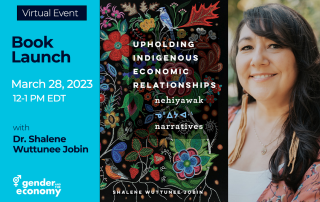
    Topic: Upholding Indigenous Economic Relationships: Nehiyawak Narratives (UBC Press, 2023)

    GATE Director Sarah Kaplan hosted a discussion with Dr. Shalene Wuttunee Jobin, Associate Professor in the Faculty of Native Studies, Director of the Indigenous Governance program, and a Canada Research Chair in Indigenous Governance at the University of Alberta. She is the author of Upholding Indigenous Economic Relationships: Nehiyawak Narratives (UBC Press, 2023). Together they had a thought-provoking conversation about the way Indigenous peoples move with and between economic structures imposed by the settler state with a particular focus on prairie Indigenous life and philosophy.

    Shalene bases her work in the knowledge systems of the nehiyawak ᓀᐦᐃᔭᐊᐧᐠ (Cree people) – whose distinctive principles and practices shape their economic behaviour. She emphasized that economic exploitation was the initial and most enduring relationship between early settlers and Indigenous peoples: capitalism and colonialism are intimately intertwined. In her book, she writes, “Those Indigenous practices that fall principally outside capitalism, such as ceremonial practices deemed to fit only within the spiritual realm, are seen as noneconomic. But governance and economic relationships are embedded in ceremonies of renewal. Settler colonialism makes silos of these different practices; by removing the blinders to recognize Cree economic relationships in everyday actions and in sublime practices, we witness acts of resurgence as strong antidotes to colonial dissonance.”

    She also highlighted that Indigenous economic relationships are constitutive: connections to the land, water, and other human and nonhuman beings form who we are as individuals and as peoples.

    “There’s this link between the exploitation of mother earth [..] and the impacts of missing and murdered Indigenous women, girls and Two Spirit peoples. Especially in places where I live, where resource extraction is so prevalent, it creates these imbalances of relationships. It also creates structures where exploitation happens. Often times Indigenous women are negatively impacted with places where there are man camps and different things where resource extraction happens.”

    – Shalene Wuttunee Jobin

    Drawing upon Cree narratives and contemporary nehiyawak examples, Shalene provided valuable tools and advice for organizing to engage in community and economic development, planning, and governance.

    Watch Shalene Jobin discuss the impact of resource extraction on Indigenous communities.

    [/fusion_text][fusion_separator style_type=”none” hide_on_mobile=”small-visibility,medium-visibility,large-visibility” top_margin=”20″ bottom_margin=”20″ alignment=”center” /][fusion_button link=”https://www.gendereconomy.org/events/” target=”_blank” hide_on_mobile=”small-visibility,medium-visibility,large-visibility” color=”custom” button_gradient_top_color=”#62bd19″ button_gradient_bottom_color=”#62bd19″ button_gradient_top_color_hover=”#00c2e2″ button_gradient_bottom_color_hover=”#00c2e2″ stretch=”yes” icon_position=”left” icon_divider=”no” animation_direction=”left” animation_speed=”0.3″]See more events[/fusion_button][/fusion_builder_column][/fusion_builder_row][/fusion_builder_container]

  • Jacqueline Quinless on Decolonizing Data

    Jacqueline Quinless on Decolonizing Data

    [fusion_builder_container hundred_percent=”no” equal_height_columns=”no” hide_on_mobile=”small-visibility,medium-visibility,large-visibility” background_position=”center center” background_repeat=”no-repeat” fade=”no” background_parallax=”none” parallax_speed=”0.3″ video_aspect_ratio=”16:9″ video_loop=”yes” video_mute=”yes” border_style=”solid” type=”legacy”][fusion_builder_row][fusion_builder_column type=”1_1″ layout=”1_1″ background_position=”left top” border_style=”solid” border_position=”all” spacing=”yes” background_repeat=”no-repeat” margin_top=”0px” margin_bottom=”0px” animation_speed=”0.3″ animation_direction=”left” hide_on_mobile=”small-visibility,medium-visibility,large-visibility” center_content=”no” last=”true” hover_type=”none” first=”true” min_height=”” link=”” background_blend_mode=”overlay”][fusion_text columns=”” column_min_width=”” column_spacing=”” rule_style=”” rule_size=”” rule_color=”” hue=”” saturation=”” lightness=”” alpha=”” content_alignment_medium=”” content_alignment_small=”” content_alignment=”” hide_on_mobile=”small-visibility,medium-visibility,large-visibility” sticky_display=”normal,sticky” class=”” id=”” margin_top=”” margin_right=”” margin_bottom=”” margin_left=”” fusion_font_family_text_font=”” fusion_font_variant_text_font=”” font_size=”” line_height=”” letter_spacing=”” text_transform=”none” text_color=”” animation_type=”” animation_direction=”left” animation_speed=”0.3″ animation_offset=””]

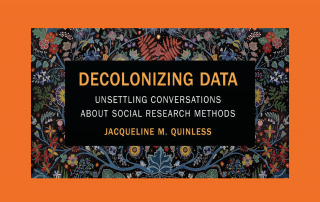
    Topic: Jacqueline Quinless on Decolonizing Data (University of Toronto Press, February 15, 2022)

    GATE recently co-hosted with the Sandra Rotman Centre for Health Sector Strategy a thought-provoking conversation on decolonizing research practices. It featured Dr. Jacqueline M. Quinless, award winning Public Sociologist recognized by the Canadian Sociological Association (CSA) and the Angus Reid Foundation for her community-based research in the advancement of Indigenous welfare in Canada. The event was moderated by Dr. Suzanne Stewart, Director of the Waakebiness-Bryce Institute for Indigenous Health at the Dalla Lana School of Public Health at the University of Toronto (U of T), where she is an Associate Professor in the Division of Social and Behaviour Health Sciences.

    Jaqueline’s book, Decolonizing Data, is a valuable resource and guide to taking a critical approach to Indigenous research. The book explores how ongoing structures of colonialization negatively impact the well-being of Indigenous peoples and communities across Canada, resulting in persistent health and other forms of inequality. It provides a deeper understanding of the social dimensions of health as applied to Indigenous peoples who have been historically excluded from health services, programs, and quality of care. These inequalities have most recently been seen during the pandemic.

    In the conversation, Jaqueline highlighted her approach to decolonizing research which centers around culturally responsive research. She also emphasized the importance of acknowledging that there are people behind the data, and that research isn’t done in isolation. Research should honour and respect people’s stories, values and traditions. Together, Jacqueline and Suzanne discussed how standard research practices can contribute to the colonization of Indigenous peoples. Their reflections on current research practices allow us to “unsettle conversations” regarding applied social research that concerns society’s most vulnerable communities. Jacqueline emphasized that the first step in decolonizing methodologies is learning to open your mind. Being aware of the colonial lens and listening respectfully to the stories of Indigenous communities as you conduct research can help change traditional thinking patterns.

     “If you have feelings of discomfort lean into them and be curious about them. That would be a great place to start [decolonization work], and then allow the journey to expand. Don’t be afraid of it”

    – Jacqueline Quinless

    Watch Jacqueline and Suzanne discuss how researchers can decolonize their data

    [/fusion_text][fusion_separator style_type=”none” hide_on_mobile=”small-visibility,medium-visibility,large-visibility” top_margin=”20″ bottom_margin=”20″ alignment=”center” /][fusion_button link=”https://www.gendereconomy.org/events/” target=”_blank” hide_on_mobile=”small-visibility,medium-visibility,large-visibility” color=”custom” button_gradient_top_color=”#62bd19″ button_gradient_bottom_color=”#62bd19″ button_gradient_top_color_hover=”#00c2e2″ button_gradient_bottom_color_hover=”#00c2e2″ stretch=”yes” icon_position=”left” icon_divider=”no” animation_direction=”left” animation_speed=”0.3″]See more events[/fusion_button][/fusion_builder_column][/fusion_builder_row][/fusion_builder_container]

  • Feminist City 3.0

    Feminist City 3.0

    [fusion_builder_container hundred_percent=”no” equal_height_columns=”no” hide_on_mobile=”small-visibility,medium-visibility,large-visibility” background_position=”center center” background_repeat=”no-repeat” fade=”no” background_parallax=”none” parallax_speed=”0.3″ video_aspect_ratio=”16:9″ video_loop=”yes” video_mute=”yes” border_style=”solid” type=”legacy”][fusion_builder_row][fusion_builder_column type=”1_1″ layout=”1_1″ background_position=”left top” background_color=”” border_color=”” border_style=”solid” border_position=”all” spacing=”yes” background_image=”” background_repeat=”no-repeat” padding_top=”” padding_right=”” padding_bottom=”” padding_left=”” margin_top=”0px” margin_bottom=”0px” class=”” id=”” animation_type=”” animation_speed=”0.3″ animation_direction=”left” hide_on_mobile=”small-visibility,medium-visibility,large-visibility” center_content=”no” last=”true” min_height=”” hover_type=”none” link=”” first=”true” border_sizes_top=”” border_sizes_bottom=”” border_sizes_left=”” border_sizes_right=””][fusion_text columns=”” column_min_width=”” column_spacing=”” rule_style=”default” rule_size=”” rule_color=”” hue=”” saturation=”” lightness=”” alpha=”” content_alignment_medium=”” content_alignment_small=”” content_alignment=”” hide_on_mobile=”small-visibility,medium-visibility,large-visibility” sticky_display=”normal,sticky” class=”” id=”” margin_top=”” margin_right=”” margin_bottom=”” margin_left=”” fusion_font_family_text_font=”” fusion_font_variant_text_font=”” font_size=”” line_height=”” letter_spacing=”” text_transform=”none” text_color=”” animation_type=”” animation_direction=”left” animation_speed=”0.3″ animation_offset=””]

    Topic: Feminist City 3.0: How can we apply a gender and equity lens to economic recovery in our cities?

    Wanting to further explore questions of gender and equity in the economic recovery of our cities, GATE along with the University of Toronto’s School of Cities, co-hosted the third event in the popular Feminist City series.

    COVID-19 has exacerbated many pre-existing problems in society such as poverty, lack of affordable housing, and unemployment. As a result, the pandemic has highlighted intersecting crises related to homelessness, mental health, and physical safety in our cities. We discussed these problems with Brittany Andrew-Amofah, Manager, Policy & Research, Federation of Canadian Municipalities, Jasmine Ramze Rezaee, Director of Advocacy & Communications at YWCA Toronto, Dr. Suzanne Stewart, Director of the Waakebiness-Bryce Institute for Indigenous Health at the Dalla Lana School of Public Health at the University of Toronto (U of T), where she is an Associate Professor in the Division of Social and Behaviour Health Sciences.

    They highlighted some key issues that will be important to consider as cities recover from the pandemic:

    • The homelessness and housing crisis is not equally experienced and disproportionately affects those from low-income locations.
    • In Toronto, approximately 30-40% of the homeless population is Indigenous with a large portion being women.
    • Mental health services are often inaccessible to those from low-income backgrounds and are underfunded.
    • Care work is systemically undervalued in our societies, despite research showing how vital care work is for our economy. As a result, people are leaving the care economy workforce in large numbers.

    “A fair and just economic recovery involves a green recovery, a feminist recovery, and an economic recovery that looks at the needs of various municipalities across the country. We need to ensure that we incorporate good urban planning policies into the cities we build and re-build”

    – Brittany Andrew-Amofah

    Watch our panel of experts discuss what it means to ‘build back better’, essential workers, and mental health.

    [/fusion_text][fusion_separator style_type=”none” hide_on_mobile=”small-visibility,medium-visibility,large-visibility” class=”” id=”” sep_color=”” top_margin=”20″ bottom_margin=”20″ border_size=”” icon=”” icon_circle=”” icon_circle_color=”” width=”” alignment=”center” /][fusion_button link=”https://www.gendereconomy.org/events/” text_transform=”” title=”” target=”_blank” link_attributes=”” alignment=”” modal=”” hide_on_mobile=”small-visibility,medium-visibility,large-visibility” class=”” id=”” color=”custom” button_gradient_top_color=”#62bd19″ button_gradient_bottom_color=”#62bd19″ button_gradient_top_color_hover=”#00c2e2″ button_gradient_bottom_color_hover=”#00c2e2″ accent_color=”” accent_hover_color=”” type=”” bevel_color=”” size=”” stretch=”yes” icon=”” icon_position=”left” icon_divider=”no” animation_type=”” animation_direction=”left” animation_speed=”0.3″ animation_offset=””]See more events[/fusion_button][/fusion_builder_column][/fusion_builder_row][/fusion_builder_container]

  • SheNative: Fostering community and supporting Indigenous women

    SheNative: Fostering community and supporting Indigenous women

    [fusion_builder_container hundred_percent=”no” equal_height_columns=”no” menu_anchor=”” hide_on_mobile=”small-visibility,medium-visibility,large-visibility” class=”” id=”” background_color=”” background_image=”” background_position=”center center” background_repeat=”no-repeat” fade=”no” background_parallax=”none” parallax_speed=”0.3″ video_mp4=”” video_webm=”” video_ogv=”” video_url=”” video_aspect_ratio=”16:9″ video_loop=”yes” video_mute=”yes” overlay_color=”” video_preview_image=”” border_color=”” border_style=”solid” padding_top=”” padding_bottom=”” padding_left=”” padding_right=”” type=”legacy”][fusion_builder_row][fusion_builder_column type=”1_1″ layout=”1_1″ background_position=”left top” background_color=”” border_color=”” border_style=”solid” border_position=”all” spacing=”yes” background_image=”” background_repeat=”no-repeat” padding_top=”” padding_right=”” padding_bottom=”” padding_left=”” margin_top=”0px” margin_bottom=”0px” class=”” id=”” animation_type=”” animation_speed=”0.3″ animation_direction=”left” hide_on_mobile=”small-visibility,medium-visibility,large-visibility” center_content=”no” last=”true” min_height=”” hover_type=”none” link=”” border_sizes_top=”” border_sizes_bottom=”” border_sizes_left=”” border_sizes_right=”” first=”true”][fusion_text columns=”” column_min_width=”” column_spacing=”” rule_style=”” rule_size=”” rule_color=”” hue=”” saturation=”” lightness=”” alpha=”” content_alignment_medium=”” content_alignment_small=”” content_alignment=”” hide_on_mobile=”small-visibility,medium-visibility,large-visibility” sticky_display=”normal,sticky” class=”” id=”” margin_top=”” margin_right=”” margin_bottom=”” margin_left=”” fusion_font_family_text_font=”” fusion_font_variant_text_font=”” font_size=”” line_height=”” letter_spacing=”” text_transform=”” text_color=”” animation_type=”” animation_direction=”left” animation_color=”” animation_speed=”0.3″ animation_delay=”0″ animation_offset=”” logics=””]Overview

    Devon Fiddler created SheNative, an Indigenous and women-founded leather goods and apparel social enterprise, with a mission to empower and elevate Indigenous women. This case study details how SheNative achieves its mission, such as by using a community-based design process and considering people and the planet in all of its decision making.   

    Course Topics:
    • Business design 
    • Indigenous entrepreneurship 
    • Innovation 
    • Social enterprise/entrepreneurship 
    • Supply chain management 

    Introduction:

    Before she knew what product she wanted to produce and sell, Devon Fiddler—founder and Chief Executive Officer of SheNative—knew she wanted to start a business built around the vision of women supporting women. Everything from the company’s mission to its products and employment practices would be created with this vision in mind. For the past 6 years, Fiddler and her team at SheNative, an Indigenous and female-founded company, have successfully achieved this goal and more through a strategy centred around social impact.  

    Based in Saskatoon, Saskatchewan, SheNative is a women’s leather goods and apparel social enterprise launched in 2015. Fiddler started the company after beginning her professional career in 2011 as a business development coordinator advising First Nations entrepreneurs. In this role, Fiddler worked in Northern Saskatchewan with Meadow Lake Tribal Council “to promote entrepreneurship, and guide First Nations entrepreneurs to resources to help them build small businesses.” Through this work, helping others begin their entrepreneurial journey, Fiddler became inspired to become an entrepreneur herself. Having only the vision of her company in mind—women supporting women—Fiddler worked with a product-development consultant to assess what product would be the best match. She ultimately chose to create a “fashion lifestyle brand” selling leather accessories and clothing for women because of her life-long love of fashion and past dreams of becoming a designer.  

    SheNative Thumbnail

    View and download the full case study.

    [/fusion_text][fusion_text columns=”” column_min_width=”” column_spacing=”” rule_style=”default” rule_size=”” rule_color=”” content_alignment_medium=”” content_alignment_small=”” content_alignment=”” hide_on_mobile=”small-visibility,medium-visibility,large-visibility” sticky_display=”normal,sticky” class=”” id=”” margin_top=”” margin_right=”” margin_bottom=”” margin_left=”” font_size=”” fusion_font_family_text_font=”” fusion_font_variant_text_font=”” line_height=”” letter_spacing=”” text_color=”” animation_type=”” animation_direction=”left” animation_speed=”0.3″ animation_offset=””]

    __________________________

    This case was written by:

    This case was written by Victoria Sahagian and Ana Baseio. The authors prepared this case under the supervision of Professor Sarah Kaplan, with guidance from Alyson Colón, Bonnie Lam and Vanessa Serra Iarocci and research assistance from Carmina Ravanera and Riley Yesno. The authors are grateful for the participation Devon Fiddler in this project.

    [/fusion_text][fusion_separator style_type=”none” hide_on_mobile=”small-visibility,medium-visibility,large-visibility” sticky_display=”normal,sticky” class=”” id=”” flex_grow=”0″ top_margin=”10″ bottom_margin=”10″ width=”” alignment=”center” border_size=”” sep_color=”” icon=”” icon_size=”” icon_color=”” icon_circle=”” icon_circle_color=”” /][fusion_button link=”https://www.gendereconomy.org/education/case-studies/” text_transform=”” title=”” target=”_blank” link_attributes=”” alignment_medium=”” alignment_small=”” alignment=”” modal=”” hide_on_mobile=”small-visibility,medium-visibility,large-visibility” sticky_display=”normal,sticky” class=”” id=”” color=”custom” button_gradient_top_color=”#62bd19″ button_gradient_bottom_color=”#62bd19″ button_gradient_top_color_hover=”#00c2e2″ button_gradient_bottom_color_hover=”#00c2e2″ accent_color=”” accent_hover_color=”” type=”” bevel_color=”” border_color=”” border_hover_color=”” size=”” stretch=”yes” margin_top=”” margin_right=”” margin_bottom=”” margin_left=”” icon=”” icon_position=”left” icon_divider=”no” animation_type=”” animation_direction=”left” animation_speed=”0.3″ animation_offset=””]See more case studies[/fusion_button][fusion_separator style_type=”none” hide_on_mobile=”small-visibility,medium-visibility,large-visibility” sticky_display=”normal,sticky” class=”” id=”” flex_grow=”0″ top_margin=”20″ bottom_margin=”20″ width=”” alignment=”center” border_size=”” sep_color=”” icon=”” icon_size=”” icon_color=”” icon_circle=”” icon_circle_color=”” /][fusion_recent_posts layout=”default” picture_size=”fixed” hover_type=”none” columns=”3″ number_posts=”3″ post_status=”” offset=”0″ pull_by=”category” cat_slug=”case-studies” exclude_cats=”” tag_slug=”” exclude_tags=”” thumbnail=”yes” title=”yes” meta=”no” meta_author=”no” meta_categories=”no” meta_date=”yes” meta_comments=”yes” meta_tags=”no” content_alignment=”” excerpt=”no” excerpt_length=”35″ strip_html=”yes” scrolling=”no” hide_on_mobile=”small-visibility,medium-visibility,large-visibility” class=”” id=”” animation_type=”” animation_direction=”left” animation_speed=”0.3″ animation_offset=”” /][/fusion_builder_column][/fusion_builder_row][/fusion_builder_container]

  • Cheekbone Beauty: A social enterprise making a difference for Indigenous youth

    Cheekbone Beauty: A social enterprise making a difference for Indigenous youth

    [fusion_builder_container hundred_percent=”no” equal_height_columns=”no” menu_anchor=”” hide_on_mobile=”small-visibility,medium-visibility,large-visibility” class=”” id=”” background_color=”” background_image=”” background_position=”center center” background_repeat=”no-repeat” fade=”no” background_parallax=”none” parallax_speed=”0.3″ video_mp4=”” video_webm=”” video_ogv=”” video_url=”” video_aspect_ratio=”16:9″ video_loop=”yes” video_mute=”yes” overlay_color=”” video_preview_image=”” border_color=”” border_style=”solid” padding_top=”” padding_bottom=”” padding_left=”” padding_right=”” type=”legacy”][fusion_builder_row][fusion_builder_column type=”1_1″ layout=”1_1″ background_position=”left top” background_color=”” border_color=”” border_style=”solid” border_position=”all” spacing=”yes” background_image=”” background_repeat=”no-repeat” padding_top=”” padding_right=”” padding_bottom=”” padding_left=”” margin_top=”0px” margin_bottom=”0px” class=”” id=”” animation_type=”” animation_speed=”0.3″ animation_direction=”left” hide_on_mobile=”small-visibility,medium-visibility,large-visibility” center_content=”no” last=”true” min_height=”” hover_type=”none” link=”” border_sizes_top=”” border_sizes_bottom=”” border_sizes_left=”” border_sizes_right=”” first=”true”][fusion_text columns=”” column_min_width=”” column_spacing=”” rule_style=”default” rule_size=”” rule_color=”” content_alignment_medium=”” content_alignment_small=”” content_alignment=”” hide_on_mobile=”small-visibility,medium-visibility,large-visibility” sticky_display=”normal,sticky” class=”” id=”” margin_top=”” margin_right=”” margin_bottom=”” margin_left=”” font_size=”” fusion_font_family_text_font=”” fusion_font_variant_text_font=”” line_height=”” letter_spacing=”” text_color=”” animation_type=”” animation_direction=”left” animation_speed=”0.3″ animation_offset=””]

    Overview

    This case study details how Jenn Harper founded Cheekbone Beauty, a direct-to-consumer cosmetic brand, with the purpose-driven business model of supporting and empowering Indigenous youth. Cheekbone Beauty further aims to change the consumer-focused narrative in cosmetics by embracing and championing the circular economy, where their products are sustainable from harvest to end of life. 

    Course Topics:
    • Entrepreneurship 
    • Business design 
    • Indigenous entrepreneurship 
    • Innovation  
    • Social enterprise/entrepreneurship
    • Sustainability 

    Introduction:

    Cheekbone Beauty is a digitally native, direct-to-consumer cosmetic brand founded by Jenn Harper, an Indigenous woman who wanted to do something to empower Indigenous youth. She had a dream where she saw Indigenous girls using lip gloss, which is when she decided to create her company. Although she had 15 years of sales and marketing experience in the food industry and 12 years of experience in the hospitality industry, Harper had no background in the beauty space. However, as she explained, “[I] had always been looking, I think my whole life, for a way to connect deeper to my Indigenous roots, my First Nations community, my family.” Initially, Harper wanted to create a charity. However, financial advisors told her that it would be better to start a business and find a charity to donate to, so in 2016 Cheekbone Beauty was born. The company is a social enterprise that operates with a purpose-driven business model: to help Indigenous youth. When customers purchase Cheekbone Beauty products, they are doing good because they are supporting a company dedicated to ensuring equal opportunities for education for Indigenous youth; feeling good about buying from a cruelty-free and environmentally friendly brand; and looking good because the makeup highlights their favourite characteristics. 

    View and download the full case study.

    [/fusion_text][fusion_text columns=”” column_min_width=”” column_spacing=”” rule_style=”default” rule_size=”” rule_color=”” content_alignment_medium=”” content_alignment_small=”” content_alignment=”” hide_on_mobile=”small-visibility,medium-visibility,large-visibility” sticky_display=”normal,sticky” class=”” id=”” margin_top=”” margin_right=”” margin_bottom=”” margin_left=”” font_size=”” fusion_font_family_text_font=”” fusion_font_variant_text_font=”” line_height=”” letter_spacing=”” text_color=”” animation_type=”” animation_direction=”left” animation_speed=”0.3″ animation_offset=””]

    __________________________

    This case was written by:

    This case was written by Ana Baseio and Victoria Sahagian. The authors prepared this case under the supervision of Professor Sarah Kaplan, with guidance from Alyson Colón, Bonnie Lam and Vanessa Serra Iarocci and research assistance from Carmina Ravanera and Riley Yesno. The authors are grateful for the participation of Jenn Harper in this project.

    [/fusion_text][fusion_separator style_type=”none” hide_on_mobile=”small-visibility,medium-visibility,large-visibility” sticky_display=”normal,sticky” class=”” id=”” flex_grow=”0″ top_margin=”10″ bottom_margin=”10″ width=”” alignment=”center” border_size=”” sep_color=”” icon=”” icon_size=”” icon_color=”” icon_circle=”” icon_circle_color=”” /][fusion_button link=”https://www.gendereconomy.org/education/case-studies/” text_transform=”” title=”” target=”_blank” link_attributes=”” alignment_medium=”” alignment_small=”” alignment=”” modal=”” hide_on_mobile=”small-visibility,medium-visibility,large-visibility” sticky_display=”normal,sticky” class=”” id=”” color=”custom” button_gradient_top_color=”#62bd19″ button_gradient_bottom_color=”#62bd19″ button_gradient_top_color_hover=”#00c2e2″ button_gradient_bottom_color_hover=”#00c2e2″ accent_color=”” accent_hover_color=”” type=”” bevel_color=”” border_color=”” border_hover_color=”” size=”” stretch=”yes” margin_top=”” margin_right=”” margin_bottom=”” margin_left=”” icon=”” icon_position=”left” icon_divider=”no” animation_type=”” animation_direction=”left” animation_speed=”0.3″ animation_offset=””]See more case studies[/fusion_button][fusion_separator style_type=”none” hide_on_mobile=”small-visibility,medium-visibility,large-visibility” sticky_display=”normal,sticky” class=”” id=”” flex_grow=”0″ top_margin=”20″ bottom_margin=”20″ width=”” alignment=”center” border_size=”” sep_color=”” icon=”” icon_size=”” icon_color=”” icon_circle=”” icon_circle_color=”” /][fusion_recent_posts layout=”default” picture_size=”fixed” hover_type=”none” columns=”3″ number_posts=”3″ post_status=”” offset=”0″ pull_by=”category” cat_slug=”case-studies” exclude_cats=”” tag_slug=”” exclude_tags=”” thumbnail=”yes” title=”yes” meta=”no” meta_author=”no” meta_categories=”no” meta_date=”yes” meta_comments=”yes” meta_tags=”no” content_alignment=”” excerpt=”no” excerpt_length=”35″ strip_html=”yes” scrolling=”no” hide_on_mobile=”small-visibility,medium-visibility,large-visibility” class=”” id=”” animation_type=”” animation_direction=”left” animation_speed=”0.3″ animation_offset=”” /][/fusion_builder_column][/fusion_builder_row][/fusion_builder_container]

  • Livestream: Martin J. Cannon on “Men, Masculinity, and the Indian Act”

    Livestream: Martin J. Cannon on “Men, Masculinity, and the Indian Act”

    [fusion_builder_container hundred_percent=”no” equal_height_columns=”no” menu_anchor=”” hide_on_mobile=”small-visibility,medium-visibility,large-visibility” class=”” id=”” background_color=”” background_image=”” background_position=”center center” background_repeat=”no-repeat” fade=”no” background_parallax=”none” parallax_speed=”0.3″ video_mp4=”” video_webm=”” video_ogv=”” video_url=”” video_aspect_ratio=”16:9″ video_loop=”yes” video_mute=”yes” overlay_color=”” video_preview_image=”” border_color=”” border_style=”solid” padding_top=”” padding_bottom=”” padding_left=”” padding_right=”” type=”legacy”][fusion_builder_row][fusion_builder_column type=”1_1″ layout=”1_1″ background_position=”left top” background_color=”” border_color=”” border_style=”solid” border_position=”all” spacing=”yes” background_image=”” background_repeat=”no-repeat” padding_top=”” padding_right=”” padding_bottom=”” padding_left=”” margin_top=”0px” margin_bottom=”0px” class=”” id=”” animation_type=”” animation_speed=”0.3″ animation_direction=”left” hide_on_mobile=”small-visibility,medium-visibility,large-visibility” center_content=”no” last=”true” min_height=”” hover_type=”none” link=”” border_sizes_top=”” border_sizes_bottom=”” border_sizes_left=”” border_sizes_right=”” first=”true”][fusion_text columns=”” column_min_width=”” column_spacing=”” rule_style=”” rule_size=”” rule_color=”” hue=”” saturation=”” lightness=”” alpha=”” content_alignment_medium=”” content_alignment_small=”” content_alignment=”” hide_on_mobile=”small-visibility,medium-visibility,large-visibility” sticky_display=”normal,sticky” class=”” id=”” margin_top=”” margin_right=”” margin_bottom=”” margin_left=”” fusion_font_family_text_font=”” fusion_font_variant_text_font=”” font_size=”” line_height=”” letter_spacing=”” text_transform=”” text_color=”” animation_type=”” animation_direction=”left” animation_color=”” animation_speed=”0.3″ animation_delay=”0″ animation_offset=”” logics=””]Canada’s Indian Act, which has existed since 1876, has sexist underpinnings. Through many iterations of the legislation, a woman’s status rights flowed from her husband. Even once it was amended to reinstate rights lost through marriage or widowhood, Indigenous women could not necessarily pass status on to their descendants.

    In conversation with Fourth-Year Undergraduate Student, University of Toronto, Riley Yesno, Martin J. Cannon, Anishinaabe Indigenous Rights Advocate and Associate Professor, Department of Social Justice Education, Ontario Institute for Studies in Education, University of Toronto, discussed how feminist theory inspired his book “Men, Masculinity, and the Indian Act.”

    Sexism is always interlocked with racialized discrimination

    In his book, Cannon explores how sexism is interlocked with racialized discrimination in the Indian Act and how it is used as a tool to mobilize and entrench colonial dominance. For example, sexism within the Indian Act affects all Indigenous people by disrupting the matrilineal structure of nations. It also undermines the collective rights of nations by legislating who gets to belong and who doesn’t.

    “Sexism is the instrument of power that’s used to disrupt the balance between men, women and non-binary people. It is the instrument used to reverse our stories of creation, peace and gender, and also non-patriarchal ways of knowing”

    What has sexism meant for Indigenous men?

    Drawing from his own experience, Cannon, who is Onyota’a:ka (Oneida Nation), Turtle Clan, and a citizen of the Six Nations at Grand River Territory, discussed the potential of a decolonizing approach to Indigenous masculinities. He encourages Indigenous men to begin to articulate the complex ways in which their life’s journey is shaped by discrimination directed at Indigenous women. Only then can a transformative discussion about Indigenous nationhood, citizenship, and reconciliation take place.
    Dismantling the legal and conceptual regime of Indianness

    Cannon stressed the need to move forward from thinking of and treating Indigenous peoples as one race. In order to undo citizenship injustice, Canada needs to acknowledge Indigenous peoples not as one people, but as nations.

    “Canada needs to acknowledge who we are as Indigenous people and citizens especially outside of Federal jurisdiction and colonial legislation. We need to understand how we belong outside of racialized ways of thinking.”

    Watch Cannon break down the Indian Act

    [/fusion_text][/fusion_builder_column][/fusion_builder_row][/fusion_builder_container]

  • Indigenous Women and the Economy: Successes and challenges

    Indigenous Women and the Economy: Successes and challenges

    [fusion_builder_container hundred_percent=”no” equal_height_columns=”no” menu_anchor=”” hide_on_mobile=”small-visibility,medium-visibility,large-visibility” class=”” id=”” background_color=”” background_image=”” background_position=”center center” background_repeat=”no-repeat” fade=”no” background_parallax=”none” parallax_speed=”0.3″ video_mp4=”” video_webm=”” video_ogv=”” video_url=”” video_aspect_ratio=”16:9″ video_loop=”yes” video_mute=”yes” overlay_color=”” video_preview_image=”” border_color=”” border_style=”solid” padding_top=”” padding_bottom=”” padding_left=”” padding_right=”” type=”legacy”][fusion_builder_row][fusion_builder_column type=”1_1″ layout=”1_1″ background_position=”left top” background_color=”” border_color=”” border_style=”solid” border_position=”all” spacing=”yes” background_image=”” background_repeat=”no-repeat” padding_top=”” padding_right=”” padding_bottom=”” padding_left=”” margin_top=”0px” margin_bottom=”0px” class=”” id=”” animation_type=”” animation_speed=”0.3″ animation_direction=”left” hide_on_mobile=”small-visibility,medium-visibility,large-visibility” center_content=”no” last=”true” min_height=”” hover_type=”none” link=”” border_sizes_top=”” border_sizes_bottom=”” border_sizes_left=”” border_sizes_right=”” first=”true”][fusion_text columns=”” column_min_width=”” column_spacing=”” rule_style=”” rule_size=”” rule_color=”” hue=”” saturation=”” lightness=”” alpha=”” content_alignment_medium=”” content_alignment_small=”” content_alignment=”” hide_on_mobile=”small-visibility,medium-visibility,large-visibility” sticky_display=”normal,sticky” class=”” id=”” margin_top=”” margin_right=”” margin_bottom=”” margin_left=”” fusion_font_family_text_font=”” fusion_font_variant_text_font=”” font_size=”” line_height=”” letter_spacing=”” text_transform=”” text_color=”” animation_type=”” animation_direction=”left” animation_color=”” animation_speed=”0.3″ animation_delay=”0″ animation_offset=”” logics=””]As Canada continues to struggle with decolonization, it is important to consider how we move forward together in a dynamic and rapidly changing environment.

    Emphasizing Indigenous communities’ and peoples’ knowledge and experience is an essential part of truth and reconciliation, and essential to constructing a vision of our shared economic future.

    On April 19, Carol Anne Hilton, the CEO of Transformation International and Founder of the Indigenomics Institute, and Devon Fiddler, CEO and Chief Changemaker of SheNative Goods Inc., joined us to discuss their successes and challenges navigating the economy as Indigenous women, and their views on where we might go from here.

    During her presentation, Hilton explained, “The narrative within the media is strictly (about) economic growth, and a ‘No’ from First Nations,” complicates that narrative. She further stated, “But what was missing from that (narrative) was this relation to an Indigenous worldview: What was behind the ‘No’?”

    This question led to the formation of the Indigenomics Institute by Hilton, who went on to describe Indigenomics as: “A new word. It is intended to serve as a tool to insert into local, regional, national, and global consciousness on the importance of the Indigenous relationship and its role in the modern economy.”

    “Indigenomics is about honoring the powerful thinking of Indigenous wisdom within the local and national development.”

    Historically, Indigenous contributions to the economy have been devalued, resulting in reduced fiscal resources for Indigenous entrepreneurs. The undervaluing of indigenous enterprises has also reduced confidence among the next generation of entrepreneurs. Devon Fiddler, however, had a hopeful message for Indigenous entrepreneurs:

    “You can make a difference, (with) whatever you plan on doing. I know that you have it within yourself.”

    Fiddler’s vision for SheNative Goods as a “catalyst to transform public perceptions of Indigenous women by sharing stories, conveying cultural teachings, building empathy, and accentuating hope for positive change,” is an example of Indigenomics in practice.

    As a sign of this emerging interest and support for Indigenous entrepreneurship, Councillor, Kristyn Wong-Tam, announced the Toronto-based Indigenous District: an initiative intended to create a business district in downtown Toronto where Indigenous businesses and cultural centres can thrive. An initiative that Fiddler enthusiastically endorsed, and indicated she would like SheNative Goods to be a part of.

    To see more of this talk, view the videos below. 

    [/fusion_text][fusion_separator style_type=”none” hide_on_mobile=”small-visibility,medium-visibility,large-visibility” class=”” id=”” sep_color=”” top_margin=”50″ bottom_margin=”50″ border_size=”” icon=”” icon_circle=”” icon_circle_color=”” width=”” alignment=”center” /][fusion_button link=”https://www.gendereconomy.org/events/” text_transform=”” title=”” target=”_blank” link_attributes=”” alignment=”” modal=”” hide_on_mobile=”small-visibility,medium-visibility,large-visibility” class=”” id=”” color=”custom” button_gradient_top_color=”#62bd19″ button_gradient_bottom_color=”#62bd19″ button_gradient_top_color_hover=”#00c2e2″ button_gradient_bottom_color_hover=”#00c2e2″ accent_color=”” accent_hover_color=”” type=”” bevel_color=”” size=”” stretch=”yes” icon=”” icon_position=”left” icon_divider=”no” animation_type=”” animation_direction=”left” animation_speed=”0.3″ animation_offset=””]See more past events[/fusion_button][fusion_separator style_type=”none” hide_on_mobile=”small-visibility,medium-visibility,large-visibility” class=”” id=”” sep_color=”” top_margin=”20″ bottom_margin=”20″ border_size=”” icon=”” icon_circle=”” icon_circle_color=”” width=”” alignment=”center” /][fusion_title margin_top=”” margin_bottom=”” hide_on_mobile=”medium-visibility,large-visibility” class=”” id=”” size=”5″ content_align=”center” style_type=”default” sep_color=””]

    Or register below for these upcoming events

    [/fusion_title][fusion_recent_posts layout=”default” hover_type=”none” columns=”3″ number_posts=”3″ offset=”0″ pull_by=”category” cat_slug=”events” exclude_cats=”past” tag_slug=”” exclude_tags=”” thumbnail=”yes” title=”yes” meta=”no” meta_author=”no” meta_categories=”no” meta_date=”yes” meta_comments=”yes” meta_tags=”no” content_alignment=”” excerpt=”no” excerpt_length=”35″ strip_html=”yes” scrolling=”no” hide_on_mobile=”medium-visibility,large-visibility” class=”” id=”” animation_type=”” animation_direction=”left” animation_speed=”0.3″ animation_offset=”” /][/fusion_builder_column][/fusion_builder_row][/fusion_builder_container]