Tag: Race

Research briefs, news, and event recaps related to racial minorities.

  • An Equity Lens on Artificial Intelligence

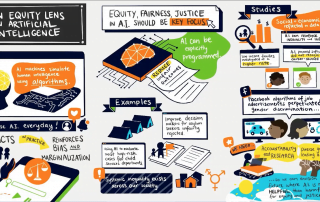
    An Equity Lens on Artificial Intelligence

    [fusion_builder_container admin_label=”” hundred_percent=”no” equal_height_columns=”no” menu_anchor=”” hide_on_mobile=”small-visibility,medium-visibility,large-visibility” class=”” id=”” background_color=”” background_image=”” background_position=”center center” background_repeat=”no-repeat” fade=”no” background_parallax=”none” enable_mobile=”no” parallax_speed=”0.3″ video_mp4=”” video_webm=”” video_ogv=”” video_url=”” video_aspect_ratio=”16:9″ video_loop=”yes” video_mute=”yes” video_preview_image=”” border_color=”” border_style=”solid” margin_top=”20″ margin_bottom=”” padding_top=”” padding_right=”” padding_bottom=”” padding_left=”” type=”legacy”][fusion_builder_row][fusion_builder_column type=”3_4″ layout=”3_4″ spacing=”” center_content=”no” hover_type=”none” link=”” min_height=”” hide_on_mobile=”small-visibility,medium-visibility,large-visibility” class=”” id=”” background_color=”” background_image=”” background_position=”left top” background_repeat=”no-repeat” border_color=”” border_style=”solid” border_position=”all” padding_top=”” padding_right=”” padding_bottom=”” padding_left=”” margin_top=”” margin_bottom=”” animation_type=”” animation_direction=”left” animation_speed=”0.3″ animation_offset=”” last=”false” border_sizes_top=”0″ border_sizes_bottom=”0″ border_sizes_left=”0″ border_sizes_right=”0″ first=”true” spacing_right=””][fusion_text columns=”” column_min_width=”” column_spacing=”” rule_style=”default” rule_size=”” rule_color=”” content_alignment_medium=”” content_alignment_small=”” content_alignment=”” hide_on_mobile=”small-visibility,medium-visibility,large-visibility” sticky_display=”normal,sticky” class=”” id=”” margin_top=”” margin_right=”” margin_bottom=”” margin_left=”” font_size=”” fusion_font_family_text_font=”” fusion_font_variant_text_font=”” line_height=”” letter_spacing=”” text_color=”” animation_type=”” animation_direction=”left” animation_speed=”0.3″ animation_offset=””]

    DOWNLOAD THIS RESEARCH OVERVIEW IN ENGLISH/ EN FRANÇAIS


    OVERVIEW:

    Artificial intelligence (AI) describes machines that can simulate some forms of human intelligence, such as identifying patterns and making predictions and decisions. Today, AI is used by organizations across many sectors for a variety of purposes, from hiring employees, to assessing risk, to making investment recommendations, to recommending criminal sentencing. However, it is well-known that social relations and contexts are reflected and reproduced in technology, and AI is no exception: it has the potential to reinforce underlying biases, discrimination, and inequities. Although AI can be used to benefit marginalized groups, a concerted focus on equity in AI by businesses and governments is necessary to mitigate possible harms. Here we provide a resource for scholars and practitioners for viewing AI through the lens of equity, with the objectives of synthesizing existing research and knowledge about the connection between AI and (in)equity and suggesting considerations for public and private sector leaders to be aware of when implementing AI.

    The key Insight: AI is a double-edged sword, with potential to both mitigate and reinforce bias:

    • Because AI uses statistical prediction methods that can be audited, it has the potential to create outcomes that help groups facing marginalization in situations where human decisions may be clouded by cognitive biases.
    • Despite this potential, because inequality and inequity are often reflected in technologies, some AI can and has reinforced marginalization of certain groups, such as women, gender minorities, and racialized and low-income communities. AI-powered products and services mayuse biased data sets that reproduce this bias; amplify stereotypes and marginalization, sometimes for profit; and/or widen asymmetries of power.
    • The reinforcement of inequity and inequality has occurred because of embedded bias or significant omissions in datasets; the complexity and trade-offs involved in aligning AI with social values when profits are also at stake; a lack of transparency from those creating and implementing AI; a lack of accountability to the public or other users of AI; and limited participation by marginalized and diverse groups in the technology sector.
    • There are also varied potential impacts of AI and automation on jobs and labour. It is possible that women, racialized, and low-income groups may be more susceptible to job loss or displacement due to automation across an increasing number of blue-, white- and pink- collar jobs.

    These results suggest the following considerations for businesses and governments:

    • Technology companies and governments can focus on initiatives for equitable representation in AI development
    • Creators, researchers and implementors of AI can prioritize aligning AI with social values such as fairness, despite possible trade-offs for efficiency and profit
    • Governments can create policies for AI that prioritize accountability and transparency, and require organizations to adhere to these principles
    • Governments and companies can work towards economic security for workers who are being doubly impacted by new technologies and a global pandemic through attention on reskilling and/or upskilling programs
    • Academic researchers can deepen knowledge on AI and inequity, such as by continuing cross-disciplinary work on the social, political and environmental impacts of AI and developing new and different alternatives that prioritize mitigation of harm.

    VIDEO SUMMARY:

    __________________________

    RESEARCH OVERVIEW PREPARED BY

    Carmina Ravanera, Sarah Kaplan

    VIDEO ANIMATION

    Fuselight Creative

    “An Equity Lens on Artificial Intelligence” is co-funded by the Social Sciences and Humanities Research Council and the Government of Canada’s Future Skills Program Grant #872-2020-0011.

    [/fusion_text][fusion_separator style_type=”none” hide_on_mobile=”small-visibility,medium-visibility,large-visibility” class=”” id=”” sep_color=”” top_margin=”20″ bottom_margin=”20″ border_size=”” icon=”” icon_circle=”” icon_circle_color=”” width=”” alignment=”center” /][fusion_button link=”https://www.gendereconomy.org/category/research-overviews/” text_transform=”” title=”” target=”_blank” link_attributes=”” alignment_medium=”” alignment_small=”” alignment=”” modal=”” hide_on_mobile=”small-visibility,medium-visibility,large-visibility” sticky_display=”normal,sticky” class=”” id=”” color=”custom” button_gradient_top_color=”#62bd19″ button_gradient_bottom_color=”#62bd19″ button_gradient_top_color_hover=”#00c2e2″ button_gradient_bottom_color_hover=”#00c2e2″ accent_color=”” accent_hover_color=”” type=”” bevel_color=”” border_color=”” border_hover_color=”” size=”” stretch=”yes” margin_top=”” margin_right=”” margin_bottom=”” margin_left=”” icon=”” icon_position=”left” icon_divider=”no” animation_type=”” animation_direction=”left” animation_speed=”0.3″ animation_offset=””]See more research overviews[/fusion_button][fusion_separator style_type=”none” hide_on_mobile=”small-visibility,medium-visibility,large-visibility” class=”” id=”” sep_color=”” top_margin=”20″ bottom_margin=”20″ border_size=”” icon=”” icon_circle=”” icon_circle_color=”” width=”” alignment=”center” /][fusion_recent_posts layout=”default” hover_type=”none” columns=”3″ number_posts=”3″ offset=”0″ pull_by=”category” cat_slug=”research-briefs” exclude_cats=”” tag_slug=”” exclude_tags=”” thumbnail=”yes” title=”yes” meta=”no” meta_author=”no” meta_categories=”no” meta_date=”yes” meta_comments=”yes” meta_tags=”no” content_alignment=”” excerpt=”no” excerpt_length=”35″ strip_html=”yes” scrolling=”no” hide_on_mobile=”small-visibility,medium-visibility,large-visibility” class=”” id=”” animation_type=”” animation_direction=”left” animation_speed=”0.3″ animation_offset=”” /][/fusion_builder_column][fusion_builder_column type=”1_4″ layout=”1_4″ spacing=”” center_content=”no” hover_type=”none” link=”” min_height=”” hide_on_mobile=”small-visibility,medium-visibility,large-visibility” class=”” id=”” background_color=”” background_image=”” background_position=”left top” background_repeat=”no-repeat” border_color=”” border_style=”solid” border_position=”all” padding_top=”” padding_right=”” padding_bottom=”” padding_left=”” margin_top=”” margin_bottom=”” animation_type=”” animation_direction=”left” animation_speed=”0.3″ animation_offset=”” last=”true” border_sizes_top=”0″ border_sizes_bottom=”0″ border_sizes_left=”0″ border_sizes_right=”0″ first=”false”][fusion_title title_type=”text” rotation_effect=”bounceIn” display_time=”1200″ highlight_effect=”circle” loop_animation=”off” highlight_width=”9″ highlight_top_margin=”0″ before_text=”” rotation_text=”” highlight_text=”” after_text=”” title_link=”off” link_url=”” link_target=”_self” hide_on_mobile=”small-visibility,medium-visibility,large-visibility” sticky_display=”normal,sticky” class=”briefsummary” id=”” content_align_medium=”” content_align_small=”” content_align=”left” size=”3″ font_size=”” animated_font_size=”” fusion_font_family_title_font=”” fusion_font_variant_title_font=”” line_height=”” letter_spacing=”” text_shadow=”no” text_shadow_vertical=”” text_shadow_horizontal=”” text_shadow_blur=”0″ text_shadow_color=”” margin_top_medium=”” margin_right_medium=”” margin_bottom_medium=”” margin_left_medium=”” margin_top_small=”” margin_right_small=”” margin_bottom_small=”” margin_left_small=”” margin_top=”” margin_right=”” margin_bottom=”” margin_left=”” margin_top_mobile=”” margin_bottom_mobile=”” text_color=”” animated_text_color=”” gradient_font=”no” gradient_start_color=”” gradient_end_color=”” gradient_start_position=”0″ gradient_end_position=”100″ gradient_type=”linear” radial_direction=”center center” linear_angle=”180″ highlight_color=”” style_type=”none” sep_color=”” link_color=”” link_hover_color=”” animation_type=”” animation_direction=”left” animation_speed=”0.3″ animation_offset=””]

    Research Overview prepared by

    Carmina Ravanera, Sarah Kaplan

    Published

    September, 2021

    [/fusion_title][fusion_widget_area name=”avada-custom-sidebar-researchbriefsidebar” title_size=”” title_color=”” background_color=”” padding_top=”” padding_right=”” padding_bottom=”” padding_left=”” hide_on_mobile=”small-visibility,medium-visibility,large-visibility” class=”” id=”” /][/fusion_builder_column][/fusion_builder_row][/fusion_builder_container]

  • Protected: Heather McGhee on “The Sum of Us: What Racism Costs Everyone and How We Can Prosper Together”

    Protected: Heather McGhee on “The Sum of Us: What Racism Costs Everyone and How We Can Prosper Together”

    This content is password protected. To view it please enter your password below:

  • Heather McGhee on “The Sum of Us: What Racism Costs Everyone and How We Can Prosper Together”

    Heather McGhee on “The Sum of Us: What Racism Costs Everyone and How We Can Prosper Together”

    [fusion_builder_container hundred_percent=”no” equal_height_columns=”no” menu_anchor=”” hide_on_mobile=”small-visibility,medium-visibility,large-visibility” class=”” id=”” background_color=”” background_image=”” background_position=”center center” background_repeat=”no-repeat” fade=”no” background_parallax=”none” parallax_speed=”0.3″ video_mp4=”” video_webm=”” video_ogv=”” video_url=”” video_aspect_ratio=”16:9″ video_loop=”yes” video_mute=”yes” overlay_color=”” video_preview_image=”” border_color=”” border_style=”solid” padding_top=”” padding_bottom=”” padding_left=”” padding_right=”” type=”legacy”][fusion_builder_row][fusion_builder_column type=”1_1″ layout=”1_1″ background_position=”left top” background_color=”” border_color=”” border_style=”solid” border_position=”all” spacing=”yes” background_image=”” background_repeat=”no-repeat” padding_top=”” padding_right=”” padding_bottom=”” padding_left=”” margin_top=”0px” margin_bottom=”0px” class=”” id=”” animation_type=”” animation_speed=”0.3″ animation_direction=”left” hide_on_mobile=”small-visibility,medium-visibility,large-visibility” center_content=”no” last=”true” min_height=”” hover_type=”none” link=”” first=”true” border_sizes_top=”” border_sizes_bottom=”” border_sizes_left=”” border_sizes_right=””][fusion_text columns=”” column_min_width=”” column_spacing=”” rule_style=”default” rule_size=”” rule_color=”” content_alignment_medium=”” content_alignment_small=”” content_alignment=”” hide_on_mobile=”small-visibility,medium-visibility,large-visibility” sticky_display=”normal,sticky” class=”” id=”” margin_top=”” margin_right=”” margin_bottom=”” margin_left=”” font_size=”” fusion_font_family_text_font=”” fusion_font_variant_text_font=”” line_height=”” letter_spacing=”” text_color=”” animation_type=”” animation_direction=”left” animation_speed=”0.3″ animation_offset=””]

    Heather McGhee’s book, The Sum of Us, explores the self-destructive bargain of white supremacy and its rising cost to all of us—including white people. In The Sum of Us, McGhee embarks on a deeply personal journey across the country from Mississippi to Maine, tallying up what we lose when we buy into the zero-sum paradigm–the idea that progress for some of us must come at the expense of others. In April, she joined Sarah Kaplan of the Institute for Gender and Economy for a discussion on these ideas, where they come from, and what we can do moving forward.

    One of the best ways to represent McGhee’s central idea is the story of the “drained public pool”. In the 1930s and 40s in America there was a boom in public amenities such as schools and libraries, as well as large public pools. These came about from a new ethos that government should create a higher standard of living. Towns then began excluding Black people from pools and other public amenities, either through law or intimidation. When Black families protested, towns drained public pools rather than integrate them, leading to private or membership-only pools. They destroyed a public good to maintain white status, an attitude in the American economy which has led to the era of inequality we currently see. For example, higher education used to be virtually free until public colleges started to become more diverse. Then anti-government spending ideas began to take hold and everyone is losing out.

    What is the narrative of the zero-sum game in racial equality, and where did it come from?

    This misconception is that if something is good for people of colour, it will not be good for white people. This is untrue and racial inequality is costing America’s entire economy. Racism is often profitable for some (e.g. the prison-industrial complex), but at immense costs for broader society. It results in loss of productive wealth and harms communities, especially for people of colour.

    Historically, America’s original economic policies did mean that profits for white people came entirely at the expense of people of colour. There was a narrow white elite that used the notion of racial hierarchy to create division that ensured white people’s loyalty to them and not to people of colour. This is an idea that has renewed itself in today’s media and political landscape.

    If there are so many costs to racial inequality, why aren’t business leaders doing more to stop it?

    Many people are often not talking about the overall economy when they don’t support changing inequality. They are talking about the current distribution of power,  including their own status relative to others. The existing scarcity model makes people think they need status, but they mistake status with security. If there was more equality, everyone would have security and be able to access things like education and healthcare that are currently inaccessible for many.

    How can we think about moving forward?

    McGhee puts forth two ideas to move forward with: 1) The solidarity dividend is the idea of rejecting the zero-sum game narrative and making gains through collective action across racial lines. 2) Truth, Racial Healing and Transformation is a community-based framework to transform society so that it is not based on a hierarchy of human value and ensures that people across the country have racial literacy.

    Watch Heather McGhee discuss where the idea of a zero-sum game in racial equality comes from.

    [/fusion_text][fusion_separator style_type=”none” hide_on_mobile=”small-visibility,medium-visibility,large-visibility” class=”” id=”” sep_color=”” top_margin=”20″ bottom_margin=”20″ border_size=”” icon=”” icon_circle=”” icon_circle_color=”” width=”” alignment=”center” /][fusion_button link=”https://www.gendereconomy.org/events/” text_transform=”” title=”” target=”_blank” link_attributes=”” alignment=”” modal=”” hide_on_mobile=”small-visibility,medium-visibility,large-visibility” class=”” id=”” color=”custom” button_gradient_top_color=”#62bd19″ button_gradient_bottom_color=”#62bd19″ button_gradient_top_color_hover=”#00c2e2″ button_gradient_bottom_color_hover=”#00c2e2″ accent_color=”” accent_hover_color=”” type=”” bevel_color=”” border_width=”” size=”” stretch=”yes” icon=”” icon_position=”left” icon_divider=”no” animation_type=”” animation_direction=”left” animation_speed=”0.3″ animation_offset=”” border_radius=””]See more events[/fusion_button][/fusion_builder_column][/fusion_builder_row][/fusion_builder_container]

  • Backstage Capital: Investing in Black women founders

    Backstage Capital: Investing in Black women founders

    [fusion_builder_container hundred_percent=”no” equal_height_columns=”no” menu_anchor=”” hide_on_mobile=”small-visibility,medium-visibility,large-visibility” class=”” id=”” background_color=”” background_image=”” background_position=”center center” background_repeat=”no-repeat” fade=”no” background_parallax=”none” parallax_speed=”0.3″ video_mp4=”” video_webm=”” video_ogv=”” video_url=”” video_aspect_ratio=”16:9″ video_loop=”yes” video_mute=”yes” overlay_color=”” video_preview_image=”” border_color=”” border_style=”solid” padding_top=”” padding_bottom=”” padding_left=”” padding_right=”” type=”legacy”][fusion_builder_row][fusion_builder_column type=”1_1″ layout=”1_1″ background_position=”left top” background_color=”” border_color=”” border_style=”solid” border_position=”all” spacing=”yes” background_image=”” background_repeat=”no-repeat” padding_top=”” padding_right=”” padding_bottom=”” padding_left=”” margin_top=”0px” margin_bottom=”0px” class=”” id=”” animation_type=”” animation_speed=”0.3″ animation_direction=”left” hide_on_mobile=”small-visibility,medium-visibility,large-visibility” center_content=”no” last=”true” min_height=”” hover_type=”none” link=”” border_sizes_top=”” border_sizes_bottom=”” border_sizes_left=”” border_sizes_right=”” first=”true”][fusion_text columns=”” column_min_width=”” column_spacing=”” rule_style=”default” rule_size=”” rule_color=”” content_alignment_medium=”” content_alignment_small=”” content_alignment=”” hide_on_mobile=”small-visibility,medium-visibility,large-visibility” sticky_display=”normal,sticky” class=”” id=”” font_size=”” fusion_font_family_text_font=”” fusion_font_variant_text_font=”” line_height=”” letter_spacing=”” text_color=”” animation_type=”” animation_direction=”left” animation_speed=”0.3″ animation_offset=””]

    Overview

    Black women, who are the fastest growing group of entrepreneurs in the United States, are consistently underfunded by venture capital firms. It has been observed by industry experts that minority founders who do not receive funding “get discouraged and exclude themselves from applying,” creating a cycle of exclusion for Black women and Black members of the LGBTQ community in the startup world.

    This case study examines how boutique venture firm Backstage Capital, which invests in minority-owned startups, attempted to create a US$36 million fund exclusively for Black women and LGBTQ founders. It also profiles the issues of Black individuals’ underrepresentation across the American investment industry, venture capital, and startup entrepreneurship.

    Course Topics:
    • Venture capital and startup
    • Diversity in STEM
    • Social entrepreneurship
    • Innovation

    Introduction:

    A cardinal stereotype of the startup world, the idea that “anyone can become a founder,” fails to fully match reality when it comes to Black women. A typical team of startup founders in the United States is comprised mainly of a single race and gender. In most cases, the “all male, all white” team is comprised of two people residing in Silicon Valley. Only 1% of venture-funded startup founders are Black. But even within the Black community itself, one group is more isolated from venture investments. Between 2009 and 2017, Black women have received only 0.0006% of venture capital financing.

    Backstage Capital is a venture capital firm that attempts to address existing funding disparities and to promote diversity in startup entrepreneurship. While it invests in companies established by various minorities, Black-founded companies constitute the core group in which Backstage Capital is investing—69 out of 130 backed firms have at least one Black co-founder, some of whom are women and/or LGBTQ. In 2018, the firm announced its new project, a US$36 million fund that will invest exclusively in the startups led by Black women over the next few years. This fund will be important to generate profits for the firm and “to move the needle and to set the example” for the investment industry overall.

    Backstage Capital case study thumbnail

    View and download the full case study

    [/fusion_text][fusion_text columns=”” column_min_width=”” column_spacing=”” rule_style=”default” rule_size=”” rule_color=”” content_alignment_medium=”” content_alignment_small=”” content_alignment=”” hide_on_mobile=”small-visibility,medium-visibility,large-visibility” sticky_display=”normal,sticky” class=”” id=”” font_size=”” fusion_font_family_text_font=”” fusion_font_variant_text_font=”” line_height=”” letter_spacing=”” text_color=”” animation_type=”” animation_direction=”left” animation_speed=”0.3″ animation_offset=””]

    __________________________

    This case was written by:

    This case was written by Bashir Chalabi and Stephanie Taylor. The authors prepared this case under the supervision of Professor Sarah Kaplan, with guidance from Bonnie Lam and Vanessa Serra Iarocci and research assistance from Carmina Ravanera.

    [/fusion_text][fusion_separator style_type=”none” hide_on_mobile=”small-visibility,medium-visibility,large-visibility” sticky_display=”normal,sticky” class=”” id=”” flex_grow=”0″ top_margin=”10″ bottom_margin=”10″ width=”” alignment=”center” border_size=”” sep_color=”” icon=”” icon_size=”” icon_color=”” icon_circle=”” icon_circle_color=”” /][fusion_button link=”https://www.gendereconomy.org/education/case-studies/” text_transform=”” title=”” target=”_blank” link_attributes=”” alignment_medium=”” alignment_small=”” alignment=”” modal=”” hide_on_mobile=”small-visibility,medium-visibility,large-visibility” sticky_display=”normal,sticky” class=”” id=”” color=”custom” button_gradient_top_color=”#62bd19″ button_gradient_bottom_color=”#62bd19″ button_gradient_top_color_hover=”#00c2e2″ button_gradient_bottom_color_hover=”#00c2e2″ accent_color=”” accent_hover_color=”” type=”” bevel_color=”” border_width=”” border_radius=”” border_color=”” border_hover_color=”” size=”” stretch=”yes” margin_top=”” margin_right=”” margin_bottom=”” margin_left=”” icon=”” icon_position=”left” icon_divider=”no” animation_type=”” animation_direction=”left” animation_speed=”0.3″ animation_offset=””]See more case studies[/fusion_button][fusion_separator style_type=”none” hide_on_mobile=”small-visibility,medium-visibility,large-visibility” sticky_display=”normal,sticky” class=”” id=”” flex_grow=”0″ top_margin=”20″ bottom_margin=”20″ width=”” alignment=”center” border_size=”” sep_color=”” icon=”” icon_size=”” icon_color=”” icon_circle=”” icon_circle_color=”” /][fusion_recent_posts layout=”default” picture_size=”fixed” hover_type=”none” columns=”3″ number_posts=”3″ post_status=”” offset=”0″ pull_by=”category” cat_slug=”case-studies” exclude_cats=”” tag_slug=”” exclude_tags=”” thumbnail=”yes” title=”yes” meta=”no” meta_author=”no” meta_categories=”no” meta_date=”yes” meta_comments=”yes” meta_tags=”no” content_alignment=”” excerpt=”no” excerpt_length=”35″ strip_html=”yes” scrolling=”no” hide_on_mobile=”small-visibility,medium-visibility,large-visibility” class=”” id=”” animation_type=”” animation_direction=”left” animation_speed=”0.3″ animation_offset=”” /][/fusion_builder_column][/fusion_builder_row][/fusion_builder_container]

  • How we talk about discrimination affects discriminatory behaviours

    How we talk about discrimination affects discriminatory behaviours

    [fusion_builder_container admin_label=”” hundred_percent=”no” equal_height_columns=”no” menu_anchor=”” hide_on_mobile=”small-visibility,medium-visibility,large-visibility” class=”” id=”” background_color=”” background_image=”” background_position=”center center” background_repeat=”no-repeat” fade=”no” background_parallax=”none” enable_mobile=”no” parallax_speed=”0.3″ video_mp4=”” video_webm=”” video_ogv=”” video_url=”” video_aspect_ratio=”16:9″ video_loop=”yes” video_mute=”yes” video_preview_image=”” border_color=”” border_style=”solid” margin_top=”20″ margin_bottom=”” padding_top=”” padding_right=”” padding_bottom=”” padding_left=”” type=”legacy”][fusion_builder_row][fusion_builder_column type=”3_4″ layout=”3_4″ spacing=”” center_content=”no” hover_type=”none” link=”” min_height=”” hide_on_mobile=”small-visibility,medium-visibility,large-visibility” class=”” id=”” background_color=”” background_image=”” background_position=”left top” background_repeat=”no-repeat” border_color=”” border_style=”solid” border_position=”all” padding_top=”” padding_right=”” padding_bottom=”” padding_left=”” margin_top=”” margin_bottom=”” animation_type=”” animation_direction=”left” animation_speed=”0.3″ animation_offset=”” last=”false” first=”true” border_sizes_top=”0″ border_sizes_bottom=”0″ border_sizes_left=”0″ border_sizes_right=”0″ spacing_right=””][fusion_text columns=”” column_min_width=”” column_spacing=”” rule_style=”default” rule_size=”” rule_color=”” content_alignment_medium=”” content_alignment_small=”” content_alignment=”” hide_on_mobile=”small-visibility,medium-visibility,large-visibility” sticky_display=”normal,sticky” class=”” id=”” font_size=”” fusion_font_family_text_font=”” fusion_font_variant_text_font=”” line_height=”” letter_spacing=”” text_color=”” animation_type=”” animation_direction=”left” animation_speed=”0.3″ animation_offset=””]

    Summary

    Statistical discrimination is the theory that when employers do not have full information about the productivity of job candidates, they rely on their beliefs about observable characteristics, such as race or gender, to assume candidates’ productivity and make hiring decisions. In economics, statistical discrimination theory is often discussed as a rational, profit-maximizing, and commonplace strategy in the face of incomplete information. This article argues that because statistical discrimination tends to be presented this way, exposure to it can lead employers to justify and use stereotypes in hiring. In this survey experiment, participants who read about statistical discrimination theory had a stronger belief in stereotypes, stronger acceptance of stereotyping, and engaged in gender discrimination in a hiring simulation to a greater extent, compared to control groups. Reading a critical commentary of statistical discrimination along with the theory lessened these effects. This study suggests that how people are exposed to ideas about discrimination can affect whether they act discriminatorily, in turn shaping labour markets.

    Research

    Statistical discrimination theory is a dominant social science framework for understanding discrimination. It appears often in policy papers, popular media, and economics courses. The theory suggests that when employers have incomplete information about candidates, they will make “educated guesses” to infer who the most productive candidate will be, using their beliefs about observable characteristics as proxies for quality. For example, they might believe older workers are less innovative on average than younger workers, and hire a young worker based on this belief. However, although employers may not be making consciously discriminatory decisions, their beliefs about certain demographic groups are often shaped by stereotypes rather than accurate statistics. Statistical discrimination thus harms candidates belonging to these groups.

    Nevertheless, statistical discrimination tends to be framed in economics textbooks, lectures, and media as profit-maximizing, efficient, and even commonplace when information about the future productivity of job candidates cannot be fully known. Statistical discrimination then becomes easy to justify. It stands in contrast to taste-based discrimination, i.e., overt prejudice towards a certain group, which is not considered as societally acceptable.

    This study predicted that people exposed to statistical discrimination theory would show greater belief in stereotypes and their usefulness, and that they would engage in more hiring discrimination, compared to other groups. It also predicted that reading a critical commentary of the theory would mitigate these effects. The author conducted a survey experiment with 2500 participants, all of whom were U.S. residents with managerial experience recruited from an online survey platform. Participants were exposed to one of four texts: 1) statistical discrimination theory, 2) unrelated materials, 3) taste-based discrimination theory, or 4) statistical discrimination theory with critical commentary. Exposure materials were created from college textbooks, articles, and other accessible descriptions about these theories.

    After exposure, participants were asked about their attitudes towards stereotyping and undertook a hiring simulation, where they had to hire four of ten job candidates based on limited information (first name, university, major, GPA, and summary of work experience).

    Findings

    Results showed that participants who were exposed to statistical discrimination theory without critical commentary perceived stereotyping as more acceptable and stereotypes as more accurate compared with participants in control groups. They also hired fewer women in the hiring simulation. On average, participants in control groups selected gender balanced teams, with two women in teams of four. Those who read about statistical discrimination without critical commentary created a gender gap of about 10%, with their average teams comprising of 55% men and 45% women—even when controlling for factors such as university major, work experience, and GPA. However, these effects were mitigated for those who read about statistical discrimination theory with critical commentary.

    Implications

    The way we talk about discrimination has impacts on the labour market and can reinforce inequality – Statistical discrimination tends to be framed and discussed as profit-maximizing, rational, and commonplace. This study demonstrates that exposure to this theory without including critiques of it may lead to increased discrimination in the labour market. Economists, professors, and other leaders have a responsibility to ensure that statistical discrimination is not normalized, whether in classrooms or workplaces. Critical commentary about statistical discrimination—such as that people’s beliefs about specific groups are often not based in fact, and that it harms individuals who do not fit stereotypes—should be communicated.

    Managers should carefully consider whether they are using statistical discrimination in hiring and mitigate this behaviour – It may be tempting for managers to make hiring decisions based on statistical discrimination, as people tend to believe that their perceptions about different demographic groups are accurate. Hiring managers and other decision-makers in organizations must ensure that they are not normalizing selecting candidates based on unfounded assumptions about characteristics that are unrelated to the job, such as race, gender, and age. This behaviour could reinforce inequality within organizations and continue to normalize statistical discrimination for future hiring.
    __________________________

    Research brief prepared by:

    Carmina Ravanera

    Tilcsik, A. (2020). Statistical Discrimination and the Rationalization of Stereotypes, American Sociological Review 86(1): 93-122.

    https://doi.org/10.1177%2F0003122420969399

    [/fusion_text][fusion_separator style_type=”none” hide_on_mobile=”small-visibility,medium-visibility,large-visibility” class=”” id=”” sep_color=”” top_margin=”20″ bottom_margin=”20″ border_size=”” icon=”” icon_circle=”” icon_circle_color=”” width=”” alignment=”center” /][fusion_button link=”https://www.gendereconomy.org/research-briefs/” text_transform=”” title=”” target=”_blank” link_attributes=”” alignment=”” modal=”” hide_on_mobile=”small-visibility,medium-visibility,large-visibility” class=”” id=”” color=”custom” button_gradient_top_color=”#62bd19″ button_gradient_bottom_color=”#62bd19″ button_gradient_top_color_hover=”#00c2e2″ button_gradient_bottom_color_hover=”#00c2e2″ accent_color=”” accent_hover_color=”” type=”” bevel_color=”” border_width=”” size=”” stretch=”yes” icon=”” icon_position=”left” icon_divider=”no” animation_type=”” animation_direction=”left” animation_speed=”0.3″ animation_offset=”” border_radius=””]See more research briefs[/fusion_button][fusion_separator style_type=”none” hide_on_mobile=”small-visibility,medium-visibility,large-visibility” class=”” id=”” sep_color=”” top_margin=”20″ bottom_margin=”20″ border_size=”” icon=”” icon_circle=”” icon_circle_color=”” width=”” alignment=”center” /][fusion_recent_posts layout=”default” hover_type=”none” columns=”3″ number_posts=”3″ offset=”0″ pull_by=”category” cat_slug=”research-briefs” exclude_cats=”” tag_slug=”” exclude_tags=”” thumbnail=”yes” title=”yes” meta=”no” meta_author=”no” meta_categories=”no” meta_date=”yes” meta_comments=”yes” meta_tags=”no” content_alignment=”” excerpt=”no” excerpt_length=”35″ strip_html=”yes” scrolling=”no” hide_on_mobile=”small-visibility,medium-visibility,large-visibility” class=”” id=”” animation_type=”” animation_direction=”left” animation_speed=”0.3″ animation_offset=”” /][/fusion_builder_column][fusion_builder_column type=”1_4″ layout=”1_4″ spacing=”” center_content=”no” hover_type=”none” link=”” min_height=”” hide_on_mobile=”small-visibility,medium-visibility,large-visibility” class=”” id=”” background_color=”” background_image=”” background_position=”left top” background_repeat=”no-repeat” border_color=”” border_style=”solid” border_position=”all” padding_top=”” padding_right=”” padding_bottom=”” padding_left=”” margin_top=”” margin_bottom=”” animation_type=”” animation_direction=”left” animation_speed=”0.3″ animation_offset=”” last=”true” first=”false” border_sizes_top=”0″ border_sizes_bottom=”0″ border_sizes_left=”0″ border_sizes_right=”0″][fusion_title title_type=”text” rotation_effect=”bounceIn” display_time=”1200″ highlight_effect=”circle” loop_animation=”off” highlight_width=”9″ highlight_top_margin=”0″ before_text=”” rotation_text=”” highlight_text=”” after_text=”” hide_on_mobile=”small-visibility,medium-visibility,large-visibility” sticky_display=”normal,sticky” class=”briefsummary” id=”” content_align_medium=”” content_align_small=”” content_align=”left” size=”3″ font_size=”” animated_font_size=”” fusion_font_family_title_font=”” fusion_font_variant_title_font=”” line_height=”” letter_spacing=”” text_shadow=”no” text_shadow_vertical=”” text_shadow_horizontal=”” text_shadow_blur=”0″ text_shadow_color=”” margin_top_medium=”” margin_bottom_medium=”” margin_top_small=”” margin_bottom_small=”” margin_top=”” margin_bottom=”” margin_top_mobile=”” margin_bottom_mobile=”” text_color=”” animated_text_color=”” highlight_color=”” style_type=”none” sep_color=”” animation_type=”” animation_direction=”left” animation_speed=”0.3″ animation_offset=””]

    Title

    Statistical Discrimination and the Rationalization of Stereotypes

    Author

    András Tilcsik

    Source

    American Sociological Review

    Published

    2020

    DOI

    10.1177/0003122420969399

    Link

    https://journals.sagepub.com/doi/10.1177/0891243219876271

    Research brief prepared by

    Carmina Ravanera

    [/fusion_title][fusion_widget_area name=”avada-custom-sidebar-researchbriefsidebar” title_size=”” title_color=”” background_color=”” padding_top=”” padding_right=”” padding_bottom=”” padding_left=”” hide_on_mobile=”small-visibility,medium-visibility,large-visibility” class=”” id=”” /][/fusion_builder_column][/fusion_builder_row][/fusion_builder_container]

  • Debates and controversies in understanding gender, race and entrepreneurship

    Debates and controversies in understanding gender, race and entrepreneurship

    [fusion_builder_container admin_label=”” hundred_percent=”no” equal_height_columns=”no” menu_anchor=”” hide_on_mobile=”small-visibility,medium-visibility,large-visibility” class=”” id=”” background_color=”” background_image=”” background_position=”center center” background_repeat=”no-repeat” fade=”no” background_parallax=”none” enable_mobile=”no” parallax_speed=”0.3″ video_mp4=”” video_webm=”” video_ogv=”” video_url=”” video_aspect_ratio=”16:9″ video_loop=”yes” video_mute=”yes” video_preview_image=”” border_color=”” border_style=”solid” margin_top=”20″ margin_bottom=”” padding_top=”” padding_right=”” padding_bottom=”” padding_left=”” type=”legacy”][fusion_builder_row][fusion_builder_column type=”3_4″ layout=”3_4″ spacing=”” center_content=”no” hover_type=”none” link=”” min_height=”” hide_on_mobile=”small-visibility,medium-visibility,large-visibility” class=”” id=”” background_color=”” background_image=”” background_position=”left top” background_repeat=”no-repeat” border_color=”” border_style=”solid” border_position=”all” padding_top=”” padding_right=”” padding_bottom=”” padding_left=”” margin_top=”” margin_bottom=”” animation_type=”” animation_direction=”left” animation_speed=”0.3″ animation_offset=”” last=”false” border_sizes_top=”0″ border_sizes_bottom=”0″ border_sizes_left=”0″ border_sizes_right=”0″ first=”true” spacing_right=””][fusion_text columns=”” column_min_width=”” column_spacing=”” rule_style=”default” rule_size=”” rule_color=”” content_alignment_medium=”” content_alignment_small=”” content_alignment=”” hide_on_mobile=”small-visibility,medium-visibility,large-visibility” sticky_display=”normal,sticky” class=”” id=”” margin_top=”” margin_right=”” margin_bottom=”” margin_left=”” font_size=”” fusion_font_family_text_font=”” fusion_font_variant_text_font=”” line_height=”” letter_spacing=”” text_color=”” animation_type=”” animation_direction=”left” animation_speed=”0.3″ animation_offset=””]

    Download this research brief (in English/en Français).

    Gender, Race & Entrepreneurship report cover              

    This research overview is based on the fascinating conversations we had in our Workshop on Gender, Race and Entrepreneurship, sponsored by the Government of Canada’s Women Entrepreneurship Hub.

    Overview

    Entrepreneurship is a key path to job creation and economic growth in the modern economy, yet women and minorities remain underrepresented. Research to date has documented some “supply side” factors showing that women and/or minorities are less likely to enter entrepreneurship and some “demand side” factors highlighting the struggle these entrepreneurs face in getting funding and other resources.[1] [2] [3] A 2013 review by Jennings and Brush documents many of these insights.[4] We know less, however, about how the supply side and demand side interact and what kinds of interventions might improve outcomes.

    To explore these challenges, the Institute for Gender and the Economy at the University of Toronto’s Rotman School of Management convened a 6-week workshop series in October and November 2020 sponsored by the Government of Canada’s Women Entrepreneurship Knowledge Hub. Organized by Camille Hebert and Sarah Kaplan, the workshop hosted over 150 scholars from around the world who heard cutting edge research from sociology, economics, management and finance researchers, including Asia Bento (Rice), Ruiqing Cao (Harvard), Alexia Delfino (Bocconi), Stefan Dimitriadis (U Toronto), Sabrina Howell (NYU Stern), Song Ma (Yale), Milan Miric (USC Marshall), Tiantian Yang (Wharton), Emmanuel Yimfor (Michigan Ross), and Jonathan Zandberg (Boston College). In the final session, senior scholars Mike Ewens (Caltech), Fiona Murray (MIT Sloan), Zulema Valdez (UC Merced) discussed the future research agenda for gender and race in entrepreneurship. The workshop and discussions underscored a number of debates and controversies in the entrepreneurship literature which are highlighted below along with a roadmap for a future research agenda in gender, race and entrepreneurship. To learn more about the event, including a video summary, click here.

    What are work and family conditions that shape entry into entrepreneurship?

    When looking at the dearth of women in the entrepreneurial space, people often suggest that it is because women don’t prefer entrepreneurship. However, research is making it increasingly clear that there are other important social and structural factors that shape these choices. A long stream of research has established that motherhood (much more so than fatherhood) leads to career and pay penalties for women, but the effects of motherhood or potential motherhood on entrepreneurship are just starting to be explored. The transition to entrepreneurship can occur during different life stages and at various career trajectories. Understanding life and workplace conditions that women and minority entrepreneurs face is important because these conditions predict the types of businesses created as well as the timing of business creation.

    • Diminishing career opportunities at work accelerates entrepreneurship for women. Individuals may consider entrepreneurship as a career option if they find that opportunities at their current jobs are not sufficient. Reduced career opportunities at work—especially associated with the penalties that women pay for motherhood such as lower pay, fewer paths to promotion, and poor access to family-friendly work policies—increases the likelihood that women will become entrepreneurs.[5]
    • Entrepreneurship may not always be an ideal career outcome for women. For women, the need for flexible time due to work-family conflict can predict entry into self-employment, as self-employment often allows for more flexible work schedules. This highlights the fact that entrepreneurship maybe not always be an ideal outcome for women who may be forced into it because more stable employment is not available. Scholars have called this type of entrepreneurship “Plan B” entrepreneurship and have shown that these constraints often lead to self-employment or small, low-growth businesses [6].
    • The start of family life for women may constrain entrepreneurship. Women who choose to exploit an entrepreneurial idea may also defer family decisions until after they have started their businesses. New research shows that better access to reproductive health care (e.g., access to abortion clinics, emergency contraception, or to fertility programs such as egg freezing) increases women’s entrepreneurship as well as their ability to raise capital and prevent bankruptcy.[7] [8] [9] This evidence suggests that if women do not have access to reproductive healthcare, this may limit their entry into high-growth entrepreneurship which is seen as highly demanding.
    • We may need new approaches to attracting women to entrepreneurship. Recent research shows that men are more likely to be attracted to jobs that demonstrate a potential for high returns to effort (a challenging environment). For women, a higher perceived share of men in a field (which is certainly the case of entrepreneurship) discourages women from entering, with only the most talented applying.[10] This may mean, in the case of entrepreneurship, that too many men are entering at lower quality while not enough women are entering.

    Obstacles in turning entrepreneurial ideas into businesses

    Even if individuals have entrepreneurial ideas, turning those ideas into businesses require being evaluated favourably key stakeholders in in entrepreneurial financing and in commercialization stages. What are the mechanisms that explain how these stakeholders may differentially evaluate entrepreneurial ideas from women and minorities?

    • Networking with venture capital firms may be more difficult for women. Entrepreneurs may experience difficulties in funding depending on their gender or minority status. Because entrepreneurial ideas carry high uncertainty, potential funders including venture capital firms (VCs) rely on personal introductions and referrals for deal sourcing. Yet, a study showed that exposure to networking opportunities benefited male entrepreneurs, but not women.[11] It appears that women may not access these networking opportunities because they felt that the VCs wouldn’t have the background to understand their business, they feared discrimination, or they held themselves to a too-high standard. Thus, designers of innovation incubators, accelerators or pitch competitions should work to reduce these networking-related frictions for women entrepreneurs.
    • Startup pitches are evaluated differently based on gender. In addition to barriers to networking with potential funders, the content of the pitches by female entrepreneurs may be interpreted differently from pitches by male entrepreneurs. Building on research showing that pitches for the identical business by men received more recommendations for funding than pitches by women[12] [13], recent research using video analysis shows that women entrepreneurs, relative to male entrepreneurs, are judged more on delivery than on informational content.[14] This puts women in a double bind because pitches mainly chosen based on delivery, rather than content, were associated with lower ex-post performance, suggesting that investors have biased beliefs about gender. While it may be tempting to tell women that they need to learn to be more persuasive, this may not be particularly helpful. Instead, motivating evaluators to focus more on the content ultimately facilitates financing of the best entrepreneurial ideas. Rather than “fixing the women,” these results point to solutions that “fix the system” (the demand side of entrepreneurship).
    • During the commercialization stage, the paucity of female product evaluators can hurt female entrepreneurs. Beta testers on online platforms are often used to evaluate products in the commercialization stage. However, because these testers are mostly men, they may not accurately assess the products targeting women, hurting the likelihood of women-targeted products developed by female entrepreneurs. As a result, products that are eventually commercialized might not reflect preferences of the entire group of consumers which impacts which products survive and grow.[15] Therefore, paying attention to the composition of early users, such as beta testers, can improve the reach and effectiveness of innovations and, conversely, biased early testing can reduce innovation impact.

    The role of institutions

    There are also important roles played by the authorities that govern, monitor and support well-functioning entrepreneurial activities. Because these institutions can confer legitimacy to entrepreneurial entities and provide capital that accelerate the creation of businesses, it is important to examine whether different minority groups benefit equally from roles played by these institutions.

    • Institutions can help to boost legitimacy of businesses founded by women. Because women’s contributions in the economy, especially in entrepreneurship, tend to be devalued, they often need to access sources that support their legitimacy. This challenge is particularly acute in settings where the power of formal institutions is weak, such as in developing countries or in any other context that puts a heavy weight on personal relationships and trust. Globally, 78% of all entrepreneurship occurs in the informal economy. In a study of entrepreneurs in Togo, where the majority of entrepreneurs operate in the informal economy, the formal registration of businesses benefited women entrepreneurs more than men entrepreneurs.[16] Similar effects for other kinds of adjudicating institutions were also identified in Zambia.[17] If entrepreneurial performance depends heavily on building relationships, women entrepreneurs may face more hurdles as they are subject to traditional gender beliefs about them. Formal registration and other legitimization mechanisms can compensate for these disadvantages.
    • Institutional resources meant to boost entrepreneurship may unintendedly reinforce racial divides. Government interventions are often intended to drive financial resources into communities which could spur entrepreneurial activity. A study that explored federal recovery programs after natural disasters, showed that capital from recovery assistance programs was only associated with increases in self-employment for whites, but not other racial groups.[18] These effects were attributed to social vulnerabilities tied to racial marginalization and hoarded opportunities tied to white privilege. These results suggest that institutions could reproduce, rather than alleviate, racial inequalities, particularly in the wake of crisis.
    • Institutions can improve entrepreneurial performance by monitoring entrepreneurial financing. Because funding is difficult to access, particularly for women and minority entrepreneurs, brokers and finders can be helpful intermediaries. Indeed, new research shows that women and minority entrepreneurs do access these sorts of resources. However, brokered offerings—because they mainly aggregate funds from retail investors—don’t perform as well because they don’t bring the same advantages of advice and networks that come with VC funding. For example, from a sample of startup offerings in the US from 2010-2019, brokers intermediated 15% of startup offerings, but 20% of these brokers were unregistered by SEC (Securities and Exchange Commission). The performance gap between registered and unregistered brokers was wider in fiduciary states (where brokers are subject to higher standards) and when unregistered brokers have a history of misconduct.[19] Thus, while these intermediaries can mitigate the challenges that underrepresented entrepreneurs face in accessing financing, without better regulations, they could actually exacerbate the entrepreneurship divide.

    The path forward and future research agenda

    The emerging research presented at this workshop series opens up exciting new lines of inquiry and suggests a new research agenda for studies of gender, race and entrepreneurship. These possibilities explore both the supply-side questions about who enters entrepreneurship and the demand-side questions about what factors are keeping women and minorities out or inhibiting their success. In our rich discussions in each of the workshop sessions, as well as in the final panel with senior scholars reflecting on the field, we developed a fruitful list of questions and opportunities.

    • Why entrepreneurship? The research shared in this workshop series highlighted that entrepreneurship is not often people’s first choice. Some entrepreneurs or self-employed people have simply been excluded from the paid workforce. Often employment is better for personal outcomes because it could come with benefits, sick leave and a steady source of income. Entrepreneurs are sometimes racial minorities who are excluded from the regular workforce or women who can’t make a corporate job work with her responsibilities at home given the gendered division of labor in unpaid care work. This research cautions us not to glorify entrepreneurship as an outcome but understand its costs and benefits, assessing not only how to get people into entrepreneurship but whether that is even the best outcome.
    • An intersectional gender lens on entrepreneurship. Neither those seeking capital nor those providing capital are representative of society in terms of gender and race. Entrepreneurship is not just an economic activity but also a cultural phenomenon that has historically been fundamentally masculinist and white and where attempts have been made to be more inclusive, they have often glorified a certain type of female entrepreneur that leverages the intersection of white, heteronormative power.[20] Thus, unsurprisingly, the discussions in this workshop made clear that we need to consider gender, race and their intersections in studying and implementing policies to support entrepreneurship. Most research on women in entrepreneurship does not consider race. There is less research on race and entrepreneurship, and what exists often neglects important gender distinctions.
    • Not all entrepreneurship is created equal. These discussions also highlighted the fact that not all entrepreneurship is the same. Research would do well to distinguish between self-employment, small and medium enterprises (SMEs) without growth aspirations, and high-tech, high-growth entrepreneurship. The reasons for entering entrepreneurship and the roadblocks to success in each of these different categories is different. Each plays a valuable role in society. We tend to glorify high-tech entrepreneurship, but SMEs are the source of more employment. For example, more than 90% of all workers in the private sector in Canada are employed in SMEs. Similarly, entrepreneurship may not operate in the same ways in different regions around the world and the role of women may differ in these diverse contexts. Researchers and policy makers would do well to distinguish between the dynamics associated with each without devaluing certain types of entrepreneurial efforts relative to others.
    • Understanding racial and ethnic minority entrepreneurs. Although we are beginning to understand the unique challenges that women entrepreneurs face, we know relatively less about precursors of entrepreneurship for racial and ethnic minorities. We know even less about how gender intersects with race and ethnicity. Empirically, this is related to small numbers of businesses created by racial and ethnic minorities in most study samples. Conceptually, we need to be conscious about using pan ethnic categories that may blur the boundaries of different ethnic groups in it. For example, within the population of people from Latin-American descent, there may be differences in initial conditions that predict the creation of businesses depending on ethnic groups (e.g., Cuban origin versus Mexican origin). The monolithic treatment of Latinx peoples may compress distinct ethnic subgroups, which masks different economic conditions and identities among these groups.[21] The same argument could be made for different groups within Asian entrepreneurs (e.g., Korean-American business-owners versus Japanese-American owners) or Black entrepreneurs who may be African-American or recent immigrants from Africa, the Caribbean or elsewhere. Therefore, to understand different entrepreneurship trajectories by race, we need conceptual toolkits to capture these differences as well as data that allows for comparison across different ethnic groups within the same pan ethnic category.
    • Family members as hidden funders and entrepreneurs. Securing entrepreneurial capital has become easier over time (for example, through the National Securities Markets Improvement Act of 1996)[22], yet we continue to witness underrepresentation of women and minority entrepreneurs. A possible answer to this question can come from understanding family and workplace conditions of women and minority entrepreneurs. Entrepreneurship is often a family endeavour, and by primarily examining entrepreneurship as an individual activity, we are missing out important factors related to funding as well as founding decisions. Further, entrepreneurs frequently rely on family for securing startup funding and sustaining business. For example, having a partner with a stable job allows entrepreneurs to persist in their business. This highlights the importance of understanding family conditions especially during the early stages of entrepreneurship. Once the business is created, an entrepreneurs’ spouses may be “shadow entrepreneurs,” playing as significant role as the founder but with less recognition. For example, depending on cultural norms that entrepreneurs are exposed to, a wife’s labor can be perceived as “family labor” readily available to entrepreneur husbands, whereas men’s labor is perceived as their own.[23] Future research should examine the role of these hidden entrepreneurs as a critical part of the entrepreneurial funding landscape and workforce.
    • Industry dynamics shaping entrepreneurial dynamics. There may be systematic variations in the gender gap in entrepreneurship by sector, but we are only beginning to observe these patterns and underlying mechanisms. For example, the gender gap in entrepreneurship in digital industries is greater than other industries. This is surprising given that digitization actually lowers the costs of launching businesses (for example, everyone can access Amazon Web Services for their data infrastructure rather than building it themselves) which should erode funding frictions that would be a source of the gender gap in entrepreneurship.[24] If funding isn’t the barrier, then what other structural characteristics in the high-tech industry would predict the lower likelihood of entrepreneurship for women, compared to other industries? It is also possible that the gender gap in entrepreneurship by industries is related to gendered distribution of workers in certain industries in the first place (male-dominated versus female-dominated sectors).[25] Large-scale field experiments would help us to understand conditions that may facilitate men’s entry into jobs dominated by women and vice versa.
    • Activating networks and referrals. The research shared in this workshop series highlighted the importance of networks for entrepreneurs to achieve success. These networks, properly mobilized, can provide access to funding, advice and other resources. Yet, the studies suggest that it is not enough to expose women and underrepresented minorities to potential networks. We also are unclear if structured interventions to create networks such as accelerator programs actually help in this regard. In addition, disentangling the effect of networking in explaining business outcomes remains challenging, empirically.[26] Connecting networks to outcomes is difficult because it is a two-sided matching problem: you need to understand how and why each matches with the other. Future research would seek to understand the underlying mechanisms that explain the benefits of networking and mentorship and determine what interventions would work to activate useful networks for underrepresented groups.
    • Reducing gatekeeper biases. The role of gatekeepers, such as VCs, are critical in early stages of startups. By studying these gatekeepers over time, we can sort out the sources of bias and appropriate interventions. For example, central to statistical discrimination theory is that when beliefs turn out to be inaccurate, actors can update their beliefs. Will we see gatekeepers update their beliefs on businesses led by women and minorities? What are ways to disentangle statistical discrimination versus taste-base discrimination against women and minority entrepreneurs? To answer these questions, researchers should leverage study designs that track behaviours of gatekeepers over multiple periods.[27] In the short run, it may be necessary to provide women and minority entrepreneurs with other supports that will increase their legitimacy as a compensatory mechanism that may offset biases.[28] For example, in Togo, this was formal business registration. In the Silicon Valley, this might be affiliation with a top VC or endorsements from recognized leaders. Such signals may help women and minority entrepreneurs overcome gatekeepers’ uncertainties around their quality and potential. Research might ask whether social capital can be transferred, as we are seeing African American stars in music, movies and sports entering into entrepreneurship or into entrepreneurial financing.

    In sum, the emerging research on gender and race is shedding new light on the complex dynamics of assuring equal opportunities in the entrepreneurial space. Many of the insights direct our attention away from seeing this as a “supply side” problem in which not enough women and minorities enter entrepreneurship and towards seeing how “demand side” factors such as systemic racism, biased evaluations, and family dynamics disguise limits and impede success. We also see an emerging set of solutions—such as interventions with gatekeepers, creating legitimacy mechanisms and reconfiguring institutional supports—that should lead to greater equity in our economy.

    __________________________

    RESEARCH OVERVIEW PREPARED BY:

    Hyeun Lee and Sarah Kaplan, Institute for Gender and the Economy at the University of Toronto’s Rotman School of Management.

    The preparation of this research overview was supported by the Government of Canada’s Women Entrepreneurship Knowledge Hub (WEKH).

    CITE AS:

    Lee, Hyeun. and Kaplan, S. (2021). “Debates and controversies in understanding gender, race and entrepreneurship,” Institute for Gender and the Economy, https://www.gendereconomy.org/debates-and-controversies-in-understanding-gender-race-and-entrepreneurship/.

    References

    [1] Kanze, D., Huang, L., Conley, M. A., & Higgins, E. T. 2018. We Ask Men to Win and Women Not to Lose: Closing the Gender Gap in Startup Funding. Academy of Management Journal, 61(2): 586–614.

    [2] Ewens, M., & Townsend, R. R. 2020. Are early-stage investors biased against women? Journal of Financial Economics, 135(3): 653-677.

    [3] Hebert, C. 2020. Gender stereotypes and entrepreneur financing.  Working Paper available on SSRN: https://papers.ssrn.com/sol3/papers.cfm?abstract_id=3318245

    [4] Jennings, J, & Brush, Candida G. Research on Women Entrepreneurs: Challenges to (and from) the Broader Entrepreneurship Literature. Academy of Management Annals, 7(1): 663-715.

    [5] Yang, T., Kacperczyk, A., & Naldi, L. 2020. Career Antecedents of Female Entrepreneurship. Working Paper.

    [6] Thébaud, Sarah. 2015. Business as Plan B: Institutional Foundations of Gender Inequality in Entrepreneurship across 24 Industrialized Countries. Administrative Science Quarterly, 60(4): 671-711.

    [7] Zandberg, J. (Forthcoming). Family Comes First: Reproductive Health and the Gender Gap in Entrepreneurship. Journal of Financial Economics.

    [8] Zandberg, J. 2020. Reproductive Rights and Women’s Access to Capital. Working Paper. https://papers.ssrn.com/abstract=3727553.

    [9] Core, Fabrizio. (2020). Maternity Risk and the Gender Gap in Entrepreneurship. Working paper available on SSRN: https://papers.ssrn.com/sol3/papers.cfm?abstract_id=3539508

    [10] Delfino, Alexia. 2020. Breaking Gender Barriers: Bringing Men into the Pick-Collar Jobs of the Future. Working Paper. https://drive.google.com/file/d/1T2KKmwIaqTZ9HiuAExq2vItss75R4_7X/view?usp=sharing

    [11] Howell, S. T., & Nanda, R. 2019. Networking Frictions in Venture Capital, and the Gender Gap in Entrepreneurship. Working Paper. https://papers.ssrn.com/abstract=3484700.

    [12] Brooks AW, Huang L, Kearney SW, Murray FE. 2014. Investors prefer entrepreneurial ventures pitched by attractive men. Proceedings of the National Academy of Sciences, 111(12): 4427–4431.

    [13] Op cit. Hebert, C. 2020.

    [14] Hu, A., & Ma, S. 2020. Human Interactions and Financial Investment: A Video-Based Approach. Working paper available on SSRN: https://doi.org/10.2139/ssrn.3583898.

    [15] Cao, R., Koning, R., & Nanda, R. 2020. Biased Sampling of Early Users and the Direction of Startup Innovation. Working Paper available on SSRN. https://doi.org/10.2139/ssrn.3736119.

    [16] Dimitriadis, S. 2020. Gender, formal registration, and entrepreneurial performance. Working Paper.

    [17] Ashraf, Nava, Delfino, Alexia, & Glaeser, Edward L. Rule of Law and Female Entrepreneurship, NBER working paper, available at https://www.nber.org/papers/w26366

    [18] Bento, A., & Elliot, J. 2020. The Racially Unequal Impacts of Disasters and Federal Recovery Assistance on Local Self Employment Rates. Working Paper.

    [19] Yimfor, E. 2020. Brokered Startup Financing. Working Paper available on SSRN: https://papers.ssrn.com/sol3/papers.cfm?abstract_id=3511164.

    [20] Heizmann, H., & Liu, Helena. (forthcoming) “Bloody Wonder Woman!”: Identity performances of elite women entrepreneurs on Instagram. Human Relations.

    [21] Valdez, Z. 2011. Political Participation Among Latinos in the United States: The Effect of Group Identity and Consciousness. Social Science Quarterly, 92(2): 466–482.

    [22] Ewens, M., & Farre-Mensa, J. 2020. The Deregulation of the Private Equity Markets and the Decline in IPOs. The Review of Financial Studies, 33(12): 5463–5509.

    [23] Valdez, Z. 2016. Intersectionality, the household economy, and ethnic entrepreneurship. Ethnic and Racial Studies, 39(9): 1618–1636.

    [24] Yin, P., & Miric, M. 2020. Population-level Evidence of the Gender Gap in Technology Entrepreneurship. Working Paper.

    [25] Op cit. Delfino, A. 2020.

    [26] Chatterji, A., Delecourt, S., Hasan, S., & Koning, R. 2019. When Does Advice Impact Startup Performance? Strategic Management Journal, 40(3): 331–356.

    [27] Rubineau, B., & Kang, Y. 2012. Bias in White: A Longitudinal Natural Experiment Measuring Changes in Discrimination. Management Science, 58(4): 660-677.

    [28] Castilla, E. J., & Rissing, B. A. 2019. Best in Class: The Returns on Application Endorsements in Higher Education. Administrative Science Quarterly, 64(1): 230–270.

    [/fusion_text][fusion_separator style_type=”none” hide_on_mobile=”small-visibility,medium-visibility,large-visibility” class=”” id=”” sep_color=”” top_margin=”20″ bottom_margin=”20″ border_size=”” icon=”” icon_circle=”” icon_circle_color=”” width=”” alignment=”center” /][fusion_button link=”https://www.gendereconomy.org/research-briefs/” text_transform=”” title=”” target=”_blank” link_attributes=”” alignment=”” modal=”” hide_on_mobile=”small-visibility,medium-visibility,large-visibility” class=”” id=”” color=”custom” button_gradient_top_color=”#62bd19″ button_gradient_bottom_color=”#62bd19″ button_gradient_top_color_hover=”#00c2e2″ button_gradient_bottom_color_hover=”#00c2e2″ accent_color=”” accent_hover_color=”” type=”” bevel_color=”” size=”” stretch=”yes” icon=”” icon_position=”left” icon_divider=”no” animation_type=”” animation_direction=”left” animation_speed=”0.3″ animation_offset=””]See more research briefs[/fusion_button][fusion_separator style_type=”none” hide_on_mobile=”small-visibility,medium-visibility,large-visibility” class=”” id=”” sep_color=”” top_margin=”20″ bottom_margin=”20″ border_size=”” icon=”” icon_circle=”” icon_circle_color=”” width=”” alignment=”center” /][fusion_recent_posts layout=”default” hover_type=”none” columns=”3″ number_posts=”3″ offset=”0″ pull_by=”category” cat_slug=”research-briefs” exclude_cats=”” tag_slug=”” exclude_tags=”” thumbnail=”yes” title=”yes” meta=”no” meta_author=”no” meta_categories=”no” meta_date=”yes” meta_comments=”yes” meta_tags=”no” content_alignment=”” excerpt=”no” excerpt_length=”35″ strip_html=”yes” scrolling=”no” hide_on_mobile=”small-visibility,medium-visibility,large-visibility” class=”” id=”” animation_type=”” animation_direction=”left” animation_speed=”0.3″ animation_offset=”” /][/fusion_builder_column][fusion_builder_column type=”1_4″ layout=”1_4″ spacing=”” center_content=”no” hover_type=”none” link=”” min_height=”” hide_on_mobile=”small-visibility,medium-visibility,large-visibility” class=”” id=”” background_color=”” background_image=”” background_position=”left top” background_repeat=”no-repeat” border_color=”” border_style=”solid” border_position=”all” padding_top=”” padding_right=”” padding_bottom=”” padding_left=”” margin_top=”” margin_bottom=”” animation_type=”” animation_direction=”left” animation_speed=”0.3″ animation_offset=”” last=”true” border_sizes_top=”0″ border_sizes_bottom=”0″ border_sizes_left=”0″ border_sizes_right=”0″ first=”false”][fusion_title title_type=”text” rotation_effect=”bounceIn” display_time=”1200″ highlight_effect=”circle” loop_animation=”off” highlight_width=”9″ highlight_top_margin=”0″ before_text=”” rotation_text=”” highlight_text=”” after_text=”” hide_on_mobile=”small-visibility,medium-visibility,large-visibility” sticky_display=”normal,sticky” class=”briefsummary” id=”” content_align_medium=”” content_align_small=”” content_align=”left” size=”3″ font_size=”” animated_font_size=”” fusion_font_family_title_font=”” fusion_font_variant_title_font=”” line_height=”” letter_spacing=”” text_shadow=”no” text_shadow_vertical=”” text_shadow_horizontal=”” text_shadow_blur=”0″ text_shadow_color=”” margin_top_medium=”” margin_bottom_medium=”” margin_top_small=”” margin_bottom_small=”” margin_top=”” margin_bottom=”” margin_top_mobile=”” margin_bottom_mobile=”” text_color=”” animated_text_color=”” highlight_color=”” style_type=”none” sep_color=”” animation_type=”” animation_direction=”left” animation_speed=”0.3″ animation_offset=””]

    Research summary prepared by

    Hyeun Lee and Sarah Kaplan

    Published

    January, 2021

    [/fusion_title][fusion_widget_area name=”avada-custom-sidebar-researchbriefsidebar” title_size=”” title_color=”” background_color=”” padding_top=”” padding_right=”” padding_bottom=”” padding_left=”” hide_on_mobile=”small-visibility,medium-visibility,large-visibility” class=”” id=”” /][/fusion_builder_column][/fusion_builder_row][/fusion_builder_container]

  • Workshop on gender, race and entrepreneurship

    Workshop on gender, race and entrepreneurship

    [fusion_builder_container hundred_percent=”no” hundred_percent_height=”no” hundred_percent_height_scroll=”no” hundred_percent_height_center_content=”yes” equal_height_columns=”no” menu_anchor=”” hide_on_mobile=”small-visibility,medium-visibility,large-visibility” status=”published” publish_date=”” class=”” id=”” border_color=”” border_style=”solid” margin_top=”” margin_bottom=”” padding_top=”” padding_right=”” padding_bottom=”2px” padding_left=”” gradient_start_color=”” gradient_end_color=”” gradient_start_position=”0″ gradient_end_position=”100″ gradient_type=”linear” radial_direction=”center center” linear_angle=”180″ background_color=”” background_image=”” background_position=”center center” background_repeat=”no-repeat” fade=”no” background_parallax=”none” enable_mobile=”no” parallax_speed=”0.3″ background_blend_mode=”none” video_mp4=”” video_webm=”” video_ogv=”” video_url=”” video_aspect_ratio=”16:9″ video_loop=”yes” video_mute=”yes” video_preview_image=”” filter_hue=”0″ filter_saturation=”100″ filter_brightness=”100″ filter_contrast=”100″ filter_invert=”0″ filter_sepia=”0″ filter_opacity=”100″ filter_blur=”0″ filter_hue_hover=”0″ filter_saturation_hover=”100″ filter_brightness_hover=”100″ filter_contrast_hover=”100″ filter_invert_hover=”0″ filter_sepia_hover=”0″ filter_opacity_hover=”100″ filter_blur_hover=”0″ type=”legacy”][fusion_builder_row][fusion_builder_column type=”1_1″ layout=”1_1″ spacing=”” center_content=”no” link=”” target=”_self” min_height=”” hide_on_mobile=”small-visibility,medium-visibility,large-visibility” class=”” id=”” hover_type=”none” border_color=”” border_style=”solid” border_position=”all” border_radius=”” box_shadow=”no” dimension_box_shadow=”” box_shadow_blur=”0″ box_shadow_spread=”0″ box_shadow_color=”” box_shadow_style=”” padding_top=”” padding_right=”” padding_bottom=”” padding_left=”” margin_top=”” margin_bottom=”” background_type=”single” gradient_start_color=”” gradient_end_color=”” gradient_start_position=”0″ gradient_end_position=”100″ gradient_type=”linear” radial_direction=”center center” linear_angle=”180″ background_color=”” background_image=”” background_image_id=”” background_position=”left top” background_repeat=”no-repeat” background_blend_mode=”none” animation_type=”” animation_direction=”left” animation_speed=”0.3″ animation_offset=”” filter_type=”regular” filter_hue=”0″ filter_saturation=”100″ filter_brightness=”100″ filter_contrast=”100″ filter_invert=”0″ filter_sepia=”0″ filter_opacity=”100″ filter_blur=”0″ filter_hue_hover=”0″ filter_saturation_hover=”100″ filter_brightness_hover=”100″ filter_contrast_hover=”100″ filter_invert_hover=”0″ filter_sepia_hover=”0″ filter_opacity_hover=”100″ filter_blur_hover=”0″ last=”true” first=”true” border_sizes_top=”0″ border_sizes_bottom=”0″ border_sizes_left=”0″ border_sizes_right=”0″][fusion_text columns=”” column_min_width=”” column_spacing=”” rule_style=”default” rule_size=”” rule_color=”” content_alignment_medium=”” content_alignment_small=”” content_alignment=”” hide_on_mobile=”small-visibility,medium-visibility,large-visibility” sticky_display=”normal,sticky” class=”” id=”” font_size=”” fusion_font_family_text_font=”” fusion_font_variant_text_font=”” line_height=”” letter_spacing=”” text_color=”” animation_type=”” animation_direction=”left” animation_speed=”0.3″ animation_offset=””]

    Entrepreneurship is a key path to job creation and economic growth in the modern economy, yet women and minorities remain underrepresented.

    To explore the challenges women and minority entrepreneurs face, the Institute for Gender and the Economy at the University of Toronto’s Rotman School of Management convened a 6-week workshop series in October and November 2020 sponsored by the Government of Canada’s Women Entrepreneurship Knowledge Hub.

    The workshop series featured an exciting agenda with 10 papers organized into 5 sessions reflecting different working areas at the intersection of gender and entrepreneurship and a final panel looking at the future directions of research on gender, race and entrepreneurship. Topics discussed included:

    • Career Antecedents of Female Entrepreneurship
    • Population-Level Evidence of the Gender Gap in Technology Entrepreneurship
    • Breaking Gender Barriers: Bringing Men into the Pink-Collar Jobs of the Future
    • Biased Experiments: Product Launches and the Invention Gender Gap
    • Gender, formal registration, and entrepreneurial performance
    • The Racially Unequal Impacts of Disasters and Federal Recovery Assistance on Local Self Employment Rates
    • Networking Frictions in Venture Capital, and the Gender Gap in Entrepreneurship
    • Reproductive Care and Entrepreneurial Finance
    • Human Interactions and Financial Investment: A Video-Based Approach
    • Brokered Startup Financing
    WATCH A SUMMARY OF THE WORKSHOP BELOW, INCLUDING A LOOK INTO FUTURE RESEARCH AREAS AND CHALLENGES OF THE FIELD.

    [/fusion_text][fusion_text columns=”” column_min_width=”” column_spacing=”” rule_style=”default” rule_size=”” rule_color=”” content_alignment_medium=”” content_alignment_small=”” content_alignment=”” hide_on_mobile=”small-visibility,medium-visibility,large-visibility” sticky_display=”normal,sticky” class=”” id=”” font_size=”” fusion_font_family_text_font=”” fusion_font_variant_text_font=”” line_height=”” letter_spacing=”” text_color=”” animation_type=”” animation_direction=”left” animation_speed=”0.3″ animation_offset=””]

    To highlight the debates and controversies discussed in our workshop series, along with a roadmap for a future research agenda in gender, race and entrepreneurship, GATE and WEKH developed a research overview: “Debates and controversies in understanding gender, race and entrepreneurship.”

    Read the research overview here!

    Woman walking across the street with cellphone in hand

    [/fusion_text][fusion_separator style_type=”none” hide_on_mobile=”small-visibility,medium-visibility,large-visibility” class=”” id=”” sep_color=”” top_margin=”20″ bottom_margin=”20″ border_size=”” icon=”” icon_circle=”” icon_circle_color=”” width=”” alignment=”center” /][fusion_button link=”http://whttps://www.gendereconomy.org/past-events/” title=”” target=”_blank” link_attributes=”” alignment=”” modal=”” hide_on_mobile=”small-visibility,medium-visibility,large-visibility” class=”” id=”” color=”custom” button_gradient_top_color=”#62bd19″ button_gradient_bottom_color=”#62bd19″ button_gradient_top_color_hover=”#00c2e2″ button_gradient_bottom_color_hover=”#00c2e2″ accent_color=”” accent_hover_color=”” type=”” bevel_color=”” border_width=”” size=”” stretch=”yes” icon=”” icon_position=”left” icon_divider=”no” animation_type=”” animation_direction=”left” animation_speed=”0.3″ animation_offset=”” border_radius=”2″]See more past events[/fusion_button][fusion_title title_type=”text” rotation_effect=”bounceIn” display_time=”1200″ highlight_effect=”circle” loop_animation=”off” highlight_width=”9″ highlight_top_margin=”0″ before_text=”” rotation_text=”” highlight_text=”” after_text=”” hide_on_mobile=”small-visibility,medium-visibility,large-visibility” class=”” id=”” content_align=”left” size=”5″ font_size=”” animated_font_size=”” line_height=”” letter_spacing=”” margin_top=”” margin_bottom=”” margin_top_mobile=”” margin_bottom_mobile=”” text_color=”” animated_text_color=”” highlight_color=”” style_type=”default” sep_color=”” margin_top_small=”” margin_bottom_small=””]


    OR REGISTER BELOW FOR THESE UPCOMING EVENTS.

    [/fusion_title][fusion_recent_posts layout=”default” hover_type=”none” columns=”3″ number_posts=”3″ offset=”0″ pull_by=”category” cat_slug=”events” exclude_cats=”past” tag_slug=”” exclude_tags=”” thumbnail=”yes” title=”yes” meta=”no” excerpt=”no” excerpt_length=”35″ strip_html=”yes” hide_on_mobile=”small-visibility,medium-visibility,large-visibility” class=”” id=”” animation_type=”” animation_direction=”left” animation_speed=”0.3″ animation_offset=”” /][/fusion_builder_column][/fusion_builder_row][/fusion_builder_container]