[fusion_builder_container admin_label=”” hundred_percent=”no” equal_height_columns=”no” menu_anchor=”” hide_on_mobile=”small-visibility,medium-visibility,large-visibility” class=”” id=”” background_color=”” background_image=”” background_position=”center center” background_repeat=”no-repeat” fade=”no” background_parallax=”none” enable_mobile=”no” parallax_speed=”0.3″ video_mp4=”” video_webm=”” video_ogv=”” video_url=”” video_aspect_ratio=”16:9″ video_loop=”yes” video_mute=”yes” video_preview_image=”” border_size=”” border_color=”” border_style=”solid” margin_top=”20″ margin_bottom=”” padding_top=”” padding_right=”” padding_bottom=”” padding_left=””][fusion_builder_row][fusion_builder_column type=”3_4″ layout=”3_4″ spacing=”” center_content=”no” hover_type=”none” link=”” min_height=”” hide_on_mobile=”small-visibility,medium-visibility,large-visibility” class=”” id=”” background_color=”” background_image=”” background_position=”left top” background_repeat=”no-repeat” border_size=”0″ border_color=”” border_style=”solid” border_position=”all” padding_top=”” padding_right=”” padding_bottom=”” padding_left=”” margin_top=”” margin_bottom=”” animation_type=”” animation_direction=”left” animation_speed=”0.3″ animation_offset=”” last=”no”][fusion_text columns=”” column_min_width=”” column_spacing=”” rule_style=”default” rule_size=”” rule_color=”” hide_on_mobile=”small-visibility,medium-visibility,large-visibility” class=”” id=””]
Summary
How do women engineering students respond to the masculine culture of the engineering profession? Do they challenge it, or are they socialized into it? This study analyzes diary entries from women engineering students in the United States, collected over four years. Researchers found that although the students recognized women were marginalized in the profession, they did not critique gender bias and sexism in engineering culture. Instead, they turned to an ideology common in engineering: meritocracy. In other words, they perceived that, despite gender inequality, their hard work and skill would be rewarded. The authors suggest that engineering education socializes women engineers into reproducing its norms and values, which upholds gender inequality in the profession.
Students perceived that despite gender inequality, their hard work and skill would be rewarded.
Research
Engineering has a gendered structure: the proportion of women engineers remains consistently low, and they are likely to earn considerably less than men. However, because engineering education fosters the notion that engineering is objective, technical, and separate from politics and culture, concerns about inequality are often seen as irrelevant and distracting. The researchers investigated how women engineering students dealt with having to adapt to this notion, while also facing marginalization.
Researchers composed a sample of engineering students from four universities in the United States that had differing approaches to engineering education and gender equality. The sample consisted of 41 students, 17 who were racial/ethnic minorities and 28 who were women. Students wrote diary entries for researchers at least twice a month for four years, from 2003 to 2007. This study examines the entries from the women participants only.
Findings
In all four schools, students felt and witnessed women’s marginalization. They noticed that women were highly underrepresented in engineering, lacked self-confidence to navigate a masculinized profession, and were concerned about balancing work and family in a career path where 80-hour work weeks are the norm.
However, the students did not align themselves with feminist or diversity ideologies, perceiving that these ideologies provide unfair preferential treatment for certain groups. Instead, they turned to ideologies that are dominant in engineering culture: meritocracy (hard work and skill will be rewarded), exceptionalism (they will be exceptions to the rule), and essentialism (women are fundamentally different from men). In other words, the study participants considered only individual solutions to marginalization. As a result, they perceived that women’s own preferences and deficiencies determine their achievement in the profession. For instance, one student noted that underrepresentation of women in engineering is due to individual choice, because “a woman will succeed if she wants to succeed.” Another said, “I live my life and set my goals and achieve or don’t achieve based on my own merit.”
Women were socialized into these ideas in class and in Society of Women Engineers (SWE) meetings. For example, SWE meetings passed on the “tricks of the trade” for women to succeed on the profession’s terms, rather than attempting to change the profession’s structure and culture. At these meetings, women learned that they needed to improve their networking and negotiating skills to get ahead–skills that were seen as natural for men. A common refrain in meetings was, “Fake it ‘til you make it.”
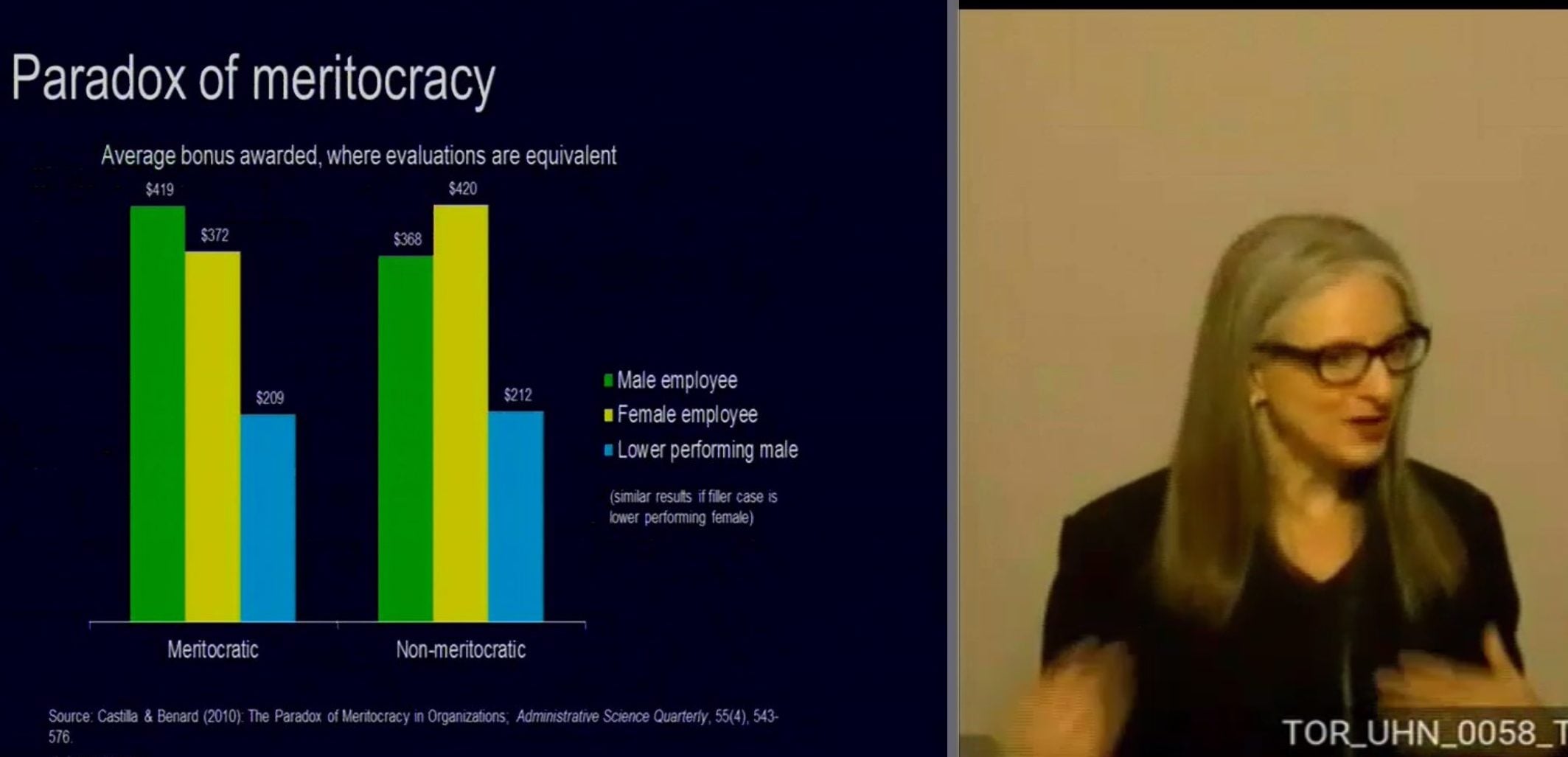
By embracing the ideology of meritocracy, women engineers may be helping to reproduce inequality in engineering.
Overall, the authors argue that these students did not critique structures or institutions that marginalize women in engineering, and instead embraced the ideology of meritocracy. In doing so, they helped to reproduce inequality in engineering. The authors further note that scholars and activists focused on equality cannot assume that people who are disadvantaged will, on that point alone, be allies for change.
Implications
- Engineering education and culture provide little space for critiquing inequality–The authors observed little to no support for diversity programming or policies, including from women students. Facilitating more space and time to discuss and educate on barriers for women and minorities, may allow engineers and engineering students to better grapple with the inequality that is pervasive in the profession. For example, leaders of engineering schools, professional associations, and workplaces can instigate a cultural shift by openly acknowledging that the underrepresentation of women engineers is not due to women’s individual deficiencies, but a result of systemic gendering, bias, and discrimination.
- The gendered division of labour causes women engineering students to be concerned about flexible work–In this study, women students who were not yet in the workforce were already worried about balancing long hours at work with their desire to have a family. This concern is driven by gender norms: it suggests that women students feel expectations to be the primary caregiver, and/or that their partners will not participate in caregiving. Gender norms need to shift to include men in caregiving so that women do not have to constantly struggle with these expectations. Further, if workplace engineering culture generally becomes more flexible and inclusive to family responsibilities for both men and women, for instance through strong re-integration programs for employees after parental leave or adopting flex-work policies, this may decrease pressures that women already feel during schooling.
[/fusion_text][fusion_separator style_type=”none” hide_on_mobile=”small-visibility,medium-visibility,large-visibility” class=”” id=”” sep_color=”” top_margin=”20″ bottom_margin=”20″ border_size=”” icon=”” icon_circle=”” icon_circle_color=”” width=”” alignment=”center” /][fusion_button link=”https://www.gendereconomy.org/research-briefs/” text_transform=”” title=”” target=”_blank” link_attributes=”” alignment=”” modal=”” hide_on_mobile=”small-visibility,medium-visibility,large-visibility” class=”” id=”” color=”custom” button_gradient_top_color=”#62bd19″ button_gradient_bottom_color=”#62bd19″ button_gradient_top_color_hover=”#00c2e2″ button_gradient_bottom_color_hover=”#00c2e2″ accent_color=”” accent_hover_color=”” type=”” bevel_color=”” border_width=”” size=”” stretch=”yes” shape=”” icon=”” icon_position=”left” icon_divider=”no” animation_type=”” animation_direction=”left” animation_speed=”0.3″ animation_offset=””]See more research briefs[/fusion_button][fusion_separator style_type=”none” hide_on_mobile=”small-visibility,medium-visibility,large-visibility” class=”” id=”” sep_color=”” top_margin=”20″ bottom_margin=”20″ border_size=”” icon=”” icon_circle=”” icon_circle_color=”” width=”” alignment=”center” /][fusion_recent_posts layout=”default” hover_type=”none” columns=”3″ number_posts=”3″ offset=”0″ pull_by=”category” cat_slug=”research-briefs” exclude_cats=”” tag_slug=”” exclude_tags=”” thumbnail=”yes” title=”yes” meta=”no” meta_author=”no” meta_categories=”no” meta_date=”yes” meta_comments=”yes” meta_tags=”no” content_alignment=”” excerpt=”no” excerpt_length=”35″ strip_html=”yes” scrolling=”no” hide_on_mobile=”small-visibility,medium-visibility,large-visibility” class=”” id=”” animation_type=”” animation_direction=”left” animation_speed=”0.3″ animation_offset=”” /][/fusion_builder_column][fusion_builder_column type=”1_4″ layout=”1_4″ spacing=”” center_content=”no” hover_type=”none” link=”” min_height=”” hide_on_mobile=”small-visibility,medium-visibility,large-visibility” class=”” id=”” background_color=”” background_image=”” background_position=”left top” background_repeat=”no-repeat” border_size=”0″ border_color=”” border_style=”solid” border_position=”all” padding_top=”” padding_right=”” padding_bottom=”” padding_left=”” margin_top=”” margin_bottom=”” animation_type=”” animation_direction=”left” animation_speed=”0.3″ animation_offset=”” last=”no”][fusion_title hide_on_mobile=”small-visibility,medium-visibility,large-visibility” class=”briefsummary” id=”” content_align=”left” size=”3″ font_size=”” line_height=”” letter_spacing=”” margin_top=”” margin_bottom=”” margin_top_mobile=”” margin_bottom_mobile=”” text_color=”” style_type=”none” sep_color=””]
Title
I am Not a Feminist, but…: Hegemony of a Meritocratic Ideology and the Limits of Critique Among Women in Engineering
Authors
Carroll Seron, Susan Silbey, Erin Cech, and Brian Rubineau
Institutions
Duke University
Source
Work and Occupation
Published
2018
DOI
10.1177/07308884187597
Link
https://journals.sagepub.com/doi/full/10.1177/0730888418759774
Research brief prepared by
Carmina Ravanera
[/fusion_title][fusion_widget_area name=”avada-custom-sidebar-researchbriefsidebar” title_size=”” title_color=”” background_color=”” padding_top=”” padding_right=”” padding_bottom=”” padding_left=”” hide_on_mobile=”small-visibility,medium-visibility,large-visibility” class=”” id=”” /][/fusion_builder_column][/fusion_builder_row][/fusion_builder_container]