Tag: Diversity+inclusion

Research briefs, news, and event recaps related to diversity and inclusion.

  • 7th Annual Research Roundtable | February 2023

    7th Annual Research Roundtable | February 2023

    [fusion_builder_container hundred_percent=”no” hundred_percent_height=”no” hundred_percent_height_scroll=”no” hundred_percent_height_center_content=”yes” equal_height_columns=”no” menu_anchor=”” hide_on_mobile=”small-visibility,medium-visibility,large-visibility” status=”published” publish_date=”” class=”” id=”” border_color=”” border_style=”solid” margin_top=”” margin_bottom=”” padding_top=”” padding_right=”” padding_bottom=”2px” padding_left=”” gradient_start_color=”” gradient_end_color=”” gradient_start_position=”0″ gradient_end_position=”100″ gradient_type=”linear” radial_direction=”center center” linear_angle=”180″ background_color=”” background_image=”” background_position=”center center” background_repeat=”no-repeat” fade=”no” background_parallax=”none” enable_mobile=”no” parallax_speed=”0.3″ background_blend_mode=”none” video_mp4=”” video_webm=”” video_ogv=”” video_url=”” video_aspect_ratio=”16:9″ video_loop=”yes” video_mute=”yes” video_preview_image=”” filter_hue=”0″ filter_saturation=”100″ filter_brightness=”100″ filter_contrast=”100″ filter_invert=”0″ filter_sepia=”0″ filter_opacity=”100″ filter_blur=”0″ filter_hue_hover=”0″ filter_saturation_hover=”100″ filter_brightness_hover=”100″ filter_contrast_hover=”100″ filter_invert_hover=”0″ filter_sepia_hover=”0″ filter_opacity_hover=”100″ filter_blur_hover=”0″ type=”legacy”][fusion_builder_row][fusion_builder_column type=”1_1″ layout=”1_1″ spacing=”” center_content=”no” link=”” target=”_self” min_height=”” hide_on_mobile=”small-visibility,medium-visibility,large-visibility” class=”” id=”” hover_type=”none” border_color=”” border_style=”solid” border_position=”all” border_radius=”” box_shadow=”no” dimension_box_shadow=”” box_shadow_blur=”0″ box_shadow_spread=”0″ box_shadow_color=”” box_shadow_style=”” padding_top=”” padding_right=”” padding_bottom=”” padding_left=”” margin_top=”” margin_bottom=”” background_type=”single” gradient_start_color=”” gradient_end_color=”” gradient_start_position=”0″ gradient_end_position=”100″ gradient_type=”linear” radial_direction=”center center” linear_angle=”180″ background_color=”” background_image=”” background_image_id=”” background_position=”left top” background_repeat=”no-repeat” background_blend_mode=”none” animation_type=”” animation_direction=”left” animation_speed=”0.3″ animation_offset=”” filter_type=”regular” filter_hue=”0″ filter_saturation=”100″ filter_brightness=”100″ filter_contrast=”100″ filter_invert=”0″ filter_sepia=”0″ filter_opacity=”100″ filter_blur=”0″ filter_hue_hover=”0″ filter_saturation_hover=”100″ filter_brightness_hover=”100″ filter_contrast_hover=”100″ filter_invert_hover=”0″ filter_sepia_hover=”0″ filter_opacity_hover=”100″ filter_blur_hover=”0″ last=”true” first=”true” border_sizes_top=”0″ border_sizes_bottom=”0″ border_sizes_left=”0″ border_sizes_right=”0″][fusion_text columns=”” column_min_width=”” column_spacing=”” rule_style=”” rule_size=”” rule_color=”” hue=”” saturation=”” lightness=”” alpha=”” content_alignment_medium=”” content_alignment_small=”” content_alignment=”” hide_on_mobile=”small-visibility,medium-visibility,large-visibility” sticky_display=”normal,sticky” class=”” id=”” margin_top=”” margin_right=”” margin_bottom=”” margin_left=”” fusion_font_family_text_font=”” fusion_font_variant_text_font=”” font_size=”” line_height=”” letter_spacing=”” text_transform=”” text_color=”” animation_type=”” animation_direction=”left” animation_color=”” animation_speed=”0.3″ animation_delay=”0″ animation_offset=”” logics=””]

    GATE’s 7th annual research roundtable brought together a multidisciplinary group of established and emerging scholars from across the University of Toronto who have won research grants from GATE to support their work. The event allowed them to share their latest research, provided an opportunity to gain valuable feedback, and facilitated networking and connection. What did we learn? 

    Gender wage gap 

    • Gender-based violence contributes significantly to the persistent gender wage gap in Canada, as well as to a staggering host of macroeconomic consequences including judicial, health, and productivity deficiencies. (Candace Milinkovic and Sujata Mishra) 
    • Contrary to previous thinking, the wage gap between male and female emergency room physicians is not due to women’s avoidance of more highly paying shifts, but rather due to women having to work fewer hours in total because of their caregiving responsibilities for young children (Shannon Potter) 

    Diversity interventions in organizations 

    • Members of traditionally high-status social groups often feel threatened by diversity initiatives and may react by shutting themselves off to new learning. Interventions that leverage remarkable events and interactions could encourage these individuals to open themselves up to transformation instead. (Camellia Bryan) 
    • Industry awards confer status and visibility to winners, but evaluation biases can limit their equitable distribution. Making awards committees more diverse may not only increase the diversity of award winners, but also increase the representation of women and visible minorities in the industry overall by encouraging more diversity in hiring decisions. (Daphne Baldassari) 
    • Many organizations have developed community-specific learning spaces for BIPOC employees, but not much is known about whether they increase feelings of belonging and confidence. Current research is exploring how to design these spaces and learning experiences to better ensure positive outcomes for BIPOC employees. (Angie Min Ah Park)  
    • Gender differences in risk-taking are contextual. Women financial analysts increase risk-taking if information about their evaluations is made public. (Hyeun Lee) 
    • Identification with different social groups is more complex than a simple “I’m in” or “I’m out”. A complex and dynamic interplay between one’s group identities, identification levels, and social contexts combine to create uniquely individual experiences of group membership. (Geoffrey Leonardelli) 

    Gender in global contexts 

    • Exposure to information about different values, attitudes, and beliefs through 3G internet decreased traditional values and increased progressive values (i.e., support for gender equality and LGBT+ rights) across Africa. (Lucienne Talba) 
    • In an experiment with male and female merchants in a food market in India, women were approached more but were also asked more frequently for discounts. Interestingly, even when women didn’t give a discount, they still sold more than their male counterparts. (Laura Doering)  
    • Publication rates for women in STEM in East Germany—which had strong labour market opportunities for women and full-time childcare—decreased if they moved to West Germany after reunification, because similar opportunities and supports were not available. (Manuela Collis)  

    [/fusion_text][fusion_separator style_type=”none” hide_on_mobile=”small-visibility,medium-visibility,large-visibility” class=”” id=”” sep_color=”” top_margin=”20″ bottom_margin=”20″ border_size=”” icon=”” icon_circle=”” icon_circle_color=”” width=”” alignment=”center” /][fusion_button link=”http://whttps://www.gendereconomy.org/past-events/” title=”” target=”_blank” link_attributes=”” alignment=”” modal=”” hide_on_mobile=”small-visibility,medium-visibility,large-visibility” class=”” id=”” color=”custom” button_gradient_top_color=”#62bd19″ button_gradient_bottom_color=”#62bd19″ button_gradient_top_color_hover=”#00c2e2″ button_gradient_bottom_color_hover=”#00c2e2″ accent_color=”” accent_hover_color=”” type=”” bevel_color=”” size=”” stretch=”yes” icon=”” icon_position=”left” icon_divider=”no” animation_type=”” animation_direction=”left” animation_speed=”0.3″ animation_offset=”” border_radius_top_left=”2px” border_radius_top_right=”2px” border_radius_bottom_right=”2px” border_radius_bottom_left=”2px”]See more past events[/fusion_button][fusion_recent_posts layout=”default” hover_type=”none” columns=”3″ number_posts=”3″ offset=”0″ pull_by=”category” cat_slug=”events” exclude_cats=”past” tag_slug=”” exclude_tags=”” thumbnail=”yes” title=”yes” meta=”no” excerpt=”no” excerpt_length=”35″ strip_html=”yes” hide_on_mobile=”small-visibility,medium-visibility,large-visibility” class=”” id=”” animation_type=”” animation_direction=”left” animation_speed=”0.3″ animation_offset=”” /][/fusion_builder_column][/fusion_builder_row][/fusion_builder_container]

  • The Behavioural Approaches to Diversity (BAD) Conference: An audio series

    The Behavioural Approaches to Diversity (BAD) Conference: An audio series

    About the series:

    Held on September 28, 2018, the BAD Conference was an innovative project led by GATE and BEAR (Behavioural Economics in Action at Rotman).

    Bringing together over 20 speakers and 200 guests from policy, business, and academia, the conference aimed to uncover new solutions from the behavioural sciences to make real progress on diversity and inclusion.

    This four-part audio series features the four panel conversations hosted at The BAD Conference. These panels focused on discussions around the roots of inequality, how to move towards real change, masculinity, and lessons from practice. Learn more about The BAD Conference, including the full list of speakers, photos, and more, by visiting badconference.com.

    Episode 1 — Roots of (In)Equality: Insights from Child Psychology and Education

    Episode 1 show notes

    Episode 2 — Beyond the Hashtag: Moving Toward Real Change

    Episode 2 show notes

    Episode 3 — Male is a Gender Too: Bringing Masculinity into the Conversation

    Episode 3 show notes

    Episode 4 — Moving the Needle on Diversity: A Conversation

    Episode 4 show notes

    *Disclaimer: The opinions expressed in this series do not necessarily reflect the views of the Institute for Gender and the Economy or the University of Toronto.

    LISTEN TO OTHER GATE PODCAST SERIES ON THE GATE AUDIO CHANNEL ON APPLE PODCASTS OR THE GATE AUDIO PLAYLIST ON SPOTIFY

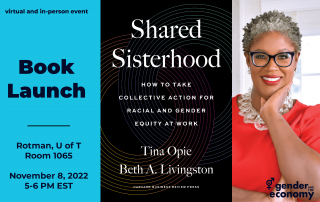
  • Shared Sisterhood: Collective Action for Racial & Gender Equality at Work

    Shared Sisterhood: Collective Action for Racial & Gender Equality at Work

    [fusion_builder_container hundred_percent=”no” equal_height_columns=”no” hide_on_mobile=”small-visibility,medium-visibility,large-visibility” background_position=”center center” background_repeat=”no-repeat” fade=”no” background_parallax=”none” parallax_speed=”0.3″ video_aspect_ratio=”16:9″ video_loop=”yes” video_mute=”yes” border_style=”solid” type=”legacy”][fusion_builder_row][fusion_builder_column type=”1_1″ layout=”1_1″ background_position=”left top” border_style=”solid” border_position=”all” spacing=”yes” background_repeat=”no-repeat” margin_top=”0px” margin_bottom=”0px” animation_speed=”0.3″ animation_direction=”left” hide_on_mobile=”small-visibility,medium-visibility,large-visibility” center_content=”no” last=”true” hover_type=”none” first=”true” min_height=”” link=”” background_blend_mode=”overlay”][fusion_text columns=”” column_min_width=”” column_spacing=”” rule_style=”” rule_size=”” rule_color=”” hue=”” saturation=”” lightness=”” alpha=”” content_alignment_medium=”” content_alignment_small=”” content_alignment=”” hide_on_mobile=”small-visibility,medium-visibility,large-visibility” sticky_display=”normal,sticky” class=”” id=”” margin_top=”” margin_right=”” margin_bottom=”” margin_left=”” fusion_font_family_text_font=”” fusion_font_variant_text_font=”” font_size=”” line_height=”” letter_spacing=”” text_transform=”none” text_color=”” animation_type=”” animation_direction=”left” animation_speed=”0.3″ animation_offset=””]

    Topic: Shared Sisterhood: How To Take Collective Action For Racial and Gender Equity At Work (Harvard Business Review Press, October 11, 2022)

    GATE Faculty Research Fellow Sonia Kang recently hosted a thought-provoking conversation with Tina Opie, Associate Professor of Management at Babson College and an award-winning teacher, researcher, consultant, and speaker. Tina is a co-author of the new book, Shared Sisterhood: How to Take Collective Action for Racial and Gender Equity at Work. The book explores how to build crucial alliances through vulnerability, trust, empathy, and risk-taking, so that all women can advance in the workplace and create systemic change.

    Although strides have been made towards equity in the last few decades, gender and racial bias persists in organizations and in society. Even more disconcerting, Black women and other women of color are held back more than their White counterparts. Most advice for women encourages individuals to speak up, be assertive, or lean in—to assimilate into a system modeled after White men. But individual action is not enough. Tina spoke of the need for collective action, highlighting that when marginalized and more privileged women work together, all women can experience the benefits of professional growth and equality. Using examples from the book she encouraged everyone to join the sisterhood, emphasizing that anyone, regardless of gender, can be a part of it.

    Balancing a mix of history, research, and real-life examples, Tina broke down three key parts of the process of shared sisterhood:

    1. Dig into your own assumptions around racioethnicity, gender, and power
    2. Bridge the divide between women of all racioethnic groups through authentic relationships
    3. Advance all women across the organization and beyond

    “Educate yourself, follow people who are different than you, and be honest with yourself about your own notions.” – Tina Opie

    Watch Tina Opie discuss what shared sisterhood can look like

    [/fusion_text][fusion_separator style_type=”none” hide_on_mobile=”small-visibility,medium-visibility,large-visibility” top_margin=”20″ bottom_margin=”20″ alignment=”center” /][fusion_button link=”https://www.gendereconomy.org/events/” target=”_blank” hide_on_mobile=”small-visibility,medium-visibility,large-visibility” color=”custom” button_gradient_top_color=”#62bd19″ button_gradient_bottom_color=”#62bd19″ button_gradient_top_color_hover=”#00c2e2″ button_gradient_bottom_color_hover=”#00c2e2″ stretch=”yes” icon_position=”left” icon_divider=”no” animation_direction=”left” animation_speed=”0.3″]See more events[/fusion_button][/fusion_builder_column][/fusion_builder_row][/fusion_builder_container]