Tag: Meritocracy

Research briefs, news, and event recaps related to meritocracy.

  • Why Progress is Slow on Gender Parity

    Why Progress is Slow on Gender Parity

    As part of our Rotman Short Talks series, hear from Professor Sarah Kaplan about why progress towards gender equality is slow. In it, she focuses on the risks of backlash and the discomfort associated with diversity. She argues that the myth of meritocracy is getting in the way of progress. And, she highlights that getting comfortable with discomfort is the only way to move forward.

    Sarah Kaplan is Professor of Strategic Management at the Rotman School. She is author of the New York Times business bestseller, Creative Destruction, challenging the notion of sustainable competitive advantage and the myth of excellence, and the recently released Survive and Thrive: Winning Against Strategic Threats to Your Business. The research shows that long-established companies, instead of maintaining excellence, almost always under-perform the market over time. Ironically, the very culture and meticulously maintained systems that fuel the good times cause companies to stall out. Her work has focused on generating insights that can help companies avoid this cultural lock-in and innovate at the pace and scale of the market.

    Her current research continues this exploration of how organizations participate in and respond to the emergence of new fields and technologies. Her studies examine the biotechnology, fiber optics, financial services, nanotechnology and most recently, the field emerging at the nexus of gender and finance. Her interest in gender lens investing is in understanding how whole new ecosystems can be built. She recently authored “Gender Equality as an Innovation Challenge” in the Rotman Magazine (2017), “The Risky Rhetoric of Female Risk Aversion” in the Stanford Social Innovation Review (2016), “Meritocracy: From Myth to Reality” in the Rotman Magazine (2015), “The Rise of Gender Capitalism,” in the Stanford Social Innovation Review (2014).

    Formerly a professor at the Wharton School, University of Pennsylvania (where she remains a Senior Fellow), and a consultant and innovation specialist for nearly a decade at McKinsey & Company in New York, she completed her doctoral research at the Sloan School of Management at the Massachusetts Institute of Technology (MIT).

  • Women in the boardroom: Has the time for quotas arrived?

    Women in the boardroom: Has the time for quotas arrived?

    Op-Ed by Sarah Kaplan and Aaron Dhir (Osgoode Hall Law School) in the Globe and Mail

  • Gender quotas do not thwart meritocracy

    Gender quotas do not thwart meritocracy

    [fusion_builder_container admin_label=”” hundred_percent=”no” equal_height_columns=”no” menu_anchor=”” hide_on_mobile=”small-visibility,medium-visibility,large-visibility” class=”” id=”” background_color=”” background_image=”” background_position=”center center” background_repeat=”no-repeat” fade=”no” background_parallax=”none” enable_mobile=”no” parallax_speed=”0.3″ video_mp4=”” video_webm=”” video_ogv=”” video_url=”” video_aspect_ratio=”16:9″ video_loop=”yes” video_mute=”yes” video_preview_image=”” border_size=”” border_color=”” border_style=”solid” margin_top=”20″ margin_bottom=”” padding_top=”” padding_right=”” padding_bottom=”” padding_left=””][fusion_builder_row][fusion_builder_column type=”3_4″ layout=”3_4″ spacing=”” center_content=”no” hover_type=”none” link=”” min_height=”” hide_on_mobile=”small-visibility,medium-visibility,large-visibility” class=”” id=”” background_color=”” background_image=”” background_position=”left top” background_repeat=”no-repeat” border_size=”0″ border_color=”” border_style=”solid” border_position=”all” padding_top=”” padding_right=”” padding_bottom=”” padding_left=”” margin_top=”” margin_bottom=”” animation_type=”” animation_direction=”left” animation_speed=”0.3″ animation_offset=”” last=”no”][fusion_text columns=”” column_min_width=”” column_spacing=”” rule_style=”default” rule_size=”” rule_color=”” class=”” id=””]

    Summary

    This study examines how the use of gender quotas for candidate selection in Sweden’s Social Democratic party increased the competence of the party’s elected politicians. Comparing the competence of politicians before the quotas went into effect (1982-1992) to after they went into effect (1993-2014), the authors find that the use of quotas is not at odds with principles of meritocracy, as is often argued. After the introduction of gender quotas, the average competence of female candidates did not decrease (as opponents of quotas might fear) but instead remained stable. In addition, the use of quotas raised the average competence of male politicians. The authors argue that this effect was driven by the resignation of mediocre male candidates, thereby raising the bar for all candidates and giving women a level playing field.

    Rather than thwarting principles of meritocracy, this study shows that quotas complement meritocratic principles by weeding out mediocre male candidates.

    Research

    The use of gender quotas to increase women’s representation in public office and corporate settings is a contentious topic. Those in favour of gender quotas argue that greater representation on boards leads to more robust deliberation, effective risk management, and a greater diversity of ideas. In addition, the slow pace of change is cited as justification for quotas; in the case of representation on corporate boards, for example, 45% of Canadian companies still have no women on their boards. Many have argued that quotas may be necessary to accelerate women’s representation both in corporate and political settings.

    Those opposed to quotas suggest that they may have the adverse effect of stigmatizing women. The underlying assumption is that quotas detract from meritocratic representation. In this line of thinking, women who are otherwise unqualified are offered a seat at the table, at the expense of more qualified men. Women that are appointed on the basis of quotas are thus presumed to be less competent.

    The present study analyses the use of gender quotas in Swedish general elections. It offers new insight into the quota/meritocracy debate by measuring political candidates’ competence before and after the implementation of gender quotas. Candidates’ competence was measured by their income earnings relative to other people of similar age and similar labor-market characteristics (occupation, education level, geographic location, and age).

    Sweden’s electoral system uses proportional representation, whereby each political party selects candidates to appear on a voting list. Seats in government are then allocated to each party in proportion to the number of votes they receive, starting at the top of the list and going down. In 1993, a “zipper” quota was introduced by the Social Democratic party, whereby local parties had to alternate male and female candidates on the list, thereby ensuring women’s equal representation in elected office.

    Following the introduction of quotas, female candidates’ competence stayed roughly constant and the competence of male candidates went up significantly.

    This improvement also extended to local party leaders.  Presumably, mediocre male leaders saw the writing on the wall and were provoked to drop out of the race (due to the increase in competition), thereby raising the calibre of the remaining male candidates. The removal of mediocre male leaders has a cascading effect, whereby their more competent successors picked more competent candidates to represent the party, increasing the overall competence of Social Democratic party candidates.

    Implications

    • Reframe the conversation – This study provides powerful evidence that gender quotas do not stifle meritocratic selection practices. Proponents need to reframe the utility of quotas; not only do they ensure women’s greater representation. They raise the overall level of competence among all those who are selected.
    • Adopt learnings from other industries – The same electoral logic may also apply to representation on corporate boards; women’s presence on corporate boards does not come at the cost of losing more highly qualified men. Quotas may, therefore, increase the competence, and by extension, the performance and effectiveness of corporate boards.

    [/fusion_text][fusion_separator style_type=”none” hide_on_mobile=”small-visibility,medium-visibility,large-visibility” class=”” id=”” sep_color=”” top_margin=”20″ bottom_margin=”20″ border_size=”” icon=”” icon_circle=”” icon_circle_color=”” width=”” alignment=”center” /][fusion_button link=”https://www.gendereconomy.org/research-briefs/” text_transform=”” title=”” target=”_blank” link_attributes=”” alignment=”” modal=”” hide_on_mobile=”small-visibility,medium-visibility,large-visibility” class=”” id=”” color=”custom” button_gradient_top_color=”#62bd19″ button_gradient_bottom_color=”#62bd19″ button_gradient_top_color_hover=”#00c2e2″ button_gradient_bottom_color_hover=”#00c2e2″ accent_color=”” accent_hover_color=”” type=”” bevel_color=”” border_width=”” size=”” stretch=”yes” shape=”” icon=”” icon_position=”left” icon_divider=”no” animation_type=”” animation_direction=”left” animation_speed=”0.3″ animation_offset=””]See more research briefs[/fusion_button][fusion_separator style_type=”none” hide_on_mobile=”small-visibility,medium-visibility,large-visibility” class=”” id=”” sep_color=”” top_margin=”20″ bottom_margin=”20″ border_size=”” icon=”” icon_circle=”” icon_circle_color=”” width=”” alignment=”center” /][fusion_recent_posts layout=”default” hover_type=”none” columns=”3″ number_posts=”3″ offset=”0″ pull_by=”category” cat_slug=”research-briefs” exclude_cats=”” tag_slug=”” exclude_tags=”” thumbnail=”yes” title=”yes” meta=”no” meta_author=”no” meta_categories=”no” meta_date=”yes” meta_comments=”yes” meta_tags=”no” content_alignment=”” excerpt=”no” excerpt_length=”35″ strip_html=”yes” scrolling=”no” hide_on_mobile=”small-visibility,medium-visibility,large-visibility” class=”” id=”” animation_type=”” animation_direction=”left” animation_speed=”0.3″ animation_offset=”” /][/fusion_builder_column][fusion_builder_column type=”1_4″ layout=”1_4″ spacing=”” center_content=”no” hover_type=”none” link=”” min_height=”” hide_on_mobile=”small-visibility,medium-visibility,large-visibility” class=”” id=”” background_color=”” background_image=”” background_position=”left top” background_repeat=”no-repeat” border_size=”0″ border_color=”” border_style=”solid” border_position=”all” padding_top=”” padding_right=”” padding_bottom=”” padding_left=”” margin_top=”” margin_bottom=”” animation_type=”” animation_direction=”left” animation_speed=”0.3″ animation_offset=”” last=”no”][fusion_title hide_on_mobile=”small-visibility,medium-visibility,large-visibility” class=”briefsummary” id=”” content_align=”left” size=”3″ font_size=”” line_height=”” letter_spacing=”” margin_top=”” margin_bottom=”” text_color=”” style_type=”none” sep_color=””]

    Title

    Gender quotas and the crisis
    of the mediocre man: theory
    and evidence from Sweden

    Authors

    Timothy Besley, Olle Folke,
    Torsten Persson, and Johanna
    Rickne

    Institutions

    London School of Economics,
    Uppsala University, Stockholm
    University

    Source

    American Economic Review

    Published

    August 2017

    DOI

    10.1257/aer.20160080

    Link

    https://www.aeaweb.org/articles?id=10.1257/aer.20160080

    Research brief prepared by

    Kim de Laat

    [/fusion_title][fusion_widget_area name=”avada-custom-sidebar-researchbriefsidebar” title_size=”” title_color=”” background_color=”” padding_top=”” padding_right=”” padding_bottom=”” padding_left=”” hide_on_mobile=”small-visibility,medium-visibility,large-visibility” class=”” id=”” /][/fusion_builder_column][/fusion_builder_row][/fusion_builder_container]

  • An Introduction to Thinking about Gender and the Economy

    An Introduction to Thinking about Gender and the Economy

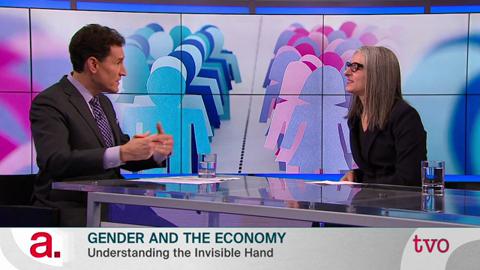
    See this 17-minute segment with Sarah Kaplan on TVO’s The Agenda with Steve Paikin which aired on International Women’s Day 2017. It covers some of the key issues to consider when thinking about gender and the economy.

  • The problem with working for a supposed meritocracy

    Whenever one person espouses greater diversity in the work force, leave it to some well-meaning colleague to raise the meritocracy card…

  • Gender inequality in entrepreneurial teams

    Gender inequality in entrepreneurial teams

    [fusion_builder_container admin_label=”” hundred_percent=”no” equal_height_columns=”no” menu_anchor=”” hide_on_mobile=”small-visibility,medium-visibility,large-visibility” class=”” id=”” background_color=”” background_image=”” background_position=”center center” background_repeat=”no-repeat” fade=”no” background_parallax=”none” enable_mobile=”no” parallax_speed=”0.3″ video_mp4=”” video_webm=”” video_ogv=”” video_url=”” video_aspect_ratio=”16:9″ video_loop=”yes” video_mute=”yes” video_preview_image=”” border_size=”” border_color=”” border_style=”solid” margin_top=”20″ margin_bottom=”” padding_top=”” padding_right=”” padding_bottom=”” padding_left=””][fusion_builder_row][fusion_builder_column type=”3_4″ layout=”3_4″ spacing=”” center_content=”no” hover_type=”none” link=”” min_height=”” hide_on_mobile=”small-visibility,medium-visibility,large-visibility” class=”” id=”” background_color=”” background_image=”” background_position=”left top” background_repeat=”no-repeat” border_size=”0″ border_color=”” border_style=”solid” border_position=”all” padding_top=”” padding_right=”” padding_bottom=”” padding_left=”” dimension_margin=”” animation_type=”” animation_direction=”left” animation_speed=”0.3″ animation_offset=”” last=”no”][fusion_text columns=”” column_min_width=”” column_spacing=”” rule_style=”default” rule_size=”” rule_color=”” class=”” id=””]

    Summary

    How does gender inequality in leadership emerge, despite efforts to achieve meritocratic business principles? The authors explore this question in the context of entrepreneurship. Using survey data that examines founding team characteristics of entrepreneurial ventures, they find that women have fewer chances to be in charge when they co-found ventures with their husbands (the study does not address the dynamics of same-sex couples). By contrast, when mixed-sex founding team members are connected through friendship or familial ties, the process of leadership formation is much less influenced by gender, especially when formal business procedures are adopted.

    The authors conclude that stereotypical expectations regarding men as breadwinners and women as homemakers get transmitted to entrepreneurial startups when husbands and wives go into business together, and diminish women’s opportunities to assume leadership positions.

    Research

    Much of the academic literature on entrepreneurship assumes that meritocracy is the primary value shaping business practices. The authors question this assumption by analyzing how gender influences status distinctions among entrepreneurs. Using a dataset that surveyed over 30,000 entrepreneurs in the U.S., they measure how family dynamics and merit-based characteristics influence the likelihood of female entrepreneurs assuming a leadership position within new business ventures.

    The authors argue that four main conditions determine whether women assume leadership positions:

    (1) Founding members’ competence as measured by prior work experience and education credentials.

    (2) The degree to which business practices are formalized via contractual agreements on ownership shares and whether teams completed a business plan.

    The authors argue that both of these conditions increase the likelihood that merit will be the guiding principle that determines whether female founding members assume the position of a leader.  Their data analysis revealed that when team members are ranked equally high in terms of observable measures of competency, such as education level and years of experience, the effect of gender in determining leadership races is reduced.  Regarding the formalization of business practices, men are 85 percent more likely than women to be in charge when a formal agreement is not in place. But when a formal ownership agreement has been adopted, men and women have the same chance of leading the startup. And when teams have completed a formal business plan outlining their strategic goals, the bias against women-as-leaders is reduced by 50 percent. In sum, when formal business procedures are adopted, there is a greater chance that women become the boss in new ventures.

    When teams have completed a formal business plan outlining their strategic goals, the bias against women-as-leaders is reduced by 50 percent.

    Two other conditions may influence whether women assume a leadership position:

    (3) Pre-existing social relations between co-founders, measured as whether founding members are spouses, friends, or relatives, and

    (4) Family household conditions, measured as whether spousal founding teams hold full-time jobs outside of the startup, and whether they have children.

    The authors argue that these conditions make it more likely that gender will be a guiding principle determining whether female founding members assume the position of leader. The study finds that when founding members are spouses, such teams are less likely to instate formal business practices. While 45 percent of non-spousal founding teams use formal agreements to map out venture ownership, only 20 percent of spousal teams do the same. And women more often assume the position of leader in non-spousal founding teams, suggesting that objective criteria are more likely to guide leadership decisions in non-spousal teams than in teams where the founding members are husband and wife.

    Looking specifically at teams where the founding members are husband and wife, the authors find that when husbands are the sole wage-earner working outside of the venture, the wives’ odds of assuming a leadership position are 44 percent higher than their husbands’. Having more children also increases women’s odds of becoming the leader, but only when businesses are based inside the home.

    These results seem positive, insofar as they increase the odds that women will assume a leadership position. However, they mirror traditional ideas about men’s and women’s roles in the labour force. When the husband works full-time outside of the business venture, presumably that job takes precedence since it is the primary source of family income. It is only when husbands’ full-time employment is prioritized that wives’ leadership chances increase. Similarly, women’s odds of becoming the boss increase when the business is located within the home because it enables them to balance the competing demands of housework and childcare with their entrepreneurial endeavours.

    When traditional, family-based gender expectations are transferred into business settings, gender inequality gets reproduced in entrepreneurial ventures.

    Implications

    • Develop strategies to balance household labour and childcare – Entrepreneurial ventures may provide women with the flexibility they need to balance work and household labour. These kinds of ventures are often called “Plan B” entrepreneurship for women because they are a substitute for jobs outside the home that would be less flexible. But as long as women continue to take on the lion’s share of household labour and childcare, their opportunities for growth entrepreneurship will be curtailed. Universal childcare programs could alleviate the gendered division of household labour and allow women to focus more on growing their businesses, thus facilitating their success.
    • Emphasize meritocratic principles – This study shows that meritocratic principles, when explicitly incorporated into entrepreneurial startups, lessen the influence of gender biases. It is hard to regulate small businesses to ensure fairness. However, in Canada, there are many government-mandated loans and grants available for small businesses. Training in meritocratic principles, such as evaluating candidates for leadership positions on the basis of credentials rather than perceived competency (which may be biased) could be enforced as a requisite condition of receiving grants.
    • Formalize entrepreneurial arrangments – Formalization can increase the likelihood that women are given equal opportunities to lead. While entrepreneurial ventures often start out with informal arrangements, this study suggests that deliberate efforts to establish documented procedures would support women’s entrepreneurial leadership.

    [/fusion_text][fusion_separator style_type=”none” hide_on_mobile=”small-visibility,medium-visibility,large-visibility” class=”” id=”” sep_color=”” top_margin=”20″ bottom_margin=”20″ border_size=”” icon=”” icon_circle=”” icon_circle_color=”” width=”” alignment=”center” /][fusion_button link=”https://www.gendereconomy.org/research-briefs/” text_transform=”” title=”” target=”_blank” link_attributes=”” alignment=”” modal=”” hide_on_mobile=”small-visibility,medium-visibility,large-visibility” class=”” id=”” color=”custom” button_gradient_top_color=”#62bd19″ button_gradient_bottom_color=”#62bd19″ button_gradient_top_color_hover=”#00c2e2″ button_gradient_bottom_color_hover=”#00c2e2″ accent_color=”” accent_hover_color=”” type=”” bevel_color=”” border_width=”” size=”” stretch=”yes” shape=”” icon=”” icon_position=”left” icon_divider=”no” animation_type=”” animation_direction=”left” animation_speed=”0.3″ animation_offset=””]See more research briefs[/fusion_button][fusion_separator style_type=”none” hide_on_mobile=”small-visibility,medium-visibility,large-visibility” class=”” id=”” sep_color=”” top_margin=”20″ bottom_margin=”20″ border_size=”” icon=”” icon_circle=”” icon_circle_color=”” width=”” alignment=”center” /][fusion_recent_posts layout=”default” hover_type=”none” columns=”3″ number_posts=”3″ offset=”0″ pull_by=”category” cat_slug=”research-briefs” exclude_cats=”” tag_slug=”” exclude_tags=”” thumbnail=”yes” title=”yes” meta=”no” meta_author=”no” meta_categories=”no” meta_date=”yes” meta_comments=”yes” meta_tags=”no” content_alignment=”” excerpt=”no” excerpt_length=”35″ strip_html=”yes” scrolling=”no” hide_on_mobile=”small-visibility,medium-visibility,large-visibility” class=”” id=”” animation_type=”” animation_direction=”left” animation_speed=”0.3″ animation_offset=”” /][/fusion_builder_column][fusion_builder_column type=”1_4″ layout=”1_4″ spacing=”” center_content=”no” hover_type=”none” link=”” min_height=”” hide_on_mobile=”small-visibility,medium-visibility,large-visibility” class=”” id=”” background_color=”” background_image=”” background_position=”left top” background_repeat=”no-repeat” border_size=”0″ border_color=”” border_style=”solid” border_position=”all” padding_top=”” padding_right=”” padding_bottom=”” padding_left=”” dimension_margin=”” animation_type=”” animation_direction=”left” animation_speed=”0.3″ animation_offset=”” last=”no”][fusion_title margin_top=”” margin_bottom=”” hide_on_mobile=”small-visibility,medium-visibility,large-visibility” class=”briefsummary” id=”” size=”3″ content_align=”left” style_type=”none” sep_color=””]

    Title

    Who’s the Boss? Explaining Gender
    Inequality in Entrepreneurial Teams

    Authors

    Tiantian Yang,
    Howard E. Aldrich

    Institutions

    University of North Carolina-Chapel Hill

    Source

    American Sociological Review

    Published

    February 2014

    DOI

    http://journals.sagepub.com/doi/abs/10.1177/0003122414524207

    Research brief prepared by

    Kim de Laat[/fusion_title][fusion_widget_area name=”avada-custom-sidebar-researchbriefsidebar” title_size=”” title_color=”” background_color=”” padding_top=”” padding_right=”” padding_bottom=”” padding_left=”” hide_on_mobile=”small-visibility,medium-visibility,large-visibility” class=”” id=”” /][/fusion_builder_column][/fusion_builder_row][/fusion_builder_container]

  • TEDx: Gender equality as an innovation challenge

    TEDx: Gender equality as an innovation challenge

    [fusion_builder_container hundred_percent=”no” equal_height_columns=”no” menu_anchor=”” hide_on_mobile=”small-visibility,medium-visibility,large-visibility” class=”” id=”” background_color=”” background_image=”” background_position=”center center” background_repeat=”no-repeat” fade=”no” background_parallax=”none” parallax_speed=”0.3″ video_mp4=”” video_webm=”” video_ogv=”” video_url=”” video_aspect_ratio=”16:9″ video_loop=”yes” video_mute=”yes” overlay_color=”” video_preview_image=”” border_color=”” border_style=”solid” padding_top=”” padding_bottom=”” padding_left=”” padding_right=”” type=”legacy”][fusion_builder_row][fusion_builder_column type=”1_1″ layout=”1_1″ background_position=”left top” background_color=”” border_color=”” border_style=”solid” border_position=”all” spacing=”yes” background_image=”” background_repeat=”no-repeat” padding_top=”” padding_right=”” padding_bottom=”” padding_left=”” margin_top=”0px” margin_bottom=”0px” class=”” id=”” animation_type=”” animation_speed=”0.3″ animation_direction=”left” hide_on_mobile=”small-visibility,medium-visibility,large-visibility” center_content=”no” last=”true” min_height=”” hover_type=”none” link=”” border_sizes_top=”” border_sizes_bottom=”” border_sizes_left=”” border_sizes_right=”” first=”true”][fusion_text columns=”” column_min_width=”” column_spacing=”” rule_style=”” rule_size=”” rule_color=”” hue=”” saturation=”” lightness=”” alpha=”” content_alignment_medium=”” content_alignment_small=”” content_alignment=”” hide_on_mobile=”small-visibility,medium-visibility,large-visibility” sticky_display=”normal,sticky” class=”” id=”” margin_top=”” margin_right=”” margin_bottom=”” margin_left=”” fusion_font_family_text_font=”” fusion_font_variant_text_font=”” font_size=”” line_height=”” letter_spacing=”” text_transform=”” text_color=”” animation_type=”” animation_direction=”left” animation_color=”” animation_speed=”0.3″ animation_delay=”0″ animation_offset=”” logics=””]Frustrated with the lack of progress towards gender equality in the economy, proponents of diversity are building the “business case” for action. But, the “business case” may do more harm than good by sending signals that women need to be better than men in order to be included in corporate leadership, as investors or as entrepreneurs.

    About the Event

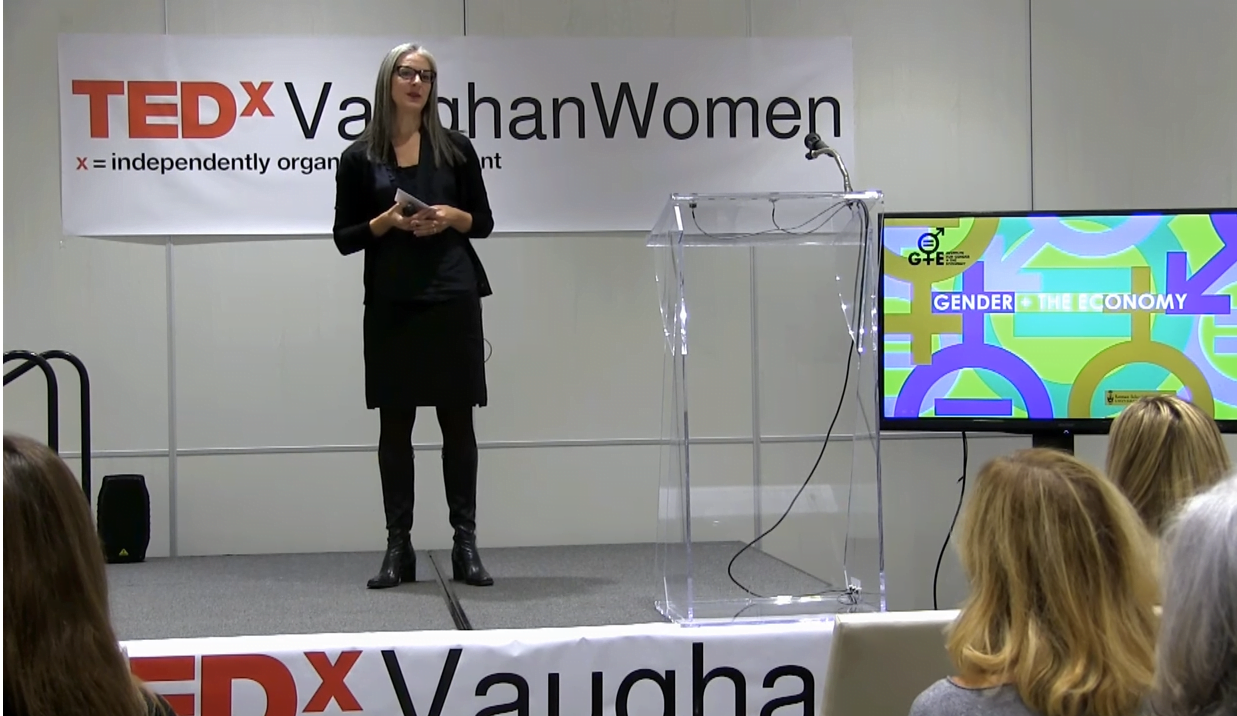
    In this TEDx talk on October 27, 2016, Sarah Kaplan shows how the myth of meritocracy unintentionally reinforces privilege and blocks further moves towards gender equality. She also suggests that if we treat the diversity challenge as an innovation problem, we can make progress.

    About TEDx

    In the spirit of TED’s mission, “ideas worth spreading,” the TEDx program helps communities, organizations and individuals produce TED-style events at the local level. TEDx events are planned and coordinated independently, on a community-by-community basis, under a free license from TED.

    About the Speaker

    Sarah Kaplan is University of Toronto Distinguished Professor of Gender and the Economy, Professor of Strategic Management and Director of the Institute for Gender + the Eco. She is author of the business bestseller, Creative Destruction which challenges the myth of sustainable competitive advantage. Her current research continues this exploration of how organizations participate in and respond to the emergence of new fields, examining biotechnology, fiber optics, financial services, nanotechnology and the field emerging at the nexus of gender and finance. Her interest in gender lens investing is in understanding how whole new ecosystems can be built. She recently authored “The Risky Rhetoric of Female Risk Aversion,” “Meritocracy: From Myth to Reality,” and “The Rise of Gender Capitalism.” Formerly a professor at the Wharton School, University of Pennsylvania, and a consultant for nearly a decade at McKinsey & Company, she received her PhD from the Sloan School of Management at MIT.[/fusion_text][fusion_separator style_type=”none” hide_on_mobile=”small-visibility,medium-visibility,large-visibility” class=”” id=”” sep_color=”” top_margin=”50″ bottom_margin=”50″ border_size=”” icon=”” icon_circle=”” icon_circle_color=”” width=”” alignment=”center” /][fusion_button link=”https://www.gendereconomy.org/events/” text_transform=”” title=”” target=”_blank” link_attributes=”” alignment=”” modal=”” hide_on_mobile=”small-visibility,medium-visibility,large-visibility” class=”” id=”” color=”custom” button_gradient_top_color=”#62bd19″ button_gradient_bottom_color=”#62bd19″ button_gradient_top_color_hover=”#00c2e2″ button_gradient_bottom_color_hover=”#00c2e2″ accent_color=”” accent_hover_color=”” type=”” bevel_color=”” size=”” stretch=”yes” icon=”” icon_position=”left” icon_divider=”no” animation_type=”” animation_direction=”left” animation_speed=”0.3″ animation_offset=””]See more past events[/fusion_button][fusion_separator style_type=”none” hide_on_mobile=”small-visibility,medium-visibility,large-visibility” class=”” id=”” sep_color=”” top_margin=”20″ bottom_margin=”20″ border_size=”” icon=”” icon_circle=”” icon_circle_color=”” width=”” alignment=”center” /][fusion_title margin_top=”” margin_bottom=”” hide_on_mobile=”medium-visibility,large-visibility” class=”” id=”” size=”5″ content_align=”center” style_type=”default” sep_color=””]

    Or register below for these upcoming events

    [/fusion_title][fusion_recent_posts layout=”default” hover_type=”none” columns=”3″ number_posts=”3″ offset=”0″ pull_by=”category” cat_slug=”events” exclude_cats=”past” tag_slug=”” exclude_tags=”” thumbnail=”yes” title=”yes” meta=”no” meta_author=”no” meta_categories=”no” meta_date=”yes” meta_comments=”yes” meta_tags=”no” content_alignment=”” excerpt=”no” excerpt_length=”35″ strip_html=”yes” scrolling=”no” hide_on_mobile=”medium-visibility,large-visibility” class=”” id=”” animation_type=”” animation_direction=”left” animation_speed=”0.3″ animation_offset=”” /][/fusion_builder_column][/fusion_builder_row][/fusion_builder_container]

  • Meritocracy: From myth to reality

    Meritocracy: From myth to reality

    [fusion_builder_container hundred_percent=”no” equal_height_columns=”no” menu_anchor=”” hide_on_mobile=”small-visibility,medium-visibility,large-visibility” class=”” id=”” background_color=”” background_image=”” background_position=”center center” background_repeat=”no-repeat” fade=”no” background_parallax=”none” parallax_speed=”0.3″ video_mp4=”” video_webm=”” video_ogv=”” video_url=”” video_aspect_ratio=”16:9″ video_loop=”yes” video_mute=”yes” overlay_color=”” video_preview_image=”” border_color=”” border_style=”solid” padding_top=”” padding_bottom=”” padding_left=”” padding_right=”” type=”legacy”][fusion_builder_row][fusion_builder_column type=”1_1″ layout=”1_1″ background_position=”left top” background_color=”” border_color=”” border_style=”solid” border_position=”all” spacing=”yes” background_image=”” background_repeat=”no-repeat” padding_top=”” padding_right=”” padding_bottom=”” padding_left=”” margin_top=”0px” margin_bottom=”0px” class=”” id=”” animation_type=”” animation_speed=”0.3″ animation_direction=”left” hide_on_mobile=”small-visibility,medium-visibility,large-visibility” center_content=”no” last=”true” min_height=”” hover_type=”none” link=”” border_sizes_top=”” border_sizes_bottom=”” border_sizes_left=”” border_sizes_right=”” first=”true”][fusion_text columns=”” column_min_width=”” column_spacing=”” rule_style=”” rule_size=”” rule_color=”” hue=”” saturation=”” lightness=”” alpha=”” content_alignment_medium=”” content_alignment_small=”” content_alignment=”” hide_on_mobile=”small-visibility,medium-visibility,large-visibility” sticky_display=”normal,sticky” class=”” id=”” margin_top=”” margin_right=”” margin_bottom=”” margin_left=”” fusion_font_family_text_font=”” fusion_font_variant_text_font=”” font_size=”” line_height=”” letter_spacing=”” text_transform=”” text_color=”” animation_type=”” animation_direction=”left” animation_color=”” animation_speed=”0.3″ animation_delay=”0″ animation_offset=”” logics=””]Sarah Kaplan, Professor of Strategic Management, Rotman School of Management & Sonya Kunkel, Chief Diversity Officer & VP, Talent Strategies, BMO Financial Group spoke together on October 02, 2015 on Meritocracy: From Myth to Reality

    Event Synopsis

    Sponsored by BMO Financial Group

    “Meritocracy: From Myth to Reality” explores and suggests a tension that exists in corporate and investment communities: we believe that we operate in a meritocracy, but the evidence increasingly suggests that we do not. Instead, our systems for evaluating people and investments are skewed in unintended ways. Our frames of reference and procedures contain implicit biases that devalue women’s contributions and reinforce the privileges of dominant groups. Surprisingly, research shows that the belief in meritocracy may get in the way of actual meritocracy because it gives evaluators permission not to watch out for bias. The presentation will also identify a set of practical actions any organization can take to move towards a true meritocracy. Following Sarah Kaplan’s presentation, she will be joined in conversation with Sonya Kunkel, Chief Diversity Officer & VP, Talent Strategies of BMO Financial Group to discuss BMO’s experience and journey in minimizing cultural blind spots through inclusive leadership. Sarah Kaplan & Sonya Kunkel’s conversation will explore how large organizations can move towards a true meritocracy as the title suggests.

    About the Speakers

    Sarah Kaplan is Professor of Strategic Management at Rotman. She is a co-author of the bestselling business book, Creative Destruction. Her research explores how framing processes of managers and entrepreneurial actors affect the evolution of technologies, organizational response to change, and strategy making inside organizations. Her studies examine the biotechnology, fiber optics, personal digital assistant, financial services and nanotechnology fields. She is Senior Editor at Organization Science, and Associate Editor for The Academy of Management Annals, and sits on the Editorial Boards of Administrative Science Quarterly and Organization Studies.

    Sonya Kunkel is Chief Diversity Officer & Vice President, Talent Strategies, Talent Management, BMO Financial Group. She has an enterprise-wide responsibility (Canada & U.S.) for the bank’s talent and diversity and inclusion strategies. Throughout a decade of research and consulting, she has specialized in understanding the experiences of women, visible minorities, and Aboriginal peoples, particularly their experiences in the workplace. Formerly Vice-President and Senior Research Director for Environics Research Group, she led Environics Institute’s 2010 Urban Aboriginal Peoples Study (uaps.ca), a research project that captured the stories and experiences of thousands of First Nations peoples, Métis and Inuit living in Canadian cities and generated much national and international attention. Sonya has an undergraduate degree in Peace and Conflict Studies, an M.A. in Political Economy and an MBA in Strategic Management from the Schulich School of Business.[/fusion_text][fusion_separator style_type=”none” hide_on_mobile=”small-visibility,medium-visibility,large-visibility” class=”” id=”” sep_color=”” top_margin=”50″ bottom_margin=”50″ border_size=”” icon=”” icon_circle=”” icon_circle_color=”” width=”” alignment=”center” /][fusion_button link=”https://www.gendereconomy.org/events/” text_transform=”” title=”” target=”_blank” link_attributes=”” alignment=”” modal=”” hide_on_mobile=”small-visibility,medium-visibility,large-visibility” class=”” id=”” color=”custom” button_gradient_top_color=”#62bd19″ button_gradient_bottom_color=”#62bd19″ button_gradient_top_color_hover=”#00c2e2″ button_gradient_bottom_color_hover=”#00c2e2″ accent_color=”” accent_hover_color=”” type=”” bevel_color=”” size=”” stretch=”yes” icon=”” icon_position=”left” icon_divider=”no” animation_type=”” animation_direction=”left” animation_speed=”0.3″ animation_offset=””]See more past events[/fusion_button][fusion_separator style_type=”none” hide_on_mobile=”small-visibility,medium-visibility,large-visibility” class=”” id=”” sep_color=”” top_margin=”20″ bottom_margin=”20″ border_size=”” icon=”” icon_circle=”” icon_circle_color=”” width=”” alignment=”center” /][fusion_title margin_top=”” margin_bottom=”” hide_on_mobile=”medium-visibility,large-visibility” class=”” id=”” size=”5″ content_align=”center” style_type=”default” sep_color=””]

    Or register below for these upcoming events

    [/fusion_title][fusion_recent_posts layout=”default” hover_type=”none” columns=”3″ number_posts=”3″ offset=”0″ pull_by=”category” cat_slug=”events” exclude_cats=”past” tag_slug=”” exclude_tags=”” thumbnail=”yes” title=”yes” meta=”no” meta_author=”no” meta_categories=”no” meta_date=”yes” meta_comments=”yes” meta_tags=”no” content_alignment=”” excerpt=”no” excerpt_length=”35″ strip_html=”yes” scrolling=”no” hide_on_mobile=”medium-visibility,large-visibility” class=”” id=”” animation_type=”” animation_direction=”left” animation_speed=”0.3″ animation_offset=”” /][/fusion_builder_column][/fusion_builder_row][/fusion_builder_container]