Tag: Social class

Research briefs, news, and event recaps related to social class.

  • How Pay Gaps Lead to Durable Inequality

    How Pay Gaps Lead to Durable Inequality

    [fusion_builder_container type=”flex” hundred_percent=”no” equal_height_columns=”no” menu_anchor=”” hide_on_mobile=”small-visibility,medium-visibility,large-visibility” class=”” id=”” background_color=”” background_image=”” background_position=”center center” background_repeat=”no-repeat” fade=”no” background_parallax=”none” parallax_speed=”0.3″ video_mp4=”” video_webm=”” video_ogv=”” video_url=”” video_aspect_ratio=”16:9″ video_loop=”yes” video_mute=”yes” overlay_color=”” video_preview_image=”” border_color=”” border_style=”solid” padding_top=”” padding_bottom=”” padding_left=”” padding_right=””][fusion_builder_row][fusion_builder_column type=”1_1″ layout=”1_1″ background_position=”left top” background_color=”” border_color=”” border_style=”solid” border_position=”all” spacing=”yes” background_image=”” background_repeat=”no-repeat” padding_top=”” padding_right=”” padding_bottom=”” padding_left=”” margin_top=”0px” margin_bottom=”0px” class=”” id=”” animation_type=”” animation_speed=”0.3″ animation_direction=”left” hide_on_mobile=”small-visibility,medium-visibility,large-visibility” center_content=”no” last=”true” min_height=”” hover_type=”none” link=”” border_sizes_top=”” border_sizes_bottom=”” border_sizes_left=”” border_sizes_right=”” first=”true”][fusion_text columns=”” column_min_width=”” column_spacing=”” rule_style=”” rule_size=”” rule_color=”” hue=”” saturation=”” lightness=”” alpha=”” content_alignment_medium=”” content_alignment_small=”” content_alignment=”” hide_on_mobile=”small-visibility,medium-visibility,large-visibility” sticky_display=”normal,sticky” class=”” id=”” margin_top=”” margin_right=”” margin_bottom=”” margin_left=”” fusion_font_family_text_font=”” fusion_font_variant_text_font=”” font_size=”” line_height=”” letter_spacing=”” text_transform=”none” text_color=”” animation_type=”” animation_direction=”left” animation_color=”” animation_speed=”0.3″ animation_delay=”0″ animation_offset=”” logics=””]

    How Pay Gaps Lead to Durable Inequality

    Authors: András Tilcsik

    THE SOCIAL CLASS PAY GAP — the difference in earnings between people from lower-class versus upper-class origins — is a persistent issue that has been widely studied. A common theme in the findings to date is that because people growing up with upper-class parents have more economic, social and cultural advantages, they are likely to attain more education and a more prestigious job, both of which produce a higher income. What is striking is that even when controlling for education, occupational prestige and other variables, class origin still relates to personal income. In other words, people who grew up in lower-class families earn less than their peers who grew up in upper-class families, even when they are similar in education and occupational prestige. This is especially puzzling because the class pay gap appears to span the educational spectrum — from those who lack a university degree to those graduating with an MBA — suggesting the pay gap exists across low- to high-skilled occupations.

    Read the full article here

    [/fusion_text][/fusion_builder_column][/fusion_builder_row][/fusion_builder_container]

  • How Social Class Affects Our Behaviour

    How Social Class Affects Our Behaviour

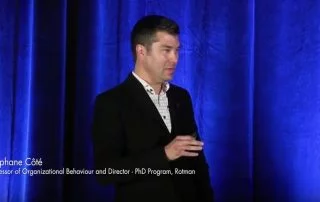
    As part of our Rotman Short Talks series, hear from Professor Stéphane Côté about how social class affects our behaviour. Based on his research, he shows that those in upper economic classes are less inclined to help others, especially when they are made aware of social inequalities. He outlines that society would function better with only moderate levels of inequality — which raises a red flag about the risks of increasing inequality in many economies.

    Stéphane Côté is Professor of Organizational Behaviour and Director of the PhD program at the Rotman School of Management at the University of Toronto. He received his PhD in organizational psychology from the University of Michigan. He studies how employees can use emotional intelligence to improve their well-being and performance, and how social class and economic inequality relate to prosocial behavior in social and organizational settings. He serves on the editorial boards of the Administrative Science Quarterly, Academy of Management Journal, and Personnel Psychology, and has served as Associate Editor of Emotion. He is a Fellow of the Society for Personality and Social Psychology. He teaches The Socially Intelligent Manager in the MBA program and seminars on organizational behavior and research methods in the PhD program.

  • Four Short Talks: Changing the conversation on inequality

    Four Short Talks: Changing the conversation on inequality

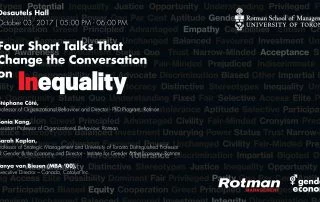
    [fusion_builder_container hundred_percent=”no” equal_height_columns=”no” menu_anchor=”” hide_on_mobile=”small-visibility,medium-visibility,large-visibility” class=”” id=”” background_color=”” background_image=”” background_position=”center center” background_repeat=”no-repeat” fade=”no” background_parallax=”none” parallax_speed=”0.3″ video_mp4=”” video_webm=”” video_ogv=”” video_url=”” video_aspect_ratio=”16:9″ video_loop=”yes” video_mute=”yes” overlay_color=”” video_preview_image=”” border_color=”” border_style=”solid” padding_top=”” padding_bottom=”” padding_left=”” padding_right=”” type=”legacy”][fusion_builder_row][fusion_builder_column type=”1_1″ layout=”1_1″ background_position=”left top” background_color=”” border_color=”” border_style=”solid” border_position=”all” spacing=”yes” background_image=”” background_repeat=”no-repeat” padding_top=”” padding_right=”” padding_bottom=”” padding_left=”” margin_top=”0px” margin_bottom=”0px” class=”” id=”” animation_type=”” animation_speed=”0.3″ animation_direction=”left” hide_on_mobile=”small-visibility,medium-visibility,large-visibility” center_content=”no” last=”true” min_height=”” hover_type=”none” link=”” border_sizes_top=”” border_sizes_bottom=”” border_sizes_left=”” border_sizes_right=”” first=”true”][fusion_text columns=”” column_min_width=”” column_spacing=”” rule_style=”” rule_size=”” rule_color=”” hue=”” saturation=”” lightness=”” alpha=”” content_alignment_medium=”” content_alignment_small=”” content_alignment=”” hide_on_mobile=”small-visibility,medium-visibility,large-visibility” sticky_display=”normal,sticky” class=”” id=”” margin_top=”” margin_right=”” margin_bottom=”” margin_left=”” fusion_font_family_text_font=”” fusion_font_variant_text_font=”” font_size=”” line_height=”” letter_spacing=”” text_transform=”” text_color=”” animation_type=”” animation_direction=”left” animation_color=”” animation_speed=”0.3″ animation_delay=”0″ animation_offset=”” logics=””]On October 03, 2017, we featured four short “TED” style talks on inequality to launch the publication of Rotman Magazine’s special issue on Inequality.

    Speakers:
    Sonia Kang, Assistant Professor of Organizational Behaviour, Rotman
    Tanya van Biesen (MBA ’00), Executive Director – Canada, Catalyst Inc.
    Stéphane Côté, Professor of Organizational Behaviour and Director – PhD Program, Rotman
    Sarah Kaplan, Professor of Strategic Management; University of Toronto Distinguished Professor of Gender & the Economy; and Director – Institute for Gender & the Economy, Rotman

    [/fusion_text][fusion_separator style_type=”none” hide_on_mobile=”small-visibility,medium-visibility,large-visibility” class=”” id=”” sep_color=”” top_margin=”50″ bottom_margin=”50″ border_size=”” icon=”” icon_circle=”” icon_circle_color=”” width=”” alignment=”center” /][fusion_button link=”https://www.gendereconomy.org/events/” text_transform=”” title=”” target=”_blank” link_attributes=”” alignment=”” modal=”” hide_on_mobile=”small-visibility,medium-visibility,large-visibility” class=”” id=”” color=”custom” button_gradient_top_color=”#62bd19″ button_gradient_bottom_color=”#62bd19″ button_gradient_top_color_hover=”#00c2e2″ button_gradient_bottom_color_hover=”#00c2e2″ accent_color=”” accent_hover_color=”” type=”” bevel_color=”” size=”” stretch=”yes” icon=”” icon_position=”left” icon_divider=”no” animation_type=”” animation_direction=”left” animation_speed=”0.3″ animation_offset=””]See more past events[/fusion_button][fusion_separator style_type=”none” hide_on_mobile=”small-visibility,medium-visibility,large-visibility” class=”” id=”” sep_color=”” top_margin=”20″ bottom_margin=”20″ border_size=”” icon=”” icon_circle=”” icon_circle_color=”” width=”” alignment=”center” /][fusion_title margin_top=”” margin_bottom=”” hide_on_mobile=”medium-visibility,large-visibility” class=”” id=”” size=”5″ content_align=”center” style_type=”default” sep_color=””]

    Or register below for these upcoming events

    [/fusion_title][fusion_recent_posts layout=”default” hover_type=”none” columns=”3″ number_posts=”3″ offset=”0″ pull_by=”category” cat_slug=”events” exclude_cats=”past” tag_slug=”” exclude_tags=”” thumbnail=”yes” title=”yes” meta=”no” meta_author=”no” meta_categories=”no” meta_date=”yes” meta_comments=”yes” meta_tags=”no” content_alignment=”” excerpt=”no” excerpt_length=”35″ strip_html=”yes” scrolling=”no” hide_on_mobile=”medium-visibility,large-visibility” class=”” id=”” animation_type=”” animation_direction=”left” animation_speed=”0.3″ animation_offset=”” /][/fusion_builder_column][/fusion_builder_row][/fusion_builder_container]

  • The Myth of the Classless Society

    Rotman Magazine

    An individual’s social class of origin continues to play an enduring role in shaping life and economic trajectories.

  • It Turns Out You Can Be Too Rich

    A study finds that female lawyers from a wealthy background have a harder time getting hired at law firms than men from the same economic class.

  • Women often have to do more and settle for less in terms of cold, hard cash

    Sarah Kaplan of the Institute for Gender & The Economy discusses solutions to the gender pay gap, and gossip blogger Elaine Lui discusses how the Sony email hack put the gender pay gap front and centre on her site Lainey Gossip.

  • How Subtle Class Cues Can Backfire on Your Resume

    How Subtle Class Cues Can Backfire on Your Resume

    Hiring at top professional services firms is highly skewed toward applicants from wealthy families. But this research uncovered a surprising — and disturbing — twist: coming from an advantaged social background helps only men.